
Report Feature
Lamp Market Trends and Forecast
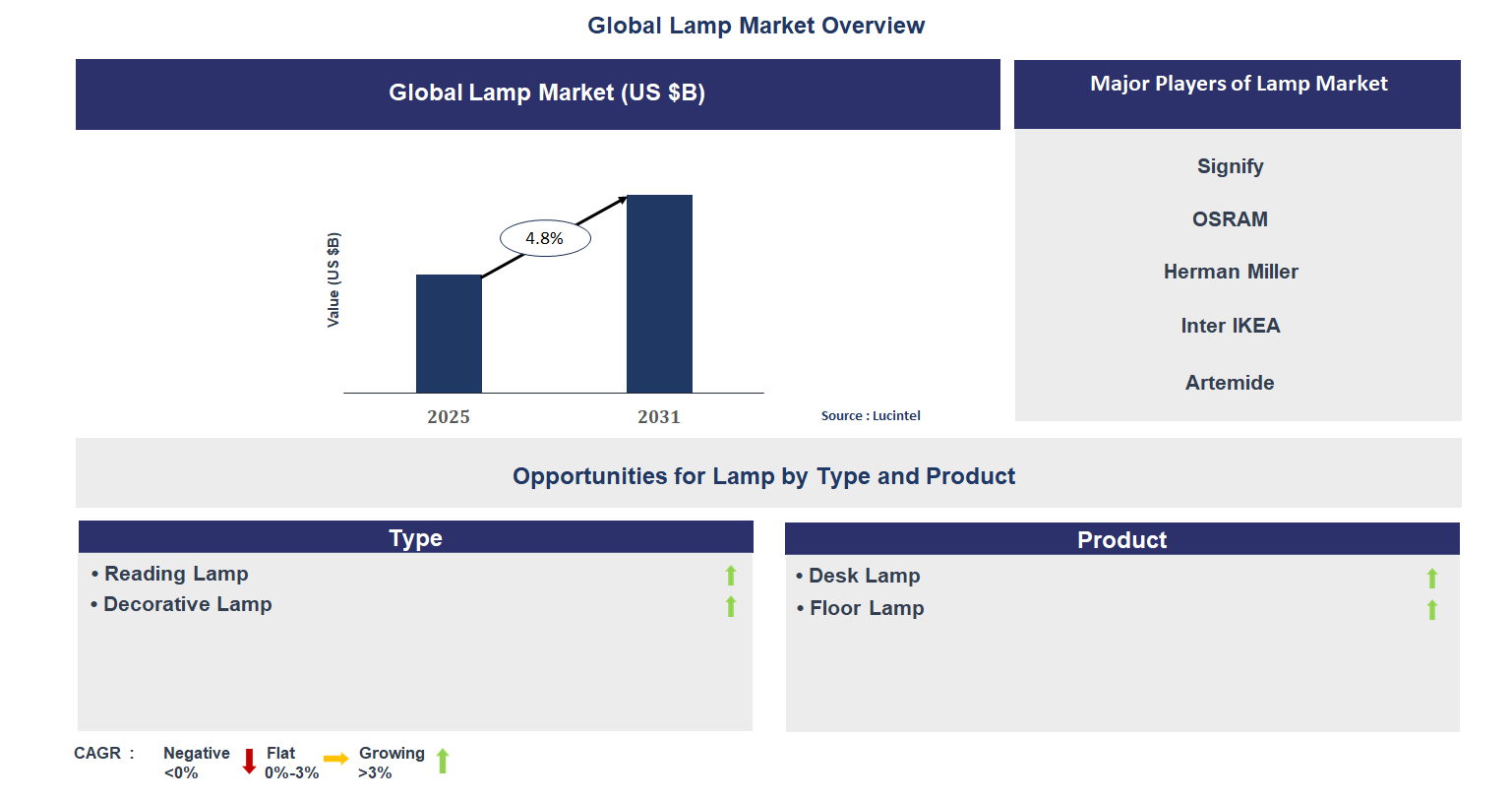
The future of the global lamp market looks promising with opportunities in the residential/retail and commercial/hospitality markets. The global lamp market is expected to grow with a CAGR of 4.8% from 2025 to 2031. The major drivers for this market are the increasing demand for energy-efficient lighting solutions, the rising preference for smart home lighting systems, and the growing adoption of decorative lighting in interiors.• Lucintel forecasts that, within the type category, reading lamp is expected to witness higher growth over the forecast period.
• Within the application category, residential/retail is expected to witness higher growth.
• In terms of region, APAC is expected to witness the highest growth over the forecast period. Gain valuable insights for your business decisions with our comprehensive 150+ page report. Sample figures with some insights are shown below.
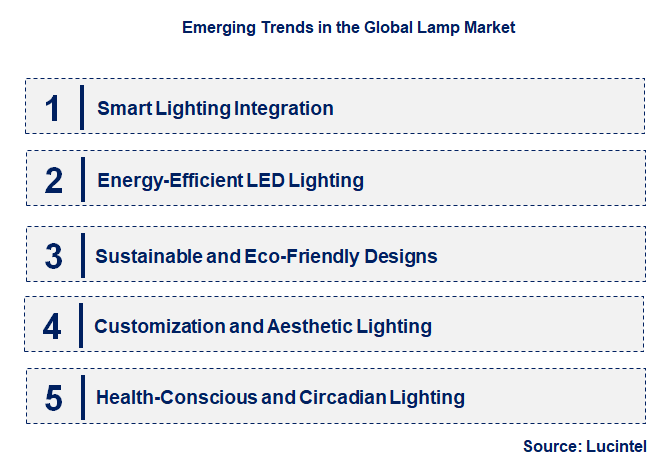
Emerging Trends in the Lamp Market
The lamp market is being reshaped by emerging trends that focus on advanced technology, energy efficiency, sustainability, and design innovation. From smart lighting integration to eco-friendly product designs, these trends reflect shifting consumer preferences towards personalized and sustainable lighting solutions. Manufacturers are aligning their strategies to meet the demands of the modern consumer, driving the evolution of the market.• Smart Lighting Integration: The trend of integrating lamps with smart home systems is rapidly growing. Consumers are increasingly seeking lighting solutions that can be controlled remotely via smartphones, voice assistants, or automated systems. This trend is fostering the development of advanced, connected lamps that offer convenience, energy savings, and customized lighting experiences, creating a more integrated and efficient home environment.
• Energy-Efficient LED Lighting: LED lighting continues to dominate the lamp market, driven by its superior energy efficiency and longevity compared to traditional incandescent bulbs. Consumers and businesses are increasingly adopting LED lamps as part of their sustainability efforts. These energy-efficient solutions help reduce electricity consumption, making them attractive in regions with energy-saving initiatives and high electricity costs.
• Sustainable and Eco-Friendly Designs: Sustainability is a key trend in the lamp market, with manufacturers focusing on producing eco-friendly lighting solutions. This includes the use of recyclable materials, energy-efficient designs, and sustainable manufacturing practices. Consumers are becoming more conscious of the environmental impact of their purchases, pushing companies to innovate in green technologies and eco-conscious designs.
• Customization and Aesthetic Lighting: Consumers are demanding more customization and aesthetic appeal from their lighting products. The focus is on personalized lighting experiences that allow for mood adjustments, color temperature changes, and design versatility. The rise of modular lamps and unique design-forward lighting products is meeting the demand for more personalized, stylish home décor solutions.
• Health-Conscious and Circadian Lighting: The rise of circadian lighting, designed to mimic natural daylight patterns, is a growing trend in the lamp market. This type of lighting promotes health and well-being by supporting natural sleep-wake cycles and reducing eye strain. As consumers become more health-conscious, circadian lighting is gaining popularity, particularly in home offices, bedrooms, and healthcare facilities. These emerging trends are significantly influencing the direction of the lamp market. As consumers demand more technologically advanced, energy-efficient, and aesthetically pleasing lighting solutions, manufacturers are adapting by innovating in smart home integration, sustainability, and customization. The market is becoming more aligned with the needs of the modern consumer, focusing on convenience, health, and environmental responsibility.
Recent Development in the Lamp Market
The lamp market is witnessing several key developments as manufacturers innovate to meet the demands of consumers for energy-efficient, smart, and customizable lighting solutions. From advancements in LED technology to new smart home integrations, these developments are reshaping the way lamps are designed and used across various applications.• Advancement in LED Technology: The ongoing development of LED technology is one of the most significant advancements in the lamp market. LEDs now offer brighter illumination, lower energy consumption, and longer lifespans compared to traditional lighting options. As LED prices continue to fall, they are becoming the preferred choice for both residential and commercial lighting applications.
• Integration with Smart Home Systems: The integration of lamps with smart home ecosystems is a growing development in the lamp market. Lamps now come with built-in compatibility with platforms like Amazon Alexa, Google Assistant, and Apple HomeKit, allowing for voice control and remote management. This development is transforming the way consumers interact with their lighting systems, enhancing convenience and energy management.
• Sustainability Focus: There has been a significant shift towards more sustainable and eco-friendly lighting solutions. Many manufacturers are focusing on using recyclable materials, reducing carbon footprints, and adhering to environmental regulations. With growing concerns about environmental impact, the demand for energy-efficient and sustainably designed lamps is driving market growth.
• Design Innovation for Aesthetic Appeal: The lamp market is increasingly driven by design-forward products that cater to consumers’ desire for aesthetic appeal. Modern lamps are not just functional; they are part of home décor. Brands are focusing on creating lamps with unique designs, customizations, and adjustable features that enhance the visual appeal of interiors while serving practical purposes.
• Circadian and Health-Focused Lighting: Circadian lighting, which adapts to the natural sleep-wake cycle, is gaining traction in both residential and commercial spaces. These health-focused lighting solutions are designed to improve well-being by mimicking the patterns of natural sunlight. As consumers become more health-conscious, the demand for these types of lamps, particularly in offices and bedrooms, is on the rise. These key developments are shaping the future of the lamp market, focusing on energy efficiency, design innovation, and smart functionality. As manufacturers continue to integrate advanced technologies like LEDs and smart home compatibility, the market is becoming more dynamic, offering consumers better lighting experiences that cater to both practicality and aesthetics.
Strategic Growth Opportunities in the Lamp Market
The lamp market offers several strategic growth opportunities across various applications, fueled by technological advancements, consumer preferences for energy-efficient solutions, and the growing trend of smart homes. By capitalizing on these opportunities, companies can expand their market share, reach new consumer segments, and drive innovation in product offerings.• Smart Lighting in Residential Spaces: As smart home adoption increases, there is a growing opportunity to offer integrated smart lighting solutions. Lamps that can be controlled remotely, integrated with voice assistants, and customized for different moods are in high demand. Brands that focus on making lighting more intelligent and personalized will have an edge in the competitive market.
• Energy-Efficient Lighting Solutions for Commercial Use: Businesses and commercial buildings are increasingly adopting energy-efficient lighting solutions, especially LEDs, as part of their sustainability efforts. The push for cost-effective and eco-friendly solutions in large-scale commercial applications presents significant growth potential for lamp manufacturers. Providing energy-efficient, long-lasting lighting products can reduce operational costs for businesses and attract eco-conscious buyers.
• Development of Affordable Sustainable Lighting: There is a growing market for affordable, sustainable lighting solutions, especially in emerging markets like India and Africa. By focusing on creating low-cost, energy-efficient products made from eco-friendly materials, manufacturers can tap into these price-sensitive markets, driving adoption of sustainable lighting in both urban and rural areas.
• Healthcare and Wellness Lighting Solutions: As consumers become more health-conscious, the demand for lighting solutions that promote well-being is increasing. Circadian lighting, which supports natural sleep-wake cycles, is gaining popularity in healthcare and wellness applications. Expanding into this segment, especially in healthcare facilities, offices, and homes, presents a growth opportunity for manufacturers.
• Outdoor and Decorative Lighting: The increasing focus on outdoor living spaces, coupled with the growing popularity of decorative lighting for gardens and patios, is opening up new growth opportunities. Lamps designed for outdoor use, with weather-resistant features and aesthetic designs, are in demand. As consumers seek to enhance their outdoor experiences, decorative outdoor lighting is a profitable segment to explore. The lamp market offers diverse growth opportunities across several applications, from smart lighting in residential areas to energy-efficient solutions for commercial use. By focusing on emerging trends such as sustainability, health-focused lighting, and outdoor décor, companies can tap into new markets and expand their product offerings to meet evolving consumer demands.
Lamp Market Driver and Challenges
The lamp market is influenced by various technological, economic, and regulatory factors that serve as key drivers for growth while also presenting challenges. Advances in lighting technology, growing demand for energy-efficient solutions, and government regulations are driving the market forward. However, challenges such as competition, material costs, and shifting consumer preferences remain hurdles for manufacturers. The factors responsible for driving the lamp market include: 1. Technological Advancements in LED and Smart Lighting: The continuous development of LED technology and its integration into smart home systems are significant drivers in the lamp market. Consumers are increasingly choosing energy-efficient and connected lighting systems, and these innovations are transforming the market, making it more competitive and appealing to tech-savvy consumers. 2. Government Regulations and Incentives: Many governments worldwide are implementing energy-efficient regulations and offering incentives for sustainable lighting solutions. These policies encourage manufacturers to produce eco-friendly lamps, driving demand for energy-efficient products like LEDs and reducing the markets environmental impact. 3. Rising Consumer Demand for Customization: Consumers are increasingly demanding customizable lighting solutions that align with their unique preferences and home décor. This demand is pushing lamp manufacturers to innovate, offering more flexible designs, adjustable features, and modular systems, which in turn helps the market expand. 4. Urbanization and Increased Disposable Income: Rapid urbanization and growing disposable incomes, particularly in emerging economies, are fueling the demand for modern, efficient, and aesthetically appealing lighting solutions. Consumers are seeking advanced lighting options for their homes, creating opportunities for manufacturers to cater to a broader market. 5. Growing Focus on Sustainability: The increasing global focus on sustainability and environmental protection is driving the demand for energy-efficient and eco-friendly lamps. Consumers are becoming more aware of their environmental impact, and manufacturers are responding by developing products that reduce energy consumption, use recyclable materials, and have a longer lifespan. Challenges in the lamp market are: 1. Competition and Price Sensitivity: Intense competition, especially in the LED lamp sector, poses a challenge for manufacturers. With many players offering similar products, companies must differentiate themselves through unique designs, additional features, or value-added services. Additionally, price sensitivity in certain markets can limit profit margins. 2. Material and Production Costs: The cost of materials, such as high-quality LEDs and eco-friendly components, can be high. These production costs can affect pricing strategies, especially for lower-cost markets, where affordability is a key consideration. Manufacturers must balance cost efficiency with quality and sustainability to remain competitive. 3. Changing Consumer Preferences: The rapid pace at which consumer preferences evolve can make it difficult for manufacturers to keep up. Trends like smart home integration and customization require constant innovation, and failing to meet consumer expectations can result in lost market share. The lamp market is shaped by technological advancements, rising demand for customization, and government incentives promoting energy-efficient lighting solutions. However, intense competition, rising production costs, and rapidly changing consumer preferences present challenges for manufacturers. Overcoming these obstacles will be key to maintaining growth and adapting to the evolving market dynamics.List of Lamp Companies
Companies in the market compete on the basis of product quality offered. Major players in this market focus on expanding their manufacturing facilities, R&D investments, infrastructural development, and leverage integration opportunities across the value chain. With these strategies lamp companies cater increasing demand, ensure competitive effectiveness, develop innovative products & technologies, reduce production costs, and expand their customer base. Some of the lamp companies profiled in this report include-• Signify
• OSRAM
• Herman Miller
• Inter IKEA
• Artemide
• Pablo Design
• Lutron Electronics
• Koncept
• OttLite Technologies
• Flos
Lamp Market by Segment
The study includes a forecast for the global lamp market by type, product, application, and region.Lamp Market by Type [Value from 2019 to 2031]:
• Reading Lamp
• Decorative Lamp
Lamp Market by Product [Value from 2019 to 2031]:
• Desk Lamp
• Floor Lamp
Lamp Market by Application [Value from 2019 to 2031]:
• Residential/Retail
• Commercial/Hospitality
Lamp Market by Region [Value from 2019 to 2031]:
• North America
• Europe
• Asia Pacific
• The Rest of the World
Country Wise Outlook for the Lamp Market
The lamp market across key regions like the United States, China, Germany, India, and Japan is undergoing dynamic changes, driven by technological innovations, eco-consciousness, and evolving consumer preferences. Advancements in energy-efficient lighting, smart home integration, and design aesthetics are reshaping the market. The ongoing push for sustainability and enhanced user experiences is also playing a crucial role in these developments.• United States: The U.S. lamp market is seeing rapid adoption of energy-efficient LED lamps and smart lighting systems. The integration of lamps with smart home devices like Amazon Alexa and Google Home is gaining momentum. Consumers are increasingly demanding eco-friendly, customizable lighting solutions, contributing to the shift toward energy-efficient designs. The popularity of minimalistic, modern lamp designs is also growing.
• China: In China, there is significant growth in the lamp market due to the rising demand for LED lights and smart lighting solutions. Domestic manufacturers like Opple and TCL are leading the charge in creating affordable, energy-efficient lighting products. The Chinese government’s push for green technologies is also accelerating the adoption of energy-efficient lamps, while online retail platforms drive market accessibility.
• Germany: Germany is at the forefront of adopting eco-friendly and energy-efficient lighting solutions. The demand for sustainable products is driving growth in the LED and smart lighting sectors. German consumers are highly focused on the quality, durability, and energy efficiency of lamps. There is also an increasing trend towards integrating lamps with home automation systems, making smart lighting a priority.
• India: In India, the lamp market is expanding rapidly with the growing adoption of LED lights, driven by both residential and commercial sectors. The government’s push for energy-efficient solutions through initiatives like the LED bulb distribution program has accelerated market growth. Consumers are also becoming more conscious of the environmental impact of traditional lighting, leading to higher demand for sustainable options.
• Japan: Japan’s lamp market is witnessing steady growth, with a strong preference for smart lamps that integrate seamlessly with home automation systems. There is a growing interest in design-forward lamps that combine functionality with aesthetics. Japanese consumers place a premium on energy efficiency and longevity, and the market is shifting towards products that offer both. Additionally, sustainable lighting solutions are gaining traction.

Features of the Global Lamp Market
Market Size Estimates: Lamp market size estimation in terms of value ($B). Trend and Forecast Analysis: Market trends (2019 to 2024) and forecast (2025 to 2031) by various segments and regions. Segmentation Analysis: Lamp market size by type, product, application, and region in terms of value ($B). Regional Analysis: Lamp market breakdown by North America, Europe, Asia Pacific, and Rest of the World. Growth Opportunities: Analysis of growth opportunities in different types, products, applications, and regions for the lamp market. Strategic Analysis: This includes M&A, new product development, and competitive landscape of the lamp market. Analysis of competitive intensity of the industry based on Porter’s Five Forces model.
FAQ
Q1. What is the growth forecast for lamp market? Answer: The global lamp market is expected to grow with a CAGR of 4.8% from 2025 to 2031. Q2. What are the major drivers influencing the growth of the lamp market? Answer: The major drivers for this market are the increasing demand for energy-efficient lighting solutions, the rising preference for smart home lighting systems, and the growing adoption of decorative lighting in interiors. Q3. What are the major segments for lamp market? Answer: The future of the lamp market looks promising with opportunities in the residential/retail and commercial/hospitality markets. Q4. Who are the key lamp market companies? Answer: Some of the key lamp companies are as follows:• Signify
• OSRAM
• Herman Miller
• Inter IKEA
• Artemide
• Pablo Design
• Lutron Electronics
• Koncept
• OttLite Technologies
• Flos Q5. Which lamp market segment will be the largest in future? Answer: Lucintel forecasts that, within the type category, reading lamp is expected to witness higher growth over the forecast period. Q6. In lamp market, which region is expected to be the largest in next 5 years? Answer: In terms of region, APAC is expected to witness the highest growth over the forecast period. Q7. Do we receive customization in this report? Answer: Yes, Lucintel provides 10% customization without any additional cost.
Table of Contents
List of Figures
List of Tables
Methodology
- In-depth interviews of the major players in this market
- Detailed secondary research from competitors’ financial statements and published data
- Extensive searches of published works, market, and database information pertaining to industry news, company press releases, and customer intentions
- A compilation of the experiences, judgments, and insights of Lucintel’s professionals, who have analyzed and tracked this market over the years.


Buy Now
Choose a license that fits your team. Instant PDF delivery.
Prices exclude taxes. Instant delivery. Custom licensing available on request.
Key Questions
- • What are some of the most promising, high-growth opportunities for the lamp market by type (reading lamp and decorative lamp), product (desk lamp and floor lamp), application (residential/retail and commercial/hospitality), and region (North America, Europe, Asia Pacific, and the Rest of the World)?
- • Which segments will grow at a faster pace and why?
- • Which region will grow at a faster pace and why?
- • What are the key factors affecting market dynamics? What are the key challenges and business risks in this market?
- • What are the business risks and competitive threats in this market?
- • What are the emerging trends in this market and the reasons behind them?
- • What are some of the changing demands of customers in the market?
- • What are the new developments in the market? Which companies are leading these developments?
- • Who are the major players in this market? What strategic initiatives are key players pursuing for business growth?
- • What are some of the competing products in this market and how big of a threat do they pose for loss of market share by material or product substitution?
- • What M&A activity has occurred in the last 5 years and what has its impact been on the industry? For any questions related to Lamp Market, Lamp Market Size, Lamp Market Growth, Lamp Market Analysis, Lamp Market Report, Lamp Market Share, Lamp Market Trends, Lamp Market Forecast, Lamp Companies, write Lucintel analyst at email: helpdesk@lucintel.com. We will be glad to get back to you soon.


