
Market Report · July 16, 2026

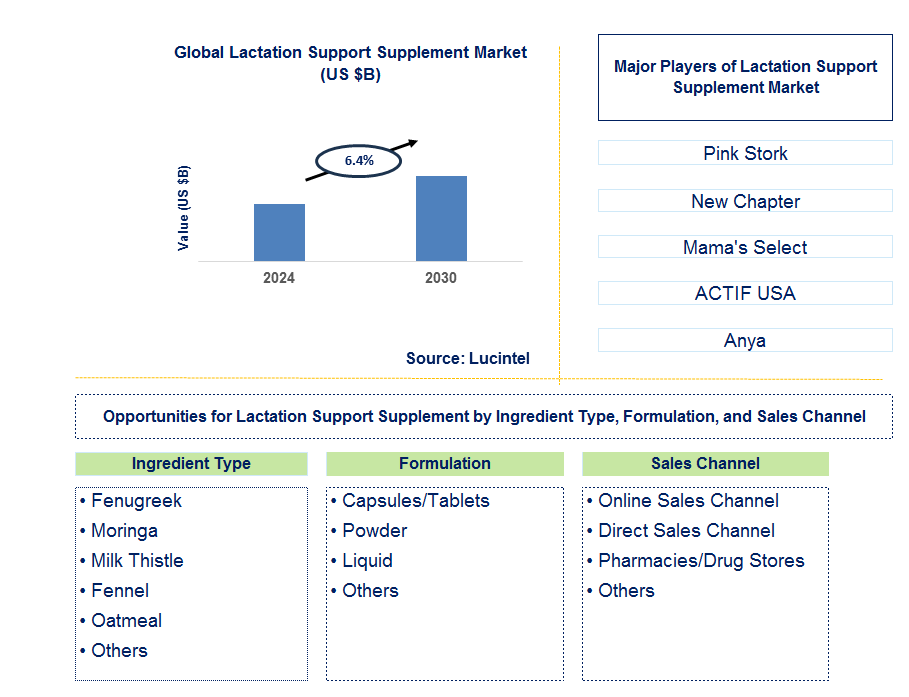
Key data points: The growth forecast = 6.4% annually for the next 6 years. Scroll below to get more insights. This market report covers trends, opportunities, and forecasts in the global lactation support supplement market to 2030 by ingredient type (fenugreek, moringa, milk thistle, fennel, oatmeal, and others), formulation (capsules/tablets, powder, liquid, and others), sales channel (online sales channel, direct sales channel, pharmacies/drug stores, and others), and region (North America, Europe, Asia Pacific, and the Rest of the World)
We'll send your sample report shortly.
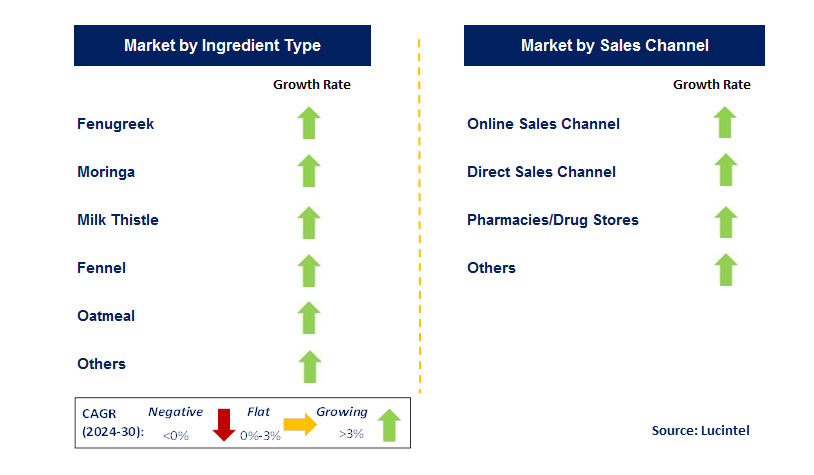
• Lucintel forecasts that, within the ingredient type category, fenugreek is expected to witness the highest growth.
• Within the formulation category, capsule/tablet will remain the largest segment.
• In terms of regions, APAC will remain the largest region. Gain valuable insights for your business decisions with our comprehensive 150+ page report.
• Lucintel forecasts that, within the type category, fenugreek is expected to witness the highest growth.
• Within the end use category, capsule/tablet will remain the largest segment.
• In terms of regions, APAC will remain the largest region. A more than 150-page report is developed to help in your business decisions.
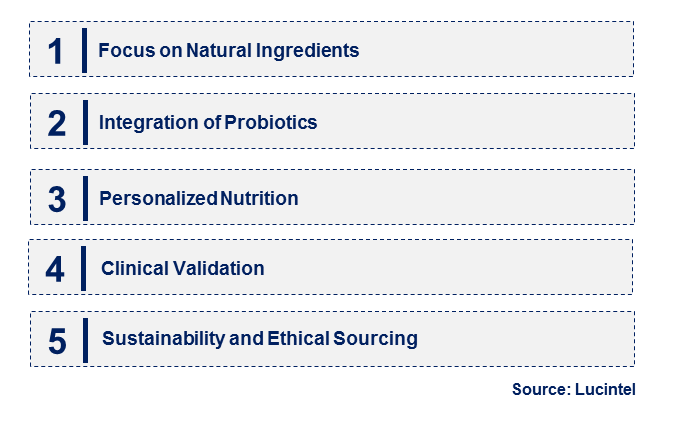
• Focus on Natural Ingredients: There is an increasing demand for lactation supplements made with natural and organic ingredients. This trend is driven by consumer preferences for products that are perceived as safer, cleaner, and more beneficial for both mother and baby.
• Integration of Probiotics: More lactation supplements are now incorporating probiotics to support maternal gut health and improve breastfeeding outcomes. Probiotics are believed to enhance digestion, boost immunity, and benefit both mother and child.
• Personalized Nutrition: Advances in personalized nutrition are enabling lactation supplements to be tailored to the individual needs of mothers based on their genetics and lifestyle. This trend is designed to optimize lactation support by providing a more customized nutrient profile.
• Clinical Validation: More products are undergoing rigorous clinical trials to validate their efficacy and safety. This trend reflects the industry's shift towards evidence-based supplements that are backed by scientific research, increasing consumer trust and confidence.
• Sustainability and Ethical Sourcing: Consumers are increasingly demanding that supplements be produced using sustainable and ethically sourced ingredients. Companies are responding by adopting environmentally friendly practices and transparent sourcing methods. These trends are reshaping the lactation support supplement market by emphasizing the importance of natural ingredients, probiotics, personalized nutrition, clinical validation, and sustainability, all of which cater to consumer demands for safety, efficacy, and environmental responsibility.
• Increased Focus on Organic Ingredients: The trend toward using organic and natural ingredients in lactation supplements is growing. This shift responds to consumer demand for holistic products that are free from synthetic additives and support breastfeeding more safely.
• Development of Probiotic-Enhanced Formulations: Probiotic-enhanced lactation supplements are becoming increasingly popular. These formulations aim to improve maternal health and milk quality, supported by research that suggests probiotics can positively influence gut health and lactation.
• Introduction of Personalized Supplements: Personalized lactation supplements are emerging, tailored to individual health profiles and nutritional needs. This trend allows for targeted support for mothers, enhancing the effectiveness of supplementation.
• Collaboration with Healthcare Professionals: A growing trend in the industry involves collaboration between supplement manufacturers and healthcare providers to ensure new products are grounded in scientific evidence and meet safety and efficacy standards.
• Expansion into Emerging Markets: As awareness of maternal health grows, lactation supplements are expanding into emerging markets. Affordable, culturally relevant products are being introduced to meet the increasing demand for postpartum nutrition solutions in these regions. These developments highlight the market’s focus on improving product efficacy, expanding access to lactation support, and offering personalized solutions that meet the diverse needs of mothers.
• Organic and Natural Products: There is a significant opportunity to develop supplements made with organic and natural ingredients, as more health-conscious consumers seek products they perceive as safer and more effective for both mother and baby.
• Probiotic Formulations: Probiotic-enhanced lactation supplements present a promising growth area. Probiotics can improve maternal gut health and overall well-being, which is a key factor in boosting breastfeeding outcomes.
• Personalized Supplement Solutions: Providing personalized lactation supplements, tailored to individual health needs and genetic profiles, can cater to the growing demand for customized nutrition. This personalized approach enhances the efficacy of supplementation and offers a unique value proposition.
• Global Market Expansion: Expanding into emerging markets, where awareness of maternal health and access to postpartum nutrition solutions is on the rise, presents a key growth opportunity. Products that are culturally adapted and affordable can drive market growth in these regions.
• Scientific Research and Validation: Investing in clinical research to validate the efficacy and safety of lactation supplements can help build consumer trust and credibility. Backed by solid scientific evidence, products are more likely to gain acceptance among healthcare professionals and consumers. These growth opportunities focus on organic ingredients, probiotics, personalized solutions, global market expansion, and scientific validation, all of which position companies to meet the evolving needs of consumers.
• Increased Awareness of Maternal Health: Growing awareness of the importance of maternal health and the benefits of lactation support supplements is driving demand. Consumers are increasingly seeking products that improve breastfeeding outcomes and support overall well-being.
• Advancements in Ingredient Science: Innovations in ingredient science, such as the use of probiotics and organic compounds, are enhancing the effectiveness of lactation supplements. These advancements contribute to better product performance and higher consumer satisfaction.
• Rising Demand for Natural Products: The demand for natural and organic products is rising, with consumers preferring lactation supplements that use fewer synthetic additives. This trend reflects broader consumer shifts toward health-conscious, holistic lifestyles.
• Regulatory Support: Supportive regulatory environments across various regions help facilitate the development, approval, and sale of lactation supplements. Clear guidelines and standards support product innovation and market entry.
• Expansion into Emerging Markets: The increasing awareness of maternal health and growing access to healthcare in emerging markets presents significant opportunities for lactation supplements to reach new customers and drive market expansion. Challenges in the lactation support supplement market are:
• Accuracy of Claims: Ensuring the accuracy of claims regarding supplement efficacy can be challenging. Misleading claims may lead to regulatory issues and undermine consumer trust, potentially stalling market growth.
• Regulatory Compliance: The complex regulatory requirements in different regions can pose challenges for manufacturers. Navigating varying laws and compliance standards across markets affects product development and distribution.
• Cultural and Regional Preferences: Adapting products to meet the specific needs, preferences, and cultural sensitivities of different regions can be a challenge. Effective product localization is essential for gaining acceptance in diverse markets.
• Competition and Market Saturation: With a growing number of players offering lactation supplements, standing out in a crowded market is increasingly difficult. Companies need to differentiate themselves through product innovation, quality, and effective marketing.
• Consumer Skepticism: Some consumers may be skeptical about the benefits of lactation supplements, particularly if they are unfamiliar with the ingredients or if there is limited clinical evidence. Transparency, clinical validation, and clear communication are essential to building trust. By addressing these drivers and challenges, companies can better position themselves for success in the lactation support supplement market.
• Pink Stork
• New Chapter
• Mama's Select
• ACTIF USA
• Anya
• Mommy’s Bliss
• Nestle
• Mother Love
• Mommy Knows Best
• Rumina Naturals
• Fenugreek
• Moringa
• Milk Thistle
• Fennel
• Oatmeal
• Others
• Capsules/Tablets
• Powder
• Liquid
• Others
• Online Sales Channel
• Direct Sales Channel
• Pharmacies/Drug Stores
• Others
• North America
• Europe
• Asia Pacific
• The Rest of the World
• United States: In the U.S., there is a growing trend toward incorporating organic and natural ingredients in lactation supplements. Formulations emphasize enhanced bioavailability, and clinical studies support their efficacy in improving milk supply and quality.
• China: In China, lactation supplements are increasingly incorporating traditional herbal ingredients alongside modern formulations. This trend is fueled by a growing awareness of maternal nutrition and postpartum care among Chinese women.
• Germany: Germany is leading the development of lactation supplements with scientifically validated ingredients. Many new products are developed in collaboration with healthcare professionals to meet stringent safety and efficacy standards.
• India: The market in India is expanding with affordable lactation supplements that address the diverse needs of mothers. Ayurvedic and traditional herbal remedies are gaining popularity due to their natural benefits and cultural acceptance.
• Japan: Japan is incorporating advanced technology into lactation supplements, such as probiotics and prebiotics, supported by extensive research and innovation. This approach aims to enhance maternal health and optimize breastfeeding outcomes. These regional developments highlight the diverse approaches to lactation support supplements, emphasizing natural ingredients, scientific validation, and cultural relevance across different markets.


• Pink Stork
• New Chapter
• Mama's Select
• ACTIF USA
• Anya
• Mommy’s Bliss
• Nestle
• Mother Love
• Mommy Knows Best
• Rumina Naturals Q5. Which lactation support supplement market segment will be the largest in future? Answer: Lucintel forecasts that fenugreek is expected to witness the highest growth. Q6. In lactation support supplement market, which region is expected to be the largest in next 5 years? Answer: APAC will remain the largest region. Q.7 Do we receive customization in this report? Answer: Yes, Lucintel provides 10% customization without any additional cost.


Choose a license that fits your team. Instant PDF delivery.
Prices exclude taxes. Instant delivery. Custom licensing available on request.
Market Report · July 16, 2026
Market Report · July 15, 2026
Market Report · July 15, 2026
Trusted partner for strategic intelligence and business growth


Receive a complimentary market analysis tailored to your industry. Our analysts will identify key growth opportunities and competitive dynamics specific to your business.

Market size, growth rate, and key trend analysis for your specific sector.

Top competitor positioning and market share analysis.

Strategic recommendations backed by data-driven insights.
Get curated market intelligence and competitive moves straight to your inbox.
By subscribing, you agree to receive our monthly insights. Unsubscribe anytime.
Receive a complimentary market analysis tailored to your industry. Our analysts will identify key growth opportunities and competitive dynamics specific to your business.
Market size, growth rate, and key trend analysis for your specific sector.
Top competitor positioning and market share analysis.
Strategic recommendations backed by data-driven insights.
Get curated market intelligence, emerging trends, and competitive moves straight to your inbox each month.
By subscribing, you agree to receive our monthly insights. Unsubscribe anytime.
We'll send your sample report shortly.