
Market Report · July 17, 2026

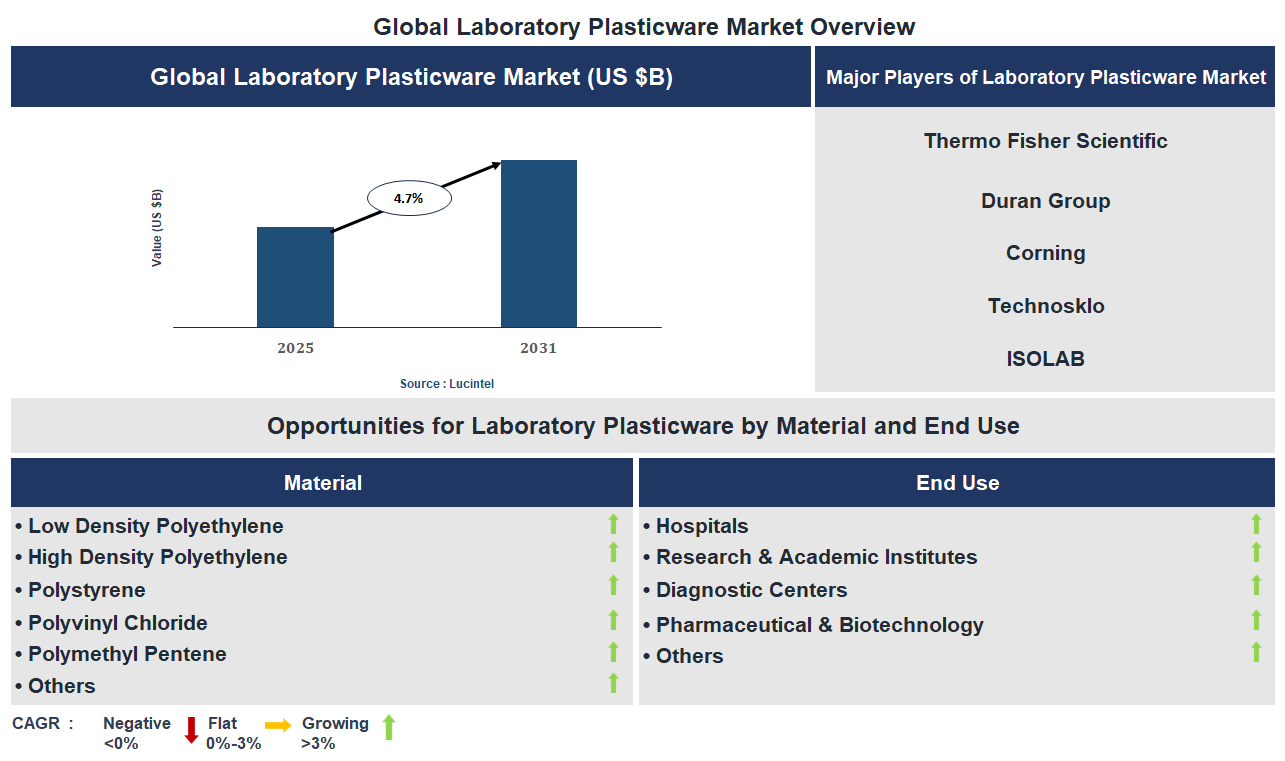
Key data points: The growth forecast = 4.7% annually for the next 7 years. Scroll below to get more insights. This market report covers trends, opportunities and forecasts in laboratory plasticware market to 2031 by material (low density polyethylene, high density polyethylene, polystyrene, polyvinyl chloride, polymethyl pentene, and others), end use (hospitals, research & academic institutes, diagnostic centers, pharmaceutical & biotechnology, and others), and region (North America, Europe, Asia Pacific, and the Rest of the World)
We'll send your sample report shortly.
• Lucintel forecasts that, within the material category, low density polyethylene is expected to witness the highest growth over the forecast period.
• Within the end use category, diagnostic center is expected to witness the highest growth.
• In terms of region, North America is expected to witness the highest growth over the forecast period. Gain valuable insights for your business decisions with our comprehensive 150+ page report. Sample figures with some insights are shown below.
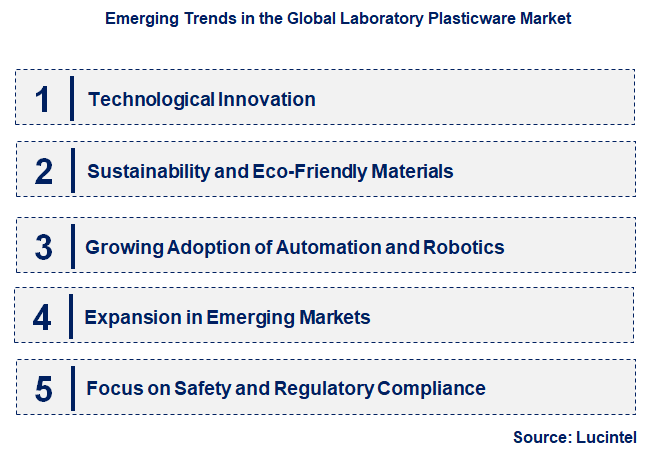
• Technological Innovation: The integration of advanced manufacturing techniques such as 3D printing and injection molding is leading to highly customized and precise laboratory plasticware. These innovations improve functionality, durability, and user safety, enabling laboratories to perform complex experiments with greater accuracy. The adoption of smart plasticware with embedded sensors is also emerging, providing real-time data and enhancing experimental control. This trend is driving market growth by offering tailored solutions that meet specific research needs, reducing waste, and increasing efficiency.
• Sustainability and Eco-Friendly Materials: Increasing environmental awareness is prompting manufacturers to develop biodegradable and recyclable plasticware options. The shift towards sustainable materials reduces the environmental footprint of laboratory operations and aligns with regulatory standards. Companies are investing in research to create eco-friendly plastics that do not compromise performance. This trend is influencing procurement decisions, with laboratories favoring suppliers that offer sustainable options, thereby reshaping the market towards greener practices and encouraging innovation in biodegradable plastics.
• Growing Adoption of Automation and Robotics: The integration of automation in laboratories is fueling demand for plasticware compatible with robotic systems. Automated handling, high-throughput screening, and liquid handling systems require specialized, durable, and contamination-free plasticware. This trend enhances laboratory efficiency, reduces human error, and accelerates research timelines. As automation becomes more prevalent, the market is witnessing increased demand for standardized, high-quality plasticware designed for robotic compatibility, which is transforming traditional laboratory workflows and expanding market opportunities.
• Expansion in Emerging Markets: Rapid industrialization, increased research funding, and a rising number of educational and healthcare institutions in emerging economies are driving market expansion. These regions are experiencing a surge in laboratory setup and research activities, creating a significant demand for affordable, high-quality plasticware. Local manufacturers are also emerging, offering cost-effective solutions tailored to regional needs. This trend is broadening the market scope, fostering competition, and encouraging innovation to meet diverse regional requirements, ultimately making laboratory plasticware more accessible worldwide.
• Focus on Safety and Regulatory Compliance: Stringent safety standards and regulatory requirements are prompting manufacturers to develop plasticware that complies with international health and safety guidelines. Features such as chemical resistance, non-reactivity, and leak-proof designs are becoming standard. This focus ensures laboratory safety, reduces contamination risks, and facilitates compliance with regulatory audits. As safety remains a top priority, the market is witnessing increased innovation in plasticware that meets these standards, reinforcing trust among users and expanding the market for compliant products. In summary, these trends are collectively reshaping the laboratory plasticware market by fostering innovation, promoting sustainability, enhancing automation, expanding geographical reach, and prioritizing safety. This evolution is leading to more efficient, environmentally friendly, and safer laboratory environments, ultimately supporting scientific progress and healthcare advancements worldwide.
• Adoption of Eco-friendly Materials: The market is shifting towards biodegradable and recyclable plastics, reducing environmental impact and aligning with sustainability goals. This development encourages manufacturers to innovate with eco-conscious materials, appealing to environmentally aware consumers and regulatory bodies. It enhances brand reputation and compliance, fostering long-term growth and responsible manufacturing practices.
• Integration of Smart Technologies: Incorporation of IoT and digital tracking in plasticware is improving inventory management, traceability, and data accuracy. Smart labware enables real-time monitoring of sample conditions and usage, increasing efficiency and reducing errors. This technological integration enhances laboratory productivity and supports digital transformation in research environments.
• Expansion in Customization and Specialty Products: There is a rising demand for customized plasticware tailored to specific research needs, such as specialized pipettes, centrifuge tubes, and multi-well plates. Manufacturers are offering bespoke solutions to meet unique laboratory requirements, boosting market competitiveness. This trend allows labs to optimize workflows and improve experimental outcomes.
• Growth in Emerging Markets: Developing regions are witnessing increased adoption of laboratory plasticware due to expanding healthcare infrastructure and research activities. Market penetration is facilitated by cost-effective manufacturing and rising investments in scientific research. This expansion broadens the global market scope and creates new growth opportunities for manufacturers.
• Focus on Sterility and Safety Standards: Enhanced emphasis on sterile, non-toxic, and chemical-resistant plasticware is driven by stringent safety regulations. Innovations in material coatings and manufacturing processes ensure compliance and improve sample integrity. This focus boosts user confidence and supports the adoption of advanced plasticware solutions in sensitive applications. In summary, these developments are collectively transforming the laboratory plasticware market by promoting sustainability, technological advancement, customization, market expansion, and safety. They are driving innovation, increasing efficiency, and opening new avenues for growth, ultimately shaping a more dynamic and responsive industry landscape.
• Medical & Diagnostic Laboratories: Enhanced demand for disposable plasticware in diagnostics and sample collection drives growth. The need for contamination-free, sterile, and cost-effective solutions is increasing, supporting faster testing and improved patient outcomes. This trend boosts market revenue and encourages innovation in material safety and functionality.
• Pharmaceutical & Biotech Research: The rising volume of drug development and biotechnological research necessitates specialized plasticware. These products facilitate high-throughput screening, cell culture, and formulation processes, leading to increased adoption. The growth enhances research efficiency and accelerates product development timelines.
• Academic & Research Institutions: Growing investments in scientific research and education are expanding the use of laboratory plasticware. Universities and research centers prefer affordable, durable, and customizable options, fostering market penetration. This trend promotes innovation and broadens application scope.
• Food & Beverage Testing Labs: The increasing focus on food safety and quality control is boosting demand for plasticware used in testing and analysis. Disposable, easy-to-clean products ensure compliance with safety standards, supporting regulatory adherence and consumer trust.
• Environmental & Waste Management Labs: The need for sustainable and eco-friendly plasticware solutions is rising. Development of biodegradable and recyclable products addresses environmental concerns, opening new markets and aligning with global sustainability goals. In summary, these growth opportunities across key applications are significantly shaping the laboratory plasticware market. They are driving innovation, expanding market reach, and responding to evolving safety and sustainability standards. As a result, the market is poised for substantial growth, with diverse applications fueling ongoing development and competitive advantage.
• Technological Innovations: The development of advanced manufacturing processes, such as injection molding and blow molding, has improved the quality, durability, and safety of laboratory plasticware. These innovations enable the production of specialized products like sterile, autoclavable, and chemically resistant plasticware, meeting stringent laboratory standards. As research institutions and industries demand more reliable and efficient tools, manufacturers are investing in R&D to introduce innovative solutions, which further fuels market growth. Additionally, the integration of automation and smart technology in plasticware enhances usability and data management, making laboratory processes more efficient and accurate.
• Growing Pharmaceutical and Biotechnology Industries: The expanding pharmaceutical and biotech sectors are significant drivers for the Laboratory Plasticware Market. These industries require a wide range of plasticware for research, development, and quality control processes. The increasing prevalence of chronic diseases and the rising investment in personalized medicine have led to a surge in clinical trials and research activities, boosting demand for high-quality laboratory plasticware. Moreover, the need for sterile, contamination-free, and disposable plasticware aligns with industry standards for safety and efficiency, further propelling market growth as these sectors continue to expand globally.
• Rising Research and Development Activities: An increase in R&D activities across academic, government, and private sectors is a key driver. As scientific research becomes more complex, there is a growing need for specialized laboratory plasticware that can withstand various experimental conditions. The focus on innovation in fields like nanotechnology, genomics, and regenerative medicine necessitates advanced plasticware solutions. This trend is supported by government funding and grants aimed at fostering scientific discovery, which in turn stimulates demand for innovative, high-performance laboratory plasticware that can meet evolving research needs.
• Increasing Adoption of Disposable Plasticware: The shift towards disposable plasticware is driven by the need to prevent cross-contamination and ensure safety in laboratory environments. Disposable products such as pipette tips, petri dishes, and test tubes are preferred for their convenience and ability to maintain sterile conditions without the need for cleaning or sterilization. This trend is particularly prominent in clinical diagnostics, pharmaceutical manufacturing, and food safety testing. The growing awareness of biosafety protocols and regulatory compliance further accelerates the adoption of disposable plasticware, contributing significantly to market expansion.
• Environmental Sustainability Initiatives: The push for eco-friendly and sustainable laboratory plasticware is shaping market dynamics. Manufacturers are developing biodegradable and recyclable plastic products to address environmental concerns and comply with regulations. The adoption of sustainable materials reduces plastic waste and minimizes ecological impact, appealing to environmentally conscious consumers and institutions. This drive for sustainability encourages innovation in material science and manufacturing processes, creating new opportunities for market players to differentiate their offerings and meet the increasing demand for environmentally responsible laboratory solutions. The challenges in the laboratory plasticware market are:
• Regulatory and Safety Standards: Stringent regulations regarding material safety, chemical resistance, and sterilization requirements pose significant challenges. Compliance with international standards such as ISO, FDA, and CE is mandatory, requiring continuous product testing and certification. These regulatory hurdles increase costs and time-to-market for new products, potentially limiting innovation and market entry for smaller players. Additionally, evolving safety standards demand ongoing updates to product designs and materials, which can hinder rapid development and adaptation within the industry.
• Environmental Concerns and Waste Management: Despite efforts to develop sustainable plasticware, environmental issues related to plastic waste remain a major challenge. The widespread use of single-use plastic products contributes to pollution and environmental degradation. Managing plastic waste through recycling and disposal is complex and costly, often limited by the quality and type of plastics used. Regulatory restrictions on plastic waste disposal and increasing public awareness about environmental impact pressure manufacturers to innovate eco-friendly alternatives, which can be expensive and technologically challenging to develop and implement at scale.
• Price Fluctuations and Supply Chain Disruptions: Volatility in raw material prices, such as polymers and resins, directly impacts manufacturing costs. Supply chain disruptions caused by geopolitical tensions, pandemics, or logistical issues can lead to shortages and delays in production. These factors increase overall costs and can hinder the ability of companies to meet market demand promptly. Small and medium-sized enterprises are particularly vulnerable, which may limit market competition and innovation. Ensuring a stable supply chain and controlling costs are ongoing challenges that influence market stability and growth prospects. In summary, the laboratory plasticware market is driven by technological advancements, expanding industries, increased R&D activities, and sustainability initiatives. However, regulatory complexities, environmental concerns, and supply chain issues pose significant challenges. These factors collectively influence market dynamics, requiring stakeholders to innovate continuously, adapt to regulatory changes, and address environmental impacts. The overall impact is a market that is poised for growth but must navigate these hurdles to sustain long-term development and competitiveness.
• Thermo Fisher Scientific
• Duran Group
• Corning
• Technosklo
• ISOLAB
• Peninsula Plastics
• VITLAB
• Gerresheimer
• Eppendorf
• Eurofins
• Low Density Polyethylene
• High Density Polyethylene
• Polystyrene
• Polyvinyl Chloride
• Polymethyl Pentene
• Others
• Hospitals
• Research & Academic Institutes
• Diagnostic Centers
• Pharmaceutical & Biotechnology
• Others
• North America
• Europe
• Asia Pacific
• The Rest of the World
• United States: The US market has seen substantial growth due to increased funding for biomedical research and a surge in clinical laboratory testing. Innovations in biodegradable plastics and automation integration are gaining traction, improving efficiency and sustainability. The adoption of smart laboratory plasticware with embedded sensors is also rising, enhancing data collection and process control. Regulatory agencies are emphasizing safety standards, prompting manufacturers to develop high-quality, compliant products. The COVID-19 pandemic further accelerated demand for disposable plasticware, especially in diagnostic testing and vaccine development.
• China: China has emerged as a major player in the laboratory plasticware market, driven by rapid expansion in healthcare infrastructure and research activities. The country is investing heavily in biotech and pharmaceutical sectors, boosting demand for laboratory consumables. Local manufacturers are adopting advanced manufacturing techniques to improve product quality and reduce costs. There is a growing focus on environmentally friendly plastics and sustainable production practices. Additionally, government initiatives to promote innovation and self-sufficiency in scientific equipment are fostering market growth, with increased exports to other Asian countries.
• Germany: Germany’s market is characterized by a strong emphasis on quality, safety, and environmental sustainability. The country is a leader in developing high-precision, durable laboratory plasticware used in pharmaceutical and chemical research. Innovations include the integration of automation and robotics to streamline laboratory workflows. German companies are also investing in eco-friendly materials and recycling technologies to meet stringent EU regulations. The focus on research and development, coupled with collaborations between academia and industry, is driving the creation of advanced, sustainable plasticware solutions.
• India: The Indian laboratory plasticware market is witnessing rapid growth due to expanding healthcare infrastructure, increasing research activities, and rising awareness of laboratory safety. Local manufacturers are expanding their product portfolios to include innovative, cost-effective, and eco-friendly options. The government’s initiatives to promote biotechnology and scientific research are further fueling demand. Additionally, the growth of diagnostic laboratories and pharmaceutical manufacturing units is contributing to market expansion. The adoption of automation and digital solutions in laboratories is also increasing, leading to a shift towards more sophisticated plasticware products.
• Japan: Japan’s market is characterized by a focus on high-quality, precision-engineered laboratory plasticware used in advanced research and industrial applications. The country is investing in innovative materials that enhance durability and chemical resistance. There is a strong emphasis on sustainability, with companies developing biodegradable and recyclable plastics to comply with environmental regulations. Japan is also integrating automation and IoT technologies into laboratory workflows, improving efficiency and data accuracy. The aging population and increased healthcare research are driving demand for specialized plasticware in medical and biotech fields, supporting steady market growth.


• Thermo Fisher Scientific
• Duran Group
• Corning
• Technosklo
• ISOLAB
• Peninsula Plastics
• VITLAB
• Gerresheimer
• Eppendorf
• Eurofins Q5. Which laboratory plasticware market segment will be the largest in future? Answer: Lucintel forecasts that, within the material category, low density polyethylene is expected to witness the highest growth over the forecast period. Q6. In laboratory plasticware market, which region is expected to be the largest in next 5 years? Answer: In terms of region, North America is expected to witness the highest growth over the forecast period. Q7. Do we receive customization in this report? Answer: Yes, Lucintel provides 10% customization without any additional cost.


Choose a license that fits your team. Instant PDF delivery.
Prices exclude taxes. Instant delivery. Custom licensing available on request.
Market Report · July 17, 2026
Market Report · July 16, 2026
Market Report · July 10, 2026
Trusted partner for strategic intelligence and business growth


Receive a complimentary market analysis tailored to your industry. Our analysts will identify key growth opportunities and competitive dynamics specific to your business.

Market size, growth rate, and key trend analysis for your specific sector.

Top competitor positioning and market share analysis.

Strategic recommendations backed by data-driven insights.
Get curated market intelligence and competitive moves straight to your inbox.
By subscribing, you agree to receive our monthly insights. Unsubscribe anytime.
Receive a complimentary market analysis tailored to your industry. Our analysts will identify key growth opportunities and competitive dynamics specific to your business.
Market size, growth rate, and key trend analysis for your specific sector.
Top competitor positioning and market share analysis.
Strategic recommendations backed by data-driven insights.
Get curated market intelligence, emerging trends, and competitive moves straight to your inbox each month.
By subscribing, you agree to receive our monthly insights. Unsubscribe anytime.
We'll send your sample report shortly.