
Market Report · June 29, 2026

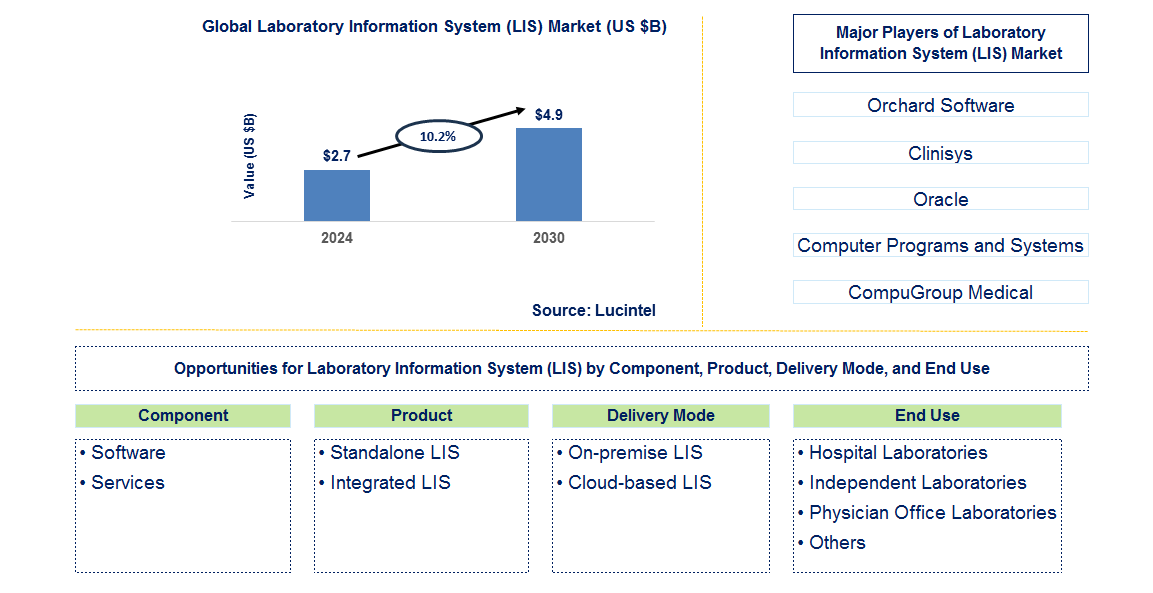
Key data points: The market size in 2030 = $4.9 billion, growth forecast = 10.2% annually for the next 6 years. Scroll below to get more insights. This market report covers trends, opportunities, and forecasts in the global laboratory information system (LIS) market to 2030 by component (software and services), product (standalone LIS and integrated LIS), delivery mode (on-premise LIS and cloud-based LIS), end use (hospital laboratories, independent laboratories, physician office laboratories, and others), and region (North America, Europe, Asia Pacific, and the Rest of the World)
We'll send your sample report shortly.
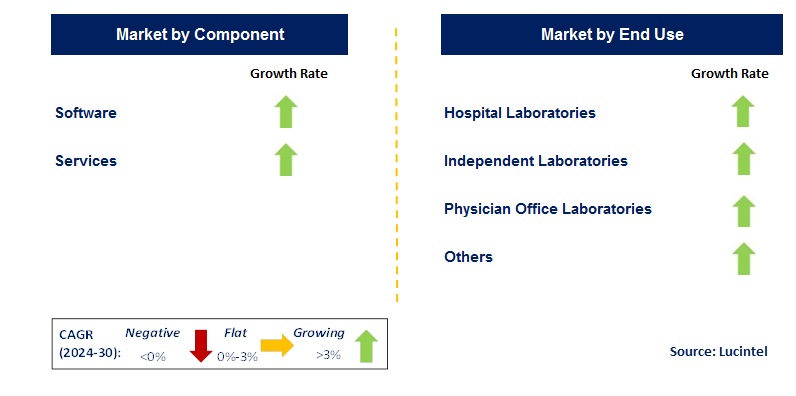
• Lucintel forecasts that, within the component category, software is expected to witness higher growth over the forecast period due to the growing need for LIS software that is comprehensive, integrated, and easy to use.
• Within the end-use category, the hospital laboratory will remain the largest segment as it facilitates long-distance consultation with experts and provides digital slide shows of specimens like blood smears and frozen sections.
• In terms of regions, North America will remain the largest region over the forecast period due to the development of biobanks, the ease of LIS products and services availability at affordable prices, as well as supportive initiatives taken by regional governments. Gain valuable insights for your business decisions with our comprehensive 150+ page report.
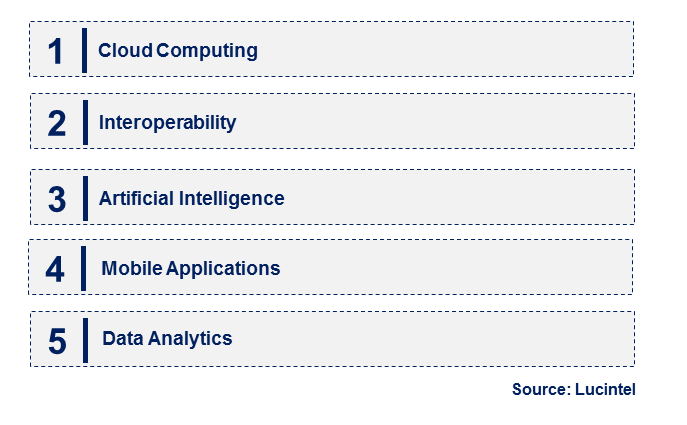
• Cloud Computing: Cloud-based LIS solutions are gaining popularity due to their flexibility, scalability, and cost-effectiveness. These systems allow laboratories to access data remotely, facilitate collaboration, and improve data security while reducing IT infrastructure costs.
• Interoperability: Enhanced interoperability between LIS and other healthcare systems is becoming essential for seamless data exchange. This trend fosters improved patient care through coordinated workflows and better access to comprehensive patient data across various platforms.
• Artificial Intelligence: The integration of AI in LIS helps automate repetitive tasks and enhance data analysis capabilities. AI algorithms can identify trends, optimize workflows, and assist in decision-making, thus increasing laboratory efficiency and accuracy.
• Mobile Applications: The rise of mobile applications for LIS enables laboratory professionals to access critical information on the go. These apps facilitate real-time updates and notifications, improving communication and workflow management in busy laboratory environments.
• Data Analytics: Advanced data analytics tools integrated into LIS provide laboratories with insights into operational performance and patient outcomes. These analytics help identify areas for improvement, optimize resource allocation, and enhance overall laboratory efficiency. These emerging trends are reshaping the LIS market by enhancing operational efficiencies, promoting collaboration, and improving patient care. As laboratories increasingly adopt these technologies, the market is expected to grow significantly, driving innovations that support better healthcare outcomes.
• Cloud-Based Solutions: The adoption of cloud-based LIS solutions is increasing, allowing laboratories to streamline data management and improve accessibility. This transition enhances collaboration among healthcare providers and supports remote work capabilities.
• AI Integration: The incorporation of artificial intelligence in LIS is revolutionizing data processing and analysis. AI tools assist in automating routine tasks, increasing accuracy, and enabling data-driven decision-making, ultimately improving laboratory efficiency.
• Mobile Platform Development: The rise of mobile platforms for LIS allows healthcare professionals to manage laboratory operations on the go. This development enhances communication, real-time updates, and workflow management, essential in high-paced environments.
• Regulatory Compliance Features: Recent LIS developments focus on incorporating regulatory compliance features, ensuring that laboratories meet stringent industry standards. These features streamline audits and improve data integrity, enhancing overall operational quality.
• Integration with EHRs: Increasing integration between LIS and electronic health records (EHRs) facilitates seamless data sharing and improves patient care. This trend supports coordinated healthcare delivery, enhancing laboratory workflows and patient management. These developments in the LIS market reflect a shift toward enhanced efficiency, accuracy, and regulatory compliance. By embracing these innovations, laboratories can improve their operations and contribute to better healthcare delivery.
• Healthcare Applications: The growing need for efficient lab operations in hospitals and clinics offers significant growth opportunities. Implementing LIS can streamline workflows, improve data accuracy, and enhance patient care, thus driving market demand.
• Research Institutions: Research laboratories require robust data management systems to handle large volumes of data. Growth opportunities in this sector involve developing customized LIS solutions that facilitate advanced research and improve operational efficiency.
• Pharmaceutical Companies: Pharmaceutical laboratories benefit from LIS in managing complex workflows related to drug development and testing. The need for compliance and efficiency in this sector creates opportunities for tailored LIS solutions.
• Diagnostic Laboratories: With the rising demand for diagnostic services, opportunities exist for LIS providers to enhance data management and reporting capabilities. Implementing advanced analytics can improve decision-making and operational efficiency.
• Telemedicine Integration: The rise of telemedicine presents a unique opportunity for LIS providers to integrate their systems with telehealth platforms. This collaboration can enhance data sharing and patient management, supporting the growing trend of remote healthcare services. The strategic growth opportunities in the LIS market reflect the increasing demand for efficient laboratory management across various applications. By capitalizing on these opportunities, companies can drive innovations that enhance laboratory operations and improve patient outcomes.
• Technological Advancements: Continuous innovations in LIS technology, such as cloud computing and AI integration, drive market growth by improving laboratory efficiency and data management capabilities.
• Increased Demand for Healthcare Services: The rising demand for healthcare services and diagnostics creates a pressing need for efficient lab operations, propelling the adoption of advanced LIS solutions.
• Regulatory Compliance Requirements: Stringent regulations in the healthcare sector necessitate robust LIS systems to ensure compliance, driving the demand for advanced data management solutions.
• Focus on Patient-Centric Care: The shift toward patient-centric care emphasizes the need for efficient laboratory data management, enhancing communication and collaboration among healthcare providers.
• Growing Need for Automation: Laboratories are increasingly seeking automation solutions to streamline workflows, reduce errors, and improve operational efficiency, driving the adoption of advanced LIS technologies. Challenges in the laboratory information system (LIS) market are:
• High Implementation Costs: The initial investment required for implementing advanced LIS systems can be a significant barrier for smaller laboratories, limiting their ability to adopt these technologies.
• Data Security Concerns: With the increasing reliance on digital systems, concerns regarding data security and privacy pose challenges for LIS providers and users alike.
• Integration Issues: Integrating new LIS with existing healthcare systems can be complex and time-consuming, leading to potential disruptions in laboratory operations. The drivers and challenges impacting the LIS market highlight the need for strategic approaches to navigate the evolving landscape. By addressing these factors, stakeholders can leverage opportunities while mitigating potential risks to foster growth in the LIS market.
• Orchard Software
• Clinisys
• Oracle
• Computer Programs and Systems
• CompuGroup Medical
• Software
• Services
• Standalone LIS
• Integrated LIS
• On-premise LIS
• Cloud-based LIS
• Hospital Laboratories
• Independent Laboratories
• Physician Office Laboratories
• Others
• North America
• Europe
• Asia Pacific
• The Rest of the World
• United States: The U.S. LIS market is witnessing significant growth, driven by advancements in cloud-based solutions and integration with electronic health records (EHRs). Major companies are focusing on enhancing user interfaces and expanding interoperability features to improve lab efficiency and patient outcomes.
• China: China is rapidly adopting LIS technology, with significant investments in automation and digitalization. The government supports the integration of LIS in public health labs, aiming to improve data accuracy and accessibility while streamlining laboratory workflows.
• Germany: The German LIS market is characterized by high standards in quality and regulatory compliance. Recent developments include the incorporation of artificial intelligence for data analysis, enhancing decision-making processes, and increasing operational efficiency in laboratories.
• India: In India, the LIS market is evolving due to increasing healthcare demands. The focus is on affordable and scalable solutions, with local vendors developing customized LIS that cater to the needs of smaller laboratories, thus enhancing efficiency and data management.
• Japan: The Japanese LIS market is driven by technological innovation, particularly in automation and robotics. Recent developments emphasize integrating LIS with other healthcare systems, improving workflow efficiency and patient care through seamless data sharing across platforms.


• Orchard Software
• Clinisys
• Oracle
• Computer Programs and Systems
• CompuGroup Medical Q6. Which laboratory information system (LIS) market segment will be the largest in future? Answer: Lucintel forecasts that software is expected to witness higher growth over the forecast period due to the growing need for LIS software that is comprehensive, integrated, and easy to use. Q7. In laboratory information system (LIS) market, which region is expected to be the largest in next 5 years? Answer: North America will remain the largest region over the forecast period due to the development of biobanks, the ease of LIS products and services availability at affordable prices, as well as supportive initiatives taken by regional governments. Q.8 Do we receive customization in this report? Answer: Yes, Lucintel provides 10% customization without any additional cost.


Choose a license that fits your team. Instant PDF delivery.
Prices exclude taxes. Instant delivery. Custom licensing available on request.
Market Report · June 29, 2026
Market Report · May 18, 2026
Trusted partner for strategic intelligence and business growth


Receive a complimentary market analysis tailored to your industry. Our analysts will identify key growth opportunities and competitive dynamics specific to your business.

Market size, growth rate, and key trend analysis for your specific sector.

Top competitor positioning and market share analysis.

Strategic recommendations backed by data-driven insights.
Get curated market intelligence and competitive moves straight to your inbox.
By subscribing, you agree to receive our monthly insights. Unsubscribe anytime.
Receive a complimentary market analysis tailored to your industry. Our analysts will identify key growth opportunities and competitive dynamics specific to your business.
Market size, growth rate, and key trend analysis for your specific sector.
Top competitor positioning and market share analysis.
Strategic recommendations backed by data-driven insights.
Get curated market intelligence, emerging trends, and competitive moves straight to your inbox each month.
By subscribing, you agree to receive our monthly insights. Unsubscribe anytime.
We'll send your sample report shortly.