
Market Report · July 16, 2026

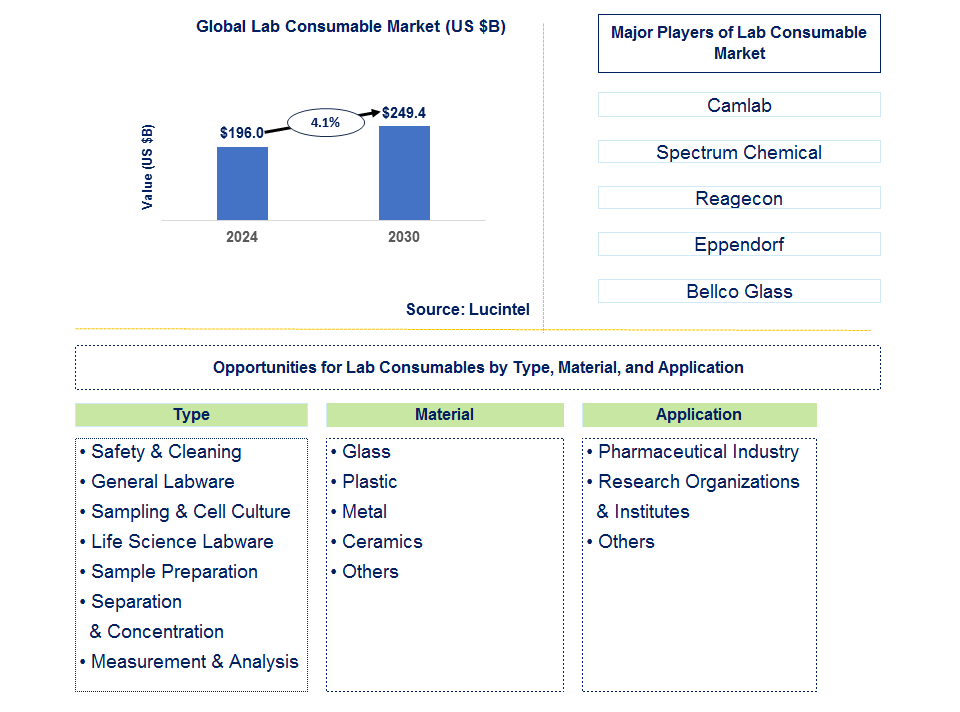
Key data points: The market size in 2030 = $249.4 billion, growth forecast = 4.1% annually next 6 years. Scroll below to get more insights. This market report covers trends, opportunities, and forecast in the global lab consumable market to 2030 by type (safety & cleaning, general LabWare, sampling & cell culture, life science LabWare, sample preparation, separation & concentration, and measurement & analysis), material (glass, plastic, metal, ceramics, and others), application (pharmaceutical industry, research organizations & institutes, and others), and region (North America, Europe, Asia Pacific, and the Rest of the World)
We'll send your sample report shortly.
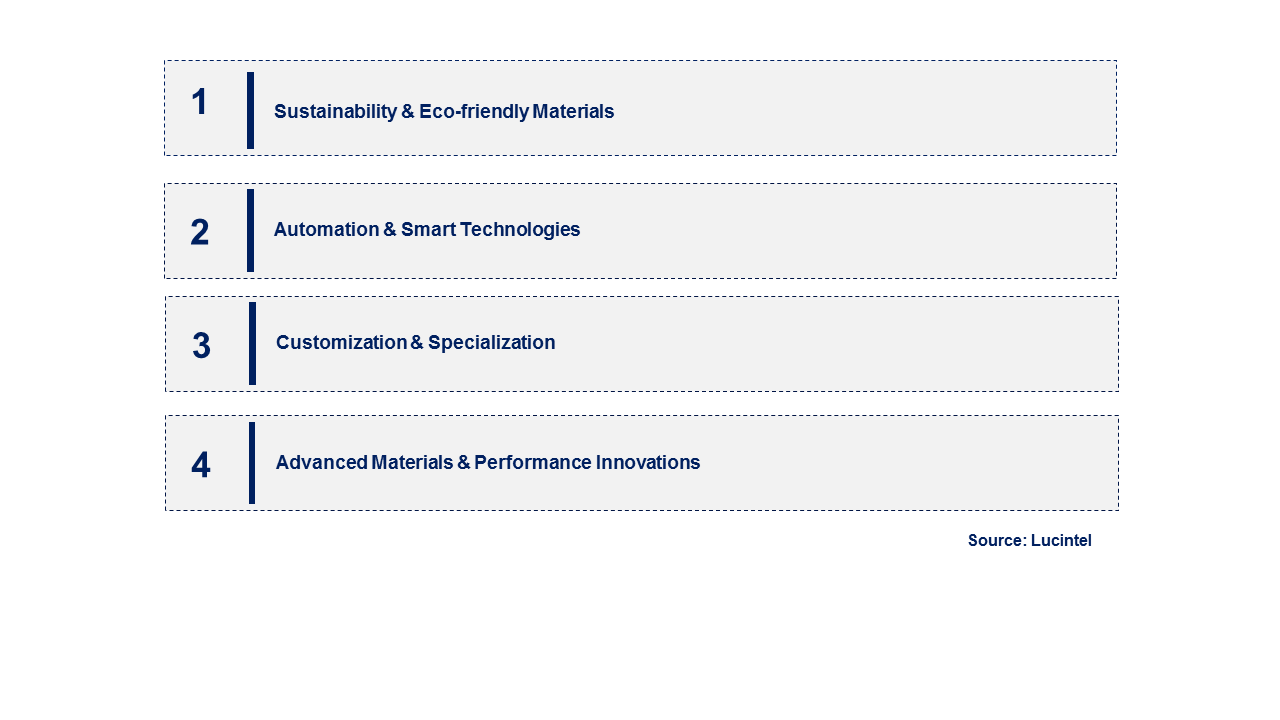
• Sustainability & Eco-friendly Materials: There is a growing shift towards the use of biodegradable or recyclable materials in lab consumables due to increased environmental regulations and greener lab practices. Consequently, environmental waste is significantly reduced, and there is a lower ecological footprint in the labs.
• Automation & Smart Technologies: This has led to automation of some of the processes involved in making lab consumables more efficient. Automated dispensing systems, smart inventory tracking technologies, and IoT-enabled laboratory equipment make experiments more accurate and optimize work flows.
• Customization & Specialization: The market for lab consumables that are specifically designed for certain applications or industries is growing. Tailored labware materials and specialty consumables for specific research requirements enhance performance and flexibility.
• Advanced Materials & Performance Innovations: Advance materials and performance innovations in material science have resulted to the creation of durable, precise performance enhanced lab consumables that provide better chemical resistance; reduced contamination risks as well as increased confidence in key tests carried out. These emerging trends reshape the landscape of laboratory operations leading to sustainability issues, technological advancements and customized products within the market for scientific products. These developments will definitely impact on how laboratories are operated in future as well as product lines offered on their shelves.
• Development of Eco-Friendly Materials: The most significant trend is the shift to sustainable, biodegradable materials for lab consumables. Firms are getting involved in research to make labware and plastics from renewable sources or that will decompose easily after use. This step addresses increasing environmental concerns while advancing universal sustainability goals so as to reduce any laboratory’s ecological footprint.
• Advancements in Automation: Lab consumables have integrated automation technology that has increased their efficiency and accuracy. For example, automated dispensing systems guarantees precise measurements, minimizing human errors during manual handling. Innovations in robotics and smart lab equipment are streamlining repetitive tasks while enabling researchers concentrate on more intricate areas of their work.
• Enhanced Quality Control Measures: To meet growing needs for accuracy, producers have now imposed stringent quality control measures. This includes improved methods of production, better testing for contamination as well as material integrity standards that are very rigorous. Through enhanced quality control of lab consumable products; it helps them achieve high performance and safety which is needed for reliable research findings.
• Smart Lab Technologies: Such smart technologies like IoT-enabled devices have been incorporated into lab consumables enabling real-time monitoring and data collection. As such, this allows for better inventory management, usage pattern tracking and integration with Laboratory Information Management Systems (LIMS) hence improving overall operational efficiency. These developments underscore a move towards more sustainable automated and superior quality lab consumables. Technological changes will enhance efficiency, productivity and environmental footprint of laboratories through these novelties.
• Expansion into Emerging Markets: There is substantial growth potential in emerging markets where demand for laboratory infrastructure is rising. By targeting these areas using cost-effective and high-quality laboratory consumables companies can enter new customer segments and expand their markets.
• Investment in Sustainable Products: Developing eco-friendly laboratory commodities provides an opportunity to meet the growing demand for sustainability. Companies that innovate non-degradable materials and recyclable items can stand out in the marketplace and attract customers who are environmentally committed.
• Leveraging Automation and Smart Technologies: Integrating automation and smart technologies into lab consumables can enhance operational efficiency and attract customers looking for advanced solutions. By doing so, they will have products with automated dispensing or real-time data tracking capabilities which are on high demand.
• Customization for Niche Applications: Satisfying specialized market demands by supplying personalized laboratory consumables that meet specific research needs or industries. This is achievable through having products designed to address particular applications or having those meeting superlative performance expectations hence targeting niche segments while building a stronger relationship with clients. These strategic opportunities offer pathways for growth by addressing emerging market needs, sustainability trends, and technological advancements. Thus, companies focusing on these areas gain considerable competitive advantage as well as expanding market presence of the company.
• Camlab
• Spectrum Chemical
• Reagecon
• Eppendorf
• Bellco Glass
• Crystalgen
• Thermo Fisher Scientific
• Safety & Cleaning
• General LabWare
• Sampling & Cell Culture
• Life Science LabWare
• Sample Preparation
• Separation & Concentration
• Measurement & Analysis
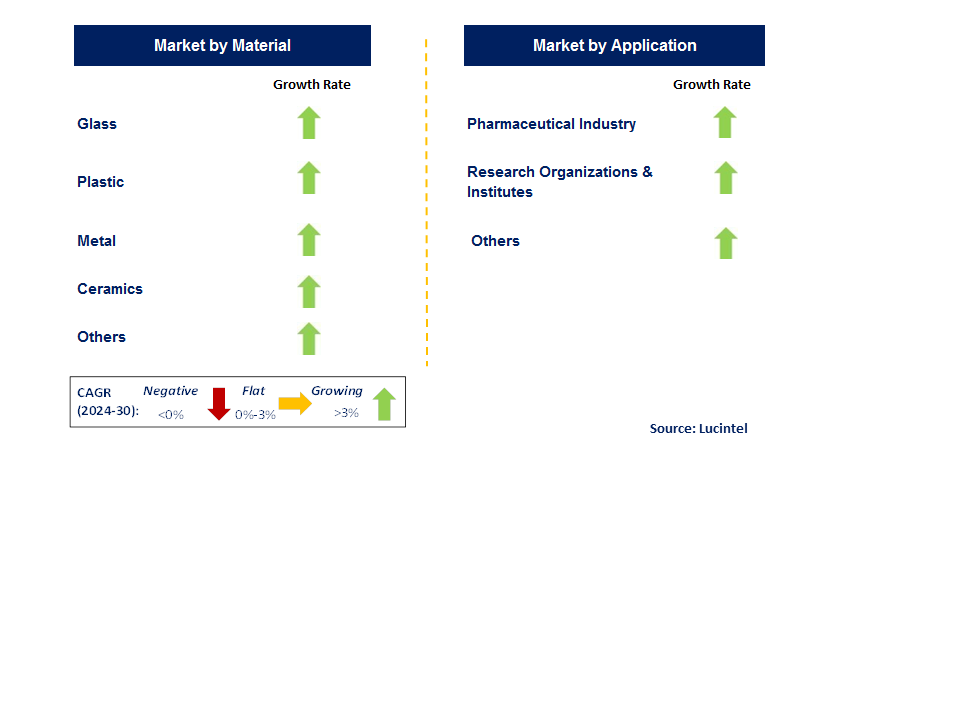
• Glass
• Plastic
• Metal
• Ceramics
• Others
• Pharmaceutical Industry
• Research Organizations & Institutes
• Others
• North America
• Europe
• Asia Pacific
• The Rest of the World
• United States: The U.S. lab consumables market has seen advancements in eco-friendly materials, with a focus on biodegradable plastics and recyclable glassware. Innovations in automation and digital tracking are also on the rise, improving inventory management and operational efficiency in laboratories.
• China: China is rapidly expanding its production capabilities for lab consumables, emphasizing cost efficiency and scalability. Recent developments include enhanced quality control processes and the adoption of advanced materials to meet international standards, boosting the competitiveness of Chinese lab consumables.
• Germany: Germany has introduced new standards for precision and contamination control in lab consumables. Advances include the development of high-performance, contamination-free products and the integration of smart technologies for monitoring and data collection that raise research accuracy and reliability.
• India: In India, there’s a drive towards cheaper lab consumables that are easily available locally as well as greener ones that match tighter environmental regulations; domestic manufacturers have been seeking ways to produce better goods at lower costs while meeting these demands.
• Japan: Japan is advancing in the development of high-tech lab consumables with features like enhanced durability and precision. Innovations include advanced sterilization methods and high-performance materials that cater to specialized research needs supporting the country's strong emphasis on cutting-edge scientific research.


• Camlab
• Spectrum Chemical
• Reagecon
• Eppendorf
• Bellco Glass
• Crystalgen
• Thermo Fisher Scientific Q6. Which lab consumable market segment will be the largest in future? Answer: Lucintel forecasts that plastic will remain the largest segment over the forecast period due to its durability and cost effectiveness. Q7. In lab consumable market, which region is expected to be the largest in next 5 years? Answer: North America is expected to be the largest region over the forecast period due to the existence of a number of pharmaceutical and biotechnology companies, which are active in research and development activities. Q.8 Do we receive customization in this report? Answer: Yes, Lucintel provides 10% customization without any additional cost.


Choose a license that fits your team. Instant PDF delivery.
Prices exclude taxes. Instant delivery. Custom licensing available on request.
Market Report · July 16, 2026
Market Report · July 15, 2026
Market Report · July 15, 2026
Trusted partner for strategic intelligence and business growth


Receive a complimentary market analysis tailored to your industry. Our analysts will identify key growth opportunities and competitive dynamics specific to your business.

Market size, growth rate, and key trend analysis for your specific sector.

Top competitor positioning and market share analysis.

Strategic recommendations backed by data-driven insights.
Get curated market intelligence and competitive moves straight to your inbox.
By subscribing, you agree to receive our monthly insights. Unsubscribe anytime.
Receive a complimentary market analysis tailored to your industry. Our analysts will identify key growth opportunities and competitive dynamics specific to your business.
Market size, growth rate, and key trend analysis for your specific sector.
Top competitor positioning and market share analysis.
Strategic recommendations backed by data-driven insights.
Get curated market intelligence, emerging trends, and competitive moves straight to your inbox each month.
By subscribing, you agree to receive our monthly insights. Unsubscribe anytime.
We'll send your sample report shortly.