
Report Feature
Krill Oil Market Trends and Forecast
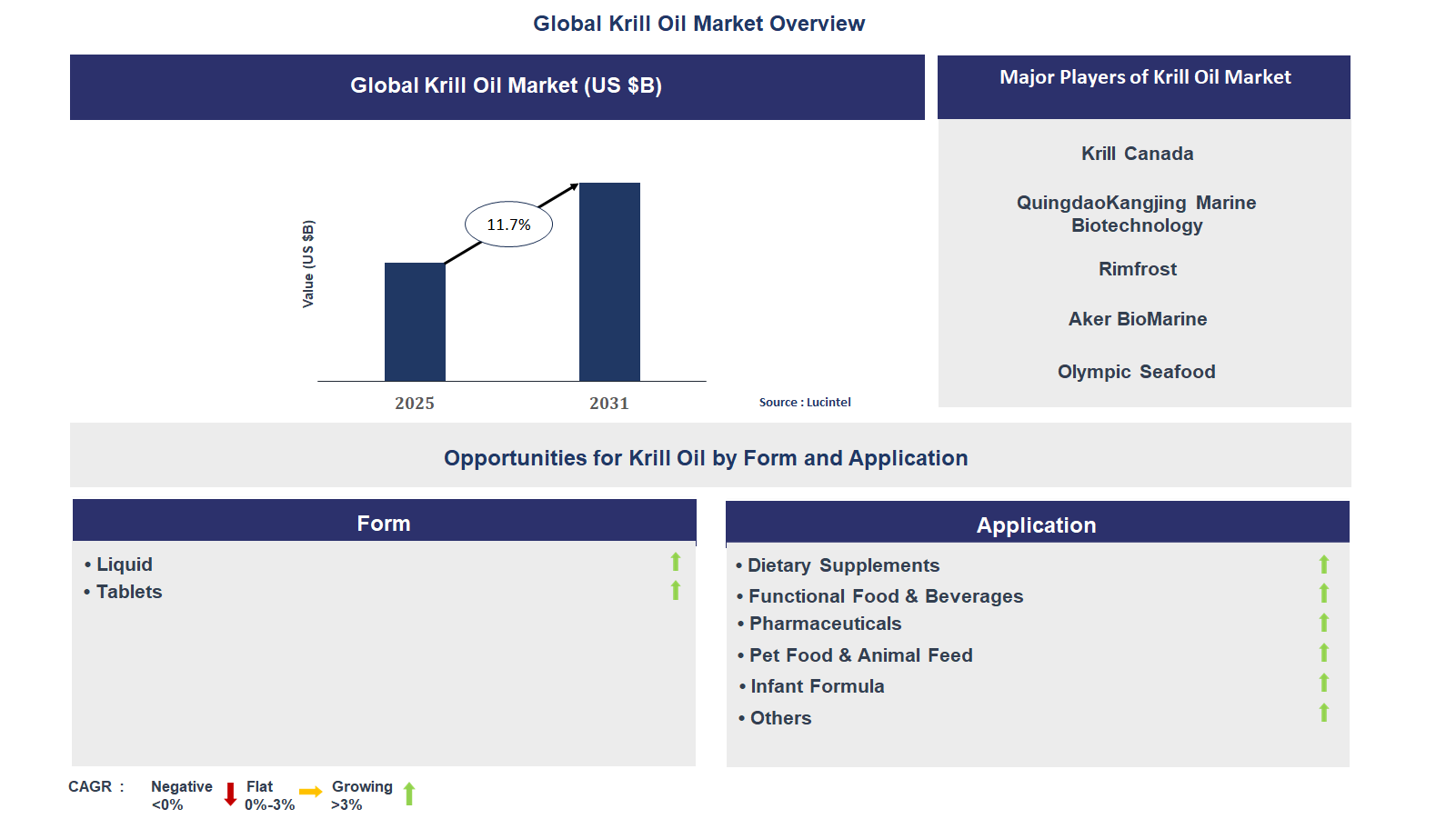
The future of the global krill oil market looks promising with opportunities in the dietary supplement, functional food & beverage, pharmaceutical, pet food & animal feed, and infant formula markets. The global krill oil market is expected to grow with a CAGR of 11.7% from 2025 to 2031. The major drivers for this market are the increasing awareness of omega-3 health benefits, the rising demand for dietary supplements products, and the growing focus on heart & brain wellness.• Lucintel forecasts that, within the form category, liquid is expected to witness higher growth over the forecast period.
• Within the application category, dietary supplement is expected to witness the highest growth.
• In terms of region, APAC is expected to witness the highest growth over the forecast period. Gain valuable insights for your business decisions with our comprehensive 150+ page report. Sample figures with some insights are shown below.
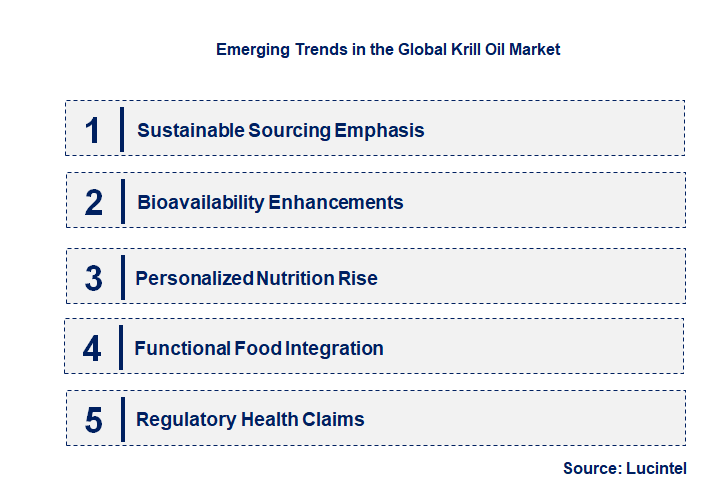
Emerging Trends in the Krill Oil Market
Krill oil trends emphasize sustainability and personalization amid omega-3 surges, with phospholipid innovations and clean-label demands leading. Asia-Pacific expansions and regulatory nods for health claims drive multifunctional products. These shifts prioritize bioavailability, eco-sourcing, and targeted wellness for resilient consumer health ecosystems.• Sustainable Sourcing Emphasis: Certified Antarctic harvesting via MSC standards addresses overfishing concerns, appealing to eco-conscious buyers. Traceable chains enhance transparency in supply. Impact boosts trust, complies with global regs, and unlocks premium pricing, expanding market reach in green-focused regions.
• Bioavailability Enhancements: Phospholipid-bound omega-3s improve absorption over fish oil, supported by R&D in liposomal tech. Clinical validations highlight superior EPA/DHA uptake. This trend elevates efficacy for heart and brain apps, reduces dosages, and differentiates products in competitive nutraceutical spaces.
• Personalized Nutrition Rise: Tailored formulations with astaxanthin and choline target cognitive and joint needs, via AI-driven recommendations. Direct-to-consumer models customize blends. Impact fosters loyalty, meets diverse demographics, and integrates with preventive health apps for broader adoption.
• Functional Food Integration: Enriched beverages and snacks incorporate krill for daily omega-3 intake, masking flavors innovatively. Partnerships with food giants scale fortification. This expands beyond supplements, enhances convenience, and taps mainstream diets for sustained growth.
• Regulatory Health Claims: Approvals for anti-inflammatory and skin benefits, like Japan‘s FFC, validate efficacy through trials. Harmonized standards ease exports. Impact accelerates marketing, builds credibility, and spurs R&D for new indications like metabolic health. These trends reshape the krill oil market by embedding eco-innovation and efficacy, diversifying from capsules to everyday formats. They mitigate sustainability risks, amplify wellness claims, and fuel Asia-Pacific booms, positioning krill as a versatile omega-3 leader.
Recent Development in the Krill Oil Market
Krill oil developments spotlight R&D breakthroughs and expansions amid omega-3 demand spikes. Global launches focus on purity, bioavailability, and sustainability, with partnerships scaling production. These target chronic wellness, bridging supply gaps while advancing eco-harvesting tech.• Aker BioMarine US Expansion: Capacity boost meets heart and cognitive supplement surges, integrating Superba BOOST phospholipids. This enhances local availability, supports trials for joint efficacy, and strengthens North American leadership in premium sourcing.
• Swisse OA Trial Success: High-strength krill oil validated for knee pain relief in mild osteoarthritis, improving function via six-month studies. Impact pioneers pharmaceutical apps, boosts consumer confidence, and expands therapeutic indications beyond supplements.
• Maruha Nichiro Capsule Launch: EPA/DHA-enriched products target aging demographics, aligning with Japanese wellness norms. This drives functional food integrations, enhances metabolic support, and elevates export potential in Asia.
• NOW Health Softgel Debut: Bioavailable formulations for brain and joint health rolled out nationwide, emphasizing astaxanthin synergies. Impact accelerates retail penetration, reduces inflammation claims, and appeals to active users seeking natural alternatives.
• Vitaworld Phospholipid Blend: Choline-astaxanthin combos for fat metabolism launched in Europe, meeting EU purity standards. This fosters preventive nutrition, cuts oxidative stress, and diversifies into personalized blends for broader demographics. These developments impact the krill oil market by validating health benefits, scaling eco-production, and innovating formats. They drive adoption in pharma and foods, mitigate supply risks, and unlock targeted wellness for global resilience.
Strategic Growth Opportunities in the Krill Oil Market
Krill oil opportunities leverage omega-3 versatility across supplements, foods, and pharma, with sustainability unlocking niches. Chronic disease rises and personalization trends enable tailored apps, from heart to cognitive. These pathways blend innovation with eco-focus for scalable, high-value ecosystems.• Dietary Supplements Expansion: Phospholipid capsules for daily omega-3 intake target preventive heart health in aging populations. E-commerce customizes dosages. Impact boosts bioavailability, captures premium segments, and aligns with wellness routines for loyalty.
• Functional Foods Fortification: Enriched beverages and snacks deliver joint support via astaxanthin blends, masking tastes innovatively. Partnerships scale mainstream access. This integrates nutrition seamlessly, enhances convenience, and taps daily diets for volume growth.
• Pharmaceutical Therapeutics: Anti-inflammatory formulations for osteoarthritis and metabolic syndromes via clinical validations. Regulatory nods accelerate trials. Impact pioneers drug integrations, reduces symptoms, and opens high-margin medical channels.
• Animal Nutrition Enhancements: Aquaculture feeds with krill phospholipids improve fish immunity and growth. Sustainable sourcing meets demand. This elevates livestock outputs, supports eco-farming, and diversifies B2B revenues.
• Cosmetics and Beauty Apps: Skin health creams leveraging antioxidant properties for anti-aging, backed by FFC claims. Beauty-from-within supplements rise. Impact harnesses cellular benefits, appeals to premium beauty, and expands into personal care. These opportunities impact the krill oil market by diversifying beyond human supplements into pharma and feeds. They spur R&D, sustainability investments, and regional expansions, propelling multifunctional, resilient growth worldwide.
Krill Oil Market Driver and Challenges
Krill oil dynamics interweave technological, economic, and regulatory threads, with omega-3 awareness offsetting sustainability hurdles. Drivers like preventive health propel innovations, while harvesting limits challenge scalability. This balance navigates toward eco-compliant, high-efficacy models. The factors responsible for driving the krill oil market include: 1. Omega-3 Health Awareness: Rising recognition of EPA/DHA benefits for heart, brain, and joints fuels supplement demand amid chronic diseases. Consumer education via campaigns amplifies uptake. Implications include broader adoption, R&D surges, and premium positioning in wellness sectors. 2. Sustainability Certifications: MSC and traceable sourcing build trust, differentiating from fish oil amid eco-concerns. Policies incentivize responsible harvesting. This enhances market access, attracts green investors, and supports long-term supply stability. 3. Bioavailability Superiority: Phospholipid forms outperform triglycerides, validated by trials for better absorption. Innovations like liposomal tech optimize delivery. Implications reduce dosages, improve outcomes, and drive switches from alternatives for efficacy gains. 4. Functional Food Demand: Fortification in snacks and drinks meets convenience needs, expanding beyond capsules. Partnerships scale integrations. This mainstreams omega-3s, boosts volumes, and aligns with daily nutrition trends. 5. Asia-Pacific Expansions: Urbanization and aging populations in China, India, Japan spur imports and local R&D. E-commerce accelerates reach. Implications unlock emerging volumes, foster manufacturing hubs, and diversify global chains. Challenges in the krill oil market are: 1. Harvesting Regulations: Antarctic quotas limit supply, risking shortages from ecosystem protections. Compliance hikes costs. This constrains scalability, pressures prices, and demands alternative sourcing strategies. 2. High Production Costs: Extraction and purification premiums versus fish oil deter budget buyers. Remote Antarctic logistics add expenses. This slows penetration in price-sensitive markets, favoring incumbents over new entrants. 3. Competition from Alternatives: Fish and algal oils offer cheaper, familiar options with similar benefits. Awareness gaps hinder switches. This erodes shares, requires education, and challenges differentiation efforts. These drivers and challenges synthesize a vibrant krill oil market, where innovations counter constraints for net expansion. Drivers dominate, enabling health-aligned growth, while hurdles refine sustainable, competitive frameworks for enduring viability.List of Krill Oil Companies
Companies in the market compete on the basis of product quality offered. Major players in this market focus on expanding their manufacturing facilities, R&D investments, infrastructural development, and leverage integration opportunities across the value chain. With these strategies krill oil companies cater increasing demand, ensure competitive effectiveness, develop innovative products & technologies, reduce production costs, and expand their customer base. Some of the krill oil companies profiled in this report include-• Krill Canada
• QuingdaoKangjing Marine Biotechnology
• Rimfrost
• Aker BioMarine
• Olympic Seafood
• DarduckFrd
• Fuji Chemicals
• Norwegian Fish Oil
• Neptune Biotech
• Enzymotec
Krill Oil Market by Segment
The study includes a forecast for the global krill oil market by form, application, and region.Krill Oil Market by Form [Value from 2019 to 2031]:
• Liquid
• Tablets
Krill Oil Market by Application [Value from 2019 to 2031]:
• Dietary Supplements
• Functional Food & Beverages
• Pharmaceuticals
• Pet Food & Animal Feed
• Infant Formula
• Others
Krill Oil Market by Region [Value from 2019 to 2031]:
• North America
• Europe
• Asia Pacific
• The Rest of the World
Country Wise Outlook for the Krill Oil Market
The krill oil market is surging with demand for omega-3 supplements, driven by health awareness and sustainability focus. Innovations in bioavailability and eco-harvesting address chronic disease needs, while expansions in Asia and North America boost accessibility. Key nations see product launches and R&D investments, enhancing formulations for heart, brain, and joint wellness amid regulatory support for clean sourcing.• United States: Aker BioMarine expanded production for heart and cognitive supplements, while NOW Health Group launched bioavailable softgels targeting joint and brain wellness. Phase 2 trials validated anti-inflammatory benefits for joint diseases, and gummies surged in popularity among younger consumers. These advancements elevate adoption over fish oil, improving recovery and preventive health in active lifestyles.
• China: Domestic manufacturers ramped up R&D for high-purity, sustainable krill oil, emphasizing phospholipid stability and extraction tech. Investments in nutraceuticals and functional foods met rising demand from urban health trends. This fosters supply chain resilience, supports preventive care, and positions China as a key importer-exporter in marine omega-3 solutions.
• Germany: Brands like Vitaworld developed phospholipid blends with choline and astaxanthin for fat metabolism support, aligning with EU eco-standards. Online delivery expansions and innovative formats boosted accessibility in Western Europe. These efforts promote cardiovascular and cognitive health, comply with stringent regulations, and drive premium supplement growth.
• India: Aker BioMarine opened a Chennai distribution hub, targeting diabetes and heart health amid rising chronic cases. Emerging e-commerce and partnerships enhanced availability for dietary needs. This stimulates local wellness adoption, reduces import dependencies, and supports preventive nutrition in growing urban populations.
• Japan: Maruha Nichiro introduced EPA/DHA-enriched capsules for aging support, while Suntory invested in joint mobility research. Aker BioMarine launched premium supplements meeting quality norms, and FFC approvals advanced skin benefits. These innovations bolster longevity products, integrate with functional foods, and align with beauty-from-within trends.

Features of the Global Krill Oil Market
Market Size Estimates: Krill oil market size estimation in terms of value ($B). Trend and Forecast Analysis: Market trends (2019 to 2024) and forecast (2025 to 2031) by various segments and regions. Segmentation Analysis: Krill oil market size by form, application, and region in terms of value ($B). Regional Analysis: Krill oil market breakdown by North America, Europe, Asia Pacific, and Rest of the World. Growth Opportunities: Analysis of growth opportunities in different forms, applications, and regions for the krill oil market. Strategic Analysis: This includes M&A, new product development, and competitive landscape of the krill oil market. Analysis of competitive intensity of the industry based on Porter’s Five Forces model.
FAQ
Q1. What is the growth forecast for krill oil market? Answer: The global krill oil market is expected to grow with a CAGR of 11.7% from 2025 to 2031. Q2. What are the major drivers influencing the growth of the krill oil market? Answer: The major drivers for this market are the increasing awareness of omega-3 health benefits, the rising demand for dietary supplements products, and the growing focus on heart & brain wellness. Q3. What are the major segments for krill oil market? Answer: The future of the krill oil market looks promising with opportunities in the dietary supplement, functional food & beverage, pharmaceutical, pet food & animal feed, and infant formula markets. Q4. Who are the key krill oil market companies? Answer: Some of the key krill oil companies are as follows:• Krill Canada
• QuingdaoKangjing Marine Biotechnology
• Rimfrost
• Aker BioMarine
• Olympic Seafood
• DarduckFrd
• Fuji Chemicals
• Norwegian Fish Oil
• Neptune Biotech
• Enzymotec Q5. Which krill oil market segment will be the largest in future? Answer: Lucintel forecasts that, within the form category, liquid is expected to witness higher growth over the forecast period. Q6. In krill oil market, which region is expected to be the largest in next 5 years? Answer: In terms of region, APAC is expected to witness the highest growth over the forecast period. Q7. Do we receive customization in this report? Answer: Yes, Lucintel provides 10% customization without any additional cost.
Table of Contents
List of Figures
List of Tables
Methodology
- In-depth interviews of the major players in this market
- Detailed secondary research from competitors’ financial statements and published data
- Extensive searches of published works, market, and database information pertaining to industry news, company press releases, and customer intentions
- A compilation of the experiences, judgments, and insights of Lucintel’s professionals, who have analyzed and tracked this market over the years.


Buy Now
Choose a license that fits your team. Instant PDF delivery.
Prices exclude taxes. Instant delivery. Custom licensing available on request.
Key Questions
- • What are some of the most promising, high-growth opportunities for the krill oil market by form (liquid and tablets), application (dietary supplements, functional food & beverages, pharmaceuticals, pet food & animal feed, infant formula, and others), and region (North America, Europe, Asia Pacific, and the Rest of the World)?
- • Which segments will grow at a faster pace and why?
- • Which region will grow at a faster pace and why?
- • What are the key factors affecting market dynamics? What are the key challenges and business risks in this market?
- • What are the business risks and competitive threats in this market?
- • What are the emerging trends in this market and the reasons behind them?
- • What are some of the changing demands of customers in the market?
- • What are the new developments in the market? Which companies are leading these developments?
- • Who are the major players in this market? What strategic initiatives are key players pursuing for business growth?
- • What are some of the competing products in this market and how big of a threat do they pose for loss of market share by material or product substitution?
- • What M&A activity has occurred in the last 5 years and what has its impact been on the industry? For any questions related to Krill Oil Market, Krill Oil Market Size, Krill Oil Market Growth, Krill Oil Market Analysis, Krill Oil Market Report, Krill Oil Market Share, Krill Oil Market Trends, Krill Oil Market Forecast, Krill Oil Companies, write Lucintel analyst at email: helpdesk@lucintel.com. We will be glad to get back to you soon.


