
Market Report · May 18, 2026

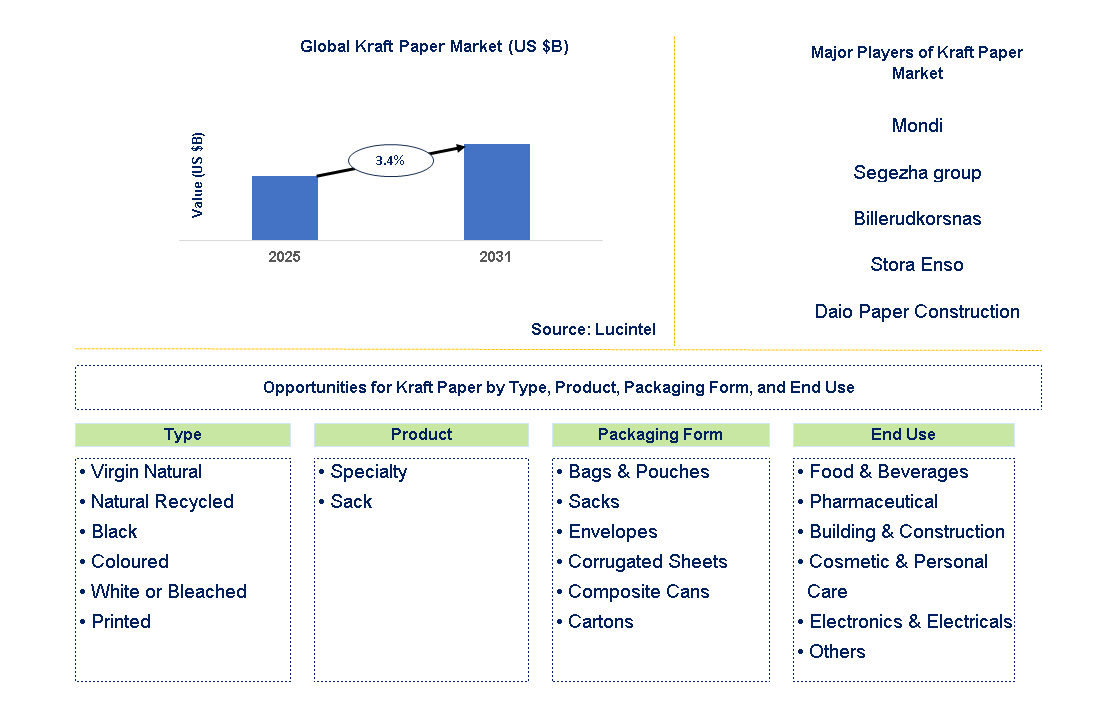
Key data points: The growth forecast = 3.4% annually for the next 7 years. Scroll below to get more insights. This market report covers trends, opportunities and forecasts in kraft paper market to 2031 by type (virgin natural, natural recycled, black, coloured, white or bleached, and printed), product (specialty and sack), packaging form (bags & pouches, sacks, envelopes, corrugated sheets, composite cans, and cartons), end use (food & beverages, pharmaceutical, building & construction, cosmetic & personal care, electronics & electricals, and others), and region (North America, Europe, Asia Pacific, and the Rest of the World)
We'll send your sample report shortly.
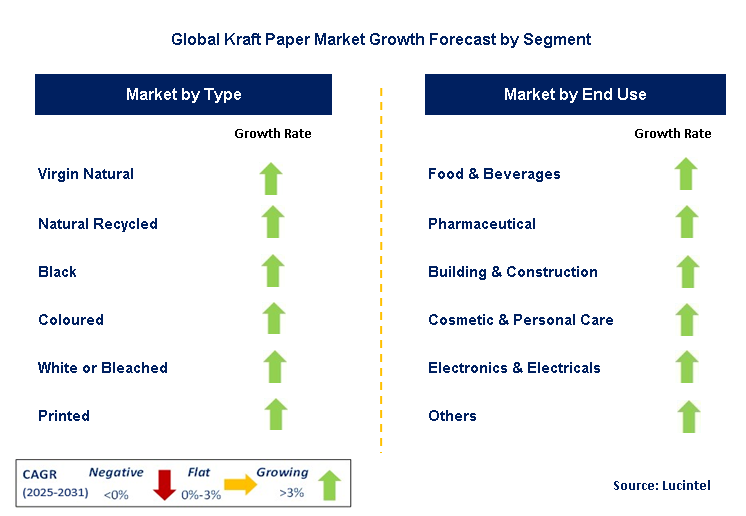
• Lucintel forecasts that, within the type category, virgin natural is expected to witness the highest growth over the forecast period.
• Within the end use category, food & beverage is expected to witness the highest growth.
• In terms of region, APAC is expected to witness the highest growth over the forecast period. Gain valuable insights for your business decisions with our comprehensive 150+ page report. Sample figures with some insights are shown below.
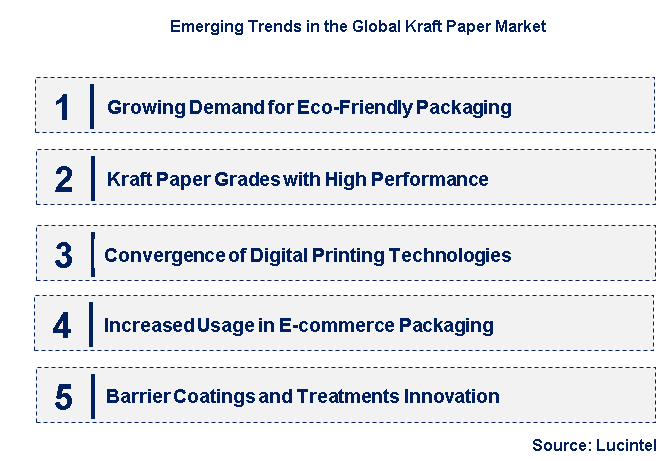
• Growing Demand for Eco-Friendly Packaging: One of the significant trends is the increasing demand for eco-friendly packaging materials, with kraft paper being one of the major gainers. Its renewability, recyclability, and biodegradability make it a promising substitute for plastic in packaging uses such as food packaging, e-commerce packaging, and industrial packaging. This is being spurred on by public awareness, business sustainability efforts, and more stringent environmental regulations around the world. The effect is a huge surge in demand for kraft paper as an eco-friendly packaging material.
• Kraft Paper Grades with High Performance: Research and development are generating kraft paper grades with improved properties like greater strength, better tear resistance, and improved barrier properties against moisture, grease, and oxygen. These are broadening the scope of kraft paper use to more demanding packaging applications, which earlier used less sustainable alternatives. The effect is the incursion of kraft paper into new market segments and the decline in consumption of conventional packaging materials.
• Convergence of Digital Printing Technologies: Convergence of digital printing technologies with kraft paper is facilitating high-quality and customized printing for labeling, branding, and promotional intentions. Digital printing has the flexibility of design and reduced print runs, which is making kraft paper a desirable option for those brands that require special and eco-friendly packaging with high visual appeal. The effect is increased marketing possibilities and higher customization in kraft paper packaging.
• Increased Usage in E-commerce Packaging: The increasing rate of e-commerce is propelling the need for durable and eco-friendly packaging materials to transport merchandise. kraft paper, especially corrugated Kraft board, is gaining popularity for use in e-commerce packaging because it is strong, recyclable, and can keep merchandise safe during transportation. The movement towards eco-friendly e-commerce also contributes to this demand. The effect is a dramatic boost in the usage of kraft paper in logistics and e-commerce.
• Barrier Coatings and Treatments Innovation: In order to increase its application in food and other sensitive product packaging, there is increased emphasis on the development of new barrier coatings and treatments for kraft paper. These coatings improve the paper's barrier properties to moisture, grease, and gases, providing a sustainable and alternative packaging solution to plastic films and laminates for a broader spectrum of packaging applications. The effect is the substitution of more unsustainable materials in food packaging and other barrier-sensitive uses. These trends are all redefining the kraft paper market together by spurring innovation, broadening possibilities for applications, and strengthening kraft paper's value proposition as a sustainable and flexible material.
• Manufacturing of Lightweight but High-Strength Kraft Paper: Improvements in pulping and papermaking technologies are facilitating the manufacture of kraft paper lighter in weight while having or even surpassing conventional strength characteristics. This innovation provides advantages like lower material usage, less transportation cost, and improved sustainability without the downgrading of packaging performance. The effect is more efficient packaging solutions and less environmental impact.
• Kraft Paper with Improved Barrier Properties: Important developments have been made in the creation of kraft paper with better barrier properties against moisture, grease, oil, and gases using new coatings and treatments. These are important in order to open up more applications for kraft paper in food packaging as well as other uses where product protection and shelf life are a priority. The effect is the substitution of less sustainable barrier material and kraft paper penetration into alternative food packaging markets.
• Expanded Application of Recycled Kraft Fiber: There is increased focus on using recycled Kraft fibers as part of the manufacturing process to increase sustainability and lower virgin pulp dependence. Technological innovations in recycling technologies are enhancing the quality and functionality of recycled Kraft fibers, enabling increasing rates of inclusion in new kraft paper products with minimal loss of performance. The effect is more circular economy based kraft paper manufacturing and less virgin forest resource pressure.
• Integration of Smart Features into Kraft Paper Packaging: Although in nascent stages, there is growing interest in integrating smart technologies such as RFID and NFC into kraft paper-based packaging for uses such as inventory tracking, product authentication, and consumer interaction. Developments in embedding these technologies into kraft paper materials seamlessly are being researched. The effect is the possibility of developing more interactive and data-rich kraft paper packaging solutions.
• Enhanced Printability and Appearance: Companies are working towards optimizing the printability and overall look of kraft paper to address branding and marketing requirements. This encompasses creating smoother surfaces on the paper and optimizing the coatings for multiple printing methods, leading to better graphics and intense colors on kraft paper packaging. The effect is greater appeal of kraft paper to consumer-facing applications and improved brand communication. These five major developments are all together creating a more flexible, sustainable, and technologically advanced kraft paper industry, which is an increasingly competitive material in the global packaging industry.
• Sustainable E-commerce Packaging: The rapid rise of e-commerce presents a large opportunity for kraft paper, especially in the form of corrugated boxes and paper-based mailers. With the growing need for sustainable and recyclable online retail packaging material, kraft paper is poised as a perfect choice for void fill, protective wrap, and outer packaging. The effect is a huge boost to the use of kraft paper in the fast-growing e-commerce market.
• Plastics Alternatives in Food Packaging: Increasing public concern regarding waste from plastics fuels the need for paper-based replacements in food packaging. kraft paper, particularly due to the evolving barrier coatings technology, can supplant single-plastic use applications like flexible pouches, wrapping, and packaging containers for fruits, vegetables, and other packaged foods. The effect is market penetration by kraft paper into an extensive and environment-conscious market category.
• Industrial Packaging and Protective Materials: The inherent strength and durability of kraft paper render it highly suitable for various industrial packaging applications, such as wrapping heavy machinery, interleaving materials, and making strong sacks and bags for construction materials and agriculture products. The need for strong and economical industrial packaging continues to offer opportunities for growth. The effect is a steady and substantial demand for kraft paper in the industrial market.
• Paper Bags and Retail Packaging: The shift worldwide to discontinue the use of plastic bags is propelling the demand for kraft paper bags. kraft paper bags are tough, can be recycled, and provide good printability for their brand. Potential opportunities lie in providing kraft paper for grocery, retail shopping bags, and specialty bags for consumers. The effect is a noteworthy surge in kraft paper usage among the retail and consumer goods sectors.
• Specialty Paper Uses: Aside from conventional packaging, kraft paper is used in specialty niches like release liners, abrasive backing, and decorative paper. Formulating specialized kraft paper grades with customized properties for these uses can provide new avenues for growth. The effect is diversification of kraft paper use and the generation of higher-value market segments. Seizing these strategic growth opportunities across different uses will be important to the ongoing development and growth of the kraft paper market, both providing advantages to manufacturers and end-consumers with appropriate sustainable and functional material solutions.
• Mondi
• Segezha group
• Billerudkorsnas
• Stora Enso
• Daio Paper Construction
• Nordic Paper
• Glatfelter
• Gascogne Papier
• Tokushu Tokai Paper
• Goodwin Robbins Packaging Company
• Virgin Natural
• Natural Recycled
• Black
• Coloured
• White or Bleached
• Printed
• Specialty
• Sack
• North America
• Europe
• Asia Pacific
• The Rest of the World
• United States: The U.S. kraft paper market is seeing a big thrust towards sustainable and recycled kraft paper grades. The latest trends involve more investment in pulp and paper mill infrastructure to increase the production of high-strength kraft paper with higher recycled content. There is also increased emphasis on producing specialty kraft papers with barrier characteristics for food packaging and industrial uses, prompted by regulatory requirements and consumer pressure towards green solutions to plastics.
• China: China is a major and fast-changing market for kraft paper, fueled by its huge manufacturing base and expanding e-commerce sector. Recent trends consist of the upgrade of local pulp and paper industries to enhance efficiency and minimize the environmental footprint. There is an increasing trend of producing high-grade kraft paper to be used for packaging purposes at the expense of less environmentally friendly materials. Also, the export of Kraft pulp to satisfy growing demand for producing kraft paper is still a critical component of the market.
• Germany: Germany's kraft paper market is dominated by a high priority for high-quality, sustainable, and technologically advanced kraft paper grades. Recent trends involve innovations in papermaking processes to improve strength, printability, and barrier properties. kraft paper demand is also increasing in niche markets like specialty packaging and technical papers, as an indicator of Germany's industrial innovation and eco-friendliness focus.
• India: India's kraft paper market is witnessing significant growth, largely because of the burgeoning packaging industry and the rising organized retail adoption. New kraft paper mills have been set up while existing ones expanded capacity to cater to growing demand. There is also increasing emphasis on enhancing the quality and consistency of domestically manufactured kraft paper to meet the various requirements of end-use industries such as corrugated packaging and paper bags.
• Japan: Japan kraft paper market is defined by a trend of high-performance and lightweight kraft paper grades due to the nation's stress on product quality and resource efficiency. Emerging trends encompass innovation in papermaking technologies to create kraft paper with high strength-to-weight ratios and good printability. kraft paper is also increasingly demanded for niche packaging uses and as a substitute for plastic in many consumer goods packaging.


• Mondi
• Segezha group
• Billerudkorsnas
• Stora Enso
• Daio Paper Construction
• Nordic Paper
• Glatfelter
• Gascogne Papier
• Tokushu Tokai Paper
• Goodwin Robbins Packaging Company Q5. Which kraft paper market segment will be the largest in future? Answer: Lucintel forecasts that, within the type category, virgin natural is expected to witness the highest growth over the forecast period. Q6. In kraft paper market, which region is expected to be the largest in next 5 years? Answer: In terms of region, APAC is expected to witness the highest growth over the forecast period. Q7. Do we receive customization in this report? Answer: Yes, Lucintel provides 10% customization without any additional cost.


Choose a license that fits your team. Instant PDF delivery.
Prices exclude taxes. Instant delivery. Custom licensing available on request.
Market Report · May 18, 2026
Market Report · May 18, 2026
Market Report · May 18, 2026
Trusted partner for strategic intelligence and business growth


Receive a complimentary market analysis tailored to your industry. Our analysts will identify key growth opportunities and competitive dynamics specific to your business.

Market size, growth rate, and key trend analysis for your specific sector.

Top competitor positioning and market share analysis.

Strategic recommendations backed by data-driven insights.
Get curated market intelligence and competitive moves straight to your inbox.
By subscribing, you agree to receive our monthly insights. Unsubscribe anytime.
Receive a complimentary market analysis tailored to your industry. Our analysts will identify key growth opportunities and competitive dynamics specific to your business.
Market size, growth rate, and key trend analysis for your specific sector.
Top competitor positioning and market share analysis.
Strategic recommendations backed by data-driven insights.
Get curated market intelligence, emerging trends, and competitive moves straight to your inbox each month.
By subscribing, you agree to receive our monthly insights. Unsubscribe anytime.
We'll send your sample report shortly.