
Report Feature
Knee Pad Market Trends and Forecast
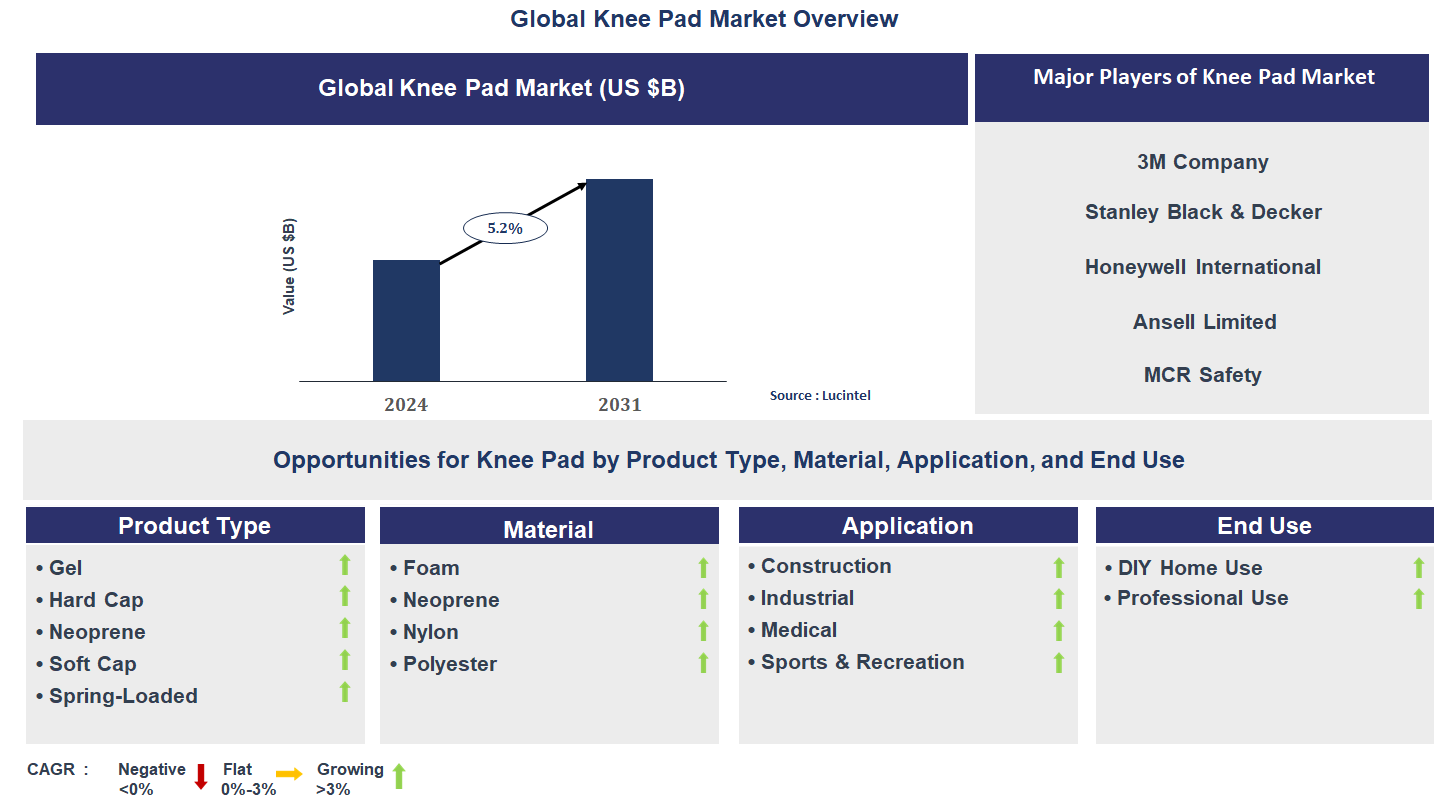
The future of the global knee pad market looks promising with opportunities in the construction, industrial, medical, and sport & recreation markets. The global knee pad market is expected to grow with a CAGR of 5.2% from 2025 to 2031. The major drivers for this market are the increasing demand for sports safety equipment, the rising awareness about knee injury prevention, and the growing popularity of outdoor recreational activities.• Lucintel forecasts that, within the product type category, gel is expected to witness the highest growth over the forecast period.
• Within the application category, sport & recreation is expected to witness the highest growth.
• In terms of region, APAC is expected to witness the highest growth over the forecast period. Gain valuable insights for your business decisions with our comprehensive 150+ page report. Sample figures with some insights are shown below.
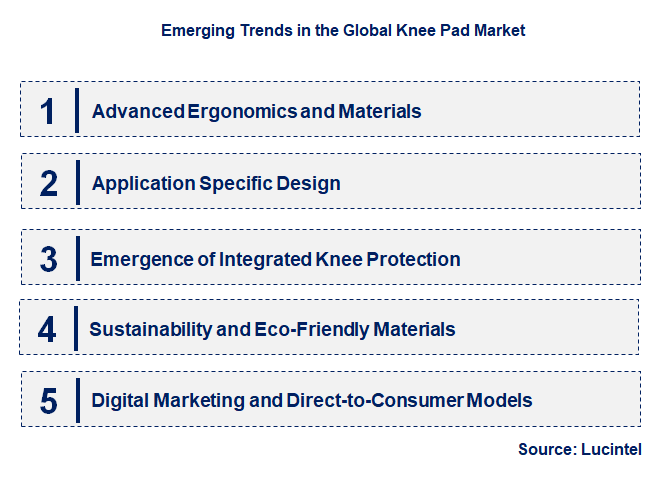
Emerging Trends in the Knee Pad Market
The knee pad industry is being remade by a number of developing trends that speak to an enhanced appreciation of safety, ergonomics, and contemporary consumer values. The era of simple, one-size-fits-all products is in the past. Consumers today are demanding specialized, science-based solutions that align as well with more general concerns regarding comfort and durability. These trends are affecting everything from formula to marketing, and they are generating an increasingly specialized and consumer-driven industry that is concerned with both safety and ease of use.• Advanced Ergonomics and Materials: One strong trend is the increasing application of advanced materials such as gel, memory foam, and foam composites in knee pads. This is prompted by the need for increased comfort and better impact absorption. Manufacturers are also looking at ergonomic design that fits the shape of the knee and offers greater support. The effect is a market transition where brands are emphasizing the scientific advantages of their products. This is building a new category of high-performance, premium knee pads that have appeal among professionals and dedicated athletes who value both protection and joint health over the long term.
• Application Specific Design: One of the dominant trends is the transition in the market away from commodity-type products to specific pads for particular applications. There is a growing need for products tailored to problems such as construction, tactical use, gardening, or particular sports such as volleyball or skateboarding. These products tend to have features specifically adapted to the distinctive requirements of a specific activity. This trend is building a new niche of extremely specialized knee pads. It enables brands to address niche consumer requirements and provide more efficient, solution-oriented products.
• Emergence of Integrated Knee Protection: One trending concept is the comprehensive approach to knee protection as an integrated element of a uniform or wear. There are work pants, tactical equipment, and sportswear available with integrated knee pads. This eliminates straps and offers a more comfortable and streamlined user experience. The effect is that brands currently concentrate on developing seamless and non-irritating solutions. This is being led by an increased awareness of user comfort and a need to make wearing protective gear easier.
• Sustainability and Eco-Friendly Materials: The industry is witnessing a new trend towards sustainability. Companies are being forced to decrease their carbon footprint, and hence, using eco-friendly and recycled materials for products and packaging. Consumers are becoming more willing to back companies that are concerned about sustainability and ethical supply. The effect is a marketplace where being environmentally responsible becomes an important differentiator. This movement resonates with a generation of consumers who are more green-minded and willing to make sustainable purchases.
• Digital Marketing and Direct-to-Consumer Models: One trend fueled by the growth of e-commerce is the adoption of direct-to-consumer (D2C) models. Brands are using social media and online platforms more and more to sell their products and to engage with consumers directly. It helps them to bypass retail outlets and to manage their brand message. The result is a more accessible and competitive marketplace. This is especially favored by smaller, innovative brands that have the ability to establish a direct connection with their base of consumers using targeted advertising and personalized content. These new trends are, at their core, transforming the knee pad market into one that is more consumer-oriented, specialized, and ethically driven. The emphasis on innovative materials and built-in designs is elevating the bar for product safety and functionality. Meanwhile, the transition to a more sustainable and direct-to-consumer model is bringing the industry in line with the sentiments of contemporary consumers. Finally, these trends are pushing the market towards a time when knee pads will be an even more considerate, integrated, and sustainable part of an individual protection regimen.
Recent Development in the Knee Pad Market
The knee pad market is currently being influenced by a number of key recent developments that are impacting its growth and competitive landscape. These developments are not isolated events but are interconnected, reflecting a broader shift in consumer values and technological capabilities. The market is becoming more sophisticated, driven by scientific innovation, a focus on efficacy and safety, and new ways of reaching consumers.• Advanced Impact-Absorbing Technology Introduction: One of the most important developments is the industry-wide introduction of advanced impact-absorbing technology. Producing beyond the use of simple foam padding, manufacturers are introducing solutions that employ materials such as gel, foam composites, and intelligent textiles to better dissipate force. This innovation fulfills an old need for enhanced protection. Its effect is a more diversified market addressing a broader spectrum of sporting and professional requirements, thus building customer satisfaction and brand loyalty.
• More Emphasis on Ergonomic Design for All-Day Comfort: One of the new trends is the widespread use of ergonomically shaped knee pads. Spurred by customer complaints of discomfort and straps that cut into circulation, the products are shaped to the curve of the knee and made of flexible materials. The result is a major growth of the markets "comfort" segment. This trend is requiring established brands to re-engineer their products in order to compete and building a new market for high-end, easy-to-use products.
• Increase in Online and Direct-to-Consumer Channels: Online shopping and direct-to-consumer (D2C) models are a major phenomenon. Brands today are using e-commerce sites and their own websites to connect with more people free from the limitations of conventional retail. The result is an extremely competitive market with more choices available to consumers. This evolution also enables brands to own their brand message, communicate directly with consumers, and obtain useful feedback to shape the development of future products.
• Sports and Recreation Segments Growth: A new trend is the increased uptake of knee pads in sports and leisure activities. This is fueled by a growing understanding on the part of players and enthusiasts of the need for injury prevention in sports such as skateboarding, volleyball, and mountain biking. The effect is an extremely high level of market accessibility and a new consumer base. This approach also assists brands in targeting first-time customers who desire a less expensive point of entry to the market.
• Integrated Apparel Innovations: The industry is experiencing a significant growth in the field of integrated apparel. Companies are launching work pants and uniforms featuring integrated pockets for removable knee pads. This innovation is in response to consumer demand for ease of use and convenience. The effect is a user-friendly and low-maintenance experience. It also offers a significant marketing edge for professionals worried about having to spend time and effort putting on individual knee pads. These recent changes are collectively shaping the knee pad market toward a more specialized, ethical, and consumer-focused model. Emphasis on sophisticated technology and ergonomic design is maximizing product performance and user comfort. In contrast, the move to online shopping and growth of integrated apparel is transforming the markets distribution and accessibility criteria, assuring its ongoing growth and performance for a new wave of consumers.
Strategic Growth Opportunities in the Knee Pad Market
The knee pad market offers a number of strategic growth opportunities in its major uses. With changing consumer behavior and increasing emphasis on safety, businesses can use these opportunities to innovate and gain new market share. The opportunities are not limited to conventional product formulation and consist of innovation within marketing, distribution, and product specialization. Spotting these strategic growth areas and using them will prove vital for businesses wanting to attain long-term success in this fast-paced market.• Professional and Industrial Sector Opportunity: There is a vast growth opportunity in the professional and industrial products category. With the increasing number of companies putting workplace safety first and working under stricter regulations, there is an escalating demand for quality, long-lasting, and comfortable knee pads for construction, plumbing, and other jobs. Companies can leverage this by creating specialized, certified, and ergonomic products for professional purposes.
• E-commerce and Direct-to-Consumer Channel Opportunity: The growth of e-commerce presents a considerable opportunity for expansion. By creating a strong web presence and utilizing direct-to-consumer (D2C) strategies, brands can circumvent retail intermediaries and address a broader audience. This approach enables businesses to own their brand story, speak directly with consumers via social media and content marketing, and make personalized product suggestions. It also enables a data-driven strategy, with useful insights into consumer behavior and preferences driving future product development.
• Opportunity in Sports and Recreation: The increased consumer interest in sports and recreation represents a large opportunity. Firms can differentiate themselves by concentrating on products that are specifically designed for particular sports such as volleyball, skateboarding, or mountain biking. This means employing materials that are light in weight, ventilated, and provide a low profile to ensure maximum movement. This initiative not only targets a rising size of health-focused consumers but also creates a healthy brand image and encourages long-term customer loyalty by engaging with their values.
• Integrated Apparel Opportunity: One of the most important growth opportunities is to create products integrated into apparel. The modern professional and athlete want convenience, so they need work trousers, shorts, and uniforms with built-in pockets that protect the knees. Formulations and marketing efforts can be developed to meet the specific needs of those looking for a comfortable and hassle-free solution. This approach targets an under-served market and offers a new platform for expansion. It also makes it possible to partner with uniform and garment manufacturers.
• Opportunity for Personalization and Customization: The approach offers an opportunity for growth in personalization. Businesses can create platforms where the customers can design customized knee pads according to their needs. This may entail an internet application that suggests a customized product depending on their profession, body type, or activity level. This tactic offers a unique selling point and fosters a healthy relationship with the buyer. It shifts the market from mass production to one that is more tailored and consumer-oriented. These strategic expansion opportunities are set to propel the market for knee pads. Through targeting the professional market, and utilizing direct-to-consumer methods, businesses are able to extend their customer base and establish new streams of revenue. Creating sports-specific and converged products also reflects contemporary consumer values, and the potential for customization shows a future where the market not only continues to grow, but is more innovative and customized to meet the specific requirements of every single customer.
Knee Pad Market Driver and Challenges
The market for knee pad is driven by a dynamic blend of key drivers and challenges that are determining its direction. The major drivers are mostly focused on evolving safety standards, increased emphasis on preventing injuries, and developments in technology. Nonetheless, the market also has serious challenges, such as price sensitivity, unawareness in certain areas, and the vicious competition from a vast array of products. Knowledge of these factors is vital for any firm or organization interested in succeeding in this changing market. The factors responsible for driving the knee pad market include: 1. Growing Awareness on Workplace Safety: One main driver is the increased awareness among professionals regarding workplace safety. As industries increasingly implement tighter safety measures, there is more demand for trusted protective gear. This is causing a higher demand for specialty, certified, and long-lasting knee pads. This driver is supported by the extensive availability of information concerning occupational hazards and increased employee well-being, which is revolutionizing purchasing behavior in most industries. 2. Increased Participation in Sports and Outdoor Activities: One of the key drivers is the worldwide increase in participation in sports and outdoor activities. As increasingly more individuals participate in high-impact sports such as skateboarding, mountain biking, and volleyball, knee pads are becoming increasingly popular as a preventive measure against injuries. This is contributing to the brands gaining presence in new markets as well as developing high-value products for a more active customer base, thus fueling growth and profitability in the market. 3. Technology Advances and Product Development: The demand for knee pads is propelled by ongoing technological developments. The use of sophisticated materials such as gel, foam, and intelligent textiles has increased the performance and comfort of knee pads. These new developments not only enhanced the user experience but also mitigated age-old issues of comfort and longevity, thus spurring consumer adoption. 4. Growth of E-commerce and Online Shopping: The emergence of e-commerce websites is a primary driver. Knee pad products are now easily accessible to customers worldwide through online shopping. This driver has reduced entry barriers for new brands and provided customers with more choices. Ease of purchase online and product comparison and review-readiness are primary drivers of buying behavior. This transition is also facilitating brands to be more targeted in their marketing. 5. Rising Demand from Military and Tactical Segment: One final driver is the rising demand for knee pads from the military and tactical segment. With armed forces and law enforcement organizations upgrading their equipment, there is a requirement for sturdy, durable, and reliable protective gear. This driver is creating a new, high-value segment for the industry. It is inspiring brands to create and market goods that will meet this groups unique needs and demands. Challenges in the knee pad market are: 1. Availability and Price Sensitivity: A major challenge is the price sensitivity in a majority of developing markets and unavailability in certain areas. Although there is an increasing number of consumers who can afford premium products, most of the population continues to find them unaffordable. This restricts market penetration and requires brands to innovate more affordable solutions, which may disappoint on sophisticated features and good quality materials. 2. Intense Competition and Market Saturation: The market is intensely competitive and in certain markets it is saturated with numerous brands, ranging from multinational companies to local firms. This high competition level makes it challenging for new players to establish themselves and for existing brands to hold their market share. The challenge needs brands to spend significant amounts on marketing, product innovation, and brand building in order to differentiate themselves. 3. Consumer Unawareness: The market has challenges that are consumer awareness-related, especially in emerging countries. Most individuals lack knowledge of the long-term advantages of wearing protective gear, which makes it difficult for markets to grow. This challenge requires wide-ranging marketing and education campaigns to alert consumers to the value of injury prevention and establish trust in a brand. The market for knee pads is driven by several strong drivers such as increasing awareness of safety, increased participation in sports, and technological advances. These drivers are creating the right environment for expansion and growth. But the future of the market also lies in how it addresses some of its main challenges. The cost of products being too high, high competition, and low consumer awareness are the main challenges that need to be addressed. Companies capacity for responsible innovation, product safety, and consumer confidence-building will be critical to the markets long-term viability and success.List of Knee Pad Companies
Companies in the market compete on the basis of product quality offered. Major players in this market focus on expanding their manufacturing facilities, R&D investments, infrastructural development, and leverage integration opportunities across the value chain. With these strategies knee pad companies cater increasing demand, ensure competitive effectiveness, develop innovative products & technologies, reduce production costs, and expand their customer base. Some of the knee pad companies profiled in this report include-• 3M Company
• Stanley Black & Decker
• Honeywell International
• Ansell Limited
• MCR Safety
• Protective Industrial Products
• Ergodyne
• A E Fischer Tool Company
• McDavid Holdings Company
• Mueller Sports Medicine
Knee Pad Market by Segment
The study includes a forecast for the global knee pad market by product type, material, application, end use, and region.Knee Pad Market by Product Type [Value from 2019 to 2031]:
• Gel
• Hard Cap
• Neoprene
• Soft Cap
• Spring-Loaded
Knee Pad Market by Material [Value from 2019 to 2031]:
• Foam
• Neoprene
• Nylon
• Polyester
Knee Pad Market by Application [Value from 2019 to 2031]:
• Construction
• Industrial
• Medical
• Sports & Recreation
Knee Pad Market by End Use [Value from 2019 to 2031]:
• DIY Home Use
• Professional Use
Knee Pad Market by Region [Value from 2019 to 2031]:
• North America
• Europe
• Asia Pacific
• The Rest of the World
Country Wise Outlook for the Knee Pad Market
The worldwide market for knee pad is experiencing a major shift, fueled by growing safety awareness, improvements in material science, and the widening of applications from conventional industrial and sporting applications. New-age consumers and professionals no longer accept rudimentary protection; they expect ergonomic, comfortable, and technology-enabled solutions. This market transformation is also driven by the growth of e-commerce, which democratizes access to more products and creates a more competitive and innovative environment globally.• United States: The market for knee pads in the United States is mature but highly dynamic, with a strong consumer and professional demand for products that pass strict safety standards. A new trend is the rising popularity of ergonomically shaped knee pads with features such as gel and foam composites for enhanced comfort and shock absorption. Product development is also trending towards product launches that are highly customized for various activities ranging from construction to tactical missions. Professional athletes and workplace safety standards are among the major drivers of innovation.
• China: Chinas market for knee pads is growing strongly, driven by the countrys accelerating urbanization and growth of its manufacturing and construction industries. One of the most significant trends is the emerging need for both commercial- and consumer-grade knee pads, as increasing numbers of workers and sports enthusiasts become aware of the need to prevent injury. While domestic companies are competing by producing with high speed and prioritizing affordability and mass production, international companies are also increasing their strength by promoting high-quality, highly technological products.
• Germany: The market for knee pads in Germany is dominated by a high focus on the quality of the product, safety, and science. German professionals and consumers are extremely sophisticated and favor products certified to adhere to stringent safety standards. The trend is increasingly towards integrated solutions, whereby knee pads are incorporated into work pants. The market also strongly favors products featuring ergonomic designs that give professionals long-term comfort when spending extensive periods of time on their knees. Brands that are able to show a long-term focus on safety and durability perform well.
• India: Indias market for knee pads is going through a period of quick growth with increasing middle-class population and awareness about personal and workplace safety. One major trend is the growth of local brands that specialize in making affordable and long-lasting products for the manufacturing and construction industry. While so, global brands are growing in presence, most often with e-commerce websites, providing more extensive models for sports and professional use.
• Japan: Japans knee pad market is extremely sophisticated and driven by a culture of fastidiousness and a desire for high-quality, gentle products. Trends have included a high emphasis on minimalist designs and light, strong materials that give maximum protection with no compromise in mobility. The market also prefers products with soft, natural colors and minimalist, elegant packaging. Brands are innovating to develop products which not only are safe but also offer a nice sensory experience, the ritual of personal protection.

Features of the Global Knee Pad Market
Market Size Estimates: Knee pad market size estimation in terms of value ($B). Trend and Forecast Analysis: Market trends (2019 to 2024) and forecast (2025 to 2031) by various segments and regions. Segmentation Analysis: Knee pad market size by various segments, such as by product type, material, application, end use, and region in terms of value ($B). Regional Analysis: Knee pad market breakdown by North America, Europe, Asia Pacific, and Rest of the World. Growth Opportunities: Analysis of growth opportunities in different product types, materials, applications, end uses, and regions for the knee pad market. Strategic Analysis: This includes M&A, new product development, and competitive landscape of the knee pad market. Analysis of competitive intensity of the industry based on Porter’s Five Forces model.
FAQ
Q1. What is the growth forecast for knee pad market? Answer: The global knee pad market is expected to grow with a CAGR of 5.2% from 2025 to 2031. Q2. What are the major drivers influencing the growth of the knee pad market? Answer: The major drivers for this market are the increasing demand for sports safety equipment, the rising awareness about knee injury prevention, and the growing popularity of outdoor recreational activities. Q3. What are the major segments for knee pad market? Answer: The future of the knee pad market looks promising with opportunities in the construction, industrial, medical, and sport & recreation markets. Q4. Who are the key knee pad market companies? Answer: Some of the key knee pad companies are as follows:• 3M Company
• Stanley Black & Decker
• Honeywell International
• Ansell Limited
• MCR Safety
• Protective Industrial Products
• Ergodyne
• A E Fischer Tool Company
• McDavid Holdings Company
• Mueller Sports Medicine Q5. Which knee pad market segment will be the largest in future? Answer: Lucintel forecasts that, within the product type category, gel is expected to witness the highest growth over the forecast period. Q6. In knee pad market, which region is expected to be the largest in next 5 years? Answer: In terms of region, APAC is expected to witness the highest growth over the forecast period. Q7. Do we receive customization in this report? Answer: Yes, Lucintel provides 10% customization without any additional cost.
Table of Contents
List of Figures
List of Tables
Methodology
- In-depth interviews of the major players in this market
- Detailed secondary research from competitors’ financial statements and published data
- Extensive searches of published works, market, and database information pertaining to industry news, company press releases, and customer intentions
- A compilation of the experiences, judgments, and insights of Lucintel’s professionals, who have analyzed and tracked this market over the years.


Buy Now
Choose a license that fits your team. Instant PDF delivery.
Prices exclude taxes. Instant delivery. Custom licensing available on request.
Key Questions
- • What are some of the most promising, high-growth opportunities for the knee pad market by product type (gel, hard cap, neoprene, soft cap, and spring-loaded), material (foam, neoprene, nylon, and polyester), application (construction, industrial, medical, and sports & recreation), end use (DIY home use and professional use), and region (North America, Europe, Asia Pacific, and the Rest of the World)?
- • Which segments will grow at a faster pace and why?
- • Which region will grow at a faster pace and why?
- • What are the key factors affecting market dynamics? What are the key challenges and business risks in this market?
- • What are the business risks and competitive threats in this market?
- • What are the emerging trends in this market and the reasons behind them?
- • What are some of the changing demands of customers in the market?
- • What are the new developments in the market? Which companies are leading these developments?
- • Who are the major players in this market? What strategic initiatives are key players pursuing for business growth?
- • What are some of the competing products in this market and how big of a threat do they pose for loss of market share by material or product substitution?
- • What M&A activity has occurred in the last 5 years and what has its impact been on the industry? For any questions related to Knee Pad Market, Knee Pad Market Size, Knee Pad Market Growth, Knee Pad Market Analysis, Knee Pad Market Report, Knee Pad Market Share, Knee Pad Market Trends, Knee Pad Market Forecast, Knee Pad Companies, write Lucintel analyst at email: helpdesk@lucintel.com. We will be glad to get back to you soon.


