
Report Feature
Ketorolac Injection Market Trends and Forecast
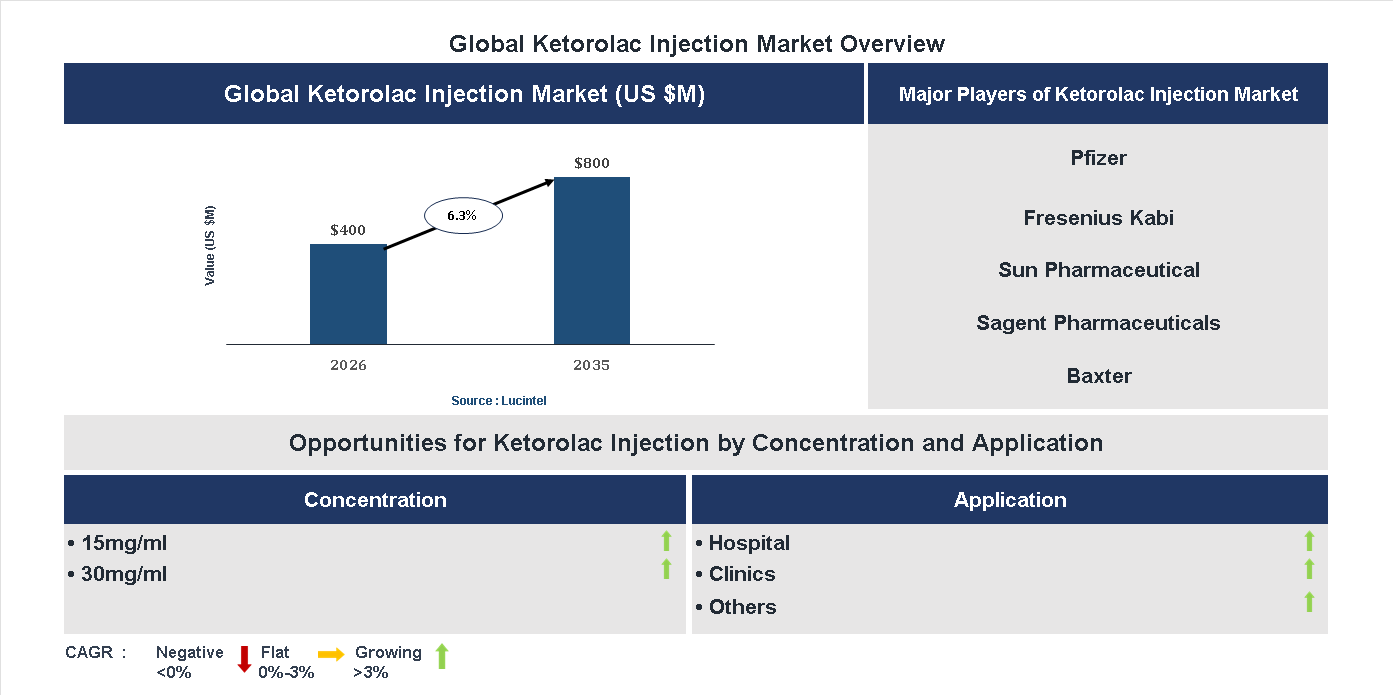
The future of the global ketorolac injection market looks promising with opportunities in the hospital and clinic markets. The global ketorolac injection market is expected to reach an estimated $800 million by 2035 with a CAGR of 6.3% from 2026 to 2035. The major drivers for this market are the rising demand for pain management solutions, the growing preference for short-term pain relief injection, and the increasing adoption in hospitals & clinics.• Lucintel forecasts that, within the concentration category, 15mg/ml is expected to witness higher growth over the forecast period.
• Within the application category, hospital is expected to witness the highest growth.
• In terms of region, APAC is expected to witness the highest growth over the forecast period. Gain valuable insights for your business decisions with our comprehensive 150+ page report. Sample figures with some insights are shown below.
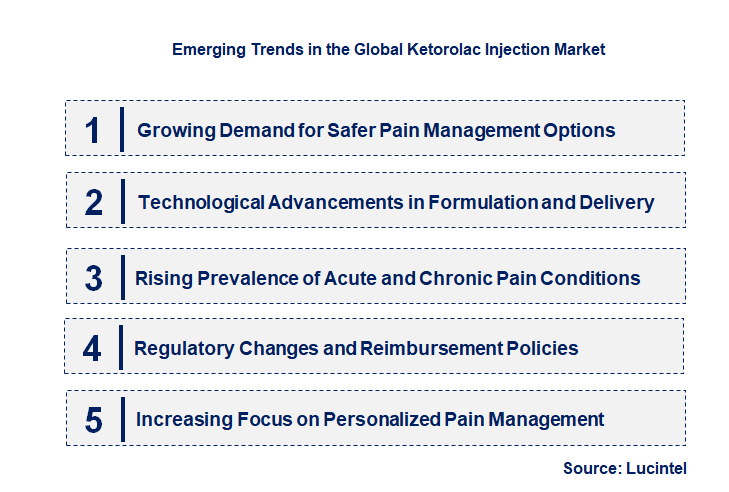
Emerging Trends in the Ketorolac Injection Market
The ketorolac injection market is experiencing significant transformation driven by advancements in healthcare, evolving patient needs, and regulatory changes. As pain management becomes more sophisticated, manufacturers are innovating to improve efficacy, safety, and convenience. The market is also influenced by increasing awareness of pain management options and the rising prevalence of acute and chronic pain conditions. Technological innovations, regulatory shifts, and a focus on personalized medicine are shaping the competitive landscape. These developments are not only expanding market opportunities but also prompting stakeholders to adapt strategies to meet emerging demands. Understanding these trends is crucial for stakeholders aiming to capitalize on future growth prospects.• Growing Demand for Safer Pain Management Options: There is an increasing preference for safer analgesic options due to concerns over opioid dependency and adverse effects. Ketorolac, being a non-steroidal anti-inflammatory drug (NSAID), is gaining attention as an alternative for short-term pain relief, especially in postoperative settings. This trend is driven by the need to reduce opioid use and improve patient safety, leading to increased adoption of ketorolac injections in hospitals and clinics. Manufacturers are also focusing on developing formulations with minimized side effects to meet safety standards and gain regulatory approval, thereby expanding their market share.
• Technological Advancements in Formulation and Delivery: Innovations in drug formulation and delivery methods are enhancing the efficacy and convenience of ketorolac injections. New delivery systems, such as pre-filled syringes and multi-dose vials, are improving ease of use and reducing administration errors. Additionally, research into sustained-release formulations aims to prolong pain relief and reduce dosing frequency. These technological improvements are making ketorolac injections more appealing to healthcare providers and patients, ultimately broadening their application in various clinical settings and increasing market penetration.
• Rising Prevalence of Acute and Chronic Pain Conditions: The increasing incidence of conditions such as postoperative pain, musculoskeletal injuries, and chronic pain syndromes is fueling demand for effective analgesics like ketorolac injections. An aging population and lifestyle-related injuries contribute to this trend, prompting healthcare providers to seek reliable pain management solutions. The growing burden of pain-related conditions is expected to sustain market growth, encouraging manufacturers to innovate and expand their product portfolios to address diverse patient needs.
• Regulatory Changes and Reimbursement Policies: Evolving regulatory frameworks and reimbursement policies are impacting the market landscape. Stricter safety and efficacy standards are prompting companies to conduct comprehensive clinical trials and obtain approvals for new formulations. Simultaneously, reimbursement policies favoring cost-effective pain management options are encouraging healthcare providers to adopt ketorolac injections. These regulatory and policy shifts are shaping market dynamics by influencing product development, pricing strategies, and market access, ultimately affecting the competitive environment.
• Increasing Focus on Personalized Pain Management: The trend toward personalized medicine is influencing the ketorolac injection market by emphasizing tailored treatment approaches. Genetic profiling and patient-specific factors are being considered to optimize dosing and minimize adverse effects. This focus is leading to the development of targeted pain management protocols and combination therapies. Personalized approaches are expected to improve treatment outcomes, increase patient satisfaction, and expand the market by catering to individual needs, thereby fostering innovation and differentiation among manufacturers. These emerging trends are collectively reshaping the ketorolac injection market by promoting safer, more effective, and patient-centric pain management solutions. Technological innovations, regulatory adaptations, and a focus on personalized care are driving growth and competition, positioning the market for sustained expansion in the coming years.
Recent Development in the Ketorolac Injection Market
The ketorolac injection market has experienced significant advancements driven by increasing demand for effective pain management solutions and expanding healthcare infrastructure worldwide. Innovations in formulation, regulatory approvals, and clinical applications are shaping the market landscape. These developments are enhancing product efficacy, safety profiles, and accessibility, thereby opening new opportunities for manufacturers and healthcare providers. The evolving regulatory environment and technological progress are also influencing market dynamics, making it crucial to monitor these key growth areas for strategic planning and investment.• Growing Demand for Pain Management Solutions: The rising prevalence of acute pain conditions and post-surgical pain has increased the need for potent analgesics like Ketorolac injections. Healthcare providers are seeking effective, fast-acting pain relief options, which has driven market growth. Additionally, the shift towards outpatient procedures requiring efficient pain management has further boosted demand. This trend is expected to continue as awareness of pain management options improves and healthcare infrastructure expands globally, especially in emerging markets.
• Regulatory Approvals and Product Launches: Recent approvals by regulatory agencies such as the FDA and EMA have facilitated market expansion. New formulations and generic versions have entered the market, increasing accessibility and affordability. These approvals often lead to increased clinical adoption and broader usage in hospitals and clinics. The launch of innovative delivery systems and combination therapies is also enhancing treatment options, thereby expanding the market scope and encouraging investment in research and development.
• Advances in Formulation Technology: Innovations in formulation technology, including sustained-release and preservative-free options, are improving drug stability, safety, and patient compliance. These advancements allow for better control over drug release and reduce side effects, making Ketorolac injections more appealing for long-term and outpatient use. Enhanced formulations also enable easier storage and administration, which is particularly beneficial in resource-limited settings. Such technological progress is expected to drive market growth by broadening application areas and improving patient outcomes.
• Increasing Adoption in Emerging Markets: Rising healthcare expenditure, expanding healthcare infrastructure, and increasing awareness about pain management are fueling adoption in emerging markets such as Asia-Pacific and Latin America. Local manufacturers are entering the market, offering cost-effective options that meet regional needs. Government initiatives to improve healthcare access and the growing prevalence of surgical procedures are further boosting demand. This trend presents significant growth opportunities for global players aiming to expand their footprint and capture new customer bases.
• Focus on Safety and Side Effect Management: Recent developments emphasize improving the safety profile of Ketorolac injections, addressing concerns related to gastrointestinal and renal side effects. New guidelines and clinical protocols are being implemented to optimize dosing and duration of therapy. Enhanced safety measures are increasing clinician confidence and patient acceptance, leading to wider usage. Ongoing research aims to develop safer formulations and identify patient populations that benefit most, ultimately reducing adverse events and expanding the market’s reach. These developments are collectively transforming the ketorolac injection market by improving product efficacy, safety, and accessibility. Regulatory approvals, technological innovations, and expanding markets are driving growth and creating new opportunities for stakeholders. As safety profiles improve and formulations become more patient-friendly, market adoption is expected to accelerate further. Overall, these advancements are positioning the market for sustained expansion, benefiting healthcare providers and patients through more effective and safer pain management options.
Strategic Growth Opportunities in the Ketorolac Injection Market
The ketorolac injection market is poised for significant expansion driven by increasing demand for effective pain management solutions across healthcare settings. Rising awareness of analgesic options, advancements in formulation technologies, and expanding applications in surgical and emergency care are fueling growth. Additionally, regulatory approvals and strategic collaborations are enhancing market reach. The evolving healthcare landscape presents numerous opportunities for manufacturers to innovate and capture market share, ultimately improving patient outcomes and addressing unmet medical needs.• Growing Adoption in Postoperative Pain Management: Ketorolac injections are increasingly preferred for managing acute postoperative pain due to their efficacy and safety profile. Hospitals and surgical centers are adopting this NSAID to reduce reliance on opioids, aligning with efforts to minimize opioid-related side effects and dependency. The expanding surgical procedures globally and the need for fast-acting analgesics are driving demand, creating opportunities for manufacturers to develop tailored formulations and expand distribution channels.
• Expansion into Emergency and Trauma Care Settings: The urgent need for rapid pain relief in emergency departments and trauma units positions ketorolac injections as a vital solution. Their quick onset of action makes them suitable for acute pain scenarios, including fractures, burns, and other injuries. As emergency care protocols evolve, there is a growing market for injectable NSAIDs. Companies can capitalize on this by developing formulations optimized for emergency use and establishing partnerships with healthcare providers.
• Increasing use in Cancer Pain Management: Ketorolac injections are gaining traction as part of multimodal pain management strategies for cancer patients undergoing surgery or experiencing severe pain. The need for effective, non-opioid analgesics in oncology settings presents a significant growth avenue. Innovations in dosing regimens and combination therapies can enhance efficacy and safety, encouraging broader adoption. This expanding application segment offers manufacturers opportunities to tailor products for oncology care and secure regulatory approvals.
• Rising Demand in Outpatient and Ambulatory Care: The shift towards outpatient procedures and ambulatory surgeries is boosting the need for fast-acting, easily administrable pain relief options like ketorolac injections. Healthcare providers seek cost-effective, efficient analgesics that facilitate quick recovery and discharge. Developing user-friendly formulations, such as pre-filled syringes, and expanding distribution networks can help manufacturers meet this demand, ultimately capturing a larger share of the outpatient pain management market.
• Strategic Collaborations and Regulatory Approvals Driving Market Growth: Partnerships between pharmaceutical companies and healthcare institutions are accelerating product development and market penetration. Regulatory approvals in emerging markets are expanding access and adoption. These collaborations facilitate innovation, streamline supply chains, and enhance marketing efforts. As regulatory landscapes evolve, companies that leverage strategic alliances and navigate approval processes effectively will be well-positioned to capitalize on the growing demand for ketorolac injections globally. The overall market outlook is positive, with these growth opportunities collectively driving innovation, expanding applications, and increasing accessibility. This will likely result in a more competitive landscape, improved patient care options, and sustained market expansion. Companies that strategically invest in product development, partnerships, and regulatory navigation will be best positioned to benefit from these emerging opportunities.
Ketorolac Injection Market Driver and Challenges
The ketorolac injection market is influenced by a variety of technological, economic, and regulatory factors that shape its growth and development. Advances in pharmaceutical manufacturing and delivery methods have improved drug efficacy and safety profiles, encouraging wider adoption. Economic factors such as healthcare spending and insurance coverage impact patient access and market expansion. Regulatory policies, including approvals and safety guidelines, also play a crucial role in shaping market dynamics. Additionally, increasing awareness of pain management options and the prevalence of acute and chronic pain conditions drive demand. However, challenges such as safety concerns, regulatory hurdles, and competition from alternative therapies also influence market stability and growth potential. The factors responsible for driving the ketorolac injection market include:• Technological Advancements: The development of improved formulation techniques and delivery systems enhances drug stability, efficacy, and patient compliance. Innovations such as pre-filled syringes and controlled-release formulations facilitate easier administration and reduce dosing errors. These technological improvements increase the attractiveness of ketorolac injections for healthcare providers and patients, expanding market reach. Moreover, ongoing research into combination therapies and novel delivery methods promises further growth opportunities. As technology continues to evolve, the market benefits from increased safety profiles and improved therapeutic outcomes, fostering confidence among prescribers and patients alike.
• Rising Prevalence of Pain Conditions: The increasing incidence of acute and chronic pain conditions, including postoperative pain, musculoskeletal disorders, and cancer-related pain, significantly drives demand for effective analgesics like ketorolac injections. An aging population and lifestyle-related factors contribute to higher pain management needs globally. This growing burden prompts healthcare providers to seek potent, fast-acting pain relief options, positioning ketorolac as a preferred choice due to its proven efficacy. The expanding patient population requiring pain management directly correlates with increased market sales and product adoption, supporting sustained growth in the sector.
• Regulatory Approvals and Support: Stringent regulatory frameworks and approvals from health authorities such as the FDA and EMA ensure the safety and efficacy of ketorolac injections. These approvals facilitate market entry and bolster confidence among healthcare providers and patients. Regulatory bodies also provide guidelines for safe usage, which helps in minimizing adverse effects and optimizing treatment protocols. Ongoing regulatory support for new formulations or indications can further expand market opportunities. Compliance with evolving regulations ensures sustained market access and encourages manufacturers to innovate, ultimately fostering a stable environment for growth.
• Increasing Healthcare Expenditure: Rising healthcare spending across developed and developing countries enhances access to advanced pain management therapies, including ketorolac injections. Governments and private insurers are investing more in healthcare infrastructure, leading to increased hospital admissions and outpatient procedures where such injections are commonly used. This economic trend supports the procurement and utilization of potent analgesics, boosting market sales. Additionally, increased funding for pain management research and training improves prescribing practices, further expanding the market. As healthcare budgets grow, the demand for effective, fast-acting pain relief solutions like ketorolac injections is expected to rise.
• Growing Awareness and Adoption: Enhanced awareness among healthcare professionals and patients regarding the benefits of ketorolac injections for pain management contributes to market growth. Educational initiatives, clinical guidelines, and promotional activities inform prescribers about the drug’s efficacy and safety profile. Patient awareness campaigns also promote acceptance and demand for effective pain relief options. This increased knowledge fosters higher adoption rates in hospitals, clinics, and outpatient settings. As awareness spreads, the market experiences a broader customer base and increased utilization, supporting sustained growth and market penetration. The challenges facing the market include:
• Safety Concerns and Side Effects: Ketorolac injections are associated with adverse effects such as gastrointestinal bleeding, renal impairment, and cardiovascular risks, especially with prolonged use or high doses. These safety concerns necessitate strict prescribing guidelines and limit the duration of therapy, which can restrict market growth. Healthcare providers may hesitate to prescribe ketorolac due to potential complications, especially in vulnerable populations like the elderly or those with pre-existing conditions. Managing these risks requires continuous monitoring and education, which can increase healthcare costs and complicate treatment protocols, thereby impacting overall market expansion.
• Regulatory and Approval Barriers: Despite regulatory support, stringent approval processes and evolving safety regulations pose challenges for market players. Obtaining approvals for new formulations or indications can be time-consuming and costly, delaying product launches. Additionally, regulatory agencies may impose restrictions or warnings that limit the drug’s use, affecting sales and market share. Navigating complex regulatory landscapes requires significant resources and expertise, which can be a barrier for smaller manufacturers. These hurdles can slow innovation and market growth, especially in emerging markets with less developed regulatory frameworks.
• Competition from Alternative Therapies: The market faces intense competition from other analgesics, including opioids, NSAIDs, and non-pharmacological pain management options. The opioid crisis has led to increased scrutiny and regulatory restrictions on opioid-based therapies, pushing prescribers toward alternative options like ketorolac. However, the availability of newer NSAIDs, local anesthetics, and non-drug therapies also challenges ketorolac’s market share. The emergence of biosimilars and generic alternatives further intensifies competition, potentially reducing profit margins and market dominance. This competitive landscape requires continuous innovation and strategic positioning to maintain market relevance. The ketorolac injection market is shaped by technological innovations, rising pain management needs, regulatory support, economic growth, and increased awareness. However, safety concerns, regulatory challenges, and stiff competition pose significant hurdles. These factors collectively influence market growth, requiring stakeholders to balance innovation with safety and compliance. Overall, the market’s future depends on how effectively these drivers are leveraged and challenges mitigated, impacting its expansion and sustainability in the global healthcare landscape.
List of Ketorolac Injection Companies
Companies in the market compete on the basis of product quality offered. Major players in this market focus on expanding their manufacturing facilities, R&D investments, infrastructural development, and leverage integration opportunities across the value chain. With these strategies ketorolac injection companies cater increasing demand, ensure competitive effectiveness, develop innovative products & technologies, reduce production costs, and expand their customer base. Some of the ketorolac injection companies profiled in this report include-• Pfizer
• Fresenius Kabi
• Sun Pharmaceutical
• Sagent Pharmaceuticals
• Baxter
• Glenmark Pharmaceutical
• Sola Pharmaceutical
• TC Pharmaceuticals (Jiangsu) Co., Ltd
• Lunan Pharm
• Yunnan Longhai Natured Plant Pharmaceutical
Ketorolac Injection Market by Segment
The study includes a forecast for the global ketorolac injection market by concentration, application, and region.Ketorolac Injection Market by Concentration [Value from 2019 to 2035]:
• 15mg/ml
• 30mg/ml
Ketorolac Injection Market by Application [Value from 2019 to 2035]:
• Hospital
• Clinics
• Others
Ketorolac Injection Market by Region [Value from 2019 to 2035]:
• North America
• Europe
• Asia Pacific
• The Rest of the World
Country Wise Outlook for the Ketorolac Injection Market
The ketorolac injection market has experienced notable shifts driven by evolving healthcare needs, regulatory updates, and technological advancements across major economies. As pain management remains a critical component of medical treatment, countries are adopting new formulations, expanding usage, and improving distribution channels. These developments reflect broader trends in healthcare innovation, regulatory compliance, and market competition, shaping the future landscape of ketorolac injection utilization worldwide. Understanding these regional dynamics is essential for stakeholders aiming to capitalize on emerging opportunities and address challenges effectively.• United States: The US market has seen increased adoption of ketorolac injections in hospital settings, driven by rising surgical procedures and pain management protocols. Regulatory agencies have approved new formulations with improved safety profiles, and there is a growing emphasis on reducing opioid use by promoting NSAIDs like ketorolac. Market players are investing in advanced delivery systems and expanding distribution networks to meet demand. Additionally, ongoing clinical research aims to optimize dosing and minimize adverse effects, further supporting market growth.
• China: China's ketorolac injection market is expanding rapidly due to increasing healthcare infrastructure and a rising prevalence of chronic pain conditions. Local manufacturers are gaining approval for generic versions, making the drug more accessible and affordable. Government initiatives to improve pain management and surgical procedures are fueling demand. Moreover, technological advancements in manufacturing processes are enhancing product quality. The market is also witnessing a surge in hospital-based administrations, with an emphasis on integrating ketorolac into comprehensive pain management protocols.
• Germany: In Germany, the market for ketorolac injections is characterized by stringent regulatory standards and a focus on safety. The country has seen a shift towards more targeted pain management strategies, with ketorolac being used in combination therapies. Innovations in formulation, such as preservative-free options, are gaining popularity. The healthcare system's emphasis on minimizing adverse effects has led to increased clinical research and cautious prescribing practices. Market growth is also supported by an aging population requiring effective pain relief solutions.
• India: The Indian ketorolac injection market is witnessing rapid growth due to expanding healthcare infrastructure and increasing surgical procedures. Local pharmaceutical companies are producing cost-effective generic formulations, making the drug widely accessible. Rising awareness about pain management options and government initiatives to improve healthcare delivery are further boosting demand. The market is also benefiting from increased hospital admissions and outpatient surgeries. Efforts to streamline regulatory approvals and improve manufacturing standards are expected to sustain growth in this emerging market.
• Japan: Japan's market for ketorolac injections is evolving with a focus on safety and efficacy. The aging population has increased demand for effective pain relief options, prompting healthcare providers to adopt ketorolac more widely. Regulatory agencies have approved new formulations with enhanced safety features. The market is also seeing a trend toward combination therapies and personalized pain management approaches. Technological innovations in drug delivery and a strong emphasis on clinical research are contributing to the steady growth of the ketorolac injection market in Japan.

Features of the Global Ketorolac Injection Market
Market Size Estimates: Ketorolac injection market size estimation in terms of value ($M). Trend and Forecast Analysis: Market trends (2019 to 2025) and forecast (2026 to 2035) by various segments and regions. Segmentation Analysis: Ketorolac injection market size by concentration, application, and region in terms of value ($M). Regional Analysis: Ketorolac injection market breakdown by North America, Europe, Asia Pacific, and Rest of the World. Growth Opportunities: Analysis of growth opportunities in different concentration, applications, and regions for the ketorolac injection market. Strategic Analysis: This includes M&A, new product development, and competitive landscape of the ketorolac injection market. Analysis of competitive intensity of the industry based on Porter’s Five Forces model.
FAQ
Q1. What is the ketorolac injection market size? Answer: The global ketorolac injection market is expected to reach an estimated $800 million by 2035. Q2. What is the growth forecast for ketorolac injection market? Answer: The global ketorolac injection market is expected to grow with a CAGR of 6.3% from 2026 to 2035. Q3. What are the major drivers influencing the growth of the ketorolac injection market? Answer: The major drivers for this market are the rising demand for pain management solutions, the growing preference for short-term pain relief injection, and the increasing adoption in hospitals & clinics. Q4. What are the major segments for ketorolac injection market? Answer: The future of the ketorolac injection market looks promising with opportunities in the hospital and clinic markets. Q5. Who are the key ketorolac injection market companies? Answer: Some of the key ketorolac injection companies are as follows:• Pfizer
• Fresenius Kabi
• Sun Pharmaceutical
• Sagent Pharmaceuticals
• Baxter
• Glenmark Pharmaceutical
• Sola Pharmaceutical
• TC Pharmaceuticals (Jiangsu) Co., Ltd
• Lunan Pharm
• Yunnan Longhai Natured Plant Pharmaceutical Q6. Which ketorolac injection market segment will be the largest in future? Answer: Lucintel forecasts that, within the concentration category, 15mg/ml is expected to witness higher growth over the forecast period. Q7. In ketorolac injection market, which region is expected to be the largest in next 5 years? Answer: In terms of region, APAC is expected to witness the highest growth over the forecast period. Q8. Do we receive customization in this report? Answer: Yes, Lucintel provides 10% customization without any additional cost.
Table of Contents
List of Figures
List of Tables
Methodology
- In-depth interviews of the major players in this market
- Detailed secondary research from competitors’ financial statements and published data
- Extensive searches of published works, market, and database information pertaining to industry news, company press releases, and customer intentions
- A compilation of the experiences, judgments, and insights of Lucintel’s professionals, who have analyzed and tracked this market over the years.


Buy Now
Choose a license that fits your team. Instant PDF delivery.
Prices exclude taxes. Instant delivery. Custom licensing available on request.
Key Questions
- • What are some of the most promising, high-growth opportunities for the ketorolac injection market by concentration (15mg/ml and 30mg/ml), application (hospital, clinics, and others), and region (North America, Europe, Asia Pacific, and the Rest of the World)?
- • Which segments will grow at a faster pace and why?
- • Which region will grow at a faster pace and why?
- • What are the key factors affecting market dynamics? What are the key challenges and business risks in this market?
- • What are the business risks and competitive threats in this market?
- • What are the emerging trends in this market and the reasons behind them?
- • What are some of the changing demands of customers in the market?
- • What are the new developments in the market? Which companies are leading these developments?
- • Who are the major players in this market? What strategic initiatives are key players pursuing for business growth?
- • What are some of the competing products in this market and how big of a threat do they pose for loss of market share by material or product substitution?
- • What M&A activity has occurred in the last 7 years and what has its impact been on the industry? For any questions related to Ketorolac Injection Market, Ketorolac Injection Market Size, Ketorolac Injection Market Growth, Ketorolac Injection Market Analysis, Ketorolac Injection Market Report, Ketorolac Injection Market Share, Ketorolac Injection Market Trends, Ketorolac Injection Market Forecast, Ketorolac Injection Companies, write Lucintel analyst at email: helpdesk@lucintel.com. We will be glad to get back to you soon.


