
Report Feature
Jet Kerosene Market Trends and Forecast
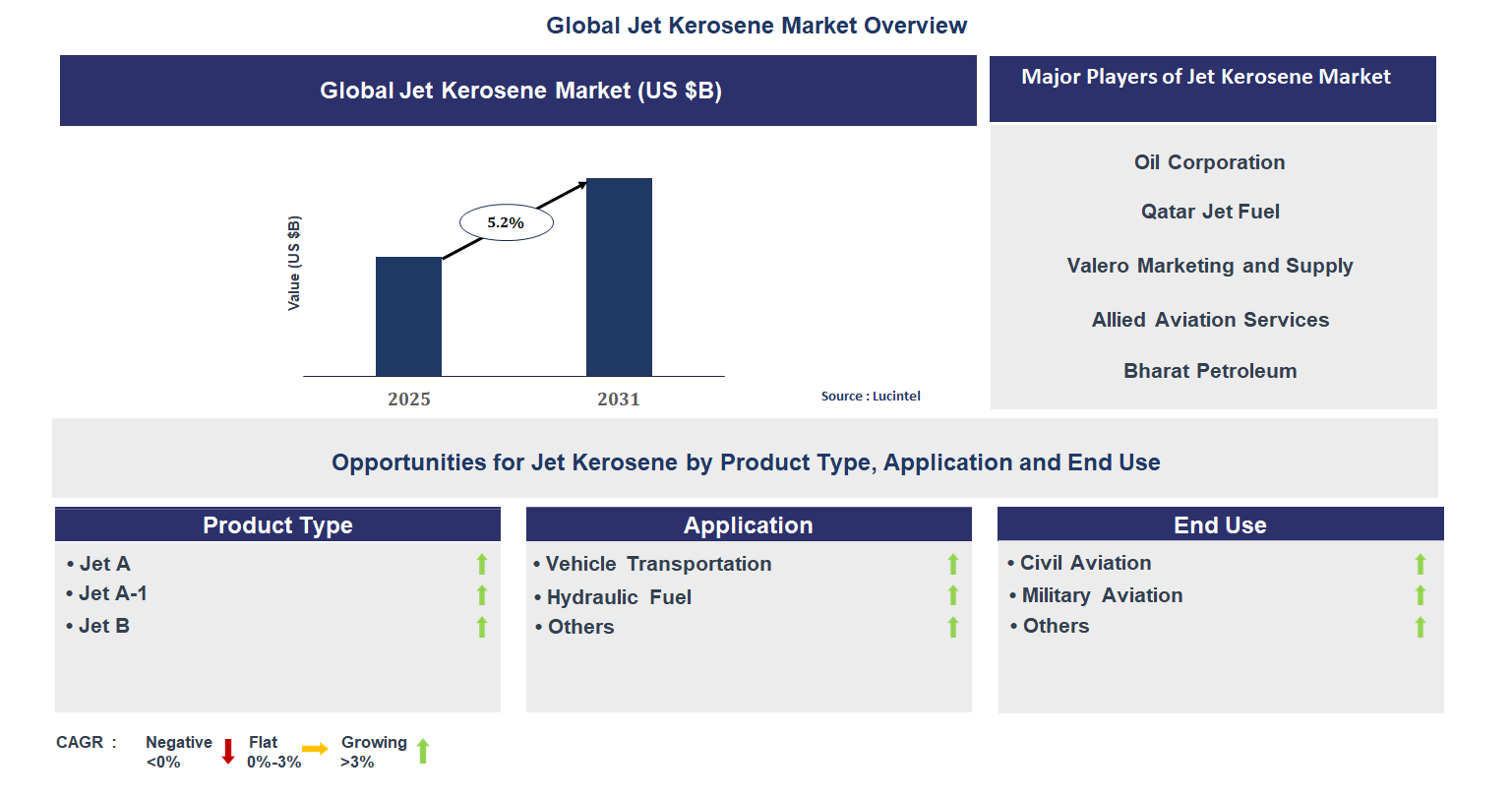
The future of the global jet kerosene market looks promising with opportunities in the civil aviation and military aviation markets. The global jet kerosene market is expected to grow with a CAGR of 5.2% from 2025 to 2031. The major drivers for this market are the increasing air passenger traffic across regions, the rising demand for efficient aviation fuels, and the growing expansion of commercial airline fleets.• Lucintel forecasts that, within the product type category, jet a-1 is expected to witness the highest growth over the forecast period.
• Within the end use category, civil aviation is expected to witness higher growth.
• In terms of region, APAC is expected to witness the highest growth over the forecast period. Gain valuable insights for your business decisions with our comprehensive 150+ page report. Sample figures with some insights are shown below.
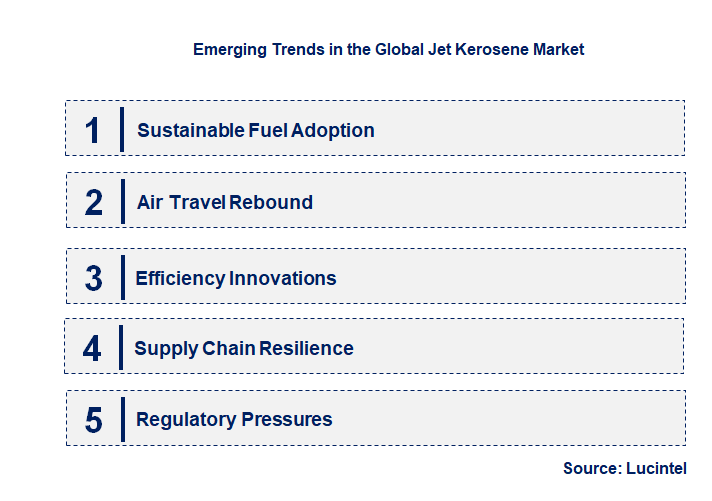
Emerging Trends in the Jet Kerosene Market
Jet kerosene trends reflect aviation‘s pivot toward sustainability amid rebounding demand, with SAF integration and efficiency gains at the forefront. Policy pressures and tech innovations drive diversification, while volatility tests resilience. These shifts prioritize low-carbon solutions, reshaping supply chains for equitable global access.• Sustainable Fuel Adoption: Mandates require SAF blending, reducing lifecycle emissions through biofuels and synthetics. Partnerships scale production from waste feedstocks, easing fossil dependencies. Impact includes compliance with net-zero targets, lowering operational costs long-term and enhancing airline branding.
• Air Travel Rebound: Passenger and cargo surges post-recovery boost consumption, with low-cost carriers expanding routes. Urbanization in emerging markets amplifies connectivity. This trend fuels economic growth, stimulates tourism, and necessitates robust supply to match demand spikes.
• Efficiency Innovations: Advanced engines and lightweight materials cut per-flight fuel needs, optimizing kerosene use. Digital procurement streamlines sourcing, minimizing waste. Impact enhances profitability, reduces emissions per passenger, and supports fleet modernization for sustainable operations.
• Supply Chain Resilience: Geopolitical shifts prompt diversified imports and local refining. Digital platforms track logistics, mitigating disruptions. This strengthens availability, stabilizes prices, and builds adaptive networks for global hubs.
• Regulatory Pressures: Emission trading schemes enforce carbon pricing, incentivizing cleaner blends. International accords harmonize standards, accelerating transitions. Impact drives R&D investments, fosters collaborations, and aligns industry with climate resilience. These trends are reshaping the jet kerosene market by accelerating decarbonization, optimizing efficiencies, and fortifying global chains. They balance growth with environmental imperatives, unlocking hybrid models that sustain demand while pioneering low-carbon aviation ecosystems.
Recent Development in the Jet Kerosene Market
Jet kerosene developments underscore aviation‘s sustainability push, with SAF mandates and partnerships countering traditional fuel demands. Global traffic recovery amplifies needs, while innovations address volatility. These advancements target emission cuts and supply stability, fostering resilient infrastructure.• SAF Production Pacts: Boeing-Norsk e-Fuel alliance scales power-to-liquids SAF, slashing emissions versus kerosene. This integrates renewables into fleets, aiding compliance and cutting costs through volume efficiencies.
• Refinery Import Surges: U.S. inflows from Nigeria‘s Dangote facility replenish stocks amid outages, stabilizing prices. It enhances regional security, supports peak travel, and diversifies sources for uninterrupted operations.
• Military Fuel Investments: U.S. Air Force budgets fund collaborative aircraft, boosting JP-8 needs. This modernizes defense capabilities, ensures readiness, and drives specialized refining advancements.
• Domestic Traffic Milestones: China‘s routes surpass pre-crisis levels, expanding kerosene use. It bolsters trade, tourism, and e-commerce, stimulating economic hubs and infrastructure upgrades.
• Blending Mandate Rollouts: EU‘s ReFuelEU enforces SAF quotas at airports, promoting synthetics. This reduces carbon footprints, spurs local production, and aligns commercial aviation with green standards. These developments impact the jet kerosene market by blending tradition with innovation, mitigating risks, and enabling scalable sustainability. They drive equitable access, lower emissions, and position aviation for resilient, low-carbon futures.
Strategic Growth Opportunities in the Jet Kerosene Market
Jet kerosene opportunities leverage aviation‘s expansion across commercial, military, and general segments, integrating SAF for sustainability. Rising traffic and infrastructure investments unlock diverse applications, from passenger surges to defense needs. These pathways blend efficiency with green tech for inclusive growth.• Commercial Passenger Flights: Fleet expansions and route additions meet tourism booms, heightening kerosene demand. SAF blending eases transitions, optimizing costs. Impact includes enhanced connectivity, revenue from high-yield routes, and emission-aligned operations.
• Air Cargo Logistics: E-commerce growth propels freighter fleets, requiring reliable fuels for global chains. Efficient sourcing cuts delays, supporting just-in-time deliveries. This fosters trade volumes, diversifies revenues, and integrates renewables for greener supply networks.
• Military Operations: Modernized aircraft demand specialized kerosene variants, backed by defense budgets. Secure logistics ensure mission readiness, minimizing disruptions. Impact strengthens strategic postures, creates tech synergies, and explores hybrid fuels for agile forces.
• General Aviation Ventures: Private jets and charters surge with affluent travel, tapping niche markets. Customized blends enhance performance in remote areas. This diversifies portfolios, boosts premium services, and pioneers SAF for eco-conscious flyers.
• Sustainable Blending Initiatives: SAF-kerosene mixes comply with mandates, reducing carbon via waste-derived options. Partnerships scale production, lowering premiums. Impact accelerates net-zero paths, attracts investments, and redefines aviation as a sustainability leader. These opportunities impact the jet kerosene market by diversifying applications and embedding sustainability, fueling innovation and partnerships. They mitigate risks, expand access, and propel aviation toward resilient, low-emission paradigms worldwide.
Jet Kerosene Market Driver and Challenges
Jet kerosene dynamics hinge on technological, economic, and regulatory forces, with air travel surges countering emission pressures. Drivers like fleet growth propel demand, while challenges from volatility demand adaptive strategies. Navigating these unlocks sustainable pathways amid global transitions. The factors responsible for driving the jet kerosene market include: 1. Air Travel Expansion: Passenger and cargo booms, driven by urbanization and e-commerce, escalate kerosene needs. Low-cost carriers broaden access, amplifying frequencies. Implications include stimulated economies, job creation in aviation, and scaled infrastructure for connectivity. 2. Fleet Modernization: Efficient engines and lightweight designs optimize fuel use, supporting longer hauls. Investments in wide-bodies meet demand spikes. This enhances profitability, cuts per-seat emissions, and fosters tech collaborations for resilient operations. 3. Economic Recovery: Rising incomes fuel tourism and business flights, rebounding post-disruptions. Trade growth bolsters cargo, diversifying demand. Implications drive supplier expansions, stabilize prices, and integrate regions into global networks. 4. Policy Incentives: Subsidies for SAF blends encourage low-carbon shifts, aligning with net-zero pledges. Mandates spur R&D in synthetics. This accelerates adoption, reduces regulatory fines, and positions firms as green leaders. 5. Infrastructure Upgrades: Airport expansions and digital logistics ensure seamless fueling. Hub developments in Asia handle surges. Implications improve efficiency, minimize downtime, and support sustainable scaling through integrated systems. Challenges in the jet kerosene market are: 1. Price Volatility: Crude fluctuations ripple through refining costs, straining airline budgets. Geopolitical tensions exacerbate swings. This disrupts planning, hikes fares, and pressures margins, necessitating hedging and diversification. 2. Emission Regulations: Stricter carbon pricing and quotas challenge fossil reliance, demanding costly transitions. Non-compliance risks penalties. This spurs innovation needs, elevates SAF premiums, and tests supply readiness. 3. Supply Disruptions: Refinery outages and trade barriers limit availability, inflating imports. Logistics bottlenecks delay deliveries. This heightens risks in peak seasons, demands resilient chains, and underscores diversification imperatives. These drivers and challenges synthesize a market poised for hybrid evolution, where growth opportunities outweigh hurdles through strategic adaptations. Drivers dominate, enabling emission-aligned expansions, while challenges forge resilient, innovative frameworks for aviation‘s future.List of Jet Kerosene Companies
Companies in the market compete on the basis of product quality offered. Major players in this market focus on expanding their manufacturing facilities, R&D investments, infrastructural development, and leverage integration opportunities across the value chain. With these strategies jet kerosene companies cater increasing demand, ensure competitive effectiveness, develop innovative products & technologies, reduce production costs, and expand their customer base. Some of the jet kerosene companies profiled in this report include-• Oil Corporation
• Qatar Jet Fuel
• Valero Marketing and Supply
• Allied Aviation Services
• Bharat Petroleum
• Propel Holdings
• Trans Oil
• Air BP
• Chevron
• Exxon Mobil
Jet Kerosene Market by Segment
The study includes a forecast for the global jet kerosene market by product type, application, end use, and region.Jet Kerosene Market by Product Type [Value from 2019 to 2031]:
• Jet A
• Jet A-1
• Jet B
Jet Kerosene Market by Application [Value from 2019 to 2031]:
• Vehicle Transportation
• Hydraulic Fuel
• Others
Jet Kerosene Market by End Use [Value from 2019 to 2031]:
• Civil Aviation
• Military Aviation
• Others
Jet Kerosene Market by Region [Value from 2019 to 2031]:
• North America
• Europe
• Asia Pacific
• The Rest of the World
Country Wise Outlook for the Jet Kerosene Market
The jet kerosene market is undergoing transformation amid surging air travel recovery and sustainability mandates, balancing traditional demand with sustainable alternatives. Key drivers include fleet expansions and policy shifts toward low-carbon fuels, while challenges like supply volatility persist. In major economies, investments in refining and blending technologies are enhancing resilience and efficiency.• United States: Military aviation investments bolster demand, with budget allocations for advanced aircraft driving specialized fuel needs. Refinery outages create import surges, stabilizing supplies despite volatility. These dynamics support commercial growth, reducing emission impacts through SAF blends and fostering innovation in fuel efficiency.
• China: Domestic traffic exceeds pre-pandemic levels, spurring refinery expansions and SAF production pacts with global firms. Urbanization fuels passenger surges, enhancing connectivity. This positions China as a hub, cutting reliance on imports and aligning with emission goals via integrated sustainable pathways.
• Germany: EU mandates enforce SAF blending, accelerating synthetic kerosene plants for carbon-neutral operations. Airport infrastructure upgrades meet rising traffic, promoting green aviation. These initiatives lower environmental footprints, stimulate local production, and integrate renewables into defense and commercial fleets.
• India: Domestic air traffic expansion prompts route additions and frequency hikes, boosting kerosene consumption. SAF alliances target net-zero goals, easing crude dependencies. This drives economic connectivity, supports tourism recovery, and creates blending opportunities for cleaner aviation.
• Japan: Import reliance persists amid stable crack spreads, with focus on SAF for international hubs. Fleet modernizations enhance efficiency, aligning with emission reductions. These efforts ensure supply security, promote tourism, and position Japan as a leader in sustainable regional aviation.

Features of the Global Jet Kerosene Market
Market Size Estimates: Jet kerosene market size estimation in terms of value ($B). Trend and Forecast Analysis: Market trends (2019 to 2024) and forecast (2025 to 2031) by various segments and regions. Segmentation Analysis: Jet kerosene market size by product type, application, end use, and region in terms of value ($B). Regional Analysis: Jet kerosene market breakdown by North America, Europe, Asia Pacific, and Rest of the World. Growth Opportunities: Analysis of growth opportunities in different product types, applications, end uses, and regions for the jet kerosene market. Strategic Analysis: This includes M&A, new product development, and competitive landscape of the jet kerosene market. Analysis of competitive intensity of the industry based on Porter’s Five Forces model.
FAQ
Q1. What is the growth forecast for jet kerosene market? Answer: The global jet kerosene market is expected to grow with a CAGR of 5.2% from 2025 to 2031. Q2. What are the major drivers influencing the growth of the jet kerosene market? Answer: The major drivers for this market are the increasing air passenger traffic across regions, the rising demand for efficient aviation fuels, and the growing expansion of commercial airline fleets. Q3. What are the major segments for jet kerosene market? Answer: The future of the jet kerosene market looks promising with opportunities in the civil aviation and military aviation markets. Q4. Who are the key jet kerosene market companies? Answer: Some of the key jet kerosene companies are as follows:• Oil Corporation
• Qatar Jet Fuel
• Valero Marketing and Supply
• Allied Aviation Services
• Bharat Petroleum
• Propel Holdings
• Trans Oil
• Air BP
• Chevron
• Exxon Mobil Q5. Which jet kerosene market segment will be the largest in future? Answer: Lucintel forecasts that, within the product type category, jet a-1 is expected to witness the highest growth over the forecast period. Q6. In jet kerosene market, which region is expected to be the largest in next 5 years? Answer: In terms of region, APAC is expected to witness the highest growth over the forecast period. Q7. Do we receive customization in this report? Answer: Yes, Lucintel provides 10% customization without any additional cost.
Table of Contents
List of Figures
List of Tables
Methodology
- In-depth interviews of the major players in this market
- Detailed secondary research from competitors’ financial statements and published data
- Extensive searches of published works, market, and database information pertaining to industry news, company press releases, and customer intentions
- A compilation of the experiences, judgments, and insights of Lucintel’s professionals, who have analyzed and tracked this market over the years.


Buy Now
Choose a license that fits your team. Instant PDF delivery.
Prices exclude taxes. Instant delivery. Custom licensing available on request.
Key Questions
- • What are some of the most promising, high-growth opportunities for the jet kerosene market by product type (jet a, jet a-1, and jet b), application (vehicle transportation, hydraulic fuel, and others), end use (civil aviation, military aviation, and others), and region (North America, Europe, Asia Pacific, and the Rest of the World)?
- • Which segments will grow at a faster pace and why?
- • Which region will grow at a faster pace and why?
- • What are the key factors affecting market dynamics? What are the key challenges and business risks in this market?
- • What are the business risks and competitive threats in this market?
- • What are the emerging trends in this market and the reasons behind them?
- • What are some of the changing demands of customers in the market?
- • What are the new developments in the market? Which companies are leading these developments?
- • Who are the major players in this market? What strategic initiatives are key players pursuing for business growth?
- • What are some of the competing products in this market and how big of a threat do they pose for loss of market share by material or product substitution?
- • What M&A activity has occurred in the last 5 years and what has its impact been on the industry? For any questions related to Jet Kerosene Market, Jet Kerosene Market Size, Jet Kerosene Market Growth, Jet Kerosene Market Analysis, Jet Kerosene Market Report, Jet Kerosene Market Share, Jet Kerosene Market Trends, Jet Kerosene Market Forecast, Jet Kerosene Companies, write Lucintel analyst at email: helpdesk@lucintel.com. We will be glad to get back to you soon.


