
Report Feature
IPS Cell-derived Platelets Market Trends and Forecast
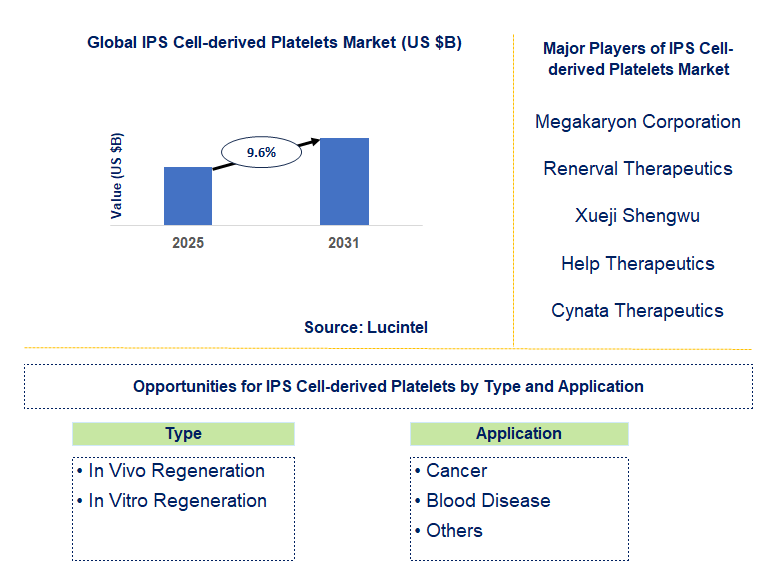
The future of the global IPS cell-derived platelets market looks promising with opportunities in the cancer and blood disease markets. The global IPS cell-derived platelets market is expected to grow with a CAGR of 9.6% from 2025 to 2031. The major drivers for this market are the increasing demand for advanced platelet therapies, the rising adoption of regenerative medicine techniques, and the growing research in cell-based platelet production.• Lucintel forecasts that, within the type category, in vivo regeneration is expected to witness higher growth over the forecast period.
• Within the application category, blood disease is expected to witness higher growth.
• In terms of region, APAC is expected to witness the highest growth over the forecast period. Gain valuable insights for your business decisions with our comprehensive 150+ page report. Sample figures with some insights are shown below.

Emerging Trends in the IPS Cell-derived Platelets Market
The IPS cell-derived platelets market is evolving with several key trends aimed at addressing current limitations and expanding clinical utility. These trends are centered on improving production efficiency, ensuring safety and quality, and exploring new applications, which will collectively drive the market's growth and accessibility.• Automation and Scalable Production: This trend involves the use of bioreactors and robotic systems to automate the complex process of differentiating iPSCs into platelets. The impact is a significant increase in production yield, reduced labor costs, and enhanced product consistency, which are crucial for meeting the large-scale demands of clinical applications.
• Allogeneic Off-the-Shelf Products: Companies are developing iPSC lines that are genetically engineered to be "universal," reducing the risk of immune rejection. This trend is impacting the market by enabling the creation of readily available, universal-donor products that do not require patient-specific customization, thus making transfusions faster and more accessible.
• Gene-Editing for Enhanced Functionality: The use of gene-editing tools like CRISPR to modify iPSCs to improve platelet function, reduce immunogenicity, or increase production efficiency is a growing trend. This is impacting the market by creating more effective and safer products with superior therapeutic properties, broadening their use beyond standard transfusions.
• Integration of Artificial Intelligence: AI is being used to optimize culture conditions and predict differentiation outcomes, streamlining the development process. AI's impact is in accelerating research and development, reducing the time from lab to clinic, and improving the accuracy and reliability of manufacturing processes.
• Focus on Cryopreservation and Storage: Companies are developing methods to efficiently cryopreserve IPS cell-derived platelets, extending their shelf life beyond the current few days. This trend is significantly impacting logistics, enabling long-distance transport and creating a more reliable supply chain, which is essential for global market penetration. These emerging trends are fundamentally reshaping the IPS cell-derived platelets market. The shift towards automation, off-the-shelf products, and enhanced functionality through gene-editing is transforming a niche technology into a viable, scalable, and globally accessible therapeutic option.

Recent Development in the IPS Cell-derived Platelets Market
The IPS cell-derived platelets market is witnessing a surge in innovation and strategic activity. These developments are primarily focused on overcoming the challenges of traditional platelet supply, such as limited shelf life and donor dependency, by leveraging advanced biotechnologies to create a more reliable and safer alternative for transfusion medicine.• Successful Clinical Trials: The completion of initial human clinical trials in Japan has marked a significant milestone. This development has provided crucial safety and efficacy data, which is essential for regulatory approval and has demonstrated the therapeutic potential of IPS cell-derived platelets, paving the way for further large-scale clinical investigations.
• Advances in Mass Production: New manufacturing protocols utilizing optimized bioreactor systems and differentiation media have led to a substantial increase in production yield. This development is impacting the market by making the technology more economically viable and scalable, addressing a key challenge to commercialization and widespread adoption.
• Focus on Universal Donor Platelets: The development of iPSC lines that are genetically modified to be "universal donors" is a key development. This is impacting the market by reducing the need for HLA matching, which can simplify the logistics of platelet transfusions and make them more readily available for a broader patient population.
• Strategic Partnerships and Collaborations: There has been an increase in collaborations between biotech companies, academic institutions, and pharmaceutical giants. These partnerships are impacting the market by pooling resources, expertise, and funding to accelerate research, streamline product development, and navigate the complex regulatory landscape, bringing the products closer to commercial reality.
• Regulatory Pathway Development: Regulatory bodies in key markets are establishing specific guidelines for cell-based therapies, including iPSC-derived products. This development is impacting the market by providing a clearer and more predictable path to market approval, encouraging investment and reducing the time required for products to reach patients. These key developments, from successful clinical trials to strategic collaborations, are collectively driving the IPS cell-derived platelets market toward commercial viability. They are systematically addressing the technical, economic, and regulatory hurdles, transforming the field from a research endeavor into a tangible solution for global platelet shortages and transfusion-related challenges.
Strategic Growth Opportunities in the IPS Cell-derived Platelets Market
The IPS cell-derived platelets market presents significant strategic growth opportunities across various applications. These opportunities are driven by the unique advantages of IPS cell technology, such as scalability and reduced risk of contamination, which enable its application in areas where traditional donor-based platelets are limited.• Transfusion Medicine: An immediate opportunity lies in addressing the chronic shortage of donor platelets. The ability to produce a consistent and contamination-free supply of platelets from iPSCs is a game-changer. This offers a reliable alternative for patients requiring frequent transfusions, such as those undergoing chemotherapy or with bone marrow disorders.
• Regenerative Medicine: Another key opportunity is the use of IPS cell-derived platelets in regenerative medicine applications. Platelets contain growth factors that can aid in tissue repair and wound healing. Their use in therapies for conditions like chronic wounds, orthopedic injuries, and cardiovascular diseases offers a new avenue for growth and market expansion.
• Drug Discovery and Development: iPSC-derived platelets provide a valuable tool for drug screening and disease modeling. They offer a physiologically relevant human cell model for studying platelet-related disorders and testing new antiplatelet drugs. This application can accelerate the development of new therapeutics and reduce the reliance on animal testing.
• Personalized Medicine: The ability to generate patient-specific platelets from their own iPSCs is a unique opportunity for personalized medicine. This can be particularly impactful for patients with alloimmune refractoriness, who do not respond to donor platelets. This niche application addresses an unmet medical need and can command premium pricing.
• Gene and Cell Therapy: The market can grow by combining iPSC-derived platelets with gene and cell therapies. For example, platelets could be engineered to deliver specific therapeutic genes or molecules. This offers an innovative platform for treating genetic bleeding disorders or as a delivery vehicle for targeted drug delivery. These strategic growth opportunities are poised to transform the IPS cell-derived platelets market. By expanding beyond traditional transfusion, the market can tap into the burgeoning fields of regenerative medicine, personalized therapy, and drug development, ensuring long-term growth and establishing IPS cell-derived platelets as a cornerstone of future medicine.
IPS Cell-derived Platelets Market Driver and Challenges
The IPS cell-derived platelets market is influenced by a complex interplay of drivers and challenges, which include various technological, economic, and regulatory factors. Understanding these dynamics is crucial for navigating the market, as they dictate the pace of innovation, investment, and ultimately, the commercial viability and patient accessibility of these products. The factors responsible for driving the IPS cell-derived platelets market include: 1. Shortage of Donor Platelets: The limited shelf life and short supply of donor platelets, which are susceptible to bacterial contamination, is a major driver. This scarcity creates a critical need for an alternative source, which IPS cell technology can address by providing a scalable and on-demand supply. 2. Technological Advancements in Biomanufacturing: Innovations in bioreactor technology and cell culture media have improved the efficiency and yield of iPSC-derived platelet production. These advancements are making the process more cost-effective and reproducible, which is essential for moving from research to large-scale commercial manufacturing. 3. Rising Prevalence of Chronic Diseases: The increasing incidence of chronic diseases like cancer and autoimmune disorders, which often require frequent platelet transfusions, is driving market growth. This demographic trend creates a growing patient population that can benefit from the reliable supply offered by IPS cell-derived platelets. 4. Reduced Risk of Transfusion-Transmitted Infections: IPS cell-derived platelets are produced in a controlled laboratory environment, significantly reducing the risk of viral and bacterial contamination. This inherent safety advantage over donor-derived platelets is a key driver for both patient and physician adoption. 5. Government Funding and Research Initiatives: Favorable government policies and public and private funding for stem cell research are accelerating the development of IPS cell therapies. This financial support helps to fund expensive research and clinical trials, which are necessary to bring products to market. Challenges in the IPS cell-derived platelets market are: 1. High Production Costs: The current cost of manufacturing IPS cell-derived platelets is very high, primarily due to the complex processes and expensive reagents involved. This economic challenge is a major barrier to widespread commercial adoption and affordability, especially in cost-sensitive healthcare systems. 2. Regulatory Hurdles and Long Approval Times: Navigating the complex regulatory landscape for novel cell-based therapies is a significant challenge. The need for extensive clinical trials and long-term safety data, coupled with evolving regulatory guidelines, can cause significant delays in product commercialization. 3. Technical Challenges in Product Standardization: Ensuring consistency and quality of IPS cell-derived platelets from different batches is a major technical challenge. Variations in cell lines, differentiation protocols, and final product characteristics can impact efficacy and safety, requiring rigorous quality control and standardization. The IPS cell-derived platelets market is at a critical juncture, with strong drivers pushing for innovation and significant challenges to overcome. While the demand for a safe and scalable platelet source is clear, the high costs, regulatory complexities, and technical hurdles must be systematically addressed to realize the full potential of this groundbreaking technology and make it accessible to patients worldwide.List of IPS Cell-derived Platelets Companies
Companies in the market compete on the basis of product quality offered. Major players in this market focus on expanding their manufacturing facilities, R&D investments, infrastructural development, and leverage integration opportunities across the value chain. With these strategies IPS cell-derived platelets companies cater increasing demand, ensure competitive effectiveness, develop innovative products & technologies, reduce production costs, and expand their customer base. Some of the IPS cell-derived platelets companies profiled in this report include-• Megakaryon Corporation
• Renerval Therapeutics
• Xueji Shengwu
• Help Therapeutics
• Cynata Therapeutics
• Fate Therapeutics
• Century Therapeutics
IPS Cell-derived Platelets Market by Segment
The study includes a forecast for the global IPS cell-derived platelets market by type, application, and region.IPS Cell-derived Platelets Market by Type [Value from 2019 to 2031]:
• In Vivo Regeneration
• In Vitro Regeneration
IPS Cell-derived Platelets Market by Application [Value from 2019 to 2031]:
• Cancer
• Blood Disease
• Others
IPS Cell-derived Platelets Market by Region [Value from 2019 to 2031]:
• North America
• Europe
• Asia Pacific
• The Rest of the World
Country Wise Outlook for the IPS Cell-derived Platelets Market
The IPS cell-derived platelets market is experiencing significant progress, driven by the limitations of traditional donor-based platelet transfusions. This innovative field addresses challenges like short shelf life, risk of infectious diseases, and supply shortages by offering a scalable, safe, and readily available alternative for treating various bleeding disorders and for use in regenerative medicine.• United States: The U.S. market is leading in advancements due to robust funding and a strong R&D infrastructure. Major developments include clinical trials and collaborations between biotech firms and academia, focusing on scaling up production and developing "off-the-shelf" allogeneic products for applications in fields like cardiology and neurology.
• China: China is a rapidly growing market for IPS cell-derived products, with increasing government support and investment in biotechnology. The focus is on building a robust R&D ecosystem and fostering partnerships to accelerate the development of cell therapies. While still in early stages, there is a strong push to catch up with global leaders.
• Germany: Germany's market is characterized by a strong regulatory framework and a focus on high-quality research. Recent developments include increased investment in regenerative medicine and partnerships between public institutions and private companies. The country is leveraging its expertise in biomanufacturing to optimize production processes for IPS cell-derived products.
• India: The Indian market is emerging, driven by a growing patient population with chronic diseases and rising awareness of advanced cell therapies. Recent developments include increased government funding for stem cell research and collaborations between local and international players. The country is focusing on establishing a foundation for R&D and clinical trials.
• Japan: Japan is a global leader in IPS cell research and commercialization, with government backing and key collaborations. Recent milestones include the first-in-human clinical trials for IPS cell-derived platelets. Companies are focusing on mass production techniques and developing universal-type platelets to overcome the challenges of HLA compatibility and supply.

Features of the Global IPS Cell-derived Platelets Market
Market Size Estimates: Ips cell-derived platelets market size estimation in terms of value ($B). Trend and Forecast Analysis: Market trends (2019 to 2024) and forecast (2025 to 2031) by various segments and regions. Segmentation Analysis: Ips cell-derived platelets market size by type, application, and region in terms of value ($B). Regional Analysis: Ips cell-derived platelets market breakdown by North America, Europe, Asia Pacific, and Rest of the World. Growth Opportunities: Analysis of growth opportunities in different types, applications, and regions for the IPS cell-derived platelets market. Strategic Analysis: This includes M&A, new product development, and competitive landscape of the IPS cell-derived platelets market. Analysis of competitive intensity of the industry based on Porter’s Five Forces model.
FAQ
Q1. What is the growth forecast for IPS cell-derived platelets market? Answer: The global IPS cell-derived platelets market is expected to grow with a CAGR of 9.6% from 2025 to 2031. Q2. What are the major drivers influencing the growth of the IPS cell-derived platelets market? Answer: The major drivers for this market are the increasing demand for advanced platelet therapies, the rising adoption of regenerative medicine techniques, and the growing research in cell-based platelet production. Q3. What are the major segments for IPS cell-derived platelets market? Answer: The future of the IPS cell-derived platelets market looks promising with opportunities in the cancer and blood disease markets. Q4. Who are the key IPS cell-derived platelets market companies? Answer: Some of the key IPS cell-derived platelets companies are as follows:• Megakaryon Corporation
• Renerval Therapeutics
• Xueji Shengwu
• Help Therapeutics
• Cynata Therapeutics
• Fate Therapeutics
• Century Therapeutics Q5. Which IPS cell-derived platelets market segment will be the largest in future? Answer: Lucintel forecasts that, within the type category, in vivo regeneration is expected to witness higher growth over the forecast period. Q6. In IPS cell-derived platelets market, which region is expected to be the largest in next 5 years? Answer: In terms of region, APAC is expected to witness the highest growth over the forecast period. Q7. Do we receive customization in this report? Answer: Yes, Lucintel provides 10% customization without any additional cost.
Table of Contents
Methodology
- In-depth interviews of the major players in this market
- Detailed secondary research from competitors’ financial statements and published data
- Extensive searches of published works, market, and database information pertaining to industry news, company press releases, and customer intentions
- A compilation of the experiences, judgments, and insights of Lucintel’s professionals, who have analyzed and tracked this market over the years.


Buy Now
Choose a license that fits your team. Instant PDF delivery.
Prices exclude taxes. Instant delivery. Custom licensing available on request.
Key Questions
- • What are some of the most promising, high-growth opportunities for the IPS cell-derived platelets market by type (in vivo regeneration and in vitro regeneration), application (cancer, blood disease, and others), and region (North America, Europe, Asia Pacific, and the Rest of the World)?
- • Which segments will grow at a faster pace and why?
- • Which region will grow at a faster pace and why?
- • What are the key factors affecting market dynamics? What are the key challenges and business risks in this market?
- • What are the business risks and competitive threats in this market?
- • What are the emerging trends in this market and the reasons behind them?
- • What are some of the changing demands of customers in the market?
- • What are the new developments in the market? Which companies are leading these developments?
- • Who are the major players in this market? What strategic initiatives are key players pursuing for business growth?
- • What are some of the competing products in this market and how big of a threat do they pose for loss of market share by material or product substitution?
- • What M&A activity has occurred in the last 5 years and what has its impact been on the industry? For any questions related to IPS Cell-derived Platelets Market, IPS Cell-derived Platelets Market Size, IPS Cell-derived Platelets Market Growth, IPS Cell-derived Platelets Market Analysis, IPS Cell-derived Platelets Market Report, IPS Cell-derived Platelets Market Share, IPS Cell-derived Platelets Market Trends, IPS Cell-derived Platelets Market Forecast, IPS Cell-derived Platelets Companies, write Lucintel analyst at email: helpdesk@lucintel.com. We will be glad to get back to you soon.


