
Market Report · July 16, 2026

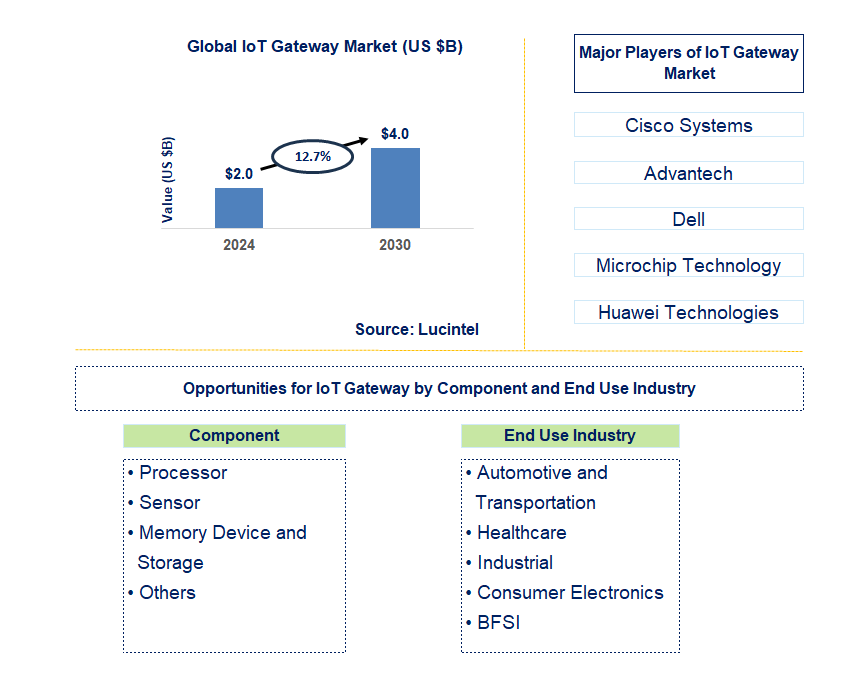
Key data points: The market size in 2030 = $4.0 billion, growth forecasts = 12.7% annually for the next 6 years. Scroll below to get more insights. This market report covers trends, opportunities, and forecasts in the global iot gateway market to 2030 by component (processor, sensor, memory device and storage, and others ), end use industry (automotive and transportation, healthcare, industrial, consumer electronics, BFSI, oil and gas, retail, aerospace and defense, other end use ), and region (North America, Europe, Asia Pacific, and the Rest of the World)
We'll send your sample report shortly.
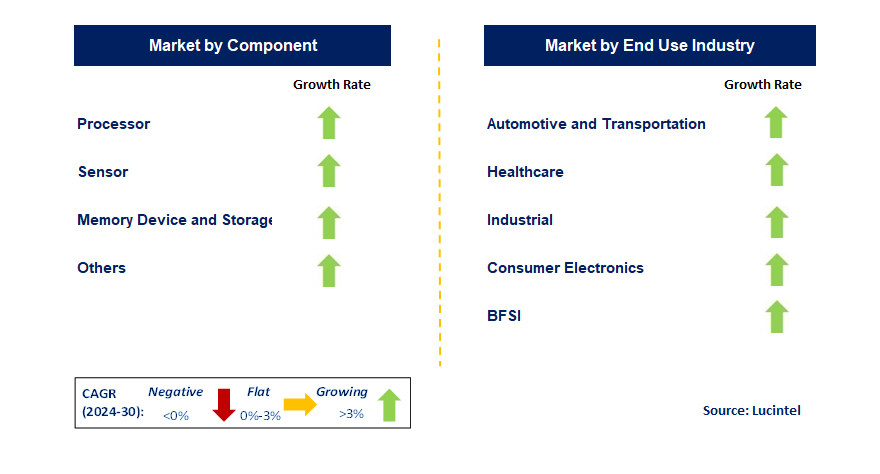
• Lucintel forecast that, within the component category, processor is expected to witness highest growth over the forecast period.
• Within the end use category, industrial will remain the largest segment.
• In terms of regions, APAC is expected to witness the highest growth over the forecast period. Gain Valuable insights for your business decisions with our comprehensive 150+ page report.
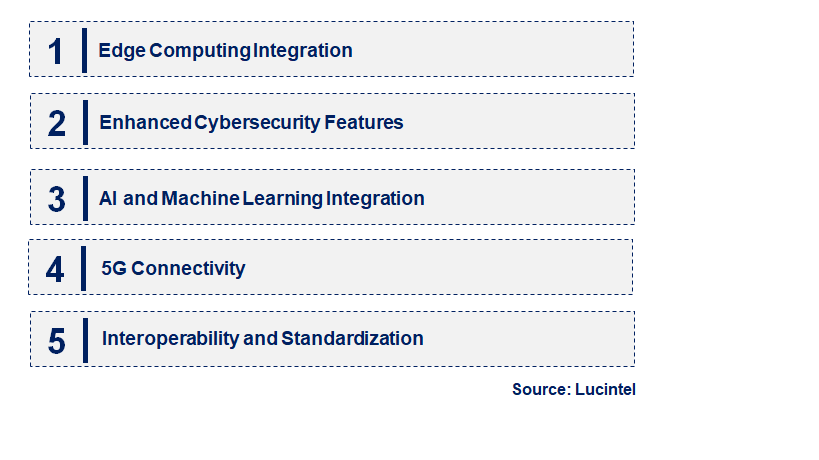
• Edge Computing Integration: Edge computing is increasingly integrated into IoT gateways, enabling data processing closer to the source. This reduces latency and bandwidth use by processing data locally rather than sending it to a central server. As IoT applications demand real-time responses, edge-enabled gateways offer faster and more efficient data handling. This trend supports enhanced performance in smart cities, industrial automation, and remote monitoring systems, where rapid data analysis is critical for operational efficiency.
• Enhanced Cybersecurity Features: With the rise in cyber threats, IoT gateways are incorporating advanced security measures to protect data and devices. Features such as encryption, secure boot, and intrusion detection systems are becoming standard. Enhanced cybersecurity is essential to safeguard sensitive information and maintain user trust. As IoT deployments grow, robust security protocols ensure that gateways can defend against attacks and vulnerabilities, making them more resilient in various applications, from industrial settings to consumer devices.
• AI and Machine Learning Integration: The integration of AI and machine learning into IoT gateways is transforming data processing capabilities. These technologies enable gateways to perform predictive analytics, anomaly detection, and intelligent decision-making at the edge. AI-enhanced gateways can analyze data patterns and optimize operations without relying on centralized cloud computing. This trend is driving advancements in smart manufacturing, autonomous systems, and personalized services, where real-time insights and adaptive responses are crucial.
• 5G Connectivity: The rollout of 5G technology is significantly impacting IoT gateways by providing higher data speeds, lower latency, and increased device connectivity. 5G-enabled gateways facilitate seamless communication between devices and the cloud, supporting applications that require high bandwidth and real-time performance. This trend is particularly relevant for emerging use cases such as autonomous vehicles, smart grids, and large-scale IoT networks, where 5G connectivity enhances overall system efficiency and reliability.
• Interoperability and Standardization: Interoperability and standardization are becoming key focus areas for IoT gateways, aiming to ensure seamless integration across different devices and platforms. As IoT ecosystems grow, gateways need to support various communication protocols and standards to enable smooth data exchange and system integration. This trend promotes greater flexibility and scalability in IoT deployments, facilitating more cohesive and user-friendly solutions across diverse applications and industries. These emerging trends edge computing, enhanced cybersecurity, AI integration, 5G connectivity, and interoperability are driving significant changes in the IoT gateway market. They address the growing need for real-time data processing, robust security, and seamless integration in increasingly complex IoT environments. As these trends continue to evolve, they will reshape how IoT gateways are developed and utilized, enhancing their capabilities and expanding their applications across various sectors.
• Enhanced Edge Computing Capabilities: Recent advancements in edge computing have significantly improved the performance of IoT gateways. Modern gateways now feature robust edge computing capabilities, allowing for real-time data processing and analytics directly at the source. This reduces latency, minimizes data transfer costs, and improves decision-making efficiency. As a result, businesses can deploy more responsive and reliable IoT solutions, enhancing operational efficiency and enabling more complex use cases.
• Integration of AI and Machine Learning: The integration of AI and machine learning (ML) into IoT gateways is revolutionizing data processing and management. Gateways equipped with AI and ML algorithms can perform advanced data analytics, predictive maintenance, and automated decision-making. This development not only enhances the functionality of IoT gateways but also enables smarter, more autonomous IoT systems, leading to better performance and reduced human intervention.
• Advancements in Security Protocols: With increasing concerns over data breaches and cyber-attacks, security has become a critical focus in IoT gateway development. Recent advancements include the implementation of advanced encryption methods, multi-factor authentication, and secure boot mechanisms. These improvements significantly bolster the security posture of IoT gateways, protecting sensitive data and ensuring compliance with stringent regulatory standards.
• Support for Multiple Communication Protocols: IoT gateways are now designed to support a wider range of communication protocols, including 5G, LPWAN, and Zigbee. This flexibility allows for seamless integration with diverse IoT devices and networks. By accommodating various protocols, gateways enhance interoperability, facilitate easier device connectivity, and expand the potential use cases across different industries.
• Edge-to-Cloud Integration: The seamless integration between edge devices and cloud platforms is a notable development in the IoT gateway market. Modern gateways facilitate efficient data synchronization between edge computing resources and cloud services, enabling scalable data storage, advanced analytics, and remote management. This integration supports hybrid architectures, allowing businesses to leverage both edge and cloud resources for optimized IoT solutions. These developments are collectively enhancing the functionality, security, and versatility of IoT gateways. Improved edge computing, AI integration, advanced security, multi-protocol support, and edge-to-cloud integration are driving innovations and expanding the applications of IoT gateways. As a result, the IoT gateway market is becoming more robust, addressing complex needs, and paving the way for more advanced IoT ecosystems.
• Smart Cities: IoT gateways play a crucial role in smart city initiatives by connecting and managing numerous urban sensors and devices. Opportunities lie in deploying gateways for traffic management, energy monitoring, and public safety. As cities become smarter, the demand for efficient, reliable gateways that can handle vast amounts of data and integrate with various city infrastructure components will grow, driving market expansion.
• Industrial Automation: In industrial automation, IoT gateways facilitate real-time monitoring and control of machinery and processes. The opportunity lies in providing gateways that support high-speed data transfer, rugged environments, and complex industrial protocols. By enabling predictive maintenance and optimizing operations, these gateways contribute to increased efficiency and reduced downtime, making them critical for the industrial sector.
• Healthcare: In the healthcare sector, IoT gateways are essential for connecting medical devices, patient monitoring systems, and health management platforms. The growth opportunity here involves developing gateways that ensure data accuracy, security, and compliance with health regulations. Enhanced connectivity and interoperability can improve patient outcomes and streamline healthcare operations, making this a promising application area.
• Retail: Retail environments increasingly rely on IoT gateways for managing inventory, point-of-sale systems, and customer experience enhancements. Opportunities in this sector include gateways that support seamless integration with various retail technologies and provide real-time analytics. Improved customer insights and operational efficiency can significantly benefit retail businesses, driving demand for advanced IoT solutions.
• Agriculture: IoT gateways in agriculture support precision farming by connecting sensors for soil monitoring, crop management, and livestock tracking. The growth opportunity lies in developing gateways that can operate in remote and harsh environments, handle diverse agricultural sensors, and enable data-driven farming practices. By improving yield and resource management, these gateways are pivotal in modernizing agriculture. The identified growth opportunities across smart cities, industrial automation, healthcare, retail, and agriculture reflect the diverse applications of IoT gateways. Each sector presents unique demands and potential for innovation, driving market expansion and creating new avenues for growth. By addressing these opportunities, companies can leverage the evolving IoT landscape to achieve competitive advantages and contribute to the advancement of IoT technologies.
• Increased IoT Adoption: The proliferation of IoT devices across various sectors, such as smart cities, healthcare, and manufacturing, fuels the demand for IoT gateways. These gateways enable seamless communication and data management between diverse IoT devices and central systems. As organizations adopt more IoT solutions for automation and data analytics, the need for efficient and reliable gateways escalates, driving market growth.
• Advancements in Connectivity Technologies: The evolution of connectivity technologies, such as 5G and LPWAN (Low Power Wide Area Network), enhances the performance and range of IoT gateways. These advancements enable more efficient data transfer, lower latency, and improved connectivity in remote and challenging environments. As connectivity technology progresses, it broadens the scope and application of IoT gateways, further propelling market expansion.
• Demand for Edge Computing: The shift towards edge computing, which processes data closer to its source, is a significant driver for IoT gateways. By reducing the latency and bandwidth required for data transmission to central servers, edge computing improves operational efficiency and real-time decision-making. IoT gateways play a pivotal role in edge computing architectures by aggregating and analyzing data locally before sending it to the cloud, thus enhancing overall system performance.
• Growing Focus on Cybersecurity: As IoT deployments expand, so do concerns about cybersecurity. IoT gateways are increasingly being designed with advanced security features to protect against data breaches and cyberattacks. Enhanced security protocols, such as encryption and secure boot mechanisms, are integrated into gateways to ensure data integrity and privacy. This growing emphasis on cybersecurity drives demand for more sophisticated IoT gateway solutions.
• Regulatory and Compliance Requirements: Regulatory standards and compliance requirements for data protection and interoperability are becoming more stringent. IoT gateways must adhere to various standards, such as GDPR and ISO/IEC 27001, to ensure lawful data handling and secure operations. These regulations drive the adoption of gateways that meet compliance requirements, influencing the market by promoting products that support industry standards and legal obligations. Challenges in the iot gateway market are:
• Interoperability Issues: One of the primary challenges in the IoT gateway market is ensuring interoperability among diverse IoT devices and platforms. With a wide range of communication protocols and standards in use, integrating devices from different manufacturers can be complex and costly. This lack of uniformity can hinder the seamless operation of IoT systems, potentially affecting the performance and efficiency of IoT gateways.
• High Deployment Costs: The initial cost of deploying IoT gateways, including hardware and software, can be substantial. For many organizations, especially small and medium-sized enterprises, these costs may be a barrier to entry. Additionally, the ongoing maintenance and upgrading expenses contribute to the overall financial burden. These high costs can limit the adoption of IoT gateways and slow down market growth.
• Data Privacy Concerns: As IoT gateways handle large volumes of sensitive data, privacy concerns are paramount. Ensuring that data collected and transmitted through gateways is protected against unauthorized access is critical. Data breaches or misuse can lead to significant legal and reputational consequences. Addressing these privacy issues requires robust data protection measures, which can be complex and resource-intensive to implement. The IoT gateway market is significantly influenced by various drivers and challenges. Technological advancements, increased IoT adoption, and a focus on cybersecurity propel market growth, while interoperability issues, high deployment costs, and data privacy concerns pose considerable challenges. Balancing these drivers and challenges is crucial for stakeholders aiming to optimize their IoT gateway solutions and capitalize on emerging opportunities. The market's future will depend on how effectively these factors are addressed, shaping the landscape of IoT technology and its applications.
• Cisco Systems
• Advantech
• Dell
• Microchip Technology
• Huawei Technologies
• Hewlett Packard Enterprise Development LP
• Samsara Networks
• Eurotech
• ADLINK Technology
• Kontron S&T AG
• Processor
• Sensor
• Memory Device and Storage
• Others
• Automotive and Transportation
• Healthcare
• Industrial
• Consumer Electronics
• BFSI
• North America
• Europe
• Asia Pacific
• The Rest of the World
• United States: In the United States, the IoT gateway market has seen substantial advancements in edge computing and AI integration. Companies are increasingly focusing on gateways that support advanced data analytics and machine learning at the edge, reducing latency and bandwidth use. There is also a strong push towards enhanced cybersecurity features to protect sensitive data. Key players like Cisco and Intel are leading innovations, integrating IoT gateways with cloud services and 5G connectivity to improve overall performance and scalability.
• China: China IoT gateway market is characterized by rapid expansion and significant government support. The country is heavily investing in smart city initiatives and industrial IoT applications. Major Chinese technology firms, such as Huawei and Alibaba, are developing advanced gateways that cater to a wide range of applications from smart manufacturing to urban infrastructure. The emphasis is on integrating IoT gateways with AI and big data analytics to drive efficiency and innovation in various sectors.
• Germany: Germany IoT gateway market is driven by its strong industrial base and focus on Industry 4.0. The country is leveraging IoT gateways to enhance manufacturing processes and integrate automation technologies. Companies are investing in gateways that support high-performance computing and real-time data processing. There is a notable emphasis on interoperability and adherence to stringent data protection regulations, ensuring that gateways can seamlessly integrate with existing systems while maintaining robust security measures.
• India: In India, the IoT gateway market is emerging with a focus on affordable and scalable solutions to support smart agriculture, healthcare, and urban development. The market is seeing growth due to increased adoption of IoT in various sectors, supported by government initiatives and infrastructure improvements. Indian companies are developing cost-effective gateways that address local needs and are tailored for high-volume, low-cost applications. Collaboration with international technology providers is also helping to advance the capabilities of local IoT solutions.
• Japan: Japan IoT gateway market is characterized by its emphasis on advanced technology integration and high standards of quality. Japanese companies are focusing on incorporating IoT gateways with robotics and automation for industrial applications. There is a significant push towards integrating IoT with 5G technology to enhance connectivity and performance. Additionally, Japan is seeing growth in smart home and healthcare IoT solutions, with gateways playing a crucial role in managing and optimizing these systems.


• Cisco Systems
• Advantech
• Dell
• Microchip Technology
• Huawei Technologies
• Hewlett Packard Enterprise Development LP
• Samsara Networks
• Eurotech
• ADLINK Technology
• Kontron S&T AG Q6. Which IoT gateway market segment will be the largest in future? Answer: Lucintel forecast that processor is expected to witness highest growth over the forecast period. Q7. In IoT gateway market, which region is expected to be the largest in next 5 years? Answer: APAC is expected to witness highest growth over the forecast period. Q.8 Do we receive customization in this report? Answer: Yes, Lucintel provides 10% customization without any additional cost.


Choose a license that fits your team. Instant PDF delivery.
Prices exclude taxes. Instant delivery. Custom licensing available on request.
Market Report · July 16, 2026
Market Report · July 15, 2026
Market Report · July 15, 2026
Trusted partner for strategic intelligence and business growth


Receive a complimentary market analysis tailored to your industry. Our analysts will identify key growth opportunities and competitive dynamics specific to your business.

Market size, growth rate, and key trend analysis for your specific sector.

Top competitor positioning and market share analysis.

Strategic recommendations backed by data-driven insights.
Get curated market intelligence and competitive moves straight to your inbox.
By subscribing, you agree to receive our monthly insights. Unsubscribe anytime.
Receive a complimentary market analysis tailored to your industry. Our analysts will identify key growth opportunities and competitive dynamics specific to your business.
Market size, growth rate, and key trend analysis for your specific sector.
Top competitor positioning and market share analysis.
Strategic recommendations backed by data-driven insights.
Get curated market intelligence, emerging trends, and competitive moves straight to your inbox each month.
By subscribing, you agree to receive our monthly insights. Unsubscribe anytime.
We'll send your sample report shortly.