
Report Feature
Ion Sources Market Trends and Forecast
The technologies in the ion sources market have undergone significant changes in recent years, with a shift from electron ionization to electrospray ionization, from chemical ionization to atmospheric pressure chemical ionization, and from gas discharge ion sources to matrix-assisted laser desorption/ionization. These advancements have enhanced the efficiency and precision of ionization processes in various applications across industries.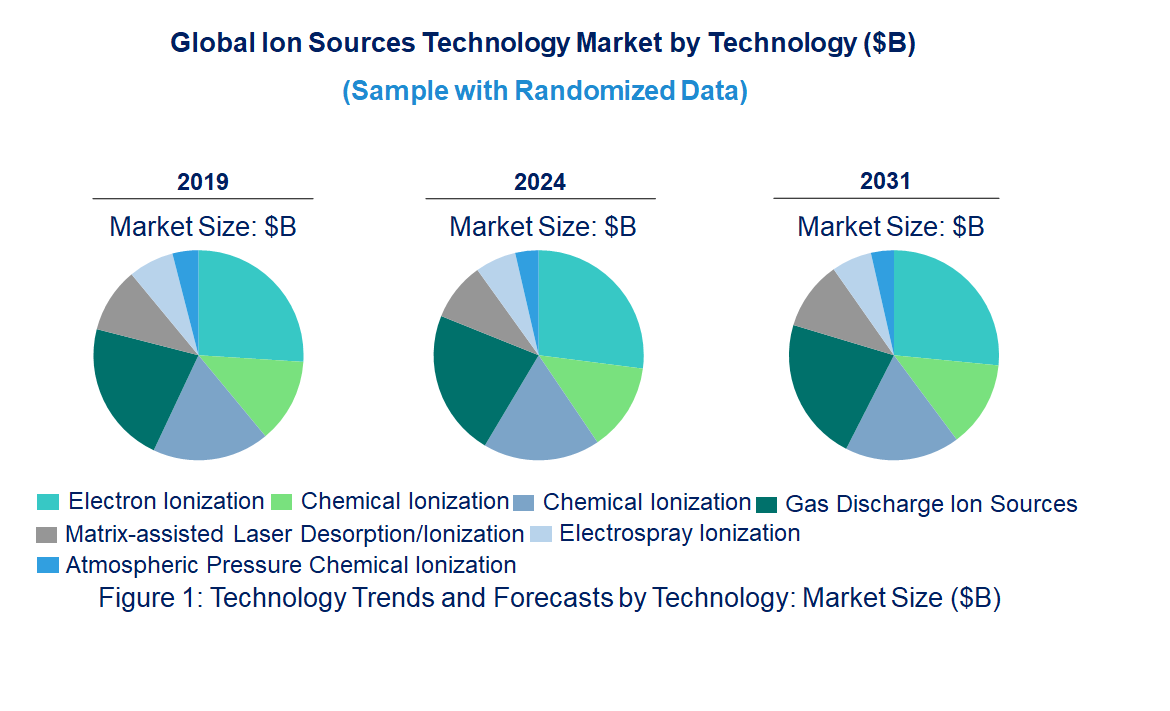
Emerging Trends in the Ion Sources Market
The ion sources market is evolving rapidly as technological advancements continue to drive improvements in precision, efficiency, and application versatility. These innovations are reshaping industries like pharmaceuticals, healthcare, petrochemicals, and environmental analysis. Emerging trends reflect the growing demand for more sensitive, reliable, and cost-effective ionization methods, as well as the need for greater integration of ion sources into automated systems and analytical instruments. Below are the five key trends currently shaping the Ion Sources Market:• Shift Toward Miniaturization: The trend towards miniaturization of ion sources is gaining momentum. Smaller, more compact ionization devices are becoming increasingly popular, driven by their ability to be integrated into portable or handheld devices. This is particularly relevant for applications in field analysis, where space and mobility are essential. Miniaturization also leads to reduced power consumption and cost, making ion sources more accessible for smaller labs and institutions.
• Development of Hybrid Ionization Technologies: Hybrid ionization techniques that combine the strengths of various technologies are becoming more prevalent. For example, combining Electrospray Ionization (ESI) with Atmospheric Pressure Chemical Ionization (APCI) allows for greater versatility, enabling ionization of a broader range of chemical compounds with increased sensitivity. This trend is particularly beneficial in complex analytical applications like drug discovery, environmental monitoring, and metabolomics.
• Advancements in Atmospheric Pressure Ionization (API) Techniques: Atmospheric Pressure Ionization techniques, including Atmospheric Pressure Chemical Ionization (APCI) and Electrospray Ionization (ESI), are evolving rapidly due to their high sensitivity and compatibility with a variety of compounds. These methods are increasingly being adopted in mass spectrometry for a wide array of analytical applications. The continuous improvements in these technologies are leading to more accurate and efficient detection of trace compounds in diverse industries, including healthcare, environmental, and petrochemical sectors.
• Integration with Automation and High-Throughput Systems: The growing trend of integrating ion sources with automated systems and high-throughput analytical platforms is enabling faster, more efficient analysis. Ion sources are being integrated into robotic systems, allowing for continuous sample processing with minimal human intervention. This is particularly important in industries like pharmaceuticals and research institutions, where rapid data acquisition and processing are crucial for large-scale screening and testing.
• Focus on Green Chemistry and Sustainable Practices: There is a rising focus on sustainability in the Ion Sources Market, with an emphasis on green chemistry and the development of ionization methods that minimize environmental impact. Technologies such as Matrix-assisted Laser Desorption/Ionization (MALDI) are being explored for their ability to work with minimal sample preparation and fewer solvents, reducing chemical waste. This trend aligns with the broader movement towards eco-friendly practices across many industries, including healthcare, manufacturing, and environmental monitoring. The ion sources market is being reshaped by technological advancements that enhance performance, portability, and sustainability. Miniaturization, hybrid technologies, and improved ionization methods such as API techniques are leading to more efficient and versatile applications across industries. Integration with automation systems and the adoption of sustainable practices are further contributing to the transformation, positioning the ion sources market for continued innovation and growth in the coming years.
Ion Sources Market : Industry Potential, Technological Development, and Compliance Considerations
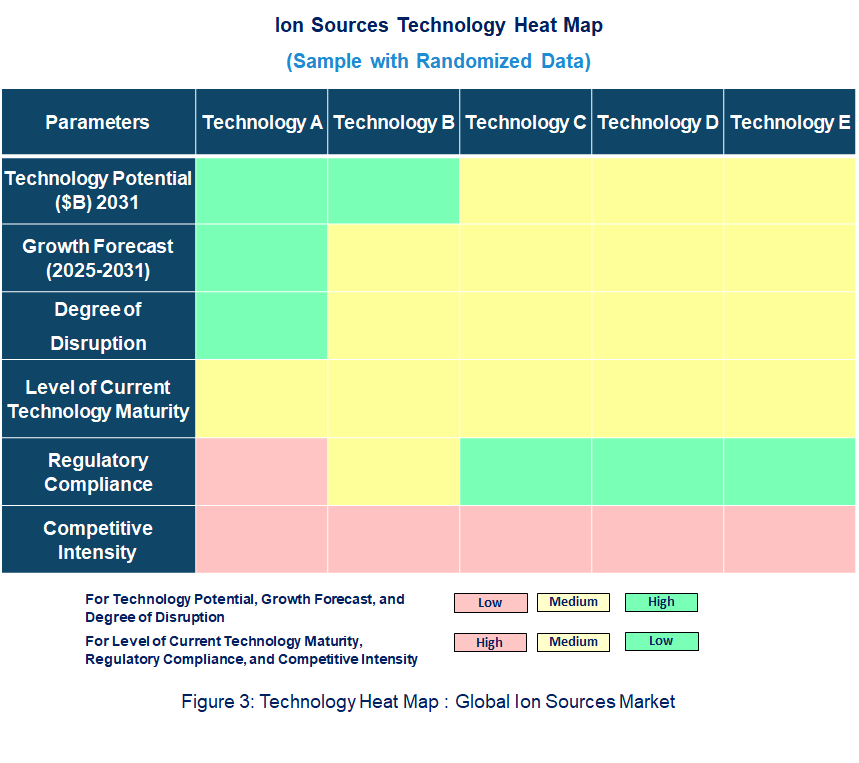
The ion sources market involves the development and application of technologies used to generate charged particles for various industrial and scientific applications. Ion sources are critical in fields such as mass spectrometry, semiconductor manufacturing, and material analysis. With growing demands in medical diagnostics, aerospace, and defense, the market for ion sources is expanding rapidly. These technologies can range from simple ionization techniques to complex, highly specialized systems. Innovation in ion source technology is crucial to meeting evolving industry requirements.• Technology Potential: Ion source technologies have vast potential, particularly in high-precision applications like mass spectrometry, particle accelerators, and ion implantation in semiconductor processing. The ability to generate highly controlled and stable ion beams is central to advancements in various sectors, such as healthcare (radiation therapies), research (material analysis), and space exploration (spacecraft propulsion).
• Degree of Disruption: While ion source technologies are well-established, emerging innovations in miniaturization, efficiency, and cost-effectiveness are expected to disrupt industries reliant on them. New ionization techniques or compact, portable sources could redefine research and medical fields, improving accessibility and performance.
• Level of Current Technology Maturity: Current technology maturity is high, with numerous commercialized ion sources in use. However, the continued development of more efficient and versatile ion sources for specific applications is ongoing.
• Regulatory Compliance: Ion sources, particularly in sectors like healthcare and aerospace, must comply with stringent regulations for safety, environmental impact, and performance standards.
Recent Technological development in Ion Sources Market by Key Players
The ion sources market has seen significant advancements in recent years, driven by increasing demand for precision analysis in fields such as mass spectrometry, biotechnology, and material science. Companies in this space are continually innovating to improve ionization techniques, enhance sensitivity, and broaden the applications of ion sources. The efforts of key players such as ZEROK Nanotech, Waters, Thermo Fisher Scientific Inc., Tescan, SCIEX, NanoLab, Intlvac, Hitachi High-Technologies, and Fibics Incorporated have been central to these developments. Their technologies are transforming industries by offering more accurate and efficient solutions for a wide range of analytical challenges.• ZEROK Nanotech: It has developed cutting-edge ion source technologies that aim to improve ionization efficiency for various industrial applications. Their innovations in nanotechnology-based sources have the potential to disrupt industries like material science and bioanalysis by offering higher resolution and sensitivity.
• Waters: It has been expanding its portfolio with advanced ionization technologies such as the Xevo TQ-XS mass spectrometer, which integrates Ion Source capabilities to provide ultra-sensitive and high-accuracy results. Their commitment to providing solutions for drug discovery and environmental testing is enhancing the capabilities of laboratories globally.
• Thermo Fisher Scientific Inc: The company continues to lead in the Ion Sources Market with technologies like the Q Exactive and Orbitrap mass spectrometers, which utilize advanced ionization methods such as ESI and APCI. These innovations are driving improvements in clinical diagnostics, proteomics, and environmental testing.
• Tescan: It is focusing on developing advanced Gas Discharge Ion Sources, which provide high precision in surface and material analysis. Their technology is being applied in semiconductor manufacturing and advanced material research, enhancing performance and cost-effectiveness in these sectors.
• SCIEX: It has made significant strides with its Electrospray Ionization (ESI) and Atmospheric Pressure Chemical Ionization (APCI) technologies, which are widely used in pharmaceutical and clinical labs. Their advancements have improved the accuracy and throughput of high-throughput screening processes for drug development.
• NanoLab: It focuses on providing next-generation ion sources for nanomaterials and nanotechnology applications. Their innovations in ion source technology are helping to drive advancements in semiconductor analysis and materials engineering, offering enhanced precision in atomic-level investigations.
• Intlvac: It has introduced new Gas Discharge Ion Sources that offer higher sensitivity and faster analysis, making them particularly valuable in surface science and materials analysis. Their products are designed to meet the needs of high-tech industries such as aerospace and automotive.
• Hitachi High-Technologies: It continues to push the boundaries with its advanced ion sources, particularly in the field of electron microscopy and materials science. Their innovations are crucial in applications requiring precise ion beam analysis, such as semiconductor manufacturing and defect inspection.
• Fibics: It Incorporated specializes in Focused Ion Beam (FIB) technology, which is essential in the analysis of microstructures and nanostructures. Their ion sources, used in conjunction with their FIB systems, provide enhanced resolution and are widely adopted in research labs and manufacturing processes requiring precision. These developments are significantly shaping the direction of the ion sources market, driving innovation across multiple sectors, from healthcare to materials science, and ensuring greater precision, efficiency, and application flexibility.
Ion Sources Market Driver and Challenges
The ion sources market is influenced by various drivers and challenges, shaping the future of ionization technologies in sectors like mass spectrometry, biotechnology, material science, and more. As demand for precise, efficient analysis increases, several growth opportunities are emerging. At the same time, the market faces ongoing challenges that require innovative solutions. The factors responsible for driving the ion sources market include:• Technological Advancements: Continuous innovations in ionization techniques, such as ESI, MALDI, and APCI, are driving the market’s growth. These advancements offer better sensitivity, accuracy, and efficiency in applications across healthcare, research, and industrial testing, fueling demand for next-generation ion sources.
• Demand in Pharmaceuticals and Healthcare: The increasing use of ion source technologies in drug discovery, clinical diagnostics, and biomarker identification is a key driver. The rise in chronic diseases and personalized medicine is pushing the need for advanced ionization methods in mass spectrometry and clinical labs.
• Growth in Semiconductor and Material Science Applications: Ion sources are critical for semiconductor manufacturing and advanced materials analysis, where precision is paramount. As the semiconductor industry expands, the demand for high-performance ion sources is growing, creating opportunities in this sector. Challenges in the ion sources market are:
• High Cost of Advanced Ionization Systems: While advanced ion sources offer high accuracy and efficiency, their initial cost remains a barrier for smaller laboratories and institutions. The cost of maintaining and upgrading these systems can also limit their widespread adoption, especially in emerging markets.
• Regulatory Compliance and Standardization: Ion sources used in medical and environmental applications are subject to strict regulatory standards. Adhering to these regulations is costly and time-consuming, and any changes in regulations can disrupt operations and product development timelines.
• Technical Complexity and Integration: The complexity of integrating ion source technologies with existing analytical equipment can be a challenge. Ensuring compatibility with other systems and maintaining ease of use are ongoing concerns that impact the widespread adoption of advanced ionization technologies. The ion sources market is experiencing significant growth due to advances in technology, increased demand in pharmaceuticals and material sciences, and expanding applications in emerging markets. However, challenges such as high costs, regulatory compliance, and technical complexity remain. Addressing these issues while capitalizing on growth opportunities, such as personalized medicine and portable devices, will drive the continued evolution of the market.
List of Ion Sources Companies
Companies in the market compete on the basis of product quality offered. Major players in this market focus on expanding their manufacturing facilities, R&D investments, infrastructural development, and leverage integration opportunities across the value chain. With these strategies ion sources companies cater increasing demand, ensure competitive effectiveness, develop innovative products & technologies, reduce production costs, and expand their customer base. Some of the ion sources companies profiled in this report includes.• Zerok Nanotech
• Waters
• Thermo Fisher Scientific Inc.
• Tescan
• Sciex
• Nanolab
Ion Sources Market by Technology
The ion sources market plays a critical role in various industries such as mass spectrometry, bioanalysis, and material sciences, with technologies designed to generate charged particles for precise analysis. Key ionization methods like electron ionization (EI), chemical ionization (CI), and electrospray ionization (ESI) have been foundational in analytical research. Emerging technologies such as gas discharge ion sources (GDIS), matrix-assisted laser desorption/ionization (MALDI), and atmospheric pressure chemical Iionization (APCI) are poised to disrupt existing processes. These advancements promise improvements in sensitivity, speed, and versatility across numerous applications. However, these technologies face challenges related to competitive intensity, regulatory compliance, and their readiness for widespread implementation.• Technology Readiness by Technology Type: The disruption potential of ionization technologies such as electron ionization (EI) and chemical ionization (CI) lies in their ability to provide precise, reliable data in mass spectrometry, revolutionizing industries like pharmaceuticals and environmental analysis. Gas discharge ion sources (GDIS) offer the promise of high sensitivity and efficient ion generation for diverse applications, including materials analysis. Matrix-assisted laser desorption/ionization (MALDI) holds high potential in proteomics and biotechnology, enabling faster and more accurate biomolecule analysis. Electrospray ionization (ESI) is poised to transform biological research by improving the analysis of large biomolecules, including proteins and nucleic acids. Atmospheric pressure chemical Ionization (APCI) could disrupt high-throughput screening in drug discovery by providing rapid analysis of complex samples. Each of these technologies brings innovations, making them valuable for specific industries while challenging traditional methods with enhanced capabilities and performance.
• Competitive Intensity and Regulatory Compliance: The competitive intensity within the ion sources market is high, as companies constantly innovate to enhance ionization efficiency and adaptability. Electron ionization and chemical ionization are well-established but face competition from newer technologies like ESI and MALDI, which offer greater sensitivity and application flexibility. Gas discharge ion sources and APCI are gaining traction due to their ability to handle complex sample types and provide rapid analysis. Regulatory compliance varies by technology, with stringent requirements for technologies used in medical, environmental, and defense applications. Ion source technologies, especially in sectors like healthcare, must adhere to safety and environmental regulations, ensuring accuracy, reliability, and minimal environmental impact.
• Disruption Potential by Technology Type: Electron ionization (EI) and chemical ionization (CI) are highly mature, with widespread use in analytical labs, offering excellent precision for organic compounds. Gas discharge ion sources (GDIS) are still evolving but demonstrate considerable promise for specialized applications, especially in material sciences. Matrix-assisted laser desorption/ionization (MALDI) is advancing rapidly and is now a key technology in proteomics and genomics. Electrospray Ionization (ESI) is well-established in bioanalysis, particularly for large biomolecules, while atmospheric pressure chemical ionization (APCI) is emerging as a preferred method for high-throughput drug screening. Competitive levels in these technologies vary EI, CI, and ESI dominate the market, while newer technologies like APCI and MALDI are growing in niche areas. Regulatory compliance for each technology depends on its application, with medical and environmental sectors requiring the highest levels of safety and accuracy.
Ion Sources Market Trend and Forecast by Technology [Value from 2019 to 2031]:
• Electron Ionization
• Chemical Ionization
• Chemical Ionization
• Gas Discharge Ion Sources
• Matrix-assisted Laser Desorption/Ionization
• Electrospray Ionization
• Atmospheric Pressure Chemical Ionization
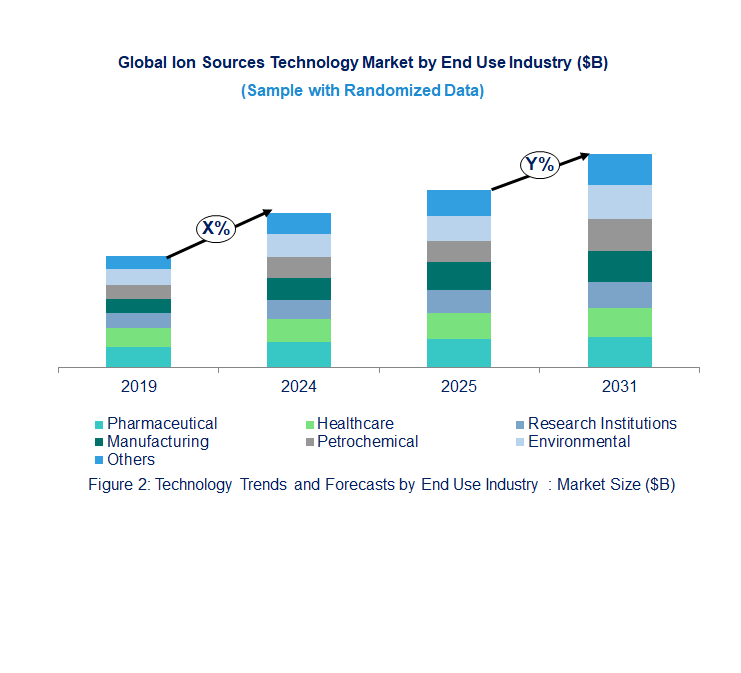
Ion Sources Market Trend and Forecast by End Use Industry [Value from 2019 to 2031]:
• Pharmaceutical
• Healthcare
• Research Institutions
• Manufacturing
• Petrochemical
• Environmental
• Others
Ion Sources Market by Region [Value from 2019 to 2031]:
• North America
• Europe
• Asia Pacific
• The Rest of the World
• Latest Developments and Innovations in the Ion Sources Technologies
• Companies / Ecosystems
• Strategic Opportunities by Technology Type
Features of the Global Ion Sources Market
Market Size Estimates: Ion sources market size estimation in terms of ($B). Trend and Forecast Analysis: Market trends (2019 to 2024) and forecast (2025 to 2031) by various segments and regions. Segmentation Analysis: Technology trends in the global ion sources market size by various segments, such as end use industry and technology in terms of value and volume shipments. Regional Analysis: Technology trends in the global ion sources market breakdown by North America, Europe, Asia Pacific, and the Rest of the World. Growth Opportunities: Analysis of growth opportunities in different end use industries, technologies, and regions for technology trends in the global ion sources market. Strategic Analysis: This includes M&A, new product development, and competitive landscape for technology trends in the global ion sources market. Analysis of competitive intensity of the industry based on Porter’s Five Forces model.Table of Contents
Methodology
- In-depth interviews of the major players in this market
- Detailed secondary research from competitors’ financial statements and published data
- Extensive searches of published works, market, and database information pertaining to industry news, company press releases, and customer intentions
- A compilation of the experiences, judgments, and insights of Lucintel’s professionals, who have analyzed and tracked this market over the years.


Buy Now
Choose a license that fits your team. Instant PDF delivery.
Prices exclude taxes. Instant delivery. Custom licensing available on request.
Key Questions
- • What are some of the most promising potential, high-growth opportunities for the technology trends in the global ion sources market by technology (electron ionization, chemical ionization, chemical ionization, gas discharge ion sources, matrix-assisted laser desorption/ionization, electrospray ionization, and atmospheric pressure chemical ionization), end use industry (pharmaceutical, healthcare, research institutions, manufacturing, petrochemical, environmental, and others), and region (North America, Europe, Asia Pacific, and the Rest of the World)?
- • Which technology segments will grow at a faster pace and why?
- • Which regions will grow at a faster pace and why?
- • What are the key factors affecting dynamics of different technology? What are the drivers and challenges of these technologies in the global ion sources market?
- • What are the business risks and threats to the technology trends in the global ion sources market?
- • What are the emerging trends in these technologies in the global ion sources market and the reasons behind them?
- • Which technologies have potential of disruption in this market?
- • What are the new developments in the technology trends in the global ion sources market? Which companies are leading these developments?
- • Who are the major players in technology trends in the global ion sources market? What strategic initiatives are being implemented by key players for business growth?
- • What are strategic growth opportunities in this ion sources technology space?
- • What M & A activities did take place in the last five years in technology trends in the global ion sources market?


