
Market Report · July 22, 2026

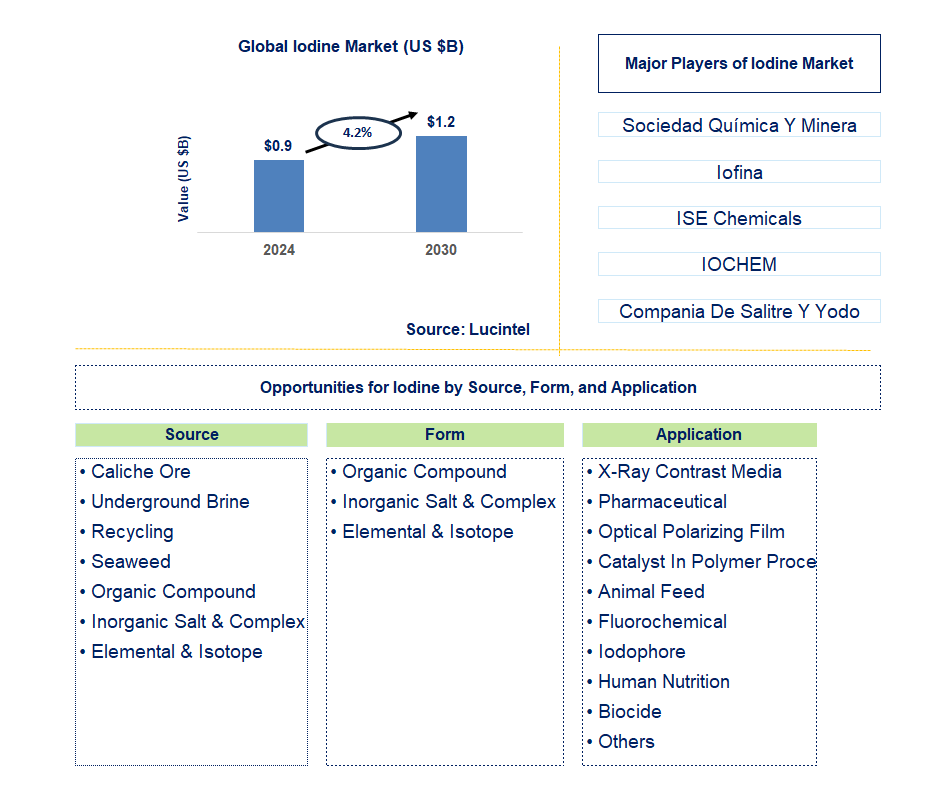
Key data points: The market size in 2030 = $1.2 billion, growth forecast = 4.2% annually for the next 6 years. Scroll below to get more insights. This market report covers trends, opportunities, and forecasts in the global iodine market to 2030 by source (caliche ore, underground brine, recycling, and seaweed), form (organic compound, inorganic salt & complex, and elemental & isotope), application (x-ray contrast media, pharmaceutical, optical polarizing film, catalyst in polymer processing, animal feed, fluorochemical, iodophore, human nutrition, biocide, and others), and region (North America, Europe, Asia Pacific, and the Rest of the World)
We'll send your sample report shortly.
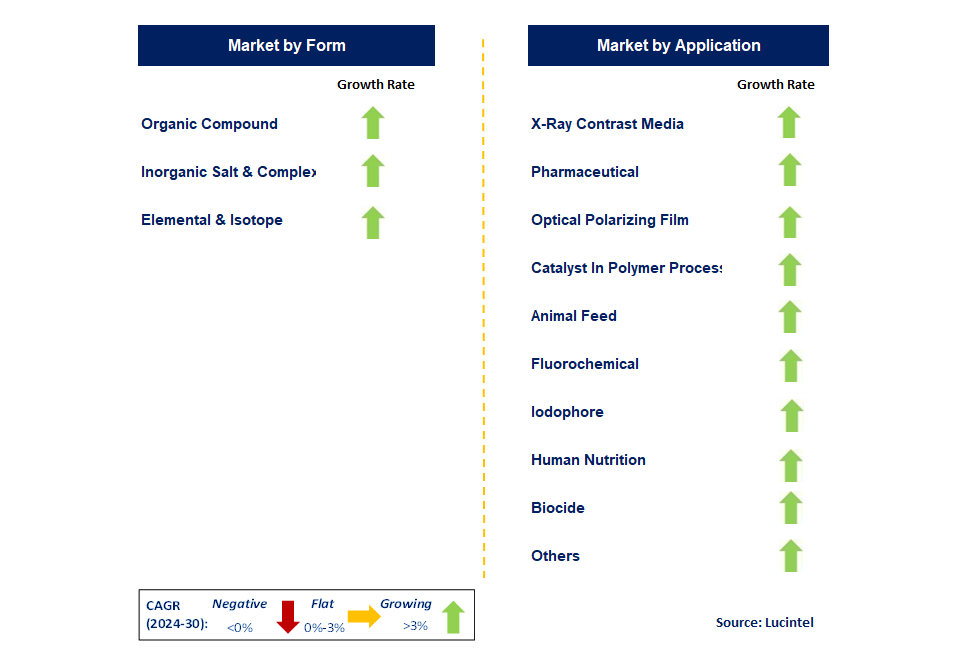
• Lucintel forecasts that, within the form category, organic compound will remain the largest segment over the forecast period because they are used as pesticides and as soil disinfectants in agrochemical industry and as additive in pet food and cattle feed with high bioavailability.
• Within the application category, x-ray contrast media will remain the largest segment due to rising incidence of long-term conditions including cancer, neurological problems, and cardiovascular diseases, which call for diagnostic imaging tests like MRIs, CT scans, and X-rays.
• In terms of regions, North America will remain the largest region over the forecast period due to rise in the meat consumption, increase in the poultry industry, along with the growing demand for iodine in the healthcare industry for thyroid disorders and other medical applications in the region. Gain valuable insights for your business decisions with our comprehensive 150+ page report. The market for iodine is undergoing significant changes, driven by rising demand in various sectors such as pharmaceuticals, agriculture, and industrial applications. Developments in the market have been influenced by technological advancements, regulatory changes, and supply-demand dynamics. Key players in the United States, China, Germany, India, and Japan are responding to these trends with strategic initiatives aimed at expanding production capacities while striving to achieve sustainability and meet the evolving needs of the market. Understanding these moves is crucial for stakeholders to navigate the complex global iodine landscape effectively.
• United States: The iodine market in the US has experienced growth due to increasing demand from pharmaceuticals and industry. Focus has been directed towards expanding production capabilities as well as adopting sustainable practices. Recent developments include improvements in extraction technologies, which are more efficient, and exploring alternative sources of iodine. Additionally, the US benefits from a strong regulatory framework that supports innovation and high-quality standards. Increased domestic production and reduced reliance on imports are strategic priorities driven by supply chain considerations and geopolitical factors.
• China: China remains a major player in the global iodine market, being both one of the largest producers and consumers. Recent developments include significant investments aimed at increasing the capacity of iodine production facilities and improving extraction technologies. Furthermore, China is focusing on enhancing efficiency in the use of iodine across various sectors, including agriculture and medicine. Additionally, there is an exploration of new markets and applications, prompted by rising demand within the country, as well as concerns over environmental pollution from iodine production processes.
• Germany: Germany’s robust industrial base supports the advancement of iodine applications, particularly in pharmaceuticals and chemical processes. Recent developments also include the adoption of sustainable manufacturing practices and the development of innovative compounds based on iodine. The country is involved in collaborative research efforts aimed at identifying new uses for iodine across multiple industries, such as healthcare imaging and renewable energy systems. Germany’s stringent regulatory environment ensures high standards for both the production and utilization of iodine, aligning with broader EU sustainability goals.
• India: India is witnessing an expanding iodine market due to growing demand in the health and agricultural sectors. Recent developments include efforts to increase local production while minimizing dependence on imports. This is being supported by the Indian government through initiatives to improve the efficiency of iodine extraction and its use in public health programs. In addition, there is a focus on agriculture-based applications, such as iodine-based fertilizers, to enhance crop yields and address iodine deficiency issues.
• Japan: Japan’s high-tech sectors, including electronics and pharmaceuticals, are experiencing advances in the iodine market. Other recent developments include innovations in advanced materials based on iodine and an emphasis on sustainability in production processes. Japan is also exploring new uses for iodine in medical diagnostics and imaging. All these developments are driven by a strong R&D focus, backed by stringent regulations that ensure safety and quality while promoting innovation in iodine applications. A more than 150-page report is developed to help in your business decisions.
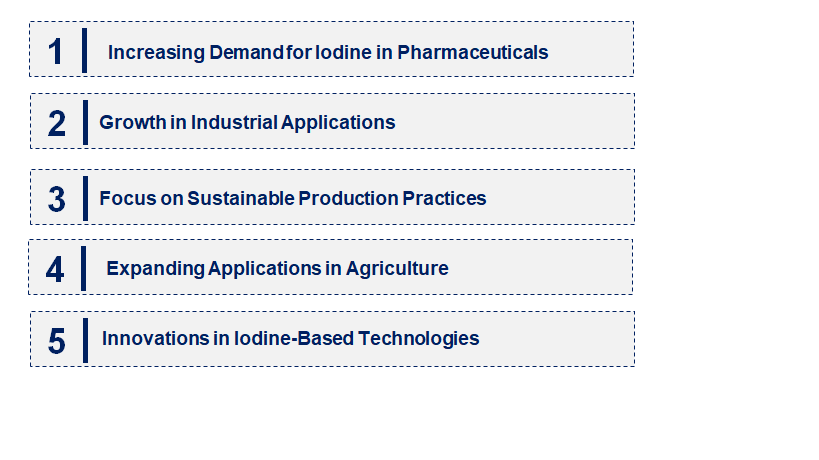
• Increasing Demand for Iodine in Pharmaceuticals: There has been increased demand for iodine by pharmaceuticals due to its application in antiseptics, contrast media used during imaging, and other medical uses. This trend has been driven by innovations in drugs and diagnostic agents that have an iodine base. The growing focus on healthcare, along with advancements in medical technologies, is expanding the use of iodine into newer therapeutic areas. This development has led to investments aimed at improving the effectiveness and safety of iodine-based drugs through enhanced R&D activities and increased production volumes.
• Growth in Industrial Applications: Iodine is increasingly utilized in a range of industrial sectors, such as catalysts used in chemical reactions, LCD screens, and high-tech materials, among others. Expansion of these industries requires highly qualitative iodine compounds and high-purity forms. Technological breakthroughs in industrial processes have improved utilization efficiency, resulting in new applications and expanding market opportunities for producers and suppliers within this sector.
• Focus on Sustainable Production Practices: Environmental concerns, coupled with regulatory pressures, are making sustainability a critical issue within the global iodine markets. Corporations are adopting environmentally friendly techniques, such as using renewable energy sources during extraction and manufacturing processes, as well as minimizing wastage wherever possible. Innovations in recycling and recovery methods from waste substances containing iodide are also gaining momentum, especially as less damaging, environmentally friendly approaches are being sought. This is driven by the need to minimize the environmental impact of iodine production and align with global sustainability goals, enhancing the market’s appeal to environmentally conscious consumers and investors.
• Expanding Applications in Agriculture: There is a growing utilization of iodine in agriculture, particularly through iodine-based fertilizers and soil conditioners. Iodine is known to enhance crop yields and address deficiencies of this element within soils. Changes in farming methodologies are leading to increased consideration of how iodine may best be used to improve soil health and plant productivity. As such, there has been a rise in research on its use in agriculture, as well as a focus on sustainable agricultural practices, which opens new doors for iodine producers.
• Innovations in Iodine-Based Technologies: Technological advancements have led to new materials and applications that rely on iodine compounds. Such developments include those used in advanced electronics like medical imaging and renewable energy systems using iodine-based compounds. Research into novel uses for iodine is expanding markets by offering high-tech solutions where they were not previously available. These innovations are pushing the boundaries of traditional iodine uses and positioning iodine as a critical component in cutting-edge technologies, fueling growth and diversification in the iodine market. The landscape of the iodine market is being significantly reformed by emerging trends. Demand for more pharmaceuticals and industrial applications, sustainable production practices, wider applications in agriculture, and technological innovation have been key growth drivers and transformative agents. These trends indicate a shift towards more efficient, environmentally friendly, and technologically advanced uses of iodine. Consequently, the market must embrace these changes as they present new opportunities to investors and innovators, while aligning with growing industry demands in relation to global sustainability objectives.
• Expansion of Production Capabilities: The iodine market is being shaped by recent investments in expanding production capacities. Major producers are upgrading facilities and increasing output to meet growing global demand. For example, new extraction plants have been established, while others have implemented advanced processing technologies aimed at enhancing efficiency and reducing costs. This expansion is important because it addresses the growing need for iodine in various sectors, such as pharmaceuticals and industrial applications. Upgraded production capabilities also help stabilize the supply chain and enhance market growth by ensuring a constant, reliable flow of iodine that can meet diverse consumer requirements.
• Advancements in Extraction Technologies: Innovations in extraction technologies greatly influence the iodine market. New methods, such as enhanced solvent extraction and advanced electrochemical processes, improve the efficiency and yield of iodine recovery. These improvements also reduce environmental impact and operational costs, making iodine production more sustainable. This will help to reduce waste and energy consumption, allowing producers to meet rising demand without increasing pollution. By embracing these modern extraction techniques, firms can offer competitive prices while contributing to a greener iodine supply chain.
• Growth in Demand for Iodine-Based Pharmaceuticals: The demand for iodine-based pharmaceuticals has increased due to their critical role in medical applications, such as antiseptics, contrast agents, and therapy treatments. This rise is driven by recent developments in medical technology and increased healthcare spending. Innovations in drug research using iodine elements, along with diagnostic imaging, will further drive market expansion. This demonstrates how significant iodine is in today’s medicine, providing pharmaceutical companies with opportunities to develop new products and applications that will further expand the iodine market.
• Focus on Sustainable Practices: Environmental sustainability practices are becoming more prominent in the iodine market as companies adopt green production approaches, such as using renewable energy sources and implementing waste reduction strategies. Regulatory pressures, coupled with consumer demand for greener products, are pushing for sustainable development. Recycling and recovering iodine from waste have become increasingly popular among organizations. These practices not only reduce environmental impact but also make the market more attractive to ecologically aware investors, helping sustain industry growth over time.
• Expansion of Applications in Agriculture: There has been an increasing use of iodine, particularly in the development of iodine-based fertilizers and soil conditioners needed to address soil deficiencies, which can lower crop yields. New research findings highlight the role that iodine plays in improving agricultural productivity and soil health. The growing demand for iodine-based agricultural solutions reflects the agricultural sector's search for more effective and sustainable interventions. This trend is creating new markets while broadening the field of application, thus boosting growth within the iodine sector. The iodine market is evolving through production expansion, improved extraction technologies, and increasing demand for iodine-derived medicines. In addition to the adoption of sustainable practices, the growth in iodine applications in agriculture also contributes to market development. These developments indicate a shift toward higher efficiency, creativity, and environmental friendliness, which will enable continued growth and adaptation of the iodine sector to ever-changing industrial requirements and global challenges.
• Pharmaceuticals: One of the major advancements in the medical field has been the development of drugs to fight cancerous cells, thereby reducing cancer-related deaths. The growing demand for medical diagnostics and treatments using iodine-based compounds underpins this change. Innovations have led to new antiseptics and enhanced contrast agents for imaging, while opening up new markets for expansion. With increasing healthcare investments and advances in medical technology, iodine is now considered a vital element in contemporary healthcare solutions.
• Agriculture: Iodine-based fertilizers are increasingly used in agricultural practices that aim to improve soil health by addressing deficiencies in essential crop nutrients. As a result, iodine's role in maintaining soil fertility and combating nutrient deficiencies in crops is being recognized more widely than ever before. Innovation-driven increases in iodine-based agricultural chemicals have led to positive effects on both environmental sustainability and productivity improvements within the global agricultural sector, contributing to sustainable farming practices.
• Industrial Applications: Iodine plays a crucial role as a catalyst in chemical processes and as a component in high-tech materials, making it an area with significant growth potential. The demand for high-purity iodides has increased due to technological advancements driven by industry demands. This increase in demand also requires better technology applications than previous trends, such as when LCD screens were more expensive. As a result, there is a rising demand for innovative ideas and advancements in areas like electronics, liquid crystal displays, and chemical synthesis. The industrial sector requires unique iodine compounds through effective production processes, which are expected to shape the future of the iodine market.
• Water Treatment: Water quality problems are increasingly being solved using iodine-based disinfectants and purification systems. The reason for this growth lies in iodine's ability to eliminate disease-causing microorganisms, making water safe again. As global issues like pollution and health risks have become more prevalent, there is growing demand for reliable water purification methods. Iodine manufacturers can take advantage of this opportunity to create complex domestic products with innovative features.
• Emerging Technologies: Renewable energy sources have opened up opportunities for iodine's application in new technologies, such as photoelectric cells and applied coatings. These materials, which are becoming more popular, include iodine-based photoelectric cells and advanced coatings for glasses or sheaths used in various industries, including architecture. Iodine is playing an increasingly significant role in developing new applications and solutions for energy storage devices, sensors, and high-tech devices. It has become more important than ever as an enabler of new technology development, opening up new markets and applications through constant innovation. The strategic growth opportunities within various important applications, such as pharmaceuticals, agriculture, industrial processes, water treatment, and emerging technologies, are present in the iodine market today. These opportunities represent diverse ways in which iodine is contributing to addressing global challenges and meeting the dynamically evolving needs of industry practices at large scales. By focusing on these sectors, companies can capitalize on market trends and steer innovation toward long-term prosperity in the dynamic and growing iodine markets.
• Technological Advancements: Improved mining techniques, including superior solvent extraction methods and electrochemical processes, have been instrumental in driving the market forward. These advancements improve efficiency and output levels, reduce operational costs, and address environmental concerns, making production more sustainable. As technology advances, new areas for iodine applications arise, thus expanding the market size significantly. Companies embracing cutting-edge technologies are able to enhance competitiveness, improve profitability, and significantly increase supply for various industries.
• Growing Demand in Pharmaceuticals: Iodine’s use in medicines such as antiseptics, contrast agents for imaging tests, and thyroid medication has driven research into the iodine market globally. Healthcare expenditures continue to rise, while advancements in medical products require increasing amounts of iodine-based materials to support them. Consequently, there is a growing trend towards expanding R&D activities and production capacities aimed at meeting the rising demand for medical diagnostics and treatments. The global focus on health and wellness programs also stabilizes demand and increases the need for iodine in pharmaceutical applications.
• Expansion in Industrial Applications: Manufacturers in chemical plants and electronics firms are increasingly selecting iodine due to its ability to perform and add value within their production processes. As industrial techniques and technologies continue to advance, the demand for higher-quality iodine and its derivatives grows. Iodine is used as a catalyst in various industrial applications, including high-tech materials. The iodine market continues to expand because industrial uses of this element have diversified, enabling new entrants to profit in this sector.
• Increased Focus on Sustainable Practices: As part of the global push for greener practices, there is growing emphasis on sustainability in the iodine market due to both regulatory pressure and consumer demand for eco-friendly products. More companies are producing greener alternatives, while others focus on recycling or reclaiming waste iodine. These efforts help preserve the planet and improve the image of businesses. It is essential that all companies recognize their responsibility and adopt cleaner production alternatives in compliance with environmental laws. This transition towards sustainable development not only supports long-term growth but also aligns with global efforts to reduce ecological footprints.
• Rising Agricultural Demand: A significant factor driving the increased use of iodine by farmers is its application in fertilizers and soil conditioners. These products help overcome soil deficiencies and increase crop productivity, which is essential for ensuring food security. As farming practices evolve globally, the demand for sustainable solutions pushes the use of iodine-based agricultural products. The introduction of new agrochemicals based on iodine offers better opportunities for business expansion in agriculture, thereby boosting the global food supply. Challenges in the iodine market include:
• Supply Chain Disruptions: Supply chain disruptions pose a major challenge for manufacturers who rely on iodine as a raw material. For instance, events like the Olympic Games may create tension between countries or cause heavy rainfall in some regions, disrupting the supply of iodine and leading to production delays or inefficiencies. When developing resilient supply chain strategies, firms must diversify their suppliers and improve inventory management to better respond to changing market conditions. To mitigate risks and maintain stable iodine supplies, companies must develop more robust sourcing strategies with multiple suppliers.
• High Production Costs: The iodine industry faces high production costs, which remain an ongoing issue. The costs of extraction and purification processes are prohibitively high due to the complex nature of these methods and rising raw material prices. These expenses can reduce profitability and erode competitive advantage. To reduce such costs, firms must optimize production procedures, invest in technologies that enhance efficiency, and seek cost-effective alternatives that allow them to manage output costs while still seizing market opportunities.
• Stringent Regulatory Requirements: Stringent regulatory requirements for iodine production and use exist across regions, but compliance varies depending on the location. The certification process alone requires substantial financial investment to meet safety and environmental regulations. Ongoing changes in regulations may complicate market operations and delay product development. Corporations must stay informed about regulatory changes to ensure compliance, enabling uninterrupted operations in commercial environments. The iodine market is driven by several factors, including technological advancements, rising pharmaceutical demand, industrial expansions, sustainability efforts, and agricultural needs. However, challenges such as supply chain disruptions, high production costs, and stringent regulations affect market dynamics. Therefore, stakeholders must carefully balance these drivers with the limitations to take advantage of opportunities while minimizing risks. Such strategies will enable businesses to succeed in the developing iodine market, positioning themselves for future stability. Long-term success can be achieved by helping companies adapt to the ongoing transition within the iodine market.
• Sociedad Química Y Minera
• Iofina
• ISE Chemicals
• IOCHEM
• Compania De Salitre Y Yodo
• Algorta Norte
• Nippoh Chemicals
• Kanto Natural Gas Development
• Toho Earthtech
• Godo Shigen
• Toho Earthtech
• Godo Shigen
• Caliche Ore
• Underground Brine
• Recycling
• Seaweed
• Organic Compound
• Inorganic Salt & Complex
• Elemental & Isotope
• Organic Compound
• Inorganic Salt & Complex
• Elemental & Isotope
• X-Ray Contrast Media
• Pharmaceutical
• Optical Polarizing Film
• Catalyst In Polymer Processing
• Animal Feed
• Fluorochemical
• Human Nutrition
• Biocide
• Others
• North America
• Europe
• Asia Pacific
• The Rest of the World


• Sociedad Química Y Minera
• Iofina
• ISE Chemicals
• IOCHEM
• Compania De Salitre Y Yodo
• Algorta Norte
• Nippoh Chemicals
• Kanto Natural Gas Development
• Toho Earthtech
• Godo ShigenQ6. Which iodine market segment will be the largest in future?Answer: Lucintel forecasts that organic compound will remain the largest segment over the forecast period because they are used as pesticides and as soil disinfectants in agrochemical industry and as additive in pet food and cattle feed with high bioavailability.Q7. In iodine market, which region is expected to be the largest in next 5 years?Answer: North America will remain the largest region over the forecast period due to rise in the meat consumption, increase in the poultry industry, along with the growing demand for iodine in the healthcare industry for thyroid disorders and other medical applications in the region. Q.8 Do we receive customization in this report? Answer: Yes, Lucintel provides 10% customization without any additional cost.


Choose a license that fits your team. Instant PDF delivery.
Prices exclude taxes. Instant delivery. Custom licensing available on request.
Market Report · July 22, 2026
Market Report · July 22, 2026
Market Report · July 22, 2026
Trusted partner for strategic intelligence and business growth


Receive a complimentary market analysis tailored to your industry. Our analysts will identify key growth opportunities and competitive dynamics specific to your business.

Market size, growth rate, and key trend analysis for your specific sector.

Top competitor positioning and market share analysis.

Strategic recommendations backed by data-driven insights.
Get curated market intelligence and competitive moves straight to your inbox.
By subscribing, you agree to receive our monthly insights. Unsubscribe anytime.
Receive a complimentary market analysis tailored to your industry. Our analysts will identify key growth opportunities and competitive dynamics specific to your business.
Market size, growth rate, and key trend analysis for your specific sector.
Top competitor positioning and market share analysis.
Strategic recommendations backed by data-driven insights.
Get curated market intelligence, emerging trends, and competitive moves straight to your inbox each month.
By subscribing, you agree to receive our monthly insights. Unsubscribe anytime.
We'll send your sample report shortly.