
Market Report · July 22, 2026

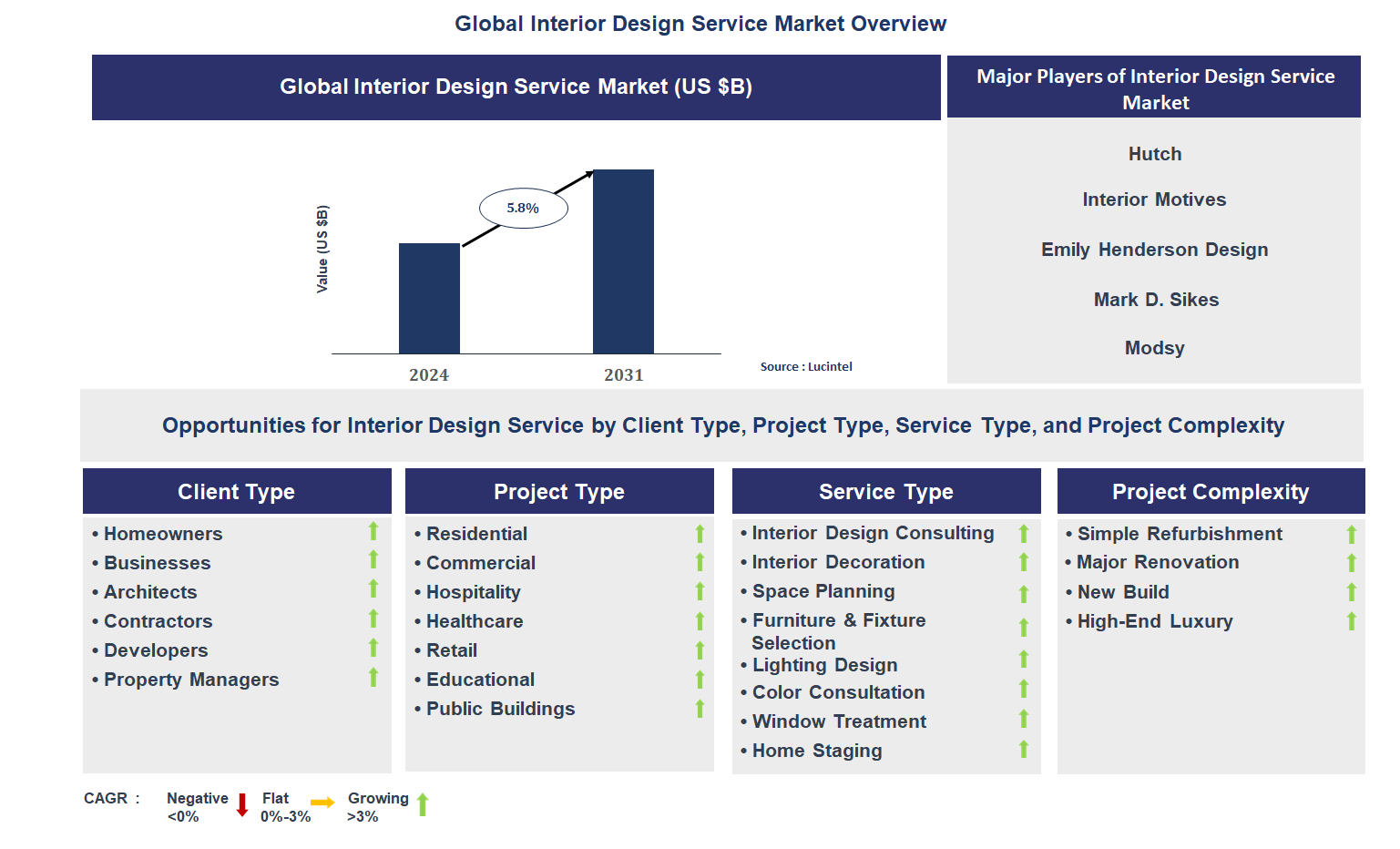
Key data points: The growth forecast = 5.8% annually for the next 7 years. Scroll below to get more insights. This market report covers trends, opportunities and forecasts in interior design service market to 2031 by client type (homeowners, businesses, architects, contractors, developers, and property managers), project type (residential, commercial, hospitality, healthcare, retail, educational, and public buildings), service type (interior design consulting, interior decoration, space planning, furniture & fixture selection, lighting design, color consultation, window treatment, and home staging), project complexity (simple refurbishment, major renovation, new build, and high-end luxury), and region (North America, Europe, Asia Pacific, and the Rest of the World)
We'll send your sample report shortly.
• Lucintel forecasts that, within the client type category, homeowner is expected to witness the highest growth over the forecast period.
• Within the project type category, residential is expected to witness the highest growth.
• In terms of region, APAC is expected to witness the highest growth over the forecast period. Gain valuable insights for your business decisions with our comprehensive 150+ page report. Sample figures with some insights are shown below.
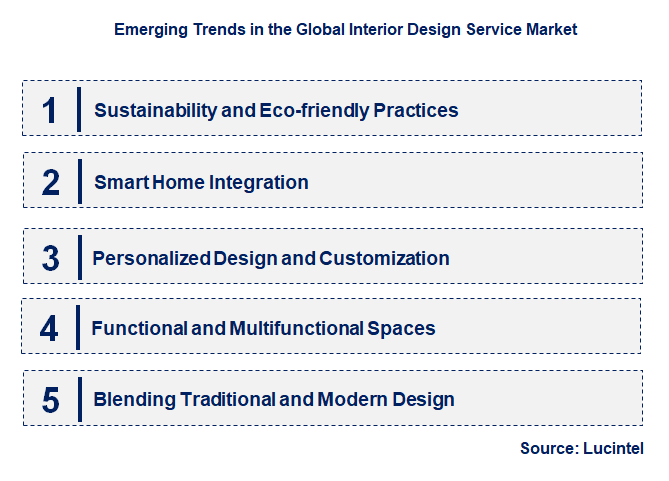
• Sustainability and Eco-friendly Practices: As environmental awareness grows, interior designers are prioritizing sustainability by incorporating eco-friendly materials and energy-efficient solutions into their designs. This trend includes using recycled materials, low-VOC paints, and energy-saving appliances. It has become a defining feature of modern design, attracting eco-conscious clients who want their homes and offices to align with their values.
• Smart Home Integration: The rise of IoT technology is influencing interior design. Smart home devices like thermostats, lights, and security systems are being integrated into home designs. Consumers are seeking seamless, tech-driven living experiences, which has led designers to create spaces that are not only stylish but also equipped with automated features for convenience and energy efficiency.
• Personalized Design and Customization: Consumers are increasingly opting for interior designs that reflect their unique personalities and lifestyles. The demand for custom furniture, personalized color schemes, and bespoke decorations is rising. This trend is allowing designers to move beyond traditional design approaches, creating one-of-a-kind interiors that cater to individual preferences and tastes.
• Functional and Multifunctional Spaces: In response to the changing work environment, particularly after the COVID-19 pandemic, consumers are requesting multifunctional spaces. Designers are creating flexible areas that can serve as home offices, gyms, or entertainment spaces. This trend is especially significant in urban settings where space is limited, making it essential to maximize functionality without sacrificing style.
• Blending Traditional and Modern Design: A growing trend is the fusion of traditional elements with modern aesthetics. In countries like India and China, there’s a strong desire to blend cultural heritage with contemporary design. This trend is seen in the use of traditional materials or motifs in modern layouts, allowing for spaces that respect history while embracing modern design principles. Emerging trends in the interior design service market are pushing the industry toward more personalized, sustainable, and tech-driven solutions. These trends reflect broader consumer demands for functionality, eco-consciousness, and innovative living experiences, reshaping how interior spaces are designed and utilized globally.
• Rise of Virtual Design Tools: The adoption of digital tools, such as 3D modeling, virtual reality (VR), and augmented reality (AR), is transforming the way designers interact with clients. These technologies allow for immersive experiences where clients can visualize their future spaces before committing to design plans. They also streamline the design process, enhancing accuracy and communication.
• Focus on Sustainability: Sustainability has become a core pillar in interior design. Clients are increasingly seeking eco-friendly solutions, leading designers to incorporate sustainable materials, energy-efficient lighting, and water-saving fixtures. Green certifications for buildings, such as LEED, are becoming a requirement for many clients, pushing designers to adopt environmentally friendly practices.
• Customization and Personalized Services: There is a growing demand for bespoke interior design services tailored to the specific needs and tastes of clients. Custom-designed furniture, personalized color palettes, and unique layouts have become integral to the modern interior design process. This shift towards individualized services reflects a broader desire for personal expression in home and office design.
• Smart Home Integration: With the rise of smart technologies, interior designers are incorporating smart home devices into their designs. Automated lighting, security systems, and voice-controlled appliances are becoming standard features. This development reflects the growing consumer interest in creating smart, efficient living spaces that enhance comfort and convenience.
• Growth of Commercial Design Services: As businesses adapt to post-pandemic needs, there has been a rise in demand for innovative office designs. Flexible workspaces, ergonomic furniture, and creative design elements are increasingly popular in commercial settings. Companies are investing in design services to create spaces that enhance employee productivity and well-being. Key developments in the interior design service market, such as technological integration, sustainability, and customization, are transforming how spaces are designed and experienced. These developments reflect evolving consumer expectations and are influencing the industrys future direction, offering significant opportunities for designers to innovate and meet new demands.
• Residential Smart Homes: With the rise of smart home technologies, interior designers have an opportunity to integrate smart devices into residential spaces. The demand for tech-enabled homes is growing, providing designers with the chance to offer innovative solutions that make living spaces more convenient, energy-efficient, and sustainable.
• Sustainability-focused Design Solutions: As consumers become more environmentally conscious, there is a significant opportunity for designers to offer sustainable, eco-friendly design solutions. Using recycled materials, low-energy appliances, and green building practices is a growth area that not only meets consumer demand but also aligns with global sustainability goals.
• Office Design for Hybrid Workplaces: With the rise of hybrid work models, there is a growing need for flexible and adaptable office designs. Designers can capitalize on this trend by creating multifunctional workspaces that promote employee collaboration and well-being, while also catering to remote working needs. This presents a significant opportunity in the commercial design sector.
• Luxury and Custom Designs: The growing demand for high-end, bespoke interior designs presents an opportunity for designers to cater to affluent clients seeking unique, personalized spaces. Offering luxury design services that include custom furniture, premium materials, and exclusive finishes can tap into this lucrative market.
• Renovations and Retrofitting: As more homeowners seek to update their existing properties, there is a growing market for interior design services focused on renovations and retrofitting. This includes updating older homes to reflect modern aesthetics, improve energy efficiency, and integrate smart technologies, offering designers an opportunity to expand their services. Strategic growth opportunities in the interior design service market are abundant, with sectors like smart homes, sustainable design, and luxury customization offering significant potential. Designers who adapt to these opportunities can differentiate themselves in a competitive market and meet the growing demands of consumers seeking innovative and personalized solutions.
• Hutch
• Interior Motives
• Emily Henderson Design
• Mark D. Sikes
• Modsy
• Leanne Ford Interiors
• Amber Interiors
• Sarah Sherman Samuel
• Emily A. Clark
• Homepolish
• Homeowners
• Businesses
• Architects
• Contractors
• Developers
• Property Managers
• Residential
• Commercial
• Hospitality
• Healthcare
• Retail
• Educational
• Public Buildings
• Interior Design Consulting
• Interior Decoration
• Space Planning
• Furniture & Fixture Selection
• Lighting Design
• Color Consultation
• Window Treatment
• Home Staging
• Simple Refurbishment
• Major Renovation
• New Build
• High-End Luxury
• North America
• Europe
• Asia Pacific
• The Rest of the World
• United States: In the U.S., the interior design market is heavily influenced by the growing demand for smart home technologies and sustainable designs. Consumers are increasingly seeking eco-friendly materials, energy-efficient solutions, and bespoke designs. Remote work has also led to a spike in home office projects, while digital tools like virtual reality (VR) are reshaping how interior designers interact with clients.
• China: China’s interior design service market is flourishing, especially with the rising disposable income among its middle class. Luxury and high-end residential spaces are in demand, and smart home integration is becoming increasingly popular. Government policies focusing on sustainable building practices have prompted designers to adopt greener solutions, while urbanization continues to drive the demand for innovative, space-efficient designs.
• Germany: In Germany, the interior design market is deeply rooted in sustainability and functionality. With strict environmental regulations, designers are using eco-friendly materials and energy-efficient solutions to meet demand. Minimalist designs and quality craftsmanship remain popular, while digitalization in the form of design software, 3D modeling, and virtual tours is becoming integral to the industry, providing clients with a more interactive experience.
• India: India’s interior design market is expanding rapidly, with urbanization driving demand for modern homes and offices. There is an increasing focus on blending traditional and contemporary elements, particularly in residential design. Eco-conscious designs and sustainable materials are gaining popularity, especially in tier-1 cities. The rise in home-based offices due to the pandemic has also contributed to the growth of this sector.
• Japan: In Japan, the interior design market focuses on creating functional, minimalist spaces that emphasize simplicity and organization. With limited space in urban areas, there is an increased focus on multifunctional furniture and space-saving designs. Sustainability is also a growing concern, and designers are incorporating eco-friendly materials and energy-efficient solutions in their projects. Technology integration, including smart home systems, is on the rise.


• Hutch
• Interior Motives
• Emily Henderson Design
• Mark D. Sikes
• Modsy
• Leanne Ford Interiors
• Amber Interiors
• Sarah Sherman Samuel
• Emily A. Clark
• Homepolish Q5. Which interior design service market segment will be the largest in future? Answer: Lucintel forecasts that, within the client type category, homeowner is expected to witness the highest growth over the forecast period. Q6. In interior design service market, which region is expected to be the largest in next 5 years? Answer: In terms of region, APAC is expected to witness the highest growth over the forecast period. Q7. Do we receive customization in this report? Answer: Yes, Lucintel provides 10% customization without any additional cost.


Choose a license that fits your team. Instant PDF delivery.
Prices exclude taxes. Instant delivery. Custom licensing available on request.
Market Report · July 22, 2026
Market Report · July 17, 2026
Market Report · July 17, 2026
Trusted partner for strategic intelligence and business growth


Receive a complimentary market analysis tailored to your industry. Our analysts will identify key growth opportunities and competitive dynamics specific to your business.

Market size, growth rate, and key trend analysis for your specific sector.

Top competitor positioning and market share analysis.

Strategic recommendations backed by data-driven insights.
Get curated market intelligence and competitive moves straight to your inbox.
By subscribing, you agree to receive our monthly insights. Unsubscribe anytime.
Receive a complimentary market analysis tailored to your industry. Our analysts will identify key growth opportunities and competitive dynamics specific to your business.
Market size, growth rate, and key trend analysis for your specific sector.
Top competitor positioning and market share analysis.
Strategic recommendations backed by data-driven insights.
Get curated market intelligence, emerging trends, and competitive moves straight to your inbox each month.
By subscribing, you agree to receive our monthly insights. Unsubscribe anytime.
We'll send your sample report shortly.