
Report Feature
Insulin Pen Market Trends and Forecast
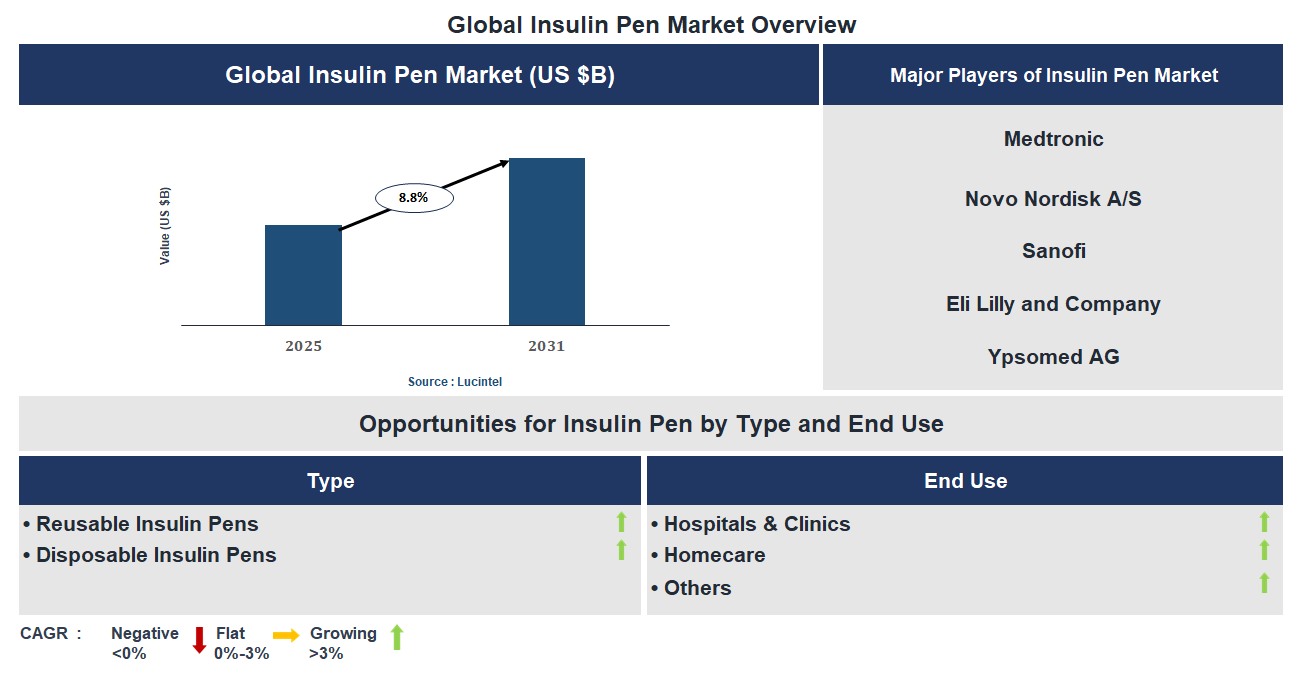
The future of the global insulin pen market looks promising with opportunities in the hospital & clinic and homecare markets. The global insulin pen market is expected to grow with a CAGR of 8.8% from 2025 to 2031. The major drivers for this market are the increasing prevalence of diabetes cases, the rising adoption of home-based diabetes care, and the growing demand for convenient insulin delivery systems.• Lucintel forecasts that, within the type category, reusable insulin pen is expected to witness higher growth over the forecast period.
• Within the end use category, hospital & clinic is expected to witness higher growth.
• In terms of region, North America is expected to witness the highest growth over the forecast period. Gain valuable insights for your business decisions with our comprehensive 150+ page report. Sample figures with some insights are shown below.
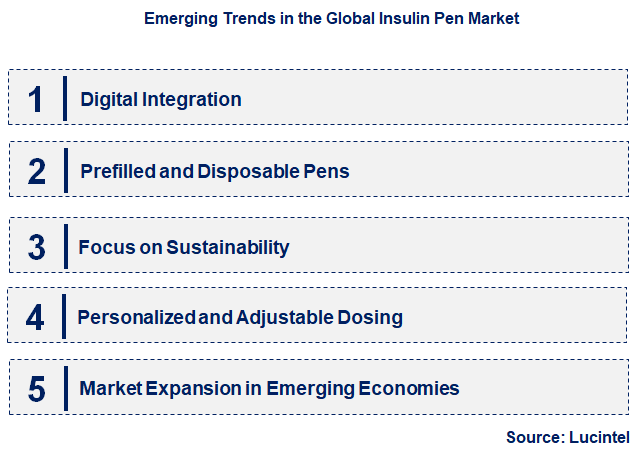
Emerging Trends in the Insulin Pen Market
The insulin pen market is experiencing rapid growth driven by technological advancements, increasing diabetes prevalence, and a shift towards patient-centered care. As healthcare systems adapt to new challenges, innovative solutions are emerging to improve treatment adherence, convenience, and overall patient outcomes. These developments are transforming the landscape of diabetes management, making insulin delivery more efficient and accessible. The following key trends highlight the major shifts shaping this market, reflecting a move towards smarter, more personalized, and sustainable insulin pen solutions that cater to diverse patient needs and healthcare settings.• Digital Integration: The integration of digital technology into insulin pens is revolutionizing diabetes management. Smart insulin pens equipped with Bluetooth and mobile app connectivity enable real-time dose tracking, data sharing with healthcare providers, and personalized feedback. This trend enhances treatment adherence, reduces errors, and facilitates remote monitoring, which is especially valuable in telemedicine. As digital health continues to evolve, these connected devices are becoming essential tools for both patients and clinicians, improving overall disease control and patient engagement.
• Prefilled and Disposable Pens: The shift towards prefilled and disposable insulin pens offers increased convenience and ease of use. These pens eliminate the need for cartridge filling, reducing preparation time and minimizing contamination risks. They are particularly beneficial for elderly patients, children, and those with manual dexterity issues. The disposable nature also supports infection control and simplifies disposal procedures. This trend is driving market growth by catering to a broader patient demographic seeking hassle-free, portable insulin delivery options, thereby improving adherence and quality of life.
• Focus on Sustainability: Environmental concerns are prompting manufacturers to develop eco-friendly insulin pens. Innovations include biodegradable materials, refillable pens, and sustainable packaging to reduce plastic waste. This trend aligns with global efforts to minimize healthcare-related environmental impact. Sustainable insulin pens appeal to environmentally conscious consumers and healthcare providers aiming to reduce their carbon footprint. As regulations tighten and awareness increases, sustainability is becoming a key differentiator in the market, encouraging companies to invest in greener product designs and disposal methods.
• Personalized and Adjustable Dosing: Advances in insulin pen technology now allow for more precise and customizable dosing options. Features such as dose memory, adjustable dose increments, and digital dose calculators enable tailored treatment plans. This trend supports better glycemic control, especially for patients with variable insulin needs. Personalized dosing reduces the risk of hypoglycemia and hyperglycemia, improving patient safety and comfort. The ability to fine-tune insulin delivery fosters greater confidence in self-management and enhances overall treatment efficacy, making insulin pens more adaptable to individual patient requirements.
• Market Expansion in Emerging Economies: Increasing healthcare infrastructure, rising diabetes prevalence, and growing awareness are expanding the insulin pen market in emerging economies. Manufacturers are focusing on affordable, easy-to-use devices suited for diverse populations. Local manufacturing, strategic partnerships, and government initiatives are facilitating market penetration. This expansion not only broadens access to insulin therapy but also stimulates local economies and healthcare systems. As these markets develop, they are expected to become significant contributors to global market growth, driven by the need for cost-effective, accessible insulin delivery solutions. In summary, these trends are reshaping the insulin pen market by fostering innovation, enhancing user experience, and promoting sustainability. They are enabling more personalized, efficient, and environmentally conscious diabetes management solutions, ultimately improving patient outcomes and expanding market reach across diverse healthcare settings worldwide.
Recent Development in the Insulin Pen Market
The insulin pen market has experienced significant growth driven by technological advancements, increasing diabetes prevalence, and a shift towards patient-centric care. As healthcare systems adapt to new treatment modalities, key developments are shaping the future landscape of insulin delivery devices. These innovations aim to improve patient compliance, reduce costs, and enhance overall disease management. The markets evolution reflects a broader trend towards personalized medicine and digital health integration, making insulin pens more efficient, user-friendly, and accessible worldwide. Understanding these developments is crucial for stakeholders aiming to capitalize on emerging opportunities and address ongoing challenges in diabetes care.• Technological Integration: Digital insulin pens with Bluetooth connectivity are revolutionizing diabetes management by enabling real-time data tracking, remote monitoring, and personalized dosing adjustments. This development enhances patient engagement and adherence, leading to better glycemic control and reduced complications. Healthcare providers can also utilize data for more informed treatment decisions, improving overall outcomes.
• Introduction of Prefilled and Disposable Pens: The launch of prefilled, disposable insulin pens offers convenience, ease of use, and reduced preparation time for patients. These devices are particularly beneficial for elderly and pediatric populations, increasing adherence and simplifying insulin administration. Their growing popularity is driving market expansion and catering to a broader patient demographic.
• Advancements in Pen Design and Materials: Innovations in ergonomic design, lightweight materials, and leak-proof mechanisms have improved user comfort and safety. These enhancements reduce injection pain and minimize medication wastage, encouraging consistent use. Improved durability and portability also make insulin pens more suitable for active lifestyles and travel.
• Rising Adoption of Smart Insulin Pens: Smart insulin pens equipped with dose calculators and memory functions are gaining traction. They help prevent dosing errors and facilitate better tracking of insulin intake, which is vital for tight glycemic control. This development supports personalized treatment plans and enhances patient confidence in managing their condition.
• Regulatory Approvals and Market Expansion: Increased regulatory approvals for innovative insulin pen devices and expanding markets in emerging economies are fueling growth. Governments and healthcare providers are recognizing the benefits of advanced insulin delivery systems, leading to wider adoption. This trend is expected to continue, further driving market penetration and technological innovation. In summary, these key developments are transforming the insulin pen market by improving device functionality, patient experience, and treatment outcomes. The integration of digital technology, innovative designs, and expanding regulatory support are collectively driving market growth and making insulin therapy more accessible and effective worldwide.
Strategic Growth Opportunities in the Insulin Pen Market
The insulin pen market is experiencing rapid growth driven by increasing diabetes prevalence, technological advancements, and a shift towards patient-centric care. As healthcare systems worldwide focus on improving diabetes management, innovative solutions like smart insulin pens and user-friendly devices are gaining prominence. This evolving landscape presents multiple strategic growth opportunities across various applications, enabling manufacturers to expand their market share and improve patient outcomes. Understanding these opportunities is crucial for stakeholders aiming to capitalize on emerging trends and address unmet needs in diabetes care.• Digital Integration: Enhancing patient adherence and monitoring through smart insulin pens that connect to mobile apps, providing real-time data and personalized feedback, thereby improving glycemic control and reducing complications.
• Pediatric Applications: Developing specialized insulin pens tailored for children, focusing on ease of use, safety features, and dose accuracy, which can significantly improve management in pediatric diabetes patients.
• Hospital and Clinical Use: Expanding insulin pen adoption in hospital settings with devices designed for precise dosing and ease of use by healthcare professionals, streamlining inpatient diabetes management.
• Premium and Luxury Segments: Introducing high-end insulin pens with advanced features such as dose memory, dose confirmation, and ergonomic designs to cater to affluent consumers seeking enhanced convenience and technology.
• Sustainable and Eco-friendly Devices: Innovating biodegradable or reusable insulin pens to address environmental concerns, appealing to eco-conscious consumers and reducing medical waste. These growth opportunities are transforming the insulin pen market by fostering innovation, improving patient compliance, and expanding application scopes. They are driving market expansion, enhancing patient outcomes, and encouraging sustainable practices, ultimately shaping a more efficient and patient-focused diabetes management landscape.
Insulin Pen Market Driver and Challenges
The insulin pen market is influenced by a variety of technological, economic, and regulatory factors that shape its growth trajectory. Advances in medical technology, increasing prevalence of diabetes, supportive government policies, and rising awareness about self-management of diabetes are key drivers. Conversely, challenges such as high costs, regulatory hurdles, and technological limitations pose significant barriers. Understanding these drivers and challenges is essential for stakeholders to navigate the evolving landscape effectively and capitalize on emerging opportunities while addressing potential risks. The factors responsible for driving the insulin pen market include:• Technological Innovation: The development of user-friendly, accurate, and portable insulin pens has revolutionized diabetes management. Innovations such as smart insulin pens with digital tracking capabilities enhance patient adherence and improve health outcomes. These advancements reduce injection pain, simplify dosing, and enable remote monitoring, making insulin therapy more accessible and convenient. As technology continues to evolve, the market is expected to expand further, driven by increased adoption among healthcare providers and patients seeking efficient management solutions.
• Rising Prevalence of Diabetes: The global increase in diabetes cases, driven by sedentary lifestyles, unhealthy diets, and obesity, significantly fuels demand for insulin delivery devices. As diabetes becomes more prevalent across age groups and regions, the need for reliable, easy-to-use insulin pens grows. This trend is particularly prominent in emerging economies where healthcare infrastructure is improving, and awareness is increasing. The expanding patient base directly correlates with market growth, encouraging manufacturers to innovate and expand their product portfolios.
• Government Initiatives and Supportive Policies: Governments worldwide are implementing policies to improve diabetes management, including subsidies, awareness campaigns, and reimbursement schemes for insulin pens. These initiatives lower financial barriers for patients and promote the adoption of insulin pens over traditional vial and syringe methods. Regulatory approvals and supportive healthcare policies also facilitate market entry for new products, fostering innovation and competition. Such measures are crucial in increasing accessibility and ensuring better health outcomes for diabetic populations.
• Increasing Awareness and Self-Management: Growing awareness about diabetes and the importance of self-management tools have led to increased adoption of insulin pens. Patients are now more informed about treatment options and prefer devices that offer convenience, discretion, and precision. Educational campaigns and digital health platforms further promote the use of insulin pens, empowering patients to manage their condition effectively. This shift towards self-care reduces healthcare costs and hospital visits, positively impacting market growth by encouraging manufacturers to develop more advanced, user-friendly devices. The challenges facing this insulin pen market include:
• High Cost of Devices and Insulin Pens: Despite technological advancements, the high cost remains a significant barrier, especially in low- and middle-income countries. The expense of insulin pens, along with ongoing costs for insulin and accessories, limits accessibility for economically disadvantaged populations. This financial burden hampers widespread adoption and restricts market growth in regions with limited healthcare funding. Manufacturers face pressure to develop cost-effective solutions without compromising quality, which is a complex balancing act. Addressing affordability is crucial for expanding market reach and ensuring equitable access to diabetes management tools.
• Regulatory and Reimbursement Barriers: Stringent regulatory requirements and complex approval processes can delay product launches and increase costs for manufacturers. Variability in regulations across countries complicates market entry strategies. Additionally, limited reimbursement policies in certain regions restrict patient access, impacting sales and market expansion. Navigating these regulatory landscapes requires significant resources and expertise, posing a challenge for new entrants and established players alike. Harmonizing standards and expanding reimbursement schemes are essential to facilitate broader adoption of insulin pens globally.
• Technological Limitations and Data Security Concerns: While innovations like smart insulin pens offer benefits, they also face challenges related to data security, privacy, and device interoperability. Ensuring secure transmission of sensitive health data is critical to prevent breaches and maintain patient trust. Technological limitations such as battery life, device durability, and integration with other health systems can hinder user experience and adoption. Overcoming these barriers requires ongoing research, robust cybersecurity measures, and user-centric design, which can be resource-intensive and time-consuming for manufacturers. In summary, the insulin pen market is driven by technological advancements, increasing diabetes prevalence, supportive policies, and rising awareness. However, high costs, regulatory complexities, and technological limitations pose significant challenges. These factors collectively influence market dynamics, with growth prospects hinging on innovative, affordable, and compliant solutions. Addressing challenges effectively will be vital for expanding access and improving diabetes management worldwide, ultimately fostering a more inclusive and sustainable market environment.
List of Insulin Pen Companies
Companies in the market compete on the basis of product quality offered. Major players in this market focus on expanding their manufacturing facilities, R&D investments, infrastructural development, and leverage integration opportunities across the value chain. With these strategies insulin pen companies cater increasing demand, ensure competitive effectiveness, develop innovative products & technologies, reduce production costs, and expand their customer base. Some of the insulin pen companies profiled in this report include-• Medtronic
• Novo Nordisk A/S
• Sanofi
• Eli Lilly and Company
• Ypsomed AG
• Insulet Corporation
• B. Braun SE
Insulin Pen Market by Segment
The study includes a forecast for the global insulin pen market by type, end use, and region.Insulin Pen Market by Type [Value from 2019 to 2031]:
• Reusable Insulin Pens
• Disposable Insulin Pens
Insulin Pen Market by End Use [Value from 2019 to 2031]:
• Hospitals & Clinics
• Homecare
• Others
Insulin Pen Market by Region [Value from 2019 to 2031]:
• North America
• Europe
• Asia Pacific
• The Rest of the World
Country Wise Outlook for the Insulin Pen Market
The insulin pen market has experienced significant growth driven by increasing diabetes prevalence, technological innovations, and rising awareness about diabetes management worldwide. Countries are adopting new devices, improving accessibility, and integrating digital health solutions to enhance patient outcomes. Regulatory approvals and collaborations between pharmaceutical companies and tech firms are further accelerating market expansion. As healthcare systems evolve, the focus remains on developing user-friendly, cost-effective, and precise insulin delivery options. These developments reflect a global shift towards personalized and efficient diabetes care, with each country contributing uniquely based on its healthcare infrastructure, technological capabilities, and population needs.• United States: The US market has seen rapid adoption of smart insulin pens with digital tracking features, improving adherence and data sharing with healthcare providers. Regulatory agencies have approved several innovative devices, and telehealth integration has become prominent, especially post-pandemic. Companies are investing in R&D to develop more precise, user-friendly options, and there is a growing emphasis on personalized diabetes management solutions.
• China: China’s insulin pen market is expanding due to rising diabetes prevalence and government initiatives to improve healthcare access. Local manufacturers are increasing production of affordable, high-quality insulin pens, and digital health integration is gaining traction. The government’s focus on rural healthcare and subsidies is making insulin pens more accessible to underserved populations, fostering market growth.
• Germany: Germany’s market is characterized by high-quality, technologically advanced insulin pens with features like dose memory and ergonomic design. Regulatory standards are strict, ensuring safety and efficacy. The country is also witnessing increased adoption of reusable pens and digital health solutions, supported by a robust healthcare infrastructure and emphasis on patient-centered care.
• India: India’s insulin pen market is rapidly growing due to increasing diabetes cases and a large population requiring affordable treatment options. Local companies are launching cost-effective insulin pens, and government schemes are promoting their use. Digital and smart pen technologies are gradually entering the market, aiming to improve adherence and monitoring in resource-limited settings.
• Japan: Japan’s market features high-tech insulin pens with features like dose correction and digital connectivity, catering to an aging population with complex diabetes management needs. The country emphasizes innovation, safety, and ease of use. Regulatory support and collaborations with tech firms are driving the development of advanced insulin delivery devices, aligning with Japan’s focus on precision medicine.

Features of the Global Insulin Pen Market
Market Size Estimates: Insulin pen market size estimation in terms of value ($B). Trend and Forecast Analysis: Market trends (2019 to 2024) and forecast (2025 to 2031) by various segments and regions. Segmentation Analysis: Insulin pen market size by type, end use, and region in terms of value ($B). Regional Analysis: Insulin pen market breakdown by North America, Europe, Asia Pacific, and Rest of the World. Growth Opportunities: Analysis of growth opportunities in different types, end uses, and regions for the insulin pen market. Strategic Analysis: This includes M&A, new product development, and competitive landscape of the insulin pen market. Analysis of competitive intensity of the industry based on Porter’s Five Forces model.
FAQ
Q1. What is the growth forecast for insulin pen market? Answer: The global insulin pen market is expected to grow with a CAGR of 8.8% from 2025 to 2031. Q2. What are the major drivers influencing the growth of the insulin pen market? Answer: The major drivers for this market are the increasing prevalence of diabetes cases, the rising adoption of home-based diabetes care, and the growing demand for convenient insulin delivery systems. Q3. What are the major segments for insulin pen market? Answer: The future of the insulin pen market looks promising with opportunities in the hospital & clinic and homecare markets. Q4. Who are the key insulin pen market companies? Answer: Some of the key insulin pen companies are as follows:• Medtronic
• Novo Nordisk A/S
• Sanofi
• Eli Lilly and Company
• Ypsomed AG
• Insulet Corporation
• B. Braun SE Q5. Which insulin pen market segment will be the largest in future? Answer: Lucintel forecasts that, within the type category, reusable insulin pen is expected to witness higher growth over the forecast period. Q6. In insulin pen market, which region is expected to be the largest in next 5 years? Answer: In terms of region, North America is expected to witness the highest growth over the forecast period. Q7. Do we receive customization in this report? Answer: Yes, Lucintel provides 10% customization without any additional cost.
Table of Contents
List of Figures
List of Tables
Methodology
- In-depth interviews of the major players in this market
- Detailed secondary research from competitors’ financial statements and published data
- Extensive searches of published works, market, and database information pertaining to industry news, company press releases, and customer intentions
- A compilation of the experiences, judgments, and insights of Lucintel’s professionals, who have analyzed and tracked this market over the years.


Buy Now
Choose a license that fits your team. Instant PDF delivery.
Prices exclude taxes. Instant delivery. Custom licensing available on request.
Key Questions
- • What are some of the most promising, high-growth opportunities for the insulin pen market by type (reusable insulin pens and disposable insulin pens), end use (hospitals & clinics, homecare, and others), and region (North America, Europe, Asia Pacific, and the Rest of the World)?
- • Which segments will grow at a faster pace and why?
- • Which region will grow at a faster pace and why?
- • What are the key factors affecting market dynamics? What are the key challenges and business risks in this market?
- • What are the business risks and competitive threats in this market?
- • What are the emerging trends in this market and the reasons behind them?
- • What are some of the changing demands of customers in the market?
- • What are the new developments in the market? Which companies are leading these developments?
- • Who are the major players in this market? What strategic initiatives are key players pursuing for business growth?
- • What are some of the competing products in this market and how big of a threat do they pose for loss of market share by material or product substitution?
- • What M&A activity has occurred in the last 5 years and what has its impact been on the industry? For any questions related to Insulin Pen Market, Insulin Pen Market Size, Insulin Pen Market Growth, Insulin Pen Market Analysis, Insulin Pen Market Report, Insulin Pen Market Share, Insulin Pen Market Trends, Insulin Pen Market Forecast, Insulin Pen Companies, write Lucintel analyst at email: helpdesk@lucintel.com. We will be glad to get back to you soon.


