
Report Feature
Instant Ramen Market Trends and Forecast
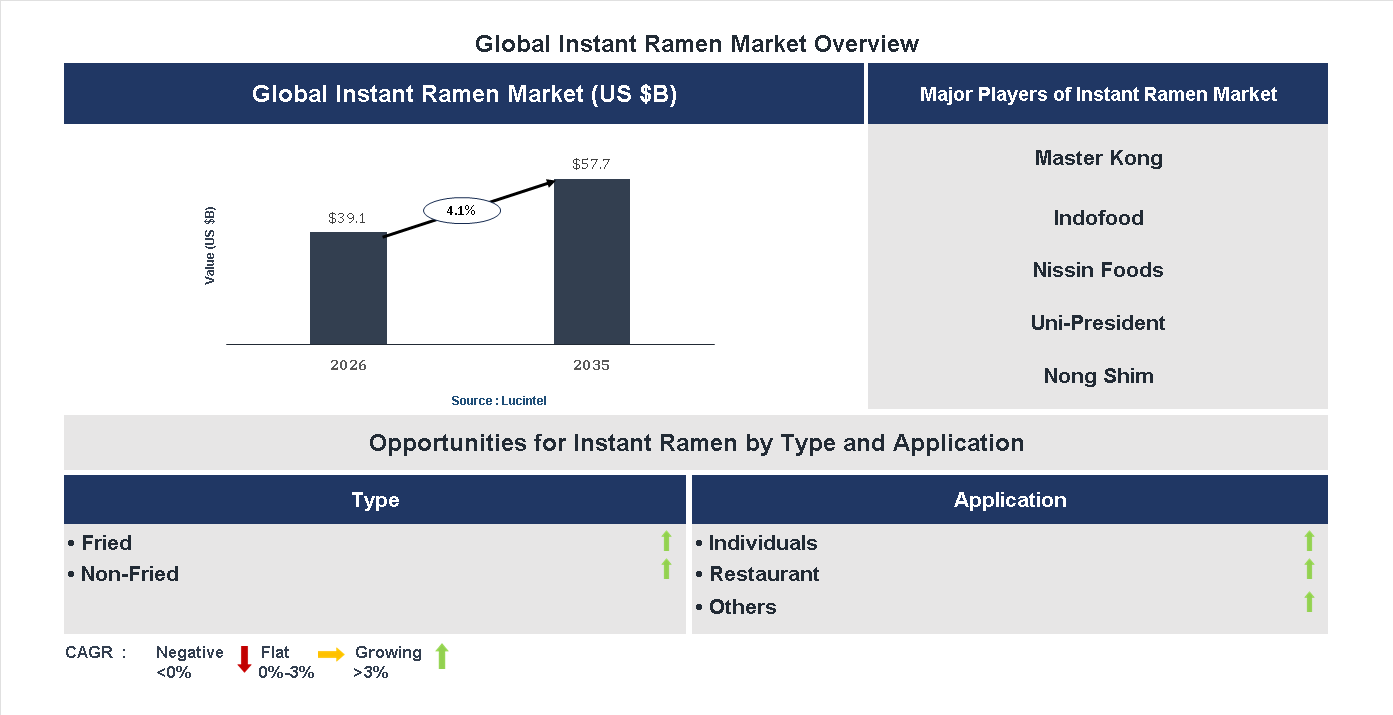
The future of the global instant ramen market looks promising with opportunities in the individual and restaurant markets. The global instant ramen market is expected to reach an estimated $57.7 billion by 2035 with a CAGR of 4.1% from 2026 to 2035. The major drivers for this market are the increasing demand for convenient meal options, the rising popularity of affordable comfort food, and the growing preference for quick meal solutions.• Lucintel forecasts that, within the type category, non-fried is expected to witness higher growth over the forecast period.
• Within the application category, individual is expected to witness higher growth.
• In terms of region, APAC is expected to witness the highest growth over the forecast period. Gain valuable insights for your business decisions with our comprehensive 150+ page report. Sample figures with some insights are shown below.
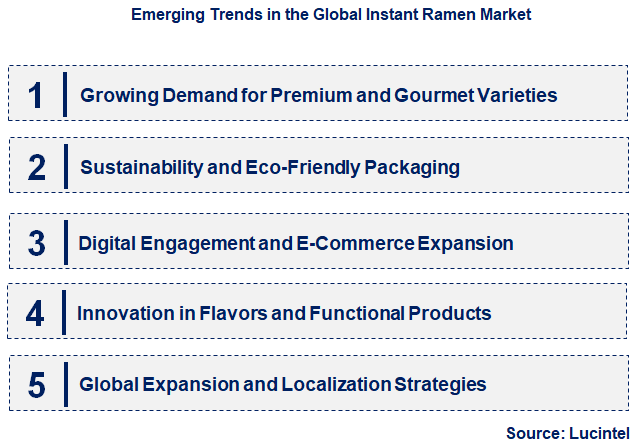
Emerging Trends in the Instant Ramen Market
The instant ramen market is experiencing rapid growth driven by changing consumer preferences, technological advancements, and global economic shifts. As consumers seek convenient, affordable, and diverse food options, the market is evolving with innovative flavors, sustainable packaging, and digital engagement. These developments are not only expanding market reach but also influencing product innovation and supply chain strategies. The following key trends highlight the dynamic nature of this industry and how it is adapting to meet modern consumer demands and environmental considerations.• Growing Demand for Premium and Gourmet Varieties: Consumers are increasingly seeking high-quality, gourmet instant ramen options with unique flavors and ingredients. This trend is driven by a desire for more authentic and diverse culinary experiences, prompting brands to introduce premium lines with organic, non-GMO, and locally sourced ingredients. The shift enhances product differentiation and allows brands to target a more health-conscious and adventurous demographic, thereby expanding market share and encouraging innovation within the sector.
• Sustainability and Eco-Friendly Packaging: Environmental concerns are prompting brands to adopt sustainable packaging solutions such as biodegradable, recyclable, and minimal packaging materials. This trend reflects consumers growing awareness of environmental impact and their preference for eco-conscious products. Companies investing in sustainable practices not only improve their brand image but also comply with stricter regulations, reducing their carbon footprint. This shift is reshaping supply chains and product design, making sustainability a core component of market growth strategies.
• Digital Engagement and E-Commerce Expansion: The rise of online shopping and digital marketing is transforming how consumers access instant ramen products. Brands are leveraging social media, influencer collaborations, and e-commerce platforms to reach a broader audience. This trend facilitates direct-to-consumer sales, personalized marketing, and real-time feedback, enabling companies to adapt quickly to consumer preferences. The digital shift enhances market penetration, especially among younger consumers, and accelerates product launches and promotional campaigns.
• Innovation in Flavors and Functional Products: The market is witnessing a surge in innovative flavors, including regional, spicy, and fusion varieties, catering to diverse tastes. Additionally, functional instant ramen with added health benefits such as probiotics, vitamins, and low sodium content is gaining popularity. This trend responds to health-conscious consumers seeking convenient yet nutritious options. It drives product differentiation and opens new segments within the market, encouraging brands to invest in R&D for flavor development and functional ingredients.
• Global Expansion and Localization Strategies: Companies are expanding into emerging markets and tailoring products to local tastes and preferences. Localization involves customizing flavors, packaging, and marketing to resonate with regional consumers. This strategy helps brands penetrate new markets, increase sales, and build brand loyalty. As global demand for instant ramen grows, localization efforts are crucial for competitive advantage, fostering cultural relevance and meeting diverse consumer needs across different regions. In summary, these trends are reshaping the instant ramen market by fostering innovation, emphasizing sustainability, leveraging digital channels, and expanding globally. They are driving product diversification, enhancing consumer engagement, and promoting environmentally responsible practices, ultimately leading to a more dynamic and resilient industry poised for sustained growth.
Recent Development in the Instant Ramen Market
The instant ramen market has experienced significant growth driven by changing consumer lifestyles, increasing demand for quick and affordable meals, and expanding global markets. Innovations in product offerings, packaging, and health-conscious options are shaping the industry’s future. Market players are focusing on sustainability and regional flavor adaptations to meet diverse consumer preferences. These developments are creating new opportunities for growth, expanding market reach, and enhancing consumer engagement across different regions.• Growing Demand for Convenient Meals: The increasing pace of modern life has boosted the need for quick, easy-to-prepare food options like instant ramen, leading to higher sales and market expansion. Consumers seek affordable, portable, and time-saving meal solutions, especially in urban areas. This trend encourages manufacturers to innovate with new flavors, healthier ingredients, and convenient packaging, thereby broadening the product appeal and increasing market penetration globally.
• Innovation in Flavors and Ingredients: Companies are introducing diverse flavors and healthier ingredients to cater to evolving consumer preferences. This includes organic, low-sodium, and plant-based options, which appeal to health-conscious buyers. Such innovations enhance product differentiation, attract new customer segments, and expand market share. The focus on regional flavors also helps brands penetrate local markets more effectively, fostering global growth and consumer loyalty.
• Sustainability and Eco-Friendly Packaging: The industry is shifting towards sustainable practices by adopting biodegradable, recyclable, and eco-friendly packaging materials. This development responds to increasing environmental awareness among consumers and regulatory pressures. Implementing sustainable packaging reduces carbon footprint and appeals to eco-conscious buyers, strengthening brand reputation. It also opens new market opportunities in regions with strict environmental standards, supporting long-term industry growth.
• Expansion in Emerging Markets: Rapid urbanization and rising disposable incomes in emerging economies are fueling market expansion. Companies are investing in localized marketing strategies and product adaptations to meet regional tastes and preferences. This growth in markets like Asia, Africa, and Latin America offers significant revenue opportunities and diversifies the customer base. It also helps brands establish a strong presence in developing regions, ensuring sustained industry growth.
• Digital Marketing and E-Commerce Growth: The rise of online retail platforms and digital marketing strategies has increased product accessibility and consumer engagement. E-commerce enables brands to reach wider audiences, offer customized products, and gather valuable consumer data. This development accelerates sales, enhances brand visibility, and fosters direct consumer relationships. The integration of digital channels is transforming traditional distribution models, making instant ramen more accessible and appealing to tech-savvy consumers worldwide. These recent developments are significantly transforming the instant ramen market by enhancing product diversity, sustainability, and accessibility. Innovation in flavors and healthier options attracts a broader consumer base, while expansion into emerging markets offers new growth avenues. Digital marketing and e-commerce further boost sales and brand engagement. Collectively, these trends are driving industry growth, increasing competitiveness, and shaping a dynamic, consumer-centric market landscape poised for continued expansion.
Strategic Growth Opportunities in the Instant Ramen Market
The instant ramen market is experiencing rapid growth driven by changing consumer lifestyles, urbanization, and the demand for quick, affordable meal options. Innovations in flavors, packaging, and health-conscious formulations are expanding its appeal across diverse demographics. Market players are focusing on strategic collaborations and expanding distribution channels to capture new markets. The increasing popularity of convenience foods globally presents significant opportunities for brands to innovate and diversify their product offerings, ensuring sustained growth and competitive advantage in this dynamic industry.• Growing Urbanization and Busy Lifestyles Drive Demand for Convenient Meals: As urban populations increase and lifestyles become busier, consumers seek quick, easy-to-prepare food options like instant ramen. The need for time-saving meal solutions in workplaces and homes fuels market expansion. This trend is particularly prominent among working professionals, students, and young consumers who prioritize convenience without compromising taste and affordability. Companies are capitalizing on this by offering innovative, ready-to-eat ramen products tailored to modern, fast-paced lives.
• Innovation in Flavors and Ingredients Enhances Consumer Appeal: The development of diverse flavors, regional varieties, and healthier ingredients attracts a broader consumer base. Incorporating organic, low-sodium, and plant-based options caters to health-conscious customers. Flavor innovation, such as spicy, savory, or fusion styles, keeps products exciting and relevant. This continuous innovation helps brands differentiate themselves in a competitive market, encouraging repeat purchases and expanding the customer demographic beyond traditional instant ramen consumers.
• Expansion of E-commerce and Distribution Channels Boosts Market Reach: The rise of online shopping platforms and direct-to-consumer sales channels has significantly increased product accessibility. E-commerce enables brands to reach remote and international markets efficiently, offering convenience and a wider product assortment. Strategic partnerships with online retailers and food delivery services further enhance visibility and sales. This expansion reduces reliance on traditional retail outlets, accelerates product launches, and caters to the growing demand for instant ramen among digital-savvy consumers.
• Increasing Focus on Health and Wellness Creates New Market Segments: Consumers are increasingly seeking healthier, functional, and nutrient-rich instant ramen options. Brands are responding by developing products with added vitamins, minerals, and superfoods, as well as reducing artificial preservatives and flavors. The demand for gluten-free, low-calorie, and allergen-free varieties is rising, opening new market segments. This focus on health and wellness aligns with broader dietary trends, helping companies attract health-conscious consumers and expand their market share.
• Strategic Collaborations and Product Diversification Drive Market Growth: Partnerships with foodservice providers, flavor houses, and international brands facilitate product innovation and market penetration. Diversification into related categories like instant noodles with added health benefits or premium gourmet ramen appeals to different consumer segments. Collaborations with celebrity chefs or popular brands enhance brand visibility and credibility. These strategies enable companies to differentiate their offerings, expand their consumer base, and capitalize on emerging trends within the instant ramen industry. The overall impact of these opportunities is a robust, expanding market characterized by innovation, increased accessibility, and diverse consumer preferences. Companies that leverage these growth avenues can strengthen their market position, foster brand loyalty, and achieve sustainable growth in the competitive instant ramen landscape.
Instant Ramen Market Driver and Challenges
The instant ramen market is influenced by a variety of technological, economic, and regulatory factors that shape its growth and development. Advances in food processing technology have enabled manufacturers to produce more diverse and convenient products, appealing to busy consumers worldwide. Economic factors such as rising disposable incomes and urbanization have increased demand for quick, affordable meal options. Regulatory policies concerning food safety, labeling, and import-export standards also impact market operations and product innovation. Additionally, changing consumer preferences towards healthier and sustainable options are prompting industry players to adapt. These drivers and challenges collectively determine the markets trajectory, influencing innovation, competitiveness, and overall growth prospects. The factors responsible for driving the instant ramen market include:• Technological Innovation: The rapid development of food processing and packaging technologies has enabled manufacturers to create more flavorful, longer-lasting, and convenient instant ramen products. Innovations such as improved flavoring techniques, packaging materials that extend shelf life, and the integration of healthier ingredients have expanded product offerings. These advancements meet consumer demand for convenience without compromising taste or quality, thereby fueling market growth. Moreover, automation and supply chain improvements have reduced production costs, making instant ramen more accessible and affordable globally.
• Rising Urbanization and Busy Lifestyles: Increasing urbanization, especially in emerging economies, has led to a surge in demand for quick, easy-to-prepare meals. Consumers with hectic schedules prefer instant ramen as a convenient, time-saving food option that fits into their fast-paced lifestyles. The growing working population and students seeking affordable meals further drive demand. Urban centers also facilitate better distribution channels, ensuring wider availability. This trend is expected to continue, supporting sustained growth in the market as urban populations expand.
• Economic Growth and Disposable Income: Economic development in various regions has resulted in higher disposable incomes, enabling consumers to spend more on convenience foods like instant ramen. As affordability remains a key factor, manufacturers are expanding their product lines to cater to middle-income and affluent consumers seeking premium or specialized ramen options. Increased purchasing power also encourages brand switching and trial of new flavors, boosting sales. The economic stability in key markets thus acts as a catalyst for market expansion, especially in developing countries where the middle class is rapidly growing.
• Product Diversification and Health Trends: The market is witnessing a shift towards healthier and more diverse instant ramen options, driven by consumer awareness of nutrition and wellness. Manufacturers are introducing low-sodium, gluten-free, organic, and plant-based variants to cater to health-conscious consumers. Additionally, flavor innovation and regional customization are expanding the product portfolio. This diversification attracts a broader consumer base, including older adults and health-focused individuals, thereby expanding market reach and encouraging repeat purchases. The ability to adapt to health trends is crucial for sustained growth in a competitive landscape.
• E-commerce and Digital Marketing: The rise of online retail platforms and digital marketing strategies has significantly expanded the market reach of instant ramen products. E-commerce provides consumers with easy access to a wide variety of brands and flavors, often with attractive discounts and subscription options. Digital marketing campaigns enhance brand visibility and engagement, especially among younger consumers. Social media influencers and targeted advertising foster brand loyalty and trial. The integration of online sales channels has reduced reliance on traditional retail outlets, enabling manufacturers to penetrate new markets rapidly and efficiently, thus accelerating overall market growth. The challenges facing the instant ramen market include:
• Regulatory and Food Safety Concerns: Stringent regulations regarding food safety, labeling, and ingredient disclosures pose challenges for manufacturers. Compliance costs increase as companies must adapt to diverse standards across regions, which can delay product launches and increase operational expenses. Additionally, concerns over preservatives, additives, and MSG content have led to consumer skepticism and demand for cleaner labels. Failure to meet regulatory requirements or address safety concerns can result in product recalls, legal penalties, and damage to brand reputation, hindering market growth.
• Intense Competition and Price Wars: The market is highly competitive, with numerous local and international players vying for market share. Price wars often ensue, leading to reduced profit margins and increased marketing expenditures. Differentiating products through flavor, quality, and branding becomes essential but challenging. Small and new entrants face barriers to establishing a foothold against established brands with extensive distribution networks. This competitive pressure can stifle innovation and limit profitability, posing a significant challenge to sustainable growth.
• Supply Chain Disruptions: The global supply chain for raw materials, packaging, and distribution channels is vulnerable to disruptions caused by geopolitical tensions, pandemics, and logistical issues. Such disruptions can lead to shortages, increased costs, and delays in product availability. For instance, shortages of key ingredients or packaging materials can hamper production schedules. These uncertainties threaten the ability of manufacturers to meet consumer demand consistently and can negatively impact revenue and market stability. In summary, the instant ramen market is driven by technological advancements, urbanization, economic growth, product innovation, and digital channels, which collectively foster expansion and diversification. However, regulatory hurdles, intense competition, and supply chain vulnerabilities pose significant challenges that could impede growth. Navigating these drivers and challenges effectively will determine the markets future trajectory, requiring strategic innovation, compliance, and resilience to sustain competitive advantage and capitalize on emerging opportunities.
List of Instant Ramen Companies
Companies in the market compete on the basis of product quality offered. Major players in this market focus on expanding their manufacturing facilities, R&D investments, infrastructural development, and leverage integration opportunities across the value chain. With these strategies instant ramen companies cater increasing demand, ensure competitive effectiveness, develop innovative products & technologies, reduce production costs, and expand their customer base. Some of the instant ramen companies profiled in this report include-• Master Kong
• Indofood
• Nissin Foods
• Uni-President
• Nong Shim
• Jinmailang
• Baixiang
• Maruchan
• Acecook Vietnam
• TF
Instant Ramen Market by Segment
The study includes a forecast for the global instant ramen market by type, application, and region.Instant Ramen Market by Type [Value from 2019 to 2035]:
• Fried
• Non-Fried
Instant Ramen Market by Application [Value from 2019 to 2035]:
• Individuals
• Restaurant
• Others
Instant Ramen Market by Region [Value from 2019 to 2035]:
• North America
• Europe
• Asia Pacific
• The Rest of the World
Country Wise Outlook for the Instant Ramen Market
The instant ramen market has experienced significant growth and innovation driven by changing consumer preferences, technological advancements, and global supply chain dynamics. As demand for convenient, affordable, and diverse food options increases, countries are adopting new strategies to enhance product offerings, sustainability, and market reach. The evolving landscape reflects a focus on health-conscious ingredients, flavor innovation, and eco-friendly packaging, shaping the future of instant ramen worldwide. These developments are particularly notable in major markets such as the United States, China, Germany, India, and Japan, each contributing uniquely to the global trend.• United States: The U.S. market has seen a surge in premium and organic instant ramen options, catering to health-conscious consumers. Major brands are innovating with gluten-free, low-sodium, and plant-based ingredients. There is also a growing trend toward regional and international flavors, expanding consumer choices. E-commerce platforms have significantly boosted sales, and sustainability initiatives are prompting brands to adopt eco-friendly packaging solutions.
• China: As the largest consumer of instant ramen, China continues to innovate with local flavors and healthier formulations. Companies are investing in R&D to reduce sodium content and incorporate functional ingredients like probiotics. The market is also witnessing increased automation in manufacturing and a rise in premium product segments targeting urban middle-class consumers. E-commerce and delivery services further drive sales growth.
• Germany: The German market is expanding with a focus on organic and gluten-free options, aligning with the countrys health and wellness trends. Local brands are introducing traditional Asian flavors to cater to diverse tastes. Sustainability is a key concern, prompting brands to adopt biodegradable packaging and environmentally friendly sourcing practices. Retail chains are expanding their product ranges to include more premium and artisanal instant ramen varieties.
• India: Rapid urbanization and changing lifestyles are fueling demand for quick, affordable meals like instant ramen. The market is witnessing innovation in flavor profiles, incorporating local spices and ingredients. There is a rising preference for healthier options, including low-fat and fortified varieties. E-commerce and modern retail outlets are expanding distribution channels, making instant ramen more accessible across urban and semi-urban areas.
• Japan: As the birthplace of instant ramen, Japan continues to innovate with new flavors, premium ingredients, and limited-edition products. There is a focus on sustainability, with brands exploring biodegradable packaging and eco-friendly manufacturing processes. The market also sees a trend toward health-oriented products, such as reduced sodium and added nutritional benefits. Consumer preferences for authentic and artisanal ramen experiences are driving product diversification and innovation.

Features of the Global Instant Ramen Market
Market Size Estimates: Instant ramen market size estimation in terms of value ($B). Trend and Forecast Analysis: Market trends (2019 to 2025) and forecast (2026 to 2035) by various segments and regions. Segmentation Analysis: Instant ramen market size by type, application, and region in terms of value ($B). Regional Analysis: Instant ramen market breakdown by North America, Europe, Asia Pacific, and Rest of the World. Growth Opportunities: Analysis of growth opportunities in different types, applications, and regions for the instant ramen market. Strategic Analysis: This includes M&A, new product development, and competitive landscape of the instant ramen market. Analysis of competitive intensity of the industry based on Porter’s Five Forces model.
FAQ
Q1. What is the instant ramen market size? Answer: The global instant ramen market is expected to reach an estimated $57.7 billion by 2035. Q2. What is the growth forecast for instant ramen market? Answer: The global instant ramen market is expected to grow with a CAGR of 4.1% from 2026 to 2035. Q3. What are the major drivers influencing the growth of the instant ramen market? Answer: The major drivers for this market are the increasing demand for convenient meal options, the rising popularity of affordable comfort food, and the growing preference for quick meal solutions. Q4. What are the major segments for instant ramen market? Answer: The future of the instant ramen market looks promising with opportunities in the individual and restaurant markets. Q5. Who are the key instant ramen market companies? Answer: Some of the key instant ramen companies are as follows:• Master Kong
• Indofood
• Nissin Foods
• Uni-President
• Nong Shim
• Jinmailang
• Baixiang
• Maruchan
• Acecook Vietnam
• TF Q6. Which instant ramen market segment will be the largest in future? Answer: Lucintel forecasts that, within the type category, non-fried is expected to witness higher growth over the forecast period. Q7. In instant ramen market, which region is expected to be the largest in next 5 years? Answer: In terms of region, APAC is expected to witness the highest growth over the forecast period. Q8. Do we receive customization in this report? Answer: Yes, Lucintel provides 10% customization without any additional cost.
Table of Contents
List of Figures
List of Tables
Methodology
- In-depth interviews of the major players in this market
- Detailed secondary research from competitors’ financial statements and published data
- Extensive searches of published works, market, and database information pertaining to industry news, company press releases, and customer intentions
- A compilation of the experiences, judgments, and insights of Lucintel’s professionals, who have analyzed and tracked this market over the years.


Buy Now
Choose a license that fits your team. Instant PDF delivery.
Prices exclude taxes. Instant delivery. Custom licensing available on request.
Key Questions
- • What are some of the most promising, high-growth opportunities for the instant ramen market by type (fried and non-fried), application (individuals, restaurant, and others), and region (North America, Europe, Asia Pacific, and the Rest of the World)?
- • Which segments will grow at a faster pace and why?
- • Which region will grow at a faster pace and why?
- • What are the key factors affecting market dynamics? What are the key challenges and business risks in this market?
- • What are the business risks and competitive threats in this market?
- • What are the emerging trends in this market and the reasons behind them?
- • What are some of the changing demands of customers in the market?
- • What are the new developments in the market? Which companies are leading these developments?
- • Who are the major players in this market? What strategic initiatives are key players pursuing for business growth?
- • What are some of the competing products in this market and how big of a threat do they pose for loss of market share by material or product substitution?
- • What M&A activity has occurred in the last 7 years and what has its impact been on the industry? For any questions related to Instant Ramen Market, Instant Ramen Market Size, Instant Ramen Market Growth, Instant Ramen Market Analysis, Instant Ramen Market Report, Instant Ramen Market Share, Instant Ramen Market Trends, Instant Ramen Market Forecast, Instant Ramen Companies, write Lucintel analyst at email: helpdesk@lucintel.com. We will be glad to get back to you soon.


