
Market Report · July 31, 2026

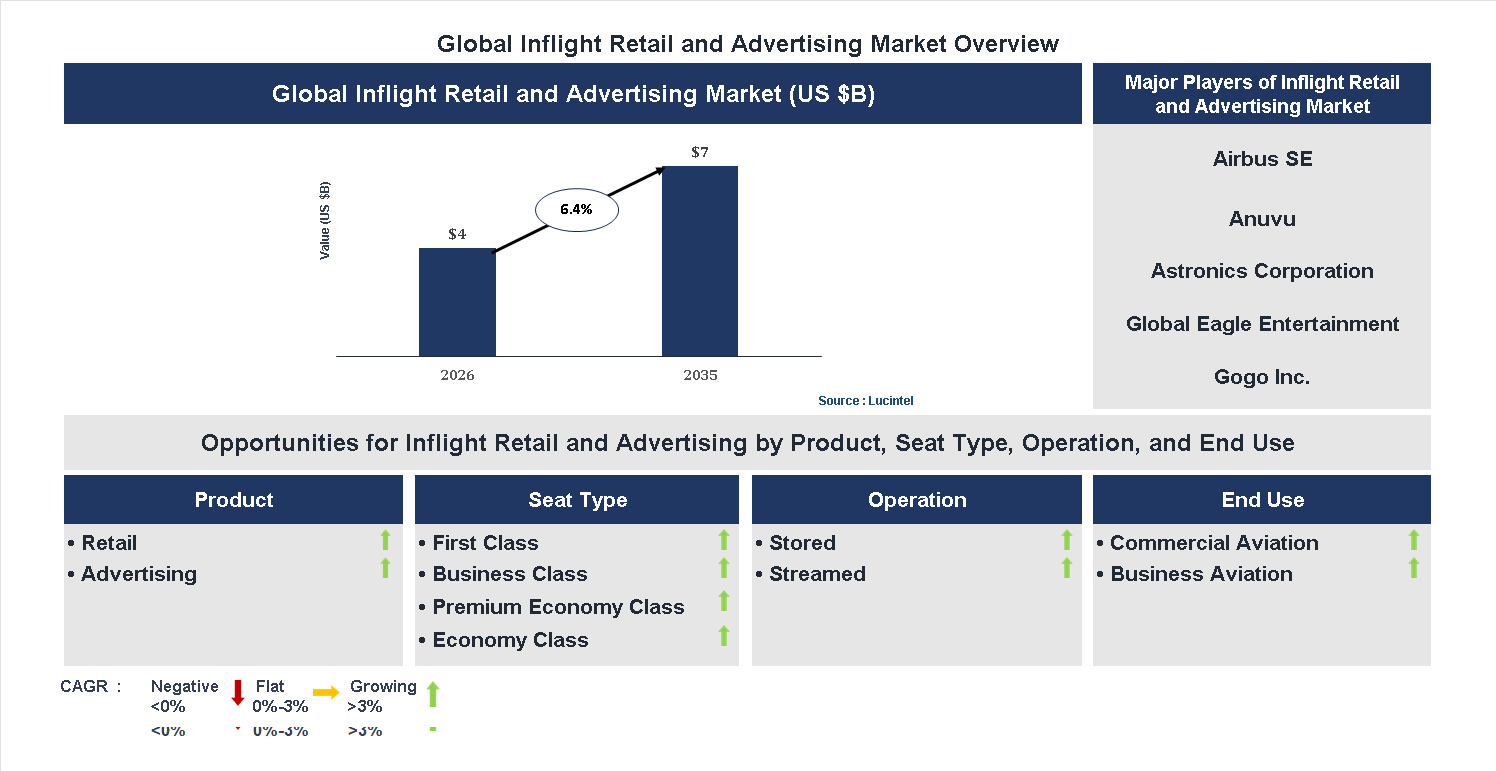
Key data points: The market size in 2035 = $7 billion, growth forecast = 6.4% annually for the next 8 years. Scroll below to get more insights. This market report covers trends, opportunities and forecasts in inflight retail and advertising market to 2035 by product (retail and advertising), seat type (first class, business class, premium economy class, and economy class), operation (stored and streamed), end use (commercial aviation and business aviation), and region (North America, Europe, Asia Pacific, and the Rest of the World)
We'll send your sample report shortly.
• Lucintel forecasts that, within the product category, retail is expected to witness higher growth over the forecast period.
• Within the end use category, commercial aviation is expected to witness higher growth.
• In terms of region, North America is expected to witness the highest growth over the forecast period. Gain valuable insights for your business decisions with our comprehensive 150+ page report. Sample figures with some insights are shown below.
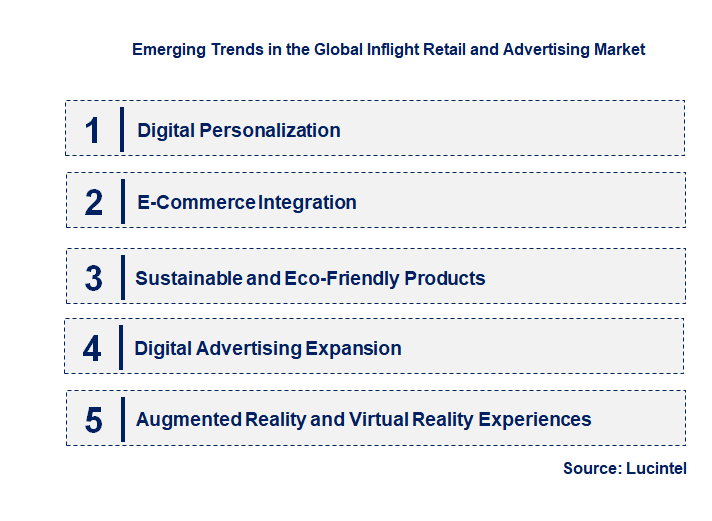
• Digital Personalization : Airlines and brands are leveraging data analytics and AI to deliver tailored product recommendations and advertising content, enhancing passenger engagement and satisfaction. Personalized offers increase conversion rates and passenger loyalty, making the inflight shopping experience more relevant and enjoyable.
• E-Commerce Integration : The adoption of seamless e-commerce platforms allows passengers to browse, purchase, and receive products post-flight. This trend extends the retail experience beyond the aircraft, boosting sales and providing airlines with new revenue channels through partnerships with online retailers.
• Sustainable and Eco-Friendly Products : Growing environmental awareness is prompting airlines and brands to offer eco-friendly products, such as biodegradable packaging and sustainable merchandise. This shift appeals to eco-conscious travelers and aligns with corporate sustainability goals, influencing purchasing decisions.
• Digital Advertising Expansion : The use of digital screens, targeted ads, and in-flight Wi-Fi enables brands to deliver dynamic advertising campaigns tailored to passenger demographics and flight routes. This increases ad effectiveness and provides airlines with additional advertising revenue.
• Augmented Reality (AR) and Virtual Reality (VR) Experiences : AR and VR are being integrated into inflight entertainment and retail, offering immersive product demonstrations and interactive shopping. These technologies enhance passenger engagement and differentiate the inflight retail experience. These trends are fundamentally reshaping the inflight retail and advertising market by making it more personalized, digital, sustainable, and immersive. They are enabling airlines and brands to better connect with passengers, increase sales, and create memorable travel experiences, ultimately driving growth and innovation in this evolving sector.
• Digital Transformation in Inflight Retail: Enhanced Passenger Engagement and Revenue Growth: The integration of digital screens, mobile apps, and contactless payment systems is revolutionizing inflight retail. Airlines now offer personalized shopping experiences, real-time promotions, and seamless transactions, increasing passenger satisfaction and spending. This shift not only boosts revenue but also provides valuable data insights for targeted marketing. The digital transformation enables airlines to adapt quickly to consumer preferences, improve operational efficiency, and create a more engaging inflight environment, ultimately driving market expansion.
• Innovative Advertising Strategies: Targeted Campaigns and Increased Revenue Opportunities: Airlines are adopting advanced advertising techniques, including programmatic ads and personalized content, to maximize revenue. By leveraging passenger data, brands can deliver highly targeted advertisements, increasing engagement and conversion rates. This approach opens new revenue streams for airlines through advertising partnerships and sponsorships. Additionally, dynamic advertising options, such as digital billboards and in-seat screens, enhance the passenger experience while providing brands with measurable ROI, fostering a more lucrative inflight advertising ecosystem.
• Expansion of Premium and Luxury Retail Offerings: Catering to Affluent Passengers and Increasing Profit Margins: The market is witnessing a rise in premium inflight retail options, including luxury goods, high-end cosmetics, and exclusive merchandise. Airlines are partnering with luxury brands to offer curated collections, appealing to affluent travelers seeking exclusivity and quality. This segment not only enhances passenger satisfaction but also significantly increases profit margins. The focus on premium retail is positioning airlines as providers of exclusive experiences, attracting high-value customers and strengthening brand loyalty.
• Adoption of E-commerce and Pre-Order Platforms: Enhancing Convenience and Sales Volumes: E-commerce platforms and pre-order systems are enabling passengers to shop before and during flights conveniently. Airlines are integrating these platforms into their apps, allowing travelers to browse, select, and purchase products seamlessly. This approach reduces onboard inventory costs and increases sales volume by tapping into passengers’ purchasing power. The convenience factor encourages higher spending, improves customer satisfaction, and provides airlines with valuable data for personalized marketing, thereby expanding the market reach.
• Use of Data Analytics and Personalization: Improving Customer Experience and Revenue Optimization: Advanced data analytics are enabling airlines to understand passenger preferences and behaviors better. Personalized recommendations, targeted promotions, and tailored offers enhance the inflight experience, leading to increased spending and loyalty. Data-driven insights also help optimize inventory management and marketing strategies, reducing waste and increasing profitability. This focus on personalization is transforming inflight retail and advertising, making it more relevant and engaging for passengers, and driving overall market growth through improved customer retention and higher revenue. These developments are significantly transforming the inflight retail and advertising market by enhancing passenger engagement, increasing revenue streams, and offering personalized experiences. Digital innovations, targeted advertising, premium offerings, e-commerce platforms, and data analytics are collectively expanding market opportunities and improving operational efficiency. As airlines and brands continue to adopt these strategies, the market is poised for sustained growth, increased competitiveness, and a more dynamic passenger experience, shaping the future landscape of inflight retail and advertising.
• Digital Transformation in Inflight Retail: The adoption of digital platforms, mobile apps, and contactless payment systems is revolutionizing inflight retail. Airlines and retailers are leveraging data analytics to personalize product recommendations, streamline purchasing processes, and enhance customer engagement. This shift reduces reliance on traditional sales methods, increases revenue per passenger, and offers real-time inventory management. The integration of augmented reality (AR) and virtual reality (VR) further enriches the shopping experience, attracting tech-savvy travelers and expanding market reach.
• Growth of Premium and Luxury Product Offerings: Increasing passenger disposable income and a desire for exclusive experiences are driving demand for premium and luxury products onboard. Airlines are expanding their curated selections of high-end cosmetics, jewelry, and designer accessories. This segment benefits from higher profit margins and brand collaborations with luxury labels. As consumers seek personalized and indulgent experiences, the premium inflight retail segment is poised for significant expansion, especially on long-haul and international flights.
• Innovative Advertising and Brand Partnerships: Airlines are becoming strategic advertising platforms by partnering with global brands to deliver targeted marketing campaigns. Inflight advertising opportunities include digital screens, product placements, and sponsored content tailored to passenger demographics. These collaborations enhance brand visibility and generate additional revenue streams for airlines. The use of data-driven insights allows for highly personalized advertising, increasing effectiveness and consumer engagement, thus creating a lucrative avenue for brand expansion in the inflight environment.
• Expansion of Inflight Duty-Free and E-Commerce Platforms: The rise of e-commerce platforms integrated with inflight systems enables passengers to browse and purchase duty-free items before, during, and after flights. This convenience boosts sales and broadens product selection, including exclusive and limited-edition items. Airlines are investing in seamless online shopping experiences, mobile apps, and delivery services at destination. The growth of these platforms enhances passenger satisfaction and opens new revenue channels, especially in regions with high tourism and affluent travelers.
• Adoption of Sustainable and Eco-Friendly Products: Increasing environmental awareness among travelers is prompting airlines to offer sustainable products in inflight retail. Eco-friendly packaging, organic cosmetics, and ethically sourced jewelry are gaining popularity. Airlines are also promoting eco-conscious brands through targeted advertising and product placement. This trend aligns with corporate social responsibility goals and appeals to environmentally conscious consumers, creating a competitive advantage. The focus on sustainability is expected to drive growth in this segment, attracting a broader customer base and fostering brand loyalty. These growth opportunities are transforming the inflight retail and advertising market into a highly innovative and consumer-centric sector. Embracing digital solutions, premium offerings, strategic advertising, e-commerce expansion, and sustainability initiatives will enable industry players to capitalize on emerging trends. This evolution promises increased revenues, enhanced passenger experiences, and stronger brand positioning, ultimately shaping the future landscape of inflight retail and advertising.
• Technological Innovation: The adoption of digital screens, onboard Wi-Fi, and mobile payment systems enables personalized, seamless shopping experiences. These technologies facilitate targeted advertising and real-time engagement, increasing sales opportunities. Airlines investing in digital infrastructure can offer dynamic content, boosting passenger satisfaction and revenue. The integration of AI and data analytics further refines marketing strategies, making inflight retail more relevant and efficient. As technology continues to evolve, the market benefits from enhanced operational capabilities and innovative consumer engagement methods, driving sustained growth.
• Rising Passenger Traffic and Premium Travel: Increasing global air travel, especially among premium and business travelers, creates a lucrative environment for inflight retail and advertising. Higher passenger volumes translate into more opportunities for targeted marketing and sales. Airlines catering to affluent travelers can offer exclusive retail options and premium advertising placements, enhancing revenue streams. The growth in international travel also broadens market reach, allowing brands to access diverse customer segments. This expanding passenger base directly correlates with increased demand for innovative retail and advertising solutions onboard, fueling market expansion.
• Strategic Partnerships and Collaborations: Collaborations between airlines, retail brands, and advertising agencies foster innovative offerings and expand market reach. These partnerships enable the development of customized retail experiences and targeted advertising campaigns tailored to passenger preferences. Joint ventures facilitate resource sharing, technological integration, and data exchange, enhancing the effectiveness of marketing efforts. Such alliances also help airlines differentiate their services and generate additional revenue streams. As strategic collaborations become more prevalent, they drive market growth by leveraging combined expertise and expanding the scope of inflight retail and advertising initiatives.
• Evolving Consumer Preferences: Passengers increasingly seek personalized, convenient, and engaging inflight experiences. This shift encourages airlines to adopt advanced retail and advertising solutions that cater to individual tastes and preferences. The demand for seamless digital transactions, exclusive offers, and interactive content influences market offerings. Meeting these evolving expectations enhances passenger satisfaction and loyalty, which in turn boosts sales. The market benefits from innovations that align with consumer trends, such as mobile commerce and targeted advertising, fostering a more dynamic and responsive inflight retail environment.
• Regulatory Environment and Data Privacy: Regulatory policies regarding advertising standards, consumer data protection, and digital content significantly impact the inflight retail and advertising market. Compliance with data privacy laws like GDPR influences how passenger data is collected and used for targeted marketing. Regulations also govern advertising content, ensuring it adheres to ethical and legal standards. Navigating these frameworks requires careful strategy and investment, but they also create opportunities for transparent and trustworthy marketing practices. Adapting to regulatory changes is essential for sustained market growth and maintaining passenger trust. The challenges facing the inflight retail and advertising market include:
• Regulatory Restrictions and Data Privacy Concerns: Stringent regulations around advertising content and data privacy pose significant hurdles. Airlines and advertisers must ensure compliance with laws like GDPR and CCPA, which restrict data collection and targeted marketing practices. These restrictions can limit the scope of personalized advertising and complicate data management processes. Non-compliance risks legal penalties and damage to brand reputation. Balancing effective marketing with regulatory adherence requires substantial investment in secure data systems and legal expertise, potentially slowing market innovation and expansion.
• Technological Integration and Infrastructure Costs: Implementing advanced digital solutions onboard involves high capital expenditure and complex integration processes. Airlines need to upgrade aircraft systems, install digital displays, and establish reliable Wi-Fi networks, which can be costly and time-consuming. Compatibility issues between legacy systems and new technologies may hinder seamless deployment. Additionally, maintaining and updating digital infrastructure requires ongoing investment. These financial and operational challenges can restrict smaller airlines from adopting innovative retail and advertising solutions, limiting overall market growth.
• Passenger Acceptance and Privacy Concerns: While digital and personalized advertising can enhance passenger experience, privacy concerns may lead to resistance. Passengers increasingly value data security and may be wary of intrusive marketing practices. Negative perceptions or discomfort with targeted ads can reduce engagement and sales. Airlines must strike a balance between personalization and respecting passenger privacy, which can be challenging. Failure to address these concerns may result in decreased trust, lower participation in digital initiatives, and potential reputational damage, hindering market development. The inflight retail and advertising market is driven by technological advancements, rising passenger traffic, strategic collaborations, and evolving consumer preferences. However, regulatory restrictions, high infrastructure costs, and privacy concerns present notable challenges. These factors collectively influence the pace and nature of market growth. While innovation and strategic partnerships offer significant opportunities, addressing regulatory and privacy issues is crucial for sustainable development. Overall, the markets future depends on balancing technological progress with compliance and passenger trust, ensuring long-term profitability and customer satisfaction.
• Airbus SE
• Anuvu
• Astronics Corporation
• Global Eagle Entertainment
• Gogo Inc.
• Inmarsat plc
• IMM International
• Intelsat Holdings, Inc.
• Panasonic Avionics Corporation
• Raytheon Technologies Corporation
• Retail
• Advertising
• First Class
• Business Class
• Premium Economy Class
• Economy Class
• Stored
• Streamed
• Commercial Aviation
• Business Aviation
• North America
• Europe
• Asia Pacific
• The Rest of the World
• United States: The US inflight retail and advertising market has seen rapid growth driven by technological integration and digital advertising. Airlines are leveraging data analytics to personalize offers, increasing passenger engagement. The adoption of contactless payment systems and onboard digital catalogs has improved shopping experiences. Major carriers are partnering with tech firms to enhance targeted advertising, boosting revenue. Additionally, sustainability initiatives are influencing product offerings, with a focus on eco-friendly packaging. The US market also benefits from a large, affluent traveler base, fostering premium retail and advertising opportunities. Overall, innovation and personalization remain key drivers.
• China: Chinas inflight retail and advertising market is expanding swiftly, fueled by a booming domestic travel sector and increasing consumer spending. Airlines are adopting advanced digital platforms for onboard shopping, including mobile apps and in-flight Wi-Fi integration. Local brands are gaining prominence through targeted advertising campaigns tailored to Chinese consumers preferences. The market emphasizes luxury and premium products, aligning with rising disposable incomes. Additionally, Chinese airlines are exploring augmented reality (AR) and virtual reality (VR) to enhance shopping experiences. Government policies supporting aviation growth and digital innovation further propel market development, making China a significant player in inflight retail and advertising.
• Germany: The German inflight retail and advertising market is characterized by a focus on sustainability and digital transformation. Airlines are integrating eco-friendly products and packaging into their retail offerings, responding to environmental concerns. Digital advertising is increasingly personalized, utilizing data analytics to target specific passenger segments. German carriers are also adopting contactless payment and digital catalogs to streamline shopping. Collaborations with local luxury brands and tech firms enhance the premium retail experience. Regulatory frameworks emphasize passenger privacy and data security, shaping advertising strategies. Overall, the market balances innovation with sustainability and regulatory compliance.
• India: The inflight retail and advertising market in India is experiencing rapid growth driven by rising middle-class incomes and expanding domestic travel. Airlines are investing in digital platforms, including mobile apps and onboard Wi-Fi, to facilitate retail and advertising. There is a strong emphasis on local and regional products, catering to diverse consumer preferences. Advertising strategies focus on targeted campaigns leveraging data analytics. The market also sees increased adoption of contactless payments and digital catalogs. With government initiatives promoting aviation, the sector is poised for further expansion. The focus remains on offering affordable, diverse, and personalized retail experiences to capture the growing Indian traveler base.
• Japan: Japans inflight retail and advertising market emphasizes innovation and cultural relevance. Airlines incorporate advanced digital solutions, such as AR and VR, to enhance shopping experiences. There is a focus on high-quality, locally sourced products, appealing to Japanese consumers preferences for craftsmanship and authenticity. Digital advertising is tailored to passenger demographics, with a focus on premium and luxury brands. Sustainability is also a key concern, influencing product offerings and packaging. Regulatory standards ensure data privacy and security, shaping advertising practices. The market continues to evolve with technological advancements and a focus on delivering personalized, culturally resonant experiences.


• Airbus SE
• Anuvu
• Astronics Corporation
• Global Eagle Entertainment
• Gogo Inc.
• Inmarsat plc
• IMM International
• Intelsat Holdings, Inc.
• Panasonic Avionics Corporation
• Raytheon Technologies Corporation Q6. Which inflight retail and advertising market segment will be the largest in future? Answer: Lucintel forecasts that, within the product category, retail is expected to witness higher growth over the forecast period. Q7. In inflight retail and advertising market, which region is expected to be the largest in next 8 years? Answer: In terms of region, North America is expected to witness the highest growth over the forecast period. Q8. Do we receive customization in this report? Answer: Yes, Lucintel provides 10% customization without any additional cost.


Choose a license that fits your team. Instant PDF delivery.
Prices exclude taxes. Instant delivery. Custom licensing available on request.
Market Report · July 31, 2026
Market Report · July 31, 2026
Market Report · July 31, 2026
Trusted partner for strategic intelligence and business growth


Receive a complimentary market analysis tailored to your industry. Our analysts will identify key growth opportunities and competitive dynamics specific to your business.

Market size, growth rate, and key trend analysis for your specific sector.

Top competitor positioning and market share analysis.

Strategic recommendations backed by data-driven insights.
Get curated market intelligence and competitive moves straight to your inbox.
By subscribing, you agree to receive our monthly insights. Unsubscribe anytime.
Receive a complimentary market analysis tailored to your industry. Our analysts will identify key growth opportunities and competitive dynamics specific to your business.
Market size, growth rate, and key trend analysis for your specific sector.
Top competitor positioning and market share analysis.
Strategic recommendations backed by data-driven insights.
Get curated market intelligence, emerging trends, and competitive moves straight to your inbox each month.
By subscribing, you agree to receive our monthly insights. Unsubscribe anytime.
We'll send your sample report shortly.