
Market Report · July 22, 2026

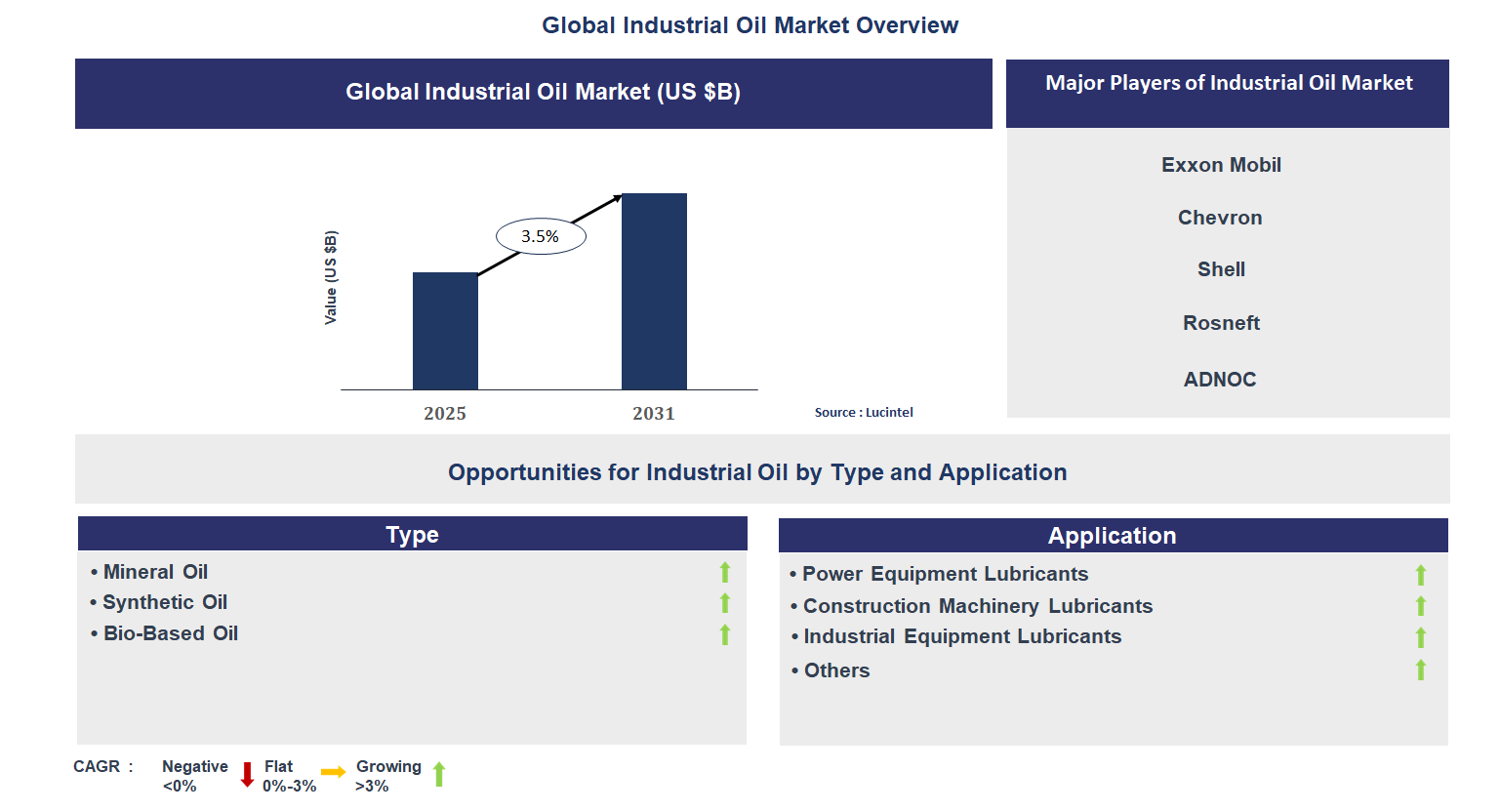
Key data points: The growth forecast = 3.5% annually for the next 7 years. Scroll below to get more insights. This market report covers trends, opportunities and forecasts in industrial oil market to 2031 by type (mineral oil, synthetic oil, and bio-based oil), application (power equipment lubricants, construction machinery lubricants, industrial equipment lubricants, and others), and region (North America, Europe, Asia Pacific, and the Rest of the World)
We'll send your sample report shortly.
• Lucintel forecasts that, within the type category, bio-based oil is expected to witness the highest growth over the forecast period.
• Within the application category, industrial equipment lubricant is expected to witness the highest growth.
• In terms of region, APAC is expected to witness the highest growth over the forecast period. Gain valuable insights for your business decisions with our comprehensive 150+ page report. Sample figures with some insights are shown below.
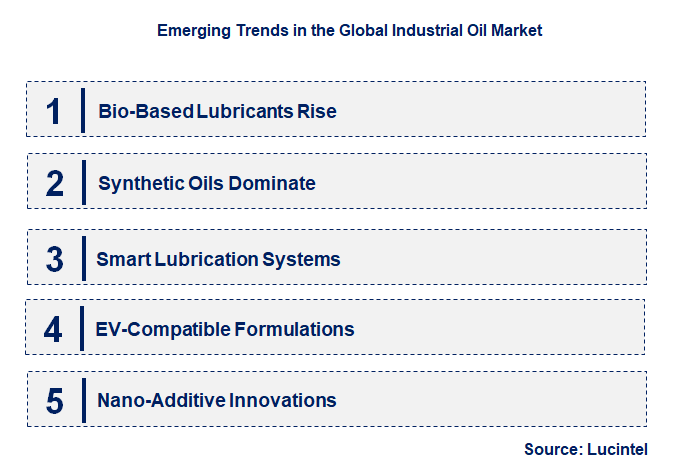
• Bio-based Lubricants Rise: Transition to plant-derived oils reduces reliance on petroleum, slashing carbon emissions and biodegradability issues. Industries like food processing and marine adopt them for compliance and spill safety, extending equipment life while cutting disposal costs. This trend fosters supplier diversification and greener supply chains.
• Synthetic Oils Dominate: Advanced synthetics deliver superior stability under extreme temperatures and pressures, vital for aerospace and automotive. They minimize friction, boost fuel efficiency, and extend intervals between changes, yielding substantial savings. Widespread adoption accelerates in high-precision sectors, elevating overall productivity.
• Smart Lubrication Systems: IoT-enabled monitoring predicts failures, optimizing oil usage in real-time for factories. Centralized systems in Industry 4.0 setups cut waste by dispensing precise amounts, enhancing reliability in automated lines. This integration transforms maintenance from reactive to predictive, driving cost efficiencies.
• EV-Compatible Formulations: Specialized low-viscosity oils for electric motors and batteries address heat dissipation without conductivity risks. As electrification surges, they prevent wear in drivetrains, supporting quieter, efficient operations. This trend opens vast markets in transportation and renewables.
• Nano-additive Innovations: Nanoparticles enhance viscosity and anti-wear properties, ideal for micro-machinery. They enable thinner films for fuel savings and durability in electronics manufacturing. Rapid commercialization boosts performance in compact devices, spurring next-gen industrial applications. These trends collectively propel the industrial oil market toward sustainability and intelligence. By prioritizing eco-formulations, digital tools, and specialized blends, stakeholders achieve lower costs, compliance, and superior efficiency. The market evolves into a resilient ecosystem, fueling global industrial competitiveness and innovation.
• Strategic Acquisitions Boost: Major firms acquire niche players specializing in bio-lubricants, expanding portfolios for diverse applications. This consolidates expertise in sustainable tech, accelerating market entry for ester-based oils in power and marine sectors, enhancing competitive edges through integrated R&D.
• Eco-formula Launches Surge: New biodegradable lines meet stringent regulations, replacing mineral oils in sensitive environments. They offer comparable performance with faster breakdown, slashing pollution risks in agriculture and construction, while promoting brand loyalty among eco-conscious operators.
• Asia Expansion Accelerates: Producers ramp up facilities in high-growth regions to serve burgeoning manufacturing. Localized blending ensures tailored solutions for tropical climates, reducing import dependencies and logistics costs, fueling infrastructure-driven demand.
• Digital Monitoring Advances: Sensor-integrated oils enable predictive analytics, preventing breakdowns in automated plants. Real-time data optimizes usage, cutting consumption by alerting on contamination early, revolutionizing maintenance in steel and chemical industries.
• High-temp Blends Emerge: Formulations withstand extreme heat in renewables and aerospace, preventing oxidation. They extend overhaul cycles, lowering operational expenses and downtime, critical for turbine and engine reliability in emerging energy sectors. These developments fortify the industrial oil market‘s resilience and innovation capacity. By embracing acquisitions, green tech, and digital tools, the sector cuts costs, complies with norms, and supports sustainable growth, positioning it as a cornerstone of modern industry.
• Power Generation Demand: Turbine and generator oils require high-purity synthetics for continuous operation. Growth stems from renewable expansions, where dielectric properties prevent failures, ensuring grid stability and enabling seamless integration of wind-solar hybrids with minimal maintenance.
• Metalworking Fluids Boom: Cutting and forming oils enhance precision in automotive plants. Advanced emulsions reduce tool wear, speeding production cycles and yielding smoother finishes, vital for export-quality components in global supply chains.
• Construction Equipment Needs: Hydraulic oils for excavators withstand dust and loads. Bio-hybrids extend life in harsh sites, cutting repair frequency and supporting mega-projects with reliable performance under variable pressures.
• Chemical Processing Rise: Process oils lubricate reactors and pumps against corrosives. High-stability variants minimize leaks, boosting safety and throughput in petrochemicals, aligning with capacity expansions worldwide.
• Food Grade Oils Expand: NSF-certified lubricants for processing lines prevent contamination. Silicone-free formulas ensure hygiene in packaging, meeting food safety norms while optimizing conveyor speeds for higher yields. These application-focused opportunities drive diversified revenues and innovation. By addressing sector-specific pains with advanced oils, the market gains traction in renewables, manufacturing, and consumer goods, fostering long-term partnerships and sustainable expansion.
• Exxon Mobil
• Chevron
• Shell
• Rosneft
• ADNOC
• Lubrizol
• BP
• Lukoil
• Total
• Sinopec
• Mineral Oil
• Synthetic Oil
• Bio-Based Oil
• Power Equipment Lubricants
• Construction Machinery Lubricants
• Industrial Equipment Lubricants
• Others
• North America
• Europe
• Asia Pacific
• The Rest of the World
• United States: Investments in advanced automation and precision machinery propel demand for specialized high-performance industrial oils. Manufacturers prioritize synthetic blends offering superior thermal stability and longevity, reducing downtime in sectors like aerospace and automotive assembly. Sustainability initiatives drive adoption of bio-based alternatives, aligning with stricter emission standards while boosting energy efficiency in heavy industries.
• China: Rapid expansion of electric vehicle production and smart manufacturing accelerates need for EV-compatible industrial oils with low viscosity. State policies promote green lubricants to curb pollution, spurring innovation in biodegradable formulations for heavy machinery. This shift supports massive infrastructure projects, enhancing equipment reliability and cutting maintenance costs in steel and construction sectors.
• Germany: Precision engineering industries lead adoption of ultra-high-performance synthetic oils tailored for high-speed operations. Emphasis on circular economy principles fosters recyclable lubricant development, minimizing waste in automotive and machinery production. Regulatory pressures for low-emission operations drive formulations that extend service life, optimizing performance in export-oriented manufacturing hubs.
• India: Booming construction, power generation, and textile sectors fuel surge in versatile industrial oils resistant to extreme conditions. Local production ramps up affordable synthetic variants, supporting ‘Make in India‘ initiatives. Enhanced formulations reduce friction in heavy equipment, lowering energy use and enabling faster industrialization while addressing diverse climatic challenges.
• Japan: Advanced robotics and semiconductor manufacturing demand precision lubricants with exceptional purity and anti-wear properties. Focus on bio-based, low-friction oils aligns with energy-saving goals, prolonging component life in high-tech assembly lines. Innovations in nano-additives enhance thermal management, bolstering Japan‘s leadership in efficient, compact machinery worldwide.


• Exxon Mobil
• Chevron
• Shell
• Rosneft
• ADNOC
• Lubrizol
• BP
• Lukoil
• Total
• Sinopec Q5. Which industrial oil market segment will be the largest in future? Answer: Lucintel forecasts that, within the type category, bio-based oil is expected to witness the highest growth over the forecast period. Q6. In industrial oil market, which region is expected to be the largest in next 5 years? Answer: In terms of region, APAC is expected to witness the highest growth over the forecast period. Q7. Do we receive customization in this report? Answer: Yes, Lucintel provides 10% customization without any additional cost.


Choose a license that fits your team. Instant PDF delivery.
Prices exclude taxes. Instant delivery. Custom licensing available on request.
Market Report · July 22, 2026
Market Report · July 22, 2026
Market Report · July 22, 2026
Trusted partner for strategic intelligence and business growth


Receive a complimentary market analysis tailored to your industry. Our analysts will identify key growth opportunities and competitive dynamics specific to your business.

Market size, growth rate, and key trend analysis for your specific sector.

Top competitor positioning and market share analysis.

Strategic recommendations backed by data-driven insights.
Get curated market intelligence and competitive moves straight to your inbox.
By subscribing, you agree to receive our monthly insights. Unsubscribe anytime.
Receive a complimentary market analysis tailored to your industry. Our analysts will identify key growth opportunities and competitive dynamics specific to your business.
Market size, growth rate, and key trend analysis for your specific sector.
Top competitor positioning and market share analysis.
Strategic recommendations backed by data-driven insights.
Get curated market intelligence, emerging trends, and competitive moves straight to your inbox each month.
By subscribing, you agree to receive our monthly insights. Unsubscribe anytime.
We'll send your sample report shortly.