
Market Report · July 22, 2026

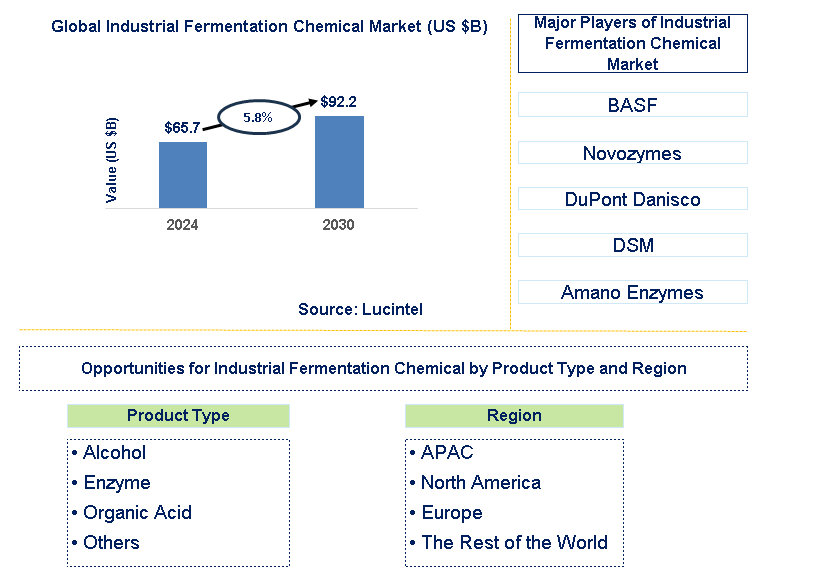
Key data points: The market size in 2030 = $92.2 billion, growth forecast = 5.8% annually for the next 6 years. Scroll below to get more insights. This market report covers trends, opportunities, and forecasts in the global industrial fermentation chemical market to 2030 by product type (alcohol, enzyme, organic acid, and others), and region (North America, Europe, Asia Pacific, and the Rest of the World)
We'll send your sample report shortly.
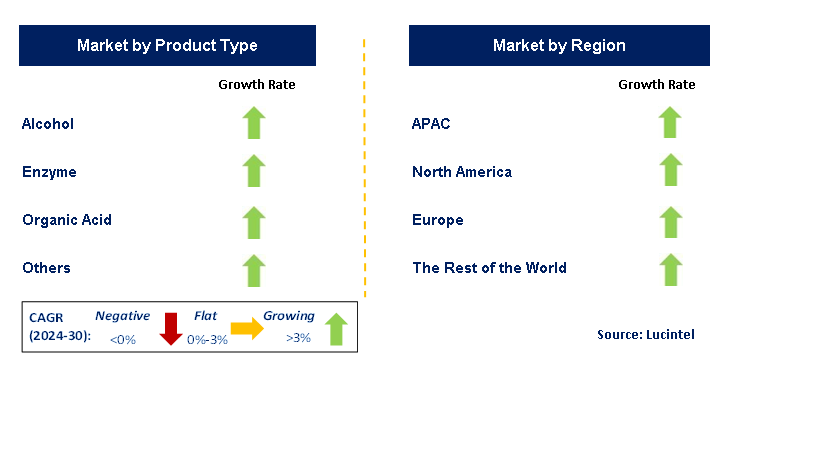
• Within this market, within the product type category, alcohol will remain the largest segment due to the growing utilization of alternative energy sources and biofuels based on alcohol.
• In terms of regions, North America will remain the largest region over the forecast period due to the growing pharmaceutical industry in countries. Gain valuable insight for your business decisions with our comprehensive 150+ page report.
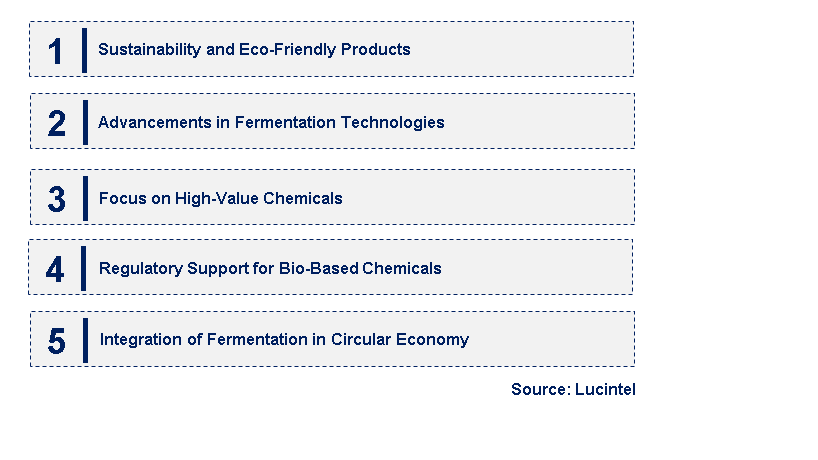
• Sustainability and Eco-Friendly Products: The shift towards sustainable production methods is a dominant trend. Companies are prioritizing bio-based chemicals derived from renewable resources to reduce reliance on fossil fuels. This trend not only addresses environmental concerns but also meets the growing consumer demand for eco-friendly products.
• Advancements in Fermentation Technologies: Innovations in fermentation technologies, such as precision fermentation and synthetic biology, are enhancing production efficiency. These advancements allow for higher yields and the ability to produce complex molecules, expanding the range of chemicals that can be obtained through fermentation.
• Focus on High-Value Chemicals: There is an increasing emphasis on the production of high-value specialty chemicals through fermentation. Industries are shifting from commodity chemicals to more valuable products, such as bioplastics and biopharmaceuticals, which offer greater profitability and market differentiation.
• Regulatory Support for Bio-Based Chemicals: Governments worldwide are implementing policies to promote the use of bio-based chemicals. Regulatory incentives and funding for biotechnology research are driving the adoption of fermentation processes across various industries, fostering market growth.
• Integration of Fermentation in Circular Economy: The concept of a circular economy is gaining traction, with fermentation processes playing a key role. Companies are focusing on using waste materials as feedstock for fermentation, contributing to waste reduction and resource efficiency, and aligning with global sustainability goals. These emerging trends are significantly reshaping the industrial fermentation chemical market. By promoting sustainability, enhancing production efficiency, and focusing on high-value applications, companies are positioning themselves for success in a rapidly evolving landscape.
• Enhanced Microbial Strains: Recent advancements in genetic engineering are leading to the development of specialized microbial strains that improve fermentation efficiency. These engineered strains can optimize the production of specific chemicals, resulting in higher yields and reduced production costs, positioning companies for competitive advantage.
• Bioprocess Optimization: Companies are investing in bioprocess optimization technologies that enhance fermentation conditions. Innovations in process control and monitoring allow for better management of fermentation parameters, leading to improved consistency and quality of the final products.
• Sustainable Feedstock Utilization: The utilization of agricultural waste and by-products as feedstock for fermentation is gaining popularity. This development not only reduces production costs but also addresses waste management issues, aligning with sustainability goals and enhancing the overall efficiency of production processes.
• Collaboration and Partnerships: Strategic collaborations between biotechnology firms and traditional industries are increasing. These partnerships aim to leverage expertise in fermentation technology and application development, driving innovation and expanding market reach across various sectors.
• Investment in Research and Development: Increased investment in R&D is facilitating breakthroughs in fermentation technology and applications. Companies are focusing on developing new fermentation processes and products, fostering innovation, and enabling entry into new markets. These recent developments are significantly impacting the industrial fermentation chemical market by enhancing efficiency, promoting sustainability, and fostering innovation. As the market continues to evolve, these advancements will play a vital role in shaping future production methods and applications.
• Bioplastics Production: The growing demand for sustainable packaging solutions presents significant opportunities for fermentation-derived bioplastics. Companies can develop bio-based alternatives to traditional plastics, appealing to environmentally conscious consumers and meeting regulatory requirements for sustainability.
• Pharmaceutical Applications: The pharmaceutical industry is increasingly utilizing fermentation processes to produce active pharmaceutical ingredients (APIs). Companies can explore opportunities in this sector by developing fermentation-derived compounds with therapeutic properties, addressing the rising demand for natural and effective medications.
• Food and Beverage Industry: The food and beverage sector is a key growth area for industrial fermentation chemicals, particularly in the production of natural flavorings, preservatives, and functional ingredients. Companies can innovate in this space by developing health-focused products that cater to consumer preferences for clean labels and natural ingredients.
• Biofuels Development: The shift towards renewable energy sources is driving opportunities in biofuel production through fermentation processes. Companies can invest in research and development to create efficient fermentation pathways for biofuels, contributing to energy sustainability and reducing carbon emissions.
• Agricultural Biochemicals: The agriculture sector offers growth potential for fermentation-derived biochemicals, such as biofertilizers and biopesticides. Companies can tap into this market by developing sustainable agricultural solutions that enhance crop yield and reduce environmental impact. These strategic growth opportunities across key applications position the industrial fermentation chemical market for significant expansion. By leveraging these opportunities, companies can enhance their product offerings and respond effectively to evolving market demands.
• Increasing Demand for Sustainable Products: The growing consumer preference for sustainable and bio-based products is a primary driver for the fermentation chemical market. Companies are investing in sustainable processes to meet this demand, fostering market growth and innovation.
• Technological Advancements: Innovations in fermentation technology, such as improved microbial strains and process optimization, are driving production efficiency. These advancements enable companies to enhance yield and reduce costs, positioning them competitively in the market.
• Government Support for Biotechnology: Regulatory support for biotechnology and bio-based products is facilitating growth in the fermentation sector. Incentives and funding for research initiatives are encouraging investment and innovation, driving market expansion.
• Global Shift Towards Circular Economy: The movement towards a circular economy is promoting the utilization of waste materials in fermentation processes. This trend reduces environmental impact and resource consumption, aligning with global sustainability goals.
• Expansion of Emerging Markets: The growth of emerging markets presents significant opportunities for fermentation chemical companies. Rising industrialization and increasing consumer awareness of sustainability in these regions are driving demand for bio-based products. Challenges in the industrial fermentation chemical market are:
• Regulatory Compliance: Navigating regulatory frameworks can be challenging for fermentation companies, particularly regarding safety and environmental standards. Compliance requires investment and may slow product development timelines.
• High Production Costs: The costs associated with advanced fermentation technologies can be substantial. This financial burden may limit access for smaller companies and restrict their ability to compete in the market.
• Market Competition: The fermentation market faces competition from synthetic alternatives and other natural ingredients. Companies must continuously innovate to differentiate their products and maintain market share. These drivers and challenges significantly shape the industrial fermentation chemical market's dynamics. While growing demand for sustainable products and technological advancements present growth opportunities, challenges such as regulatory compliance and market competition must be addressed for sustained success.
• BASF
• Novozymes
• DuPont Danisco
• DSM
• Amano Enzymes
• Dow
• ADM
• Alcohol
• Enzyme
• Organic Acid
• Others
• North America
• Europe
• Asia Pacific
• The Rest of the World
• United States: In the U.S., significant investments in biotechnology are enhancing industrial fermentation processes. Companies are focusing on developing bio-based chemicals to replace petroleum-derived products. Advances in microbial fermentation technology have enabled the production of high-value chemicals like lactic acid and amino acids. Additionally, regulatory support for biofuels is promoting research into fermentation methods for sustainable energy solutions, creating new market opportunities.
• China: China is rapidly advancing in the industrial fermentation sector, driven by its vast agricultural resources and government initiatives supporting biotechnology. Recent developments include the commercialization of fermentation-derived chemicals, such as organic acids and enzymes, aimed at various industries, including food and pharmaceuticals. The Chinese government’s emphasis on green chemistry is fostering innovations in fermentation processes, increasing production efficiency, and reducing environmental impact.
• Germany: Germany is a leader in fermentation technology, with a strong focus on sustainability and environmental responsibility. Recent developments include the integration of fermentation processes in the production of bioplastics and biofuels. German companies are investing in R&D to improve the efficiency of microbial fermentation, leading to higher yields of bio-based chemicals. The country’s stringent regulations are pushing industries toward greener processes, further enhancing market growth.
• India: In India, the industrial fermentation market is gaining momentum due to rising demand for bio-based chemicals and pharmaceuticals. Recent developments include the establishment of fermentation technology hubs to promote research and development. Indian companies are exploring the use of local agricultural waste as feedstock for fermentation, aiming to enhance sustainability. Government initiatives promoting bio-economy and renewable resources are also supporting growth in this sector.
• Japan: Japan is focusing on innovative fermentation technologies to produce high-value chemicals and bioproducts. Recent advancements include the development of specialized microbial strains for efficient fermentation processes. Japanese companies are exploring fermentation applications in food, pharmaceuticals, and biofuels. The country's emphasis on sustainability and reducing carbon emissions is driving investments in fermentation technology, positioning Japan as a key player in the global market.


• BASF
• Novozymes
• DuPont Danisco
• DSM
• Amano Enzymes
• Dow
• ADM Q6. Which industrial fermentation chemical market segment will be the largest in future? Answer: Lucintel forecasts that alcohol will remain the largest segment over the forecast period due to growing utilisation of alternative energy sources and biofuels based on alcohol. Q7. In industrial fermentation chemical market, which region is expected to be the largest in next 5 years? Answer: North America will remain the largest region over the forecast period due to growing pharmaceutical industry in countries. Q8. Do we receive customization in this report? Answer: Yes, Lucintel provides 10% customization without any additional cost.


Choose a license that fits your team. Instant PDF delivery.
Prices exclude taxes. Instant delivery. Custom licensing available on request.
Market Report · July 22, 2026
Market Report · July 22, 2026
Market Report · July 22, 2026
Trusted partner for strategic intelligence and business growth


Receive a complimentary market analysis tailored to your industry. Our analysts will identify key growth opportunities and competitive dynamics specific to your business.

Market size, growth rate, and key trend analysis for your specific sector.

Top competitor positioning and market share analysis.

Strategic recommendations backed by data-driven insights.
Get curated market intelligence and competitive moves straight to your inbox.
By subscribing, you agree to receive our monthly insights. Unsubscribe anytime.
Receive a complimentary market analysis tailored to your industry. Our analysts will identify key growth opportunities and competitive dynamics specific to your business.
Market size, growth rate, and key trend analysis for your specific sector.
Top competitor positioning and market share analysis.
Strategic recommendations backed by data-driven insights.
Get curated market intelligence, emerging trends, and competitive moves straight to your inbox each month.
By subscribing, you agree to receive our monthly insights. Unsubscribe anytime.
We'll send your sample report shortly.