
Market Report · May 18, 2026

This market report covers trends, opportunities, and forecasts in the global industrial clutches and brakes market to 2031 by technology (electric, mechanical, pneumatic & hydraulic, and electromagnetic), end use (mining & metallurgy, construction, power generation, industrial production, commercial, logistics, and material handling ), and region (North America, Europe, Asia Pacific, and the Rest of the World)
We'll send your sample report shortly.
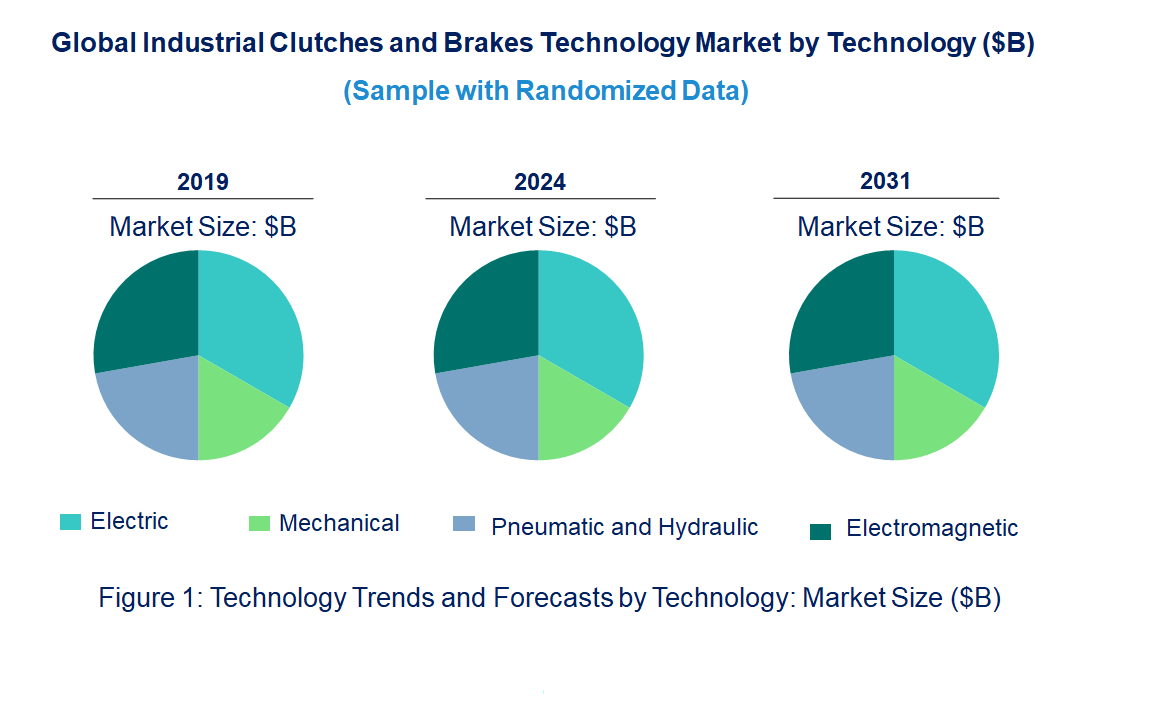
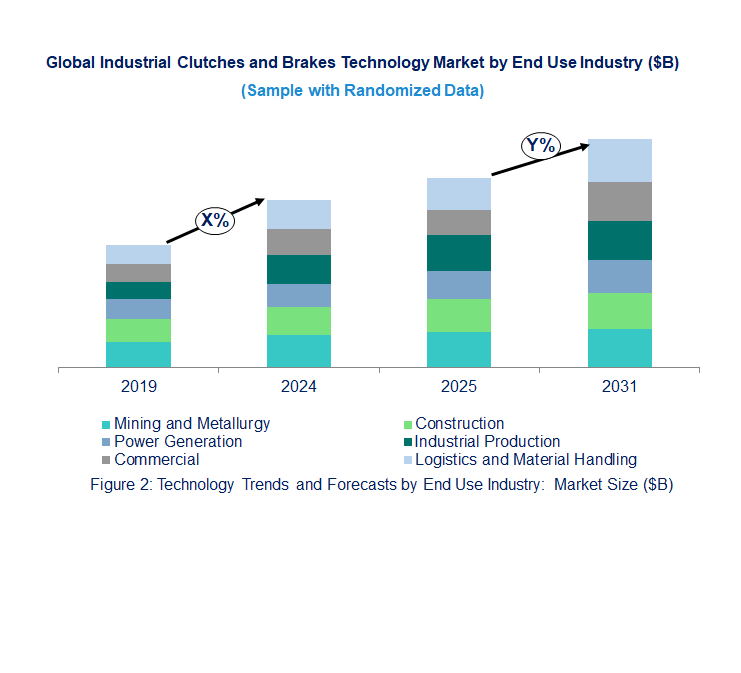
• Increasing Demand for Electric Clutches and Brakes: Electric clutches and brakes are gaining traction due to their efficiency, precision, and ease of integration with automated systems. They are increasingly being used in sectors such as mining and manufacturing, where performance and energy efficiency are critical.
• Technological Integration with IoT: The integration of industrial clutches and brakes with Internet of Things (IoT) technology allows for real-time monitoring and predictive maintenance, reducing downtime and improving system longevity. This trend is becoming prominent in industries like logistics and material handling.
• Shift Towards Energy-Efficient Solutions: There is a growing focus on energy-efficient solutions as industries seek to reduce operational costs and environmental impact. Electric and electromagnetic clutches are more energy-efficient compared to traditional mechanical and pneumatic alternatives.
• Customization and Advanced Control Systems: There is an increasing need for customizable clutches and brakes that can be tailored to specific applications. Advanced control systems enable precise adjustments, leading to better performance and higher reliability in applications like power generation and industrial production.
• Automated Systems and Robotics: The rise of automation and robotics in industrial sectors is driving the demand for more reliable and efficient clutches and brakes. These systems require high-performance, low-maintenance components that can operate continuously under demanding conditions. These trends are shaping the future of the industrial clutches and brakes market by driving innovations in efficiency, performance, and connectivity. As automation and energy efficiency continue to dominate the industrial landscape, clutches and brakes will evolve to meet the new demands of these sectors.
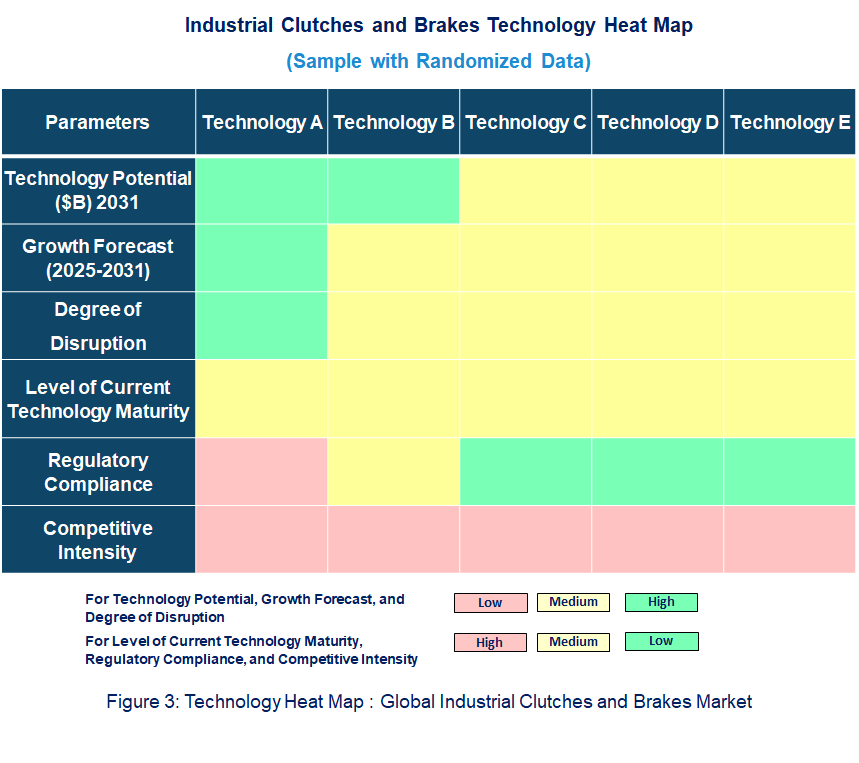
• Technology Potential: The growing demand for automation and energy efficiency has unlocked significant potential for electric and electromagnetic clutches and brakes, which offer better control and lower energy consumption compared to traditional mechanical systems. Hydraulic and pneumatic systems are increasingly being optimized for heavier industrial applications, offering improved power transmission capabilities in environments like mining and construction.
• Degree of Disruption: Electric and electromagnetic clutches are leading the disruption in the market, enabling highly precise control over machinery, reducing mechanical wear, and providing opportunities for real-time monitoring and integration with Industry 4.0 technologies. These advancements enable seamless automation and integration into digital systems, enhancing performance across industrial sectors.
• Technology Maturity: While pneumatic and hydraulic clutches have reached a high level of maturity, electric and electromagnetic technologies are rapidly advancing. The adoption of smart technologies and IoT-enabled systems is still emerging but is expected to become more widespread as industries seek improved performance and reduced downtime.
• Regulatory Compliance: Industrial clutches and brakes are subject to stringent regulations, particularly in sectors like power generation, aerospace, and automotive, where safety and performance are critical. Manufacturers must adhere to global safety standards, such as ISO certifications, to ensure that their products meet both performance and safety benchmarks. The industrial clutches and brakes market is on the cusp of transformation, driven by advancements in electric, pneumatic, hydraulic, and electromagnetic technologies. As these innovations mature, they hold the potential to disrupt industries by enhancing energy efficiency, automation, and performance. However, maintaining regulatory compliance remains a critical factor in the continued success of these technologies.
• Altra Industrial Motion Corp has been advancing its electromagnetic and electric clutch technologies, providing more energy-efficient solutions for industries such as mining and industrial production. Their recent developments aim to integrate smart monitoring capabilities to further reduce maintenance costs.
• The Carlyle Johnson Machine Company, LLC has introduced advanced mechanical and pneumatic brake systems that provide improved torque handling for heavy-duty applications, especially in the construction and mining sectors. Their designs focus on higher reliability and durability under extreme operational conditions.
• Eaton Corporation Plc has been at the forefront of developing integrated brake systems for the automotive and logistics sectors. They have launched new electric-powered clutches and brakes with enhanced performance and reduced environmental impact, in line with global sustainability goals.
• Johnson Industries Ltd has been focusing on specialized clutches and brake systems for industrial production and power generation sectors, particularly in applications requiring precision and safety. Their products are now equipped with automated control features for smoother operation.
• Hindon Corporation has introduced cutting-edge pneumatic and hydraulic brake systems designed to meet the growing demands of the aerospace and defense sectors. Their latest innovations improve both operational efficiency and safety in high-stakes environments. These developments highlight the ongoing shift towards more energy-efficient, precise, and high-performance clutch and brake solutions. As companies continue to innovate and adapt to market needs, the industrial clutches and brakes market is set to grow further, driven by advancements in automation, energy efficiency, and IoT integration.
• Increased Automation in Industrial Sectors: The growing trend of automation in manufacturing, logistics, and other industrial sectors is driving the demand for high-performance clutches and brakes that can function in automated systems and machinery.
• Energy Efficiency Demand: Rising energy costs and sustainability concerns are pushing industries to adopt energy-efficient solutions, which is contributing to the growing demand for electric and electromagnetic clutches and brakes.
• Technological Advancements: Continuous innovations in electric, pneumatic, and hydraulic systems, such as the integration of IoT and smart sensors, are enhancing the performance and functionality of industrial clutches and brakes, creating new growth opportunities.
• Industrialization in Emerging Markets: The ongoing industrialization in emerging markets is driving the demand for industrial machinery and components, including clutches and brakes, as industries look to expand production capacities. Challenges facing the global industrial clutches and brakes market are:
• High Initial Costs: The adoption of advanced clutches and brake systems often requires a significant upfront investment, particularly in electric and electromagnetic solutions, which may deter small- and medium-sized enterprises (SMEs).
• Complexity in Maintenance: While advanced systems offer better performance, they may also require more specialized maintenance, which can be a challenge for industries with limited technical expertise or resources.
• Competition from Alternative Technologies: The presence of alternative technologies, such as servo motors and other braking systems, can pose a threat to the market growth of traditional industrial clutches and brakes, especially in highly competitive sectors. The market for industrial clutches and brakes is poised for growth due to factors such as increased automation, demand for energy-efficient solutions, and continuous technological advancements. However, challenges such as high initial costs and competition from alternative technologies need to be addressed to fully realize market potential.
• Altra Industrial Motion Corp.
• The Carlyle Johnson Machine Company
• Eaton Corporation
• Johnson Industries Ltd.
• Hindon Corporation
• Technology Readiness by Technology Type: Electric clutches are highly competitive and technologically mature, with growing adoption in automation and energy-efficient applications. They offer improved precision and control over mechanical systems, which remain widely used but are less flexible and efficient. Pneumatic and hydraulic clutches are well-established and widely used in industries like mining and construction, where high power and robustness are required. However, their environmental impact and efficiency are driving a shift towards more sustainable technologies. Electromagnetic clutches, still emerging, hold great potential for disruption due to their advanced control and integration with smart systems. They are highly suitable for automated applications but face challenges in scalability and cost. All technologies must comply with stringent safety standards and regulations, especially in critical industries like aerospace, automotive, and power generation. While mechanical and pneumatic systems are established, newer technologies like electric and electromagnetic clutches are setting the stage for the next wave of innovation in the industrial clutches and brakes market.
• Competitive Intensity and Regulatory Compliance: The competitive intensity in the industrial clutches and brakes market is high, with companies continually innovating to meet demand for more efficient, durable, and precise systems. Electric and electromagnetic clutches face increased competition as industries transition towards automation and energy-efficient solutions. Pneumatic and hydraulic systems remain dominant in heavy-duty applications like mining and construction, where power density is key. However, they also face regulatory pressure to improve energy efficiency and reduce environmental impacts. All technologies must comply with strict industry standards and safety regulations, particularly in the power generation and automotive sectors. Regulatory frameworks such as ISO certifications and environmental norms drive product development and influence market competition. As a result, manufacturers must balance innovation with compliance to stay competitive.
• Disruption Potential of Different Technologies for Industrial Clutches and Brakes Market: The disruption potential of various clutch and brake technologies lies in their ability to improve performance, efficiency, and integration into modern automation systems. Electric and electromagnetic clutches offer precise control, energy efficiency, and real-time monitoring, enabling smarter and more automated systems. Pneumatic and hydraulic systems are well-suited for high-power applications, but they may not provide the same level of flexibility or energy efficiency as electric alternatives. Mechanical systems remain widely used but are limited in terms of automation and precision. The emergence of smart technologies such as electromagnetic systems promises greater control and reduced maintenance costs, marking a shift from traditional mechanical clutches. As industries adopt more advanced technologies, the potential for disruptive innovation increases, particularly in sectors requiring high reliability and precision, such as aerospace and automotive.
• Electric
• Mechanical
• Pneumatic & Hydraulic
• Electromagnetic
• Mining & Metallurgy
• Construction
• Power Generation
• Industrial Production
• Commercial
• Logistics and Material Handling
• North America
• Europe
• Asia Pacific
• The Rest of the World
• Latest Developments and Innovations in the Industrial Clutches and Brakes Technologies
• Companies / Ecosystems
• Strategic Opportunities by Technology Type


Choose a license that fits your team. Instant PDF delivery.
Prices exclude taxes. Instant delivery. Custom licensing available on request.
Market Report · May 18, 2026
Market Report · May 18, 2026
Market Report · May 18, 2026
Trusted partner for strategic intelligence and business growth


Receive a complimentary market analysis tailored to your industry. Our analysts will identify key growth opportunities and competitive dynamics specific to your business.

Market size, growth rate, and key trend analysis for your specific sector.

Top competitor positioning and market share analysis.

Strategic recommendations backed by data-driven insights.
Get curated market intelligence and competitive moves straight to your inbox.
By subscribing, you agree to receive our monthly insights. Unsubscribe anytime.
Receive a complimentary market analysis tailored to your industry. Our analysts will identify key growth opportunities and competitive dynamics specific to your business.
Market size, growth rate, and key trend analysis for your specific sector.
Top competitor positioning and market share analysis.
Strategic recommendations backed by data-driven insights.
Get curated market intelligence, emerging trends, and competitive moves straight to your inbox each month.
By subscribing, you agree to receive our monthly insights. Unsubscribe anytime.
We'll send your sample report shortly.