
Report Feature
Indoor Ski Resort Market Trends and Forecast
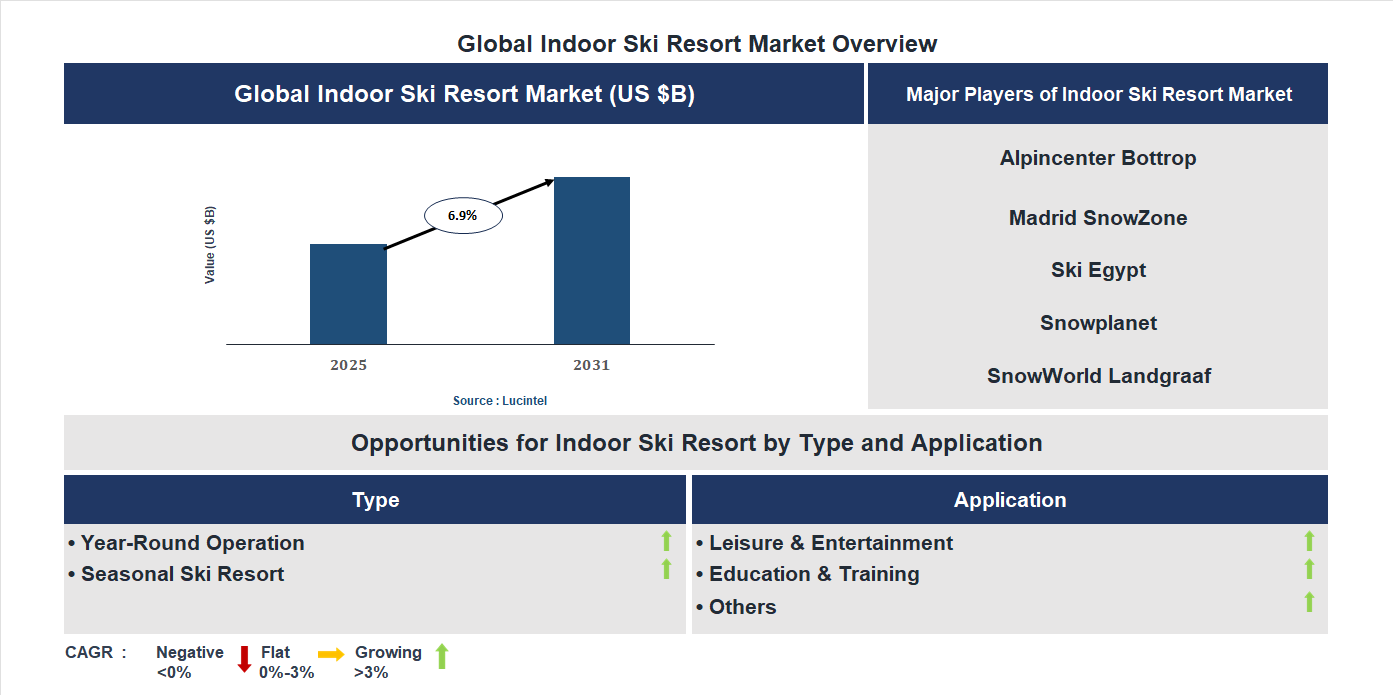
The future of the global indoor ski resort market looks promising with opportunities in the leisure & entertainment and education & training markets. The global indoor ski resort market is expected to grow with a CAGR of 6.9% from 2025 to 2031. The major drivers for this market are the increasing demand for year round recreational activities, the rising popularity of indoor adventure sports, and the growing investment in experiential entertainment facilities.• Lucintel forecasts that, within the type category, year-round operation is expected to witness higher growth over the forecast period.
• Within the application category, leisure & entertainment is expected to witness higher growth.
• In terms of region, APAC is expected to witness the highest growth over the forecast period. Gain valuable insights for your business decisions with our comprehensive 150+ page report. Sample figures with some insights are shown below.
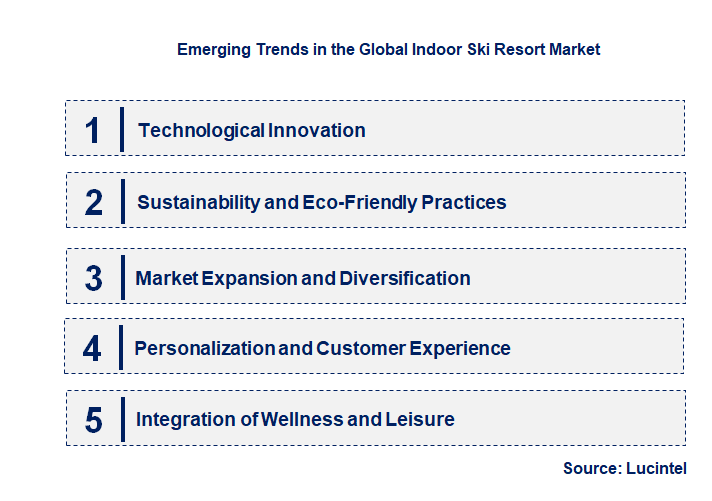
Emerging Trends in the Indoor Ski Resort Market
The indoor ski resort market is experiencing rapid growth driven by technological advancements, changing consumer preferences, and global climate challenges. As urbanization increases and outdoor winter sports become less accessible, indoor facilities offer year-round skiing experiences. Innovations in design, sustainability efforts, and enhanced customer experiences are shaping the future of this industry. These trends are not only expanding market reach but also redefining how consumers engage with winter sports. Understanding these key developments is essential for stakeholders aiming to capitalize on emerging opportunities and stay competitive in this evolving landscape.• Technological Innovation: Advanced simulation and virtual reality technologies are enhancing the skiing experience. These innovations improve safety, realism, and customization, attracting a broader demographic. Automated snow-making and climate control systems ensure consistent quality regardless of external weather conditions, reducing operational costs and environmental impact. As technology continues to evolve, indoor ski resorts will become more immersive and efficient, offering a more engaging experience that appeals to both beginners and seasoned skiers.
• Sustainability and Eco-Friendly Practices: The industry is increasingly adopting sustainable building materials, energy-efficient systems, and renewable energy sources. Green initiatives include solar panels, water recycling, and eco-conscious construction methods. These efforts reduce carbon footprints and operational costs, aligning with consumer demand for environmentally responsible entertainment options. Sustainable practices also enhance brand reputation and appeal to eco-conscious visitors, making environmental responsibility a key differentiator in a competitive market.
• Market Expansion and Diversification: Indoor ski resorts are expanding into new geographic regions, including urban centers and emerging markets. This diversification allows access to a broader customer base and mitigates risks associated with seasonal or outdoor weather variability. Resorts are also diversifying offerings by integrating additional amenities such as snow parks, après-ski activities, and wellness centers, creating comprehensive entertainment hubs that attract diverse demographics and increase revenue streams.
• Personalization and Customer Experience: Enhanced data analytics and digital platforms enable resorts to tailor experiences to individual preferences. Personalized coaching, customized packages, and interactive features improve customer satisfaction and loyalty. Virtual reality previews and mobile apps facilitate seamless booking and real-time updates, elevating the overall experience. This focus on personalization helps resorts differentiate themselves in a competitive market and fosters long-term customer relationships.
• Integration of Wellness and Leisure: Indoor ski resorts are increasingly incorporating wellness and leisure facilities such as spas, fitness centers, and relaxation zones. This holistic approach appeals to health-conscious consumers seeking active lifestyles combined with relaxation. The integration of wellness services not only broadens the appeal but also encourages longer stays and higher spending per visitor. This trend reflects a shift towards lifestyle-oriented entertainment, positioning indoor ski resorts as comprehensive leisure destinations. In summary, these emerging trends are transforming the indoor ski resort market by making it more innovative, sustainable, accessible, personalized, and holistic. They are expanding market opportunities, enhancing customer engagement, and positioning indoor ski resorts as versatile, eco-friendly entertainment hubs that cater to a diverse and evolving consumer base.
Recent Development in the Indoor Ski Resort Market
The indoor ski resort market has experienced significant growth driven by technological advancements, increasing urbanization, and a rising demand for year-round winter sports experiences. As consumers seek convenient and sustainable alternatives to outdoor skiing, industry players are innovating to enhance visitor experiences and expand their offerings. Recent developments reflect a strategic shift towards sustainability, technological integration, and diversification of services, which are shaping the future landscape of this niche market. These trends are not only attracting new customers but also encouraging existing resorts to upgrade facilities, thereby fostering competitive growth and market expansion.• Technological Innovations: Implementation of advanced snow-making and climate control systems has improved operational efficiency and guest experience, enabling resorts to maintain optimal skiing conditions regardless of external weather. This development reduces energy consumption and operational costs, making indoor resorts more sustainable and attractive to investors.
• Sustainability Initiatives: Many resorts are adopting eco-friendly practices such as renewable energy sources, water recycling, and energy-efficient infrastructure. These initiatives appeal to environmentally conscious consumers and help resorts meet regulatory standards, fostering long-term viability and reducing environmental impact.
• Diversification of Offerings: Resorts are expanding beyond skiing to include activities like snowboarding, tubing, and après-ski entertainment. This diversification attracts a broader customer base, increases revenue streams, and enhances overall visitor engagement, making indoor resorts more competitive.
• Strategic Partnerships and Investments: Major players are forming alliances with technology firms, hospitality brands, and entertainment companies to enhance service quality and marketing reach. Increased investments are fueling expansion projects and technological upgrades, accelerating market growth and global reach.
• Market Expansion and New Entrants: Emerging markets in Asia and the Middle East are witnessing the development of new indoor ski facilities, driven by rising disposable incomes and urbanization. This expansion broadens the market scope, introduces innovative concepts, and intensifies competition among providers. In summary, these recent developments are transforming the indoor ski resort market by improving operational efficiency, promoting sustainability, diversifying services, and expanding geographically. These changes are attracting a wider customer base, increasing revenue opportunities, and fostering competitive innovation, ultimately driving the market toward sustained growth and global prominence.
Strategic Growth Opportunities in the Indoor Ski Resort Market
The indoor ski resort market is experiencing rapid growth driven by increasing urbanization, climate change concerns, and a rising demand for year-round winter sports experiences. As consumers seek convenient and accessible options for skiing and snowboarding, industry players are exploring innovative strategies to expand their presence across various applications. These developments are shaping the future landscape of indoor ski resorts, creating new opportunities for investment, technological advancement, and customer engagement. The following five key growth opportunities across different applications highlight the potential for market expansion and increased profitability in this dynamic sector.• Tourism and Hospitality: Expanding indoor ski resorts in urban centers enhances tourism appeal by offering year-round winter sports experiences, attracting both local and international visitors. This diversification boosts hotel occupancy rates, restaurant revenues, and overall regional economic growth, making indoor ski resorts a strategic asset for urban tourism development.
• Entertainment and Leisure: Integrating indoor ski facilities into entertainment complexes creates multifunctional venues that attract diverse demographics. These resorts serve as entertainment hubs, increasing customer dwell time and revenue through additional activities such as après-ski, shopping, and events, thereby elevating the leisure experience.
• Sports Training and Academies: Indoor ski resorts provide controlled environments ideal for training athletes and hosting ski academies. This application supports skill development regardless of weather conditions, fostering talent cultivation and attracting professional and amateur athletes, which enhances the market’s credibility and growth potential.
• Corporate Events and Team Building: Utilizing indoor ski resorts for corporate events offers unique team-building experiences in a controlled setting. This application attracts corporate clients seeking innovative venues, increasing revenue streams through event hosting, corporate packages, and branded experiences.
• Retail and Equipment Sales: Indoor ski resorts often incorporate retail outlets for ski equipment, apparel, and accessories. This creates additional revenue opportunities, promotes brand partnerships, and enhances customer convenience, encouraging longer visits and higher spending. In summary, these growth opportunities are significantly impacting the indoor ski resort market by diversifying revenue streams, attracting new customer segments, and fostering innovation. They are driving market expansion, increasing profitability, and positioning indoor ski resorts as versatile, year-round destinations for recreation, sports, and entertainment.
Indoor Ski Resort Market Driver and Challenges
The indoor ski resort market is influenced by a variety of technological, economic, and regulatory factors that shape its growth and sustainability. Technological advancements enable more realistic and efficient indoor skiing experiences, while economic conditions affect consumer spending and investment in new facilities. Regulatory policies related to safety standards and environmental impact also play a crucial role. Additionally, demographic shifts and changing leisure preferences influence market demand. Navigating these drivers and challenges is essential for stakeholders aiming to capitalize on the market's potential and address obstacles effectively. Understanding these factors provides insight into the market's future trajectory and strategic opportunities. The factors responsible for driving the indoor ski resort market include:• Technological Innovation: The integration of advanced snow-making machines, virtual reality, and simulation technologies enhances the realism and appeal of indoor ski resorts. These innovations reduce operational costs and enable year-round skiing, attracting a broader customer base. As technology continues to evolve, resorts can offer more immersive experiences, increasing customer satisfaction and loyalty. This continuous improvement drives market growth by expanding accessibility and operational efficiency.
• Growing Tourism and Leisure Industry: Increasing global tourism and a rising preference for unique leisure activities boost demand for indoor ski resorts. These resorts serve as year-round attractions, especially in regions with limited natural snowfall. The appeal of combining skiing with other entertainment options attracts diverse demographics, including families and corporate groups. The expansion of the tourism sector directly correlates with increased investments in indoor skiing facilities, fueling market expansion.
• Urbanization and Population Growth: Rapid urbanization leads to higher demand for accessible recreational facilities within city limits. Indoor ski resorts offer convenient, year-round skiing options for urban populations, reducing the need for travel to natural ski destinations. Population growth in metropolitan areas increases the potential customer base, encouraging developers to invest in such facilities. This trend supports the market by making indoor skiing more accessible and appealing to a broader audience.
• Environmental Sustainability Initiatives: Growing awareness of environmental issues prompts resorts to adopt eco-friendly practices, such as energy-efficient snow production and sustainable building materials. These initiatives appeal to environmentally conscious consumers and help resorts meet regulatory standards. Implementing sustainable practices can reduce operational costs and improve brand reputation, further driving market growth. As sustainability becomes a key factor in consumer decision-making, it significantly influences market dynamics.
• Investment and Funding Opportunities: Increased availability of venture capital, government grants, and private investments facilitates the development of new indoor ski resorts. Financial support reduces barriers to entry and enables technological upgrades. This influx of capital encourages innovation and expansion, especially in emerging markets. The availability of funding is crucial for scaling operations and maintaining competitive advantage, thus propelling market growth. The challenges facing this indoor ski resort market include:
• High Capital and Operational Costs: Establishing and maintaining indoor ski resorts require significant investment in infrastructure, technology, and maintenance. These high costs can deter new entrants and limit expansion, especially in regions with uncertain demand. Operational expenses, including energy consumption and staffing, further strain profitability. Managing these costs while ensuring a quality experience remains a key challenge for industry players.
• Regulatory and Safety Compliance: Stringent safety standards and regulatory requirements pose hurdles for indoor ski resorts. Ensuring compliance involves regular inspections, safety protocols, and staff training, which can increase operational complexity and costs. Non-compliance risks legal penalties and damage to reputation. Navigating diverse regulatory environments across regions complicates expansion plans and operational consistency.
• Market Saturation and Competition: As the market matures, increased competition from existing resorts and new entrants can lead to price wars and reduced profit margins. Differentiating offerings and maintaining customer loyalty become critical challenges. Additionally, geographic saturation in certain regions limits growth opportunities, requiring resorts to innovate continuously to stay competitive and attract visitors. In summary, the indoor ski resort market is shaped by technological advancements, tourism growth, urbanization, sustainability efforts, and investment inflows, which collectively drive expansion. However, high costs, regulatory hurdles, and intense competition pose significant challenges. These factors influence strategic decisions, with successful players leveraging innovation and sustainability to sustain growth. The market's future depends on balancing these drivers and overcoming obstacles through technological, operational, and strategic adaptations. Overall, the market holds promising potential but requires careful navigation of its complex landscape to achieve long-term success.
List of Indoor Ski Resort Companies
Companies in the market compete on the basis of product quality offered. Major players in this market focus on expanding their manufacturing facilities, R&D investments, infrastructural development, and leverage integration opportunities across the value chain. With these strategies indoor ski resort companies cater increasing demand, ensure competitive effectiveness, develop innovative products & technologies, reduce production costs, and expand their customer base. Some of the indoor ski resort companies profiled in this report include-• Alpincenter Bottrop
• Madrid SnowZone
• Ski Egypt
• Snowplanet
• SnowWorld Landgraaf
• SnowWorld Rucphen
• BONSKI
Indoor Ski Resort Market by Segment
The study includes a forecast for the global indoor ski resort market by type, application, and region.Indoor Ski Resort Market by Type [Value from 2019 to 2031]:
• Year-Round Operation
• Seasonal Ski Resort
Indoor Ski Resort Market by Application [Value from 2019 to 2031]:
• Leisure & Entertainment
• Education & Training
• Others
Indoor Ski Resort Market by Region [Value from 2019 to 2031]:
• North America
• Europe
• Asia Pacific
• The Rest of the World
Country Wise Outlook for the Indoor Ski Resort Market
The indoor ski resort market has experienced significant growth driven by technological advancements, increasing urbanization, and changing consumer preferences for year-round recreational activities. As outdoor winter sports face climate variability and seasonal limitations, indoor facilities offer a reliable alternative, attracting a diverse customer base globally. Countries are investing in innovative designs, sustainable practices, and expanding their indoor ski infrastructure to meet rising demand. This evolving landscape reflects a broader trend toward experiential entertainment and health-conscious leisure options, positioning indoor ski resorts as a key segment within the broader recreational industry.• United States: The US indoor ski resort market has seen rapid expansion with notable investments in large-scale facilities equipped with advanced snow-making technology. Major players are focusing on eco-friendly operations and integrating virtual reality experiences to enhance customer engagement. The demand is driven by urban populations seeking convenient winter sports options, especially in regions with limited outdoor snow. Several resorts are also diversifying offerings with additional amenities like restaurants, fitness centers, and entertainment zones, boosting overall revenue and customer retention.
• China: China’s indoor ski resort industry is experiencing unprecedented growth, supported by government initiatives promoting winter sports ahead of the 2022 Beijing Winter Olympics. New facilities are emerging in major cities, utilizing cutting-edge snow production and energy-efficient systems. The market is characterized by rapid technological adoption and partnerships with international brands to improve quality standards. Additionally, the government’s focus on winter sports development is encouraging domestic tourism and attracting international visitors, making China a key emerging market for indoor skiing.
• Germany: Germany’s indoor ski resort market is characterized by high-quality facilities emphasizing sustainability and innovative design. Resorts are incorporating eco-friendly snow production methods and energy-efficient infrastructure to reduce environmental impact. The market is driven by urban dwellers seeking accessible winter sports options and a growing interest in health and fitness activities. Several resorts are expanding their offerings to include après-ski experiences, wellness services, and family-friendly amenities, positioning Germany as a mature and environmentally conscious market within Europe.
• India: The indoor ski resort industry in India is still in its nascent stages but shows promising growth potential. Recent developments include the launch of flagship resorts in major metropolitan areas, focusing on providing luxury and experiential entertainment. The market is driven by rising disposable incomes, increasing awareness of winter sports, and a desire for unique leisure activities. Companies are investing in modern snow-making technology and themed environments to attract affluent urban consumers. As awareness and infrastructure improve, India is poised to become a significant player in the indoor ski resort sector.
• Japan: Japan’s indoor ski resort market is well-established, with a strong focus on innovation and customer experience. Resorts are adopting advanced snow-making systems and integrating digital technologies like augmented reality to enhance visitor engagement. The market benefits from Japan’s affinity for winter sports and a high level of domestic tourism. Recent developments include expanding resort capacities, improving sustainability practices, and offering year-round skiing options. The industry continues to evolve with a focus on eco-friendly operations and integrating wellness and entertainment services to attract a broader demographic.

Features of the Global Indoor Ski Resort Market
Market Size Estimates: Indoor ski resort market size estimation in terms of value ($B). Trend and Forecast Analysis: Market trends (2019 to 2024) and forecast (2025 to 2031) by various segments and regions. Segmentation Analysis: Indoor ski resort market size by type, application, and region in terms of value ($B). Regional Analysis: Indoor ski resort market breakdown by North America, Europe, Asia Pacific, and Rest of the World. Growth Opportunities: Analysis of growth opportunities in different types, applications, and regions for the indoor ski resort market. Strategic Analysis: This includes M&A, new product development, and competitive landscape of the indoor ski resort market. Analysis of competitive intensity of the industry based on Porter’s Five Forces model.
FAQ
Q1. What is the growth forecast for indoor ski resort market? Answer: The global indoor ski resort market is expected to grow with a CAGR of 6.9% from 2025 to 2031. Q2. What are the major drivers influencing the growth of the indoor ski resort market? Answer: The major drivers for this market are the increasing demand for year round recreational activities, the rising popularity of indoor adventure sports, and the growing investment in experiential entertainment facilities. Q3. What are the major segments for indoor ski resort market? Answer: The future of the indoor ski resort market looks promising with opportunities in the leisure & entertainment and education & training markets. Q4. Who are the key indoor ski resort market companies? Answer: Some of the key indoor ski resort companies are as follows:• Alpincenter Bottrop
• Madrid SnowZone
• Ski Egypt
• Snowplanet
• SnowWorld Landgraaf
• SnowWorld Rucphen
• BONSKI Q5. Which indoor ski resort market segment will be the largest in future? Answer: Lucintel forecasts that, within the type category, year-round operation is expected to witness higher growth over the forecast period. Q6. In indoor ski resort market, which region is expected to be the largest in next 5 years? Answer: In terms of region, APAC is expected to witness the highest growth over the forecast period. Q7. Do we receive customization in this report? Answer: Yes, Lucintel provides 10% customization without any additional cost.
Table of Contents
List of Figures
List of Tables
Methodology
- In-depth interviews of the major players in this market
- Detailed secondary research from competitors’ financial statements and published data
- Extensive searches of published works, market, and database information pertaining to industry news, company press releases, and customer intentions
- A compilation of the experiences, judgments, and insights of Lucintel’s professionals, who have analyzed and tracked this market over the years.


Buy Now
Choose a license that fits your team. Instant PDF delivery.
Prices exclude taxes. Instant delivery. Custom licensing available on request.
Key Questions
- • What are some of the most promising, high-growth opportunities for the indoor ski resort market by type (year-round operation and seasonal ski resort), application (leisure & entertainment, education & training, and others), and region (North America, Europe, Asia Pacific, and the Rest of the World)?
- • Which segments will grow at a faster pace and why?
- • Which region will grow at a faster pace and why?
- • What are the key factors affecting market dynamics? What are the key challenges and business risks in this market?
- • What are the business risks and competitive threats in this market?
- • What are the emerging trends in this market and the reasons behind them?
- • What are some of the changing demands of customers in the market?
- • What are the new developments in the market? Which companies are leading these developments?
- • Who are the major players in this market? What strategic initiatives are key players pursuing for business growth?
- • What are some of the competing products in this market and how big of a threat do they pose for loss of market share by material or product substitution?
- • What M&A activity has occurred in the last 5 years and what has its impact been on the industry? For any questions related to Indoor Ski Resort Market, Indoor Ski Resort Market Size, Indoor Ski Resort Market Growth, Indoor Ski Resort Market Analysis, Indoor Ski Resort Market Report, Indoor Ski Resort Market Share, Indoor Ski Resort Market Trends, Indoor Ski Resort Market Forecast, Indoor Ski Resort Companies, write Lucintel analyst at email: helpdesk@lucintel.com. We will be glad to get back to you soon.


