
Market Report · July 31, 2026

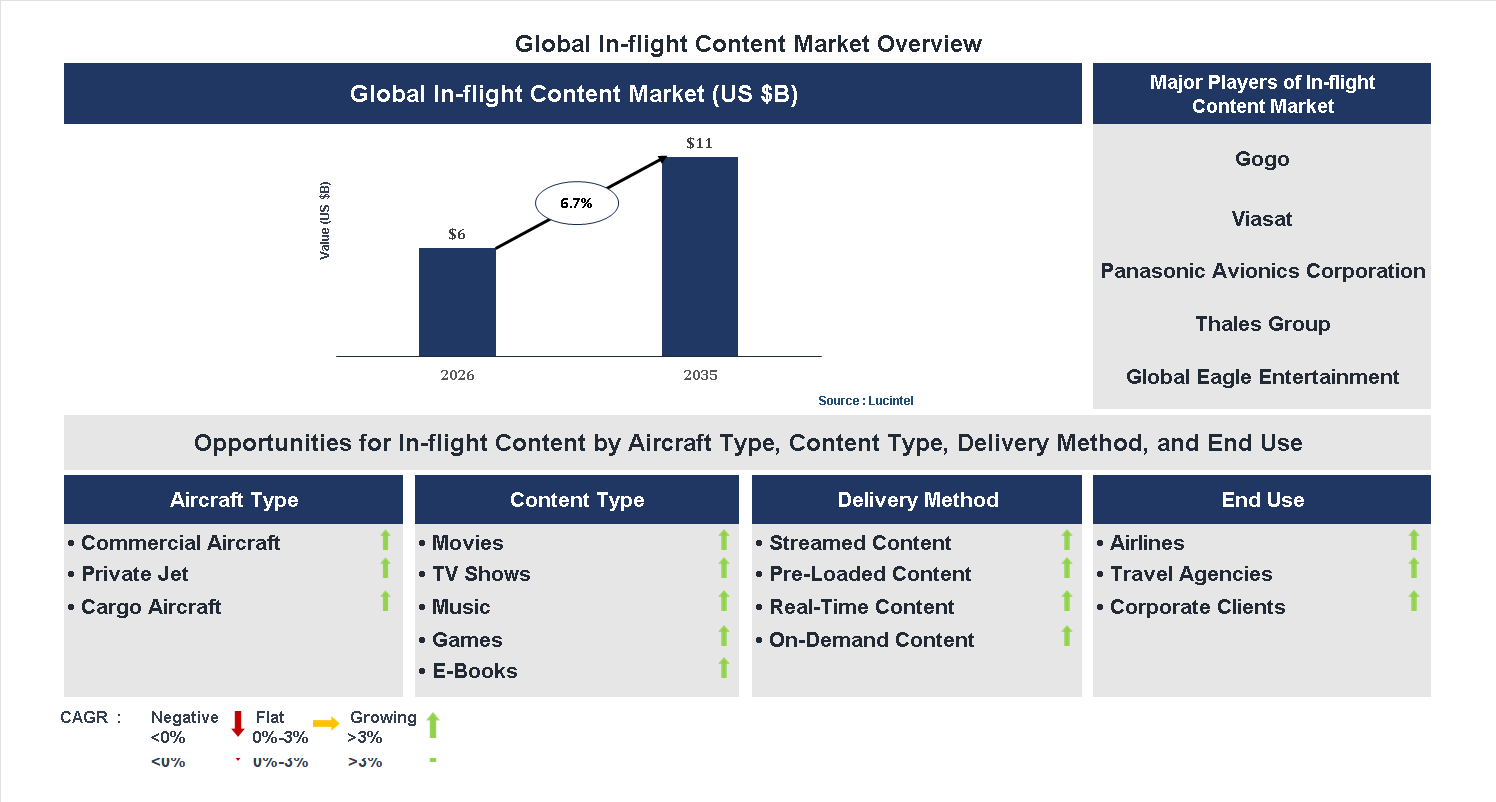
Key data points: The market size in 2035 = $11 billion, growth forecast = 6.7% annually for the next 8 years. Scroll below to get more insights. This market report covers trends, opportunities and forecasts in in-flight content market to 2035 by aircraft type (commercial aircraft, private jet, and cargo aircraft), content type (movies, tv shows, music, games, and e-books), delivery method (streamed content, pre-loaded content, real-time content, and on-demand content), end use (airlines, travel agencies, and corporate clients), and region (North America, Europe, Asia Pacific, and the Rest of the World)
We'll send your sample report shortly.
• Lucintel forecasts that, within the aircraft type category, commercial aircraft is expected to witness the highest growth over the forecast period.
• Within the end use category, airline is expected to witness the highest growth.
• In terms of region, APAC is expected to witness the highest growth over the forecast period. Gain valuable insights for your business decisions with our comprehensive 150+ page report. Sample figures with some insights are shown below.
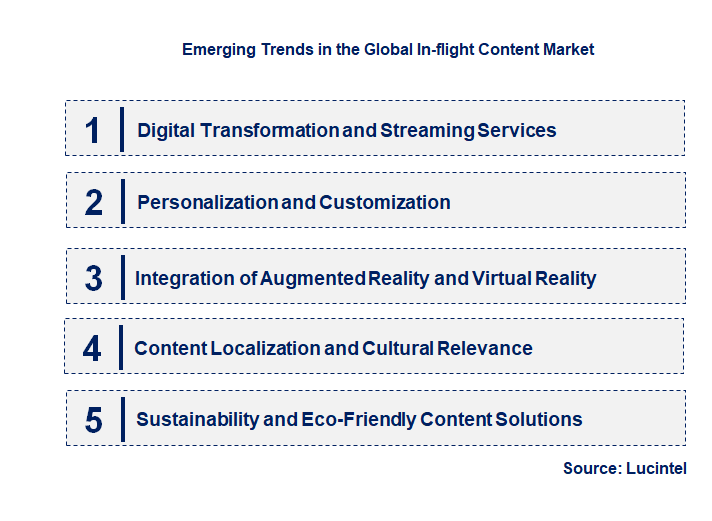
• Digital Transformation and Streaming Services : The shift towards digital and streaming platforms is revolutionizing in-flight entertainment by enabling on-demand access to a vast library of movies, TV shows, and music. Airlines are partnering with major streaming providers to offer seamless content, reducing reliance on physical media. This trend enhances passenger satisfaction by providing personalized, up-to-date content and allows airlines to easily update offerings without costly physical media. It also supports the integration of Wi-Fi connectivity, making in-flight entertainment more flexible and accessible, thus catering to tech-savvy travelers seeking instant access to their favorite content.
• Personalization and Customization : Personalization is becoming a key differentiator in the in-flight content market. Advanced data analytics and AI-driven algorithms enable airlines to tailor content recommendations based on passenger preferences, travel history, and demographics. This trend improves passenger engagement by offering relevant content, increasing satisfaction and loyalty. Customization extends to language options, accessibility features, and interactive experiences, making in-flight entertainment more inclusive. As a result, airlines can create a more immersive and satisfying experience, fostering brand loyalty and encouraging repeat business.
• Integration of Augmented Reality (AR) and Virtual Reality (VR) : AR and VR technologies are beginning to find their way into in-flight entertainment, offering immersive experiences that go beyond traditional screens. Passengers can explore virtual tours, play interactive games, or enjoy 360-degree videos, enhancing engagement during flights. Airlines adopting AR and VR can differentiate their services and appeal to tech enthusiasts and younger travelers. These technologies also open new avenues for advertising and brand partnerships, creating additional revenue streams. As hardware becomes more compact and affordable, AR and VR are poised to become integral parts of the in-flight entertainment ecosystem.
• Content Localization and Cultural Relevance : With the rise of international travel, airlines are focusing on localizing content to cater to diverse passenger demographics. Offering region-specific movies, TV shows, and music enhances the cultural relevance of in-flight entertainment, making passengers feel more connected and comfortable. Localization also involves providing multilingual options and culturally sensitive content, which broadens market appeal. This trend helps airlines attract a wider customer base and improves overall passenger experience, especially in multicultural markets. It also supports global expansion strategies by aligning content offerings with regional preferences.
• Sustainability and Eco-Friendly Content Solutions : As environmental concerns grow, the in-flight content market is adopting sustainable practices. This includes reducing physical media usage, such as DVDs and printed materials, in favor of digital content delivery. Airlines are also exploring energy-efficient hardware and eco-friendly packaging for any physical components. Additionally, content providers are developing digital solutions that minimize data transmission energy consumption. These initiatives align with broader sustainability goals, appeal to environmentally conscious travelers, and help airlines meet regulatory standards. Emphasizing eco-friendly content solutions is increasingly becoming a competitive advantage in the market. These emerging trends are collectively transforming the in-flight content market by making entertainment more digital, personalized, immersive, culturally relevant, and sustainable. They are enabling airlines to deliver richer, more engaging experiences that cater to diverse passenger preferences while also aligning with global sustainability goals. As technology continues to advance, the market is expected to see further innovations that will enhance passenger satisfaction, create new revenue opportunities, and redefine the future of in-flight entertainment. Stakeholders who adapt to these trends will be better positioned to thrive in this evolving landscape.
• Technology Integration: Enhanced Connectivity and Streaming Capabilities: The integration of high-speed Wi-Fi and streaming technology has revolutionized in-flight content delivery. Airlines now offer live TV, on-demand movies, and interactive services, improving passenger satisfaction. This shift enables content providers to reach a broader audience and tailor offerings to individual preferences. The improved connectivity also supports real-time updates and personalized content, making in-flight entertainment more engaging and competitive with other media platforms.
• Content Diversification and Localization: Expanding Content Libraries for Global Audiences: Airlines are increasing their content diversity by including regional languages, local movies, and culturally relevant programming. Localization efforts cater to diverse passenger demographics, boosting engagement and satisfaction. This approach helps airlines differentiate their services and attract international travelers. Content providers are partnering with regional studios to develop tailored content, which enhances the overall passenger experience and drives revenue growth in various markets.
• Adoption of Advanced Technologies: Use of AI and AR for Personalized Experiences: Artificial intelligence and augmented reality are being integrated into in-flight entertainment systems to offer personalized content recommendations and immersive experiences. AI analyzes passenger preferences to suggest relevant movies, music, or games, while AR provides interactive features. These technologies increase passenger engagement, improve satisfaction, and create a competitive edge for airlines. The adoption of such innovations is expected to accelerate, further transforming the in-flight content landscape.
• Strategic Partnerships and Content Licensing: Collaborations Between Airlines and Content Providers: Strategic alliances enable airlines to access premium content and exclusive programming, enhancing their entertainment offerings. Licensing agreements with major studios and streaming platforms ensure a steady flow of popular content. These partnerships help airlines differentiate themselves and attract repeat customers. Content providers benefit from expanded distribution channels, increasing revenue streams and market reach, ultimately fostering a more dynamic and competitive in-flight content ecosystem.
• Market Expansion and Emerging Technologies: Growth in Low-Cost Carriers and 5G Deployment: The rise of low-cost carriers is expanding the market by increasing the volume of air travel and demand for affordable in-flight entertainment. Simultaneously, the deployment of 5G technology enhances connectivity, enabling seamless streaming and real-time content updates. These developments facilitate the adoption of innovative content formats and improve overall passenger experience. The combined effect of market expansion and technological advancements is expected to drive sustained growth in the in-flight content industry. The overall impact of these developments is a more dynamic, personalized, and technologically advanced in-flight content market. Airlines are better equipped to meet passenger expectations, leading to increased satisfaction and loyalty. Content providers are expanding their reach through strategic partnerships and innovative technologies, fostering market growth. As connectivity and content diversity improve, the industry is poised for continued expansion, offering new revenue opportunities and elevating the in-flight entertainment experience globally.
• Increasing Demand for Personalized Content Drives Market Expansion: The rising preference for tailored entertainment options among travelers encourages airlines to adopt advanced content delivery systems. Personalized content enhances passenger engagement, satisfaction, and loyalty, prompting investments in AI-driven recommendation engines and customized media libraries. This trend opens avenues for content creators and technology providers to develop targeted offerings, expanding the market scope and revenue potential across different passenger segments.
• Advancements in Connectivity Technologies Enable Seamless Streaming: The deployment of high-speed satellite internet and 5G connectivity onboard aircraft facilitates uninterrupted streaming experiences. These technological improvements allow passengers to access live TV, movies, and social media effortlessly. Airlines partnering with telecom providers and tech firms can leverage these innovations to offer premium content services, thereby increasing ancillary revenues and differentiating their in-flight entertainment offerings in a competitive market.
• Strategic Collaborations Between Airlines and Content Providers Expand Offerings: Partnerships between airlines and major content studios or streaming platforms enable the delivery of diverse, high-quality media. Such collaborations allow airlines to update content libraries regularly, cater to regional preferences, and introduce exclusive content. These alliances also help content providers reach a broader audience, boosting licensing revenues and fostering innovation in content formats tailored for in-flight viewing experiences.
• Growth of Onboard Wi-Fi and Internet Services Enhances Content Accessibility: The proliferation of onboard Wi-Fi services allows passengers to stream content directly to their personal devices. This trend supports the shift from traditional seat-back screens to BYOD (Bring Your Own Device) models, reducing hardware costs for airlines. The increased accessibility encourages the consumption of a wider variety of content, including user-generated media, social media, and live broadcasts, creating new monetization opportunities for service providers and content distributors.
• Emergence of New Content Formats and Interactive Experiences Attract Passengers: The development of immersive and interactive content, such as virtual reality, augmented reality, and gamified entertainment, offers novel in-flight experiences. These innovative formats increase passenger engagement and differentiate airline offerings. Content developers focusing on interactive media can tap into this niche, creating premium experiences that command higher prices and foster brand loyalty, ultimately driving growth in the in-flight content market. These growth opportunities collectively shape a dynamic and expanding in-flight content market. By leveraging technological advancements, strategic partnerships, and innovative content formats, industry stakeholders can enhance passenger experiences, increase revenue streams, and maintain competitive advantage in a rapidly evolving landscape.
• Technological Innovation: The rapid development of high-speed internet, streaming platforms, and onboard Wi-Fi technology has revolutionized content delivery. Airlines are now able to offer a wide array of entertainment options, including live streaming, on-demand videos, and interactive services, which significantly enhance passenger experience. This technological evolution reduces content delivery costs and enables real-time updates, making in-flight entertainment more dynamic and personalized. As technology continues to advance, the market is expected to see increased adoption of immersive content such as virtual reality, further boosting growth.
• Rising Passenger Expectations: Modern travelers seek seamless, high-quality entertainment options comparable to those available on the ground. The demand for personalized content, high-definition visuals, and interactive experiences has surged, prompting airlines to invest heavily in in-flight content solutions. This shift in passenger expectations drives airlines to upgrade their entertainment systems, fostering market expansion. Additionally, the growth of frequent flyers and premium class travelers who prioritize comfort and entertainment contributes to increased spending on in-flight content, supporting market growth.
• Economic Growth and Airline Revenues: The expanding global economy has led to increased airline passenger traffic, especially in emerging markets. Higher airline revenues enable carriers to allocate more budgets toward enhancing in-flight entertainment offerings. Premium services and content packages are becoming key differentiators in competitive markets, encouraging airlines to invest in diverse content libraries. This economic boost not only increases the volume of content consumed but also incentivizes partnerships with content providers, fueling market expansion and innovation.
• Content Licensing and Partnerships: Strategic collaborations between content providers and airlines are vital for offering diverse and exclusive entertainment options. Licensing agreements enable access to popular movies, TV shows, and live sports, attracting more passengers. These partnerships also facilitate the integration of regional and local content, catering to diverse passenger demographics. As content licensing becomes more sophisticated, the market benefits from a broader content portfolio, enhancing passenger satisfaction and loyalty, which in turn drives revenue growth for stakeholders.
• Regulatory Environment and Data Security: Regulatory policies concerning content rights, data privacy, and cybersecurity significantly impact the market. Compliance with international standards, such as GDPR, influences how airlines manage passenger data and deliver personalized content. Content licensing restrictions and regional regulations can limit available offerings, posing challenges for global content distribution. Ensuring data security and privacy also requires substantial investment, affecting operational costs. Navigating these regulatory complexities is crucial for sustainable growth and maintaining passenger trust in the in-flight content ecosystem. The challenges facing the in-flight content market include:
• Content Licensing and Regional Restrictions: Navigating complex licensing agreements and regional content restrictions pose significant hurdles. Content rights vary across countries, limiting the availability of certain movies, shows, or sports in specific regions. This fragmentation complicates content procurement and increases costs for airlines and content providers. Additionally, regional restrictions can hinder the delivery of a consistent entertainment experience, affecting passenger satisfaction. Overcoming these barriers requires strategic negotiations and regional partnerships, which can be time-consuming and costly, potentially slowing market growth.
• High Implementation and Maintenance Costs: Deploying advanced in-flight entertainment systems involves substantial capital expenditure. Airlines must invest in hardware, software, and ongoing maintenance to ensure seamless content delivery. Upgrading existing systems to support high-speed internet and interactive content further escalates costs. Smaller carriers may find these investments prohibitive, limiting market penetration. Moreover, technological obsolescence necessitates continuous upgrades, adding to operational expenses. These financial challenges can restrict the pace of market expansion and innovation, especially in emerging markets with limited budgets.
• Data Security and Privacy Concerns: Protecting passenger data and ensuring cybersecurity are critical challenges. The increasing volume of digital content and personalized services heightens the risk of data breaches and cyberattacks. Airlines must implement robust security measures, which involve significant costs and technical expertise. Failure to safeguard data can lead to legal penalties, loss of passenger trust, and reputational damage. As regulations tighten globally, compliance becomes more complex, requiring ongoing investments. Addressing these security concerns is essential for sustainable growth but remains a persistent challenge for market participants. The in-flight content market is driven by technological advancements, rising passenger expectations, economic growth, and strategic content partnerships. However, it faces challenges such as licensing restrictions, high implementation costs, and data security issues. These factors collectively influence the pace and nature of market development. While technological innovations and economic opportunities foster growth, regulatory complexities and financial barriers pose significant hurdles. The markets future will depend on how effectively stakeholders navigate these drivers and challenges, balancing innovation with compliance to deliver compelling in-flight entertainment experiences that meet evolving passenger demands.
• Gogo
• Viasat
• Panasonic Avionics Corporation
• Thales Group
• Global Eagle Entertainment
• Inmarsat
• SITA
• Commercial Aircraft
• Private Jet
• Cargo Aircraft
• Movies
• TV Shows
• Music
• Games
• E-Books
• Streamed Content
• Pre-Loaded Content
• Real-Time Content
• On-Demand Content
• Airlines
• Travel Agencies
• Corporate Clients
• North America
• Europe
• Asia Pacific
• The Rest of the World
• United States: The US in-flight content market has seen rapid expansion with airlines adopting high-speed Wi-Fi and streaming services. Major carriers are partnering with leading content providers to offer diverse entertainment options, including movies, TV shows, and live sports. The integration of personalized content platforms enhances passenger experience, while advancements in satellite technology improve connectivity. Additionally, the rise of BYOD (Bring Your Own Device) policies encourages airlines to develop more flexible content solutions. Overall, the US market is characterized by innovation and increased investment in digital entertainment infrastructure.
• China: Chinas in-flight content market is driven by a large domestic passenger base and rapid technological adoption. Airlines are investing heavily in onboard Wi-Fi and digital entertainment systems, often collaborating with local content creators to cater to regional preferences. The government’s support for digital infrastructure development further accelerates growth. Chinese airlines are also exploring augmented reality (AR) and virtual reality (VR) experiences to differentiate their offerings. The market is witnessing a shift towards more interactive and personalized content, aligning with the countrys broader digital transformation initiatives.
• Germany: In Germany, the in-flight content market emphasizes quality and multilingual offerings to cater to diverse passenger demographics. Airlines are upgrading their in-flight entertainment systems with high-definition screens and streaming capabilities. There is a focus on sustainability, with some carriers exploring eco-friendly content delivery methods. Partnerships with European content providers ensure culturally relevant programming. The market also benefits from strong regulatory frameworks that promote passenger rights and data privacy, fostering consumer trust. Overall, German airlines are balancing technological upgrades with regional content preferences.
• India: The Indian in-flight content market is experiencing rapid growth due to increasing air travel and a young, tech-savvy population. Airlines are investing in onboard Wi-Fi and digital entertainment to enhance passenger experience. Content tailored to regional languages and cultural preferences is gaining popularity. The rise of low-cost carriers has prompted innovations in affordable content delivery solutions. Partnerships with local content creators and streaming platforms are common, providing a wide array of entertainment options. The market is also seeing a surge in mobile-based content consumption, driven by widespread smartphone usage and affordable data plans.
• Japan: Japans in-flight content market is characterized by high-quality, innovative entertainment offerings. Airlines focus on integrating advanced technology such as 4K screens and interactive touch panels. There is a strong emphasis on cultural content, including anime, manga, and local films, to appeal to domestic passengers. The market is also exploring augmented reality (AR) and virtual reality (VR) to create immersive experiences. Additionally, Japanese carriers are adopting eco-friendly practices in content delivery, aligning with sustainability goals. The overall trend is towards personalized, culturally relevant, and technologically sophisticated in-flight entertainment solutions.


• Gogo
• Viasat
• Panasonic Avionics Corporation
• Thales Group
• Global Eagle Entertainment
• Inmarsat
• SITA Q6. Which in-flight content market segment will be the largest in future? Answer: Lucintel forecasts that, within the aircraft type category, commercial aircraft is expected to witness the highest growth over the forecast period. Q7. In in-flight content market, which region is expected to be the largest in next 8 years? Answer: In terms of region, APAC is expected to witness the highest growth over the forecast period. Q8. Do we receive customization in this report? Answer: Yes, Lucintel provides 10% customization without any additional cost.


Choose a license that fits your team. Instant PDF delivery.
Prices exclude taxes. Instant delivery. Custom licensing available on request.
Market Report · July 31, 2026
Market Report · July 31, 2026
Market Report · July 31, 2026
Trusted partner for strategic intelligence and business growth


Receive a complimentary market analysis tailored to your industry. Our analysts will identify key growth opportunities and competitive dynamics specific to your business.

Market size, growth rate, and key trend analysis for your specific sector.

Top competitor positioning and market share analysis.

Strategic recommendations backed by data-driven insights.
Get curated market intelligence and competitive moves straight to your inbox.
By subscribing, you agree to receive our monthly insights. Unsubscribe anytime.
Receive a complimentary market analysis tailored to your industry. Our analysts will identify key growth opportunities and competitive dynamics specific to your business.
Market size, growth rate, and key trend analysis for your specific sector.
Top competitor positioning and market share analysis.
Strategic recommendations backed by data-driven insights.
Get curated market intelligence, emerging trends, and competitive moves straight to your inbox each month.
By subscribing, you agree to receive our monthly insights. Unsubscribe anytime.
We'll send your sample report shortly.