
Market Report · July 16, 2026

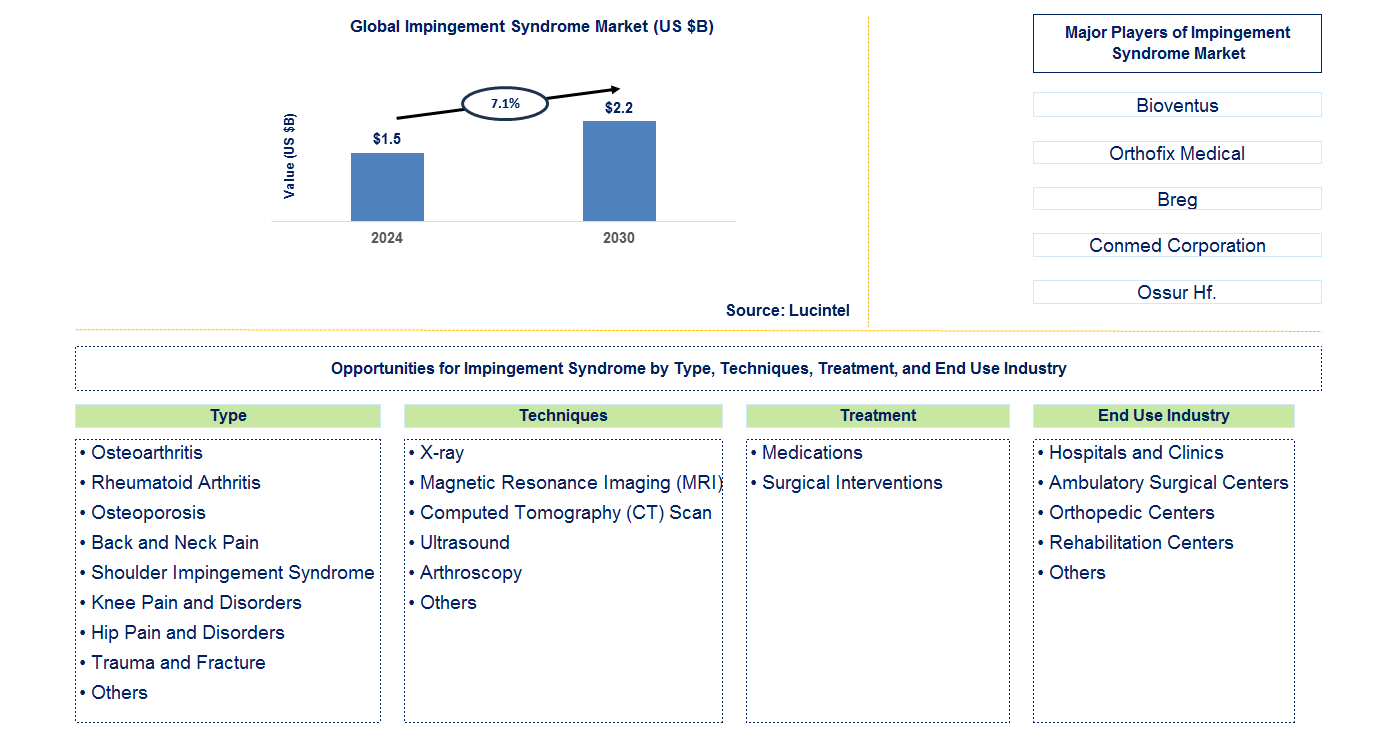
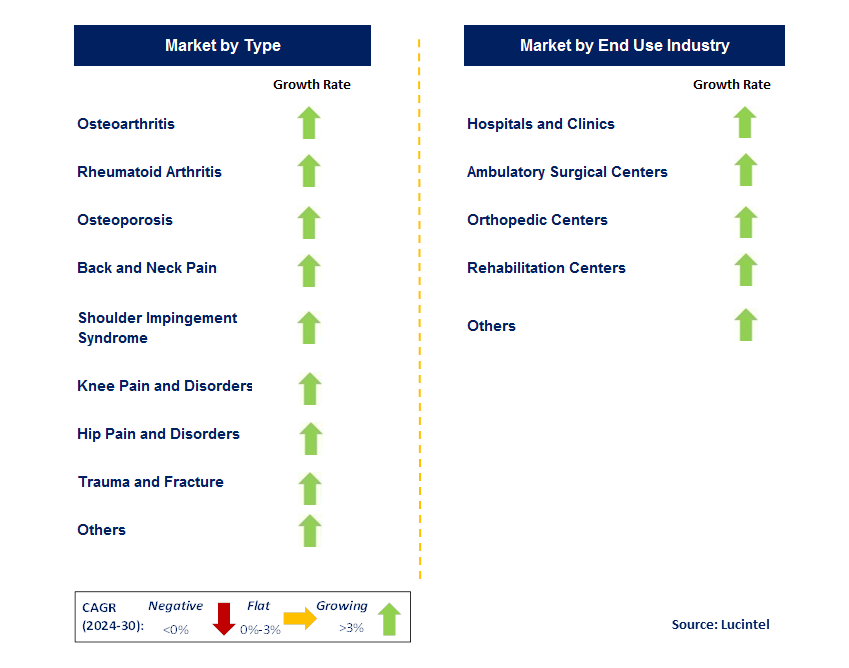
Key data points: The market size in 2030 = $2.2 billion, growth forecast = 7.1% annually next 6 years. Scroll below to get more insights. This market report covers trends, opportunities, and forecast in the global impingement syndrome market to 2030 by type (osteoarthritis, rheumatoid arthritis, osteoporosis, back & neck pain, shoulder impingement syndrome, knee pain & disorders, hip pain & disorders, trauma & fracture, and others), techniques (x-ray, magnetic resonance imaging (MRI), computed tomography (CT) scan, ultrasound, arthroscopy, and others), treatment (medications and surgical interventions), end use industry (hospitals and clinics, ambulatory surgical centers, orthopedic centers, rehabilitation centers, and others), and region (North America, Europe, Asia Pacific, and the Rest of the World)
We'll send your sample report shortly.
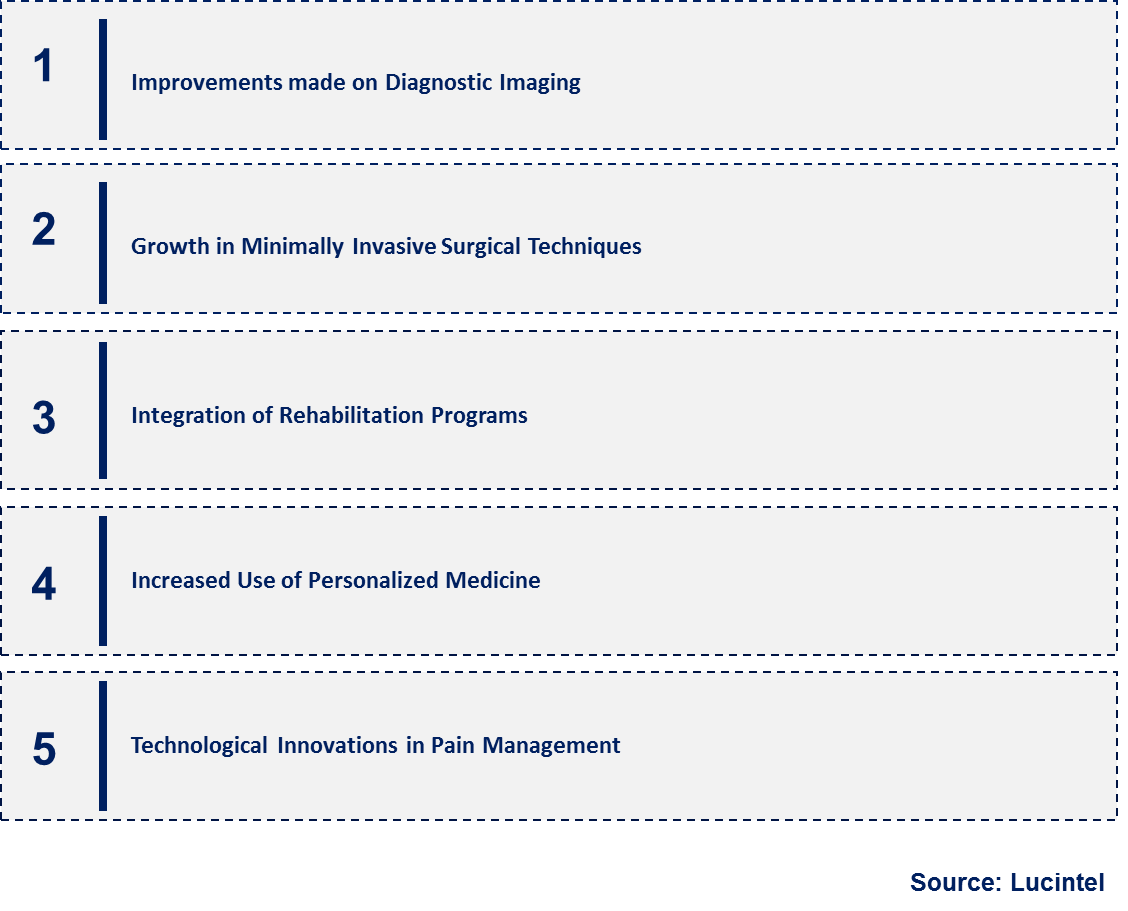
• Improvements made on Diagnostic Imaging: Emerging technologies such as high resolution MRI scans and ultrasound imaging have enhanced accuracy when diagnosing for impingement syndrome. Early detection is possible because these technological advancements can help identify even low levels of this condition thus improving treatment options leading to more successful outcomes for patients.
• Growth in Minimally Invasive Surgical Techniques: Minimally invasive arthroscopic surgery has become popular due to reduced recovery time and minimal chances of getting complications. This has led to improved outcomes for patients as well as a wider use of surgical treatments for impingement syndrome thereby making it an important factor affecting market development entirely
• Integration of Rehabilitation Programs: The rise in impingement syndrome treatment has co-evolved with incorporations of all-inclusive rehabilitation and physical therapy programs. These programs are aimed at strengthening shoulder muscles, enhancing flexibility, managing pain and ultimately improving the overall treatment process and the rate at which patients recover.
• Increased Use of Personalized Medicine: The management of impingement syndrome is witnessing personalized medicine approaches based on individualized patient care and genetic factors. This trend seeks to improve treatment outcomes by taking into consideration the different characteristic features of each patient’s condition.
• Technological Innovations in Pain Management: Advancement in impingement syndrome related pain management technologies such as regenerative medicine and targeted drug delivery systems have improved treatment options for patients. Thus, these innovations are enhancing treatment options as well as patient comfort contributing to market growth. Such emerging trends shape market for impingement syndrome by promoting diagnostic accuracy, expanding therapeutic alternatives, leading to better clinical outcomes. Market growth is driven by imaging advancements, minimally invasive (key-hole) methods, rehabilitation services, personalized therapies for individuals and pain relieving methods.
• Advancements in Diagnostic Imaging: Developments made recently indicates there has been an improvement on diagnostic imaging techniques that boost accuracy of diagnosing impingement syndrome. These improvements facilitate more accurate shoulder abnormalities identification hence targeted treatments plans enhancements.
• Minimally Invasive Surgical Techniques: Minimally invasive arthroscopic surgery has revolutionized how impingement syndrome can be treated . Compared to open surgeries they come with less recovery time, lower risks emanating from complications as well as superior results making them become popular and grow surgical segment within this market space.
• Expansion of Rehabilitation Services: Impingent also involves integrated rehabilitative services which include physical therapy and tailored exercise programs. These services focus on improving shoulder function, reducing pain and speeding up the overall patient recovery rate hence contributing to market expansion.
• Growth of Personalized Treatment Approaches: In response to this adoption, personalized treatment methods for example custom therapies are being used increasingly. This trend is directed towards increasing treatment effectiveness by addressing specific patient needs as well as characteristics that result in better outcomes and expanded markets.
• Technological Innovations in Pain Management: New technologies for the management of impingement syndrome-related pain have emerged recently such as regenerative medicine approaches and drug administration systems. These innovations are introducing new forms of analgesia or making the process more comfortable hence expanding market coverage. These recent developments significantly influence impingement syndrome diagnosis accuracy, treatment alternatives and patients’ health conditions. The growth in imaging techniques, minimal invasive surgical procedures, rehabilitation services, personalized medicine practices and pain management contribute to development of this market segment toward achieving a wider range of efficacious treatments for impingement syndrome.
• Precision Diagnostics: Advanced diagnostic tools for impingement syndrome can be developed through an opportunity for growth that exists in this field. High resolution imaging technologies and AI based diagnostic systems can enhance accuracy as well as speed up diagnosing thus enabling efficient treatment leading to better patient outcomes.
• The expanding market for minimally invasive treatments such as arthroscopic surgery is growing. These techniques are being developed and refined to improve patient outcomes, decrease recovery times, and increase the growth of the surgical treatment sector.
• Enhanced Rehabilitation Services: The expansion and improvement of rehabilitation services including physical therapy and personalized exercise programs holds significant growth potential. Comprehensive rehabilitation can facilitate faster recovery and enhance overall patient care leading to expanded market opportunities.
• Personalized Medicine Approaches: Personalized medicine approaches have high prospects in cases of impingement syndrome. The development of treatment strategies based on patients’ unique features will optimize results and push the market through more efficient targeted therapies.
• Innovative Pain Management Solutions: Such novel pain management solutions like regenerative medicine or advanced drug delivery systems create opportunities for growth. By improving pain relief, these technologies contribute to patient comfort, which contributes to extending the market limits. Strategic growth opportunities shape future impingement syndrome markets by driving innovation and expanding options for treating it. This has stimulated developments in diagnostic technology, minimally invasive treatments, rehabilitating patients, personalized healthcare solutions, pain control among others that have resulted in a high-performance system for managing impingement syndrome while contributing to the market growth.
• Technological Advancements: Technological progressions in imaging diagnostics such as ultra sound machines with high resolution MRI’s are fostering diagnosis accuracy hence promoting growth rate of impingement syndrome disease among patients. Additionally, innovative treatments involving less invasive surgery methods help provide better alternatives for patients resulting into improved health outcomes referred to as patient-reported outcome measures (PROMs).
• Increasing Awareness and Diagnosis: An increased awareness about impingement syndrome along with improved diagnostic capabilities has led to more frequent diagnosis of the condition. The market is growing as a result of this increased demand for treatment and management options.
• Expansion of Rehabilitation Services: Comprehensive rehabilitation services are being integrated and expanded upon, including physical therapy and individually designed exercise programs, leading to better patient care outcomes and driving market growth. This has led to better services that cater for patients’ needs hence guaranteeing improved recovery processes. Challenges in the impingement syndrome market are:
• High Cost of Advanced Treatments: High costs associated with advanced diagnostic tools, surgical procedures, and rehabilitation services act as a deterrent to market growth especially in price-sensitive regions. In addressing these issues of cost and technology access should be enhanced especially in places where such factors are limiting the take up rate.
• Regulatory and Reimbursement Issues: Drug Development Pathways that bring Therapies Faster than Disease Progression through Regulatory Hurdles today have numerous rules governing their operations. Market developers must comply with set regulations while also ensuring favorable reimbursement policies which will enable it to grow significantly. Technological advancements, increasing awareness, and the expansion of rehabilitation services are driving growth in the impingement syndrome market. However, high costs of treatments as well as regulatory challenges can affect the dynamics within the market. It’s therefore important that these drivers and challenges are addressed so as to advance treatment options; broaden access to markets; enhance patient outcomes in impingement syndrome cases.
• Bioventus
• Orthofix Medical
• Breg
• Conmed Corporation
• Ossur Hf.
• Djo Global
• Arthrex
• Wright Medical
• Globus Medical
• Nuvasive
• Osteoarthritis
• Rheumatoid Arthritis
• Osteoporosis
• Back and Neck Pain
• Shoulder Impingement Syndrome
• Knee Pain and Disorders
• Hip Pain and Disorders
• Trauma and Fracture
• Others
• X-ray
• Magnetic Resonance Imaging (MRI)
• Computed Tomography (CT) Scan
• Ultrasound
• Arthroscopy
• Others
• Medications
• Surgical Interventions
• Hospitals and Clinics
• Ambulatory Surgical Centers
• Orthopedic Centers
• Rehabilitation Centers
• Others
• North America
• Europe
• Asia Pacific
• The Rest of the World
• United States: The diagnosis of impingement syndrome is on the rise due to modern diagnostic imaging techniques as well as less serious surgical operation procedures of minimal invasions. Innovations like high-resolution MRI scans and ultrasound imaging are making diagnoses more accurate while arthroscopy improves outcomes with faster recovery time. Other rehabilitation programs such as physiotherapy coupled with sophisticated pain management approaches have contributed to improved efficacy rates thereby expanding markets further.
• China: China is increasingly dominating the market for impingement syndrome by adopting advanced technologies for diagnosis and treatments. Recent developments include the growing availability of high-tech imaging modalities like MRI and CT which help to make accurate diagnoses. On top of that, there has been an increase in minimally invasive surgical techniques along with physical therapy services thus leading to greater accessibilities hence market growth within the continent.
• Germany: Advanced surgical technique focus and rehabilitative strategy leadership continues earning Germany an upper hand in this sealed market for impingement disease. Recent developments have seen use of avant-garde arthroscopic methods along with creative means of dealing with pain during therapy sessions. This has seen new treatment protocols being developed as well as better outcomes thus cementing its position as a superior performer within this sector due to its emphasis on quality healthcare delivery system backed by research.
• India: A growing Indian population’s knowledge concerning these conditions together with their accessibility to more refined medical equipment are among factors that contribute towards widening India’s impingement syndrome market base. Recent developments involved the adoption of modern diagnostic tools and the increasing availability of minimally invasive surgical procedures. The growth of rehabilitation services and physical therapy programs is also driving patient care upward, hence its market growth in the country.
• Japan: Diagnostic imaging techniques have shown an upward trend in Japan’s impingement syndrome market. Recently introduced high-resolution imaging technologies as well as arthroscopic procedures that are minimally invasive are among key developments here. Market’s growth has been influenced by Japan whereby it emphasizes on innovative treatments through advanced rehabilitative techniques to enhance patient care.


• Bioventus
• Orthofix Medical
• Breg
• CONMED Corporation
• Ossur hf.
• DJO Global
• Arthrex
• Wright Medical
• Globus Medical
• NuVasive Q6. Which impingement syndrome market segment will be the largest in future? Answer: Lucintel forecasts that surgical interventions is expected to witness highest growth over the forecast period. Q7. In impingement syndrome market, which region is expected to be the largest in next 5 years? Answer: North America will remain the largest region over the forecast period due to the increasing geriatric population, rising number of patient suffering from orthopedic diseases and growing healthcare expenditure in the region. Q.8 Do we receive customization in this report? Answer: Yes, Lucintel provides 10% customization without any additional cost.


Choose a license that fits your team. Instant PDF delivery.
Prices exclude taxes. Instant delivery. Custom licensing available on request.
Market Report · July 16, 2026
Market Report · July 15, 2026
Market Report · July 15, 2026
Trusted partner for strategic intelligence and business growth


Receive a complimentary market analysis tailored to your industry. Our analysts will identify key growth opportunities and competitive dynamics specific to your business.

Market size, growth rate, and key trend analysis for your specific sector.

Top competitor positioning and market share analysis.

Strategic recommendations backed by data-driven insights.
Get curated market intelligence and competitive moves straight to your inbox.
By subscribing, you agree to receive our monthly insights. Unsubscribe anytime.
Receive a complimentary market analysis tailored to your industry. Our analysts will identify key growth opportunities and competitive dynamics specific to your business.
Market size, growth rate, and key trend analysis for your specific sector.
Top competitor positioning and market share analysis.
Strategic recommendations backed by data-driven insights.
Get curated market intelligence, emerging trends, and competitive moves straight to your inbox each month.
By subscribing, you agree to receive our monthly insights. Unsubscribe anytime.
We'll send your sample report shortly.