
Market Report · July 29, 2026

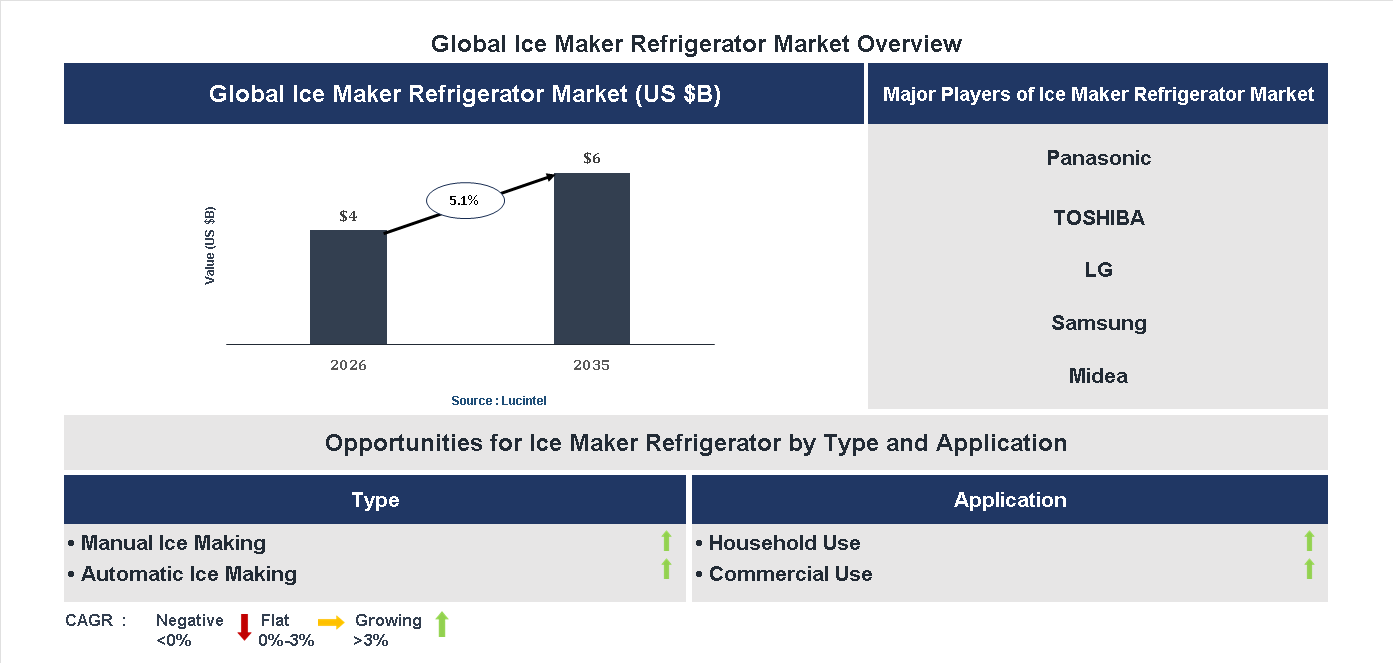
Key data points: The market size in 2035 = $6 billion, growth forecast = 5.1% annually for the next 8 years. Scroll below to get more insights. This market report covers trends, opportunities and forecasts in ice maker refrigerator market to 2035 by type (manual ice making and automatic ice making), application (household use and commercial use), and region (North America, Europe, Asia Pacific, and the Rest of the World)
We'll send your sample report shortly.
• Lucintel forecasts that, within the type category, automatic ice making is expected to witness higher growth over the forecast period.
• Within the application category, household use is expected to witness higher growth.
• In terms of region, APAC is expected to witness the highest growth over the forecast period. Gain valuable insights for your business decisions with our comprehensive 150+ page report. Sample figures with some insights are shown below.
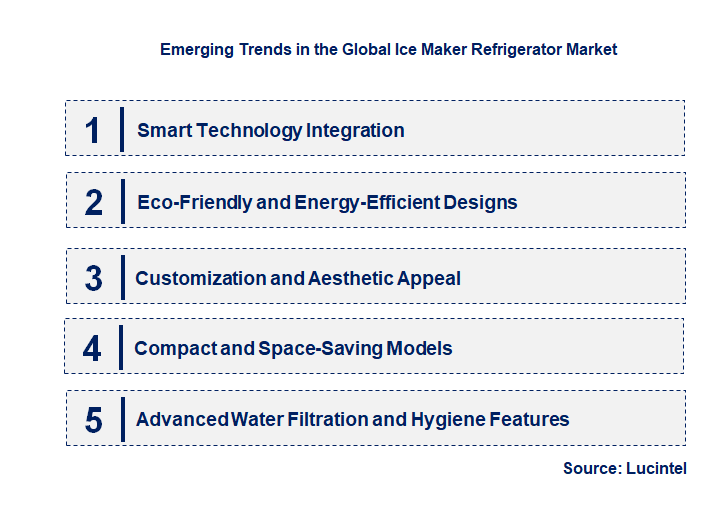
• Smart Technology Integration: The adoption of IoT-enabled features allows users to control and monitor their ice makers and refrigerators remotely via smartphones. This trend enhances convenience, energy management, and maintenance alerts, leading to improved user experience. Manufacturers are increasingly embedding smart sensors and connectivity options, making appliances more intuitive and customizable. As consumers demand seamless integration with their digital lifestyles, smart technology is becoming a standard feature, driving market growth and differentiation among brands.
• Eco-Friendly and Energy-Efficient Designs: Growing environmental awareness is pushing manufacturers to develop energy-efficient models with eco-friendly refrigerants and sustainable materials. These appliances consume less power, reduce carbon footprints, and often qualify for government incentives. The focus on sustainability not only appeals to environmentally conscious consumers but also helps companies meet regulatory standards. This trend is fostering innovation in insulation, compressor technology, and recyclable components, ultimately leading to a greener market with increased consumer trust and brand loyalty.
• Customization and Aesthetic Appeal: Consumers are seeking appliances that complement their home decor and personal preferences. Manufacturers are responding by offering customizable options, such as different finishes, sizes, and ice types. Sleek, modern designs with minimalistic aesthetics are gaining popularity, aligning with contemporary interior trends. This emphasis on aesthetics and personalization enhances consumer satisfaction and allows brands to differentiate themselves in a competitive market. Customization also enables targeted marketing strategies, catering to diverse customer segments.
• Compact and Space-Saving Models: Urbanization and smaller living spaces are driving demand for compact, space-efficient ice maker refrigerators. These models are designed to maximize utility without occupying excessive space, making them ideal for apartments and small households. Innovations include multi-functional units and modular designs that can be integrated into various kitchen layouts. The trend supports convenience and practicality, expanding market reach to a broader demographic. As space constraints persist, the development of innovative, space-saving appliances will continue to be a significant growth driver.
• Advanced Water Filtration and Hygiene Features: Consumers increasingly prioritize water quality and hygiene in their appliances. Modern ice maker refrigerators incorporate advanced filtration systems that remove impurities, odors, and bacteria, ensuring safe and clean ice and water. These features appeal to health-conscious consumers and those in regions with water quality concerns. The integration of UV sterilization and antimicrobial coatings further enhances hygiene. This trend boosts product value, encourages premium pricing, and aligns with health and safety standards, ultimately elevating consumer confidence and market competitiveness. These emerging trends are transforming the ice maker refrigerator market by emphasizing technological innovation, sustainability, customization, space efficiency, and health-conscious features. These developments are not only meeting evolving consumer demands but also fostering a more competitive, sustainable, and technologically advanced industry landscape.
• Growing Demand for Smart Refrigerators: The integration of IoT technology allows remote control, energy management, and maintenance alerts, enhancing user convenience. This innovation attracts tech-savvy consumers and boosts sales, especially in urban areas. Smart features also enable better inventory management, reducing waste and improving efficiency. As consumers prioritize connectivity and automation, manufacturers investing in smart ice maker refrigerators are gaining a competitive edge, leading to increased market penetration and higher revenue streams.
• Advancements in Energy Efficiency: New compressor technologies and insulation materials have significantly reduced power consumption in ice maker refrigerators. These energy-efficient models appeal to environmentally conscious consumers and comply with strict regulations. The reduction in energy costs also benefits end-users, making these appliances more attractive. Manufacturers focusing on sustainability are gaining market share, and governments are incentivizing energy-efficient appliances, further accelerating adoption and market growth.
• Expansion of Compact and Portable Models: The development of smaller, portable ice maker refrigerators caters to outdoor activities, small households, and commercial uses. These models are lightweight, easy to install, and energy-efficient, meeting diverse consumer needs. Their affordability and convenience are driving sales in emerging markets and among urban dwellers with limited space. This segments growth is opening new revenue streams for manufacturers and diversifying product offerings in the market.
• Innovations in Material and Design: Use of durable, eco-friendly materials and sleek designs enhances aesthetic appeal and longevity. Modern designs incorporate touch controls, LED lighting, and customizable features, attracting style-conscious consumers. Improved insulation and corrosion-resistant materials extend product lifespan. These innovations improve customer satisfaction and brand loyalty, encouraging repeat purchases. The focus on aesthetics and durability is elevating the overall market standard and expanding consumer base.
• Rising Adoption in Commercial Sectors: Hotels, restaurants, and catering services increasingly adopt ice maker refrigerators for efficiency and quality. Advanced models with higher capacity, faster ice production, and sanitation features meet commercial demands. This sectors growth is driven by the need for reliable, high-volume ice production, especially in hospitality and healthcare. The expansion of commercial applications is significantly boosting market revenue, encouraging manufacturers to develop specialized, large-capacity models tailored for business needs. These developments are significantly transforming the ice maker refrigerator market by enhancing product functionality, energy efficiency, and consumer appeal. The integration of smart technology, eco-friendly designs, and expanding application segments are driving market expansion. As manufacturers innovate and adapt to evolving consumer preferences, the market is poised for sustained growth, offering diverse opportunities for industry players to strengthen their market position and meet the increasing demand for advanced, efficient appliances.
• Growing Demand for Smart and Connected Ice Maker Refrigerators: The integration of IoT technology enables remote control, real-time monitoring, and energy management, appealing to tech-savvy consumers. Smart features such as voice control, app connectivity, and automated maintenance are enhancing user experience. This trend is particularly prominent in premium residential models and commercial settings like restaurants and hotels, where efficiency and convenience are prioritized. Manufacturers investing in smart technology are poised to capture a larger market share and meet evolving consumer expectations.
• Expansion of Commercial Applications in Hospitality and Food Service: The hospitality industry, including hotels, restaurants, and catering services, increasingly relies on high-capacity, reliable ice maker refrigerators. These appliances support large-scale operations, improve service efficiency, and ensure consistent ice quality. Innovations such as modular designs, energy-efficient models, and rapid ice production are driving adoption. As the food service sector expands globally, demand for specialized commercial units is expected to grow, creating opportunities for manufacturers to develop tailored solutions for diverse business needs.
• Innovation in Energy-Efficient and Eco-Friendly Models: Rising environmental concerns and regulatory pressures are pushing manufacturers to develop energy-efficient ice maker refrigerators. Features like low-power compressors, eco-friendly refrigerants, and smart energy management systems reduce carbon footprint and operational costs. Consumers are increasingly seeking sustainable appliances, especially in regions with strict environmental standards. The focus on green technology not only aligns with global sustainability goals but also offers competitive advantages, encouraging market players to innovate and expand eco-friendly product lines.
• Increasing Adoption of Compact and Portable Units for Personal Use: The demand for small, portable ice maker refrigerators is growing among urban dwellers, students, and outdoor enthusiasts. These compact units offer convenience, space-saving benefits, and quick ice production, making them ideal for small households, offices, and recreational activities. Technological advancements have improved efficiency and aesthetics, boosting popularity. As lifestyles become more mobile and space-conscious, manufacturers are focusing on designing versatile, affordable portable units to tap into this expanding segment.
• Rising Demand for Customization and Aesthetic-Driven Designs: Consumers increasingly prefer appliances that complement their interior decor and personal style. Manufacturers are offering customizable options, sleek finishes, and innovative designs to meet these preferences. Features like transparent doors, LED lighting, and modular configurations enhance aesthetic appeal. This trend is particularly evident in premium residential markets and boutique commercial spaces. By providing personalized and visually appealing products, companies can differentiate themselves, attract design-conscious customers, and expand their market presence. The overall market outlook is positively influenced by these growth opportunities, fostering innovation, sustainability, and consumer-centric solutions. As manufacturers capitalize on technological advancements and shifting consumer preferences, the ice maker refrigerator market is set to experience sustained expansion, increased competitiveness, and diversification across various segments. This evolution will drive long-term growth and create new avenues for strategic development within the industry.
• Technological Innovation: The continuous development of advanced ice-making technologies enhances efficiency, reduces energy consumption, and offers smarter features. Innovations such as smart connectivity and improved ice production speeds attract consumers seeking convenience and modern appliances. These technological advancements not only improve user experience but also enable manufacturers to differentiate their products in a competitive market, fueling growth.
• Rising Consumer Demand for Convenience: Modern consumers prioritize time-saving appliances that simplify daily routines. Ice maker refrigerators provide on-demand ice, eliminating the need for manual ice tray filling. This convenience factor, combined with the trend toward smart home integration, boosts demand across residential and commercial sectors, driving market expansion.
• Urbanization and Increasing Disposable Incomes: Rapid urbanization leads to higher demand for modern appliances in urban households. As disposable incomes rise, consumers are more willing to invest in premium appliances like ice maker refrigerators, which offer enhanced features and convenience. This economic shift supports market growth, especially in developing regions.
• Regulatory Focus on Energy Efficiency and Sustainability: Governments worldwide are implementing stricter energy standards and environmental regulations. Manufacturers are compelled to develop energy-efficient models that comply with these standards. Such regulatory pressures encourage innovation but also increase R&D costs, influencing market dynamics and product offerings. The challenges in the ice maker refrigerator market are:
• High Manufacturing and R&D Costs: Developing advanced, energy-efficient ice maker refrigerators requires significant investment in research and manufacturing infrastructure. These costs can lead to higher retail prices, potentially limiting affordability for some consumers and constraining market growth, especially in price-sensitive regions.
• Regulatory Compliance Complexities: Navigating diverse regulatory landscapes across countries poses challenges for manufacturers. Compliance with varying standards related to energy consumption, safety, and environmental impact demands substantial resources and adaptation, which can delay product launches and increase costs.
• Fluctuating Raw Material Prices: The market relies on raw materials such as plastics, metals, and refrigerants, whose prices are subject to volatility due to geopolitical and economic factors. Price fluctuations can impact profit margins and production planning, creating uncertainty and affecting overall market stability. The ice maker refrigerator market is driven by technological advancements, consumer preferences for convenience, economic growth, and regulatory pushes for sustainability. However, high costs, regulatory complexities, and raw material price volatility pose significant challenges. These factors collectively influence market growth, requiring manufacturers to innovate strategically and adapt swiftly to changing conditions. Overall, the markets future depends on balancing technological progress with effective management of these challenges to sustain growth and meet evolving consumer demands.
• Panasonic
• TOSHIBA
• LG
• Samsung
• Midea
• Haier
• Fisher & Paykel Appliances
• Manual Ice Making
• Automatic Ice Making
• Household Use
• Commercial Use
• North America
• Europe
• Asia Pacific
• The Rest of the World
• United States: The US market has seen a surge in smart ice maker refrigerators with Wi-Fi connectivity and voice control features. Major brands are focusing on energy efficiency and eco-friendly refrigerants to meet environmental standards. Consumer demand for larger capacity and faster ice production has driven technological advancements. Retailers are expanding premium models with advanced features, and online sales channels are growing rapidly. Additionally, there is a rising trend toward integrated smart home systems, making ice maker refrigerators a key component of connected homes.
• China: China’s ice maker refrigerator market is expanding rapidly due to rising disposable incomes and urbanization. Local manufacturers are investing in innovative designs and affordable smart features to attract consumers. The adoption of energy-efficient models is increasing, driven by government policies promoting sustainability. E-commerce platforms play a crucial role in distribution, offering a wide range of products. The market also benefits from a growing middle class seeking modern appliances, with a focus on compact and multifunctional units suitable for smaller living spaces.
• Germany: The German market emphasizes high-quality, durable, and energy-efficient ice maker refrigerators. Consumers prioritize sustainability and eco-friendliness, leading to the adoption of environmentally friendly refrigerants and energy-saving technologies. Innovations include smart appliances with remote control and maintenance alerts. The market is characterized by a preference for premium, design-oriented models that blend seamlessly with modern kitchens. Regulatory standards and environmental consciousness are key drivers, encouraging manufacturers to develop innovative, sustainable solutions.
• India: The Indian market is witnessing rapid growth due to increasing urbanization, rising income levels, and changing lifestyles. Consumers are increasingly seeking affordable, energy-efficient, and compact ice maker refrigerators suitable for smaller homes. Local brands are gaining popularity by offering innovative features at competitive prices. E-commerce and regional retail chains are expanding their reach, making these appliances more accessible. There is also a growing demand for models with faster ice production and smart features, driven by a rising middle class and urban middle-income households.
• Japan: Japan’s market focuses on compact, energy-efficient, and technologically advanced ice maker refrigerators. Consumers value reliability, innovative features, and eco-friendly designs. The adoption of smart technology, including remote operation and maintenance alerts, is increasing. Japanese manufacturers emphasize sustainability and high-quality materials, aligning with strict environmental regulations. The market also sees a trend toward integration with smart home ecosystems, offering convenience and enhanced user experience. Overall, Japan’s market is characterized by innovation, quality, and a strong focus on environmental sustainability.


• Panasonic
• TOSHIBA
• LG
• Samsung
• Midea
• Haier
• Fisher & Paykel Appliances Q6. Which ice maker refrigerator market segment will be the largest in future? Answer: Lucintel forecasts that, within the type category, automatic ice making is expected to witness higher growth over the forecast period. Q7. In ice maker refrigerator market, which region is expected to be the largest in next 5 years? Answer: In terms of region, APAC is expected to witness the highest growth over the forecast period. Q8. Do we receive customization in this report? Answer: Yes, Lucintel provides 10% customization without any additional cost.


Choose a license that fits your team. Instant PDF delivery.
Prices exclude taxes. Instant delivery. Custom licensing available on request.
Market Report · July 29, 2026
Market Report · July 15, 2026
Market Report · July 13, 2026
Trusted partner for strategic intelligence and business growth


Receive a complimentary market analysis tailored to your industry. Our analysts will identify key growth opportunities and competitive dynamics specific to your business.

Market size, growth rate, and key trend analysis for your specific sector.

Top competitor positioning and market share analysis.

Strategic recommendations backed by data-driven insights.
Get curated market intelligence and competitive moves straight to your inbox.
By subscribing, you agree to receive our monthly insights. Unsubscribe anytime.
Receive a complimentary market analysis tailored to your industry. Our analysts will identify key growth opportunities and competitive dynamics specific to your business.
Market size, growth rate, and key trend analysis for your specific sector.
Top competitor positioning and market share analysis.
Strategic recommendations backed by data-driven insights.
Get curated market intelligence, emerging trends, and competitive moves straight to your inbox each month.
By subscribing, you agree to receive our monthly insights. Unsubscribe anytime.
We'll send your sample report shortly.