
Market Report · July 22, 2026

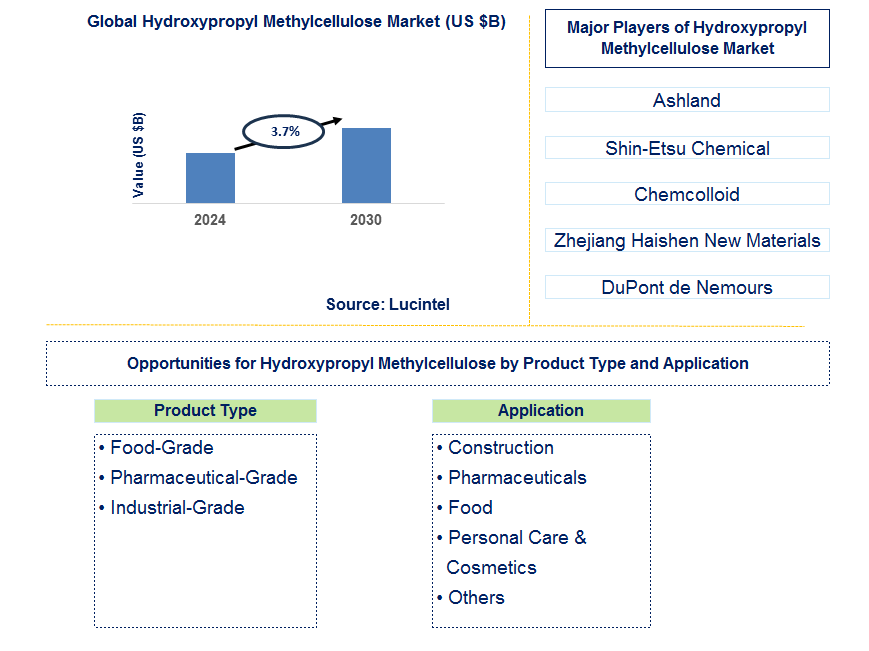
Key data points: The growth forecast = 3.7% annually for the next 6 years. Scroll below to get more insights. This market report covers trends, opportunities, and forecasts in the global hydroxypropyl methylcellulose market to 2030 by product type (food-grade, pharmaceutical-grade, and industrial-grade), application (construction, pharmaceuticals, food, personal care & cosmetics, and others), and region (North America, Europe, Asia Pacific, and the Rest of the World)
We'll send your sample report shortly.
• United States: HPMC is gaining traction in the construction sector, particularly in dry-mix mortars. Manufacturers are developing specialized grades that enhance workability and water retention to meet demand for high-performance building materials.
• China: The use of HPMC in pharmaceuticals is growing, especially in controlled-release formulations. Chinese companies are innovating HPMC-based excipients to meet regulatory standards and healthcare needs.
• Germany: Sustainability trends in Germany are influencing HPMC production, with companies investing in eco-friendly manufacturing processes and sourcing sustainable raw materials.
• India: India is witnessing a rise in HPMC applications in the food sector as a thickener and stabilizer. The growing processed food industry and demand for healthier options are driving this trend.
• Japan: Japan is focusing on technological advancements in HPMC production. Companies are adopting enzyme-based methods to improve product quality and reduce costs, enhancing global competitiveness.
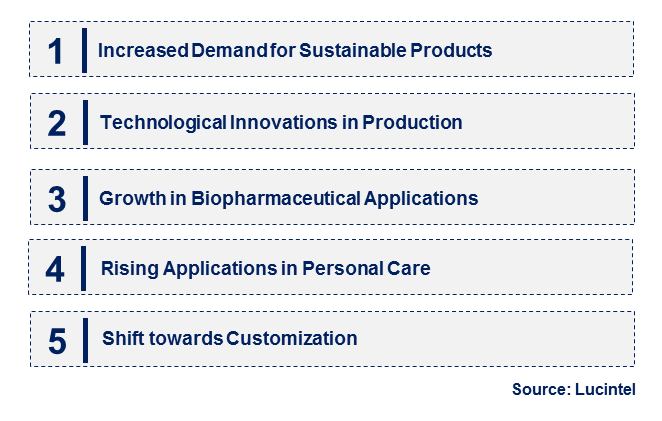
• Increased Demand for Sustainable Products: Consumers increasingly favor sustainable and eco-friendly products. This trend encourages manufacturers to develop HPMC from renewable resources and adopt greener production methods, improving market appeal and ensuring compliance with environmental regulations.
• Technological Innovations in Production: Advances in production technologies, such as enzymatic processes, are enhancing the quality and efficiency of HPMC manufacturing. These innovations enable producers to offer higher-purity grades and expand applications, driving competitive advantages.
• Growth in Biopharmaceutical Applications: The rising demand for biopharmaceuticals is creating new opportunities for HPMC. Its use as a stabilizer and emulsifier in biologic formulations is growing, highlighting HPMC’s importance in modern pharmaceutical applications.
• Rising Applications in Personal Care: HPMC is increasingly used in personal care products due to its thickening and emulsifying properties. The growth in consumer awareness of personal hygiene and skin care is driving demand for HPMC in this sector.
• Shift toward Customization: There is a growing trend for tailored HPMC products that meet specific application requirements. Manufacturers are investing in R&D to develop customized grades, enhancing their market positioning and catering to diverse customer needs. These trends reflect significant transformations in the hydroxypropyl methylcellulose market, driven by sustainability, technology, and customization. Companies adapting to these changes are positioning themselves for growth in an increasingly competitive landscape.
• Innovative Formulations for Pharmaceuticals: New HPMC formulations are being developed to enhance drug delivery systems, particularly for sustained-release medications. These improvements are increasing therapeutic efficacy and patient compliance.
• Sustainable Production Practices: Manufacturers are adopting sustainable production practices, utilizing biodegradable raw materials, and reducing waste. This shift aligns with consumer demand for eco-friendly products and meets regulatory standards across various regions.
• Expansion in Food Applications: HPMC use in food products is expanding, particularly as a fat replacer and thickening agent. This trend is driven by rising consumer preference for healthier food options and the growing processed food industry.
• R&D for Enhanced Performance: Significant investments in research and development aim to create high-performance HPMC grades. These advancements are improving viscosity and solubility, meeting diverse application needs.
• Market Consolidation and Partnerships: There is an increasing trend of mergers and acquisitions among HPMC producers aimed at consolidating resources and expanding market reach. Strategic partnerships are also enhancing product offerings and improving supply chain efficiency. These developments are driving innovation, enhancing product performance, and aligning the hydroxypropyl methylcellulose market with sustainability goals. Companies adapting to these changes are poised for growth across various sectors.
• Pharmaceutical Applications: The expanding biopharmaceutical sector presents significant opportunities for HPMC in drug formulations. Its role as a binder and stabilizer in controlled-release formulations enhances therapeutic efficacy, making it essential for modern drug delivery systems.
• Construction Industry Demand: The rise in global construction activities creates demand for HPMC in mortar and plaster applications. Its water-retention properties improve workability and adhesion, making it a vital component in high-performance construction materials.
• Food Industry Expansion: The growing demand for processed and healthy foods offers opportunities for HPMC as a thickening agent and emulsifier. Its functionality in improving texture and shelf life is key to meeting consumer expectations.
• Growth in Personal Care Products: The personal care sector is experiencing a surge in the use of HPMC for its thickening and stabilizing properties. As consumers prioritize high-quality products, HPMC offers a competitive edge in creams, lotions, and hair care products.
• Adoption in Agricultural Applications: The agricultural sector is exploring HPMC as a natural polymer for soil improvement and pesticide formulation. Its ability to enhance moisture retention and improve soil structure offers new growth opportunities in sustainable agriculture. These strategic growth opportunities are reshaping the hydroxypropyl methylcellulose market, allowing companies to diversify offerings and strengthen positions in emerging application areas.
• Increasing Demand in Pharmaceuticals: The growth of the pharmaceutical industry, driven by innovative drug delivery systems, is a major driver for HPMC. Its properties as a binder and stabilizer enhance medication formulations and expand market opportunities.
• Sustainable Product Development: The rising consumer preference for eco-friendly products encourages manufacturers to develop HPMC from renewable sources, aligning with regulatory requirements and enhancing market appeal.
• Growth in Construction Activities: The booming construction sector is increasing demand for HPMC in dry-mix mortars and other building materials. Its performance-enhancing properties are essential to meeting modern construction standards.
• Expanding Food Industry: The processed food industry is incorporating HPMC as a thickener and stabilizer to meet demand for healthier food options.
• Technological Advancements: Innovations in production technologies are improving HPMC manufacturing quality and efficiency, enhancing product performance and expanding applications. Challenges in the hydroxypropyl methylcellulose market are:
• Raw Material Price Volatility: Fluctuations in raw material prices impact manufacturing costs and profit margins, posing challenges for producers.
• Regulatory Compliance: Adhering to stringent regulations on product quality and safety can be challenging for HPMC manufacturers, with non-compliance leading to financial penalties and reputational damage.
• Market Competition: Increasing competition in the HPMC market can lead to price wars and reduced profit margins.
• Availability of Substitutes: The presence of alternative products may hinder HPMC’s growth, requiring continuous innovation to maintain market share.
• Economic Slowdowns: Economic downturns can adversely affect industries like construction and pharmaceuticals, leading to decreased HPMC demand. In conclusion, the drivers and challenges of the hydroxypropyl methylcellulose market are interconnected, influencing overall dynamics. Stakeholders can enhance market positioning and growth by addressing these challenges and capitalizing on drivers.
• Ashland
• Shin-Etsu Chemical
• Chemcolloid
• Zhejiang Haishen New Materials
• DuPont de Nemours
• CP Kelco
• Celotech Chemicals
• Food-Grade
• Pharmaceutical-Grade
• Industrial-Grade
• Construction
• Pharmaceuticals
• Food
• Personal Care & Cosmetics
• Others
• North America
• Europe
• Asia Pacific
• The Rest of the World
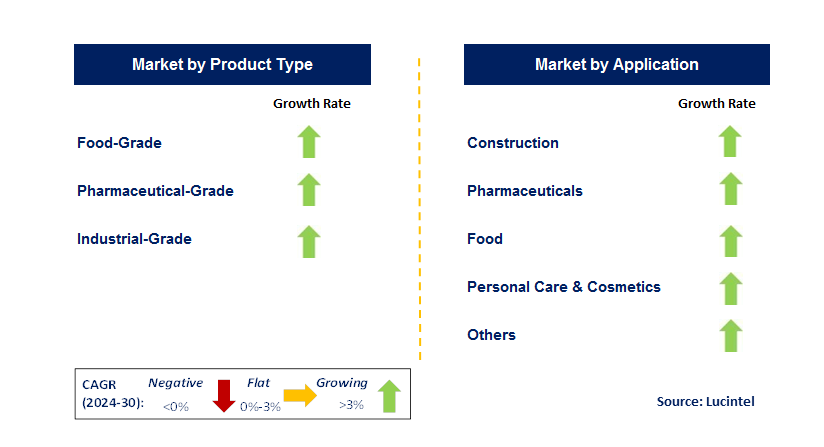
• Lucintel forecasts that, within the product type category, industrial-grade is expected to witness the highest growth over the forecast period.
• Within the application category, construction is expected to witness the highest growth due to substantial usage of HPMC in this sector given to its various benefits, such as water-holding capacity, ability to reduce flocculation and improve viscosity, and prevention of cracks.
• In terms of regions, APAC is expected to witness the highest growth over the forecast period due to significant demand for HPMC from various industries including construction and food & beverages in the region.

• Ashland
• Shin-Etsu Chemical
• Chemcolloid
• Zhejiang Haishen New Materials
• DuPont de Nemours
• CP Kelco
• Celotech Chemicals Q5. Which hydroxypropyl methylcellulose market segment will be the largest in future? Answer: Lucintel forecasts that, within the type category, industrial-grade is expected to witness the highest growth over the forecast period. Q6. In hydroxypropyl methylcellulose market, which region is expected to be the largest in next 5 years? Answer: In terms of regions, APAC is expected to witness the highest growth over the forecast period due to significant demand for HPMC from various industries including construction and food & beverages in the region. Q.7 Do we receive customization in this report? Answer: Yes, Lucintel provides 10% customization without any additional cost.


Choose a license that fits your team. Instant PDF delivery.
Prices exclude taxes. Instant delivery. Custom licensing available on request.
Market Report · July 22, 2026
Market Report · July 22, 2026
Market Report · July 22, 2026
Trusted partner for strategic intelligence and business growth


Receive a complimentary market analysis tailored to your industry. Our analysts will identify key growth opportunities and competitive dynamics specific to your business.

Market size, growth rate, and key trend analysis for your specific sector.

Top competitor positioning and market share analysis.

Strategic recommendations backed by data-driven insights.
Get curated market intelligence and competitive moves straight to your inbox.
By subscribing, you agree to receive our monthly insights. Unsubscribe anytime.
Receive a complimentary market analysis tailored to your industry. Our analysts will identify key growth opportunities and competitive dynamics specific to your business.
Market size, growth rate, and key trend analysis for your specific sector.
Top competitor positioning and market share analysis.
Strategic recommendations backed by data-driven insights.
Get curated market intelligence, emerging trends, and competitive moves straight to your inbox each month.
By subscribing, you agree to receive our monthly insights. Unsubscribe anytime.
We'll send your sample report shortly.