
Market Report · July 29, 2026

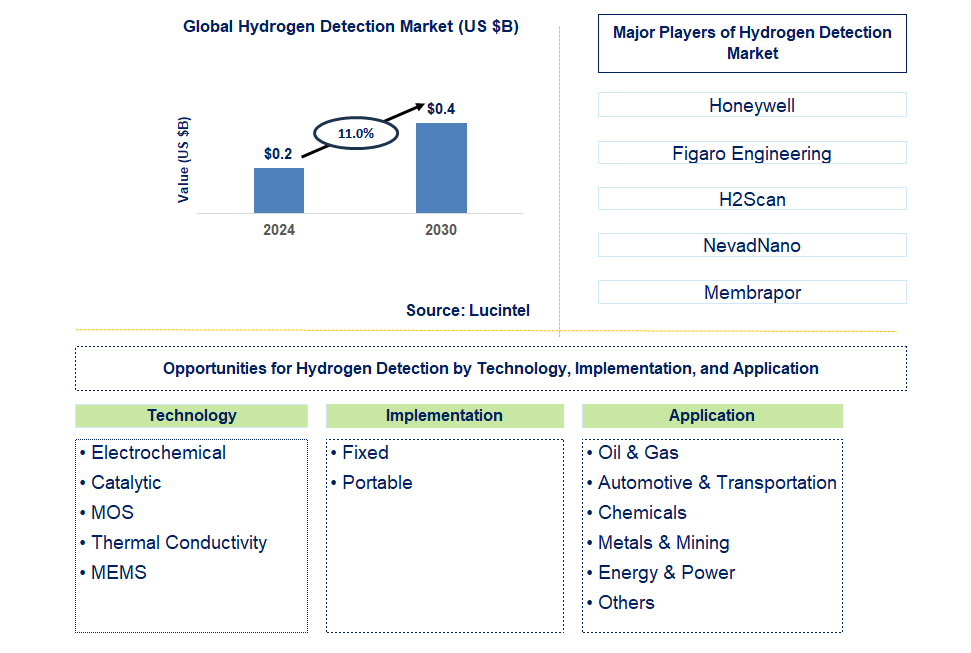
Key data points: The market size in 2030 = $0.4 billion, growth forecast = 11.0% annually for the next 6 years. Scroll below to get more insights. This market report covers trends, opportunities, and forecasts in the global hydrogen detection market to 2030 by technology (electrochemical, catalytic, MOS, thermal conductivity, and MEMS), implementation (fixed and portable), application (oil & gas, automotive & transportation, chemical, metal & mining, energy & power, and others), and region (North America, Europe, Asia Pacific, and the Rest of the World)
We'll send your sample report shortly.
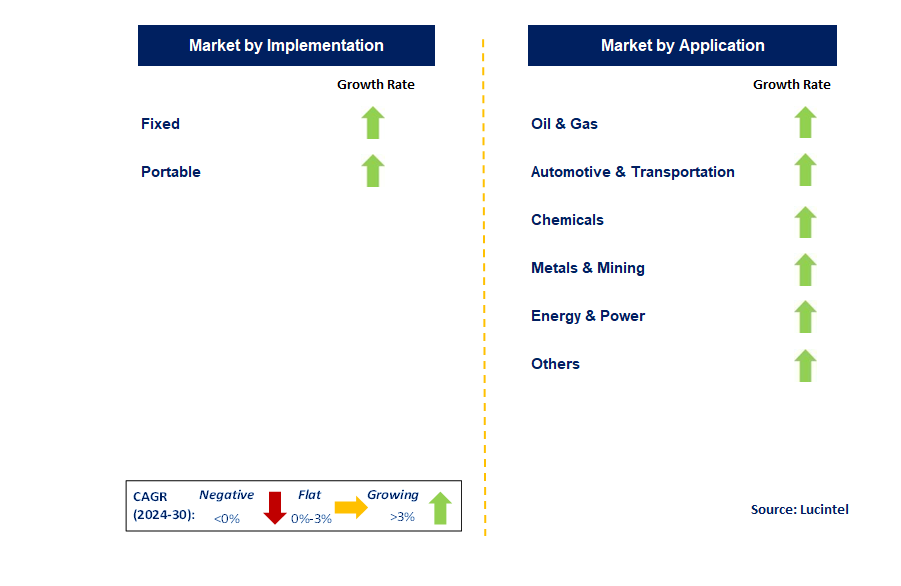
• Lucintel forecasts that within the implementation category, the portable segment is expected to witness the highest growth over the forecast period due to providing safety, monitoring, and control in diverse industrial applications and environments where hydrogen gas is available.
• In terms of regions, APAC is expected to witness the highest growth over the forecast period due to the high adaption of hydrogen technologies, including hydrogen fuel cells and hydrogen-powered vehicles, as well as, increasing hydrogen production and investments in this region. Gain valuable insights for your business decisions with our comprehensive 150+ page report.
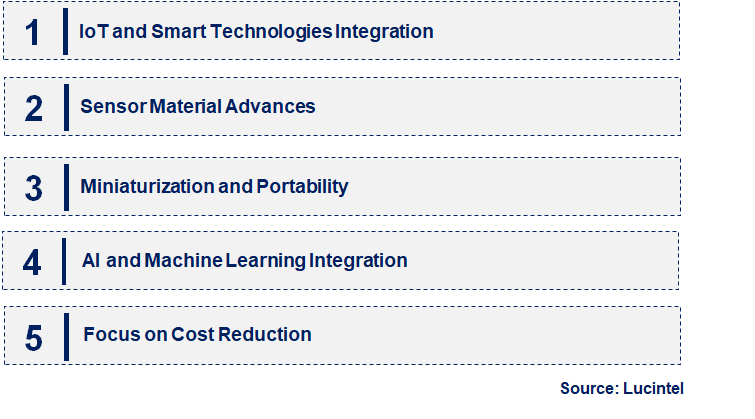
• IoT and Smart Technologies Integration: A major trend in hydrogen detection is integration with IoT and smart technologies. Modern sensors are increasingly connected to IoT platforms for real-time monitoring, data collection, and remote control. This allows prompt identification of hydrogen leaks, thereby improving security and efficiency across various sectors.
• Sensor Material Advances: Advances in sensor materials drive progress in hydrogen detection technology. Materials like nanomaterials, graphene, and advanced polymers are being used to create efficient and durable sensors at lower costs. These substances enhance hydrogen detectors' performance, making them effective under diverse conditions.
• Miniaturization and Portability: Miniaturization and portability of hydrogen sensors are growing trends. Technological advancements have enabled the production of small, lightweight hydrogen sensors that can easily be integrated into consumer electronics, automobiles, and wearable devices. This expands the applicability of hydrogen detection devices, enhancing safety across various areas.
• AI and Machine Learning Integration: Integration of AI and machine learning is transforming hydrogen detection systems. Artificial intelligence enables these systems to interpret sensor data, predict potential issues, and optimize detection processes. AI incorporation improves the precision and reliability of hydrogen detectors, making them more effective for industrial safety applications.
• Focus on Cost Reduction: Cost reduction is a key trend as manufacturers work to make hydrogen detection technology more affordable and accessible. Innovations in manufacturing methods, materials, and design are lowering costs without compromising performance. This is essential for industries and applications that depend on hydrogen-sensing mechanisms. These trends are reshaping the hydrogen detection market by advancing technology, broadening applications, and enhancing overall safety and efficiency.
• Improved Sensor Materials: More advanced hydrogen-sensing materials have enhanced the performance of hydrogen detectors. Innovations like graphene and nanomaterials improve sensitivity, response time, and durability, allowing greater precision and reliability for detecting hydrogen in challenging industrial settings and safety applications.
• IoT Platform Integration: A notable improvement is the integration of these devices with IoT platforms that support complex communication networks capable of real-time monitoring and analytics. This connectivity enhances hydrogen safety management through early warning systems that help prevent accidents and improve efficiency.
• Micro-Sensors with Broad Applications: Increasingly miniaturized sensors are used across various applications. Technological advancements have produced compact, portable hydrogen detection devices for consumer electronics, cars, and other wearable devices, expanding the scope of hydrogen detection and enhancing everyday safety.
• AI-Enhanced Detection Systems: AI-enhanced detection systems are improving the accuracy and efficiency of hydrogen detection. By incorporating artificial intelligence, these systems can better analyze data, anticipate potential hydrogen leaks, and optimize detection methods, making hydrogen safety measures more reliable across industries.
• Cost-Effective Detection Solutions: Cost-effective detection solutions are making hydrogen detection technology more accessible. Production methods and materials are reducing costs while maintaining high performance, enabling broader use of hydrogen detectors in sectors such as energy, manufacturing, and residential applications. These advancements are evolving hydrogen detection technology, increasing its accuracy, flexibility, and affordability.
• Growth in Hydrogen Energy Sector: Growth in the hydrogen energy sector offers significant opportunities for hydrogen detection technology. With hydrogen's importance in clean energy solutions, reliable detector systems are necessary to ensure safety and efficiency during storage, production, and transportation. This drives innovation, leading to wider acceptance and adoption of advanced detection technology.
• Expansion in Industrial Applications: A key area for growth in hydrogen detection is the expansion of industrial applications. Industries such as manufacturing, petrochemicals, and electronics require accurate hydrogen detection to manage safety risks and enhance operations, supporting market development through demand for reliable systems and technological advancement.
• Integration with Automotive Industry: Growth opportunities for hydrogen detection include integration with the automotive industry. The rising need for onboard hydrogen detection systems to ensure the safety and performance of hydrogen fuel cell vehicles drives the creation of compact, high-performance sensors for automotive applications.
• Development of Portable and Consumer Applications: Hydrogen detection technology is expanding through the development of portable and consumer applications. Advances in miniaturization and cost reduction enable hydrogen detectors to be incorporated into wearable technology, portable devices, and home safety systems. This expansion makes hydrogen detection solutions more accessible to a wider audience.
• Focus on Safety and Compliance: The demand for hydrogen detection systems across industries is driven by a focus on safety and compliance. Increasing regulations and standards related to hydrogen safety necessitate reliable detection technologies. Companies and organizations are investing in advanced detection solutions to meet regulatory requirements and ensure safe operations. These growth opportunities highlight the potential for hydrogen detection technology to enter new markets and applications, fostering innovation and enhancing security across diverse sectors.
The hydrogen detection market is influenced by several drivers and challenges that shape its evolution and adoption, including technological advancements, market trends, and regulatory considerations. The factors responsible for driving the hydrogen detection market include:• Technological Advancements: Technological development is a primary factor driving the hydrogen detection market. Innovations in sensor materials, miniaturization, and integration with AI and IoT technologies enhance the performance, accuracy, and versatility of hydrogen detectors. These advances support the creation of better detection systems with higher efficiency rates, thus boosting market expansion.
• Increasing Hydrogen Energy Adoption: Rising adoption rates of hydrogen energy are increasing the need for hydrogen detection technologies. As hydrogen plays a larger role in renewable energy systems, safety requirements have also grown. This drives the demand for hydrogen detection solutions.
• Regulatory and Safety Standards: Regulatory frameworks and safety standards influence the market for hydrogen detectors. Stricter regulations governing the safe handling of hydrogen necessitate better technology for detecting gas leaks from tanks. Market growth stems from rapid compliance with these regulations, encouraging companies to adopt reliable detection solutions. Challenges in the hydrogen detection market include:
• Cost Reduction Focus: The focus on cost reduction presents challenges for the hydrogen detection market. Developing low-cost, high-performance sensors without compromising quality is difficult. Manufacturers strive to balance cost and performance to make this equipment more accessible globally.
• Consumer Acceptance and Awareness: There is a challenge regarding consumer acceptance and awareness in the market. To facilitate uptake, it is important to educate consumers and industries on the benefits of this technology. Broadening reach into new markets will require overcoming skepticism and raising awareness through investment in detection systems. The market for hydrogen detection depends on technology advancements, market strategies, and industry dynamics, all influenced by key drivers and challenges. How these factors are addressed will determine future market trends, which are crucial for hydrogen safety and efficiency.
• Honeywell
• Figaro Engineering
• H2Scan
• NevadNano
• Membrapor
• Makel Engineering
• Sensidyne
• AMS
• Robert Bosch
• Siemens
• Electrochemical
• Catalytic
• MOS
• Thermal Conductivity
• MEMS
Hydrogen Detection Market by Implementation [Shipment Analysis by Value from 2018 to 2030]:• Fixed
• Portable
Hydrogen Detection Market by Application [Shipment Analysis by Value from 2018 to 2030]:• Oil & Gas
• Automotive & Transportation
• Chemicals
• Metals & Mining
• Others
• North America
• Europe
• Asia Pacific
• The Rest of the World
• United States: The US has made significant progress in developing hydrogen detection technology by focusing on enhancing sensor sensitivity and integration into smart grids. Recent developments include advanced electrochemical or semiconductor sensors capable of detecting lower hydrogen levels with higher accuracy. Additionally, American companies are working on IoT-based systems for monitoring and analyzing data to improve real-time monitoring capabilities.
• China: China’s rapid transition toward hydrogen energy and fuel cell technology has driven advancements in hydrogen detection. For example, new nanomaterial-based sensors allow for highly responsive yet affordable detection solutions. Chinese scientists are also combining AI with hydrogen detectors to optimize predictive maintenance and improve safety procedures in industries.
• Germany: Germany has been pioneering advanced hydrogen detection technologies that improve reliability and durability in challenging conditions. Recent developments include the use of advanced materials, such as graphene, in sensors to increase sensitivity and lifespan. Germany is also integrating hydrogen detectors into smart grids and energy storage systems.
• India: In India, affordability and scalability are key drivers for progress in hydrogen detection. Recent innovations include low-cost, high-performance sensors suitable for industrial and residential areas. Indian scientists are also exploring different materials and technologies to reduce production costs, making hydrogen detection systems more affordable.
• Japan: Japan has taken the lead in developing miniaturized hydrogen detection sensors that can be used with consumer electronics and vehicles. The latest developments include integrating these devices within portable gadgets, like phones and cars, to enhance safety and efficiency. Japan’s emphasis on speed and accuracy in detector design demonstrates its commitment to developing safe hydrogen technology.


• Honeywell
• Figaro Engineering
• H2Scan
• NevadNano
• Membrapor
• Makel Engineering
• Sensidyne
• AMS
• Robert Bosch
• Siemens Q6. Which hydrogen detection market segment will be the largest in future? Answer: Lucintel forecasts that portable segment is expected to witness the highest growth over the forecast period due to providing safety, monitoring, and control in diverse industrial applications and environments where hydrogen gas is available. Q7. In hydrogen detection market, which region is expected to be the largest in next 5 years? Answer: APAC is expected to witness the highest growth over the forecast period due to high adaption of hydrogen technologies, including hydrogen fuel cells and hydrogen-powered vehicles, as well as, increasing hydrogen production and its investments in this region. Q.8 Do we receive customization in this report? Answer: Yes, Lucintel provides 10% customization without any additional cost.


Choose a license that fits your team. Instant PDF delivery.
Prices exclude taxes. Instant delivery. Custom licensing available on request.
Market Report · July 29, 2026
Market Report · July 15, 2026
Market Report · July 13, 2026
Trusted partner for strategic intelligence and business growth


Receive a complimentary market analysis tailored to your industry. Our analysts will identify key growth opportunities and competitive dynamics specific to your business.

Market size, growth rate, and key trend analysis for your specific sector.

Top competitor positioning and market share analysis.

Strategic recommendations backed by data-driven insights.
Get curated market intelligence and competitive moves straight to your inbox.
By subscribing, you agree to receive our monthly insights. Unsubscribe anytime.
Receive a complimentary market analysis tailored to your industry. Our analysts will identify key growth opportunities and competitive dynamics specific to your business.
Market size, growth rate, and key trend analysis for your specific sector.
Top competitor positioning and market share analysis.
Strategic recommendations backed by data-driven insights.
Get curated market intelligence, emerging trends, and competitive moves straight to your inbox each month.
By subscribing, you agree to receive our monthly insights. Unsubscribe anytime.
We'll send your sample report shortly.