
Report Feature
Hydraulic Fracturing Market Trends and Forecast
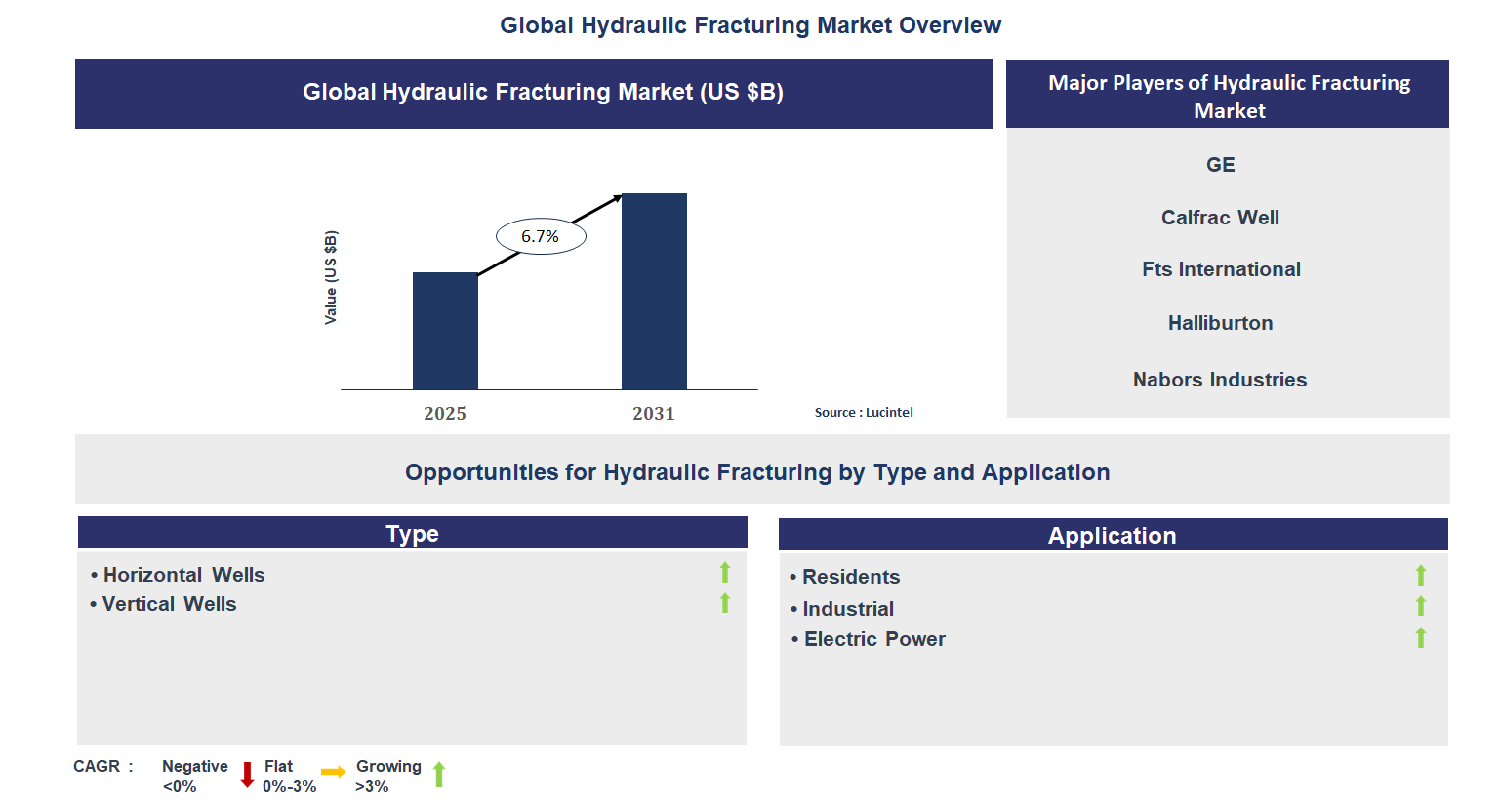
The future of the global hydraulic fracturing market looks promising with opportunities in the resident, industrial, and electric power markets. The global hydraulic fracturing market is expected to grow with a CAGR of 6.7% from 2025 to 2031. The major drivers for this market are the increasing exploration of unconventional oil reserves, the rising energy demand across industrial sectors, and the growing investments in shale gas production.• Lucintel forecasts that, within the type category, horizontal well is expected to witness higher growth over the forecast period.
• Within the application category, electric power is expected to witness the highest growth.
• In terms of region, APAC is expected to witness the highest growth over the forecast period. Gain valuable insights for your business decisions with our comprehensive 150+ page report. Sample figures with some insights are shown below.
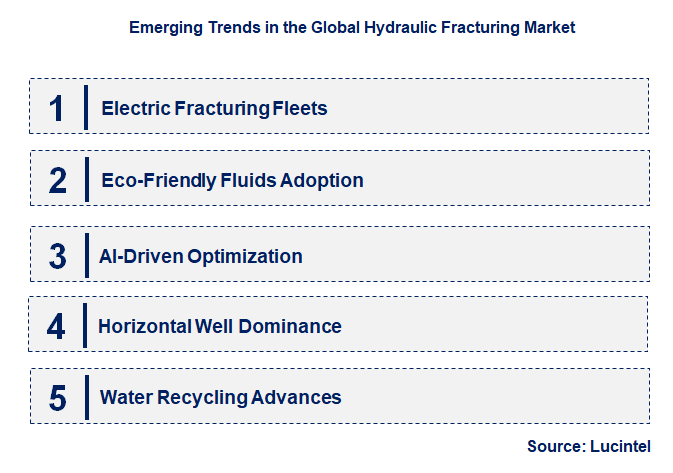
Emerging Trends in the Hydraulic Fracturing Market
Hydraulic fracturing trends emphasize sustainability and automation amid unconventional booms, with eco-fluids and AI integrations leading. Regulatory alignments and horizontal expansions drive efficiencies, while Asia-Pacific surges fuel global shifts. These evolutions balance production gains with environmental stewardship for resilient operations.• Electric Fracturing Fleets: Battery-powered pumps replace diesel, slashing emissions in shale plays. Deployed in Permian, they enable remote ops with lower noise. Impact reduces carbon footprints, complies with net-zero mandates, and cuts fuel costs, accelerating adoption in regulated regions.
• Eco-Friendly Fluids Adoption: Biodegradable gels and slickwater variants minimize water use and toxicity. Trials in Sichuan show reduced contamination. This trend eases environmental scrutiny, lowers disposal burdens, and attracts green investments for broader scalability.
• AI-Driven Optimization: Real-time analytics predict fracture propagation, optimizing proppant placement via digital twins. Used in multi-stage wells, they enhance precision. Impact boosts recovery rates, minimizes waste, and shortens cycles, transforming decision-making in complex reservoirs.
• Horizontal Well Dominance: Extended laterals with multi-stage perf increase contact areas in tight oil. Bakken adaptations yield higher outputs. This sustains productivity in mature fields, lowers per-barrel costs, and unlocks untapped reserves economically.
• Water Recycling Advances: On-site treatment systems reuse flowback, addressing scarcity in arid basins. Integrated in offshore vessels, they cut freshwater needs. Impact mitigates regulatory hurdles, enhances sustainability, and supports arid-region expansions. These trends reshape the hydraulic fracturing market by prioritizing green tech and intelligence, evolving from high-impact to efficient paradigms. They mitigate risks, amplify yields, and align with global energy transitions, fostering inclusive growth worldwide.
Recent Development in the Hydraulic Fracturing Market
Hydraulic fracturing developments highlight tech leaps and vessel launches amid shale surges. Global firms deploy autonomous systems and eco-vessels, countering water challenges with recycling. These target yields and compliance, spanning onshore to offshore.• Hai Yang Shi You 696 Launch: China‘s offshore vessel taps low-permeability reserves with advanced pumping. Designed for shale, it boosts deep-water access. Impact scales unconventional outputs, enhances security, and sets benchmarks for Asian explorations.
• Octiv Auto Frac Rollout: Halliburton-Coterra‘s ZEUS platform automates stages in North America, using subsurface feedback. Impact optimizes energy delivery, cuts risks, and exemplifies intelligent completions for efficiency.
• Eco-Fluids by Baker Hughes: Biodegradable systems reduce water by thirty percent in early trials. Incorporated in Permian ops. This pioneers sustainable stimulation, meets regs, and drives premium green services.
• ProPetro Electric Fleet Pact: Permian operator contracts zero-emission units, integrating batteries for horizontal fracs. Impact lowers emissions, trims noise, and supports net-zero transitions in shale hubs.
• Intelligent Process in Colorado: Chevron-Halliburton closed-loop system enables feedback-driven fracs. Rolled out for real-time adjustments. This heightens precision, reduces interventions, and advances automated workflows. These developments impact the hydraulic fracturing market by embedding automation and sustainability. They yield efficiencies, meet eco-standards, and innovate, anchoring resilient energy extractions.
Strategic Growth Opportunities in the Hydraulic Fracturing Market
Hydraulic fracturing opportunities leverage apps from shale gas to tight oil, with eco-tech unlocking niches. Unconventional booms and policy incentives create segments, modular systems aiding hybrids. These pathways yield adaptive, high-return ecosystems.• Shale Gas Extractions: Multi-stage perf in basins like Sichuan maximizes low-perme gas flows. Incentives spur onshore builds. Impact unlocks vast reserves, cuts imports, and supports cleaner transitions via efficient yields.
• Tight Oil Developments: Horizontal laterals with slickwater target Permian-like plays, optimizing proppants. Partnerships scale ops. This boosts liquids output, enhances economics, and revives mature assets.
• Offshore Low-Permeability: Vessels like Hai Yang enable deep-water fracs for marginal fields. Tech transfers aid adaptations. Impact diversifies supplies, mitigates onshore limits, and fosters marine energy security.
• Geothermal Energy Pilots: Low-impact fluids suit EU renewables, fracturing hot rocks for heat. Mandates drive trials. This bridges fossils to greens, taps subsidies, and expands non-hydrocarbon uses.
• Refracturing Mature Wells: AI assesses old sites for restimulation, recycling water onsite. Digital twins predict gains. Impact extends field lives, defers abandonment, and captures low-hanging recovery. These opportunities impact the hydraulic fracturing market by branching into renewables and offshore. They hasten eco-adoptions, ties, and funds, driving compliant, versatile advances globally.
Hydraulic Fracturing Market Driver and Challenges
Hydraulic fracturing dynamics blend technological, economic, and regulatory elements, with unconventional surges offsetting eco-hurdles. Drivers like shale booms propel efficiencies, while water scarcities challenge scales. This balance guides toward innovative, compliant setups. The factors responsible for driving the hydraulic fracturing market include: 1. Unconventional Resource Demand: Shale and tight formations expand drilling, needing advanced fracs for access. Urbanization amps gas needs. Implications heighten outputs, create jobs, and adapt tech for complex plays. 2. Technological Efficiency Gains: AI and electric pumps cut times, handling horizontals with precision. Recycling integrates seamlessly. This optimizes costs, reduces wastes, and enables scalable ops in harsh zones. 3. Energy Security Policies: Incentives for domestic gas spur onshore investments, like China‘s targets. Import cuts motivate. Implications foster self-reliance, stimulate infra, and broaden market reaches. 4. Horizontal Drilling Advances: Multi-stage methods boost contact, suiting tight oil. Seismic tools refine paths. This lifts recoveries, lowers barriers, and sustains mature developments. 5. Cleaner Fuel Shifts: Natural gas as bridge reduces coal ties, driving frac for low-emission sources. Mandates align. Implications unlock segments, attract capitals, and integrate with net-zero paths. Challenges in the hydraulic fracturing market are: 1. Environmental Regulation Burdens: Emission and water rules demand costly retrofits, varying regionally. Scrutiny intensifies. This slows rolls, ups compliance, and tests transitions. 2. Water Scarcity Issues: Frac volumes strain arid supplies, hiking recycling needs. Logistics add premiums. This limits sites, pressures margins, and demands alternatives. 3. Seismic Activity Risks: Induced quakes from injections erode public trust, prompting bans. Monitoring gaps persist. This heightens oppositions, delays permits, and underscores mitigation imperatives. These drivers and challenges forge a dynamic hydraulic fracturing market, where innovations counter constraints for net progress. Drivers lead, enabling yield-focused expansions, while hurdles refine green, resilient frames for viability.List of Hydraulic Fracturing Companies
Companies in the market compete on the basis of product quality offered. Major players in this market focus on expanding their manufacturing facilities, R&D investments, infrastructural development, and leverage integration opportunities across the value chain. With these strategies hydraulic fracturing companies cater increasing demand, ensure competitive effectiveness, develop innovative products & technologies, reduce production costs, and expand their customer base. Some of the hydraulic fracturing companies profiled in this report include-• GE
• Calfrac Well
• Fts International
• Halliburton
• Nabors Industries
• Patterson-Uti Energy
• RPC
• Schlumberger Limited
• Tacrom Services
• Trican Well Service
Hydraulic Fracturing Market by Segment
The study includes a forecast for the global hydraulic fracturing market by type, application, and region.Hydraulic Fracturing Market by Type [Value from 2019 to 2031]:
• Horizontal Wells
• Vertical Wells
Hydraulic Fracturing Market by Application [Value from 2019 to 2031]:
• Residents
• Industrial
• Electric Power
Hydraulic Fracturing Market by Region [Value from 2019 to 2031]:
• North America
• Europe
• Asia Pacific
• The Rest of the World
Country Wise Outlook for the Hydraulic Fracturing Market
The hydraulic fracturing market is advancing amid surging energy demands and technological innovations, focusing on unconventional resources like shale gas. Driven by offshore expansions and sustainability efforts, key shifts include electric fleets and eco-fluids. In major economies, policy incentives and R&D investments accelerate adoption, enhancing efficiency while addressing environmental concerns for resilient production.• United States: Permian Basin drilling surges with electric-powered fleets from ProPetro, cutting emissions and costs in horizontal wells. SPE conferences showcase multi-stage tech, while EPA incentives boost water recycling. These advancements optimize shale yields, reduce operational risks, and support energy independence through mature field revivals.
• China: Launch of Hai Yang Shi You 696 vessel enables offshore shale fracturing, targeting low-permeability reserves in South China Sea. National policies drive Sichuan Basin explorations with advanced fluids. This enhances domestic gas output, lowers import reliance, and positions China as Asia‘s unconventional leader.
• Germany: EU emission rules limit fracking, shifting to geothermal pilots with low-impact fracturing for renewables. North Sea adaptations use eco-additives amid bans. These efforts align with green transitions, minimize seismic risks, and integrate fracking tech into sustainable energy diversification.
• India: ONGC tenders for west coast stimulation vessels expand Cambay Basin tight gas ops, backed by refinery builds. Partnerships introduce horizontal multi-stage methods. This fuels infrastructure growth, cuts fuel imports, and bolsters economic connectivity via enhanced recovery.
• Japan: INPEX explores tight formations offshore with seismic-optimized fracking, amid energy security pushes. Tech imports focus on low-emission fluids for limited reserves. These steps mitigate import vulnerabilities, support hybrid energy mixes, and enable precise extractions in seismic zones.

Features of the Global Hydraulic Fracturing Market
Market Size Estimates: Hydraulic fracturing market size estimation in terms of value ($B). Trend and Forecast Analysis: Market trends (2019 to 2024) and forecast (2025 to 2031) by various segments and regions. Segmentation Analysis: Hydraulic fracturing market size by type, application, and region in terms of value ($B). Regional Analysis: Hydraulic fracturing market breakdown by North America, Europe, Asia Pacific, and Rest of the World. Growth Opportunities: Analysis of growth opportunities in different types, applications, and regions for the hydraulic fracturing market. Strategic Analysis: This includes M&A, new product development, and competitive landscape of the hydraulic fracturing market. Analysis of competitive intensity of the industry based on Porter’s Five Forces model.
FAQ
Q1. What is the growth forecast for hydraulic fracturing market? Answer: The global hydraulic fracturing market is expected to grow with a CAGR of 6.7% from 2025 to 2031. Q2. What are the major drivers influencing the growth of the hydraulic fracturing market? Answer: The major drivers for this market are the increasing exploration of unconventional oil reserves, the rising energy demand across industrial sectors, and the growing investments in shale gas production. Q3. What are the major segments for hydraulic fracturing market? Answer: The future of the hydraulic fracturing market looks promising with opportunities in the resident, industrial, and electric power markets. Q4. Who are the key hydraulic fracturing market companies? Answer: Some of the key hydraulic fracturing companies are as follows:• GE
• Calfrac Well
• Fts International
• Halliburton
• Nabors Industries
• Patterson-Uti Energy
• RPC
• Schlumberger Limited
• Tacrom Services
• Trican Well Service Q5. Which hydraulic fracturing market segment will be the largest in future? Answer: Lucintel forecasts that, within the type category, horizontal well is expected to witness higher growth over the forecast period. Q6. In hydraulic fracturing market, which region is expected to be the largest in next 5 years? Answer: In terms of region, APAC is expected to witness the highest growth over the forecast period. Q7. Do we receive customization in this report? Answer: Yes, Lucintel provides 10% customization without any additional cost.
Table of Contents
List of Figures
List of Tables
Methodology
- In-depth interviews of the major players in this market
- Detailed secondary research from competitors’ financial statements and published data
- Extensive searches of published works, market, and database information pertaining to industry news, company press releases, and customer intentions
- A compilation of the experiences, judgments, and insights of Lucintel’s professionals, who have analyzed and tracked this market over the years.


Buy Now
Choose a license that fits your team. Instant PDF delivery.
Prices exclude taxes. Instant delivery. Custom licensing available on request.
Key Questions
- • What are some of the most promising, high-growth opportunities for the hydraulic fracturing market by type (horizontal wells and vertical wells), application (residents, industrial, and electric power), and region (North America, Europe, Asia Pacific, and the Rest of the World)?
- • Which segments will grow at a faster pace and why?
- • Which region will grow at a faster pace and why?
- • What are the key factors affecting market dynamics? What are the key challenges and business risks in this market?
- • What are the business risks and competitive threats in this market?
- • What are the emerging trends in this market and the reasons behind them?
- • What are some of the changing demands of customers in the market?
- • What are the new developments in the market? Which companies are leading these developments?
- • Who are the major players in this market? What strategic initiatives are key players pursuing for business growth?
- • What are some of the competing products in this market and how big of a threat do they pose for loss of market share by material or product substitution?
- • What M&A activity has occurred in the last 5 years and what has its impact been on the industry? For any questions related to Hydraulic Fracturing Market, Hydraulic Fracturing Market Size, Hydraulic Fracturing Market Growth, Hydraulic Fracturing Market Analysis, Hydraulic Fracturing Market Report, Hydraulic Fracturing Market Share, Hydraulic Fracturing Market Trends, Hydraulic Fracturing Market Forecast, Hydraulic Fracturing Companies, write Lucintel analyst at email: helpdesk@lucintel.com. We will be glad to get back to you soon.


