
Market Report · July 16, 2026

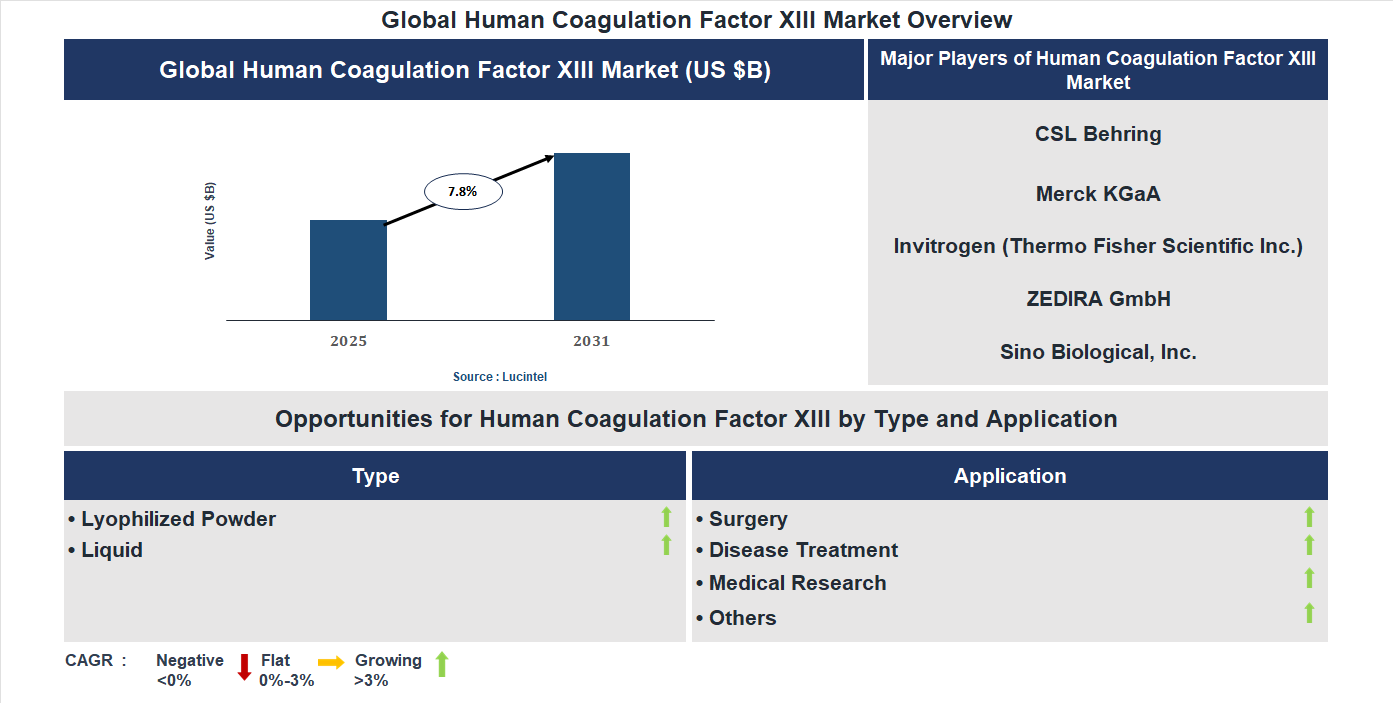
Key data points: The growth forecast = 7.8% annually for the next 7 years. Scroll below to get more insights. This market report covers trends, opportunities and forecasts in human coagulation factor XIII market to 2031 by type (lyophilized powder and liquid), application (surgery, disease treatment, medical research, and others), and region (North America, Europe, Asia Pacific, and the Rest of the World)
We'll send your sample report shortly.
• Lucintel forecasts that, within the type category, lyophilized powder is expected to witness higher growth over the forecast period.
• Within the application category, disease treatment is expected to witness the highest growth.
• In terms of region, APAC is expected to witness the highest growth over the forecast period. Gain valuable insights for your business decisions with our comprehensive 150+ page report. Sample figures with some insights are shown below.
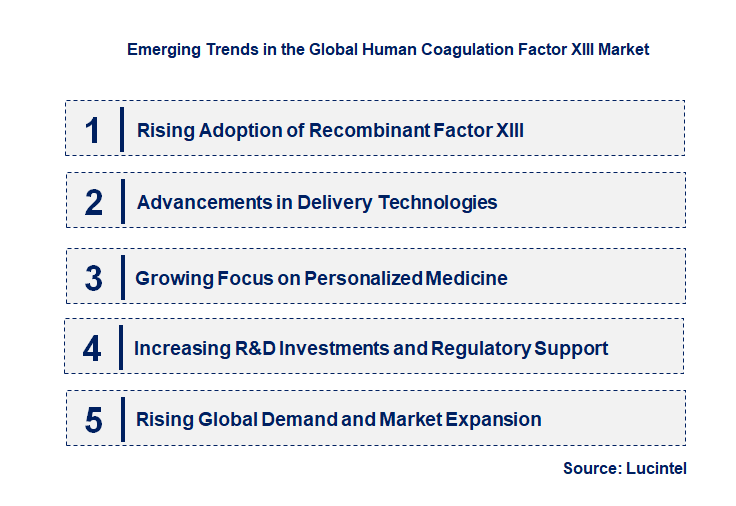
• Rising Adoption of Recombinant Factor XIII: Increased preference for recombinant over plasma-derived products due to safety and purity concerns. This trend enhances treatment efficacy and reduces infection risks, leading to broader acceptance among healthcare providers. The development of recombinant formulations also supports personalized dosing, improving patient outcomes. As regulatory approvals expand, market penetration is expected to grow, making recombinant Factor XIII the standard of care for many bleeding disorders.
• Advancements in Delivery Technologies: Introduction of novel delivery systems such as subcutaneous injections and long-acting formulations. These innovations improve patient compliance by reducing injection frequency and enhancing convenience. Long-acting products extend the duration of action, decreasing the treatment burden and improving quality of life. Such technological progress is attracting new patient segments and expanding market reach, especially among pediatric and elderly populations who require easier administration options.
• Growing Focus on Personalized Medicine: Tailoring treatments based on genetic and clinical profiles to optimize efficacy and minimize adverse effects. This approach involves developing biomarkers and diagnostic tools to identify suitable candidates for specific therapies. Personalized medicine enhances treatment success rates and reduces healthcare costs by avoiding ineffective therapies. The trend is fostering innovation in product development and encouraging collaborations between biotech firms and healthcare providers.
• Increasing R&D Investments and Regulatory Support: Significant investments in research and development aimed at discovering new formulations and indications. Regulatory agencies are providing clearer pathways for approval, facilitating faster market entry for innovative products. This supportive environment encourages startups and established companies to innovate, leading to a broader pipeline of advanced therapies. Enhanced R&D activity is expected to accelerate the availability of next-generation Factor XIII products, addressing unmet medical needs.
• Rising Global Demand and Market Expansion: Growing awareness and diagnosis of bleeding disorders worldwide, especially in emerging markets. Increased healthcare infrastructure and investment in rare disease management are driving market expansion. The rising prevalence of conditions like hemophilia and acquired Factor XIII deficiency fuels demand for effective therapies. Market players are expanding their geographic presence, establishing local manufacturing and distribution channels to meet regional needs, thus broadening the overall market scope. In summary, these emerging trends are collectively reshaping the human coagulation factor XIII market by fostering innovation, improving treatment options, and expanding access. The shift towards recombinant products, technological advancements, personalized approaches, supportive regulatory frameworks, and global market growth are creating a more dynamic, patient-centric landscape. These developments promise to enhance therapeutic outcomes and address unmet needs, positioning the market for sustained growth and evolution in the coming years.
• Introduction of recombinant Factor XIII products: These products offer enhanced safety and reduced risk of pathogen transmission, leading to increased adoption among healthcare providers and patients, thereby expanding the market and improving treatment efficacy.
• Regulatory approvals for new therapies: Recent approvals by agencies such as the FDA and EMA have facilitated market entry for innovative Factor XIII therapies, accelerating availability and encouraging further research and development in this field.
• Advances in delivery methods: Development of novel delivery systems, including subcutaneous injections and long-acting formulations, has improved patient compliance and convenience, positively impacting market growth and treatment adherence.
• Growing prevalence of bleeding disorders: Rising incidences of conditions like congenital Factor XIII deficiency and acquired bleeding disorders have increased demand for effective therapies, driving market expansion and research investments.
• Strategic collaborations and mergers: Partnerships between pharmaceutical companies and biotech firms have fostered innovation, expanded product pipelines, and enhanced manufacturing capabilities, strengthening market competitiveness and accelerating product development. In summary, these recent developments are significantly impacting the human coagulation factor XIII market by enhancing product safety, expanding therapeutic options, and improving patient outcomes. The market is poised for continued growth driven by technological innovations, regulatory support, and increasing disease prevalence, making it a dynamic and promising sector for stakeholders.
• Hemophilia Treatment: The increasing incidence of hemophilia and other bleeding disorders is driving demand for Factor XIII products. These therapies are crucial for preventing bleeding episodes and improving quality of life, leading to a surge in market growth and innovation in treatment options.
• Surgical Hemostasis: The rising number of surgeries, especially complex and minimally invasive procedures, necessitates effective hemostatic agents. Factor XIIIs role in promoting clot stability enhances surgical outcomes, creating significant opportunities for market expansion in perioperative care.
• Trauma Care: Growing cases of traumatic injuries require rapid hemostasis solutions. Factor XIIIs ability to facilitate clot formation and tissue repair positions it as a vital component in trauma management, opening avenues for new product development and market penetration.
• Neonatal and Pediatric Care: The need for safe and effective bleeding management in neonates and children is increasing. Factor XIII therapies tailored for pediatric use are gaining attention, offering potential for specialized formulations and expanding market share in pediatric healthcare.
• Veterinary Applications: The use of Factor XIII in veterinary medicine is emerging as a niche but promising segment. Its application in managing bleeding disorders in animals presents new growth opportunities, diversifying the market and fostering innovation in veterinary therapeutics. In summary, these key growth opportunities are significantly impacting the human coagulation factor XIII market by broadening its application scope, enhancing treatment efficacy, and fostering innovation. This expansion is expected to lead to increased market size, improved patient outcomes, and a competitive landscape driven by technological advancements and unmet medical needs.
• Technological Advancements: The development of recombinant factor XIII products has revolutionized treatment by reducing reliance on plasma-derived products, minimizing infection risks, and improving safety profiles. Innovations in drug delivery systems, such as subcutaneous injections and long-acting formulations, enhance patient compliance and convenience. These technological improvements have expanded the market by offering more effective and safer options, encouraging broader adoption among healthcare providers and patients. Continuous R&D efforts are expected to further refine these therapies, supporting sustained market growth.
• Rising Prevalence of Bleeding Disorders: An increasing incidence of congenital and acquired bleeding disorders, such as hemophilia and factor XIII deficiency, significantly propels market demand. Factors like aging populations, genetic predispositions, and improved diagnostic techniques contribute to higher detection rates. As awareness grows, more patients seek treatment, expanding the market size. The growing burden of these disorders underscores the need for effective therapies, thereby fueling innovation and investment in the development of human coagulation factor XIII products.
• Increasing Healthcare Expenditure: The global rise in healthcare spending, especially in emerging economies, facilitates greater access to advanced therapies, including coagulation factors. Governments and private insurers are investing more in healthcare infrastructure and treatment options, which enhances patient access to diagnosis and management of bleeding disorders. This economic support encourages pharmaceutical companies to invest in research and expand distribution networks, ultimately boosting market growth. Additionally, reimbursement policies and insurance coverage play crucial roles in making these therapies more affordable and accessible.
• Regulatory Approvals and Support: Stringent regulatory frameworks ensure the safety, efficacy, and quality of coagulation factor products, fostering trust among healthcare providers and patients. Recent approvals of novel recombinant factor XIII therapies by agencies like the FDA and EMA have accelerated market expansion. Regulatory support also encourages innovation by providing clear pathways for new product development. Moreover, government initiatives and collaborations with research institutions promote clinical trials and facilitate faster approval processes, thereby positively impacting market growth.
• Growing Awareness and Diagnosis: Increased awareness about bleeding disorders and the importance of early diagnosis have led to higher detection rates. Educational campaigns, improved screening programs, and better diagnostic tools enable timely intervention, which is critical for effective management. As more patients are diagnosed, the demand for coagulation factor XIII therapies rises. Enhanced awareness also encourages healthcare providers to adopt advanced treatment protocols, further expanding the market and improving patient outcomes. The challenges facing this Market include:
• High Treatment Costs: The cost of human coagulation factor XIII therapies remains a significant barrier, especially in low- and middle-income countries. Recombinant products and advanced formulations are expensive to develop and manufacture, leading to high prices for end-users. This financial burden limits patient access and adherence, impacting overall market growth. Payers and healthcare systems often face difficulties in covering these costs, which can restrict widespread adoption and place pressure on manufacturers to find cost-effective solutions without compromising quality.
• Stringent Regulatory Processes: While regulatory oversight ensures product safety, it also presents hurdles for market entry. Lengthy approval timelines, complex documentation requirements, and the need for extensive clinical trials can delay the launch of new therapies. Smaller companies may struggle to meet these regulatory demands, limiting innovation and competition. Navigating diverse regulatory landscapes across regions adds further complexity, potentially hindering rapid market expansion and the availability of novel treatments.
• Limited Awareness and Diagnosis: Despite advancements, awareness about bleeding disorders and the importance of early diagnosis remains inadequate in some regions. Limited access to specialized healthcare providers and diagnostic facilities hampers timely detection and treatment initiation. This results in underdiagnosis and undertreatment, constraining market growth. Additionally, cultural barriers and lack of education can prevent patients from seeking care, thereby reducing demand for coagulation factor XIII products and slowing overall market development. In summary, the human coagulation factor XIII market is driven by technological innovations, increasing disease prevalence, economic support, regulatory facilitation, and heightened awareness. However, high costs, regulatory challenges, and limited diagnosis hinder its growth. Addressing these barriers through cost reduction strategies, streamlined approval processes, and awareness campaigns will be crucial for sustainable market expansion. Overall, the market holds significant potential, provided these challenges are effectively managed to improve patient access and treatment outcomes.
• CSL Behring
• Merck KGaA
• Invitrogen (Thermo Fisher Scientific Inc.)
• ZEDIRA GmbH
• Sino Biological, Inc.
• Cell Sciences, Inc.
• Enzyme Research Laboratories Inc.
• Lyophilized Powder
• Liquid
• Surgery
• Disease Treatment
• Medical Research
• Others
• North America
• Europe
• Asia Pacific
• The Rest of the World
• United States: The US market has seen increased approval of novel Factor XIII products, with major pharmaceutical companies investing heavily in R&D. There is a rising adoption of recombinant therapies, and clinical trials are exploring new indications for Factor XIII in wound healing and other bleeding disorders. Regulatory agencies have streamlined approval processes, accelerating market entry for innovative solutions. Additionally, growing awareness and diagnosis of rare bleeding disorders are fueling demand, supported by expanding healthcare infrastructure and reimbursement policies.
• China: China’s market is rapidly expanding due to government initiatives promoting biotechnology and innovative therapies. Local companies are increasing their R&D efforts, leading to the development of cost-effective recombinant Factor XIII products. The government’s focus on improving healthcare access and increasing awareness of bleeding disorders has boosted market growth. Strategic collaborations with international firms are facilitating technology transfer and product localization. Moreover, regulatory reforms are simplifying approval processes, encouraging more domestic production and market penetration.
• Germany: Germany remains a key European hub for coagulation factor research and production, with a strong emphasis on recombinant and plasma-derived products. Recent advancements include the development of more refined formulations with improved safety profiles. The country’s robust healthcare system and high awareness of bleeding disorders support steady market growth. Regulatory bodies have approved several innovative therapies, and ongoing clinical trials aim to expand treatment options. Germany’s focus on personalized medicine and precision therapies is driving innovation in Factor XIII applications, strengthening its position in the European market.
• India: India’s market is witnessing rapid growth driven by the increasing prevalence of bleeding disorders and rising healthcare expenditure. Local manufacturers are expanding their portfolios with affordable recombinant Factor XIII products to meet domestic demand. Government initiatives to promote biotech innovation and improve healthcare infrastructure are facilitating market expansion. Additionally, partnerships with global firms are enabling technology transfer and product development. The regulatory environment is gradually becoming more conducive to faster approvals, and increasing awareness campaigns are encouraging early diagnosis and treatment, further propelling market growth.
• Japan: Japan’s market is characterized by high adoption of advanced biotechnologies and a focus on innovative therapies. Recent developments include the approval of new recombinant Factor XIII formulations with enhanced efficacy and safety. The country’s aging population and increasing prevalence of bleeding disorders are driving demand. Japan’s strong healthcare infrastructure and emphasis on research and development support ongoing clinical trials and product innovation. Regulatory agencies are actively approving novel therapies, and collaborations between academia and industry are fostering new treatment approaches. These factors collectively contribute to Japan’s leadership position in the global human coagulation factor XIII market.


• CSL Behring
• Merck KGaA
• Invitrogen (Thermo Fisher Scientific Inc.)
• ZEDIRA GmbH
• Sino Biological, Inc.
• Cell Sciences, Inc.
• Enzyme Research Laboratories Inc. Q5. Which human coagulation factor XIII market segment will be the largest in future? Answer: Lucintel forecasts that, within the type category, lyophilized powder is expected to witness higher growth over the forecast period. Q6. In human coagulation factor XIII market, which region is expected to be the largest in next 5 years? Answer: In terms of region, APAC is expected to witness the highest growth over the forecast period. Q7. Do we receive customization in this report? Answer: Yes, Lucintel provides 10% customization without any additional cost.


Choose a license that fits your team. Instant PDF delivery.
Prices exclude taxes. Instant delivery. Custom licensing available on request.
Market Report · July 16, 2026
Market Report · July 15, 2026
Market Report · July 15, 2026
Trusted partner for strategic intelligence and business growth


Receive a complimentary market analysis tailored to your industry. Our analysts will identify key growth opportunities and competitive dynamics specific to your business.

Market size, growth rate, and key trend analysis for your specific sector.

Top competitor positioning and market share analysis.

Strategic recommendations backed by data-driven insights.
Get curated market intelligence and competitive moves straight to your inbox.
By subscribing, you agree to receive our monthly insights. Unsubscribe anytime.
Receive a complimentary market analysis tailored to your industry. Our analysts will identify key growth opportunities and competitive dynamics specific to your business.
Market size, growth rate, and key trend analysis for your specific sector.
Top competitor positioning and market share analysis.
Strategic recommendations backed by data-driven insights.
Get curated market intelligence, emerging trends, and competitive moves straight to your inbox each month.
By subscribing, you agree to receive our monthly insights. Unsubscribe anytime.
We'll send your sample report shortly.