
Market Report · July 29, 2026

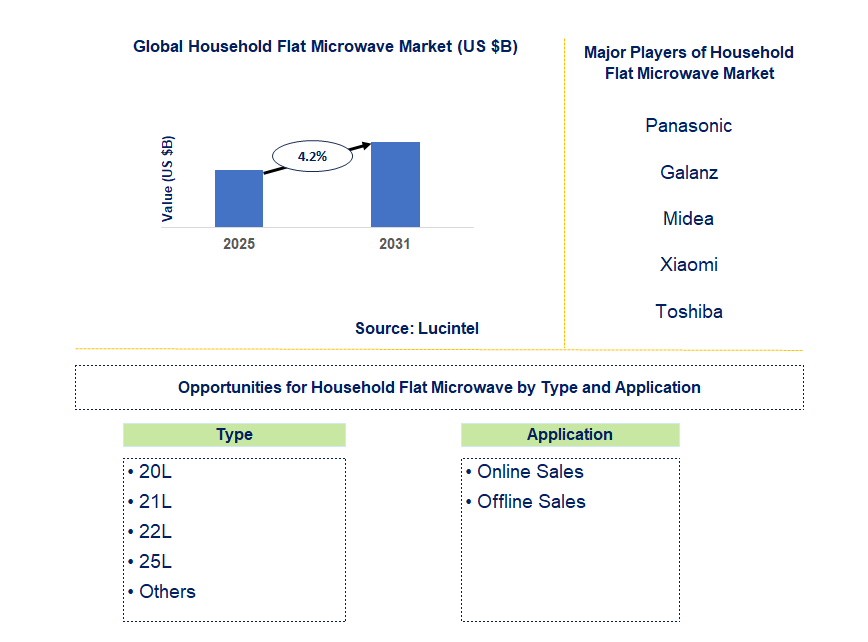
Key data points: The growth forecast = 4.2% annually for the next 7 years. Scroll below to get more insights. This market report covers Trends, opportunities and forecasts in household flat microwave market to 2031 by type (20L, 21L, 22L, 25L, and others), application (online sales and offline sales), and region (North America, Europe, Asia Pacific, and the Rest of the World)
We'll send your sample report shortly.
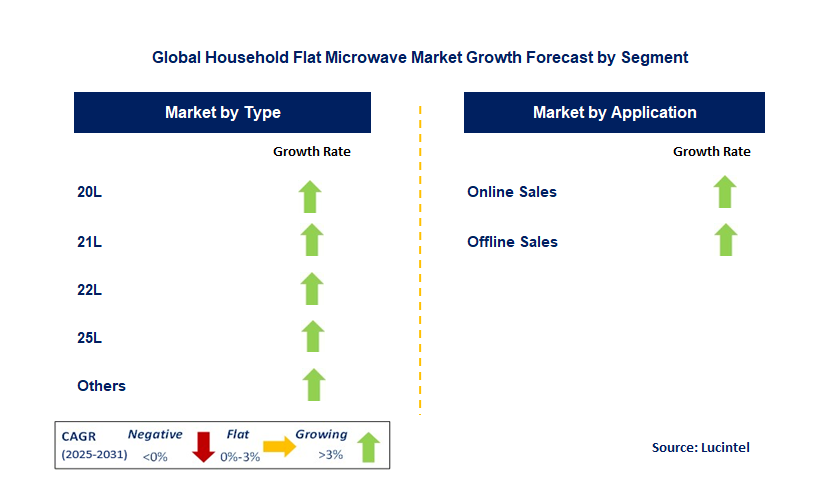
• Lucintel forecasts that, within the type category, 25L is expected to witness the highest growth over the forecast period.
• Within the application category, online sale is expected to witness higher growth.
• In terms of region, APAC is expected to witness the highest growth over the forecast period.
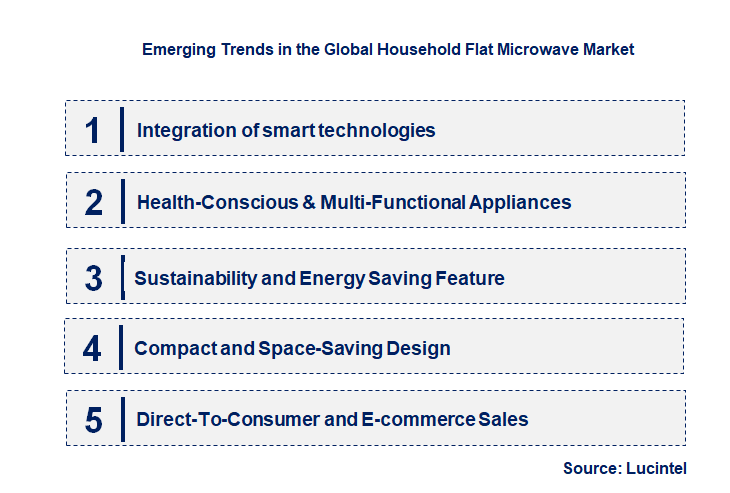
• Integration of smart technologies: Appliances such as flat microwaves enables Wi-Fi access, voice commands, and remote operation through applications. Manufacturers have embraced these technologies and increased their usage greatly. This integration helps users remotely adjust the cooking settings, check for notifications, and even get recipe recommendations through their phones or smart home devices. Smart consumer microwaves aid in improving overall experience which is why they are gaining popularity among users with advanced technological skills.
• Health-Conscious & Multi-Functional Appliances: There is an increasing readily available supply of Air Fryer microwaves that have additional useful cooking features such as grilling and convection baking. These appliances are aimed at health-conscious users that want to encourage and promote better eating habits through advanced cooking options. In response, manufacturers are creating new model designs that enable users to combine multiple cooking methods to prepare an extensive variety of dishes using a single appliance.
• Sustainability and Energy Saving Feature: Energy efficiency remains one of the major concerns for both consumers and manufacturers. Companies are putting effort towards developing new microwaves with better performance and lower power requirements at the same time. Strategies like adding Inverter technology, eco-friendly materials, and energy-saving modes are increasingly being used to meet environmental standards and reduce operational costs for the consumer.
• Compact and Space-Saving Design: The compactness of urban living spaces creates high demand for kitchen appliances that take up less space. The sleeker profile and clutter-free design forms of flatbed microwaves, devoid of the classic turntable, increase their interior volume, making them ideal for smaller kitchens. Manufacturers are catering to consumers who have limited kitchen space by compacting the designs, making them more efficient.
• Direct-To-Consumer and E-commerce Sales: The sales and distribution of household flat microwaves have been continuously impacted with the rise of e-commerce. Their appliances are being purchased more readily because online shopping offers convenience, variety, and lower price points. Manufacturers are using online shopping portals to widen their market base, sell model-exclusive pieces, and provide comprehensive information about products to aid in the purchasing decision. Developing technologies, evolution of consumer lifestyles, and greater attention to health and environmental concerns are driving the household flat microwave market through an intense metamorphosis. Market innovations are driven by smart features, multifunctionality, energy efficiency, compact designs, and the expansion of e-commerce.
• Smart devices Integration: The industry leaders are putting smart features into the household flat microwaves so that they are compatible with Alexa or Google voice controls. Smart microwaves are programmable with mobile apps, so stove supervision, setting adjustments, and cooking completion alerts are possible which further seeks convenience. These impacts shift more of the population’s focus on kitchen appliances which further drives the need for advanced features and IoT additions alongside robust competition that directly raises the demand volume and price level in the premium range.
• The Widening Scope of Biodegradable and Low Energy Model: Design strategies now include environmental sustainability. Manufacturers are creating less energy-intensive performing microwaves. The flatbed technology itself contributes to energy efficiency because it permits even heat distribution with no rotating plate. Manufacturers are now concentrating on standby energy use and applying inverter technology in addition to the use of recyclable parts. These innovations are appealing where consumers and regulations strictly focus on energy ratings, particularly in Northwestern Europe and North America. This is strengthening the manufacturers' brand loyalty while bolstering sustainability and broadening microwave appeal to eco-friendly users.
• Increase in the Number of Compact and Multipurpose Units: The increase in urban population leads to smaller kitchens which, in turn, increases demand for compact, microwave multifunction units. Many of the new models feature grill, bake, air fry, and steam combinations. Because of the greater internal space, flatbed microwaves can be easily adapted to incorporate additional features. This is changing the perception of what a microwave should be, promoting the expectation of a cooking appliance rather than just a reheating device. This helps to broaden the target market for the households that focus on minimalistic, multifunctional, and space-conservative living.
• Focus on Beauty and Simplicity in Design: Appealing design has become one of the main factors of consumer purchasing behavior. The newest product introductions come with modern designs liken-handles, touch systems, and high-end finishes such as matte black or brushed steel. The design improvements are favorable to consumers who need appliances that integrate with contemporary kitchen designs. The flatbed format is appealing because it allows for uninterrupted, clean lines. This advancement primarily affects the middle to upper market segments where design, as a cross-market driver, brand loyalty and repeat purchases influenced by alignment with style are homes’ interiors, fosters design-centric spending.
• Increased Regional Manufacturing and Local Supply Chain: Microwave manufacturers have adopted more regionally focused production strategies because of global supply chain disturbances. This change offers better delivery performance, lower transportation expenses, and protection from international trade uncertainties. For instance, North American and Asian manufacturers are establishing local assembly plants to more efficiently service the domestic markets. These changes help to transform the cost structure while simultaneously drastically improving flexibility, responsiveness to market trends, customization, and overall competitiveness in the market. Recent innovations are transforming the household flat microwave market into a more sustainable and consumer-centric microwave segment. Elegantly designed, smart compact devices that are locally produced are now able to meet evolving consumer needs. As brands take advantage of these trends, the market is anticipated to experience improved value offerings alongside greater differentiation and wider adoption from diverse demographic and geographic segments.
• Cooking Solutions with A Focus on Health: Health conscious consumers want appliances to assist in cooking with minimal fats. Modern microwaves with flat beds offer steaming vegetables alongside air frying and oil-less reheating. In addition, the flat shape enhances the steamed bowl and air fry canister's arrangement. This phenomenon is especially noticeable among Gen X and Millennial consumers. With focused marketing, meeting the needs of this group creates additional avenues for new differentiating services and value-added offerings like integrated nutrition trackers and recipe guides.
• Integrated Smart Kitchens in Connected Home: The integration of flatbed microwaves into connected kitchen systems runs parallel with the expansion of smart home ecosystems and presents a notable opportunity for growth. App-controlled cooking, remote diagnostics, and voice command capabilities enhance microwave functionality staples for automated cooking cycles. Discovering this bundled structure for smart appliances and offering cloud firmware updates and remote recipe subscriptions taps untapped possibilities for user engagement. Beyond enhancing the user experience, this creates additional consistent revenue streams while reinforcing the brand ecosystem within the lines of smart appliances.
• Urban Compact Living and Space Efficiency: There is an emerging need for compact appliances within the urban cores, and flatbed microwaves with their devoid of turntables interiors are just right for this segment. The micro-apartment and condo markets can be serviced by slim, mountable, multifunctional models. It is possible to increase penetration in urban dominated countries like Japan, South Korea, and parts of Europe by selling microwaves as kitchen-baking culinary champions. Customization and flexible aesthetics increase appeal even more.
• Student and Single-Person Household Targeting: For single person and student dorm living arrangements, flatbed microwaves offer effortless operation and considerable versatility, making them a superb choice. Custom designs to include simple, affordable units with preset functions for popular foods like noodles, pizza and ready meals should be easy to make. Targeted marketing initiatives through university retail partnerships and bundle deals with dorm necessities help expand the young adult consumer base. This needs focused approach, albeit, entails a large uncovered opportunity window for developed and emerging economies alike.
• Multi-Cuisine and Ethnic Cooking Capability: There is an increasing demand for Indian, Japanese, or Mediterranean grill cuisine-based microwaves. Flatbed models can support more shapes and sizes of cookware since they allow the use of different traditional utensils. These brands gain loyalty and acceptance by incorporating preset modes for specific recipes or partnering with regional chefs. Such ethnocentric innovations will provide the multicultural family and enhance the company's global marketing development strategies. Health-centric meals, advanced caregiving, remote control features, evolutions in cultural cuisine, and smart ergonomics are becoming multidimensional competitive factors and opportunities in the household flat microwave market. In addressing these needs, companies will help enhance consumer value, serve unmet needs, deepen relationships with customers, and sustain growth in the market.
• Panasonic
• Galanz
• Midea
• Xiaomi
• Toshiba
• Whirlpool
• SHARP
• 20L
• 21L
• 22L
• 25L
• Others
• Online Sales
• Offline Sales
• North America
• Europe
• Asia Pacific
• The Rest of the World
• United States: The household flat microwave market in the US is marked by a higher preference for smart and multifunctional appliances. Microwaves are being made with voice control, Wi-Fi, and smart home systems integration, making them more convenient for the user. AI cooking-assistant-enabled microwave models with remote control options have already been released by LG and Samsung. Moreover, health-enhancing features like airdrying and steam cooking are also popular to cater towards the health-focused demographic. Energy efficiency and product sustainability is also popular among consumers, leading to companies needing to adhere to focus on eco-friendly standards. **
• China: The household flat microwave market in China is booming as a result of urbanization, increasing disposable income, and a tech-enthusiast consumer population. Domestic competitors Galan and Midea are dominating the market with innovative, low-cost, and feature laden microwaves. There is an unmet need for smart microwaves equipped with apps, voice control, and AI programming capabilities. They also incorporate presets for traditional Chinese cooking and other localized features to cater to cultural preferences. E-commerce sites are important to product placement and the growth of sales online is outpacing other channels.
• Germany: The market for household flat microwaves in Germany is distinguished by a strong demand for high-end, energy saving, and multifunctional appliances. Shoppers prefer combination microwave, grill, and convection devices. Industry players like Bosch and Siemens pay attention to ergonomic design, easy to use displays, and eco-friendly materials due to the green consumerism trend. Space-saving designs also appeal to German consumers. Smart appliances are emerging as a market trend, especially with effortless control and connectivity to other devices.
• India: India’s flat microwave market is growing because of urbanization, lifestyle shifts, and heightened familiarity with cooking solutions that save time and effort. There is a growing demand for microwaves that come with multiple functionalities like grilling, baking, and air frying. Affordability is still an important consideration due to rising demand for budget-oriented models that do not skimp on features or functionality. Brands are also incorporating region-specific cooking presets to accommodate local Indian flavors. The growth of e-commerce has greatly affected shopping behavior as these platforms provide a range of options at competitive prices.
• Japan: Japan’s household flat microwave market is technologically advanced while simultaneously offering compact designs that are space efficient. Consumers seek out appliances with precise cooking capabilities, energy efficiency, and multiple functions. Market leaders like Panasonic AI now include cooking guidance, inverter technology, and smart appliances into their models. There is great attention paid to ease of use and connectivity to other smart home systems. It is also influenced by the local culture in terms of understated elegance and attention to detail.


• Panasonic
• Galanz
• Midea
• Xiaomi
• Toshiba
• Whirlpool
• SHARP Q5. Which household flat microwave market segment will be the largest in future? Answer: Lucintel forecasts that, within the type category, 25L is expected to witness the highest growth over the forecast period. Q6. In household flat microwave market, which region is expected to be the largest in next 5 years? Answer: In terms of region, APAC is expected to witness the highest growth over the forecast period. Q7. Do we receive customization in this report? Answer: Yes, Lucintel provides 10% customization without any additional cost.


Choose a license that fits your team. Instant PDF delivery.
Prices exclude taxes. Instant delivery. Custom licensing available on request.
Market Report · July 29, 2026
Market Report · July 15, 2026
Market Report · July 13, 2026
Trusted partner for strategic intelligence and business growth


Receive a complimentary market analysis tailored to your industry. Our analysts will identify key growth opportunities and competitive dynamics specific to your business.

Market size, growth rate, and key trend analysis for your specific sector.

Top competitor positioning and market share analysis.

Strategic recommendations backed by data-driven insights.
Get curated market intelligence and competitive moves straight to your inbox.
By subscribing, you agree to receive our monthly insights. Unsubscribe anytime.
Receive a complimentary market analysis tailored to your industry. Our analysts will identify key growth opportunities and competitive dynamics specific to your business.
Market size, growth rate, and key trend analysis for your specific sector.
Top competitor positioning and market share analysis.
Strategic recommendations backed by data-driven insights.
Get curated market intelligence, emerging trends, and competitive moves straight to your inbox each month.
By subscribing, you agree to receive our monthly insights. Unsubscribe anytime.
We'll send your sample report shortly.