
Report Feature
Hot Tub Market Trends and Forecast
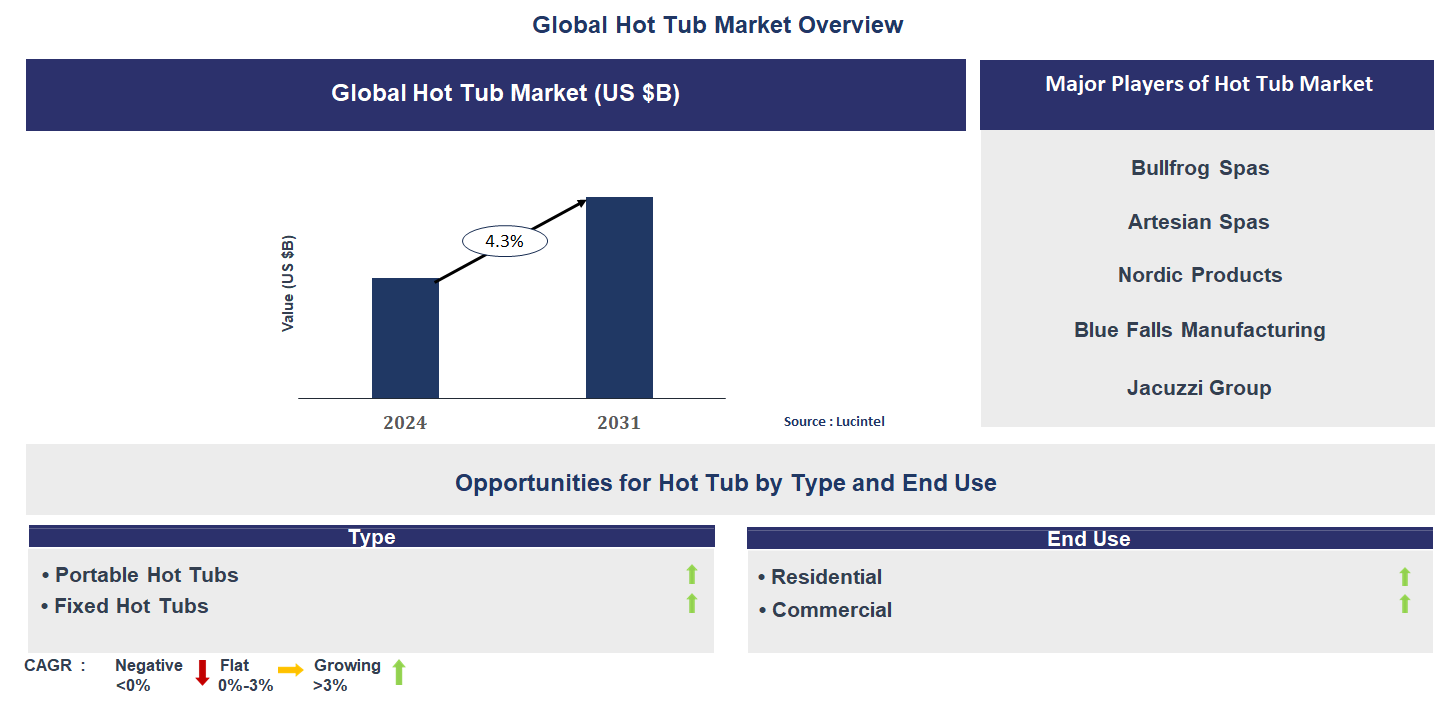
The future of the global hot tub market looks promising with opportunities in the residential and commercial markets. The global hot tub market is expected to grow with a CAGR of 4.3% from 2025 to 2031. The major drivers for this market are the increasing demand for home wellness products, the rising popularity of outdoor relaxation spaces, and the growing awareness about health benefits of hot tubs.• Lucintel forecasts that, within the type category, portable hot tub is expected to witness higher growth over the forecast period.
• Within the end use category, residential is expected to witness higher growth.
• In terms of region, APAC is expected to witness the highest growth over the forecast period. Gain valuable insights for your business decisions with our comprehensive 150+ page report. Sample figures with some insights are shown below.
Emerging Trends in the Hot Tub Market
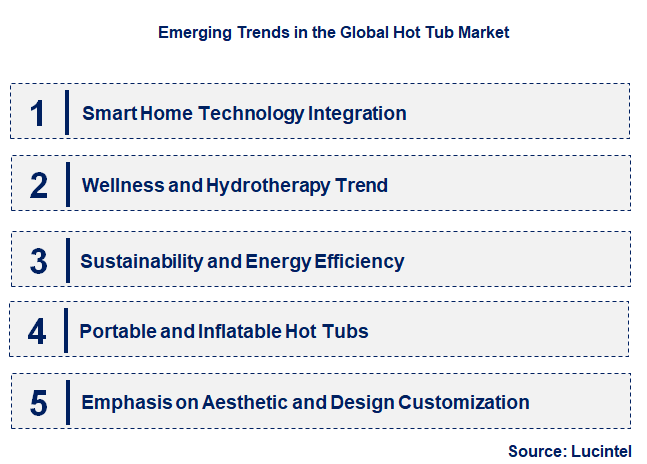
The hot tub industry is being transformed by a number of upcoming trends that indicate greater knowledge and appreciation of health, technology, and contemporary consumer values. The days of hot tubs as an easy luxury accessory are over. Consumers are now looking for specialized, science-driven solutions that are also part of larger concerns about home integration and sustainability. These trends are driving everything from product design to marketing, making a more specialized and consumer-driven industry that prioritizes both convenience and wellness.• Smart Home Technology Integration: One major trend is the integration of smart home technology into hot tubs. It is now common for manufacturers to produce products that can be controlled remotely via smartphone apps, and users have control over temperature, lighting, and jets no matter where they are. It is a trend influenced by the need for more convenience and control. The influence is a shift in the market with brands placing their products as smart home devices instead of mere recreational devices. It appeals to digitally conscious consumers and provides a new value and functionality level.
• Wellness and Hydrotherapy Trend: One of the prominent trends is the recognition of the health value of hydrotherapy. Consumers are more and more purchasing hot tubs for health purposes, including stress relief, relaxing muscles, and better sleep. The trend is shifting the market from the recreational category to the health and wellness arena. The result is a more niche product line, with companies creating hot tubs with sophisticated massage jets and ergonomic seating designed to address specific health issues. This also opens up possibilities for collaborations with wellness and health professionals.
• Sustainability and Energy Efficiency: The market is witnessing a growing trend towards energy efficiency and sustainability. The consumers are becoming environmentally aware and demanding products that are well-insulated, feature efficient heating systems, and have low operating costs. The trend is thus generating a new segment of environmentally aware consumers. The influence is a marketplace wherein environmental stewardship is emerging as a strong differentiator. This resonates with a new consumer base that is highly aware of the environment and seeks to make green buying decisions.
• Portable and Inflatable Hot Tubs: Another trend is the increasing demand for portable and inflatable hot tubs. These devices are easier to install and less expensive than conventional in-ground ones, and so are within reach for space-constrained consumers or those who cannot afford to spend a lot of money on a permanent installation. The trend is leveling the market and opening it up. The effect is a more varied consumer base. Companies are now designing products that are suitable for apartment living and young consumers who don’t have space or the money for a permanent installation.
• Emphasis on Aesthetic and Design Customization: The emphasis on aesthetics and design is a trend fueled by home remodeling. Consumers are increasingly looking at hot tubs as a focal feature of their home and outdoor living areas. They are looking for products with contemporary, minimalist designs and customizable aspects such as LED lighting and integral sound systems. This trend is developing a new segment that is concerned with form and functionality. The effect is a market in which brands are partnering with designers and architects to develop products that not only perform functionally but are gorgeous and part of the overall home aesthetic. These new trends are essentially transforming the hot tub industry by making it health-focused, technology-driven, and socially responsible. The emphasis on well-being and intelligent technology is setting the bar higher for product performance and ease of use. Concurrently, the trend toward portable and sustainable models is positioning the industry in line with the values of contemporary consumers. Ultimately, these trends are propelling the market toward a future in which a hot tub is a smarter, more integrated, and more responsible aspect of an individual wellness regimen.
Recent Development in the Hot Tub Market
The hot tub industry is being shaped today by a series of significant recent trends that are shaping its expansion and competitive dynamic. These trends are not standalone events but are interrelated, evidence of a larger shift in consumer attitudes and technological capabilities. The industry is becoming increasingly advanced, fueled by scientific advancement, concern for efficacy and safety, and alternative means of engaging consumers.• Launch of Advanced Hydrotherapy and Jet Systems: One of the biggest developments is the industry-wide launch of advanced hydrotherapy and jet systems. From single bubbles, manufacturers are now crafting intricate systems that treat specific muscle groups and offer a therapeutic massage. This innovation fills a long felt need for specialized wellness products. The effect is a more diversified marketplace addressing more diverse consumer health requirements, thus fostering customer satisfaction and brand loyalty.
• Greater Availability of Energy-Efficient Models: One significant development is the widespread availability of energy-efficient hot tub models. Fueled by consumer worries about high electricity costs and environmental footprint, such products are developed with improved insulation, efficient heaters, and intelligent control to minimize energy usage. The effect is a substantial growth of the market’s "green" sector. This trend is compelling conventional brands to re-formulate their products to stay competitive and is generating a new market for higher-end, environmentally friendly products.
• Increase in Direct-to-Consumer and Online Channels: The move towards online shopping and direct-to-consumer (D2C) platforms is the major trend. Brands are taking advantage of e-commerce sites and company websites to cater to a larger base without the restrictions of conventional retail. The effect is an intensely competitive market with more choices for consumers. This innovation also enables brands to own their brand message, communicate directly with consumers, and receive important feedback to guide product development in the future.
• Increased Popularity of Inflatable and Portable Hot Tubs: The increased popularity of inflatable and portable hot tubs is a recent innovation. They are less expensive and simpler to install than the usual models. This innovation is an answer to the call for convenience and flexibility from consumers. The effect is a major increase in the accessibility of the market and a new consumer segment. The strategy also assists brands in luring initial consumers who are seeking a less expensive entry point into the market.
• Innovations in Water Sanitation and Maintenance: The market is witnessing a significant evolution in the field of water sanitation and maintenance. Brands are launching products with high-end filtration systems, ozone technology, and UV-C technology to purify water and minimize chemicals. This innovation is a result of direct consumer demand for convenience and simplicity. The result is a low-maintenance and easier-to-use experience. It is also a big selling point for consumers who are worried about the effort and time that goes into maintenance. These newer trends are together reshaping the hot tub industry by propelling it toward greater specialization, ethics, and consumer focus. The emphasis on therapeutic amenities and energy savings is increasing product effectiveness and worth. At the same time, the trend toward e-commerce and portable designs is streamlining the market’s distribution and availability levels, assuring its continued expansion and applicability to a new generation of buyers.
Strategic Growth Opportunities in the Hot Tub Market
The hot tub industry offers several strategic opportunities for growth in its major applications. Through changing consumer trends and emphasis on health and wellness, corporations can take advantage of these opportunities to create and gain new market share. The opportunities go beyond mere product formulation and involve innovation in marketing, distribution, and product specialization. Exposing and taking advantage of these strategic areas for growth will be essential for corporations looking to gain long-term success in the changing marketplace.• Business in the Commercial and Hospitality Market: There is tremendous opportunity in the commercial and hospitality product line. With an increasing number of hotels, resorts, and vacation homes looking to differentiate themselves, there is a growing market for luxury hot tubs to advance the guest experience. Businesses can take advantage of this by designing specialty, long-lasting, and energy-efficient products for use in commercial settings. This approach enables brands to charge premium prices, establish a quality reputation, and target a business-to-business audience that values reliability and return on investment.
• E-commerce and Direct-to-Consumer Channel Opportunity: The growth of e-commerce represents a significant opportunity for growth. Through a strong online presence and direct-to-consumer (D2C) strategies, brands can circumvent traditional retail hurdles and penetrate further into the market. This approach enables businesses to manage their brand story, communicate directly with clients via social media and content marketing, and provide customized product suggestions. It also supports a data-led strategy, delivering meaningful insights into consumer habits and tastes to inform future product launches.
• Opportunity in Sustainable and Eco-Friendly Products: The increasing demand for sustainable products from consumers offers a major opportunity. Firms can differentiate themselves by emphasizing green materials, production processes, and energy-efficient designs. This involves the utilization of recycled or bio-based plastics, providing solar-powered heating solutions, and guaranteeing ethical sourcing of all parts. This approach not only targets a developing market segment of green consumers but also creates a positive company image and induces long-term customer loyalty by virtue of aligning with their values.
• Health and Wellness Opportunity: One of the main growth opportunities is creating products that are directly marketed as health and wellness products. As consumers increasingly prioritize self-care, there is a growing need for hot tubs with therapeutic relief. Companies can make formulations and marketing efforts that are specific to the special requirements of individuals looking for stress relief, muscle relaxation, or sleep relief. This plan is targeting an under-served market and offers a new revenue stream. It also enables partnerships with medical and wellness professionals.
• Small-Space and Portable Models: The market is offering a growth opportunity in the small-space and portable space. Firms can create products that are specifically meant for apartment balconies, small yards, or other places with less space. This may include producing more portable, inflatable, or "plug-and-play" formats that are simple to put together and move around. This tactic creates a distinctive selling point and establishes an excellent relationship with a new consumer base. This shifts the market from conventional, big installations to a more convenient and accessible format. These strategic opportunity areas are ready to propel the hot tub industry forward. With an emphasis on the commercial market, and making use of direct-to-consumer platforms, firms can increase their scope and build new profit streams. Increasingly health-conscious and sustainable product development aligns with contemporary consumer values, and the potential for small-space models means a future when the industry is not just bigger but more innovative and responsive to the specific needs of each individual.
Hot Tub Market Driver and Challenges
The hot tub industry is driven by a dynamic set of chief drivers and challenges that are defining its path. The chief drivers are largely focused on shifting consumer lifestyles, increased emphasis on health and wellness, and technological innovation. Yet, the industry is also driven by several major challenges, such as high initial investments, intricate installation processes, and energy consumption issues. Knowledge of these factors is necessary for any organization or business seeking to prosper in this changing market. The factors responsible for driving the hot tub market include: 1. Increased Consumer Interest in Health and Wellness: One of the main drivers is the growing consumer interest in health and wellness. People are now considering hot tubs as a means to reduce stress, relax muscles, and enhance sleep. This is resulting in increased demand for products that are therapeutic in nature. This driver is being driven by the ubiquitous presence of information online and through social media, which is revolutionizing consumer behavior and making hot tubs a must-have component of an active lifestyle. 2. Rising Disposable Incomes: The principal stimulator is the worldwide increase in disposable income, especially in developing economies. With the improvement of people’s financial resources, they are inclined to spend on leisure and luxury products for the home. This financial trend is enabling brands to enter new markets and develop high-value goods appealing to a wealthier consumer demographic, hence fueling the market’s growth and profitability. 3. Technological Innovation and Advancements: The hot tub industry is propelled by ongoing technological innovations. The incorporation of smart technology such as smartphone control, automatic chemical control, and energy-saving heating systems has enhanced the marketability of hot tubs to a wider group of people. These innovations have not only enhanced user experience but also mitigated long-standing issues related to maintenance and operating costs. 4. Growing Demand in the Commercial Sector: It is driven primarily by the rapid expansion of the hospitality and commercial sectors. They are putting hot tubs in their facilities to upgrade their amenities and draw additional customers. This has opened a new, high-value segment for the industry. This driver is strongest within the luxury tourism and wellness sectors, which are growing everywhere in the world and are heavily investing in a high-end customer experience. 5. Home Remodeling and Outdoor Living Trend: Another ultimate driver is the increasing trend of home remodeling and outdoor living. As individuals spend more time indoors, there is an increased preference for creating cozy and functional outdoor areas. The trend has made hot tubs a focal point of contemporary backyards and patios, and this is boosting sales and motivating consumers to invest in products that improve their home ambiance. Challenges in the hot tub market are: 1. High Upfront and Installation Costs: One of the main challenges is the high initial cost of a hot tub along with its installation. In-ground units especially need a lot of money to be invested and professionally installed. This poses as a hindrance for the majority of consumers and can restrict market penetration. This challenge demands brands to introduce more cost-effective models and financing options to appeal to a broader category of consumers. 2. Energy Consumption Issues: The industry is grappling with issues regarding concerns over energy consumption and operating costs. Hot tubs need a lot of electricity to heat and circulate the water, which can act as a significant turn-off for environmentally friendly buyers. This issue is compelling manufacturers to invest in technologies that conserve energy to meet these concerns and stay competitive in a market that is growing more attuned to being sustainable. 3. High Competition and Market Saturation: The market is competitive and in certain markets it is saturated with a broad range of brands, from multinationals to local players. High competition complicates the entry of new players and the hold of existing brands in terms of market share. The challenge necessitates brands investing a lot in marketing, product innovation, and brand building in order to stand out. The hot tub industry is driven by robust drivers such as increasing incomes, health and wellness focus, and technological advancements. These are all contributing towards a healthy growth and expansion environment. The future of the market also lies in how it meets some of the key challenges. The high price point of products, concerns regarding energy usage, and stiff competition are some key challenges that need to be addressed. The capacity of businesses to innovate in a responsible manner, guarantee product performance, and foster customer confidence will be instrumental towards ensuring the market’s long-term viability and achievement.List of Hot Tub Companies
Companies in the market compete on the basis of product quality offered. Major players in this market focus on expanding their manufacturing facilities, R&D investments, infrastructural development, and leverage integration opportunities across the value chain. With these strategies hot tub companies cater increasing demand, ensure competitive effectiveness, develop innovative products & technologies, reduce production costs, and expand their customer base. Some of the hot tub companies profiled in this report include-• Bullfrog Spas
• Artesian Spas
• Nordic Products
• Blue Falls Manufacturing
• Jacuzzi Group
• Canadian Spa Company
• Cal Spas
• Coast Hot Tubs
• Caldera Spas
• Plastic Development Company
Hot Tub Market by Segment
The study includes a forecast for the global hot tub market by type, end use, and region.Hot Tub Market by Type [Value from 2019 to 2031]:
• Portable Hot Tubs
• Fixed Hot Tubs
Hot Tub Market by End Use [Value from 2019 to 2031]:
• Residential
• Commercial
Hot Tub Market by Region [Value from 2019 to 2031]:
• North America
• Europe
• Asia Pacific
• The Rest of the World
Country Wise Outlook for the Hot Tub Market
The global hot tub industry is undergoing a massive change as of now, with factors converging to create a rising consumer interest in health and wellness, growing disposable incomes, and technological advancements. Something that was previously considered a luxury product is now being considered an affordable part of an integrated home wellness and relaxation system. The industry is transforming to be more consumer-oriented, placing more focus on energy efficiency, intelligence, and customization to respond to the varied needs and preferences of various global markets.• United States: In the United States, the hot tub industry is mature but highly dynamic. One development is the increasing need for intelligent hot tubs with built-in technology, which enables users to manage settings such as temperature and jets through smartphone applications. The market also is experiencing a high demand for "plug-and-play" models, which are simpler and cheaper to install. This is bringing hot tubs within reach of more consumers, especially those with smaller backyards or less disposable income.
• China: China’s hot tub industry is seeing strong development driven by urbanization and a developing middle class with more disposable income. An important trend is the emerging demand for both domestic and commercial hot tubs, especially for hotels, spas, and upscale resorts. Though high-end imported brands are favored, domestic producers are also pushing innovation, providing a broader selection of products with high-end features. The competitive market focuses sharply on product longevity and energy efficiency as customer awareness grows.
• Germany: The German market for hot tubs is dominated by a strong focus on product quality, energy efficiency, and sustainability. More recently, there is an increasing trend towards eco-friendly models that are well-insulated and feature sophisticated heating systems to save on energy. German consumers are very demanding and opt for products with clear energy labels and long-term dedication to safety and sustainability. The market also openly prefers slim designs that fit small urban dwellings and balconies.
• India: India’s hot tub market is in a stage of rapid growth, fueled by an increasing middle and wealthy class and an escalating interest in personal well-being. One notable trend is the rise of local brands that are providing cheaper products, thereby bringing hot tubs within reach of a larger consumer base. Meanwhile, multinational brands are also reaching out more, usually through online stores, to meet the increasing demand for high-end products. The commercial and hospitality industries are a significant growth driver, with hotels and resorts spending on hot tubs to maximize guest satisfaction.
• Japan: Japan’s hot tub industry is technologically advanced and well-developed, with recent innovation concentrating on incorporating smart technology and emphasizing therapeutic values significantly. Japanese consumers are looking for products that complement their culture of wellness. One major trend is the increasing popularity of hot tubs with sophisticated hydrotherapy jets and emphasis on physical and mental wellness. The market is also demanding products with minimalist, visually appealing designs that integrate with a contemporary living environment.

Features of the Global Hot Tub Market
Market Size Estimates: Hot tub market size estimation in terms of value ($B). Trend and Forecast Analysis: Market trends (2019 to 2024) and forecast (2025 to 2031) by various segments and regions. Segmentation Analysis: Hot tub market size by type, end use, and region in terms of value ($B). Regional Analysis: Hot tub market breakdown by North America, Europe, Asia Pacific, and Rest of the World. Growth Opportunities: Analysis of growth opportunities in different types, end uses, and regions for the hot tub market. Strategic Analysis: This includes M&A, new product development, and competitive landscape of the hot tub market. Analysis of competitive intensity of the industry based on Porter’s Five Forces model.
FAQ
Q1. What is the growth forecast for hot tub market? Answer: The global hot tub market is expected to grow with a CAGR of 4.3% from 2025 to 2031. Q2. What are the major drivers influencing the growth of the hot tub market? Answer: The major drivers for this market are the increasing demand for home wellness products, the rising popularity of outdoor relaxation spaces, and the growing awareness about health benefits of hot tubs. Q3. What are the major segments for hot tub market? Answer: The future of the hot tub market looks promising with opportunities in the residential and commercial markets. Q4. Who are the key hot tub market companies? Answer: Some of the key hot tub companies are as follows:• Bullfrog Spas
• Artesian Spas
• Nordic Products
• Blue Falls Manufacturing
• Jacuzzi Group
• Canadian Spa Company
• Cal Spas
• Coast Hot Tubs
• Caldera Spas
• Plastic Development Company Q5. Which hot tub market segment will be the largest in future? Answer: Lucintel forecasts that, within the type category, portable hot tub is expected to witness higher growth over the forecast period. Q6. In hot tub market, which region is expected to be the largest in next 5 years? Answer: In terms of region, APAC is expected to witness the highest growth over the forecast period. Q7. Do we receive customization in this report? Answer: Yes, Lucintel provides 10% customization without any additional cost.
Table of Contents
List of Figures
List of Tables
Methodology
- In-depth interviews of the major players in this market
- Detailed secondary research from competitors’ financial statements and published data
- Extensive searches of published works, market, and database information pertaining to industry news, company press releases, and customer intentions
- A compilation of the experiences, judgments, and insights of Lucintel’s professionals, who have analyzed and tracked this market over the years.


Buy Now
Choose a license that fits your team. Instant PDF delivery.
Prices exclude taxes. Instant delivery. Custom licensing available on request.
Key Questions
- • What are some of the most promising, high-growth opportunities for the hot tub market by type (portable hot tubs and fixed hot tubs), end use (residential and commercial), and region (North America, Europe, Asia Pacific, and the Rest of the World)?
- • Which segments will grow at a faster pace and why?
- • Which region will grow at a faster pace and why?
- • What are the key factors affecting market dynamics? What are the key challenges and business risks in this market?
- • What are the business risks and competitive threats in this market?
- • What are the emerging trends in this market and the reasons behind them?
- • What are some of the changing demands of customers in the market?
- • What are the new developments in the market? Which companies are leading these developments?
- • Who are the major players in this market? What strategic initiatives are key players pursuing for business growth?
- • What are some of the competing products in this market and how big of a threat do they pose for loss of market share by material or product substitution?
- • What M&A activity has occurred in the last 5 years and what has its impact been on the industry? For any questions related to Hot Tub Market, Hot Tub Market Size, Hot Tub Market Growth, Hot Tub Market Analysis, Hot Tub Market Report, Hot Tub Market Share, Hot Tub Market Trends, Hot Tub Market Forecast, Hot Tub Companies, write Lucintel analyst at email: helpdesk@lucintel.com. We will be glad to get back to you soon.


