
Report Feature
Home Water Filtration Unit Market Trends and Forecast
The future of the global home water filtration unit market looks promising with opportunities in the direct sale and indirect sale markets. The global home water filtration unit market is expected to reach an estimated $20,339 million by 2035 with a CAGR of 10.8% from 2026 to 2035. The major drivers for this market are the growing use of advanced filtration technologies at home, the increasing demand for safe & clean household water, and the rising use of smart & advanced filtration technologies.• Lucintel forecasts that, within the product type category, carbon filter is expected to witness the highest growth over the forecast period.
• Within the sales channel category, indirect sale is expected to witness higher growth.
• In terms of region, APAC is expected to witness the highest growth over the forecast period.
Gain valuable insights for your business decisions with our comprehensive 150+ page report. Sample figures with some insights are shown below.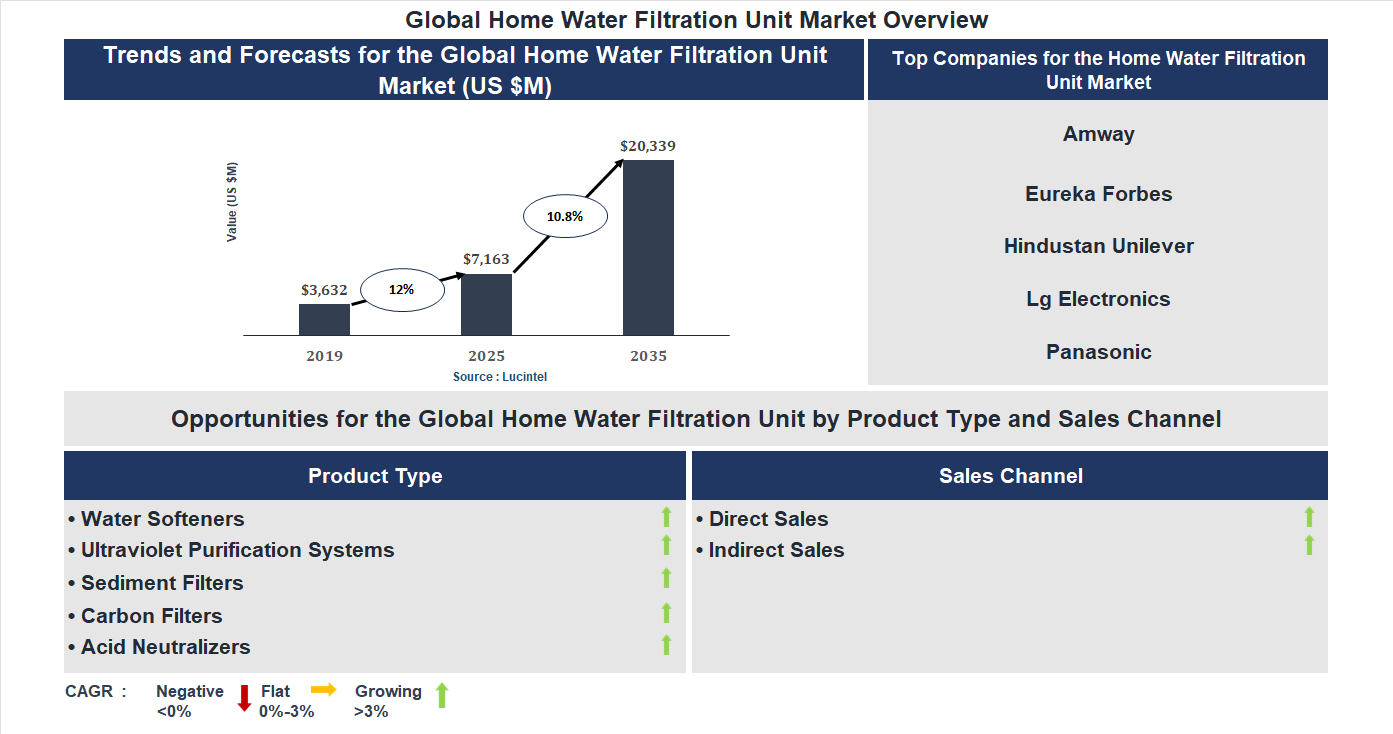
Emerging Trends in the Home Water Filtration Unit Market
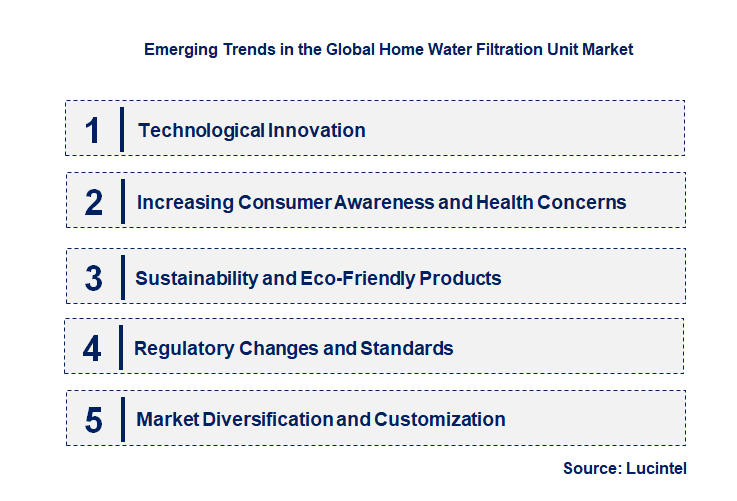
The home water filtration unit market is experiencing rapid evolution driven by technological advancements, increasing consumer awareness about water quality, and a growing emphasis on health and sustainability. As consumers seek safer, more efficient, and environmentally friendly solutions, manufacturers are innovating to meet these demands. The market is also influenced by regulatory changes and a rising preference for eco-friendly products. These developments are transforming how consumers access and perceive water filtration, leading to a more competitive and innovative landscape. Understanding these trends is crucial for stakeholders aiming to capitalize on emerging opportunities and address evolving consumer needs effectively.• Technological Innovation: Integration of smart technology and IoT devices is revolutionizing water filtration units. These smart systems enable real-time monitoring of water quality, filter status, and maintenance alerts via mobile apps, enhancing user convenience and ensuring optimal performance. This trend improves user engagement, reduces maintenance costs, and provides data-driven insights, making water filtration more efficient and user-friendly. As technology advances, we can expect even more sophisticated features, such as AI-driven diagnostics and automated filter replacements, further elevating the consumer experience.
• Increasing Consumer Awareness and Health Concerns: Growing awareness about water contaminants and health risks is driving demand for high-quality filtration solutions. Consumers are increasingly seeking products that remove harmful chemicals, heavy metals, and pathogens. This trend is fueled by information dissemination through social media, health campaigns, and regulatory advisories. As a result, there is a shift towards premium filtration units with multi-stage processes and certifications ensuring safety and efficacy. This heightened awareness is pushing manufacturers to innovate and offer more transparent, trustworthy products to meet consumer expectations.
• Sustainability and Eco-Friendly Products: Environmental concerns are significantly influencing market trends. Consumers prefer filtration units that are energy-efficient, produce less waste, and use eco-friendly materials. Companies are adopting sustainable practices, such as recyclable filters and biodegradable components, to appeal to eco-conscious buyers. Additionally, the focus on reducing plastic waste and minimizing carbon footprints is prompting innovations in filter design and packaging. This trend not only aligns with global sustainability goals but also enhances brand reputation and consumer loyalty in a competitive market.
• Regulatory Changes and Standards: Governments and regulatory bodies are implementing stricter standards for water quality and filtration efficacy. These regulations compel manufacturers to improve product standards, transparency, and safety features. Certification requirements for removal of specific contaminants are becoming more rigorous, influencing product development and marketing strategies. Compliance with these standards boosts consumer confidence and opens new market opportunities, especially in regions with stringent water safety laws. This trend ensures that market growth aligns with public health priorities and regulatory frameworks.
• Market Diversification and Customization: The market is witnessing a shift towards personalized and specialized filtration solutions tailored to specific water quality issues and consumer preferences. This includes units designed for well water, urban tap water, or specific contaminants like fluoride or arsenic. Customization options, such as portable units or aesthetic designs, are also gaining popularity. This diversification allows manufacturers to target niche segments and meet diverse consumer needs more effectively. It fosters innovation in product features and marketing strategies, ultimately expanding the market reach and enhancing consumer satisfaction.
These emerging trends are reshaping the home water filtration unit market by fostering innovation, emphasizing health and sustainability, and aligning products with regulatory standards. This evolution is creating new opportunities for manufacturers and providing consumers with safer, smarter, and more environmentally responsible water filtration solutions.
Recent Developments in the Home Water Filtration Unit Market
The home water filtration unit market is experiencing rapid growth driven by increasing health awareness, environmental concerns, and technological advancements. Consumers are seeking safer, cleaner drinking water, prompting innovation and expansion in this sector. Regulatory standards and consumer preferences are shaping product development, while sustainability initiatives are influencing market strategies. As urbanization continues, the demand for efficient, affordable filtration solutions is rising globally, creating significant opportunities for manufacturers and investors alike. These developments are transforming the landscape, making clean water more accessible and affordable for households worldwide.• Technological Innovations Enhance Filtration Efficiency: New filtration technologies, such as advanced membrane systems and UV purification, improve water quality and extend filter lifespan. These innovations reduce maintenance costs and enhance user convenience, making home water units more appealing. As a result, market penetration increases, especially in regions with contaminated water sources. The improved performance and durability of these units are driving consumer confidence and boosting sales, ultimately expanding the market and encouraging further R&D investments.
• Rising Consumer Awareness Promotes Market Growth: Increased awareness about waterborne diseases and contaminants has led consumers to prioritize water quality. Educational campaigns and health concerns are influencing purchasing decisions, favoring advanced filtration units. This heightened awareness is expanding the customer base beyond traditional markets to include health-conscious and environmentally aware consumers. Consequently, demand for reliable, safe, and eco-friendly filtration solutions is surging, fostering market expansion and encouraging manufacturers to innovate and diversify their product offerings.
• Regulatory Standards Drive Product Development: Governments and regulatory bodies are implementing stricter water quality standards, compelling manufacturers to upgrade their products. Compliance with these standards ensures market access and consumer safety, prompting innovation in filtration technology. Companies investing in R&D to meet or exceed regulatory requirements are gaining competitive advantages. This regulatory push is fostering higher-quality products, increasing consumer trust, and expanding market opportunities, especially in regions with stringent water safety laws, thereby shaping the future landscape of the home water filtration market.
• Sustainability Initiatives Influence Market Strategies: Environmental concerns are prompting companies to adopt sustainable practices, such as using eco-friendly materials and promoting water conservation. These initiatives appeal to eco-conscious consumers and reduce environmental impact. Market players are also developing reusable filters and energy-efficient units, aligning with global sustainability goals. Such strategies enhance brand reputation and meet consumer demand for responsible products, driving market growth. Sustainability-focused innovations are expected to remain a key trend, influencing product development and competitive dynamics in the industry.
• Expansion in Emerging Markets Presents New Opportunities: Rapid urbanization and increasing disposable incomes in emerging economies are fueling demand for home water filtration units. Local manufacturers are entering these markets, offering affordable and effective solutions. Infrastructure improvements and rising health awareness further support growth. This expansion provides significant revenue opportunities for global companies and encourages product customization to meet regional needs. As these markets develop, they are expected to become major growth drivers, transforming the global landscape of the home water filtration unit industry.
The overall impact of these developments is a dynamic, expanding market characterized by technological innovation, increased consumer trust, regulatory compliance, sustainability focus, and geographic diversification. These factors collectively enhance product quality, accessibility, and affordability, positioning the home water filtration unit market for sustained growth and increased competitiveness worldwide.
Strategic Growth Opportunities in the Home Water Filtration Unit Market
The home water filtration unit market is experiencing rapid expansion driven by increasing health awareness, regulatory standards, and consumer demand for clean, safe drinking water. Technological advancements and the shift towards sustainable solutions further fuel growth. Market players are focusing on innovation, product diversification, and expanding distribution channels to capture emerging opportunities. This dynamic environment offers significant potential for stakeholders to enhance market share and meet evolving consumer needs effectively.• Growing Consumer Awareness of Waterborne Contaminants: Increasing health concerns and awareness about water quality issues are driving demand for advanced filtration systems. Consumers seek reliable solutions to remove harmful chemicals, bacteria, and pollutants, prompting manufacturers to develop innovative, multi-stage filtration units. This trend boosts market growth as more households prioritize safe drinking water, leading to increased adoption of home water filtration units across various regions.
• Technological innovations Enhancing Filtration Efficiency: Advances in filtration technologies, such as reverse osmosis, UV purification, and nanotechnology, are improving product performance. These innovations enable more effective removal of contaminants, longer-lasting filters, and energy-efficient systems. As technology evolves, manufacturers can offer more sophisticated, user-friendly units, attracting a broader customer base and expanding market penetration, especially in urban and developed areas.
• Rising Demand for Eco-Friendly and Sustainable Solutions: Consumers and regulators are increasingly emphasizing environmentally sustainable products. Companies are developing eco-friendly filters, biodegradable components, and energy-efficient units to meet this demand. The shift towards sustainable filtration solutions not only reduces environmental impact but also appeals to eco-conscious consumers, creating new market segments and encouraging industry-wide innovation in sustainable home water filtration.
• Expansion of Distribution Channels and Online Retailing: The growth of e-commerce platforms and direct-to-consumer sales channels is making home water filtration units more accessible. Retailers, online marketplaces, and subscription models facilitate easier purchasing, installation, and maintenance. This expansion broadens market reach, especially in remote or underserved areas, and enhances customer convenience, thereby accelerating market growth and increasing product adoption globally.
• Increasing Regulatory Standards and Government Initiatives: Governments worldwide are implementing stricter water quality standards and promoting safe drinking water initiatives. These regulations compel households and institutions to adopt certified filtration systems. Supportive policies, subsidies, and awareness campaigns further stimulate demand. Compliance with regulatory standards ensures product credibility, fostering consumer trust and driving market expansion as stakeholders seek compliant, high-quality filtration solutions.
The overall market outlook is positively influenced by these growth opportunities, promising sustained expansion and innovation. Stakeholders who capitalize on technological advancements, sustainability, and regulatory support will be well-positioned to lead in this evolving landscape. As consumer preferences shift towards safer, eco-friendly, and technologically advanced solutions, the home water filtration unit market is poised for significant, long-term growth.
Home Water Filtration Unit Market Driver and Challenges
The home water filtration unit market is influenced by a variety of technological, economic, and regulatory factors that shape its growth and development. Advances in filtration technology, increasing health consciousness among consumers, and stringent government regulations on water quality standards are key drivers. Economic factors such as rising disposable incomes and urbanization also contribute to market expansion. Conversely, challenges such as high installation costs, limited consumer awareness in certain regions, and regulatory compliance complexities pose hurdles. Understanding these drivers and challenges is essential for stakeholders to navigate the evolving landscape and capitalize on emerging opportunities effectively.The factors responsible for driving the home water filtration unit market include:-
• Technological Innovation: The continuous development of advanced filtration technologies, such as reverse osmosis, UV purification, and activated carbon filters, enhances product efficiency and consumer appeal. These innovations address specific water contaminants more effectively, leading to increased adoption. As technology becomes more affordable and accessible, manufacturers can offer a broader range of products, catering to diverse consumer needs. This ongoing innovation not only improves water quality but also drives market growth by attracting health-conscious consumers seeking reliable solutions for safe drinking water.
• Rising Health Awareness: Increasing awareness about waterborne diseases and the health benefits of clean drinking water significantly influences consumer purchasing decisions. Consumers are now more inclined to invest in home water filtration units to ensure safe, contaminant-free water. This trend is driven by public health campaigns, media coverage, and a growing understanding of the risks associated with untreated water. As health consciousness continues to rise globally, demand for effective water filtration solutions is expected to grow, fueling market expansion across residential sectors.
• Urbanization and Population Growth: Rapid urbanization and population growth in developing and developed regions increase the demand for safe drinking water. Urban areas often face challenges related to water pollution and aging infrastructure, prompting consumers to seek home filtration units as a reliable alternative. Additionally, increased household water consumption due to higher living standards and the desire for convenience further boost market demand. This demographic shift creates a substantial market opportunity for manufacturers to expand their product offerings and reach new customer segments.
• Regulatory Standards and Government Initiatives: Governments worldwide are implementing strict water quality standards and promoting the adoption of water filtration systems to ensure public health. Regulatory frameworks, such as the Safe Drinking Water Act in the U.S., mandate water quality testing and treatment, encouraging consumers and businesses to invest in filtration units. Additionally, government initiatives and subsidies in certain regions support market growth by making these systems more affordable. Compliance with these regulations not only ensures safety but also enhances consumer trust, thereby driving market expansion.
The challenges facing the home water filtration unit market include:-
• High Installation and Maintenance Costs: The initial purchase price and ongoing maintenance expenses of home water filtration units can be prohibitive for some consumers, especially in low-income regions. High costs may deter potential buyers, limiting market penetration. Additionally, maintenance requirements such as filter replacements and system repairs add to the overall expense, impacting consumer willingness to adopt these solutions. Manufacturers need to develop cost-effective products and educate consumers on long-term benefits to overcome this barrier.
• Limited Consumer Awareness and Education: Despite growing health concerns, many consumers remain unaware of the importance of water filtration or lack knowledge about available technologies. This knowledge gap hampers market growth, particularly in rural or underdeveloped areas. Without proper awareness, consumers may not prioritize investing in filtration units, leading to slower adoption rates. Effective marketing, education campaigns, and community outreach are essential to bridge this gap and stimulate demand.
• Regulatory Compliance and Certification Challenges: Navigating complex regulatory landscapes and obtaining necessary certifications can be challenging for manufacturers. Different regions have varying standards and approval processes, which can delay product launches and increase costs. Non-compliance risks legal penalties and damages brand reputation. Ensuring products meet diverse regulatory requirements requires significant resources and expertise, posing a barrier for smaller players and hindering rapid market expansion.
The home water filtration unit market is driven by technological advancements, health awareness, urbanization, and supportive regulations, which collectively foster growth. However, high costs, limited awareness, and regulatory hurdles present significant challenges. Addressing these issues through innovation, education, and strategic compliance will be crucial for sustained market development. Overall, the market‘s future hinges on balancing these drivers and challenges to meet consumer needs and ensure safe drinking water access worldwide.
List of Home Water Filtration Unit Companies
Companies in the market compete on the basis of product quality offered. Major players in this market focus on expanding their manufacturing facilities, R&D investments, infrastructural development, and leverage integration opportunities across the value chain. With these strategies home water filtration unit companies cater increasing demand, ensure competitive effectiveness, develop innovative products & technologies, reduce production costs, and expand their customer base. Some of the home water filtration unit companies profiled in this report include-• Amway
• Eureka Forbes
• Hindustan Unilever
• Lg Electronics
• Panasonic
• Halosource
• Whirlpool
• Kent Ro Systems
• Brita
• Koninklijke Philips
Home Water Filtration Unit Market by Segment
The study includes a forecast for the global home water filtration unit market by product type, sales channel, and region.Home Water Filtration Unit Market by Product Type [Value from 2019 to 2035]:
• Water Softeners
• Ultraviolet Purification Systems
• Sediment Filters
• Carbon Filters
• Acid Neutralizers
Home Water Filtration Unit Market by Sales Channel [Value from 2019 to 2035]:
• Direct Sales
• Indirect Sales
Home Water Filtration Unit Market by Region [Value from 2019 to 2035]:
• North America
• Europe
• Asia Pacific
• The Rest of the World
Country Wise Outlook for the Home Water Filtration Unit Market
The home water filtration unit market has experienced significant growth driven by increasing awareness of water quality issues, health concerns, and technological advancements. Consumers are seeking more efficient, sustainable, and cost-effective solutions to ensure safe drinking water at home. Governments and regulatory bodies are also implementing stricter standards, encouraging innovation and adoption of new filtration technologies. The market dynamics vary across regions, influenced by local water quality, infrastructure, and consumer preferences. Recent developments reflect a shift towards eco-friendly products, smart filtration systems, and enhanced filtration capabilities, shaping the future landscape of this industry globally.• United States: The US market has seen a surge in demand for advanced filtration systems, including smart and connected units that monitor water quality in real-time. Major players are investing in R&D to develop eco-friendly and energy-efficient products. Regulatory standards, such as NSF certifications, are driving product innovation and consumer trust. The adoption of reverse osmosis and UV filtration technologies is increasing, especially in urban areas with water quality concerns. Additionally, online retail channels are expanding access to a broader consumer base, boosting market growth.
• China: China’s home water filtration market is rapidly expanding due to increasing urbanization and water pollution issues. Local manufacturers are focusing on affordable, compact, and easy-to-install units to cater to a growing middle class. The government’s initiatives to improve water safety standards are encouraging the adoption of advanced filtration solutions. There is a rising trend in the use of multi-stage filtration systems that combine various technologies for comprehensive water purification. E-commerce platforms are playing a crucial role in market penetration, making products more accessible nationwide.
• Germany: The German market emphasizes sustainability and high-quality standards, with consumers favoring eco-friendly and energy-efficient filtration units. Innovations include the integration of smart features for better maintenance and water monitoring. Stringent EU regulations on water safety and environmental impact are shaping product development. German consumers are increasingly opting for systems that reduce plastic waste and energy consumption. The market also sees a rise in demand for under-sink and point-of-use filtration units, driven by health consciousness and environmental awareness.
• India: India’s home water filtration market is witnessing rapid growth due to widespread water contamination and inadequate municipal supply. Affordable and durable products, such as gravity-based and UV filters, are popular among middle and lower-income households. The government’s Swachh Bharat Abhiyan and other initiatives are promoting water purification awareness. Local manufacturers are innovating with cost-effective solutions tailored to rural and semi-urban areas. E-commerce and local retail channels are expanding access, and there is increasing consumer interest in multi-stage filtration systems that address diverse water quality issues.
• Japan: Japan’s market is characterized by high consumer demand for technologically advanced and compact filtration units. The focus is on products that combine filtration with water heating and dispensing features. Innovations include the use of nanotechnology and smart sensors for real-time water quality monitoring. Strict safety and environmental standards influence product design, emphasizing energy efficiency and minimal waste. The aging population drives demand for easy-to-use, maintenance-free systems. The market also benefits from a strong culture of health consciousness and environmental sustainability, fostering continuous innovation and adoption of premium filtration solutions.

Features of the Global Home Water Filtration Unit Market
Market Size Estimates: Home water filtration unit market size estimation in terms of value ($M).Trend and Forecast Analysis: Market trends (2019 to 2025) and forecast (2026 to 2035) by various segments and regions.
Segmentation Analysis: Home water filtration unit market size by product type, sales channel, and region in terms of value ($M).
Regional Analysis: Home water filtration unit market breakdown by North America, Europe, Asia Pacific, and Rest of the World.
Growth Opportunities: Analysis of growth opportunities in different product type, sales channel, and regions for the home water filtration unit market.
Strategic Analysis: This includes M&A, new product development, and competitive landscape of the home water filtration unit market.
Analysis of competitive intensity of the industry based on Porter’s Five Forces model.

FAQ
Q1. What is the home water filtration unit market size?Answer: The global home water filtration unit market is expected to reach an estimated $20,339 million by 2035.
Q2. What is the growth forecast for home water filtration unit market?
Answer: The global home water filtration unit market is expected to grow with a CAGR of 10.8% from 2026 to 2035.
Q3. What are the major drivers influencing the growth of the home water filtration unit market?
Answer: The major drivers for this market are the growing use of advanced filtration technologies at home, the increasing demand for safe & clean household water, and the rising use of smart & advanced filtration technologies.
Q4. What are the major segments for home water filtration unit market?
Answer: The future of the home water filtration unit market looks promising with opportunities in the direct sale and indirect sale markets.
Q5. Who are the key home water filtration unit market companies?
Answer: Some of the key home water filtration unit companies are as follows:
• Amway
• Eureka Forbes
• Hindustan Unilever
• Lg Electronics
• Panasonic
• Halosource
• Whirlpool
• Kent Ro Systems
• Brita
• Koninklijke Philips
Q6. Which home water filtration unit market segment will be the largest in future?Answer: Lucintel forecasts that, within the product type category, carbon filter is expected to witness the highest growth over the forecast period.
Q7. In home water filtration unit market, which region is expected to be the largest in next 8 years?
Answer: In terms of region, APAC is expected to witness the highest growth over the forecast period.
Q8. Do we receive customization in this report?
Answer: Yes, Lucintel provides 10% customization without any additional cost.
Table of Contents
List of Figures
List of Tables
Methodology
- In-depth interviews of the major players in this market
- Detailed secondary research from competitors’ financial statements and published data
- Extensive searches of published works, market, and database information pertaining to industry news, company press releases, and customer intentions
- A compilation of the experiences, judgments, and insights of Lucintel’s professionals, who have analyzed and tracked this market over the years.


Buy Now
Choose a license that fits your team. Instant PDF delivery.
Prices exclude taxes. Instant delivery. Custom licensing available on request.
Key Questions
- • What are some of the most promising, high-growth opportunities for the home water filtration unit market by product type (water softeners, ultraviolet purification systems, sediment filters, carbon filters, and acid neutralizers), sales channel (direct sales and indirect sales), and region (North America, Europe, Asia Pacific, and the Rest of the World)?
- • Which segments will grow at a faster pace and why?
- • Which region will grow at a faster pace and why?
- • What are the key factors affecting market dynamics? What are the key challenges and business risks in this market?
- • What are the business risks and competitive threats in this market?
- • What are the emerging trends in this market and the reasons behind them?
- • What are some of the changing demands of customers in the market?
- • What are the new developments in the market? Which companies are leading these developments?
- • Who are the major players in this market? What strategic initiatives are key players pursuing for business growth?
- • What are some of the competing products in this market and how big of a threat do they pose for loss of market share by material or product substitution?
- • What M&A activity has occurred in the last 5 years and what has its impact been on the industry? For any questions related to Home Water Filtration Unit Market, Home Water Filtration Unit Market Size, Home Water Filtration Unit Market Growth, Home Water Filtration Unit Market Analysis, Home Water Filtration Unit Market Report, Home Water Filtration Unit Market Share, Home Water Filtration Unit Market Trends, Home Water Filtration Unit Market Forecast, Home Water Filtration Unit Companies, write Lucintel analyst at email: helpdesk@lucintel.com. We will be glad to get back to you soon.


