
Market Report · July 16, 2026

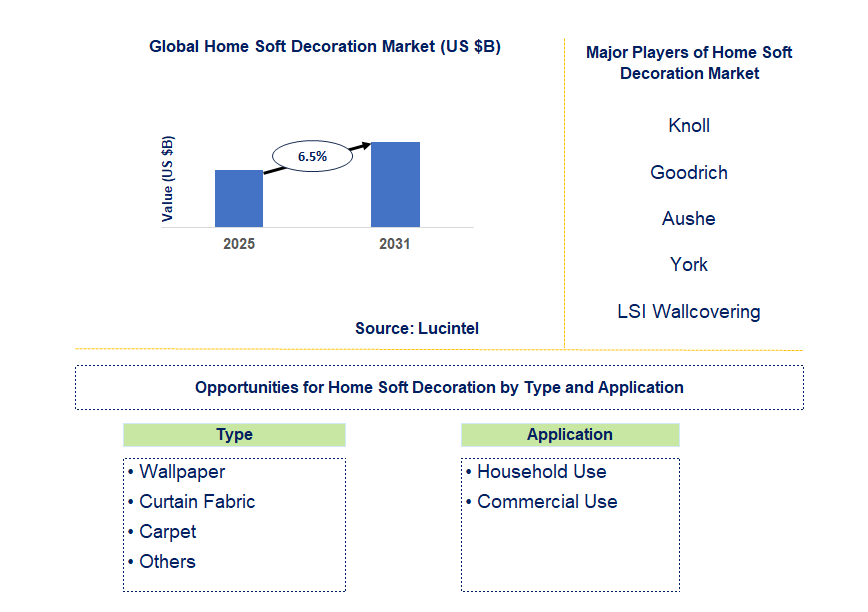
Key data points: The growth forecast = 6.5% annually for the next 7 years. Scroll below to get more insights. This market report covers Trends, opportunities and forecasts in home soft decoration market to 2031 by type (wallpaper, curtain fabric, carpet, and others), application (household use and commercial use), and region (North America, Europe, Asia Pacific, and the Rest of the World)
We'll send your sample report shortly.
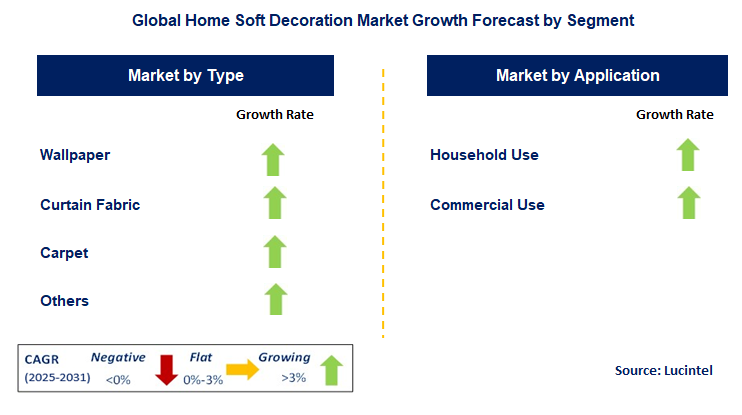
• Lucintel forecasts that, within the type category, wallpaper is expected to witness the highest growth over the forecast period.
• Within the application category, household use is expected to witness higher growth.
• In terms of region, APAC is expected to witness the highest growth over the forecast period.
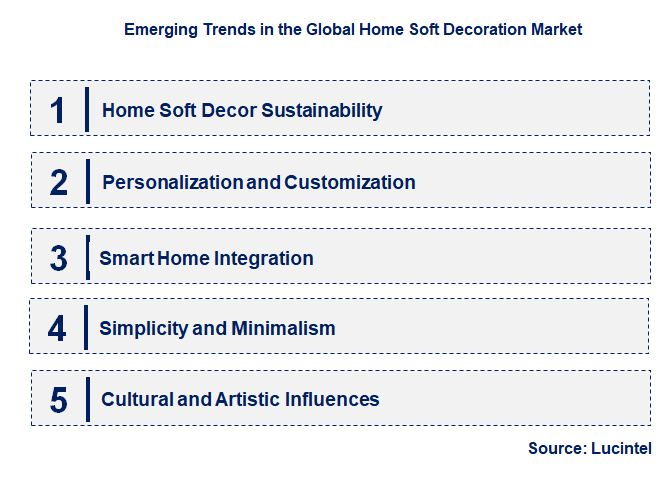
• Home Soft Decor Sustainability: Sustainability is emerging as one of the top trends in the home soft decoration industry. Consumers are demanding more and more eco-friendly and organic materials for products such as bedding, curtains, and cushions. Companies are reacting by launching products made from recycled materials, bamboo, and other renewable materials. This trend not only meets environmental needs but also responds to consumers who want healthier, non-toxic living spaces. The increase in consciousness regarding sustainability is compelling businesses to embrace greener production practices, which is contributing to the shift in the market towards more eco-friendly options.
• Personalization and Customization: Personalization is another emerging trend in the home soft decoration industry. Consumers are shifting away from mass-produced products towards decor products that are a true reflection of their individual tastes and personalities. This ranges from bespoke cushions, throws, and rugs to personalized wall art. With the evolution of digital printing and internet tools, it is now possible for customers to design their own soft furnishings and have them delivered online. This is fueled by a need for uniqueness and greater control over one's living environment, enabling individuals to create a home environment that best represents their personal style.
• Smart Home Integration: The trend is that more technology is being infused in soft decoration home products. Smart curtains, light, and temperature-managing fabrics are on the rise. The intent is to offer convenience, boost comfort, and reduce energy use. The focus is to increase efficiency at home, and the soft furnishings industry is not out of sync with this requirement either. The incorporation of technology in home decoration offers an uncomplicated mix of form and function, promoting technological innovation within the sector. Smart textiles are also part of the increasing phenomenon of networked domestic environments where aesthetics and convenience merge.
• Simplicity and Minimalism: The trend towards minimalist designs persists in shaping the home soft decor industry. Minimalist designs accentuate plain colors, clear lines, and useful decorative items. Customers are choosing the minimalist yet stunning soft furnishings which add to their space's appearance without overbearingly dominating their surroundings. Such minimalist designs even in most cases also ensure maximum relaxation and soothing, keeping it in line with overall wellness demands. Soft decorative pieces like pillows, throws, and curtains are being created so that they fit dual roles as both decor pieces and functional uses, a development that is meeting the growing desires for simplicity on the interior aspects.
• Cultural and Artistic Influences: Cultural diversity is shaping the soft decoration industry, with growing interest in introducing elements of diverse global traditions and artistic styles. Consumers are accepting ethnic prints, traditional weaves, and crafts in home furnishings, combining them with modern design elements. The trend enables individuals to convey their cultural background or interest in diverse cultures through interior decor. It also offers a chance for worldwide artisans to display their skills, adding to the popularity of handmade and unique home soft decoration items. The emerging trends in the home soft decoration market indicate a movement towards sustainability, customization, and technological advancement. Consumers are more and more inclined towards eco-friendly products, customized designs, and smart home integration in their home decor. As these trends continue to develop, the market is becoming increasingly dynamic and diverse, with companies placing emphasis on fulfilling individual consumer needs while taking care of environmental issues. The need for functional, beautiful, and environmentally friendly domestic decoration is stimulating innovation throughout the industry, and the home soft decoration market is continuing to expand and evolve to meet changing consumer requirements.
• Increase in Eco-Friendly Products: One of the biggest changes in the home soft decoration industry in recent times is the increased demand for eco-friendly and sustainable products. People are getting more environmentally conscious and looking for products that are created from organic materials, recycled textiles, and non-toxic colors. Companies have met this need by launching a variety of soft decor products made from sustainable materials like bedding, rugs, and curtains. This trend towards sustainable products mirrors the wider social push towards sustainability and is changing how consumers go shopping for home furnishing.
• Smart Technology Incorporated in Soft Decoration: Incorporating smart technology in home soft decorating products is yet another significant change. Smart drapes, smart temperature-regulated fabrics, and auto-adjustable lighting systems are gaining popularity. They are convenient, energy-saving, and more comfortable, which attract high-tech consumers who value functionality in home decor. The fusion of technology and classic soft decor products is stimulating innovation and revolutionizing the manner in which individuals interact with their living spaces, providing a new level of interactivity to home furnishings.
• Development of Internet Shopping Platforms: The development of internet shopping platforms has significantly impacted the home soft decoration industry. Online retail platforms have facilitated access to a plethora of soft furnishings, ranging from internationally sourced products to bespoke decorative items. Additionally, online shopping is convenient and provides a choice to compare prices, review products, and find special pieces that may not be found in brick-and-mortar shops. This evolution has resulted in home decor democratization, enabling individuals to personalize their homes at various price points.
• Versatility and Functionality Preferences: Customers are making more demands for aesthetic soft decor products that are functional as well. Multi-functional products like convertible furniture, compact storage solutions, and foldable fabrics are on the rise. The demand for versatility is fueled by the increasing necessity to maximize space, particularly in apartments and small houses. Practical soft furnishings, including modular seating and flexible curtains, are filling these gaps and growing popular in the marketplace.
• Handmade and Artisan Products: The demand for handmade and artisanal home soft decoration products has significantly increased. Homeowners are now appreciating authenticity, craftsmanship, and individuality in their home decor, and this has created a market for handmade home textiles. This movement is encouraging local artisans and upholding culturally important designs, including handmade rugs, embroidered pillow covers, and handwoven drapes. The appreciation of handmade craftsmanship is driving the development of niche markets and overall movement toward more personalized home decor. Current trends in the home soft decoration market emphasize increasing concern with sustainability, technological incorporation, and customized customer experiences. Increased demand for environmentally friendly products and greater adoption of smart technologies are redefining the market scenario. The proliferation of e-commerce and the movement towards multifunctional, compact products also point to larger shifts in lifestyle. All these trends are reconfiguring consumer needs and prompting brands to innovate in response. As the market keeps changing, companies will have to adjust to the changes to remain competitive and address new consumer demands.
• Home Textiles Personalization: Providing personalization options in home textiles is a major growth area. People are looking more and more for personalized home decor, ranging from personalized cushions and throws to personalized bedding and curtains. Supplying personalization services via online channels enables brands to cater to the growing demand for uniqueness in home decor. This opportunity can enable businesses to stand out in the market by providing customized products that fit unique tastes and preferences.
• Smart Home Integration in Soft Furnishings: Merging smart technology with soft furnishings, including temperature-controlling fabrics and motorized curtains, is an emerging opportunity. As consumers seek to make their homes more efficient and comfortable, the market for smart home decor products will keep growing. Companies that lead in this area can take advantage of the rising interest in connected home spaces, providing consumers with products that blend style, functionality, and convenience.
• Sustainability in Production: As consumers increasingly make sustainability a priority, companies that specialize in making sustainable home soft decor products have a competitive edge. This involves environmentally friendly materials, minimization of waste, and ethical production. Firms that go the way of sustainability will not only attract consumers that are environmentally aware but also find themselves in sync with worldwide trends towards sustainable consumption and production.
• Online Retail Channel Expansion: Online shopping is a key driver of growth for the home soft decoration industry. Brand expansion of online retail channels can enable brands to access more consumers, including those in foreign markets. Creating easy-to-use online platforms with augmented reality, which enables consumers to see products in their own homes, is a chance to make online shopping more engaging and boost sales.
• Functional and Multi-purpose Products: There is a growing need for functional home soft decor products that provide more than mere looks. Multi-purpose products, like foldable rugs, convertible furniture, and storage-included cushions, are gaining popularity as consumers seek to optimize space in compact homes. Brands that specialize in creating flexible and functional soft furnishings will address the emerging trend of space efficiency and offer solutions to modern living issues. The home soft decoration market offers numerous strategic growth opportunities, most notably in customization, sustainability, and functional design. Companies that emphasize providing customized products, incorporating smart technology, and embracing sustainable approaches are likely to thrive in this changing market. In addition to the above opportunities, increasing web-based retailing channels and producing multifunctional, multi-role products will lead to further improvements in market scope and consumer satisfaction. These are the opportunities available to guide business toward the ever-rising home soft decoration demands. By doing this, firms will be placed at the frontline of the aggressive home soft decoration industry.
• Knoll
• Goodrich
• Aushe
• York
• LSI Wallcovering
• Kanny Curtains
• Ahlstrom Munksjo
• J.Josephson
• Dedar Milano
• Vescom
• Wallpaper
• Curtain Fabric
• Carpet
• Others
• Household Use
• Commercial Use
• North America
• Europe
• Asia Pacific
• The Rest of the World
• United States: The home soft decoration sector in the United States experienced high demand for personalized and environmentally friendly products. People increasingly seek eco-friendly and organic products for home textiles, such as bedding, cushions, and curtains. The growth of online shopping websites has facilitated customers to browse through extensive styles and buy decor products. Moreover, the work-from-home trend has also contributed to increased interest in home office interior design, impacting the market for soft furnishings such as ergonomic chairs, desk accessories, and decorative items.
• China: China's home soft decoration market is being propelled by an increase in middle-class consumers and the increasing demand for modern, minimalist designs. The convergence of smart home technology with home furnishings is also gaining popularity, including smart curtains and lighting systems. Additionally, the emphasis on healthy and sustainable living is growing, and hence there is a demand for organic and natural materials in soft home furnishing products. The fast urbanization and high homeownership rate have had a major influence on the development of the soft decoration market in China.
• Germany: In Germany, sustainability is a top priority for the home soft decoration market. Sales of products crafted from recycled materials and environmentally friendly textiles have been increasing. High-quality, durable decor items that resonate with their values of eco-friendliness are also sought by German consumers. Customization and individuality in home interiors are popular, and many are choosing customized soft furnishings. Traditional European designs, coupled with contemporary clean lines, continue to dominate the German market, with a fusion of ageless sophistication with current design.
• India: The Indian home soft decor market has also witnessed a change towards contemporary and modern design with increasing urbanization and young consumers entering the marketplace. There is an emerging trend for bright and culturally rich home furnishings like rugs, cushions, and throws. Classic Indian fabric, including embroidered and handwoven fabrics, is being interwoven with modern design inputs. The lower price point of soft home furniture and accessories, particularly online, has also translated into a large consumer base seeking to customize interior spaces.
• Japan: In Japan, the Japanese market for soft decoration of the home is governed largely by concepts of minimalism and functionality. Simplicity and efficiency of space are what Japanese consumers appreciate, so there is demand for soft decor products that are functional as well as beautiful. High-quality materials, craftsmanship, and muted color are the priorities. As lifestyles change with increased small apartment dwelling, consumers increasingly look for products that are multifunctional and space-efficient, such as foldable rugs and multifunctional furniture with incorporated decor features. Sustainability and eco-friendly materials are also picking up pace in Japan's home soft decoration industry.


• Knoll
• Goodrich
• Aushe
• York
• LSI Wallcovering
• Kanny Curtains
• Ahlstrom Munksjo
• J.Josephson
• Dedar Milano
• Vescom Q5. Which home soft decoration market segment will be the largest in future? Answer: Lucintel forecasts that, within the type category, wallpaper is expected to witness the highest growth over the forecast period. Q6. In home soft decoration market, which region is expected to be the largest in next 5 years? Answer: In terms of region, APAC is expected to witness the highest growth over the forecast period. Q7. Do we receive customization in this report? Answer: Yes, Lucintel provides 10% customization without any additional cost.


Choose a license that fits your team. Instant PDF delivery.
Prices exclude taxes. Instant delivery. Custom licensing available on request.
Market Report · July 16, 2026
Market Report · July 15, 2026
Market Report · July 10, 2026
Trusted partner for strategic intelligence and business growth


Receive a complimentary market analysis tailored to your industry. Our analysts will identify key growth opportunities and competitive dynamics specific to your business.

Market size, growth rate, and key trend analysis for your specific sector.

Top competitor positioning and market share analysis.

Strategic recommendations backed by data-driven insights.
Get curated market intelligence and competitive moves straight to your inbox.
By subscribing, you agree to receive our monthly insights. Unsubscribe anytime.
Receive a complimentary market analysis tailored to your industry. Our analysts will identify key growth opportunities and competitive dynamics specific to your business.
Market size, growth rate, and key trend analysis for your specific sector.
Top competitor positioning and market share analysis.
Strategic recommendations backed by data-driven insights.
Get curated market intelligence, emerging trends, and competitive moves straight to your inbox each month.
By subscribing, you agree to receive our monthly insights. Unsubscribe anytime.
We'll send your sample report shortly.