
Market Report · July 16, 2026

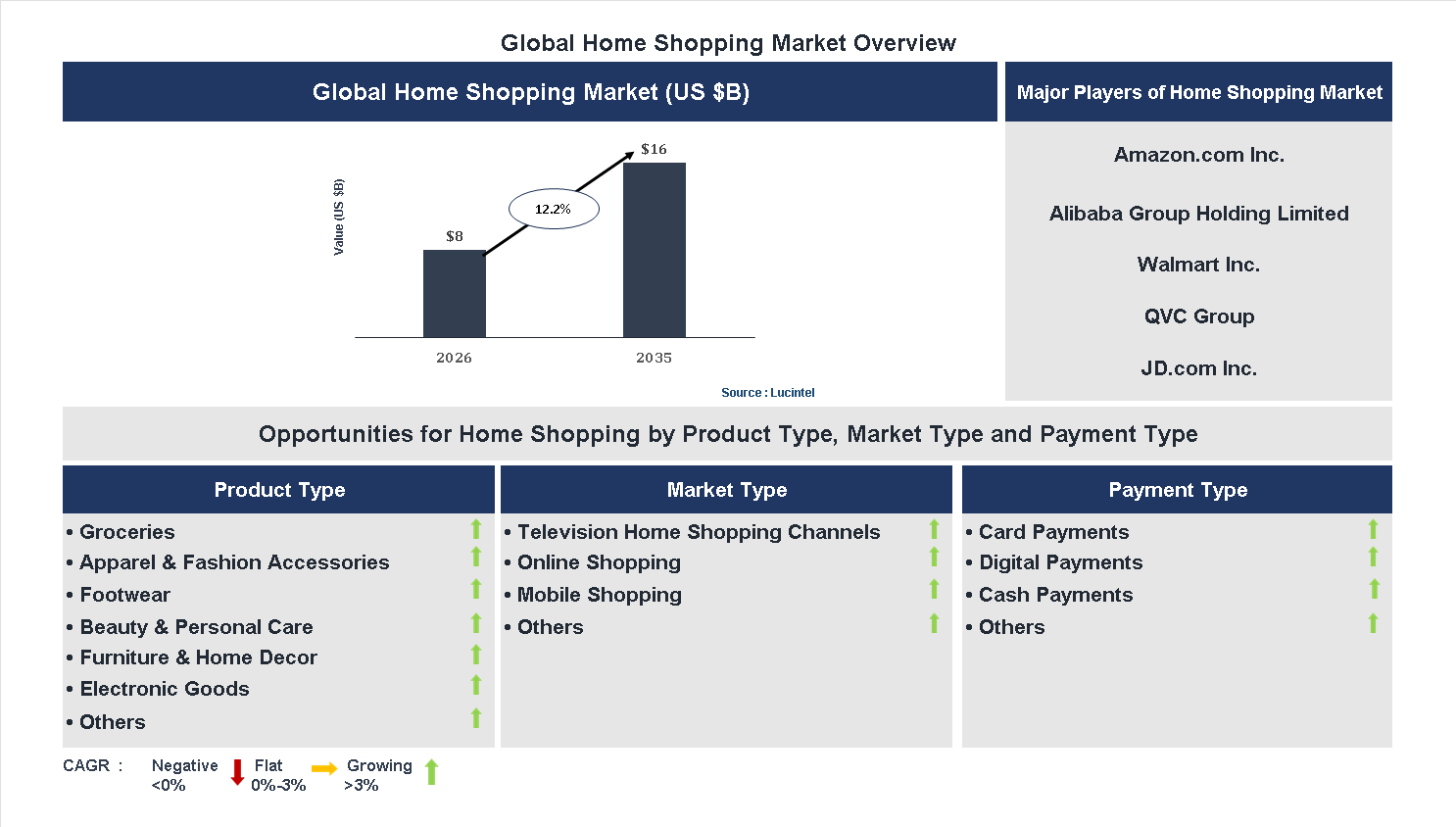
Key data points: The market size in 2035 = $16 billion, growth forecast = 12.2% annually for the next 8 years. Scroll below to get more insights. This market report covers trends, opportunities and forecasts in home shopping market to 2035 by product type (groceries, apparel & fashion accessories, footwear, beauty & personal care, furniture & home decor, electronic goods, and others), market type (television home shopping channels, online shopping, mobile shopping, and others), payment type (card payments, digital payments, cash payments, and others), and region (North America, Europe, Asia Pacific, and the Rest of the World)
We'll send your sample report shortly.
• Lucintel forecasts that, within the product type category, grocery is expected to witness the highest growth over the forecast period.
• Within the payment type category, digital payment is expected to witness the highest growth.
• In terms of region, APAC is expected to witness the highest growth over the forecast period. Gain valuable insights for your business decisions with our comprehensive 150+ page report. Sample figures with some insights are shown below.
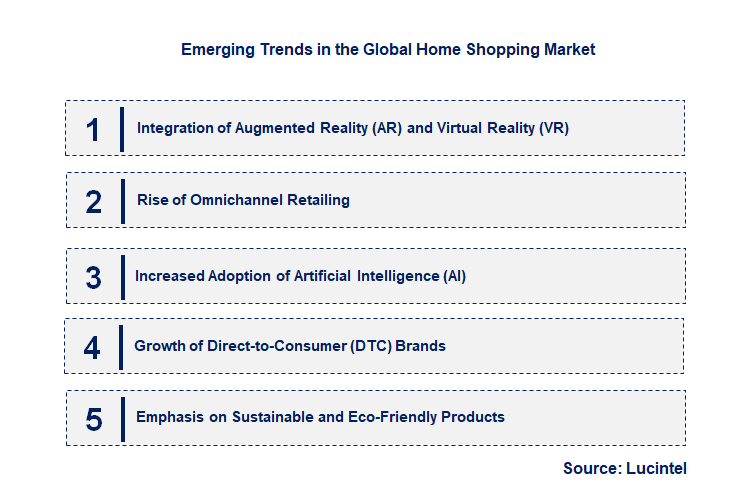
• Integration of Augmented Reality (AR) and Virtual Reality (VR): AR and VR technologies are revolutionizing the home shopping experience by allowing consumers to virtually try products before purchasing. This immersive approach enhances confidence in buying decisions, reduces return rates, and increases engagement. Retailers can showcase furniture, appliances, and decor in a realistic setting, bridging the gap between online and in-store shopping. As AR and VR become more accessible, they are expected to significantly influence consumer behavior and boost sales, making home shopping more interactive and personalized
• Rise of Omnichannel Retailing: Omnichannel strategies are becoming essential as consumers demand a seamless shopping experience across multiple platforms. Retailers integrate online stores, mobile apps, social media, and physical locations to provide consistent branding, product availability, and customer service. This approach enhances convenience, allowing customers to browse, purchase, and return products through their preferred channels. The integration of data analytics also enables personalized marketing and inventory management. Omnichannel retailing is fostering loyalty and increasing sales by meeting consumers where they are, both digitally and physically.
• Increased Adoption of Artificial Intelligence (AI): AI-driven tools are transforming home shopping by enabling personalized recommendations, chatbots for customer service, and predictive analytics for inventory management. AI helps retailers understand consumer preferences and behaviors, allowing for tailored marketing campaigns and product suggestions. Chatbots provide instant support, improving customer satisfaction and reducing operational costs. Predictive analytics optimize stock levels and supply chain logistics, ensuring product availability. The adoption of AI is making home shopping more efficient, personalized, and responsive to individual needs, thereby enhancing overall customer experience.
• Growth of Direct-to-Consumer (DTC) Brands: DTC brands are gaining prominence by bypassing traditional retail channels and selling directly to consumers via online platforms. This model offers benefits such as lower prices, greater product control, and direct customer engagement. DTC brands often leverage social media marketing and influencer partnerships to build brand loyalty and reach niche markets. Their growth is challenging traditional retailers and prompting established brands to innovate. The DTC trend is fostering a more diverse and competitive market, providing consumers with unique, high-quality products and more transparent purchasing options.
• Emphasis on Sustainable and Eco-Friendly Products: Consumers are increasingly prioritizing sustainability, prompting retailers to offer eco-friendly products and adopt greener practices. This trend includes sourcing sustainable materials, reducing packaging waste, and implementing environmentally responsible supply chains. Retailers are also transparent about their sustainability efforts to build trust and appeal to eco-conscious shoppers. The demand for sustainable products influences product development, marketing strategies, and corporate social responsibility initiatives. This shift is driving the market toward more ethical and environmentally friendly practices, aligning business success with sustainability goals. These trends are collectively reshaping the home shopping market by making it more immersive, integrated, personalized, sustainable, and consumer-centric. They are fostering innovation, enhancing customer engagement, and creating new competitive dynamics, ultimately leading to a more dynamic and responsive industry landscape.
• Expansion of E-commerce Platforms: The rise of integrated online shopping portals has significantly increased consumer access to home shopping options. These platforms offer seamless browsing, secure payment options, and fast delivery services, making shopping more convenient. Retailers are investing heavily in user-friendly interfaces and mobile compatibility, which attract a broader demographic. This development boosts sales volume, enhances customer loyalty, and enables brands to reach remote or underserved markets, ultimately driving growth in the home shopping sector.
• Adoption of Augmented Reality (AR) and Virtual Try-Ons: AR technology allows consumers to visualize products in their home environment or try on items virtually before purchase. This innovation reduces uncertainty, increases confidence in buying decisions, and minimizes return rates. Retailers integrating AR into their platforms are experiencing higher engagement and conversion rates. The technology also personalizes shopping experiences, fostering stronger customer relationships. As AR becomes more accessible, it is expected to revolutionize how consumers interact with home shopping products, expanding market potential.
• Integration of Artificial Intelligence (AI) for Personalization: AI-driven algorithms analyze consumer data to deliver tailored product recommendations and customized shopping experiences. This personalization enhances customer satisfaction, encourages repeat purchases, and increases average order value. Retailers utilizing AI can better understand consumer preferences, optimize inventory management, and streamline marketing efforts. The deployment of AI in home shopping is transforming traditional retail models into more efficient, customer-centric systems, thereby boosting competitiveness and market share.
• Growth of Subscription and Rental Services: Subscription-based models and rental services are gaining popularity, offering consumers flexible and cost-effective alternatives to outright purchases. These services cater to evolving lifestyles and preferences, such as eco-consciousness and minimalism. They generate recurring revenue streams for businesses and foster long-term customer relationships. The expansion of these models is diversifying product offerings and attracting new customer segments, which significantly contributes to the overall growth and resilience of the home shopping market.
• Emphasis on Sustainable and Eco-Friendly Products: Consumers are increasingly prioritizing sustainability, prompting retailers to stock eco-friendly and ethically sourced products. This shift influences product development, packaging, and supply chain practices. Retailers adopting green initiatives appeal to environmentally conscious consumers, enhancing brand loyalty and market differentiation. The focus on sustainability is also opening new market segments and driving innovation in product offerings, thereby contributing to the long-term growth and resilience of the home shopping industry. The recent developments in the home shopping market are fostering innovation, enhancing customer experience, and expanding market reach. These opportunities are driving increased sales, improving operational efficiency, and attracting diverse consumer segments. As these trends continue to evolve, they are fundamentally transforming the industry landscape, making it more competitive, sustainable, and responsive to consumer needs, ultimately fueling sustained growth and market expansion.
• Expansion into Smart Home Device Integration: The rise of smart home technology presents a significant growth opportunity for home shopping. By integrating products with IoT devices, companies can offer seamless, personalized shopping experiences. Consumers can control and purchase products directly through their smart home systems, increasing convenience and engagement. This integration also enables targeted marketing based on user behavior, fostering loyalty and boosting sales in a competitive market.
• Leveraging Augmented Reality for Immersive Shopping Experiences: Augmented reality (AR) allows consumers to visualize products within their home environment before purchase. This technology reduces uncertainty, enhances confidence in buying decisions, and increases conversion rates. Home shopping brands adopting AR can differentiate themselves by providing interactive, engaging experiences that mimic in-store consultations. As AR technology becomes more accessible, its adoption is expected to grow, creating a compelling avenue for market expansion.
• Personalization Through Data Analytics and AI: Advanced data analytics and artificial intelligence enable highly personalized shopping experiences. By analyzing consumer preferences, browsing history, and purchase patterns, companies can tailor product recommendations, marketing messages, and promotions. This targeted approach improves customer satisfaction, increases repeat purchases, and enhances brand loyalty. As data-driven strategies become more sophisticated, they will play a crucial role in capturing and retaining market share in the home shopping industry.
• Expansion into Emerging Markets with Growing Middle Classes: Emerging markets with expanding middle classes represent a substantial growth opportunity. As disposable incomes rise, consumers seek convenient shopping options, especially for home goods. Companies can tailor offerings to local preferences, leverage mobile commerce, and establish regional logistics networks to penetrate these markets effectively. This expansion not only increases sales volume but also diversifies revenue streams and enhances global market presence.
• Adoption of Sustainable and Eco-Friendly Products: Consumers are increasingly prioritizing sustainability and eco-friendliness in their purchasing decisions. Home shopping companies that incorporate environmentally responsible products and transparent supply chains can attract eco-conscious buyers. Promoting sustainable offerings through targeted marketing and certifications can differentiate brands and foster loyalty. As environmental awareness grows, integrating sustainability into product lines and marketing strategies will be vital for capturing a broader customer base. The overall impact of these growth opportunities is poised to significantly transform the home shopping market, fostering innovation, expanding consumer reach, and enhancing competitive advantage. Companies that effectively leverage these strategies will be better positioned to capitalize on evolving consumer demands and technological advancements, ensuring sustained growth and market leadership in a rapidly changing landscape.
• Technological Innovation: The integration of advanced technologies such as AI, AR, and mobile apps enhances the shopping experience by providing personalized recommendations, virtual try-ons, and seamless online transactions. These innovations increase customer engagement and retention, leading to higher sales. The convenience of digital platforms allows consumers to shop from home at any time, expanding market reach. Companies investing in technology gain a competitive edge, fostering market growth. As technology continues to evolve, the market is expected to see increased adoption and diversification of services, further fueling growth.
• Rising Internet Penetration and Smartphone Usage: The widespread availability of high-speed internet and affordable smartphones has made online shopping more accessible to a broader demographic. Consumers can browse, compare, and purchase products conveniently from their devices, driving sales in the home shopping sector. This trend is particularly prominent in emerging markets where internet adoption is rapidly increasing. Enhanced connectivity enables real-time updates, personalized marketing, and improved customer service, which collectively boost consumer confidence and spending. As internet penetration deepens, the market is poised for sustained expansion.
• Changing Consumer Preferences: Modern consumers seek convenience, variety, and personalized experiences, which are well-suited to home shopping platforms. The preference for time-saving solutions and the desire for a wider product selection have shifted purchasing habits away from traditional retail. Additionally, consumers are increasingly influenced by online reviews and social media, shaping their buying decisions. The demand for home delivery and flexible return policies further supports the growth of the market. As consumer expectations evolve, companies that adapt their offerings to meet these preferences are likely to capture larger market shares.
• Economic Growth and Disposable Income: Economic stability and growth directly influence consumer spending in the home shopping market. Higher disposable incomes enable consumers to purchase a broader range of products and premium brands online. During periods of economic prosperity, there is increased investment in marketing and infrastructure to attract consumers. Conversely, economic downturns may lead to cautious spending, affecting sales volumes. Nonetheless, the convenience and often lower prices of home shopping platforms can mitigate some economic challenges, maintaining steady growth even during uncertain times. The challenges facing the home shopping market include:
• Regulatory Restrictions and Compliance: The home shopping industry faces complex regulatory environments concerning consumer protection, data privacy, and product standards. Stringent regulations can increase operational costs and limit certain marketing practices. Compliance with varying regional laws requires significant resources and adaptation, which can hinder rapid expansion. Non-compliance risks legal penalties and damage to brand reputation. As governments tighten regulations around online transactions and data security, companies must continuously update their policies, posing ongoing challenges to market players.
• Supply Chain Disruptions: The reliance on efficient supply chains makes the home shopping market vulnerable to disruptions caused by global events such as pandemics, geopolitical tensions, and logistical issues. Delays in product delivery, inventory shortages, and increased shipping costs can negatively impact customer satisfaction and profitability. Companies need to invest in resilient supply chain management and diversify sourcing strategies to mitigate these risks. Persistent disruptions can erode consumer trust and reduce repeat business, posing a significant challenge to sustained growth.
• Intense Competition and Market Saturation: The low entry barriers and increasing number of players have intensified competition within the home shopping market. Established retailers, e-commerce giants, and new entrants compete for consumer attention through pricing, product variety, and marketing strategies. Market saturation can lead to price wars and reduced profit margins. Differentiating offerings and maintaining customer loyalty become critical but challenging tasks. Companies must innovate continuously and enhance customer experience to stay competitive, which requires significant investment and strategic planning. The home shopping market is driven by technological advancements, increased internet and smartphone penetration, evolving consumer preferences, and economic growth. However, it faces challenges such as regulatory complexities, supply chain vulnerabilities, and fierce competition. These factors collectively influence the markets trajectory, requiring stakeholders to adapt proactively. While growth prospects remain promising, success depends on effectively managing these drivers and overcoming challenges to sustain competitive advantage and meet consumer demands.
• Amazon.com Inc.
• Alibaba Group Holding Limited
• Walmart Inc.
• QVC Group
• JD.com Inc.
• eBay Inc.
• Rakuten Group Inc.
• MercadoLibre Inc.
• Flipkart Internet Pvt. Ltd.
• OTTO Group
• Groceries
• Apparel & Fashion Accessories
• Footwear
• Beauty & Personal Care
• Furniture & Home Decor
• Electronic Goods
• Others
• Television Home Shopping Channels
• Online Shopping
• Mobile Shopping
• Others
• Card Payments
• Digital Payments
• Cash Payments
• Others
• North America
• Europe
• Asia Pacific
• The Rest of the World
• United States: The US home shopping market has seen a surge in online sales, with major retailers expanding their digital presence. Innovations include augmented reality features for product visualization and personalized shopping experiences driven by AI. Subscription-based models and live streaming sales events have gained popularity, enhancing customer engagement. Companies are also investing in faster delivery services and seamless omnichannel integration to meet rising consumer expectations. The markets growth is supported by high internet penetration and a tech-savvy population, making it a leader in home shopping innovation.
• China: Chinas home shopping market is rapidly expanding, fueled by widespread mobile commerce adoption and innovative social commerce platforms. Live streaming sales dominate, with influencers and celebrities promoting products in real-time, creating a highly interactive shopping environment. E-commerce giants like Alibaba and JD.com are integrating AI and big data to personalize offerings and optimize logistics. The market also benefits from a large, urbanized population with increasing disposable income. Government policies supporting digital infrastructure development further bolster growth, making China a global leader in home shopping innovation.
• Germany: The German home shopping market emphasizes quality, sustainability, and customer service. Digital transformation includes the adoption of virtual fitting rooms and augmented reality tools to enhance online shopping. Companies focus on eco-friendly products and transparent supply chains to appeal to environmentally conscious consumers. The market is characterized by a mix of traditional TV shopping and online platforms, with a growing shift toward mobile commerce. Logistics and delivery services are improving to ensure reliability and speed. Overall, Germanys market reflects a balance between technological adoption and consumer values centered on sustainability.
• India: Indias home shopping market is experiencing rapid growth driven by increasing internet penetration, smartphone usage, and a burgeoning middle class. E-commerce platforms are expanding their reach into rural areas through localized content and affordable payment options. Live streaming and social commerce are gaining traction, making shopping more interactive and accessible. Companies are investing in logistics infrastructure to overcome geographical challenges. The market also sees a rise in regional language content, catering to diverse consumer segments. This dynamic environment is fostering innovation and expanding the consumer base for home shopping across the country.
• Japan: Japans home shopping market is characterized by a mature, technology-driven landscape with a focus on convenience and quality. The integration of AI and data analytics helps personalize product recommendations. Virtual reality and augmented reality tools are increasingly used to enhance online shopping experiences. The market also emphasizes health, wellness, and niche products, reflecting consumer preferences. Omnichannel strategies combining TV, online, and mobile platforms are prevalent. Additionally, Japan is exploring sustainable packaging and eco-friendly practices. The industry continues to evolve with a focus on high-quality service and innovative technology to meet sophisticated consumer demands.


• Amazon.com Inc.
• Alibaba Group Holding Limited
• Walmart Inc.
• QVC Group
• JD.com Inc.
• eBay Inc.
• Rakuten Group Inc.
• MercadoLibre Inc.
• Flipkart Internet Pvt. Ltd.
• OTTO Group Q6. Which home shopping market segment will be the largest in future? Answer: Lucintel forecasts that, within the product type category, grocery is expected to witness the highest growth over the forecast period. Q7. In home shopping market, which region is expected to be the largest in next 5 years? Answer: In terms of region, APAC is expected to witness the highest growth over the forecast period. Q8. Do we receive customization in this report? Answer: Yes, Lucintel provides 10% customization without any additional cost.


Choose a license that fits your team. Instant PDF delivery.
Prices exclude taxes. Instant delivery. Custom licensing available on request.
Market Report · July 16, 2026
Market Report · July 15, 2026
Market Report · July 10, 2026
Trusted partner for strategic intelligence and business growth


Receive a complimentary market analysis tailored to your industry. Our analysts will identify key growth opportunities and competitive dynamics specific to your business.

Market size, growth rate, and key trend analysis for your specific sector.

Top competitor positioning and market share analysis.

Strategic recommendations backed by data-driven insights.
Get curated market intelligence and competitive moves straight to your inbox.
By subscribing, you agree to receive our monthly insights. Unsubscribe anytime.
Receive a complimentary market analysis tailored to your industry. Our analysts will identify key growth opportunities and competitive dynamics specific to your business.
Market size, growth rate, and key trend analysis for your specific sector.
Top competitor positioning and market share analysis.
Strategic recommendations backed by data-driven insights.
Get curated market intelligence, emerging trends, and competitive moves straight to your inbox each month.
By subscribing, you agree to receive our monthly insights. Unsubscribe anytime.
We'll send your sample report shortly.