
Report Feature
Home Hi-Fi Audio System Market Trends and Forecast
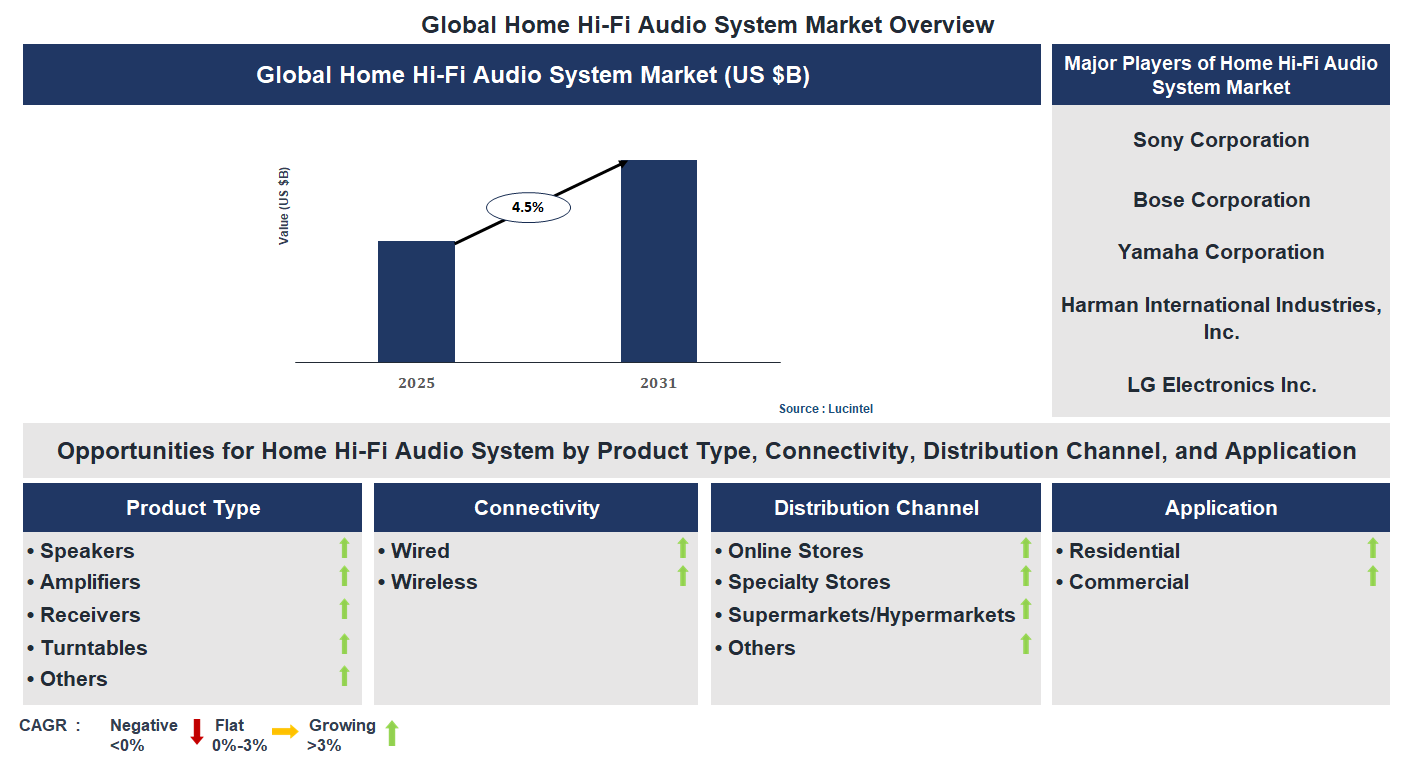
The future of the global home hi-fi audio system market looks promising with opportunities in the residential and commercial markets. The global home hi-fi audio system market is expected to grow with a CAGR of 4.5% from 2025 to 2031. The major drivers for this market are the increasing demand for premium audio experiences, the rising popularity of smart home devices, and the growing adoption of wireless audio systems.• Lucintel forecasts that, within the product type category, speaker is expected to witness the highest growth over the forecast period.
• Within the application category, residential is expected to witness higher growth.
• In terms of region, North America is expected to witness the highest growth over the forecast period. Gain valuable insights for your business decisions with our comprehensive 150+ page report. Sample figures with some insights are shown below.
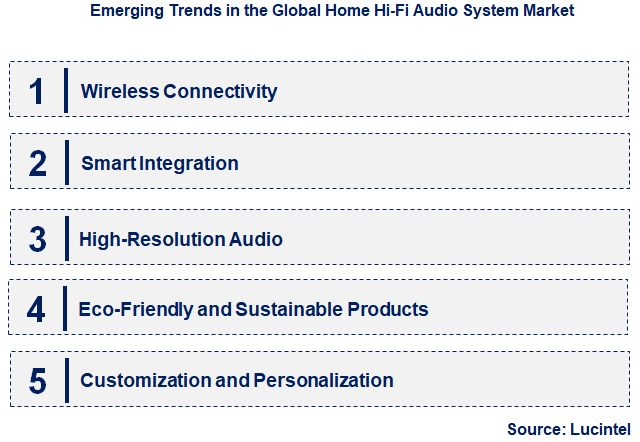
Emerging Trends in the Home Hi-Fi Audio System Market
The home hi-fi audio system market is experiencing rapid evolution driven by technological advancements, changing consumer preferences, and the integration of smart features. As consumers seek higher quality sound experiences and seamless connectivity, manufacturers are innovating to meet these demands. The market is also influenced by the rise of streaming services, smart home integration, and eco-friendly products. These developments are transforming how consumers interact with audio systems, making them more versatile, intelligent, and personalized. Understanding these emerging trends is crucial for stakeholders aiming to stay competitive and capitalize on new opportunities in this dynamic landscape.• Wireless Connectivity: The shift towards wireless technology is revolutionizing the market by enabling easier setup and greater flexibility. Bluetooth and Wi-Fi-enabled systems allow users to stream music directly from smartphones, tablets, and other devices without cumbersome cables. This trend enhances user convenience and supports multi-room audio configurations, creating a more integrated and immersive listening experience. As wireless standards improve, the quality and stability of connections continue to advance, making wireless home hi-fi systems more appealing to consumers seeking simplicity and high performance.
• Smart Integration: The integration of voice assistants and smart home platforms is a significant trend shaping the market. Systems now often come with built-in voice control features, compatible with Alexa, Google Assistant, or Siri, allowing users to operate their audio systems hands-free. This integration enhances user experience by enabling easy control, automation, and customization of audio settings. It also facilitates seamless connectivity with other smart devices, creating a unified home ecosystem. As smart technology becomes more sophisticated, consumers expect their hi-fi systems to be intuitive, responsive, and capable of personalized interactions.
• High-Resolution Audio: The demand for high-resolution audio formats is increasing as consumers seek superior sound quality. Advances in digital audio technology enable the reproduction of music with greater clarity, detail, and depth. Manufacturers are incorporating support for formats like FLAC, DSD, and MQA into their products, appealing to audiophiles and casual listeners alike. This trend drives innovation in speaker design and digital processing, elevating the overall listening experience. As streaming services also adopt high-res formats, the market is witnessing a shift towards premium audio solutions that cater to discerning consumers.
• Eco-Friendly and Sustainable Products: Environmental consciousness is influencing product development in the home hi-fi market. Manufacturers are adopting sustainable materials, energy-efficient components, and eco-friendly manufacturing processes. Consumers are increasingly prioritizing products that reduce carbon footprints and promote sustainability. This trend not only aligns with global environmental goals but also enhances brand reputation and consumer loyalty. The market is witnessing a rise in energy-efficient amplifiers, recyclable speaker enclosures, and products with low power consumption, reflecting a broader shift towards responsible consumption and eco-conscious innovation.
• Customization and Personalization: Consumers now seek tailored audio experiences that reflect their individual preferences. Manufacturers are offering customizable speaker configurations, adjustable sound profiles, and modular systems that can be expanded or modified over time. Smartphone apps and digital interfaces enable users to fine-tune settings, create playlists, and control multiple zones effortlessly. This trend enhances user engagement and satisfaction by providing a more personalized listening environment. As personalization becomes a key differentiator, companies are investing in innovative design and software solutions to meet diverse consumer needs and preferences. In summary, these emerging trends—wireless connectivity, smart integration, high-resolution audio, eco-friendly products, and customization—are fundamentally reshaping the home hi-fi audio system market. They are driving innovation, improving user experience, and aligning products with modern consumer values. As a result, the market is becoming more dynamic, competitive, and focused on delivering high-quality, intelligent, and sustainable audio solutions that cater to evolving lifestyles.
Recent Development in the Home Hi-Fi Audio System Market
The home hi-fi audio system market has experienced significant growth driven by technological advancements, increasing consumer demand for high-quality audio, and the integration of smart features. As consumers seek immersive sound experiences for entertainment and daily use, manufacturers are innovating to meet these evolving preferences. Recent developments reflect a shift towards wireless connectivity, enhanced sound quality, and smart integration, shaping the future landscape of the market. These trends are not only expanding market size but also redefining consumer expectations and competitive strategies within the industry.• Wireless Connectivity Advancements: The adoption of Bluetooth 5.0 and Wi-Fi 6 has improved wireless range, stability, and data transfer speeds, enabling seamless multi-room audio experiences. This development enhances user convenience and flexibility, encouraging more consumers to upgrade to wireless systems. It also fosters the growth of smart home integration, making audio systems more versatile and user-friendly.
• Integration of Smart Features: The incorporation of voice assistants like Alexa, Google Assistant, and Siri into home audio systems has revolutionized user interaction. Consumers now enjoy hands-free control, personalized settings, and automation capabilities, increasing the appeal of advanced Hi-Fi systems. This integration boosts sales and encourages manufacturers to develop more intelligent, connected products.
• Enhanced Sound Quality and Design: Innovations in speaker technology, such as high-resolution audio support and advanced driver materials, have significantly improved sound clarity and fidelity. Sleek, modern designs with customizable aesthetics appeal to a broader consumer base. These improvements elevate the overall user experience and position high-end systems as premium entertainment solutions.
• Rise of Compact and Portable Systems: The market has seen a surge in compact, portable Hi-Fi systems that offer high-quality sound in smaller sizes. Battery-powered options and lightweight designs cater to consumers seeking mobility and convenience. This trend expands market reach, especially among younger demographics and outdoor enthusiasts.
• Market Expansion through Strategic Collaborations: Major brands are forming partnerships with content providers, technology firms, and retail channels to enhance product offerings and distribution. Collaborations with streaming services and smart home platforms increase product visibility and consumer engagement. These strategies accelerate market penetration and foster innovation. In summary, these recent developments are transforming the home hi-fi audio system market by enhancing user experience, expanding product offerings, and integrating smart technologies. The market is becoming more competitive, innovative, and consumer-centric, leading to increased adoption and revenue growth. As these trends continue, the industry is poised for sustained expansion and technological evolution.
Strategic Growth Opportunities in the Home Hi-Fi Audio System Market
The home hi-fi audio system market is experiencing rapid evolution driven by technological advancements, changing consumer preferences, and the increasing demand for high-quality audio experiences. As consumers seek immersive sound environments, manufacturers are exploring innovative applications and expanding their product offerings. This growth is further fueled by the rise of smart home integration, wireless connectivity, and personalized audio solutions. These developments present significant opportunities across various applications, shaping the future landscape of the market. Companies that capitalize on these trends can gain competitive advantages and meet the growing demand for premium audio experiences in residential settings.• Residential Entertainment Systems: Expansion of high-fidelity audio systems in homes enhances the overall entertainment experience. Consumers are investing in sophisticated setups for music, movies, and gaming, driving demand for advanced speakers, amplifiers, and integrated systems. This growth improves user satisfaction and boosts market revenue.
• Smart Home Integration: Incorporating hi-fi audio systems with smart home devices creates seamless, voice-controlled environments. This integration offers convenience and personalized experiences, attracting tech-savvy consumers and expanding market reach. It also encourages the development of multifunctional audio solutions.
• Wireless and Portable Audio Devices: The shift towards wireless, portable speakers and headphones increases flexibility and ease of use. These devices cater to on-the-go lifestyles, expanding the market beyond traditional fixed systems. Their popularity boosts sales and encourages innovation in battery life and connectivity.
• Commercial and Hospitality Applications: High-quality audio systems are increasingly adopted in hotels, restaurants, and retail spaces to enhance ambiance and customer experience. This application segment offers lucrative growth opportunities, encouraging manufacturers to develop scalable, customizable solutions.
• Custom Home Theater Installations: Tailored home theater setups with premium hi-fi audio components are gaining popularity among consumers seeking cinematic experiences at home. This trend drives demand for specialized equipment and professional installation services, fostering market expansion. In summary, these key growth opportunities are significantly impacting the home hi-fi audio system market by broadening application scopes, enhancing consumer experiences, and fostering innovation. As these trends continue, the market is poised for sustained growth, driven by technological integration and evolving lifestyle preferences.
Home Hi-Fi Audio System Market Driver and Challenges
The home hi-fi audio system market is influenced by a variety of technological, economic, and regulatory factors that shape its growth and development. Rapid advancements in audio technology, increasing consumer demand for high-quality sound experiences, and the proliferation of smart home integration are key drivers. Conversely, challenges such as high product costs, rapid technological obsolescence, and regulatory standards for electronic devices pose significant hurdles. Understanding these drivers and challenges is essential for stakeholders to navigate the evolving landscape effectively and capitalize on emerging opportunities. The factors responsible for driving the home hi-fi audio system market include:-• Technological Innovation: The continuous evolution of audio technology, including wireless connectivity, smart integration, and high-resolution sound, enhances user experience and fuels market growth. Consumers seek advanced features like voice control and seamless device integration, prompting manufacturers to innovate rapidly. This technological progress not only attracts new customers but also encourages existing users to upgrade, thereby expanding the market. Additionally, advancements in miniaturization and battery technology enable portable and versatile systems, broadening application scenarios and increasing market penetration.
• Rising Consumer Preference for Premium Audio: Increasing disposable incomes and a growing appreciation for high-fidelity sound quality drive consumers toward premium home audio systems. The desire for immersive entertainment experiences, including music, movies, and gaming, encourages investment in sophisticated audio setups. This trend is further supported by the popularity of streaming services offering high-quality content, which incentivizes consumers to upgrade their audio systems to match content quality. As a result, the demand for premium, feature-rich home Hi-Fi systems continues to rise, boosting market growth.
• Growth of Smart Home Ecosystems: The integration of home audio systems with smart home devices and IoT platforms is a significant growth driver. Consumers increasingly prefer interconnected devices that can be controlled via smartphones or voice assistants. This trend promotes the adoption of multi-room audio systems and voice-controlled speakers, expanding the market beyond traditional setups. Manufacturers are developing compatible products that seamlessly integrate with other smart home devices, creating a comprehensive ecosystem that enhances convenience and user experience, thereby driving market expansion.
• Increasing Adoption of Wireless and Streaming Technologies: Wireless connectivity options such as Bluetooth, Wi-Fi, and AirPlay have revolutionized how consumers access and enjoy audio content. The convenience of wireless streaming eliminates the need for cumbersome cables, making systems more user-friendly and versatile. The proliferation of streaming platforms like Spotify, Apple Music, and Tidal further fuels demand for compatible audio systems that support high-quality streaming. This shift towards wireless and streaming technologies not only enhances user experience but also opens new revenue streams for manufacturers through software and subscription services. The challenges in the home hi-fi audio system market are:
• High Product Costs: Premium audio systems often involve significant investment, which can be a barrier for many consumers. The cost of advanced components, wireless technology, and smart features increases the retail price, limiting accessibility to a broader audience. This high cost restricts market growth, especially in price-sensitive regions, and encourages consumers to opt for more affordable alternatives or second-hand systems. Manufacturers face the challenge of balancing feature-rich offerings with affordability to expand their customer base.
• Rapid Technological Obsolescence: The fast pace of technological innovation leads to frequent product updates and obsolescence, pressuring consumers to upgrade regularly. This cycle can deter initial purchases and create a sense of uncertainty about product longevity. Manufacturers must continuously innovate to stay competitive, which can increase R&D costs and complicate inventory management. Consumers may also hesitate to invest in high-end systems fearing they will quickly become outdated, impacting overall market stability.
• Regulatory and Environmental Standards: Increasing regulations concerning electronic waste, energy efficiency, and safety standards pose compliance challenges for manufacturers. Stricter regulations can lead to higher production costs and limit design flexibility. Additionally, environmental concerns about electronic waste disposal and the use of hazardous materials require companies to adopt sustainable practices, which may involve significant investment. Navigating these regulatory landscapes is crucial for market players to avoid penalties and maintain brand reputation. In summary, the home hi-fi audio system market is driven by technological advancements, consumer preferences for premium and wireless audio, and the integration with smart home ecosystems. However, high costs, rapid obsolescence, and regulatory challenges pose significant hurdles. These factors collectively influence market dynamics, requiring manufacturers to innovate strategically and adapt to evolving consumer and regulatory demands. Overall, the markets growth prospects remain promising, provided stakeholders effectively address these challenges and leverage emerging opportunities.
List of Home Hi-Fi Audio System Companies
Companies in the market compete on the basis of product quality offered. Major players in this market focus on expanding their manufacturing facilities, R&D investments, infrastructural development, and leverage integration opportunities across the value chain. With these strategies home hi-fi audio system companies cater increasing demand, ensure competitive effectiveness, develop innovative products & technologies, reduce production costs, and expand their customer base. Some of the home hi-fi audio system companies profiled in this report include-• Sony Corporation
• Bose Corporation
• Yamaha Corporation
• Harman International Industries, Inc.
• LG Electronics Inc.
• Samsung Electronics Co., Ltd.
• Pioneer Corporation
• Denon
• Onkyo Corporation
• Onkyo Corporation
Home Hi-Fi Audio System Market by Segment
The study includes a forecast for the global home hi-fi audio system market by product type, connectivity, distribution channel, application, and region.Home Hi-Fi Audio System Market by Product Type [Value from 2019 to 2031]:
• Speakers
• Amplifiers
• Receivers
• Turntables
• Others
Home Hi-Fi Audio System Market by Connectivity [Value from 2019 to 2031]:
• Wired
• Wireless
Home Hi-Fi Audio System Market by Distribution Channel [Value from 2019 to 2031]:
• Online Stores
• Specialty Stores
• Supermarkets/Hypermarkets
• Others
Home Hi-Fi Audio System Market by Application [Value from 2019 to 2031]:
• Residential
• Commercial
Home Hi-Fi Audio System Market by Region [Value from 2019 to 2031]:
• North America
• Europe
• Asia Pacific
• The Rest of the World
Country Wise Outlook for the Home Hi-Fi Audio System Market
The home hi-fi audio system market has experienced significant growth driven by technological advancements, increasing consumer demand for high-quality audio experiences, and the integration of smart features. As consumers seek immersive sound environments, manufacturers are innovating with wireless connectivity, voice control, and premium sound quality. The market dynamics vary across regions, influenced by economic factors, technological adoption, and cultural preferences. Recent developments reflect a shift towards more sophisticated, user-friendly, and connected audio solutions, with a focus on sustainability and eco-friendly products. These trends are shaping the competitive landscape and influencing future growth trajectories in key markets worldwide.• United State: United States, the market has seen a surge in smart home integration, with major brands launching voice-controlled and wireless systems, driven by consumer demand for convenience and high-quality sound. There is also a growing trend towards premium, customizable audio setups, supported by advancements in wireless technology and streaming services. Additionally, eco-friendly and energy-efficient products are gaining popularity, aligning with sustainability initiatives.
• China: Chinas market is rapidly expanding, fueled by increasing urbanization and rising disposable incomes. Local brands are innovating with affordable yet high-performance systems, while international companies are expanding their presence. The adoption of smart, connected devices is accelerating, with a focus on integrating AI and IoT features. E-commerce platforms are playing a crucial role in distribution, making high-end audio systems more accessible to a broader consumer base.
• Germany: Germanys market emphasizes high-quality, durable, and eco-friendly products, reflecting the regions strong environmental consciousness. There is a notable increase in demand for premium audio systems with advanced features such as multi-room connectivity and high-resolution sound. Manufacturers are investing in sustainable materials and energy-efficient technologies, aligning with European Union regulations and consumer preferences for environmentally responsible products.
• India: Indias market is witnessing rapid growth due to rising middle-class income levels and increasing urbanization. Consumers are increasingly adopting wireless and Bluetooth-enabled systems for their convenience and affordability. Local brands are gaining ground by offering cost-effective solutions, while international brands are expanding their product portfolios. The market is also seeing a shift towards compact, stylish designs suitable for smaller living spaces.
• Japan: Japans market is characterized by a strong preference for high-fidelity sound and innovative features. Consumers are adopting smart home-compatible systems, with a focus on seamless integration and user experience. There is a growing interest in premium, audiophile-grade products, supported by technological advancements in sound quality and connectivity. Sustainability and energy efficiency are also becoming important considerations for Japanese consumers.

Features of the Global Home Hi-Fi Audio System Market
Market Size Estimates: Home hi-fi audio system market size estimation in terms of value ($B). Trend and Forecast Analysis: Market trends (2019 to 2024) and forecast (2025 to 2031) by various segments and regions. Segmentation Analysis: Home hi-fi audio system market size by various segments, such as by product type, connectivity, distribution channel, application, and region in terms of value ($B). Regional Analysis: Home hi-fi audio system market breakdown by North America, Europe, Asia Pacific, and Rest of the World. Growth Opportunities: Analysis of growth opportunities in different product types, connectivities, distribution channels, applications, and regions for the home hi-fi audio system market. Strategic Analysis: This includes M&A, new product development, and competitive landscape of the home hi-fi audio system market. Analysis of competitive intensity of the industry based on Porter’s Five Forces model.
FAQ
Q1. What is the growth forecast for home hi-fi audio system market? Answer: The global home hi-fi audio system market is expected to grow with a CAGR of 4.5% from 2025 to 2031. Q2. What are the major drivers influencing the growth of the home hi-fi audio system market? Answer: The major drivers for this market are the increasing demand for premium audio experiences, the rising popularity of smart home devices, and the growing adoption of wireless audio systems. Q3. What are the major segments for home hi-fi audio system market? Answer: The future of the home hi-fi audio system market looks promising with opportunities in the residential and commercial markets. Q4. Who are the key home hi-fi audio system market companies? Answer: Some of the key home hi-fi audio system companies are as follows:• Sony Corporation
• Bose Corporation
• Yamaha Corporation
• Harman International Industries, Inc.
• LG Electronics Inc.
• Samsung Electronics Co., Ltd.
• Pioneer Corporation
• Denon
• Onkyo Corporation
• Onkyo Corporation Q5. Which home hi-fi audio system market segment will be the largest in future? Answer: Lucintel forecasts that, within the product type category, speaker is expected to witness the highest growth over the forecast period. Q6. In home hi-fi audio system market, which region is expected to be the largest in next 5 years? Answer: In terms of region, North America is expected to witness the highest growth over the forecast period. Q7. Do we receive customization in this report? Answer: Yes, Lucintel provides 10% customization without any additional cost.
Table of Contents
List of Figures
List of Tables
Methodology
- In-depth interviews of the major players in this market
- Detailed secondary research from competitors’ financial statements and published data
- Extensive searches of published works, market, and database information pertaining to industry news, company press releases, and customer intentions
- A compilation of the experiences, judgments, and insights of Lucintel’s professionals, who have analyzed and tracked this market over the years.


Buy Now
Choose a license that fits your team. Instant PDF delivery.
Prices exclude taxes. Instant delivery. Custom licensing available on request.
Key Questions
- • What are some of the most promising, high-growth opportunities for the home hi-fi audio system market by product type (speakers, amplifiers, receivers, turntables, and others), connectivity (wired and wireless), distribution channel (online stores, specialty stores, supermarkets/hypermarkets, and others), application (residential and commercial), and region (North America, Europe, Asia Pacific, and the Rest of the World)?
- • Which segments will grow at a faster pace and why?
- • Which region will grow at a faster pace and why?
- • What are the key factors affecting market dynamics? What are the key challenges and business risks in this market?
- • What are the business risks and competitive threats in this market?
- • What are the emerging trends in this market and the reasons behind them?
- • What are some of the changing demands of customers in the market?
- • What are the new developments in the market? Which companies are leading these developments?
- • Who are the major players in this market? What strategic initiatives are key players pursuing for business growth?
- • What are some of the competing products in this market and how big of a threat do they pose for loss of market share by material or product substitution?
- • What M&A activity has occurred in the last 5 years and what has its impact been on the industry? For any questions related to Home Hi-Fi Audio System Market, Home Hi-Fi Audio System Market Size, Home Hi-Fi Audio System Market Growth, Home Hi-Fi Audio System Market Analysis, Home Hi-Fi Audio System Market Report, Home Hi-Fi Audio System Market Share, Home Hi-Fi Audio System Market Trends, Home Hi-Fi Audio System Market Forecast, Home Hi-Fi Audio System Companies, write Lucintel analyst at email: helpdesk@lucintel.com. We will be glad to get back to you soon.


