
Market Report · July 24, 2026

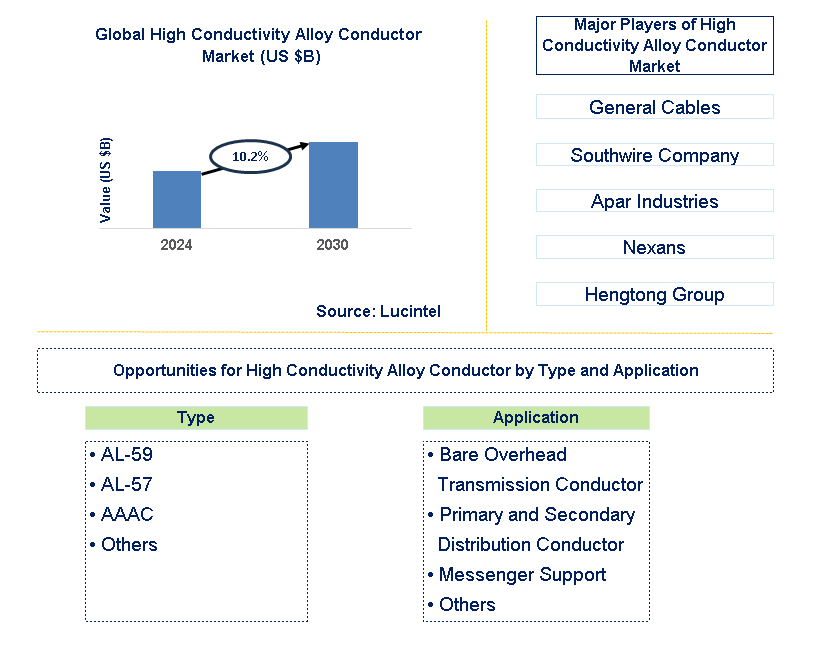
Key data points: The growth forecast = 10.2% annually for the next 6 years. Scroll below to get more insights. This market report covers trends, opportunities, and forecasts in the global high conductivity alloy conductor market to 2030 by type (AL-59, AL-57, AAAC, and others), application (bare overhead transmission conductor, primary and secondary distribution conductor, messenger support, and others), and region (North America, Europe, Asia Pacific, and the Rest of the World)
We'll send your sample report shortly.
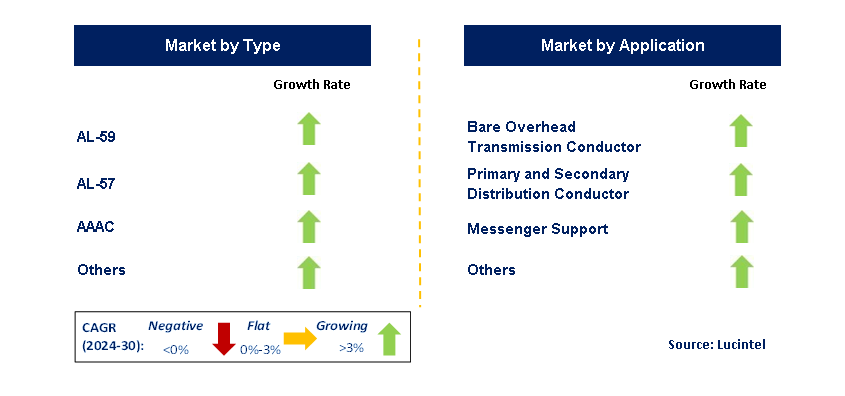
• Lucintel forecasts that, within the type category, the AL 59 is expected to witness the highest growth over the forecast period.
• Within the application category, bare overhead transmission conductor is expected to witness the highest growth.
• In terms of regions, APAC will remain the largest region over the forecast period. Gain valuable insights for your business decisions with our comprehensive 150+ page report.
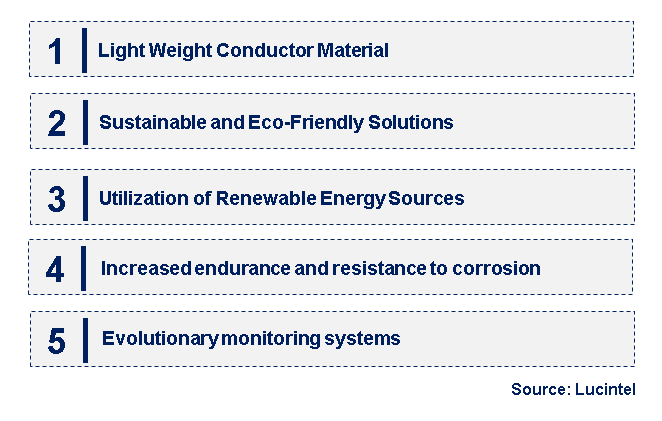
• Light Weight Conductor Material: A growing need for light weight conductor material arises as industries seek to decrease installation costs to achieve greater efficiency. Alloys developed with reduced weight but increased conductivity have become essential for long-distance transmission.
• Sustainable and Eco-Friendly Solutions: Sustainability is a future trend, and manufacturers are focusing on conducting research to develop eco-friendly conductors. The utilization of recycled materials and reduced carbon footprints in the manufacturing process is turning into a critical success factor in the market.
• Utilization of Renewable Energy Sources: Renewable energy is further enabling the growth in the use of high conductivity alloy conductors for solar and wind applications. These conductors are designed for increased capacities and support efficient transmission of power from decentralized sources.
• Increased Endurance and Resistance to Corrosion: Manufacturers are aiming to enhance these alloy conductors to be more durable and resistant to corrosion. This ensures longer lifespans and lower maintenance costs in hostile environmental conditions.
• Evolutionary Monitoring Systems: It is common practice to include advanced monitoring technologies in conductor systems. Smart sensors that provide real-time data on conductor performance aid in optimizing maintenance schedules and enhancing the overall reliability of the grid. In brief, these trends are shaping the high conductivity alloy conductor market to promote innovation, efficiency, sustainability, and reliability in energy transmission.
• Introduction of New Alloy Compositions: These new alloy compositions, including aluminum-lithium and copper-aluminum alloys, are intended to enhance conductivity and reduce weight. Application-specific performance improvements are expected in several areas, especially in renewable energy transportation.
• Infrastructural Modernization Investments: Many countries are making significant investments in modernizing their electrical infrastructures. Higher conductivity alloys reduce transmission losses directly and improve overall efficiency in upgrading existing conductor systems.
• Government Policies for Renewables: Policies for renewable energy initiated by governments help stimulate demand for advanced conductors. High conductivity alloy solutions fulfill the requirement for integrating solar and wind power into traditional grids, thereby facilitating cleaner energy transitions.
• Research and Development Work: Greater R&D efforts are focused on researching more efficient and durable conductor materials. Collaborative efforts between academia and industry to implement these new technologies have accelerated performance improvements while reducing environmental impact.
• Emerging Smart Conductor Technologies: The smartening of conductor systems is gaining momentum. Sensor technology-based conductors increase the likelihood of performance assessment for preemptive and timely maintenance, thus ensuring better dependability. This is leaving a significant impact on promoting efficiency, sustainability, and assurance in energy distribution within the high conductivity alloy conductor market.
• Renewable Energy Projects: High conductivity alloy conductors hold important future opportunities as demand for renewable energy grows. Companies can provide specialized solutions for solar and wind applications, as each project has specific requirements in that context.
• Implementation of Smart Grid: The increasing advocacy for smart grid technology positions it as one of the leading growth sectors. Conductors with advanced monitoring systems can improve efficiency and reliability, making them essential tools for energy distribution in the modern world.
• Urban Infrastructure Development: This trend opens opportunities for upgrading existing electrical infrastructure using high conductivity alloy conductors. Stronger and more efficient connections can meet the growing energy needs of rapidly urbanizing cities.
• Rural Electrification: Various regions worldwide are engaging in rural electrification schemes, creating demand for affordable solutions based on high conductivity alloys. These alloys can ensure that power supply remains stable, fostering economic progress in these areas.
• Transport Sector Advancements: Increased electrification in transportation, particularly in rail and electric vehicles, will drive growth for highly conductive alloy conductors in these sectors to enhance efficiency and performance with suitable solutions. Strategic growth opportunities highlighted in this chapter signal potential growth in the high conductivity alloy conductor market as manufacturers adapt their products to changing energy use requirements and infrastructure needs.
• Global Energy Demand Rise: Increasing energy demands worldwide are driving demand for high conductivity alloy conductors. This drive is primarily fueled by countries aiming to enhance their energy infrastructures, creating a growing market for efficient transmission solutions.
• Shift Toward Renewable Energy: Advanced conductors are in higher demand due to trends in renewable energy sources. High conductivity alloy solutions for integrating solar and wind energy into the mainstream power grid have become essential.
• Technological Changes: Improvements in materials and manufacturing processes are enhancing high conductivity alloy conductors. These advancements result in the production of better, lighter, and more durable conductors. Challenges in the high conductivity alloy conductor market include:
• Market Competition: The market for high conductivity alloy conductors is highly competitive, with numerous participants. Manufacturers may face challenges from aggressive pricing and continuous innovation.
• Supply Chain Disruptions: Global supply chains have been affected by geopolitical tensions and health crises. This can potentially disrupt the availability of critical raw materials necessary for conductor production, impacting overall market stability.
• Regulatory Compliance: Manufacturers encounter difficulties entering new markets due to complex regulatory environments. Specific expertise and resources are required to comply with safety and environmental regulations. The growth drivers for the high conductivity alloy conductor market encompass a range of challenges, including competition and the complexities associated with regulatory compliance. The market's future expansion looks promising as it adapts to changing demands in the energy sector alongside advancing technologies.
• General Cables
• Southwire Company
• Apar Industries
• Nexans
• Hengtong Group
• LS Cables
• K M Cables and Conductors
• Tongda Cable
• Saudi Cable Company
• Sumitomo Electric Industries
• AL-59
• AL-57
• AAAC
• Others
• Bare Overhead Transmission Conductor
• Primary and Secondary Distribution Conductor
• Messenger Support
• Others
• North America
• Europe
• Asia Pacific
• The Rest of the World
• United States: The U.S. is enhancing energy transmission efficiency by developing improved conductivity in alloy conductors. Among the most promising developments, aluminum-lithium alloys could significantly enhance conductivity while maintaining low weight. Federal initiatives to upgrade infrastructure seek to incorporate renewable energy, thereby increasing demand for high-capacity advanced conductors.
• China: China leads the world in the production and innovation of high conductivity alloy conductors, particularly in developing high-performance copper-aluminum alloys. Investments in China's renewable energy grid have spurred significant advancements in conductor technology, improving transmission efficiency and reducing losses. This focus aligns with China’s commitment to large-scale renewable projects to meet growing energy demands.
• Germany: Sustainable goals increasingly drive the German high conductivity alloy conductor market. Conductors that combine high performance with minimal ecological footprints are currently in focus. Innovations include enhanced corrosion-resistant alloys designed for renewable energy applications, supporting the country’s ambitious energy transition strategy and helping it meet stringent regulatory standards.
• India: The high conductivity alloy conductor market in India is developing with a focus on electrification and infrastructure improvement. The application of cost-effective, high-performance alloys will reduce losses in power distribution networks.
• Japan: Japan concentrates on high conductivity alloy conductors to improve energy efficiency and reliability. Advanced developments focus on creating lightweight, rugged, and extreme-weather-resistant conductors, which are essential for disaster resilience. As the country moves toward renewable energy, novel alloy compositions are being explored to enhance transmission capabilities across a wide range and facilitate this transformation.


• General Cables
• Southwire Company
• Apar Industries
• Nexans
• Hengtong Group
• LS Cables
• K M Cables and Conductors
• Tongda Cable
• Saudi Cable Company
• Sumitomo Electric Industries Q5. Which high conductivity alloy conductor market segment will be the largest in future? Answer: Lucintel forecasts that AL 59 is expected to witness the highest growth over the forecast period. Q6. In high conductivity alloy conductor market, which region is expected to be the largest in next 5 years? Answer: APAC will remain the largest region over the forecast period. Q.7 Do we receive customization in this report? Answer: Yes, Lucintel provides 10% customization without any additional cost.


Choose a license that fits your team. Instant PDF delivery.
Prices exclude taxes. Instant delivery. Custom licensing available on request.
Market Report · July 24, 2026
Market Report · July 20, 2026
Market Report · July 20, 2026
Trusted partner for strategic intelligence and business growth


Receive a complimentary market analysis tailored to your industry. Our analysts will identify key growth opportunities and competitive dynamics specific to your business.

Market size, growth rate, and key trend analysis for your specific sector.

Top competitor positioning and market share analysis.

Strategic recommendations backed by data-driven insights.
Get curated market intelligence and competitive moves straight to your inbox.
By subscribing, you agree to receive our monthly insights. Unsubscribe anytime.
Receive a complimentary market analysis tailored to your industry. Our analysts will identify key growth opportunities and competitive dynamics specific to your business.
Market size, growth rate, and key trend analysis for your specific sector.
Top competitor positioning and market share analysis.
Strategic recommendations backed by data-driven insights.
Get curated market intelligence, emerging trends, and competitive moves straight to your inbox each month.
By subscribing, you agree to receive our monthly insights. Unsubscribe anytime.
We'll send your sample report shortly.