
Report Feature
Heparin Market Trends and Forecast
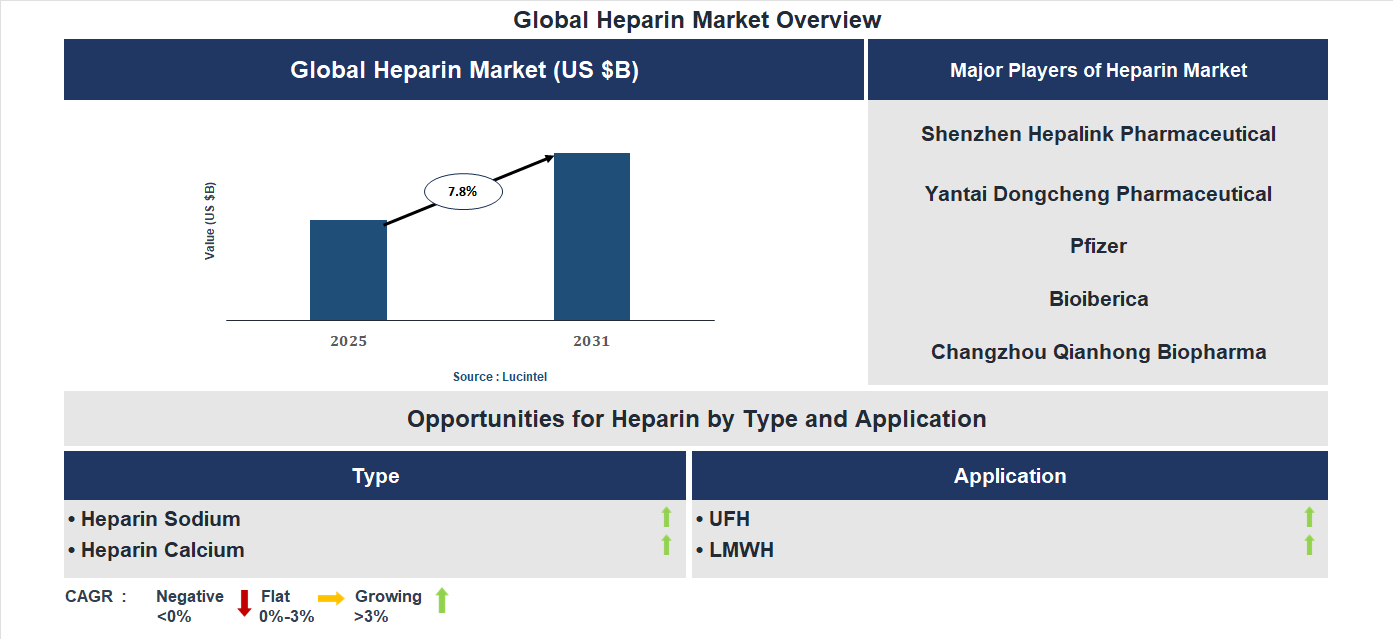
The future of the global heparin market looks promising with opportunities in the UFH and LMWH markets. The global heparin market is expected to grow with a CAGR of 7.8% from 2025 to 2031. The major drivers for this market are the rising prevalence of cardiovascular disorders & thrombotic condition, the growing use of heparin in dialysis & renal care treatment, and the increasing use of heparin in pharmaceutical research & drug formulation.• Lucintel forecasts that, within the type category, heparin sodium is expected to witness higher growth over the forecast period.
• Within the application category, LMWH is expected to witness higher growth.
• In terms of region, APAC is expected to witness the highest growth over the forecast period. Gain valuable insights for your business decisions with our comprehensive 150+ page report. Sample figures with some insights are shown below.
Emerging Trends in the Heparin Market
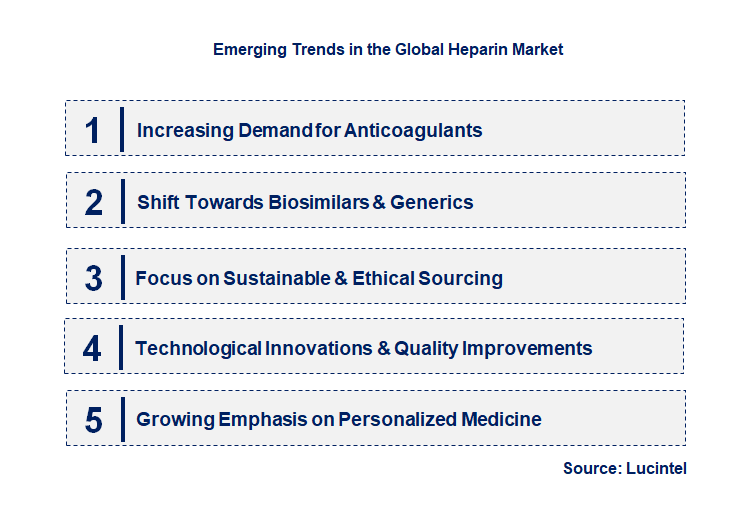
The heparin market is experiencing a significant transformation driven by technological advancements, regulatory changes, and evolving healthcare needs. As the demand for anticoagulants increases due to rising cardiovascular diseases and surgical procedures, market players are focusing on innovation, quality assurance, and sustainable sourcing. Additionally, the shift towards biosimilar products and personalized medicine is shaping the competitive landscape. These trends are not only expanding market opportunities but also prompting stakeholders to adapt strategies for better patient outcomes and regulatory compliance. Understanding these emerging trends is crucial for businesses aiming to capitalize on the growing demand and navigate the complexities of the heparin market effectively.• Increasing demand for anticoagulants: The rising prevalence of cardiovascular diseases and the growing number of surgeries worldwide are driving the demand for heparin. As an essential anticoagulant, heparin is widely used in hospitals and clinics to prevent blood clots during surgeries and dialysis. This surge in medical procedures and chronic disease management is expected to sustain high demand levels, prompting manufacturers to scale up production and innovate to meet the needs of healthcare providers and patients.
• Shift towards biosimilars and generics: With patent expirations and cost-containment pressures, the market is witnessing a shift towards biosimilar and generic heparin products. These alternatives offer comparable efficacy at lower prices, making treatment more accessible. Regulatory agencies are establishing guidelines for biosimilar approval, which encourages market entry and competition. This trend is expected to reduce overall treatment costs, increase market penetration, and provide healthcare providers with more options, ultimately improving patient access to essential anticoagulants.
• Focus on sustainable and ethical sourcing: The sourcing of heparin, traditionally derived from animal tissues, is under scrutiny due to ethical concerns, supply chain vulnerabilities, and contamination risks. Companies are exploring sustainable sourcing methods, including plant-based or recombinant technologies, to ensure safety and ethical standards. This shift aims to reduce dependency on animal sources, improve product consistency, and meet regulatory and consumer demands for ethically produced pharmaceuticals, thereby enhancing market credibility and resilience.
• Technological innovations and quality improvements: Advances in extraction, purification, and manufacturing processes are enhancing the quality, safety, and efficacy of heparin products. Innovations such as automated manufacturing and real-time quality monitoring are reducing contamination risks and ensuring compliance with stringent regulatory standards. These technological improvements are crucial for maintaining product integrity, minimizing adverse events, and gaining regulatory approvals, which collectively bolster market confidence and facilitate global expansion.
• Growing emphasis on personalized medicine: The trend towards personalized healthcare is influencing the heparin market, with research focusing on tailored anticoagulant therapies based on genetic and clinical profiles. This approach aims to optimize dosing, reduce adverse effects, and improve treatment outcomes. The development of diagnostic tools and biomarkers is supporting this shift, enabling clinicians to select the most appropriate heparin formulations for individual patients. Personalized medicine is expected to enhance patient safety, increase treatment efficacy, and open new avenues for market growth through targeted therapies. In summary, these emerging trends are reshaping the heparin market by fostering innovation, improving safety and accessibility, and aligning products with ethical and personalized healthcare standards. As these developments continue, they will drive market growth, enhance competitive dynamics, and ultimately improve patient care worldwide.
Recent Development in the Heparin Market
The heparin market has experienced significant changes driven by technological advancements, regulatory updates, and evolving healthcare needs. As anticoagulants remain critical in managing thrombotic disorders, recent developments are shaping the market landscape, influencing supply chains, product innovation, and regulatory frameworks. These changes are also impacting pricing strategies and market competition, prompting stakeholders to adapt swiftly. The following key developments highlight the current trajectory of the heparin market, reflecting its dynamic nature and the ongoing efforts to improve safety, efficacy, and accessibility.• Regulatory Reforms: Enhanced safety standards and stricter approval processes have been implemented, ensuring higher quality and reducing contamination risks. These reforms have led to increased compliance costs but improved product reliability, boosting consumer confidence and market stability.
• Supply Chain Diversification: To mitigate risks associated with reliance on a few sources, companies are diversifying raw material suppliers and manufacturing locations. This development enhances supply resilience, reduces shortages, and stabilizes prices amid geopolitical and environmental uncertainties.
• Technological Innovations: Advances in extraction and purification techniques have improved the purity and safety of heparin products. These innovations have resulted in more effective anticoagulants with fewer side effects, expanding their clinical applications and market reach.
• Market Expansion in Emerging Economies: Growing healthcare infrastructure and rising prevalence of thrombotic conditions in emerging markets have driven increased demand. Companies are entering these regions with tailored products, fostering market growth and increasing accessibility.
• Biotech and Synthetic Alternatives: The development of synthetic and recombinant heparin products offers alternatives to animal-derived sources, addressing safety concerns and supply limitations. This shift is influencing market competition and encouraging innovation in anticoagulant therapies. In summary, these developments are collectively transforming the heparin market by enhancing product safety, diversifying supply sources, expanding geographic reach, and fostering innovation. As a result, the market is becoming more resilient, competitive, and capable of meeting the evolving needs of global healthcare systems.
Strategic Growth Opportunities in the Heparin Market
The heparin market is experiencing significant growth driven by increasing demand in healthcare, pharmaceuticals, and medical research sectors. Advances in biotechnology and a rising prevalence of blood-clotting disorders are fueling innovation and expansion. Key applications such as anticoagulation therapy, surgical procedures, dialysis, and research are presenting new opportunities for market players. As the healthcare landscape evolves, companies are focusing on developing safer, more effective heparin products and expanding their applications. These developments are shaping the future of the market, offering substantial growth potential across various sectors and regions.• Anticoagulation Therapy: Expanding use in preventing and treating blood clots is a primary growth driver. The rising incidence of cardiovascular diseases and thromboembolic disorders increases demand for heparin, making it a critical component in anticoagulant therapy. Innovations in low-molecular-weight heparin (LMWH) formulations are enhancing safety and efficacy, further boosting adoption. This growth improves patient outcomes and reduces healthcare costs, solidifying heparin’s role in modern medicine.
• Surgical and Postoperative Applications: Heparin’s use in surgeries, especially cardiovascular and orthopedic procedures, is expanding. Its role in preventing clot formation during surgeries and post-surgical recovery is vital. The development of specialized formulations tailored for surgical use enhances safety and effectiveness. This application growth supports the increasing volume of complex surgeries worldwide, contributing to market expansion and improved surgical outcomes.
• Dialysis and Renal Care: The rising prevalence of chronic kidney disease (CKD) and end-stage renal disease (ESRD) is driving demand for heparin in dialysis procedures. Heparin prevents clotting in dialysis circuits, ensuring efficient treatment. Innovations in heparin formulations that reduce bleeding risks are further propelling this segment. As CKD cases increase globally, this application is expected to remain a significant growth area, supporting better patient management.
• Research and Development: The expanding scope of biomedical research is creating new opportunities for heparin applications. Its use in cell culture, drug delivery systems, and regenerative medicine is growing. Advances in biotechnology are enabling the development of novel heparin derivatives with improved properties. This segment not only supports new therapeutic innovations but also enhances the overall market by fostering product diversification and technological progress.
• Emerging Markets and Regional Expansion: Developing regions such as Asia-Pacific and Latin America are witnessing increased healthcare infrastructure investments and rising disease prevalence. Market players are expanding distribution channels and establishing local manufacturing facilities to meet regional demand. This regional growth enhances market accessibility and affordability, driving overall market expansion. The increased focus on healthcare in these regions presents substantial opportunities for long-term growth. In summary, these key growth opportunities across applications are significantly impacting the heparin market by driving innovation, expanding usage, and increasing regional penetration. The evolving landscape is fostering a more dynamic, competitive, and resilient market, poised for sustained growth in the coming years.
Heparin Market Driver and Challenges
The heparin market is influenced by a variety of technological, economic, and regulatory factors that shape its growth and development. Advances in biotechnology and manufacturing processes have improved product quality and safety, while economic factors such as increasing healthcare expenditure and aging populations drive demand. Regulatory frameworks ensure safety and efficacy but can also pose barriers to market entry and innovation. Additionally, global health initiatives and the prevalence of conditions requiring anticoagulants further impact market dynamics. Understanding these drivers and challenges is essential for stakeholders to navigate the evolving landscape and capitalize on opportunities while addressing potential obstacles. The factors responsible for driving the heparin market include:-• Technological Advancements: The development of recombinant and low-molecular-weight heparins has revolutionized treatment options, offering improved safety profiles and ease of administration. Innovations in extraction and purification processes have enhanced product purity and reduced contamination risks, boosting confidence among healthcare providers. These technological improvements have expanded the market by enabling more effective and safer therapies, especially for patients with complex conditions. As research continues, further innovations are expected to optimize dosing, reduce side effects, and improve patient compliance, thereby sustaining market growth.
• Increasing Prevalence of Thromboembolic Disorders: The rising incidence of conditions such as deep vein thrombosis, pulmonary embolism, and myocardial infarction globally is a significant driver. Aging populations and sedentary lifestyles contribute to higher risk factors, leading to increased demand for anticoagulants like heparin. Healthcare systems are prioritizing early diagnosis and management of these disorders, which directly correlates with increased heparin utilization. This trend is expected to persist, supporting steady market expansion as more patients require effective anticoagulation therapy.
• Growing Adoption of Minimally Invasive Procedures: The shift towards minimally invasive surgeries and interventions, such as catheterizations and angioplasties, necessitates effective anticoagulation management. Heparin is widely used during these procedures to prevent clot formation, making it indispensable in modern surgical practices. The increasing preference for outpatient and day-care surgeries further amplifies demand, as heparin provides a reliable anticoagulant option with predictable effects. This trend enhances the market by integrating heparin into a broader range of medical procedures, promoting its continued use and development.
• Regulatory Approvals and Reimbursement Policies: Stringent regulatory standards ensure the safety, efficacy, and quality of heparin products, fostering trust among healthcare providers and patients. Favorable reimbursement policies in key markets like the US and Europe facilitate access to heparin therapies, encouraging widespread adoption. Regulatory approvals for new formulations and biosimilars also expand market options, driving competition and innovation. However, navigating complex regulatory landscapes can pose challenges for manufacturers, impacting product launches and market penetration.
• Rising Healthcare Expenditure: Increasing healthcare spending worldwide supports the adoption of advanced therapies, including heparin. Governments and private insurers are investing more in diagnostic and treatment facilities, which enhances access to anticoagulant therapies. This economic trend enables healthcare providers to utilize high-quality heparin products, improving patient outcomes. Additionally, the expansion of healthcare infrastructure in emerging markets offers significant growth opportunities, making heparin more accessible to a broader patient population. The challenges facing this Market include:-
• Stringent Regulatory Environment: The complex approval processes and strict safety standards for heparin products can delay market entry and increase costs for manufacturers. Concerns over contamination, such as the 2008 heparin contamination crisis, have led to heightened regulatory scrutiny, requiring extensive testing and validation. These hurdles can hinder innovation and limit the availability of new formulations, impacting overall market growth. Companies must invest heavily in compliance and quality assurance to meet evolving regulatory demands, which can be resource-intensive.
• Risk of Contamination and Adverse Reactions: Heparins manufacturing process involves biological sources, making it susceptible to contamination and variability. The 2008 contamination crisis highlighted the risks associated with animal-sourced heparin, leading to adverse patient reactions and recalls. Ensuring consistent quality and safety remains a significant challenge, necessitating rigorous quality control measures. These issues can undermine confidence among healthcare providers and patients, potentially restricting market expansion and prompting a shift towards synthetic alternatives.
• High Cost and Reimbursement Challenges: Despite its clinical importance, heparin therapy can be expensive, especially newer formulations like low-molecular-weight heparins. Limited reimbursement coverage in some regions restricts patient access and affects market growth. Cost containment pressures from healthcare payers and governments may lead to reduced reimbursement rates, discouraging manufacturers from investing in innovation. Balancing affordability with quality and safety remains a critical challenge for sustaining market growth and ensuring equitable access. In summary, the heparin market is driven by technological innovations, increasing disease prevalence, procedural advancements, and supportive regulatory and economic factors. However, it faces challenges such as regulatory hurdles, contamination risks, and cost issues that could impede growth. Overall, these drivers and challenges collectively shape a dynamic landscape, requiring stakeholders to adapt strategies to capitalize on opportunities while mitigating risks. The markets future will depend on continued innovation, regulatory compliance, and efforts to improve affordability and safety, ensuring sustained growth and improved patient outcomes.
List of Heparin Companies
Companies in the market compete on the basis of product quality offered. Major players in this market focus on expanding their manufacturing facilities, R&D investments, infrastructural development, and leverage integration opportunities across the value chain. With these strategies heparin companies cater increasing demand, ensure competitive effectiveness, develop innovative products & technologies, reduce production costs, and expand their customer base. Some of the heparin companies profiled in this report include-• Shenzhen Hepalink Pharmaceutical
• Yantai Dongcheng Pharmaceutical
• Pfizer
• Bioiberica
• Changzhou Qianhong Biopharma
• Nanjing King-friend Biochemical Pharmaceutical
• Hebei Changshan Biochemical Pharmaceutical
• Qingdao Jiulong Biopharmaceutical
• Opocrin
• Dongying Tiandong Pharmaceutical
Heparin Market by Segment
The study includes a forecast for the global heparin market by type, application, and region.Heparin Market by Type [Value from 2019 to 2031]:
• Heparin Sodium
• Heparin Calcium
Heparin Market by Application [Value from 2019 to 2031]:
• UFH
• LMWH
Heparin Market by Region [Value from 2019 to 2031]:
• North America
• Europe
• Asia Pacific
• The Rest of the World
Country Wise Outlook for the Heparin Market
The heparin market has experienced significant shifts driven by technological advancements, regulatory changes, and evolving healthcare needs across the globe. Countries are focusing on improving product quality, expanding manufacturing capacities, and adopting innovative extraction and purification techniques. The demand for safer, more effective anticoagulants has spurred research and development efforts, especially in response to safety concerns and regulatory scrutiny. Market players are also exploring biosimilar and synthetic alternatives to traditional heparin to meet increasing global demand. These developments reflect a broader trend towards enhanced healthcare solutions and regulatory compliance, shaping the future landscape of the heparin market worldwide. United States: The US heparin market has seen increased regulatory oversight following safety concerns, prompting manufacturers to enhance quality control measures. There is a growing demand for low molecular weight heparin (LMWH) products, driven by their ease of use and safety profile. Innovation in biosimilars and synthetic heparin is gaining momentum, supported by substantial R&D investments. The US also emphasizes compliance with FDA regulations, leading to stricter manufacturing standards. Market players are expanding production capacities and collaborating with biotech firms to develop novel anticoagulants, ensuring a steady supply to meet rising healthcare needs. China: China’s heparin market is rapidly expanding due to increasing healthcare infrastructure and government initiatives to boost domestic pharmaceutical manufacturing. Local companies are investing heavily in advanced extraction and purification technologies to improve product quality. The country is also focusing on developing biosimilar heparin to reduce dependency on imports and lower costs. Regulatory frameworks are evolving to align with international standards, encouraging foreign investment. Additionally, China is becoming a significant exporter of heparin, leveraging its large raw material base and manufacturing capabilities to serve global markets. Germany: Germany remains a key player in the European heparin market, emphasizing high-quality standards and regulatory compliance. The country is at the forefront of research into synthetic and biosimilar heparin, aiming to improve safety and efficacy. German companies are adopting innovative purification techniques and investing in sustainable manufacturing practices. The market is also influenced by stringent EU regulations, which promote product safety and traceability. Collaborations between academia and industry are fostering advancements in anticoagulant therapies, positioning Germany as a leader in developing next-generation heparin products. India: India’s heparin market is witnessing rapid growth driven by increasing demand for affordable healthcare solutions and expanding pharmaceutical manufacturing capabilities. Local companies are focusing on improving extraction processes and quality standards to meet international benchmarks. The government’s initiatives to promote the biotech and pharmaceutical sectors are facilitating market expansion. India is also investing in developing biosimilar heparin to cater to domestic and export markets. The country’s large raw material base and cost-effective manufacturing processes make it a significant player in the global heparin supply chain, with a focus on quality enhancement and regulatory compliance. Japan: Japan’s heparin market is characterized by advanced research and a focus on safety and efficacy. The country is investing in innovative technologies for heparin extraction and purification, aiming to develop safer products. Japanese firms are actively involved in developing biosimilar and synthetic heparin to address safety concerns and regulatory requirements. The market benefits from strong regulatory frameworks and a high level of healthcare infrastructure. Japan is also exploring personalized medicine approaches, integrating heparin therapies with other treatments. These efforts position Japan as a leader in high-quality, innovative anticoagulant solutions within the global market.
Features of the Global Heparin Market
Market Size Estimates: Heparin market size estimation in terms of value ($B). Trend and Forecast Analysis: Market trends (2019 to 2024) and forecast (2025 to 2031) by various segments and regions. Segmentation Analysis: Heparin market size by type, application, and region in terms of value ($B). Regional Analysis: Heparin market breakdown by North America, Europe, Asia Pacific, and Rest of the World. Growth Opportunities: Analysis of growth opportunities in different type, application, and regions for the heparin market. Strategic Analysis: This includes M&A, new product development, and competitive landscape of the heparin market. Analysis of competitive intensity of the industry based on Porter’s Five Forces model.
FAQ
Q1. What is the growth forecast for heparin market? Answer: The global heparin market is expected to grow with a CAGR of 7.8% from 2025 to 2031. Q2. What are the major drivers influencing the growth of the heparin market? Answer: The major drivers for this market are the rising prevalence of cardiovascular disorders & thrombotic condition, the growing use of heparin in dialysis & renal care treatment, and the increasing use of heparin in pharmaceutical research & drug formulation. Q3. What are the major segments for heparin market? Answer: The future of the heparin market looks promising with opportunities in the UFH and LMWH markets. Q4. Who are the key heparin market companies? Answer: Some of the key heparin companies are as follows:• Shenzhen Hepalink Pharmaceutical
• Yantai Dongcheng Pharmaceutical
• Pfizer
• Bioiberica
• Changzhou Qianhong Biopharma
• Nanjing King-friend Biochemical Pharmaceutical
• Hebei Changshan Biochemical Pharmaceutical
• Qingdao Jiulong Biopharmaceutical
• Opocrin
• Dongying Tiandong Pharmaceutical Q5. Which heparin market segment will be the largest in future? Answer: Lucintel forecasts that, within the type category, heparin sodium is expected to witness higher growth over the forecast period. Q6. In heparin market, which region is expected to be the largest in next 5 years? Answer: In terms of region, APAC is expected to witness the highest growth over the forecast period. Q7. Do we receive customization in this report? Answer: Yes, Lucintel provides 10% customization without any additional cost.
Table of Contents
List of Figures
List of Tables
Methodology
- In-depth interviews of the major players in this market
- Detailed secondary research from competitors’ financial statements and published data
- Extensive searches of published works, market, and database information pertaining to industry news, company press releases, and customer intentions
- A compilation of the experiences, judgments, and insights of Lucintel’s professionals, who have analyzed and tracked this market over the years.


Buy Now
Choose a license that fits your team. Instant PDF delivery.
Prices exclude taxes. Instant delivery. Custom licensing available on request.
Key Questions
- • What are some of the most promising, high-growth opportunities for the heparin market by type (heparin sodium and heparin calcium), application (UFH and LMWH), and region (North America, Europe, Asia Pacific, and the Rest of the World)?
- • Which segments will grow at a faster pace and why?
- • Which region will grow at a faster pace and why?
- • What are the key factors affecting market dynamics? What are the key challenges and business risks in this market?
- • What are the business risks and competitive threats in this market?
- • What are the emerging trends in this market and the reasons behind them?
- • What are some of the changing demands of customers in the market?
- • What are the new developments in the market? Which companies are leading these developments?
- • Who are the major players in this market? What strategic initiatives are key players pursuing for business growth?
- • What are some of the competing products in this market and how big of a threat do they pose for loss of market share by material or product substitution?
- • What M&A activity has occurred in the last 5 years and what has its impact been on the industry? For any questions related to Heparin Market, Heparin Market Size, Heparin Market Growth, Heparin Market Analysis, Heparin Market Report, Heparin Market Share, Heparin Market Trends, Heparin Market Forecast, Heparin Companies, write Lucintel analyst at email: helpdesk@lucintel.com. We will be glad to get back to you soon.


