
Market Report · July 31, 2026

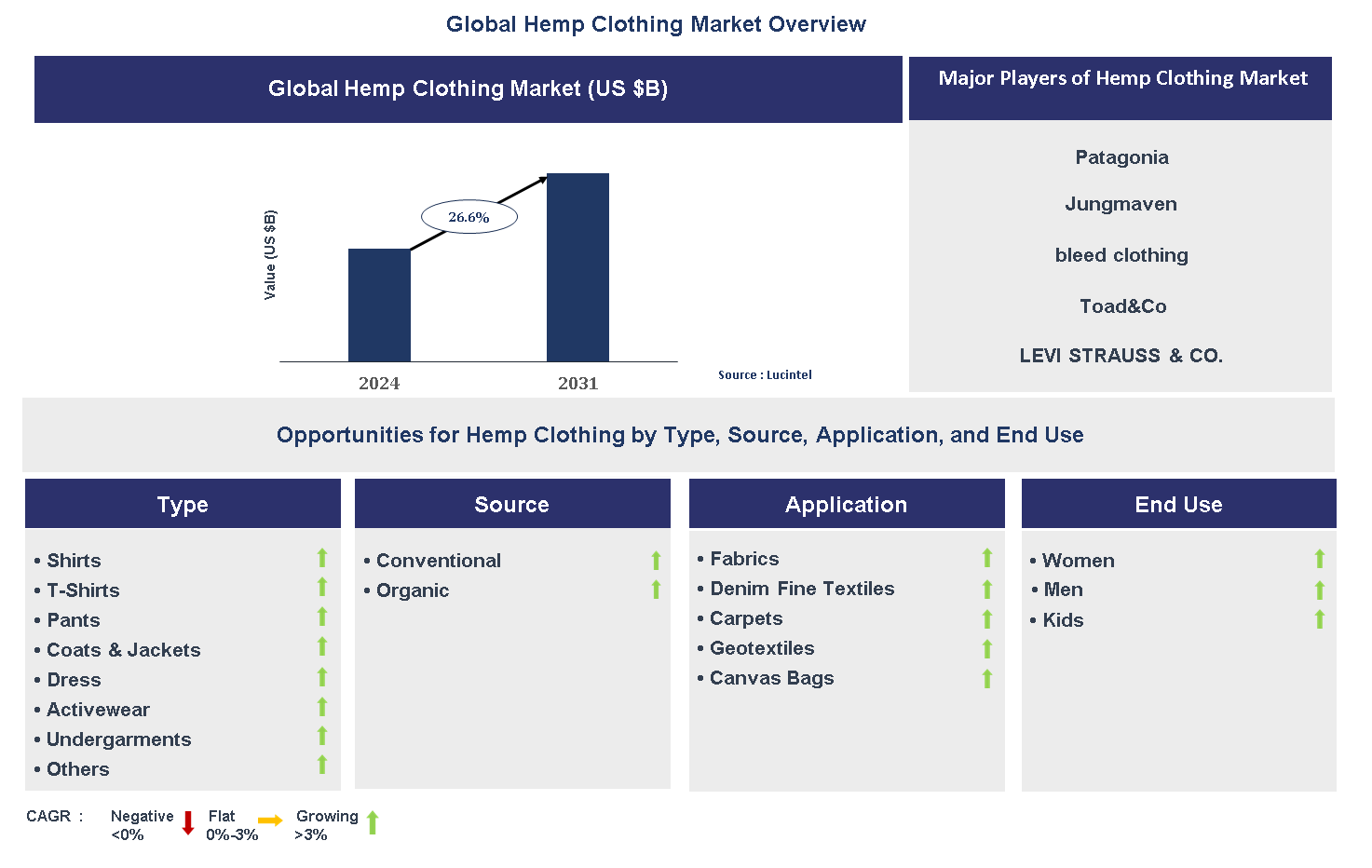
Key data points: The growth forecast = 26.6% annually for the next 7 years. Scroll below to get more insights. This market report covers trends, opportunities and forecasts in hemp clothing market to 2031 by type (shirts, t-shirts, pants, coats & jackets, dress, activewear, undergarments, and others), source (conventional and organic), application (fabrics, denim fine textiles, carpets, geotextiles, and canvas bags), end use (women, men, and kids), and region (North America, Europe, Asia Pacific, and the Rest of the World)
We'll send your sample report shortly.
• Lucintel forecasts that, within the type category, activewear is expected to witness the highest growth over the forecast period.
• Within the application category, fabric is expected to witness the highest growth.
• In terms of region, APAC is expected to witness the highest growth over the forecast period. Gain valuable insights for your business decisions with our comprehensive 150+ page report. Sample figures with some insights are shown below.
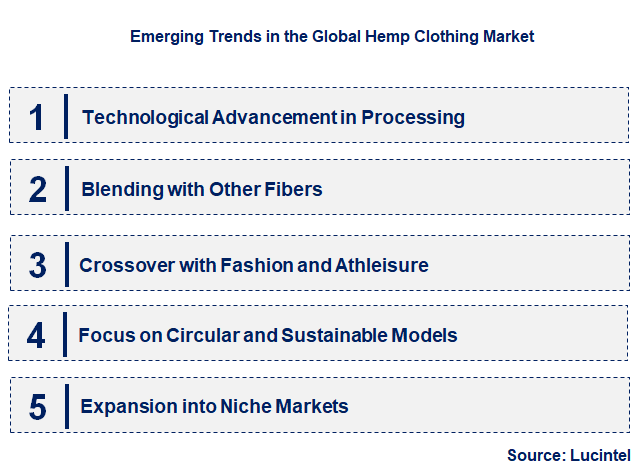
• Technological Advancement in Processing: This trend focuses on improving the quality and feel of hemp fabric. Innovations in cottonization and retting processes are making hemp fibers softer and more versatile. This development is crucial for overcoming the long-standing consumer perception of hemp as a coarse fabric, allowing it to be used in a wider range of clothing.
• Blending with Other Fibers: To improve comfort, drape, and reduce cost, brands are increasingly blending hemp with other natural fibers like organic cotton, silk, and Tencel. This trend is making hemp clothing more accessible and appealing to a mainstream audience. It also allows brands to combine the best properties of different fibers for specific applications, such as activewear.
• Crossover with Fashion and Athleisure: Hemp clothing is increasingly being influenced by high-fashion and the "athleisure" trend, blurring the lines between sustainable wear and everyday style. Brands are designing stylish and versatile garments that can be worn for various occasions. This trend expands the market’s reach and appeals to a fashion-conscious consumer base seeking both ethics and aesthetics.
• Focus on Circular and Sustainable Models: This trend is driven by growing environmental awareness and demand for transparent supply chains. Brands are not only using sustainable materials but are also launching product take-back and recycling programs for their hemp apparel. This development directly addresses consumer demand for eco-friendly products and helps brands to reduce their environmental footprint.
• Expansion into Niche Markets: The market is seeing a trend of specialized hemp clothing for specific applications. This includes high-performance activewear, durable workwear, and luxurious loungewear. By focusing on these niche segments, brands can create a loyal customer base and position hemp as a versatile fiber suitable for a variety of specific needs. These emerging trends are collectively reshaping the hemp clothing market by expanding its applications, enhancing its fashion appeal, and aligning it with modern consumer values. The focus on sustainability, comfort, and personalization is pushing brands to innovate, creating a more dynamic and diverse product landscape.
• Advanced Material Innovation: Recent developments include the use of advanced, performance-driven materials. Manufacturers are utilizing cutting-edge "cottonization" techniques to create softer, finer, and more comfortable hemp fabrics. This innovation meets the dual demand for superior comfort and performance, attracting a broader and more discerning customer base who seek both luxury and functionality.
• Focus on Circular and Sustainable Models: A key development is the industry-wide shift towards more circular business models. Brands are not only using sustainable materials but are also launching product take-back and recycling programs for their hemp apparel. This development directly addresses consumer demand for eco-friendly products and helps brands to reduce their environmental footprint.
• Rise of the D2C Model: The proliferation of e-commerce has led many hemp clothing brands to adopt a direct-to-consumer (D2C) model. This development allows companies to bypass traditional retail channels, gain full control over their brand messaging, and establish a direct relationship with their customers. This strategy can lead to higher profit margins and more personalized marketing efforts.
• Strategic Collaborations and Partnerships: A notable development is the increase in collaborations between hemp apparel brands and professional athletes, fashion designers, and outdoor influencers. These partnerships generate significant media buzz and brand visibility, and they help brands reach new consumer demographics by blending high fashion with functional performance apparel.
• Smart Textile Integration: A key development is the initial foray into smart textiles. While still nascent, brands are exploring the use of embedded sensors in hemp clothing to track biometric data like heart rate and body temperature. This innovation has the potential to create a new premium segment and position hemp as a high-tech material for the future. These developments are collectively impacting the hemp clothing market by expanding its potential applications and consumer segments. By focusing on innovation in materials, technology, and distribution, brands are successfully transforming the product from a simple commodity into a dynamic and highly differentiated footwear category.
• Targeting the Urban and Casual Market: A major growth opportunity exists in expanding beyond the traditional "eco-warrior" and outdoor segments. By creating hemp clothing that is not just for functionality but also for everyday comfort and style, brands can capture a wider urban consumer base. This strategy promotes hemp as a versatile, year-round fiber for a modern, active lifestyle.
• Expansion into Emerging Markets: Countries like India and China, with their growing affluent populations and rising environmental consciousness, represent a major growth opportunity. By establishing a strong presence in these markets and localizing their marketing, brands can tap into a new generation of consumers. Strategic partnerships with local distributors and sports organizations can enhance their success.
• Developing a Sustainable Business Model: A major growth opportunity lies in creating a business model that is built on sustainability and circularity. This involves using recycled materials, offering recycling programs, and even launching product take-back services. Brands that transparently communicate their eco-friendly practices can build a strong brand image and attract a growing segment of environmentally conscious consumers.
• Focus on Niche Communities: Instead of targeting the mass market, a strategic opportunity is to focus on niche communities like yogis, artists, or travelers. By designing specialized hemp apparel for these groups, companies can create a loyal customer base and become a trusted authority in that specific category, which allows for premium pricing and brand loyalty.
• Leveraging Technology for a Personalized Experience: A strategic opportunity exists in using technology to offer a highly personalized shopping experience. This could include AI-powered sizing recommendations, virtual try-on features, and personalized product suggestions based on a users activity and climate. This approach enhances customer satisfaction and reduces the number of product returns. These strategic growth opportunities are impacting the hemp clothing market by encouraging diversification and innovation. By moving beyond a single-use product, companies can build more robust and resilient business models that cater to a wider range of consumer needs and market conditions, leading to sustainable long-term growth.
• Patagonia
• Jungmaven
• bleed clothing
• Toad&Co
• LEVI STRAUSS & CO.
• WAMA Underwear
• Hemp Clothing Australia
• The Hemp Shop
• United By Blue
• ONNO T-SHIRT COMPANY
• Shirts
• T-Shirts
• Pants
• Coats & Jackets
• Dress
• Activewear
• Undergarments
• Others
• Conventional
• Organic
• Fabrics
• Denim Fine Textiles
• Carpets
• Geotextiles
• Canvas Bags
• Women
• Men
• Kids
• North America
• Europe
• Asia Pacific
• The Rest of the World
• United States: The U.S. market is experiencing a rapid expansion, largely due to the 2018 Farm Bill which legalized hemp cultivation. This has led to increased domestic production and a more stable supply chain. Brands are actively promoting hemps eco-friendly benefits, positioning it as a premium, sustainable alternative to traditional materials like cotton and synthetics.
• China: China’s hemp clothing market is a global powerhouse, as the country has a long history of cultivation and is a leading producer and exporter. Recent developments focus on technological advancements in processing to improve fiber quality. The market is also fueled by a growing domestic consumer base that is increasingly aware of sustainable fashion and is willing to invest in high-quality, eco-friendly products.
• Germany: The German market is characterized by a strong emphasis on product quality, durability, and a clean, functional aesthetic. Consumers are willing to pay a premium for ethically sourced and sustainably produced hemp clothing. Recent developments include a preference for traceable hemp, with certifications being a key purchasing factor, reflecting a deeply ingrained eco-conscious consumer base.
• India: India’s hemp clothing market is in a nascent stage but is poised for significant growth. Increasing awareness of environmental issues and a rising working female population are key drivers. The establishment of local e-commerce players and the growing popularity of online shopping are making these products more accessible to a wider consumer base across different regions.
• Japan: Japans market is mature but continues to evolve with a focus on both performance and design. There is a strong demand for high-quality, technologically advanced fabrics that offer superior comfort and discretion. The market is also seeing a growing interest in specialized, niche brands and lightweight hemp-blended fabrics for a variety of climates and applications.


• Patagonia
• Jungmaven
• bleed clothing
• Toad&Co
• LEVI STRAUSS & CO.
• WAMA Underwear
• Hemp Clothing Australia
• The Hemp Shop
• United By Blue
• ONNO T-SHIRT COMPANY Q5. Which hemp clothing market segment will be the largest in future? Answer: Lucintel forecasts that, within the type category, activewear is expected to witness the highest growth over the forecast period. Q6. In hemp clothing market, which region is expected to be the largest in next 5 years? Answer: In terms of region, APAC is expected to witness the highest growth over the forecast period. Q7. Do we receive customization in this report? Answer: Yes, Lucintel provides 10% customization without any additional cost.


Choose a license that fits your team. Instant PDF delivery.
Prices exclude taxes. Instant delivery. Custom licensing available on request.
Market Report · July 31, 2026
Market Report · July 31, 2026
Market Report · July 31, 2026
Trusted partner for strategic intelligence and business growth


Receive a complimentary market analysis tailored to your industry. Our analysts will identify key growth opportunities and competitive dynamics specific to your business.

Market size, growth rate, and key trend analysis for your specific sector.

Top competitor positioning and market share analysis.

Strategic recommendations backed by data-driven insights.
Get curated market intelligence and competitive moves straight to your inbox.
By subscribing, you agree to receive our monthly insights. Unsubscribe anytime.
Receive a complimentary market analysis tailored to your industry. Our analysts will identify key growth opportunities and competitive dynamics specific to your business.
Market size, growth rate, and key trend analysis for your specific sector.
Top competitor positioning and market share analysis.
Strategic recommendations backed by data-driven insights.
Get curated market intelligence, emerging trends, and competitive moves straight to your inbox each month.
By subscribing, you agree to receive our monthly insights. Unsubscribe anytime.
We'll send your sample report shortly.