
Report Feature
Heat Resistant Fabric Market Trends and Forecast
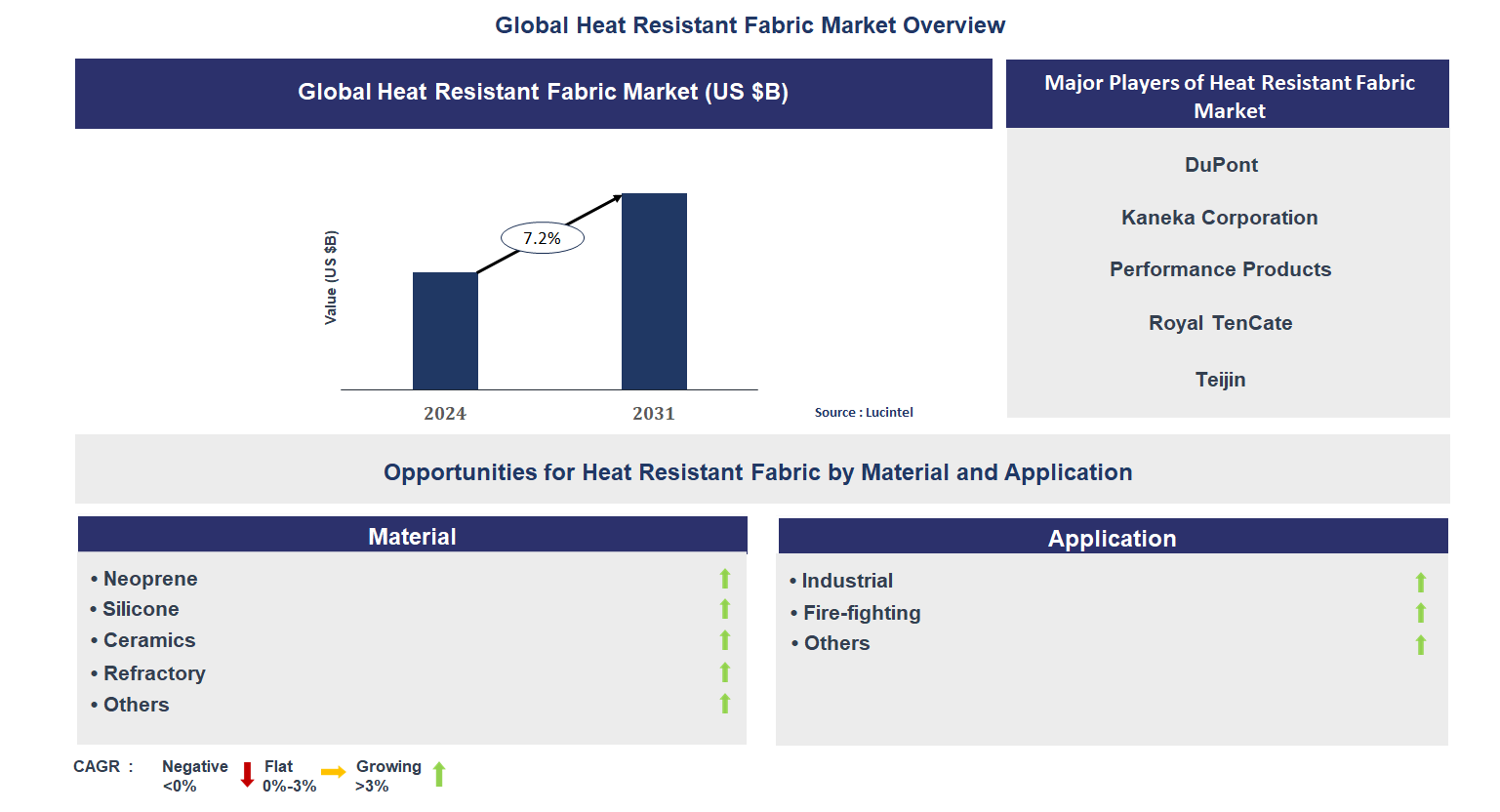
The future of the global heat resistant fabric market looks promising with opportunities in the industrial and fire-fighting markets. The global heat resistant fabric market is expected to grow with a CAGR of 7.2% from 2025 to 2031. The major drivers for this market are the increasing demand for safety in industrial sectors, the rising need for advanced protective workwear, and the growing adoption of heat-resistant materials in manufacturing.• Lucintel forecasts that, within the material category, neoprene is expected to witness the highest growth over the forecast period.
• Within the application category, fire-fighting is expected to witness higher growth.
• In terms of region, APAC is expected to witness the highest growth over the forecast period. Gain valuable insights for your business decisions with our comprehensive 150+ page report. Sample figures with some insights are shown below.
Emerging Trends in the Heat Resistant Fabric Market
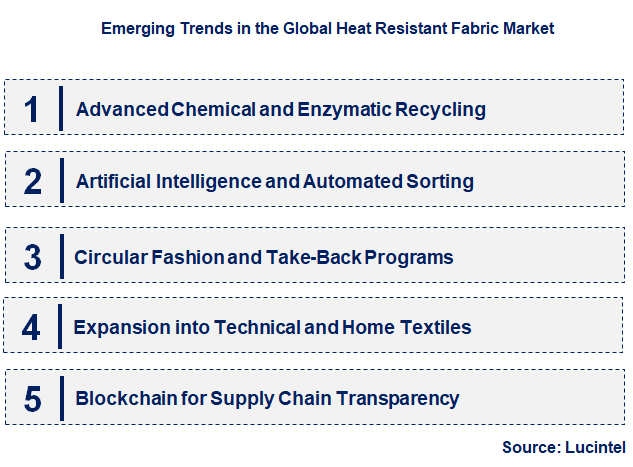
The heat resistant fabric market is being reshaped by a series of emerging trends that reflect a fundamental shift in industry practices and consumer values. These trends are moving the industry beyond a simple waste management solution to a model that emphasizes high-value material creation, technological integration, and a seamless connection between brands and consumers.• Advanced Chemical and Enzymatic Recycling: This trend is a significant breakthrough for the industry. New chemical and enzymatic processes are making it possible to recycle blended and mixed-material textiles, which were previously difficult to process. This development overcomes a major challenge and allows for the creation of high-purity recycled fibers comparable to virgin materials.
• Artificial Intelligence and Automated Sorting: The use of AI-driven sorting technologies is revolutionizing the industry. Near-infrared spectroscopy and deep learning systems can now automatically identify and separate different fiber types. This trend significantly improves the efficiency and accuracy of textile recycling, paving the way for large-scale, cost-effective processing of post-consumer waste.
• Circular Fashion and Take-Back Programs: Brands are increasingly adopting a circular economy model. This includes designing products for recyclability and launching consumer take-back programs. This trend is driven by consumer demand for sustainability and a desire for transparency. It directly addresses the issue of textile waste by creating a closed-loop system for old garments.
• Expansion into Technical and Home Textiles: While heat resistant textiles are common in fast fashion, a new trend is their expanded use in other high-value applications. This includes technical textiles for the automotive and construction industries, as well as home furnishings like upholstery and curtains. This diversification creates new revenue streams and demonstrates the versatility of heat resistant materials.
• Blockchain for Supply Chain Transparency: Brands are using blockchain technology to create a transparent and traceable supply chain for recycled textiles. This trend allows consumers to verify the origin and recycling process of their products. This builds consumer trust, adds value to the product, and is crucial for brands looking to prove their sustainability claims. These emerging trends are collectively reshaping the heat resistant fabric market by expanding its applications, enhancing its fashion appeal, and aligning it with modern consumer values. The focus on sustainability, comfort, and personalization is pushing brands to innovate, creating a more dynamic and diverse product landscape.
Recent Development in the Heat Resistant Fabric Market
The heat resistant fabric market is experiencing significant evolution, driven by shifts in consumer preferences, technological advancements, and a growing emphasis on ethical consumption. These recent developments are transforming a once-simple product category into a diverse and innovative segment of the global apparel industry, impacting everything from product design to distribution strategies.• Advanced Material Innovation: Recent developments include the use of advanced, performance-driven materials. Manufacturers are utilizing cutting-edge synthetic fabrics that offer superior moisture-wicking, breathability, and UV protection. This innovation meets the dual demand for superior performance and comfort, attracting a broader and more discerning customer base.
• Data-Driven Sizing Technology: A key development is the use of data and AI to solve the perennial problem of finding a perfect fit. Brands are creating online tools and mobile apps that use a customers measurements and preferences to recommend the ideal size and style. This technology reduces return rates and significantly enhances the online shopping experience.
• Rise of the D2C Model: The proliferation of e-commerce has led many heat resistant fabric brands to adopt a direct-to-consumer (D2C) model. This development allows companies to bypass traditional retail channels, gain full control over their brand messaging, and establish a direct relationship with their customers. This strategy can lead to higher profit margins and more personalized marketing efforts.
• Strategic Collaborations and Partnerships: A notable development is the increase in collaborations between heat resistant fabric brands and professional athletes, fashion designers, and outdoor influencers. These partnerships generate significant media buzz and brand visibility, and they help brands reach new consumer demographics by blending high fashion with functional outdoor gear.
• Focus on Inclusive Sizing and Designs: A key development is the industry-wide shift towards more inclusive sizing. Brands are expanding their product lines to offer a wider range of sizes and fits, catering to diverse body types. This development directly addresses the long-standing issue of body image in the sports industry, making heat resistant fabric more accessible and appealing to a broader consumer base. These developments are collectively impacting the heat resistant fabric market by expanding its potential applications and consumer segments. By focusing on innovation in materials, technology, and distribution, brands are successfully transforming the product from a simple commodity into a dynamic and highly differentiated footwear category.
Strategic Growth Opportunities in the Heat Resistant Fabric Market
The heat resistant fabric market, once defined by functionality, now presents significant strategic growth opportunities driven by evolving consumer lifestyles and technological integration. These opportunities extend beyond traditional applications, allowing companies to innovate and capture new market segments by focusing on specific consumer needs and behaviors.• Targeting the Urban and Commuter Market: A major growth opportunity exists in expanding beyond the traditional outdoor market. By creating heat resistant fabric that is not just for hiking but also for everyday comfort and style for urban commuters, brands can capture a wider consumer base. This strategy promotes heat resistant fabric as a versatile, year-round fiber for a modern, active lifestyle.
• Expansion into Emerging Markets: Countries like India and China, with their growing affluent populations and rising environmental consciousness, represent a major growth opportunity. By establishing a strong presence in these markets and localizing their marketing, brands can tap into a new generation of consumers. Strategic partnerships with local distributors and sports organizations can enhance their success.
• Developing Smart Training Apparel: The demand for performance-enhancing technology presents a major opportunity. Companies can develop smart apparel with embedded sensors and data-tracking capabilities for training. This innovation can create a premium product category, attracting tech-savvy athletes and positioning the brand as a leader in wearable technology.
• Building a Lifestyle Brand: A strategic opportunity exists in elevating heat resistant fabric to a lifestyle brand. By designing stylish apparel that can be worn both for outdoor use and for casual wear, brands can appeal to the broader "athleisure" trend. This approach extends the products usability beyond the daily necessity and creates a more consistent revenue stream.
• Focus on Niche Communities: Instead of targeting the mass market, a strategic opportunity is to focus on niche communities like professional cyclists, urban travelers, or those who work outdoors. By designing specialized apparel and building a strong brand presence within these communities, companies can create a loyal customer base and become a trusted authority in that specific category. These strategic growth opportunities are impacting the heat resistant fabric market by encouraging diversification and innovation. By moving beyond a single-use product, companies can build more robust and resilient business models that cater to a wider range of consumer needs and market conditions, leading to sustainable long-term growth.
Heat Resistant Fabric Market Driver and Challenges
The heat resistant fabric market is a dynamic industry shaped by a combination of major drivers and challenges that influence its growth trajectory. The major drivers include various technological and economic factors, such as the rising demand for high-performance apparel and the expansion of e-commerce. Conversely, key challenges such as high product cost and intense competition can hinder market growth. The factors responsible for driving the heat resistant fabric market include: 1. Growing Participation in Outdoor Activities: A primary driver is the increasing popularity of outdoor activities like hiking, camping, and cycling. This is leading to a greater demand for high-performance rainwear. This expanding consumer base creates a consistent and expanding market for rainwear, from beginners to seasoned professionals who seek reliable protection. 2. Technological Advancements in Fabrics: Product innovation is a key driver. Manufacturers are constantly developing new materials and designs for heat resistant fabric to enhance performance, durability, and comfort. These advancements, such as moisture-wicking and UV protection, attract serious enthusiasts who are willing to invest in high-quality gear. 3. Influence of Athleisure Trends: The "athleisure" trend has a major influence on the heat resistant fabric market. This driver is blurring the lines between sportswear and casual fashion, allowing brands to create versatile clothing that can be worn for various activities, thereby expanding the markets consumer base and applications beyond purely functional needs. 4. Growth of E-commerce Platforms: The rapid expansion of online retail has significantly driven market growth. E-commerce platforms offer a vast selection of products, competitive pricing, and convenience, making it easier for consumers to access a wide range of heat resistant fabric from various brands. This channel is crucial for new brands and for reaching customers in diverse geographic locations. 5. Climate Change and Unpredictable Weather: The increasing frequency and severity of extreme weather events, including heavy rainfall and flash floods, are a significant driver of the heat resistant fabric market. This environmental factor is creating a consistent and growing demand for reliable rain protection for both daily commutes and emergency preparedness. Challenges in the heat resistant fabric market are: 1. High Product Cost: The premium pricing of high-quality heat resistant fabric is a significant challenge. The specialized materials and complex manufacturing processes drive up costs, which can be a deterrent for many potential customers, especially in price-sensitive markets. This limits the markets accessibility to a broader consumer base. 2. Seasonal Demand Fluctuations: Heat resistant fabric is a seasonal product in many regions, with demand peaking during the rainy seasons. This seasonality poses a major challenge for inventory management and sales. Companies must find ways to diversify their product lines to maintain consistent revenue throughout the year. 3. Intense Market Competition from Non-Specialized Brands: The heat resistant fabric market is highly competitive, with a growing number of non-specialized sportswear and fashion brands entering the space. This saturation makes it difficult for traditional heat resistant fabric-specific brands to maintain market share and forces them to differentiate their products through innovation and marketing. The heat resistant fabric markets growth is propelled by powerful drivers like technological innovation and the influence of athleisure, which are expanding its market appeal and accessibility. However, it must contend with significant challenges, including high product costs and intense competition. Navigating these forces requires strategic innovation in product development and marketing to ensure sustained growth and market relevance.List of Heat Resistant Fabric Companies
Companies in the market compete on the basis of product quality offered. Major players in this market focus on expanding their manufacturing facilities, R&D investments, infrastructural development, and leverage integration opportunities across the value chain. With these strategies heat resistant fabric companies cater increasing demand, ensure competitive effectiveness, develop innovative products & technologies, reduce production costs, and expand their customer base. Some of the heat resistant fabric companies profiled in this report include-• DuPont
• Kaneka Corporation
• Performance Products
• Royal TenCate
• Teijin
• Huntsman Corporation
• Mid Mountain Materials
Heat Resistant Fabric Market by Segment
The study includes a forecast for the global heat resistant fabric market by material, application, and region.Heat Resistant Fabric Market by Material [Value from 2019 to 2031]:
• Neoprene
• Silicone
• Ceramics
• Refractory
• Others
Heat Resistant Fabric Market by Application [Value from 2019 to 2031]:
• Industrial
• Fire-fighting
• Others
Heat Resistant Fabric Market by Region [Value from 2019 to 2031]:
• North America
• Europe
• Asia Pacific
• The Rest of the World
Country Wise Outlook for the Heat Resistant Fabric Market
The global heat resistant fabric market is a rapidly evolving sector, driven by a powerful confluence of environmental consciousness and technological innovation. It is shifting from a niche industry focused on downcycling to a mainstream segment creating high-value materials. This transformation is fueled by consumer demand for sustainable products, stricter regulations on textile waste, and breakthroughs in both mechanical and chemical recycling technologies.• United States: The U.S. heat resistant fabric market is a key player, with significant growth driven by consumer demand and brand initiatives. Recent developments include increased investment in chemical recycling technologies that can process blended fibers. The market is also seeing a rise in direct-to-consumer brands that prominently feature recycled content in their product lines.
• China: China’s heat resistant fabric market is a global leader, benefiting from a long history as a textile manufacturing hub. Recent developments focus on ambitious government goals to build a comprehensive textile recycling system. The market is seeing increased adoption of automated sorting and advanced recycling technologies to handle large volumes of waste efficiently.
• Germany: The German market is a key driver of circularity in the EU, with a strong emphasis on product quality and a preference for ethically sourced materials. Recent developments include the promotion of textile recycling through sustainability mandates and significant investments in both chemical and mechanical recycling technologies to create high-quality, long-lasting products.
• India: India’s heat resistant fabric market is in a nascent stage but is poised for significant growth. The government is supporting the market through policy frameworks and integrated textile parks that encourage sustainable practices. A key development is the integration of hyperspectral imaging and deep learning to automate fiber classification and sorting.
• Japan: Japans market is a technological leader, with a strong focus on high-quality recycling and circular economy models. Recent developments include innovative recycling methods that allow for the recovery of high-quality fibers from old clothing. The market is also seeing a rise in corporate sustainability initiatives and consumer-facing take-back programs to increase recycling rates.

Features of the Global Heat Resistant Fabric Market
Market Size Estimates: Heat resistant fabric market size estimation in terms of value ($B). Trend and Forecast Analysis: Market trends (2019 to 2024) and forecast (2025 to 2031) by various segments and regions. Segmentation Analysis: Heat resistant fabric market size by material, application, and region in terms of value ($B). Regional Analysis: Heat resistant fabric market breakdown by North America, Europe, Asia Pacific, and Rest of the World. Growth Opportunities: Analysis of growth opportunities in different materials, applications, and regions for the heat resistant fabric market. Strategic Analysis: This includes M&A, new product development, and competitive landscape of the heat resistant fabric market. Analysis of competitive intensity of the industry based on Porter’s Five Forces model.
FAQ
Q1. What is the growth forecast for heat resistant fabric market? Answer: The global heat resistant fabric market is expected to grow with a CAGR of 7.2% from 2025 to 2031. Q2. What are the major drivers influencing the growth of the heat resistant fabric market? Answer: The major drivers for this market are the increasing demand for safety in industrial sectors, the rising need for advanced protective workwear, and the growing adoption of heat-resistant materials in manufacturing. Q3. What are the major segments for heat resistant fabric market? Answer: The future of the heat resistant fabric market looks promising with opportunities in the industrial and fire-fighting markets. Q4. Who are the key heat resistant fabric market companies? Answer: Some of the key heat resistant fabric companies are as follows:• DuPont
• Kaneka Corporation
• Performance Products
• Royal TenCate
• Teijin
• Huntsman Corporation
• Mid Mountain Materials Q5. Which heat resistant fabric market segment will be the largest in future? Answer: Lucintel forecasts that, within the material category, neoprene is expected to witness the highest growth over the forecast period. Q6. In heat resistant fabric market, which region is expected to be the largest in next 5 years? Answer: In terms of region, APAC is expected to witness the highest growth over the forecast period. Q7. Do we receive customization in this report? Answer: Yes, Lucintel provides 10% customization without any additional cost.
Table of Contents
List of Figures
List of Tables
Methodology
- In-depth interviews of the major players in this market
- Detailed secondary research from competitors’ financial statements and published data
- Extensive searches of published works, market, and database information pertaining to industry news, company press releases, and customer intentions
- A compilation of the experiences, judgments, and insights of Lucintel’s professionals, who have analyzed and tracked this market over the years.


Buy Now
Choose a license that fits your team. Instant PDF delivery.
Prices exclude taxes. Instant delivery. Custom licensing available on request.
Key Questions
- • What are some of the most promising, high-growth opportunities for the heat resistant fabric market by material (neoprene, silicone, ceramics, refractory, and others), application (industrial, fire-fighting, and others), and region (North America, Europe, Asia Pacific, and the Rest of the World)?
- • Which segments will grow at a faster pace and why?
- • Which region will grow at a faster pace and why?
- • What are the key factors affecting market dynamics? What are the key challenges and business risks in this market?
- • What are the business risks and competitive threats in this market?
- • What are the emerging trends in this market and the reasons behind them?
- • What are some of the changing demands of customers in the market?
- • What are the new developments in the market? Which companies are leading these developments?
- • Who are the major players in this market? What strategic initiatives are key players pursuing for business growth?
- • What are some of the competing products in this market and how big of a threat do they pose for loss of market share by material or product substitution?
- • What M&A activity has occurred in the last 5 years and what has its impact been on the industry? For any questions related to Heat Resistant Fabric Market, Heat Resistant Fabric Market Size, Heat Resistant Fabric Market Growth, Heat Resistant Fabric Market Analysis, Heat Resistant Fabric Market Report, Heat Resistant Fabric Market Share, Heat Resistant Fabric Market Trends, Heat Resistant Fabric Market Forecast, Heat Resistant Fabric Companies, write Lucintel analyst at email: helpdesk@lucintel.com. We will be glad to get back to you soon.


