
Market Report · June 29, 2026

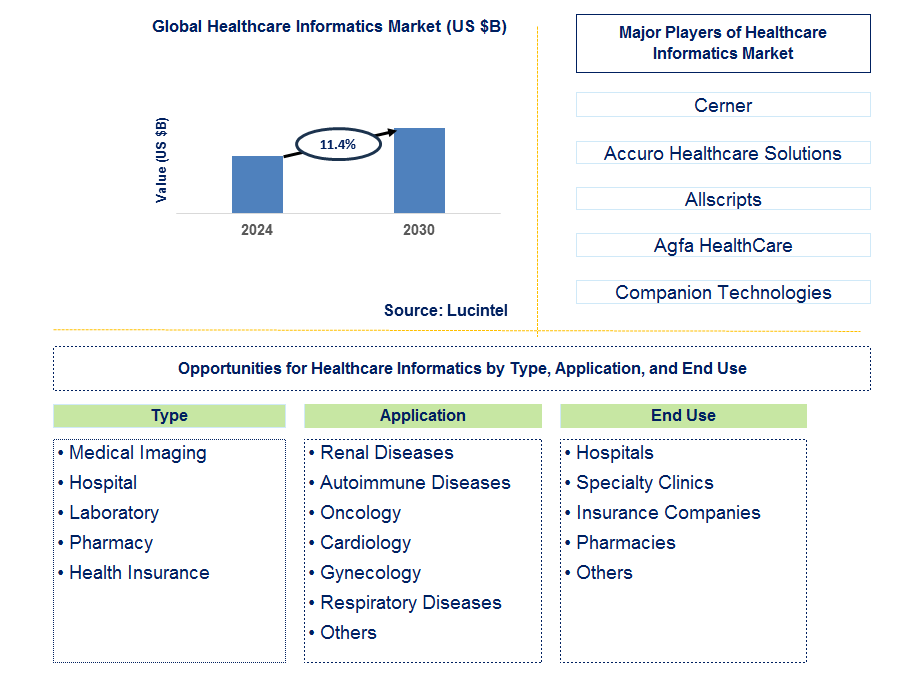
Key data points: The growth forecast = 11.4% annually for the next 6 years. Scroll below to get more insights. This market report covers trends, opportunities, and forecasts in the global healthcare informatics market to 2030 by type (medical imaging, hospital, laboratory, pharmacy, and health insurance), application (renal diseases, autoimmune diseases, oncology, cardiology, gynecology, respiratory diseases, and others), end use (hospitals, specialty clinics, insurance companies, pharmacies, and others), and region (North America, Europe, Asia Pacific, and the Rest of the World)
We'll send your sample report shortly.
• United States: The US is at the forefront of healthcare informatics, with a growing emphasis on electronic health records (EHRs) and interoperability. Initiatives like the 21st Century Cures Act aim to enhance data exchange among healthcare providers, facilitating more coordinated and personalized patient care.
• China: China is rapidly expanding its healthcare informatics landscape through the integration of AI and big data analytics. The government is investing heavily in health technology infrastructure, promoting telemedicine, and enabling remote patient monitoring to improve access to healthcare services across urban and rural areas.
• Germany: Germany is focusing on enhancing patient data protection while advancing digital health solutions. The implementation of the Digital Healthcare Act encourages the adoption of EHRs and mobile health applications, providing a framework for digital health innovations while ensuring compliance with strict privacy regulations.
• India: In India, healthcare informatics is witnessing growth driven by telehealth services and mobile health applications. The government’s Digital India initiative supports the development of a comprehensive health information system to improve healthcare accessibility and quality, particularly in underserved areas.
• Japan: Japan is leveraging robotics and AI to improve healthcare informatics, particularly in elder care. The government is promoting smart health technologies that integrate wearable devices and remote monitoring systems to enhance patient care and streamline healthcare delivery, especially for its aging population.
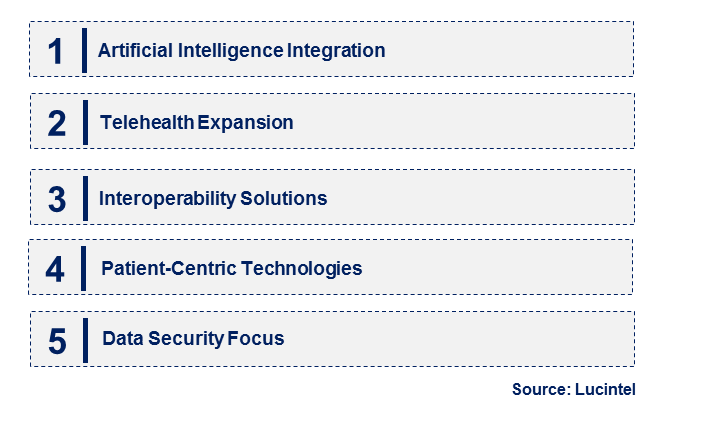
• Artificial Intelligence Integration: AI technologies are being increasingly integrated into healthcare informatics to improve diagnostic accuracy, streamline workflows, and personalize patient care, leading to better clinical outcomes.
• Telehealth Expansion: The expansion of telehealth services is facilitating remote consultations and patient monitoring, enhancing access to healthcare, especially for rural populations and those with mobility challenges.
• Interoperability Solutions: There is a growing emphasis on interoperability among health IT systems, enabling seamless data exchange across different platforms to enhance care coordination and patient management.
• Patient-Centric Technologies: The shift towards patient-centric care is driving the development of applications and platforms that empower patients to manage their health data and engage more actively in healthcare decisions.
• Data Security Focus: As healthcare data becomes increasingly digital, a heightened focus on cybersecurity measures is emerging to protect sensitive patient information from breaches and cyber threats. These trends are significantly reshaping the healthcare informatics landscape by enhancing service delivery, improving patient engagement, and ensuring data security, thereby contributing to more efficient and effective healthcare systems.
• Rise of Cloud-Based Solutions: The adoption of cloud-based health information systems is enabling healthcare organizations to store, access, and share patient data securely, enhancing collaboration and operational efficiency.
• Enhanced EHR Adoption: The increased implementation of electronic health records (EHRs) is streamlining patient information management, improving clinical workflows, and facilitating better patient outcomes through data accessibility.
• AI and Machine Learning Advancements: AI and machine learning technologies are being utilized to analyze large datasets, providing healthcare providers with actionable insights for improved decision-making and predictive analytics.
• Mobile Health Applications Growth: The proliferation of mobile health applications is empowering patients to monitor their health, access medical information, and engage with healthcare providers remotely, promoting proactive health management.
• Regulatory Support for Digital Health: Regulatory frameworks are evolving to support the integration of digital health solutions, encouraging innovation while ensuring compliance with data protection standards. These developments are significantly enhancing the efficiency and effectiveness of healthcare informatics, enabling better patient care, streamlined operations, and improved health outcomes across various healthcare settings.
• Telemedicine Applications: The growth of telemedicine offers opportunities for healthcare providers to reach more patients, reduce healthcare costs, and improve access to services, especially in underserved areas.
• AI-Driven Analytics: Leveraging AI for data analytics provides opportunities for healthcare organizations to derive actionable insights from patient data, enhancing clinical decision-making and operational efficiency.
• Wearable Health Technology: The rising popularity of wearable health devices opens avenues for monitoring patient health in real-time, allowing for timely interventions and improved chronic disease management.
• Healthcare Mobile Apps: The development of mobile applications for health management creates opportunities for patient engagement and self-management, empowering individuals to take control of their health.
• Blockchain for Data Security: The integration of blockchain technology in healthcare informatics can enhance data security and integrity, providing a secure framework for patient data sharing and management. These growth opportunities are reshaping the healthcare informatics landscape by enhancing patient care, improving operational efficiency, and promoting innovative health solutions across various applications.
• Technological Advancements: Rapid technological developments in data management and health IT solutions are enhancing the efficiency of healthcare delivery, driving market growth.
• Increased Demand for Healthcare Efficiency: Rising healthcare costs and a growing emphasis on value-based care are pushing providers to adopt informatics solutions that enhance operational efficiency and patient outcomes.
• Government Initiatives and Funding: Supportive government policies and funding for health IT initiatives are promoting the development and adoption of digital health solutions across healthcare systems.
• Growing Patient Expectations: As patients become more informed and engaged in their healthcare, there is an increasing demand for transparent, accessible, and personalized health information.
• Focus on Population Health Management: The growing emphasis on population health management is driving the need for integrated data systems that enable better tracking and management of patient health outcomes. Challenges in the healthcare informatics market are:
• Data Privacy and Security Concerns: The rise of digital health solutions raises significant concerns regarding data privacy and security, necessitating stringent measures to protect sensitive patient information.
• Interoperability Issues: Many healthcare systems face challenges with interoperability, hindering seamless data exchange and collaboration among different healthcare providers.
• High Implementation Costs: The costs associated with implementing advanced healthcare informatics solutions can be prohibitive, particularly for smaller healthcare organizations. These drivers and challenges collectively shape the healthcare informatics landscape, influencing both opportunities for growth and barriers to overcome for further development.
• Cerner
• Accuro Healthcare Solutions
• Allscripts
• Agfa HealthCare
• Companion Technologies
• Axiom Resource Management
• Cardinal Health
• Benchmark Systems
• CNSI
• Cognizant Technology Solutions
• Medical Imaging
• Hospital
• Laboratory
• Pharmacy
• Health Insurance
• Renal Diseases
• Autoimmune Diseases
• Oncology
• Cardiology
• Gynecology
• Respiratory Diseases
• Others
• Hospitals
• Specialty Clinics
• Insurance Companies
• Pharmacies
• Others
• North America
• Europe
• Asia Pacific
• The Rest of the World
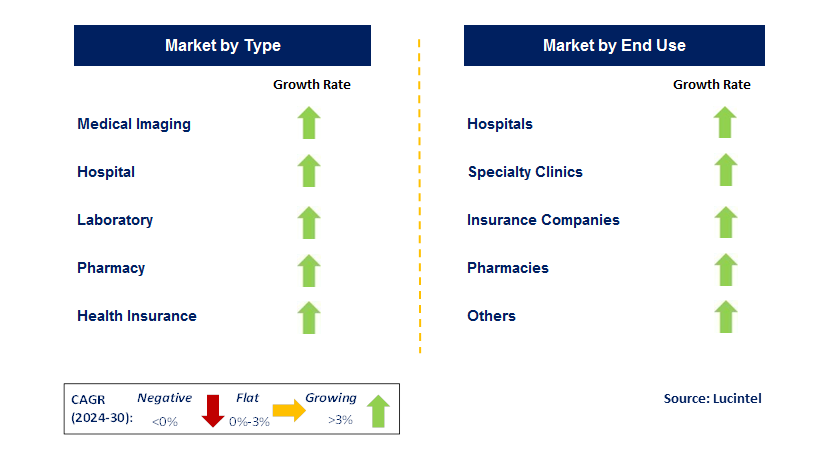
• Lucintel forecasts that, within the type category, the laboratory will remain the largest segment over the forecast period due to growing financial commitments to research endeavors.
• Within the end-use category, hospitals will remain the largest segment due to the growing demand for enhanced profitability in healthcare institutions.
• In terms of regions, APAC is expected to witness the highest growth over the forecast period due to increasing governmental spending on the advancement of healthcare infrastructure.


• Cerner
• Accuro Healthcare Solutions
• Allscripts
• Agfa HealthCare
• Companion Technologies
• Axiom Resource Management
• Cardinal Health
• Benchmark Systems
• CNSI
• Cognizant Technology Solutions Q5. Which healthcare informatics market segment will be the largest in future? Answer: Lucintel forecasts that laboratory will remain the largest segment over the forecast period due to growing financial commitments to research endeavors. Q6. In healthcare informatics market, which region is expected to be the largest in next 5 years? Answer: APAC is expected to witness the highest growth over the forecast period due to increasing governmental spending on the advancement of healthcare infrastructure. Q.7 Do we receive customization in this report? Answer: Yes, Lucintel provides 10% customization without any additional cost.


Choose a license that fits your team. Instant PDF delivery.
Prices exclude taxes. Instant delivery. Custom licensing available on request.
Market Report · June 29, 2026
Market Report · May 18, 2026
Trusted partner for strategic intelligence and business growth


Receive a complimentary market analysis tailored to your industry. Our analysts will identify key growth opportunities and competitive dynamics specific to your business.

Market size, growth rate, and key trend analysis for your specific sector.

Top competitor positioning and market share analysis.

Strategic recommendations backed by data-driven insights.
Get curated market intelligence and competitive moves straight to your inbox.
By subscribing, you agree to receive our monthly insights. Unsubscribe anytime.
Receive a complimentary market analysis tailored to your industry. Our analysts will identify key growth opportunities and competitive dynamics specific to your business.
Market size, growth rate, and key trend analysis for your specific sector.
Top competitor positioning and market share analysis.
Strategic recommendations backed by data-driven insights.
Get curated market intelligence, emerging trends, and competitive moves straight to your inbox each month.
By subscribing, you agree to receive our monthly insights. Unsubscribe anytime.
We'll send your sample report shortly.