
Report Feature
Healthcare BPO Market Trends and Forecast
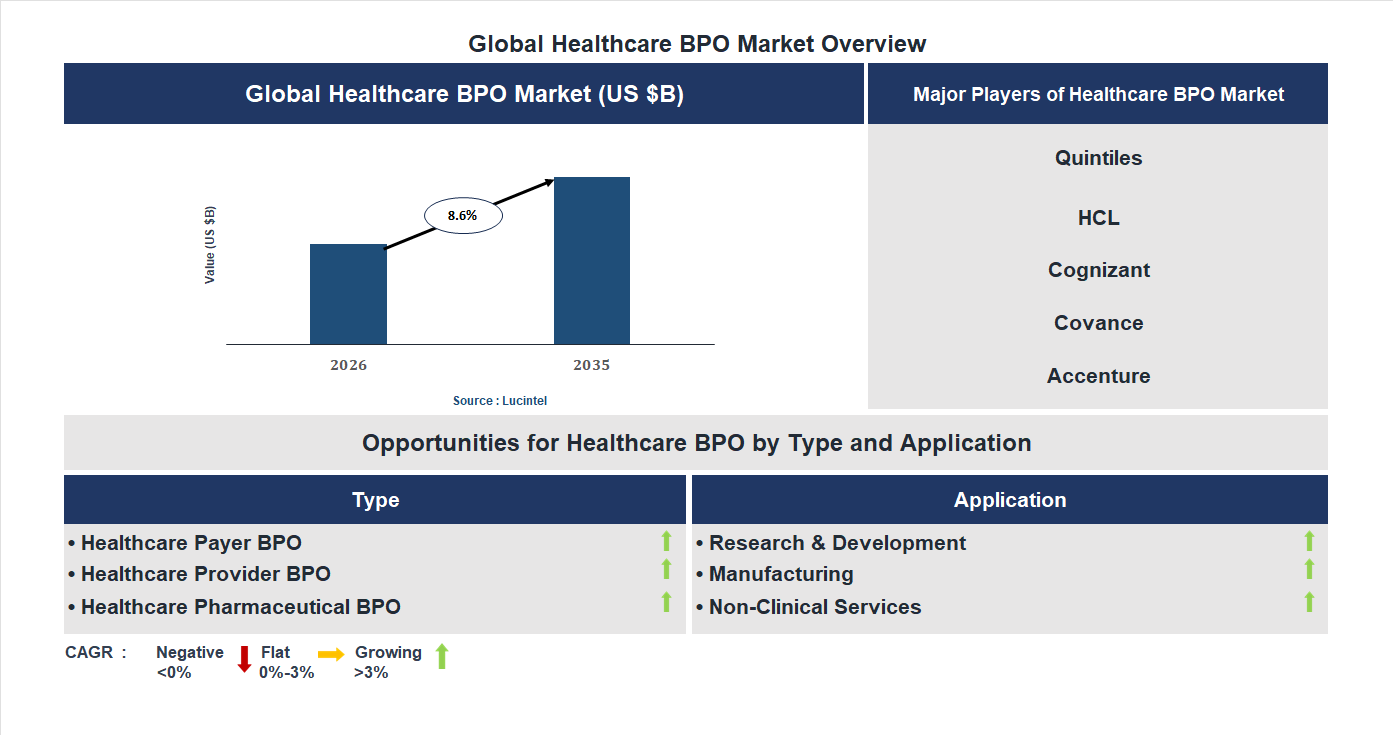
The future of the global healthcare BPO market looks promising with opportunities in the research & development, manufacturing, and non-clinical service markets. The global healthcare BPO market is expected to reach an estimated $1,261 billion by 2035 with a CAGR of 10.7% from 2026 to 2035. The major drivers for this market are the increasing pressure to reduce costs, the rising demand for healthcare outsourcing, and the growing adoption of digital health services.• Lucintel forecasts that, within the type category, healthcare provider BPO is expected to witness the highest growth over the forecast period.
• Within the application category, non-clinical service is expected to witness the highest growth.
• In terms of region, APAC is expected to witness the highest growth over the forecast period. Gain valuable insights for your business decisions with our comprehensive 150+ page report. Sample figures with some insights are shown below.
Emerging Trends in the Healthcare BPO Market
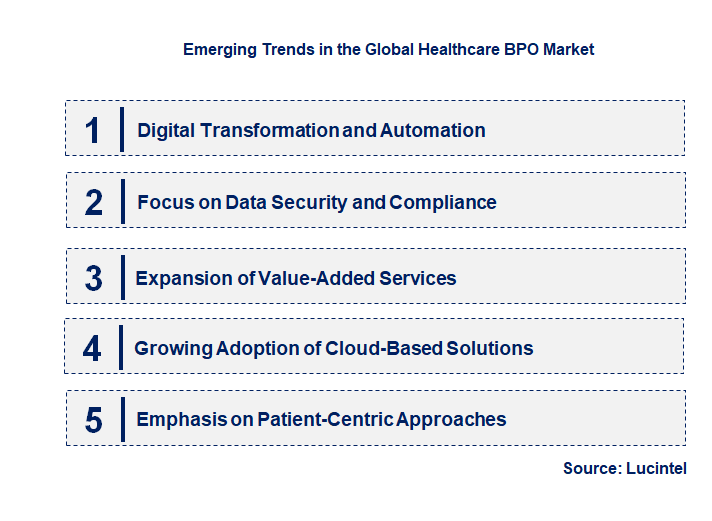
The healthcare BPO market is experiencing rapid transformation driven by technological advancements, evolving healthcare regulations, and increasing demand for cost-effective solutions. As healthcare providers seek to improve patient outcomes while managing operational costs, outsourcing services has become a strategic necessity. The market is characterized by innovation, digital integration, and a focus on personalized care. These developments are reshaping how healthcare services are delivered, managed, and optimized globally. Understanding these emerging trends is crucial for stakeholders aiming to stay competitive and leverage new opportunities in this dynamic landscape.• Digital Transformation and Automation: The integration of AI, machine learning, and robotic process automation is streamlining administrative and clinical processes. This trend reduces manual errors, accelerates workflows, and enhances data accuracy, leading to improved patient care and operational efficiency. Healthcare providers are increasingly adopting digital tools to manage claims processing, patient records, and billing, which results in faster turnaround times and cost savings.
• Focus on Data Security and Compliance: With rising concerns over data breaches and stringent regulations like HIPAA, healthcare BPO providers are prioritizing robust security measures. Implementing advanced encryption, secure cloud solutions, and compliance protocols ensures patient data confidentiality. This trend builds trust among clients and mitigates legal risks, making data security a core component of BPO services in healthcare.
• Expansion of Value-Added Services: Beyond traditional outsourcing functions, providers are offering value-added services such as analytics, population health management, and telehealth support. These services enable healthcare organizations to improve patient engagement, optimize resource allocation, and enhance overall care quality. The shift towards comprehensive solutions positions BPO providers as strategic partners rather than mere service vendors.
• Growing Adoption of Cloud-Based Solutions: Cloud technology facilitates scalable, flexible, and cost-effective healthcare BPO operations. It enables real-time data sharing, remote access, and seamless integration across various healthcare systems. This trend supports telemedicine, remote patient monitoring, and collaborative care models, ultimately improving service delivery and operational agility.
• Emphasis on Patient-Centric Approaches: Healthcare BPO providers are increasingly focusing on personalized patient experiences through improved communication channels, multilingual support, and tailored engagement strategies. This trend enhances patient satisfaction, loyalty, and adherence to treatment plans. It also aligns with the broader shift towards value-based care, emphasizing outcomes and patient well-being. These trends are fundamentally reshaping the healthcare BPO market by fostering innovation, enhancing security, expanding service offerings, leveraging technology, and prioritizing patient experience. As these developments continue to evolve, they will drive greater efficiency, compliance, and patient-centered care, positioning the market for sustained growth and transformation.
Recent Development in the Healthcare BPO Market
The healthcare BPO market is experiencing rapid transformation driven by technological advancements, increasing healthcare demands, and the need for cost-effective solutions. As healthcare providers seek efficiency and improved patient outcomes, BPO services are becoming integral to operational success. Recent developments reflect a shift towards digital integration, regulatory compliance, and innovative service models, shaping the future landscape of healthcare outsourcing. These changes are creating new opportunities for providers and stakeholders to enhance service delivery and competitive advantage.• Digital Transformation in Healthcare BPO: Adoption of AI, automation, and cloud computing is revolutionizing healthcare BPO services. These technologies enable faster data processing, improved accuracy, and enhanced patient engagement. As a result, providers can reduce operational costs, streamline workflows, and deliver personalized care. The integration of digital tools also facilitates compliance with regulatory standards and data security, making BPO a strategic asset for healthcare organizations aiming for agility and innovation in a competitive market.
• Rising Demand for Medical Coding and Billing Services: The increasing complexity of healthcare regulations and billing processes is driving demand for specialized medical coding and billing BPO services. Outsourcing these functions ensures accuracy, reduces claim denials, and accelerates revenue cycle management. This development allows healthcare providers to focus on patient care while minimizing financial risks. The growth in this sector reflects a broader trend towards outsourcing non-core functions to improve efficiency and compliance in a highly regulated environment.
• Expansion of Telehealth Support Services: The surge in telehealth adoption has created a need for BPO services that support virtual care delivery. These include patient scheduling, technical support, and remote patient monitoring. Outsourcing these functions helps healthcare providers manage increased patient volumes and maintain service quality. The development enhances access to care, reduces operational burdens, and ensures seamless telehealth experiences, positioning BPO as a critical enabler of the digital health revolution.
• Focus on Regulatory Compliance and Data Security: Stringent healthcare regulations like HIPAA and GDPR necessitate robust compliance and data security measures. BPO providers are investing in advanced cybersecurity, compliance training, and audit support to meet these standards. This focus reduces legal risks and builds trust with patients and partners. The development underscores the importance of secure, compliant outsourcing solutions in safeguarding sensitive health information and maintaining market credibility.
• Integration of RPA and AI for Clinical Support: The deployment of Robotic Process Automation (RPA) and Artificial Intelligence (AI) in clinical support functions is transforming healthcare BPO. These technologies automate routine tasks such as data entry, appointment scheduling, and patient follow-ups, increasing efficiency and reducing errors. They also enable predictive analytics for better clinical decision-making. This development enhances operational productivity, improves patient outcomes, and positions BPO providers as innovative partners in healthcare delivery. These recent developments are significantly impacting the healthcare BPO market by driving efficiency, reducing costs, and enhancing service quality. Digital transformation, specialized services, telehealth support, compliance focus, and AI integration are creating competitive advantages for providers. As a result, the market is poised for sustained growth, with BPO becoming an indispensable component of modern healthcare operations, ultimately improving patient care and operational resilience.
Strategic Growth Opportunities in the Healthcare BPO Market
The healthcare BPO market is experiencing rapid expansion driven by increasing healthcare costs, technological advancements, and the need for operational efficiency. Outsourcing non-core functions allows healthcare providers to focus on patient care while reducing expenses. The rising adoption of digital health solutions and regulatory compliance requirements further fuel growth. Market players are investing in innovative services to meet evolving demands, creating significant opportunities for strategic partnerships and market penetration. This dynamic environment offers substantial potential for growth across various healthcare segments and applications.• Increasing Adoption of Digital Health Solutions: The integration of telemedicine, electronic health records, and AI-driven diagnostics is transforming healthcare delivery. Healthcare providers are outsourcing IT and support services to specialized BPO firms to manage digital infrastructure efficiently. This shift enhances patient engagement, reduces operational costs, and improves data management. As digital health becomes mainstream, BPO providers that offer innovative, compliant, and scalable solutions will find substantial growth opportunities, especially in regions with rising healthcare digitization initiatives.
• Rising Need for Cost-Effective Operations and Focus on Core Activities: Healthcare organizations face mounting pressure to control costs while maintaining quality care. Outsourcing administrative functions such as billing, coding, and claims processing enables providers to streamline operations and reduce overhead. BPO companies offering specialized, compliant, and efficient services help healthcare entities focus on core clinical activities. This trend is expected to continue, with providers seeking strategic partnerships to optimize operational efficiency, thereby expanding the market for healthcare BPO services.
• Growing Demand for Revenue Cycle Management Services: Efficient revenue cycle management (RCM) is critical for healthcare profitability. Outsourcing RCM functions like patient registration, billing, collections, and denial management helps providers improve cash flow and reduce errors. BPO firms offering end-to-end RCM solutions leverage advanced analytics and automation to enhance accuracy and speed. As healthcare reimbursement models evolve and financial pressures increase, the demand for outsourced RCM services is projected to grow significantly, creating lucrative opportunities for market players.
• Increasing Focus on Regulatory Compliance and Data Security: Healthcare providers must adhere to strict regulations such as HIPAA and GDPR, making compliance a top priority. BPO companies offering compliant data management, secure communication, and audit-ready processes are in high demand. The need for robust cybersecurity measures and data privacy solutions drives innovation within the BPO sector. As regulatory landscapes become more complex, providers that can ensure compliance while maintaining operational efficiency will gain a competitive edge, fueling market growth.
• Expansion of Outsourcing in Emerging Markets: Emerging markets present significant growth potential due to expanding healthcare infrastructure and increasing outsourcing adoption. Countries like India, the Philippines, and Latin America are becoming preferred destinations for healthcare BPO services owing to cost advantages and skilled labor. Local providers are investing in technology and quality standards to attract global clients. This expansion not only boosts regional economies but also diversifies the global healthcare BPO landscape, offering new opportunities for providers to tap into underserved markets and meet rising demand. The healthcare BPO market is poised for substantial growth driven by digital transformation, cost optimization, regulatory compliance, and geographic expansion. These opportunities enable providers to enhance operational efficiency, improve patient outcomes, and adapt to evolving healthcare landscapes. As technology advances and global demand increases, strategic investments and innovative service offerings will be crucial for market players to capitalize on emerging trends and sustain competitive advantage in this dynamic environment.
Healthcare BPO Market Driver and Challenges
The healthcare BPO market is influenced by a complex interplay of technological advancements, economic shifts, and regulatory changes. As healthcare organizations seek cost efficiencies and improved patient outcomes, outsourcing services has become increasingly vital. Rapid technological innovations such as AI, automation, and cloud computing are transforming service delivery. Economic factors like rising healthcare costs and the need for operational efficiency drive demand for outsourcing. Additionally, evolving regulatory frameworks aim to ensure compliance and data security, impacting market dynamics. These drivers and challenges collectively shape the growth trajectory and strategic approaches within the Healthcare BPO sector, requiring stakeholders to adapt swiftly to maintain competitiveness and meet industry standards. The factors responsible for driving the healthcare BPO market include:• Technological Innovation: The integration of advanced technologies such as artificial intelligence, machine learning, and automation enhances the efficiency, accuracy, and scalability of healthcare processes. These innovations reduce manual errors, streamline workflows, and enable real-time data management, which is crucial for patient care and administrative functions. As healthcare providers aim to improve service quality while controlling costs, the adoption of cutting-edge technology becomes a key differentiator. The ability to leverage digital tools also facilitates better data analytics, predictive modeling, and personalized patient services, further fueling market growth.
• Cost Reduction and Operational Efficiency: Healthcare organizations face mounting operational costs, including staffing, infrastructure, and compliance expenses. Outsourcing non-core functions like billing, claims processing, and customer support helps reduce these costs significantly. BPO providers offer specialized expertise and economies of scale, enabling healthcare firms to focus on core clinical activities. This shift not only improves financial performance but also accelerates service delivery and enhances patient satisfaction. As economic pressures intensify, the demand for cost-effective outsourcing solutions continues to rise, making this a primary driver of market expansion.
• Increasing Focus on Patient Experience: Enhancing patient engagement and satisfaction is a strategic priority for healthcare providers. BPO services such as call centers, appointment scheduling, and patient follow-up improve communication and accessibility. Outsourcing these functions allows providers to offer 24/7 support, multilingual services, and personalized interactions without substantial internal investments. Improved patient experience leads to better retention, positive reviews, and compliance with patient-centric care models. As healthcare shifts towards value-based care, the emphasis on patient satisfaction directly influences the growth and evolution of the Healthcare BPO market.
• Regulatory Compliance and Data Security: Stringent regulations like HIPAA and GDPR necessitate robust data security and compliance measures. Healthcare BPO providers invest heavily in secure infrastructure, staff training, and compliance protocols to meet these standards. Ensuring data privacy and security not only avoids legal penalties but also builds trust with patients and healthcare organizations. The evolving regulatory landscape compels BPO firms to continuously update their processes, which can be both a challenge and a driver, as compliance becomes a competitive advantage. This focus on security and compliance sustains market growth by fostering confidence among stakeholders.
• Growing Adoption of Cloud Computing: Cloud technology enables scalable, flexible, and cost-efficient healthcare BPO solutions. It facilitates seamless data sharing, remote access, and real-time analytics, which are critical for modern healthcare operations. Cloud adoption reduces infrastructure costs and enhances disaster recovery capabilities. It also supports telehealth and remote patient monitoring, expanding service offerings. As healthcare providers seek agile and innovative solutions, cloud computing becomes a pivotal driver, accelerating digital transformation and market expansion. The shift towards cloud-based BPO services is expected to continue, driven by technological benefits and the need for operational agility. The challenges in the healthcare BPO market are:
• Data Security and Privacy Concerns: Handling sensitive patient data exposes BPO providers to significant security risks. Cyberattacks, data breaches, and non-compliance with privacy regulations can lead to legal penalties, financial losses, and reputational damage. Ensuring robust cybersecurity measures is costly and complex, especially as cyber threats evolve rapidly. Healthcare organizations are increasingly cautious about outsourcing due to these concerns, which can hinder market growth. Providers must invest heavily in secure infrastructure and staff training to mitigate risks, making data security a critical challenge that influences market dynamics.
• Regulatory Complexity and Compliance Burdens: The healthcare industry is subject to a constantly changing regulatory environment. Navigating diverse regional and international laws requires continuous updates to processes and systems. Non-compliance can result in hefty fines and legal actions, discouraging some organizations from outsourcing certain functions. BPO providers must maintain high compliance standards, which increases operational costs and complexity. This regulatory landscape can slow down market growth and limit entry for smaller or less experienced providers, posing a significant challenge to scalability and innovation.
• Quality Control and Service Standardization: Maintaining consistent quality across outsourced services is challenging, especially when dealing with multiple vendors and geographic locations. Variations in staff training, cultural differences, and language barriers can impact service delivery. Poor quality can lead to patient dissatisfaction, regulatory penalties, and loss of trust. Ensuring standardized processes and continuous quality monitoring requires substantial investment and oversight. These issues can hinder the scalability of BPO solutions and affect the overall reputation of healthcare providers, making quality control a persistent challenge in the market. The healthcare BPO market is driven by technological innovation, cost efficiency, patient experience enhancement, regulatory compliance, and cloud adoption. However, it faces challenges related to data security, regulatory complexity, and quality control. These drivers propel market growth by enabling healthcare providers to optimize operations and improve patient outcomes, while the challenges necessitate strategic investments and robust risk management. Overall, the markets future depends on balancing technological advancements with stringent security and quality standards, ensuring sustainable growth and trust among stakeholders.
List of Healthcare BPO Companies
Companies in the market compete on the basis of product quality offered. Major players in this market focus on expanding their manufacturing facilities, R&D investments, infrastructural development, and leverage integration opportunities across the value chain. With these strategies healthcare BPO companies cater increasing demand, ensure competitive effectiveness, develop innovative products & technologies, reduce production costs, and expand their customer base. Some of the healthcare BPO companies profiled in this report include-• Quintiles
• HCL
• Cognizant
• Covance
• Accenture
• Inventiv
• Catalent
• Parexel
• Lonza
• Boehringer Ingelheim
Healthcare BPO Market by Segment
The study includes a forecast for the global healthcare BPO market by type, application, and region.Healthcare BPO Market by Type [Value from 2019 to 2035]:
• Healthcare Payer BPO
• Healthcare Provider BPO
• Healthcare Pharmaceutical BPO
Healthcare BPO Market by Application [Value from 2019 to 2035]:
• Research & Development
• Manufacturing
• Non-Clinical Services
Healthcare BPO Market by Region [Value from 2019 to 2035]:
• North America
• Europe
• Asia Pacific
• The Rest of the World
Country Wise Outlook for the Healthcare BPO Market
The Healthcare BPO (Business Process Outsourcing) market has experienced significant growth globally, driven by technological advancements, increasing healthcare demands, and the need for cost efficiency. Countries are adopting innovative solutions to streamline operations, improve patient care, and comply with regulatory standards. The United States, China, Germany, India, and Japan are key players, each showing unique developments that reflect their healthcare priorities and economic conditions. These countries are investing in digital transformation, expanding service portfolios, and forming strategic partnerships to enhance their market positions and meet evolving healthcare needs.• United States: The US healthcare BPO market has seen rapid growth due to rising healthcare costs and the need for operational efficiency. Key developments include increased adoption of AI and automation for claims processing, patient data management, and revenue cycle management. Major providers are expanding into telehealth support and compliance services, driven by regulatory changes and technological innovation. The focus is on improving patient experience and reducing administrative burdens, with many companies investing in cloud-based solutions and data security enhancements.
• China: Chinas healthcare BPO market is expanding as the government promotes healthcare reforms and digital health initiatives. Recent developments include the integration of AI and big data analytics to improve diagnostics and patient management. Outsourcing services are increasingly focused on medical billing, coding, and telehealth support, driven by a growing healthcare infrastructure. Foreign companies are entering the market through joint ventures, and local firms are investing in advanced IT systems to meet the rising demand for efficient healthcare services.
• Germany: Germanys healthcare BPO market is characterized by a focus on compliance, data security, and quality standards. Recent advancements involve the adoption of digital health records and automation in administrative processes. The market is witnessing increased outsourcing of billing, coding, and patient support services to improve efficiency and reduce costs. The emphasis on data privacy regulations, such as GDPR, influences service offerings, with providers investing in secure, compliant solutions. Collaboration between healthcare providers and BPO firms is strengthening to support digital transformation initiatives.
• India: India remains a major hub for healthcare BPO services, with recent developments centered on technological innovation and expanding service scope. The market has seen increased adoption of AI, machine learning, and robotic process automation to enhance service quality. Outsourcing activities include medical coding, billing, telehealth, and clinical support. The government’s initiatives to promote digital health and the presence of a large, skilled workforce continue to attract global clients. Indian firms are also investing in advanced cybersecurity measures and compliance standards to meet international requirements.
• Japan: Japan's healthcare BPO market is evolving with a focus on aging population needs and technological integration. Recent developments include the deployment of AI and IoT solutions for remote patient monitoring and data management. Outsourcing services are expanding into areas like medical transcription, billing, and telehealth support. The market emphasizes data security and regulatory compliance, especially with strict privacy laws. Japanese companies are partnering with global BPO providers to leverage innovative technologies and address the increasing demand for efficient, high-quality healthcare services tailored to an aging demographic.

Features of the Global Healthcare BPO Market
Market Size Estimates: Healthcare BPO market size estimation in terms of value ($B). Trend and Forecast Analysis: Market trends (2019 to 2025) and forecast (2026 to 2035) by various segments and regions. Segmentation Analysis: Healthcare BPO market size by type, application, and region in terms of value ($B). Regional Analysis: Healthcare BPO market breakdown by North America, Europe, Asia Pacific, and Rest of the World. Growth Opportunities: Analysis of growth opportunities in different types, applications, and regions for the healthcare BPO market. Strategic Analysis: This includes M&A, new product development, and competitive landscape of the healthcare BPO market. Analysis of competitive intensity of the industry based on Porter’s Five Forces model.
FAQ
Q1. What is the market size and growth forecast for healthcare BPO market? Answer: The global healthcare BPO market is expected to reach an estimated $1,261 billion by 2035 and grow with a CAGR of 10.7% from 2026 to 2035. Q2. What are the major drivers influencing the growth of the healthcare BPO market? Answer: The major drivers for this market are the increasing pressure to reduce costs, the rising demand for healthcare outsourcing, and the growing adoption of digital health services. Q3. What are the major segments for healthcare BPO market? Answer: The future of the healthcare BPO market looks promising with opportunities in the research & development, manufacturing, and non-clinical service markets. Q4. Who are the key healthcare BPO market companies? Answer: Some of the key healthcare BPO companies are as follows:• Quintiles
• HCL
• Cognizant
• Covance
• Accenture
• Inventiv
• Catalent
• Parexel
• Lonza
• Boehringer Ingelheim Q5. Which healthcare BPO market segment will be the largest in future? Answer: Lucintel forecasts that, within the type category, healthcare provider BPO is expected to witness the highest growth over the forecast period. Q6. In healthcare BPO market, which region is expected to be the largest in next 5 years? Answer: In terms of region, APAC is expected to witness the highest growth over the forecast period. Q7. Do we receive customization in this report? Answer: Yes, Lucintel provides 10% customization without any additional cost.
Table of Contents
List of Figures
List of Tables
Methodology
- In-depth interviews of the major players in this market
- Detailed secondary research from competitors’ financial statements and published data
- Extensive searches of published works, market, and database information pertaining to industry news, company press releases, and customer intentions
- A compilation of the experiences, judgments, and insights of Lucintel’s professionals, who have analyzed and tracked this market over the years.


Buy Now
Choose a license that fits your team. Instant PDF delivery.
Prices exclude taxes. Instant delivery. Custom licensing available on request.
Key Questions
- • What are some of the most promising, high-growth opportunities for the healthcare BPO market by type (healthcare payer BPO, healthcare provider BPO, and healthcare pharmaceutical BPO), application (research & development, manufacturing, and non-clinical services), and region (North America, Europe, Asia Pacific, and the Rest of the World)?
- • Which segments will grow at a faster pace and why?
- • Which region will grow at a faster pace and why?
- • What are the key factors affecting market dynamics? What are the key challenges and business risks in this market?
- • What are the business risks and competitive threats in this market?
- • What are the emerging trends in this market and the reasons behind them?
- • What are some of the changing demands of customers in the market?
- • What are the new developments in the market? Which companies are leading these developments?
- • Who are the major players in this market? What strategic initiatives are key players pursuing for business growth?
- • What are some of the competing products in this market and how big of a threat do they pose for loss of market share by material or product substitution?
- • What M&A activity has occurred in the last 7 years and what has its impact been on the industry? For any questions related to Healthcare BPO Market, Healthcare BPO Market Size, Healthcare BPO Market Growth, Healthcare BPO Market Analysis, Healthcare BPO Market Report, Healthcare BPO Market Share, Healthcare BPO Market Trends, Healthcare BPO Market Forecast, Healthcare BPO Companies, write Lucintel analyst at email: helpdesk@lucintel.com. We will be glad to get back to you soon.


