
Report Feature
Headphone Market Trends and Forecast
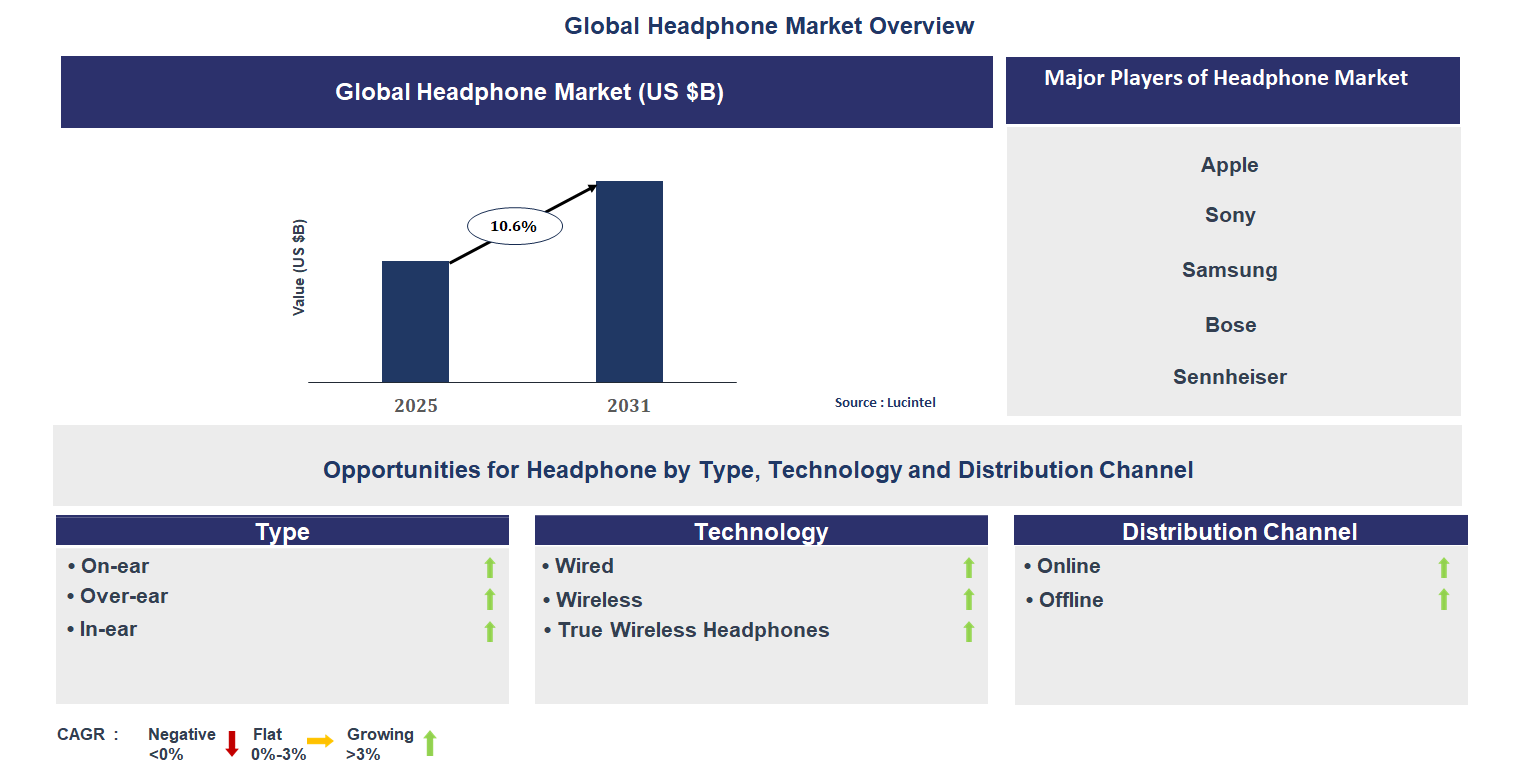
The future of the global headphone market looks promising with opportunities in the entertainment, sport, and gaming markets. The global headphone market is expected to grow with a CAGR of 10.6% from 2025 to 2031. The major drivers for this market are the demand for wireless & bluetooth headphones, the rising popularity of noise-canceling headphone features, and the growing adoption of headphones for gaming purposes.• Lucintel forecasts that, within the type category, in-ear is expected to witness the highest growth over the forecast period.
• Within the end use category, entertainment is expected to witness the highest growth.
• In terms of region, APAC is expected to witness the highest growth over the forecast period. Gain valuable insights for your business decisions with our comprehensive 150+ page report. Sample figures with some insights are shown below.
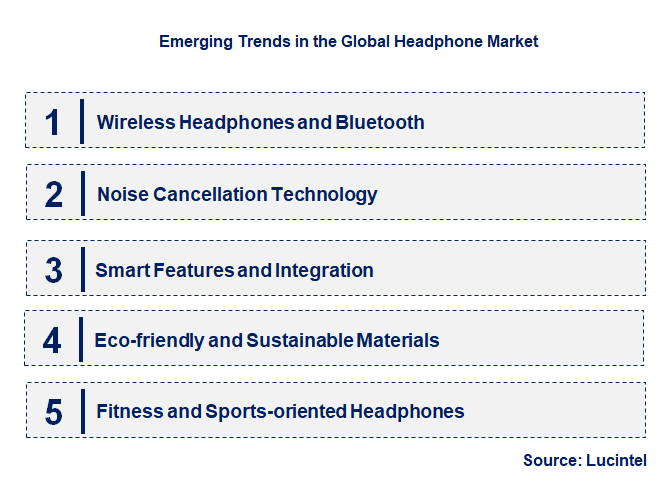
Emerging Trends in the Headphone Market
The headphone market is being reshaped by emerging trends that focus on technological innovation, user-centric designs, and evolving consumer preferences. As manufacturers continue to respond to increasing demand for better performance, convenience, and sustainability, several key trends are emerging across global markets.• Wireless Headphones and Bluetooth: Wireless headphones have become the dominant choice for consumers worldwide. Bluetooth 5.0 technology, which offers longer range, faster connection speeds, and improved sound quality, is rapidly gaining adoption. This trend is especially prominent in markets like the U.S., where convenience and portability are highly valued.
• Noise Cancellation Technology: Active Noise Cancellation (ANC) has become one of the most sought-after features in headphones, particularly for travelers and professionals. ANC technology provides a superior listening experience by blocking external noise, making it ideal for commuters, remote workers, and audiophiles who prioritize clear sound quality in noisy environments.
• Smart Features and Integration: Smart headphones with integrated AI, voice assistants, and adaptive sound features are becoming increasingly popular. Devices that can automatically adjust sound settings based on the environment or offer voice-controlled functions are gaining traction in markets like the U.S. and China, where consumers seek personalized experiences and convenience.
• Eco-friendly and Sustainable Materials: As consumers become more environmentally conscious, there is a growing demand for headphones made from sustainable materials. Brands are introducing eco-friendly models that feature biodegradable plastics, recycled materials, and energy-efficient production processes. This trend is particularly prominent in Europe, with consumers prioritizing eco-conscious brands.
• Fitness and Sports-oriented Headphones: The popularity of fitness and wellness continues to drive the demand for headphones specifically designed for active lifestyles. Water-resistant, sweatproof, and secure-fit designs are being developed to cater to gym-goers, athletes, and outdoor enthusiasts, especially in markets like India, where a younger demographic embraces fitness culture. These emerging trends, from wireless technology and noise cancellation to eco-friendly designs and fitness-focused products, are reshaping the headphone market. As consumer preferences evolve, brands are embracing innovation to meet the demands for smarter, more efficient, and sustainable audio solutions.
Recent Development in the Headphone Market
Recent developments in the headphone market are largely driven by technological advancements, evolving consumer preferences, and growing competition among brands. Key developments across regions have significantly influenced product features, design, and overall market dynamics, creating new opportunities for growth.• Introduction of Wireless Earbuds: The rise of true wireless earbuds, led by companies like Apple with their AirPods, has revolutionized the headphone market. These compact, convenient devices, often equipped with noise cancellation and touch controls, have become the preferred option for consumers in markets like the U.S. and China, where portability and comfort are top priorities.
• Integration of Voice Assistants: Headphones with built-in voice assistants like Amazon Alexa, Google Assistant, and Apple’s Siri have become increasingly popular. This development allows users to interact hands-free with their devices, enhancing convenience for tasks such as controlling smart home devices, making calls, or playing music. This feature is particularly popular in the U.S. and Japan.
• Growth of Noise-Canceling Headphones: Noise-canceling technology, especially in high-end models from brands like Sony and Bose, has become a key development in the market. This feature is now standard in many premium products, providing a better listening experience for those in noisy environments, from commuters to office workers. The demand for ANC headphones is growing in Europe and North America.
• Expansion of Affordable Wireless Options: As consumer demand for wireless solutions grows, affordable brands like boAt in India and Xiaomi in China have introduced high-quality, budget-friendly wireless headphones. These products often feature advanced features like touch controls, long battery life, and decent sound quality, making them popular among young, price-sensitive consumers.
• Enhanced Battery Life and Charging Features: Extended battery life, with some wireless headphones offering 20+ hours of usage, has become a key selling point. Additionally, innovations like wireless charging and fast charging features are improving the user experience, particularly for consumers on the go. This is a notable development in markets like the U.S. and China, where convenience is highly valued. Recent developments such as wireless earbuds, voice assistant integration, noise cancellation, and extended battery life are shaping the current landscape of the headphone market. These advancements reflect the markets shift toward smarter, more convenient, and high-performance products that cater to a variety of consumer needs.
Strategic Growth Opportunities in the Headphone Market
The headphone market presents multiple growth opportunities across various applications, driven by technological innovation, rising consumer demand for personalized audio experiences, and the need for sustainable products. As brands continue to innovate, new opportunities are emerging in both high-end and affordable segments.• Premium Wireless Headphones: There is a growing market for premium wireless headphones that offer superior sound quality, noise cancellation, and smart features. These products are particularly appealing to audiophiles and professionals seeking high-end audio experiences, with companies like Sony and Bose leading the charge. This segment is expected to grow significantly in the U.S. and Europe.
• Fitness and Sports Headphones: With the increasing popularity of fitness and wellness, there is a significant growth opportunity in the market for sports-oriented headphones. Features such as water resistance, secure fit, and sweatproof designs are essential for consumers looking for headphones that can withstand intense physical activity. Brands like JBL and Bose are capitalizing on this trend in markets like India and North America.
• True Wireless Earbuds for Everyday Use: The true wireless earbud market is booming, with consumers seeking compact, convenient, and high-quality audio solutions. Offering features like touch controls, long battery life, and seamless connectivity, these products cater to young, tech-savvy consumers in markets like China and Japan. Growth in this category is expected to continue.
• Sustainable and Eco-friendly Headphones: As environmental awareness grows, there is an increasing opportunity to develop headphones made from sustainable and recyclable materials. Brands that prioritize eco-friendly production processes and use biodegradable plastics are appealing to environmentally-conscious consumers, particularly in Europe, where sustainability is a high priority.
• Smart Headphones and Integration with IoT: Smart headphones with integrated IoT capabilities offer potential for growth, as consumers seek more intelligent audio devices. These headphones, which adapt sound profiles and integrate seamlessly with other smart devices, offer convenience and personalization. This trend is especially strong in the U.S. and Japan, where consumers demand high-tech, multifunctional products. The headphone market offers diverse growth opportunities, from premium wireless models and sports headphones to eco-friendly designs and smart audio products. Companies that can capitalize on these trends will be well-positioned to meet the evolving needs of global consumers and continue to thrive in the competitive market.
Headphone Market Driver and Challenges
The headphone market is influenced by various drivers such as technological advancements, evolving consumer demands, and increasing competition. However, challenges such as pricing pressures, saturation in some market segments, and the need for continuous innovation complicate growth. Understanding these dynamics is essential for success in this rapidly changing industry. The factors responsible for driving the headphone market include: 1. Technological Advancements: Continued innovation in wireless connectivity, noise cancellation, and smart features is a key driver. Bluetooth 5.0 and the integration of AI and voice assistants have transformed the user experience, making headphones smarter and more versatile. 2. Consumer Demand for Wireless Solutions: The growing preference for wireless headphones, especially among younger consumers, is a major market driver. Consumers prioritize the convenience, portability, and seamless connectivity that wireless headphones offer, pushing manufacturers to innovate. 3. Increasing Popularity of Fitness and Wellness: With the rise of fitness culture, there is an increased demand for headphones designed for sports, fitness, and outdoor activities. Features such as sweatproofing, secure fit, and long battery life are becoming essential for this demographic. 4. Growth of Streaming Services: The widespread adoption of music streaming services like Spotify and Apple Music has fueled the demand for quality headphones. Consumers are willing to invest in high-quality audio equipment to enhance their listening experience. 5. Sustainability and Eco-consciousness: With rising environmental awareness, consumers are increasingly choosing brands that offer eco-friendly products. This trend is driving the development of sustainable headphones made from recycled and biodegradable materials. Challenges in the headphone market are: 1. Pricing Pressures: The increasing demand for premium features, such as noise cancellation and long battery life, puts pressure on manufacturers to balance cost and performance, particularly in the budget-friendly segment. 2. Market Saturation: The headphone market is becoming increasingly saturated, with numerous brands offering similar products. Differentiating offerings and maintaining competitive advantages through innovation are challenges that brands must address. 3. Technological Compatibility Issues: As new technologies emerge, ensuring compatibility across different devices and ecosystems remains a challenge. Manufacturers must focus on creating universal solutions to maintain broad consumer appeal. The headphone market is driven by technological innovation, consumer preferences for wireless and smart products, and environmental sustainability. However, manufacturers face challenges such as pricing pressures, market saturation, and technological compatibility. Understanding and addressing these drivers and challenges will be critical for companies looking to maintain their competitive edge.List of Headphone Companies
Companies in the market compete on the basis of product quality offered. Major players in this market focus on expanding their manufacturing facilities, R&D investments, infrastructural development, and leverage integration opportunities across the value chain. With these strategies headphone companies cater increasing demand, ensure competitive effectiveness, develop innovative products & technologies, reduce production costs, and expand their customer base. Some of the headphone companies profiled in this report include-• Apple
• Sony
• Samsung
• Bose
• Sennheiser
• Skullcandy
• Anker
Headphone Market by Segment
The study includes a forecast for the global headphone market by type, technology, distribution channel, end use, and region.Headphone Market by Type [Value from 2019 to 2031]:
• On-ear
• Over-ear
• In-ear
Headphone Market by Technology [Value from 2019 to 2031]:
• Wired
• Wireless
• True Wireless Headphones
Headphone Market by Distribution Channel [Value from 2019 to 2031]:
• Online
• Offline
Headphone Market by End Use [Value from 2019 to 2031]:
• Entertainment
• Sports
• Gaming
Headphone Market by Region [Value from 2019 to 2031]:
• North America
• Europe
• Asia Pacific
• The Rest of the World
Country Wise Outlook for the Headphone Market
The global headphone market is evolving rapidly due to advancements in audio technology, the increasing demand for wireless solutions, and the growing focus on noise cancellation and sound quality. In key markets like the United States, China, Germany, India, and Japan, consumer preferences are shifting towards premium products, with companies striving to meet expectations around comfort, performance, and smart features.• United States: The U.S. headphone market continues to thrive with a strong preference for premium wireless headphones, especially noise-canceling models and those integrated with smart assistants. Brands like Bose, Sony, and Apple lead the market, focusing on enhancing user experience with features such as voice control, adaptive sound settings, and extended battery life. The trend towards fitness-oriented headphones also continues to grow.
• China: China remains a major player in both production and consumption of headphones. Local brands like Xiaomi and Huawei are increasingly dominating the affordable segment, while international brands target the premium market. Innovations in wireless charging, Bluetooth 5.0 technology, and AI-powered sound optimization are emerging trends in the Chinese market, with an increasing demand for integration with smart home ecosystems.
• Germany: In Germany, there is a growing demand for high-quality, audiophile-grade headphones, especially among the tech-savvy and professional demographic. The market is seeing a rise in both wired and wireless premium headphones from brands like Sennheiser and Beyerdynamic. Moreover, eco-friendly materials and sustainable manufacturing practices are gaining traction, with consumers favoring brands committed to reducing environmental impact.
• India: The Indian headphone market is experiencing rapid growth, driven by rising disposable incomes and the increasing popularity of music streaming services. Brands like boAt, Sony, and JBL are capitalizing on this trend by offering affordable yet feature-packed wireless models. Noise cancellation and water-resistant designs are gaining traction, particularly among young consumers and fitness enthusiasts.
• Japan: Japan is witnessing a surge in demand for high-tech headphones, particularly wireless earphones that offer seamless integration with smartphones and other devices. Companies like Sony and Panasonic dominate the market, focusing on compact, high-performance products with advanced noise-canceling technology. The Japanese market also values superior sound quality, leading to strong sales of high-end and audiophile-focused headphones.

Features of the Global Headphone Market
Market Size Estimates: Headphone market size estimation in terms of value ($B). Trend and Forecast Analysis: Market trends (2019 to 2024) and forecast (2025 to 2031) by various segments and regions. Segmentation Analysis: Headphone market size by various segments, such as by type, technology, distribution channel, end use, and region in terms of value ($B). Regional Analysis: Headphone market breakdown by North America, Europe, Asia Pacific, and Rest of the World. Growth Opportunities: Analysis of growth opportunities in different types, technologies, distribution channels, end uses, and regions for the headphone market. Strategic Analysis: This includes M&A, new product development, and competitive landscape of the headphone market. Analysis of competitive intensity of the industry based on Porter’s Five Forces model.
FAQ
Q1. What is the growth forecast for headphone market? Answer: The global headphone market is expected to grow with a CAGR of 10.6% from 2025 to 2031. Q2. What are the major drivers influencing the growth of the headphone market? Answer: The major drivers for this market are the demand for wireless & bluetooth headphones, the rising popularity of noise-canceling headphone features, and the growing adoption of headphones for gaming purposes. Q3. What are the major segments for headphone market? Answer: The future of the headphone market looks promising with opportunities in the entertainment, sport, and gaming markets. Q4. Who are the key headphone market companies? Answer: Some of the key headphone companies are as follows:• Apple
• Sony
• Samsung
• Bose
• Sennheiser
• Skullcandy
• Anker Q5. Which headphone market segment will be the largest in future? Answer: Lucintel forecasts that, within the type category, in-ear is expected to witness the highest growth over the forecast period. Q6. In headphone market, which region is expected to be the largest in next 5 years? Answer: In terms of region, APAC is expected to witness the highest growth over the forecast period. Q7. Do we receive customization in this report? Answer: Yes, Lucintel provides 10% customization without any additional cost.
Table of Contents
List of Figures
List of Tables
Methodology
- In-depth interviews of the major players in this market
- Detailed secondary research from competitors’ financial statements and published data
- Extensive searches of published works, market, and database information pertaining to industry news, company press releases, and customer intentions
- A compilation of the experiences, judgments, and insights of Lucintel’s professionals, who have analyzed and tracked this market over the years.


Buy Now
Choose a license that fits your team. Instant PDF delivery.
Prices exclude taxes. Instant delivery. Custom licensing available on request.
Key Questions
- • What are some of the most promising, high-growth opportunities for the headphone market by type (on-ear, over-ear, and in-ear), technology (wired, wireless, and true wireless headphones), distribution channel (online and offline), end use (entertainment, sports , and gaming ), and region (North America, Europe, Asia Pacific, and the Rest of the World)?
- • Which segments will grow at a faster pace and why?
- • Which region will grow at a faster pace and why?
- • What are the key factors affecting market dynamics? What are the key challenges and business risks in this market?
- • What are the business risks and competitive threats in this market?
- • What are the emerging trends in this market and the reasons behind them?
- • What are some of the changing demands of customers in the market?
- • What are the new developments in the market? Which companies are leading these developments?
- • Who are the major players in this market? What strategic initiatives are key players pursuing for business growth?
- • What are some of the competing products in this market and how big of a threat do they pose for loss of market share by material or product substitution?
- • What M&A activity has occurred in the last 5 years and what has its impact been on the industry? For any questions related to Headphone Market, Headphone Market Size, Headphone Market Growth, Headphone Market Analysis, Headphone Market Report, Headphone Market Share, Headphone Market Trends, Headphone Market Forecast, Headphone Companies, write Lucintel analyst at email: helpdesk@lucintel.com. We will be glad to get back to you soon.


