
Market Report · July 22, 2026

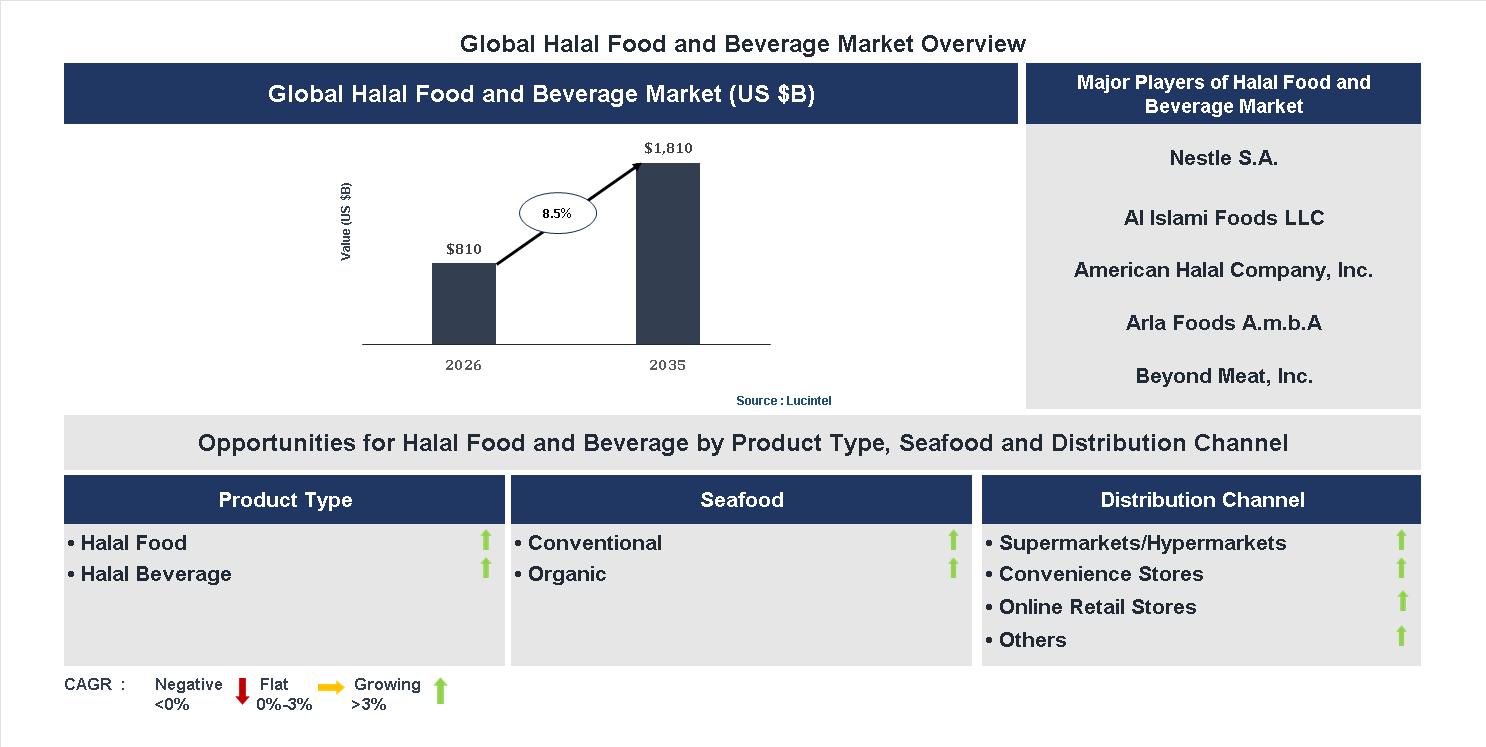
Key data points: The market size in 2035 = $1,810 billion, growth forecast = 8.5% annually for the next 8 years. Scroll below to get more insights. This market report covers trends, opportunities and forecasts in halal food and beverage market to 2035 by product type (halal food and halal beverage), seafood (conventional and organic), distribution channel (supermarkets/hypermarkets, convenience stores, online retail stores, and others), and region (North America, Europe, Asia Pacific, and the Rest of the World)
We'll send your sample report shortly.
• Lucintel forecasts that, within the distribution channel category, online retail store is expected to witness the highest growth over the forecast period.
• Within the product type category, halal beverage is expected to witness higher growth.
• In terms of region, APAC is expected to witness the highest growth over the forecast period. Gain valuable insights for your business decisions with our comprehensive 150+ page report. Sample figures with some insights are shown below.
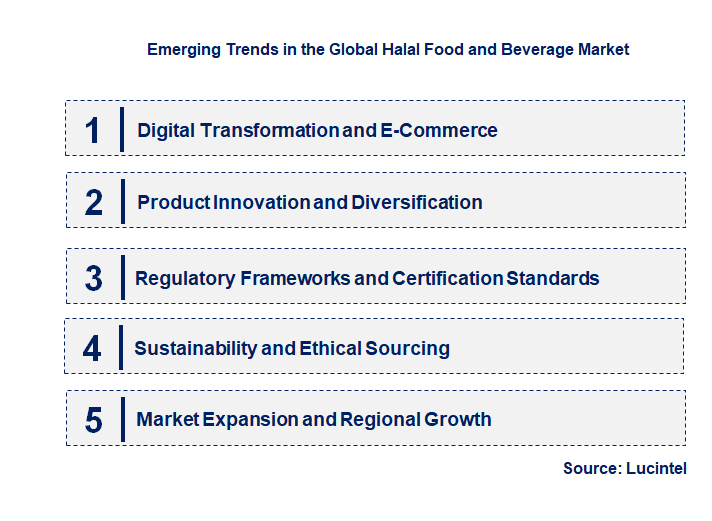
• Digital Transformation and E-commerce: The rise of online platforms and digital marketing strategies is making Halal products more accessible to consumers worldwide. E-commerce allows brands to reach niche markets efficiently, providing detailed product information, certifications, and customer reviews. Mobile apps and online marketplaces facilitate seamless purchasing experiences, especially in regions with limited physical retail outlets. This trend enhances consumer engagement, broadens market reach, and accelerates product innovation, ultimately driving sales growth and market penetration across diverse demographics.
• Product Innovation and Diversification: Companies are developing innovative Halal products to cater to evolving consumer preferences, including plant-based, organic, and functional foods. There is a growing demand for Halal-certified snacks, beverages, and ready-to-eat meals that align with health and wellness trends. Additionally, premium and luxury Halal products are entering the market, targeting affluent consumers seeking quality and exclusivity. This diversification broadens the market scope, attracts new customer segments, and encourages product differentiation, fostering competitive advantage and market expansion.
• Regulatory Frameworks and Certification Standards: Governments and industry bodies are establishing stricter Halal certification standards to ensure product authenticity and safety. Transparent certification processes build consumer trust and facilitate international trade. Harmonization of standards across regions simplifies market entry for exporters and reduces trade barriers. Enhanced regulatory oversight also encourages manufacturers to maintain high-quality standards, fostering consumer confidence and supporting sustainable growth in the sector.
• Sustainability and Ethical Sourcing: Consumers are increasingly prioritizing environmentally friendly and ethically sourced products. Halal food producers are adopting sustainable practices, such as responsible sourcing of ingredients, eco-friendly packaging, and waste reduction initiatives. These efforts appeal to environmentally conscious consumers and align with global sustainability goals. Incorporating sustainability into product development enhances brand reputation, meets regulatory requirements, and opens new market opportunities, positioning the industry as a responsible and forward-thinking sector.
• Market Expansion and Regional Growth: The Halal food market is expanding beyond traditional Muslim-majority countries into regions like Asia-Pacific, Europe, and North America. Growing Muslim populations, coupled with increasing demand from non-Muslim consumers interested in Halal products for perceived health and ethical benefits, drive this expansion. Strategic partnerships, local manufacturing, and tailored marketing campaigns facilitate regional growth. This trend diversifies revenue streams, increases market size, and encourages cross-cultural acceptance, making the Halal food industry a significant global player. These emerging trends are transforming the halal food and beverage market by enhancing accessibility, product diversity, regulatory clarity, sustainability, and global reach. They are fostering innovation, building consumer trust, and opening new opportunities, ultimately reshaping the industry into a dynamic, inclusive, and sustainable sector poised for continued growth.
• Digital Certification Platforms: Streamlining Halal Verification : The adoption of digital platforms for halal certification enhances transparency, reduces fraud, and simplifies compliance for producers. These platforms enable real-time verification, improve consumer trust, and facilitate international trade. As digital solutions become more widespread, they support market expansion by ensuring consistent standards and easier access to halal-certified products globally. This technological shift is crucial for building consumer confidence and fostering industry growth.
• Plant-Based Halal Products: Expanding Dietary Options : The rise of plant-based foods tailored to halal standards offers new opportunities for health-conscious and ethically driven consumers. These products cater to vegetarians, vegans, and those seeking sustainable options, broadening the market base. Innovations in plant-based ingredients and processing techniques are making halal-certified plant-based foods more accessible and appealing. This development is expected to significantly boost market share and diversify product offerings.
• E-commerce and Online Retail Expansion: Reaching Global Consumers : The growth of e-commerce platforms has revolutionized access to halal foods, especially in regions with limited physical retail options. Online retail provides convenience, wider product variety, and competitive pricing, attracting a broader consumer base. Digital marketing and targeted advertising further enhance visibility and sales. As online channels expand, they play a vital role in increasing market penetration and supporting small and medium-sized enterprises in the halal sector.
• Sustainable and Organic Halal Products: Meeting Ethical Consumer Demands : Increasing consumer awareness about sustainability and organic practices is driving demand for eco-friendly halal foods. Producers adopting organic farming, ethical sourcing, and environmentally friendly packaging are gaining a competitive edge. These products appeal to health-conscious and environmentally aware consumers, fostering brand loyalty. The focus on sustainability is expected to shape future product development, positioning the market as a responsible and innovative sector.
• Strategic Global Market Entry: Penetrating New Regions : Companies are increasingly targeting emerging markets in Africa, Southeast Asia, and Latin America to expand their reach. Tailored marketing strategies, local partnerships, and understanding regional preferences are key to successful entry. This approach helps tap into growing middle-class populations and rising disposable incomes. Strategic expansion into these regions is vital for market growth, diversification, and establishing a global presence in the halal food and beverage industry. The overall impact of these developments is a more dynamic, accessible, and diverse halal food and beverage market. Enhanced technological integration, product innovation, and strategic expansion are driving growth, increasing consumer trust, and opening new opportunities worldwide. These trends are positioning the sector for sustained expansion and increased competitiveness in the global food industry.
• Expansion of Halal Product Offerings Across Food Categories: The market is witnessing a surge in diverse halal products, including snacks, beverages, and ready-to-eat meals, catering to various consumer preferences. Companies are innovating with organic, vegan, and functional foods to attract health-conscious consumers. This diversification helps brands penetrate new segments and increase market share, especially in non-Muslim-majority regions where halal options are gaining popularity. Strategic product development and certification are key to capturing these opportunities.
• Growing Demand for Certified Halal Food in International Markets: Certification plays a crucial role in building consumer trust and ensuring compliance with halal standards. As global awareness increases, demand for certified halal products is rising in regions like Europe, North America, and Asia-Pacific. Companies investing in robust certification processes and transparent supply chains can differentiate themselves. This trend opens avenues for exports, partnerships, and expansion into new markets, boosting overall market growth and consumer confidence.
• Adoption of Digital Platforms for Distribution and Marketing: E-commerce and digital marketing are transforming how halal products reach consumers. Online platforms enable brands to target niche markets, provide detailed product information, and facilitate direct consumer engagement. Social media campaigns, influencer collaborations, and virtual storefronts help expand reach and educate consumers about halal standards. Leveraging digital channels enhances accessibility, reduces distribution costs, and accelerates market penetration, especially among younger demographics seeking convenience and transparency.
• Strategic Partnerships and Collaborations for Market Penetration: Collaborations between local producers, international brands, and certification bodies are vital for expanding halal product availability. Joint ventures facilitate knowledge sharing, quality improvement, and access to new markets. Partnerships with retail chains and foodservice providers help increase product visibility and shelf space. These alliances enable companies to adapt to regional preferences, streamline supply chains, and strengthen brand credibility, thereby accelerating growth in competitive markets.
• Focus on Sustainability and Ethical Sourcing in Halal Food Production: Consumers are increasingly prioritizing sustainability, animal welfare, and ethical sourcing in their purchasing decisions. Halal food producers are adopting eco-friendly practices, transparent supply chains, and humane animal treatment to meet these expectations. Incorporating organic ingredients and reducing environmental impact enhances brand reputation and appeals to a broader audience. Emphasizing sustainability aligns with halal principles and provides a competitive edge, fostering long-term growth and consumer loyalty. These growth opportunities are shaping the future of the halal food and beverage market by expanding product diversity, enhancing certification standards, leveraging digital channels, fostering strategic alliances, and emphasizing sustainability. Collectively, they enable market players to meet evolving consumer demands, penetrate new regions, and sustain competitive advantage, ultimately driving robust growth and innovation in this expanding industry.
• Growing Muslim Population and Demographic Trends: The expanding Muslim population globally, particularly in regions like Asia-Pacific, the Middle East, and Africa, significantly boosts demand for halal-certified products. As these populations grow, so does their purchasing power and preference for halal foods, which are perceived as healthier and ethically aligned with their beliefs. This demographic shift encourages manufacturers to expand halal product lines, invest in certification processes, and innovate to meet diverse consumer preferences. Additionally, increasing urbanization and rising disposable incomes further stimulate demand, making halal food a lucrative segment for both local and international players.
• Rising Consumer Awareness and Ethical Considerations: Consumers are increasingly seeking transparency, quality, and ethical standards in their food choices. The halal certification process assures consumers of product safety, hygiene, and adherence to religious guidelines. This awareness drives demand for authentic halal products, prompting brands to emphasize certification, traceability, and quality assurance. Moreover, ethical considerations such as animal welfare and sustainable sourcing are aligning with halal principles, attracting a broader consumer base beyond religious communities. This trend encourages market players to adopt rigorous standards and communicate their compliance effectively to build trust and loyalty.
• Technological Advancements in Food Processing and Certification: Innovations in food processing, packaging, and certification technologies are transforming the halal food industry. Advanced methods ensure product safety, extend shelf life, and maintain halal integrity throughout the supply chain. Digital platforms and blockchain technology facilitate transparent traceability, reducing fraud and enhancing consumer confidence. Automated certification systems streamline compliance processes, making it easier for manufacturers to obtain and maintain halal certification. These technological developments enable scalability, improve product quality, and reduce costs, thereby expanding market reach and fostering innovation within the halal food sector.
• Expansion of E-commerce and Distribution Channels: The proliferation of online retail platforms and digital marketing has opened new avenues for halal food distribution. E-commerce allows consumers in remote or underserved regions to access a wide range of halal products conveniently. It also enables brands to target niche markets and engage directly with consumers through personalized marketing. The growth of online grocery stores, mobile apps, and social media marketing enhances visibility and consumer engagement. This expansion supports market penetration, accelerates product launches, and facilitates real-time feedback, ultimately driving sales growth and market diversification.
• Increasing Investment and Strategic Partnerships: Investment from both public and private sectors is fueling market growth. Governments and industry bodies are promoting halal standards, certification, and research initiatives to boost confidence and quality. Strategic partnerships between local producers and international brands facilitate technology transfer, market access, and product innovation. Mergers and acquisitions also enable market consolidation, expanding product portfolios and geographic reach. These investments and collaborations foster a competitive environment, encourage innovation, and support the development of a robust halal food ecosystem capable of meeting global demand. The challenges facing the halal food and beverage market include:
• Strict Regulatory and Certification Requirements: The halal food industry faces complex regulatory landscapes that vary across countries and regions. Ensuring compliance with diverse standards and obtaining certifications can be time-consuming and costly. Variations in certification processes, documentation, and inspection protocols create barriers for manufacturers, especially small and medium enterprises. Non-compliance risks product recalls, legal penalties, and damage to brand reputation. Additionally, maintaining consistent standards across supply chains is challenging, particularly with imported ingredients and processed foods. Navigating these regulatory complexities requires significant resources and expertise, which can hinder market entry and expansion.
• Supply Chain Complexities and Traceability Issues: Ensuring the integrity of halal products throughout the supply chain is a significant challenge. The need for strict segregation of halal and non-halal ingredients, along with maintaining hygiene standards, complicates logistics. Traceability issues can lead to contamination or mislabeling, undermining consumer trust. Global supply chains involve multiple stakeholders, increasing the risk of non-compliance or fraud. Additionally, sourcing certified halal ingredients consistently and cost-effectively remains difficult, especially in regions with limited supply. These complexities demand robust monitoring systems and supply chain transparency, which can increase operational costs and impact product availability.
• Cultural Sensitivities and Consumer Trust: Building and maintaining consumer trust in halal products requires cultural sensitivity and authenticity. Mislabeling or perceived insincerity can lead to skepticism and reduced demand. Variations in halal standards across different communities and countries can create confusion and mistrust among consumers. Addressing these sensitivities involves transparent communication, rigorous certification, and community engagement, which can be resource-intensive. Moreover, cultural differences may influence product preferences and acceptance, requiring tailored marketing strategies. Failure to respect cultural nuances can result in brand damage and lost market opportunities, emphasizing the importance of authenticity and cultural competence. In summary, the halal food and beverage market is driven by demographic growth, consumer awareness, technological innovation, distribution expansion, and strategic investments. However, regulatory complexities, supply chain challenges, and cultural sensitivities pose significant hurdles. These factors collectively influence market dynamics, requiring stakeholders to adopt adaptive strategies, invest in compliance, and foster trust. The overall impact is a rapidly evolving market with substantial growth potential, provided that challenges are effectively managed through innovation, transparency, and cultural understanding. This balanced approach will determine the long-term sustainability and competitiveness of the halal food industry globally.
• Nestle S.A.
• Al Islami Foods LLC
• American Halal Company, Inc.
• Arla Foods A.m.b.A
• Beyond Meat, Inc.
• Midamar Corporation
• Crescent Specialty Foods, Inc.
• Almarai Company Limited
• SADAFCO
• BRF S.A.
• Halal Food
• Halal Beverage
• Conventional
• Organic
• Supermarkets/Hypermarkets
• Convenience Stores
• Online Retail Stores
• Others
• North America
• Europe
• Asia Pacific
• The Rest of the World
• United States: The US market has seen a surge in halal product offerings, with major food brands expanding their halal lines to cater to diverse Muslim communities and health-conscious consumers. Retail chains are increasing halal-certified sections, and online platforms are providing easier access to halal foods. Innovations in halal snacks and ready-to-eat meals are gaining popularity, alongside stricter certification standards to ensure authenticity and quality. The US also witnesses growing interest in halal beverages, including organic and functional drinks, reflecting broader health trends.
• China: China’s halal food market is rapidly expanding, driven by its large Muslim population, particularly among Hui and Uighur communities. The government is supporting halal certification processes to boost exports and domestic sales. New product development focuses on traditional flavors with modern packaging, appealing to younger consumers. E-commerce platforms are playing a vital role in increasing accessibility, and international brands are entering the market with localized offerings. Additionally, halal food festivals and expos are promoting awareness and fostering industry collaborations.
• Germany: Germany’s halal food sector is experiencing notable growth, fueled by its sizable Muslim immigrant population and increasing demand for diverse culinary options. Supermarkets are expanding halal sections, and local producers are obtaining halal certification to meet consumer needs. There is a rising trend in halal organic and vegan products, aligning with health and sustainability concerns. The market also benefits from European Union halal standards, which facilitate cross-border trade. Innovative marketing strategies, including social media campaigns, are enhancing consumer engagement and brand loyalty.
• India: India’s halal food market is expanding due to its large Muslim demographic and growing middle class seeking quality and authentic products. Local manufacturers are investing in halal certification to access both domestic and international markets. Traditional Indian flavors are being incorporated into halal snack foods, dairy, and processed items. The government is promoting halal exports through certification and quality assurance programs. Additionally, the rise of online retail channels is making halal products more accessible across urban and rural areas, supporting market growth and diversification.
• Japan: Japan’s halal food market is emerging as a niche but rapidly growing segment, primarily driven by increasing Muslim tourists and expatriates. Local restaurants and food producers are obtaining halal certification to cater to this demographic. Innovative products include halal-certified snacks, instant noodles, and convenience foods tailored to Japanese tastes. The government and industry associations are collaborating to improve halal standards and certification processes. Digital marketing and halal food festivals are raising awareness, and collaborations with international brands are helping to expand product availability in retail outlets.


• Nestle S.A.
• Al Islami Foods LLC
• American Halal Company, Inc.
• Arla Foods A.m.b.A
• Beyond Meat, Inc.
• Midamar Corporation
• Crescent Specialty Foods, Inc.
• Almarai Company Limited
• SADAFCO
• BRF S.A. Q6. Which halal food and beverage market segment will be the largest in future? Answer: Lucintel forecasts that, within the distribution channel category, online retail store is expected to witness the highest growth over the forecast period. Q7. In halal food and beverage market, which region is expected to be the largest in next 5 years? Answer: In terms of region, APAC is expected to witness the highest growth over the forecast period. Q8. Do we receive customization in this report? Answer: Yes, Lucintel provides 10% customization without any additional cost.


Choose a license that fits your team. Instant PDF delivery.
Prices exclude taxes. Instant delivery. Custom licensing available on request.
Market Report · July 22, 2026
Market Report · July 22, 2026
Market Report · July 22, 2026
Trusted partner for strategic intelligence and business growth


Receive a complimentary market analysis tailored to your industry. Our analysts will identify key growth opportunities and competitive dynamics specific to your business.

Market size, growth rate, and key trend analysis for your specific sector.

Top competitor positioning and market share analysis.

Strategic recommendations backed by data-driven insights.
Get curated market intelligence and competitive moves straight to your inbox.
By subscribing, you agree to receive our monthly insights. Unsubscribe anytime.
Receive a complimentary market analysis tailored to your industry. Our analysts will identify key growth opportunities and competitive dynamics specific to your business.
Market size, growth rate, and key trend analysis for your specific sector.
Top competitor positioning and market share analysis.
Strategic recommendations backed by data-driven insights.
Get curated market intelligence, emerging trends, and competitive moves straight to your inbox each month.
By subscribing, you agree to receive our monthly insights. Unsubscribe anytime.
We'll send your sample report shortly.