Hair Care Product Market Trends and Forecast
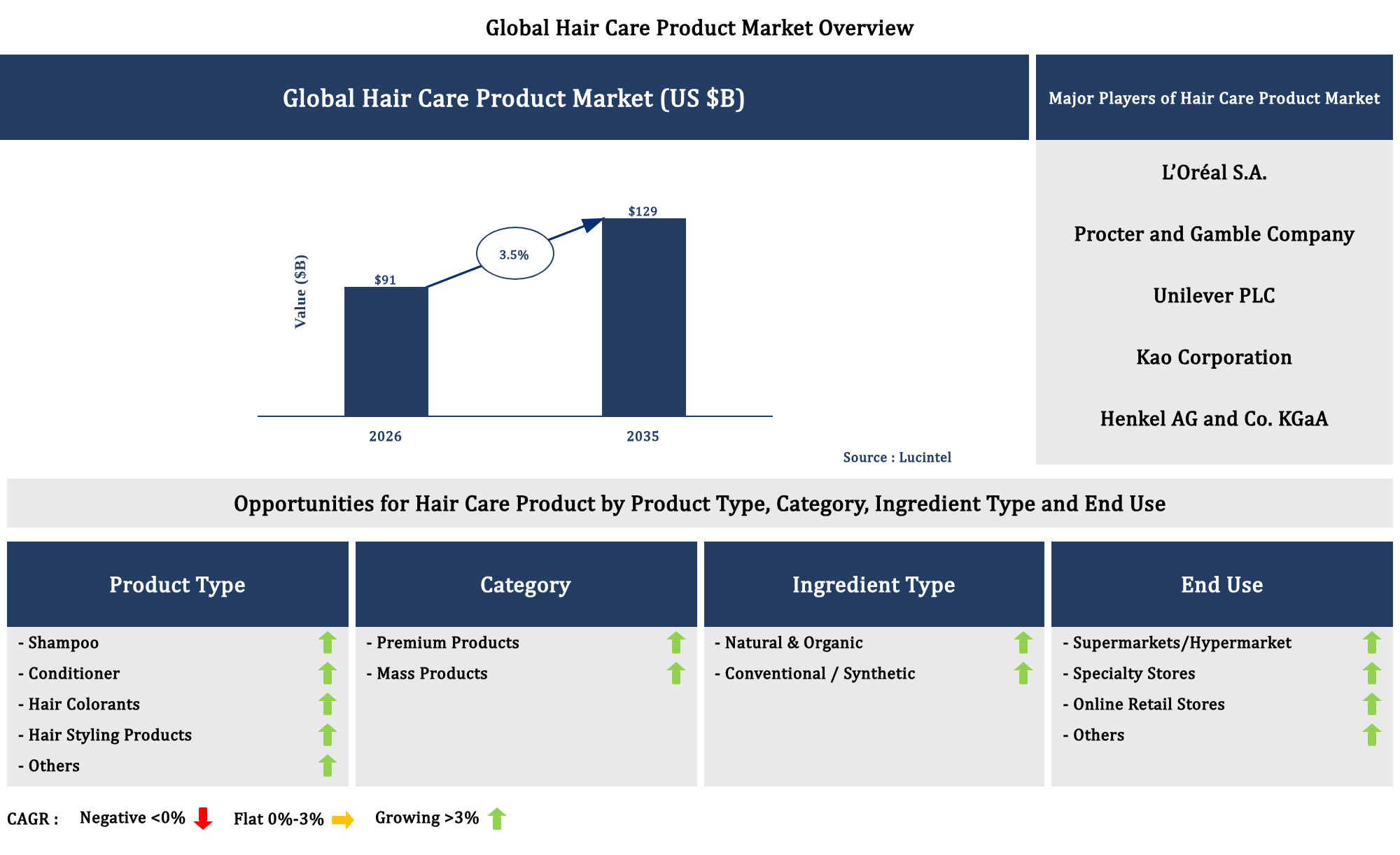
The future of the global hair care product market looks promising with opportunities in the shampoo, conditioner, hair colorant, and hair styling product markets. The global hair care product market is expected to reach an estimated $141 billion by 2035 with a CAGR of 4.1% from 2026 to 2035. The major drivers for this market are the increasing demand for premium formulations, the rising awareness about scalp health, and the growing preference for natural ingredients.
• Lucintel forecasts that, within the ingredient type category, natural & organic is expected to witness higher growth over the forecast period.
• Within the product type category, shampoo is expected to witness the highest growth.
• In terms of region, APAC is expected to witness the highest growth over the forecast period.
Gain valuable insights for your business decisions with our comprehensive 150+ page report. Sample figures with some insights are shown below.
Emerging Trends in the Hair Care Product Market
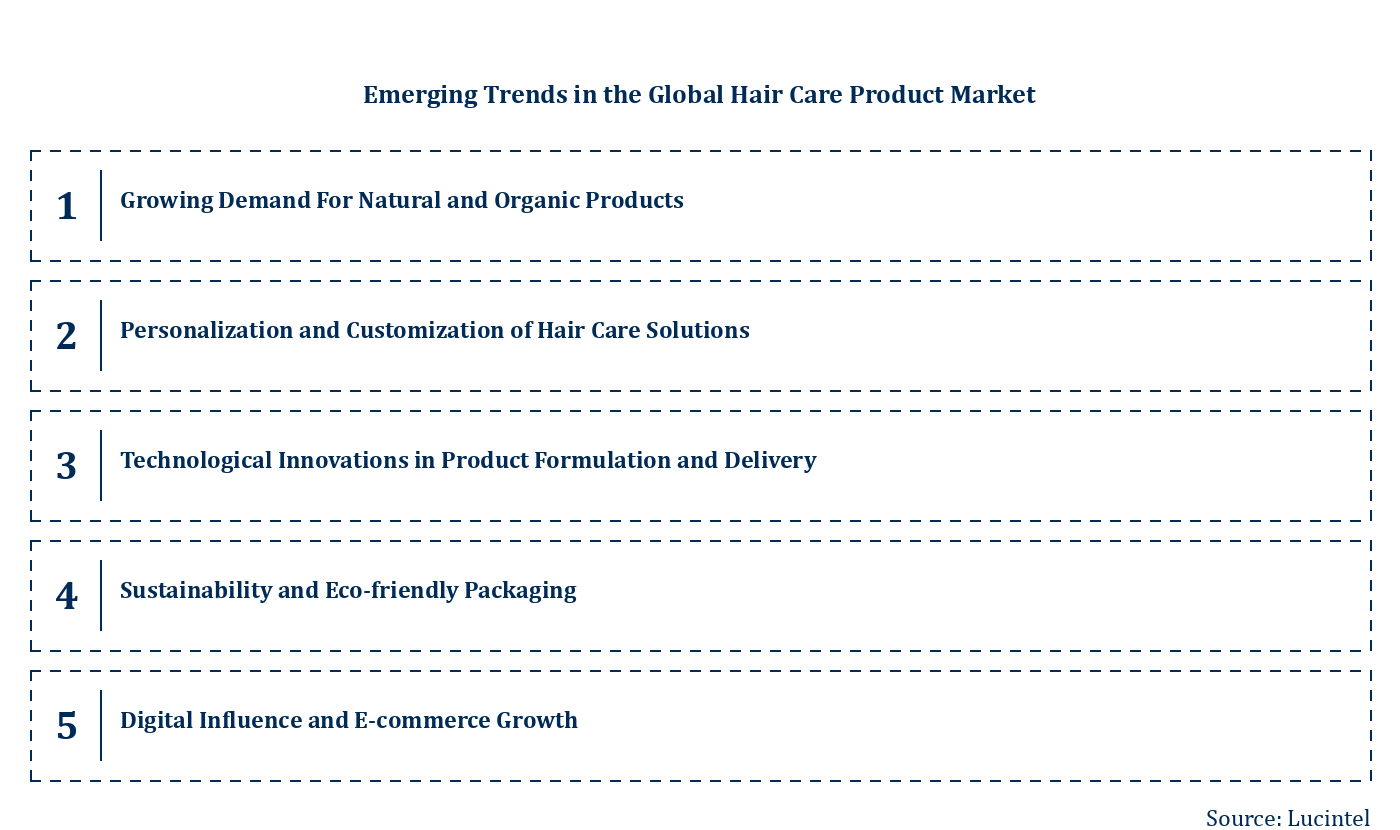
The hair care product market is experiencing rapid evolution driven by changing consumer preferences, technological advancements, and a growing emphasis on sustainability. As consumers become more conscious of ingredients, environmental impact, and personalized solutions, brands are innovating to meet these demands. The market is also witnessing a shift towards natural and organic products, digital engagement, and inclusive marketing strategies. These developments are not only transforming product offerings but also redefining how brands connect with consumers. Understanding these emerging trends is crucial for stakeholders aiming to stay competitive and relevant in this dynamic landscape.
• Increased Demand for Natural and Organic Products: Consumers are prioritizing health and environmental concerns, leading to a surge in natural, organic, and chemical-free hair care products. This trend reflects a desire for safer, eco-friendly options that deliver effective results without harmful ingredients. Brands are reformulating products and highlighting natural ingredients to attract health-conscious buyers, which boosts market growth and encourages innovation in sustainable formulations.
• Technological Innovations and Personalization: Advances in technology enable brands to offer personalized hair care solutions tailored to individual hair types, concerns, and preferences. Digital tools like AI-driven diagnostics and online consultations enhance customer experience and engagement. This trend fosters loyalty and allows brands to differentiate themselves through customized products, ultimately driving sales and market expansion.
• Sustainability and Eco-Friendly Packaging: Environmental concerns are prompting brands to adopt sustainable practices, including biodegradable packaging, refillable containers, and reduced plastic use. Consumers increasingly favor brands that demonstrate environmental responsibility, influencing purchasing decisions. This shift encourages innovation in packaging materials and sustainable supply chain practices, aligning market growth with ecological preservation.
• Digital Engagement and E-Commerce Growth: The rise of online shopping and social media marketing has transformed how consumers discover and purchase hair care products. Brands leverage influencer collaborations, tutorials, and targeted advertising to reach wider audiences. E-commerce platforms facilitate direct-to-consumer sales, providing convenience and personalized shopping experiences, which significantly boost market reach and revenue.
• Inclusive and Diverse Marketing Strategies: The market is embracing diversity by offering products suitable for all hair types, textures, and ethnicities. Inclusive marketing campaigns promote representation and cater to a broader consumer base. This approach enhances brand loyalty, expands market share, and reflects societal shifts towards acceptance and individuality, reshaping industry standards and consumer expectations.
These trends are collectively reshaping the hair care product market by fostering innovation, promoting sustainability, and emphasizing personalized, inclusive experiences. They are driving growth, encouraging responsible practices, and redefining consumer engagement, ensuring the market remains vibrant and responsive to evolving demands.
Recent Development in the Hair Care Product Market
The hair care product market is experiencing rapid growth driven by evolving consumer preferences, technological advancements, and increasing awareness of hair health. Innovations in natural ingredients, sustainable packaging, and personalized solutions are reshaping the industry landscape. Market players are focusing on expanding product lines and entering emerging markets to capitalize on rising demand. These developments are creating new opportunities for brands to differentiate themselves and meet diverse consumer needs, ultimately fueling market expansion and competition.
• Growing Demand for Natural and Organic Products: Increasing consumer awareness about health and environmental issues is driving demand for natural, organic, and chemical-free hair care products. This shift is encouraging brands to develop eco-friendly formulations, which enhances brand loyalty and attracts a broader customer base. The trend supports sustainable growth and encourages innovation in ingredient sourcing and product development, positioning the market for long-term expansion.
• Technological Innovations in Hair Care: Advancements such as nanotechnology, AI-driven personalization, and smart hair care devices are transforming the industry. These innovations enable tailored solutions for individual hair types and concerns, improving efficacy and customer satisfaction. The integration of technology enhances product performance, creates new revenue streams, and attracts tech-savvy consumers, thereby strengthening market competitiveness and fostering continuous innovation.
• Expansion in Emerging Markets: Rapid urbanization, rising disposable incomes, and increasing beauty consciousness are fueling growth in emerging markets like India, Brazil, and Southeast Asia. Companies are investing in localized marketing and distribution channels to tap into these opportunities. This expansion broadens the consumer base, diversifies revenue sources, and accelerates global market growth, making emerging markets critical to the industry’s future trajectory.
• Focus on Sustainability and Eco-Friendly Packaging: Consumers are increasingly demanding environmentally responsible products, prompting brands to adopt sustainable packaging solutions such as biodegradable bottles and refill systems. This shift reduces environmental impact and aligns with corporate social responsibility goals. Emphasizing sustainability enhances brand image, attracts eco-conscious consumers, and complies with regulatory standards, thereby fostering market resilience and encouraging industry-wide eco-innovation.
• Rise of E-commerce and Digital Marketing: The proliferation of online shopping platforms and social media has revolutionized product distribution and marketing strategies. Brands leverage digital channels for targeted advertising, influencer collaborations, and direct-to-consumer sales, expanding reach and engagement. This digital shift accelerates product launches, provides valuable consumer insights, and boosts sales, making e-commerce a vital component of growth and competitiveness in the hair care market.
These developments are significantly transforming the hair care product market by fostering innovation, expanding consumer choices, and promoting sustainability. The integration of natural ingredients, technological advancements, and digital marketing strategies is driving growth and competition. As emerging markets grow and sustainability becomes central, the industry is poised for sustained expansion, offering new opportunities for brands to meet evolving consumer demands and strengthen their market positions.
Strategic Growth Opportunities in the Hair Care Product Market
The hair care product market is experiencing rapid expansion driven by increasing consumer awareness, evolving beauty standards, and technological advancements. Growing demand for natural and organic products, personalized solutions, and innovative formulations are shaping the competitive landscape. Market players are focusing on expanding distribution channels and targeting emerging markets to capitalize on new growth opportunities. This dynamic environment offers significant potential for brands to innovate and meet diverse consumer needs, ultimately fueling sustained market growth and diversification.
• Product Innovation and Natural Formulations: The rising consumer preference for natural, organic, and chemical-free hair care products presents a significant growth opportunity. Companies investing in R&D to develop plant-based, eco-friendly formulations can differentiate their offerings. This trend aligns with increasing health consciousness and environmental concerns, encouraging brands to innovate with sustainable ingredients and packaging. Expanding product lines to include natural shampoos, conditioners, and treatments can attract a broader customer base and enhance brand loyalty.
• E-commerce Expansion and Digital Marketing Strategies: The surge in online shopping has transformed the distribution landscape for hair care products. Brands leveraging e-commerce platforms and digital marketing can reach a wider audience, especially in emerging markets. Personalized online experiences, influencer collaborations, and targeted advertising boost consumer engagement and sales. Developing robust digital channels allows companies to gather consumer data, tailor offerings, and respond swiftly to market trends, thereby accelerating growth and market penetration.
• Customization and Personalization of Hair Care Solutions: Consumers increasingly seek tailored hair care products that address specific hair types, concerns, and preferences. Advances in formulation technology enable brands to offer personalized shampoos, conditioners, and treatments. Customization enhances consumer satisfaction and brand loyalty, creating opportunities for subscription services and bespoke product lines. This trend encourages innovation in product development and marketing, fostering deeper consumer relationships and expanding market share.
• Expansion into Emerging Markets: Rapid urbanization, rising disposable incomes, and increasing beauty awareness in emerging economies present lucrative growth prospects. Companies expanding distribution networks and localizing products to suit regional preferences can tap into these markets effectively. Establishing manufacturing facilities and strategic partnerships in these regions reduces costs and enhances market responsiveness. This expansion not only increases sales volume but also diversifies revenue streams and strengthens global market presence.
• Focus on Sustainable and Eco-Friendly Packaging: Environmental concerns are prompting consumers to prefer brands with sustainable practices. Developing eco-friendly packaging solutions, such as biodegradable bottles and refillable containers, offers a competitive edge. Companies adopting green packaging can enhance brand image, meet regulatory requirements, and appeal to environmentally conscious consumers. Investing in sustainable packaging also reduces environmental impact, aligns with corporate social responsibility goals, and opens new avenues for marketing and consumer engagement.
These strategic growth opportunities collectively position the hair care product market for sustained expansion and innovation. Emphasizing natural formulations, digital engagement, personalization, emerging market penetration, and sustainability will enable brands to meet evolving consumer demands. By capitalizing on these trends, companies can enhance their competitive edge, diversify their offerings, and achieve long-term growth in a highly dynamic industry landscape.
Hair Care Product Market Driver and Challenges
The hair care product market is influenced by a variety of technological, economic, and regulatory factors that shape its growth and development. Innovations in formulation and packaging, shifting consumer preferences, economic fluctuations affecting disposable income, and evolving regulations around ingredients and safety standards all play crucial roles. These factors create opportunities for market expansion while simultaneously presenting challenges that companies must navigate. Understanding these drivers and challenges is essential for stakeholders aiming to capitalize on emerging trends and mitigate risks in this dynamic industry.
The factors responsible for driving the hair care product market include:
• Technological Innovations: Advancements in formulation techniques and packaging have led to more effective, sustainable, and user-friendly products. These innovations attract consumers seeking high-quality, eco-friendly options, thereby boosting sales and market penetration.
• Rising Consumer Awareness: Increased awareness about hair health, ingredients, and product benefits has shifted consumer preferences toward natural, organic, and specialized hair care solutions. This trend encourages brands to develop targeted products, expanding market offerings.
• E-commerce Growth: The proliferation of online retail channels has made hair care products more accessible globally. E-commerce platforms facilitate direct consumer engagement, personalized marketing, and convenient purchasing, significantly driving market growth.
• Demographic Shifts and Urbanization: Growing urban populations and changing lifestyles have increased demand for quick, effective hair care solutions. Younger consumers and working professionals seek convenient, innovative products, fueling market expansion.
The challenges in the hair care product market are:
• Regulatory Complexities: Stringent regulations regarding ingredient safety, labeling, and marketing claims pose compliance challenges for manufacturers. Navigating diverse regional standards can increase costs and delay product launches, impacting competitiveness.
• Market Saturation and Intense Competition: The proliferation of brands and product variants leads to high market saturation. Companies face difficulties differentiating their offerings, which can result in price wars and reduced profit margins.
• Supply Chain Disruptions: Fluctuations in raw material availability, geopolitical tensions, and logistical issues can disrupt supply chains. These disruptions lead to increased costs, product shortages, and delays, adversely affecting market stability.
The hair care product market is driven by technological advancements, consumer awareness, e-commerce expansion, and demographic shifts, which collectively foster growth and innovation. However, regulatory hurdles, intense competition, and supply chain challenges pose significant risks that could hinder progress. The interplay of these drivers and challenges will shape the market’s trajectory, requiring companies to adapt strategically to sustain growth and maintain competitive advantage in this evolving landscape.
List of Hair Care Product Companies
Companies in the market compete on the basis of product quality offered. Major players in this market focus on expanding their manufacturing facilities, R&D investments, infrastructural development, and leverage integration opportunities across the value chain. With these strategies hair care product companies cater increasing demand, ensure competitive effectiveness, develop innovative products & technologies, reduce production costs, and expand their customer base. Some of the hair care product companies profiled in this report include-
• L’Oréal S.A.
• Procter and Gamble Company
• Unilever PLC
• Kao Corporation
• Henkel AG and Co. KGaA
• Johnson and Johnson Services inc.
• Shiseido Company Ltd.
• Coty Inc.
• Amorepacific Corp.
• Estée Lauder Companies
Hair Care Product Market by Segment
The study includes a forecast for the global hair care product market by product type, category, ingredient type, distribution channel, and region.
Hair Care Product Market by Product Type [Value from 2019 to 2035]:
• Shampoo
• Conditioner
• Hair Colorants
• Hair Styling Products
• Others
Hair Care Product Market by Category [Value from 2019 to 2035]:
• Premium Products
• Mass Products
Hair Care Product Market by Ingredient Type [Value from 2019 to 2035]:
• Natural & Organic
• Conventional / Synthetic
Hair Care Product Market by Distribution Channel [Value from 2019 to 2035]:
• Supermarkets/Hypermarket
• Specialty Stores
• Online Retail Stores
• Others
Hair Care Product Market by Region [Value from 2019 to 2035]:
• North America
• Europe
• Asia Pacific
• The Rest of the World
Country Wise Outlook for the Hair Care Product Market
The global hair care product market has experienced significant growth driven by increasing consumer awareness, innovation in product formulations, and shifting beauty standards. Technological advancements and sustainability trends are shaping product development and marketing strategies across major markets. Countries are adopting new regulations, expanding product lines, and embracing digital platforms to reach consumers. The evolving preferences for natural and organic products are also influencing market dynamics. As the industry adapts to these changes, key markets like the United States, China, Germany, India, and Japan are witnessing unique developments that reflect their cultural, economic, and regulatory environments.
• United States: The U.S. market has seen a surge in organic and natural hair care products, driven by health-conscious consumers. Brands are focusing on clean-label formulations and sustainability initiatives. E-commerce sales continue to grow rapidly, with social media marketing playing a crucial role. Innovation in hair treatments and styling products remains a key trend, alongside increased demand for inclusive product ranges catering to diverse hair types.
• China: The Chinese hair care market is expanding rapidly, fueled by rising disposable incomes and changing beauty standards. Local brands are gaining prominence through innovative products and digital marketing strategies. There is a growing preference for premium and luxury hair care items, along with a rising trend in menÄX%$%Xs grooming products. E-commerce platforms like Tmall and JD.com are vital channels for market penetration and consumer engagement.
• Germany: The German market emphasizes sustainability and eco-friendly products, with consumers favoring brands that prioritize natural ingredients and environmentally responsible packaging. There is a notable increase in demand for professional and salon-quality hair care products. Regulatory standards are strict, encouraging brands to innovate within safety and environmental guidelines. The market also shows a rising interest in gender-neutral and inclusive hair care solutions.
• India: The Indian hair care market is characterized by a strong preference for herbal and Ayurvedic products, reflecting cultural traditions. The segment is witnessing rapid growth due to increasing urbanization and rising awareness of hair health. Local brands dominate, but international players are expanding their presence. The rise of e-commerce and social media marketing is boosting product visibility and consumer engagement, especially among young consumers seeking affordable and effective solutions.
• Japan: The Japanese market is marked by a focus on advanced technology and scientific formulations, catering to consumers seeking high-quality, effective products. There is a growing trend toward anti-aging and scalp health products. Consumers are increasingly interested in natural ingredients and minimalistic packaging. The market is also influenced by a strong beauty culture emphasizing hair health and aesthetics, with premium and luxury brands maintaining a significant presence.
Features of the Global Hair Care Product Market
Market Size Estimates: Hair care product market size estimation in terms of value ($B).
Trend and Forecast Analysis: Market trends (2019 to 2025) and forecast (2026 to 2035) by various segments and regions.
Segmentation Analysis: Hair care product market size by various segments, such as by product type, category, ingredient type, distribution channel, and region in terms of value ($B).
Regional Analysis: Hair care product market breakdown by North America, Europe, Asia Pacific, and Rest of the World.
Growth Opportunities: Analysis of growth opportunities in different product types, categories, ingredient types, distribution channels, and regions for the hair care product market.
Strategic Analysis: This includes M&A, new product development, and competitive landscape of the hair care product market.
Analysis of competitive intensity of the industry based on Porter’s Five Forces model.
FAQ
Q1. What is the hair care product market size?
Answer: The global hair care product market is expected to reach an estimated $141 billion by 2035.
Q2. What is the growth forecast for hair care product market?
Answer: The global hair care product market is expected to grow with a CAGR of 4.1% from 2026 to 2035.
Q3. What are the major drivers influencing the growth of the hair care product market?
Answer: The major drivers for this market are the increasing demand for premium formulations, the rising awareness about scalp health, and the growing preference for natural ingredients.
Q4. What are the major segments for hair care product market?
Answer: The future of the hair care product market looks promising with opportunities in the shampoo, conditioner, hair colorant, and hair styling product markets.
Q5. Who are the key hair care product market companies?
Answer: Some of the key hair care product companies are as follows:
• L’Oréal S.A.
• Procter and Gamble Company
• Unilever PLC
• Kao Corporation
• Henkel AG and Co. KGaA
• Johnson and Johnson Services inc.
• Shiseido Company Ltd.
• Coty Inc.
• Amorepacific Corp.
• Estée Lauder Companies
Q6. Which hair care product market segment will be the largest in future?
Answer: Lucintel forecasts that, within the ingredient type category, natural & organic is expected to witness higher growth over the forecast period.
Q7. In hair care product market, which region is expected to be the largest in next 5 years?
Answer: In terms of region, APAC is expected to witness the highest growth over the forecast period.
Q8. Do we receive customization in this report?
Answer: Yes, Lucintel provides 10% customization without any additional cost.
This report answers following 11 key questions:
Q.1. What are some of the most promising, high-growth opportunities for the hair care product market by product type (shampoo, conditioner, hair colorants, hair styling products, and others), category (premium products and mass products), ingredient type (natural & organic and conventional / synthetic), distribution channel (supermarkets/hypermarket, specialty stores, online retail stores, and others), and region (North America, Europe, Asia Pacific, and the Rest of the World)?
Q.2. Which segments will grow at a faster pace and why?
Q.3. Which region will grow at a faster pace and why?
Q.4. What are the key factors affecting market dynamics? What are the key challenges and business risks in this market?
Q.5. What are the business risks and competitive threats in this market?
Q.6. What are the emerging trends in this market and the reasons behind them?
Q.7. What are some of the changing demands of customers in the market?
Q.8. What are the new developments in the market? Which companies are leading these developments?
Q.9. Who are the major players in this market? What strategic initiatives are key players pursuing for business growth?
Q.10. What are some of the competing products in this market and how big of a threat do they pose for loss of market share by material or product substitution?
Q.11. What M&A activity has occurred in the last 7 years and what has its impact been on the industry?
For any questions related to Hair Care Product Market, Hair Care Product Market Size, Hair Care Product Market Growth, Hair Care Product Market Analysis, Hair Care Product Market Report, Hair Care Product Market Share, Hair Care Product Market Trends, Hair Care Product Market Forecast, Hair Care Product Companies, write Lucintel analyst at email: helpdesk@lucintel.com. We will be glad to get back to you soon.