
Report Feature
Golf Equipment Market Trends and Forecast
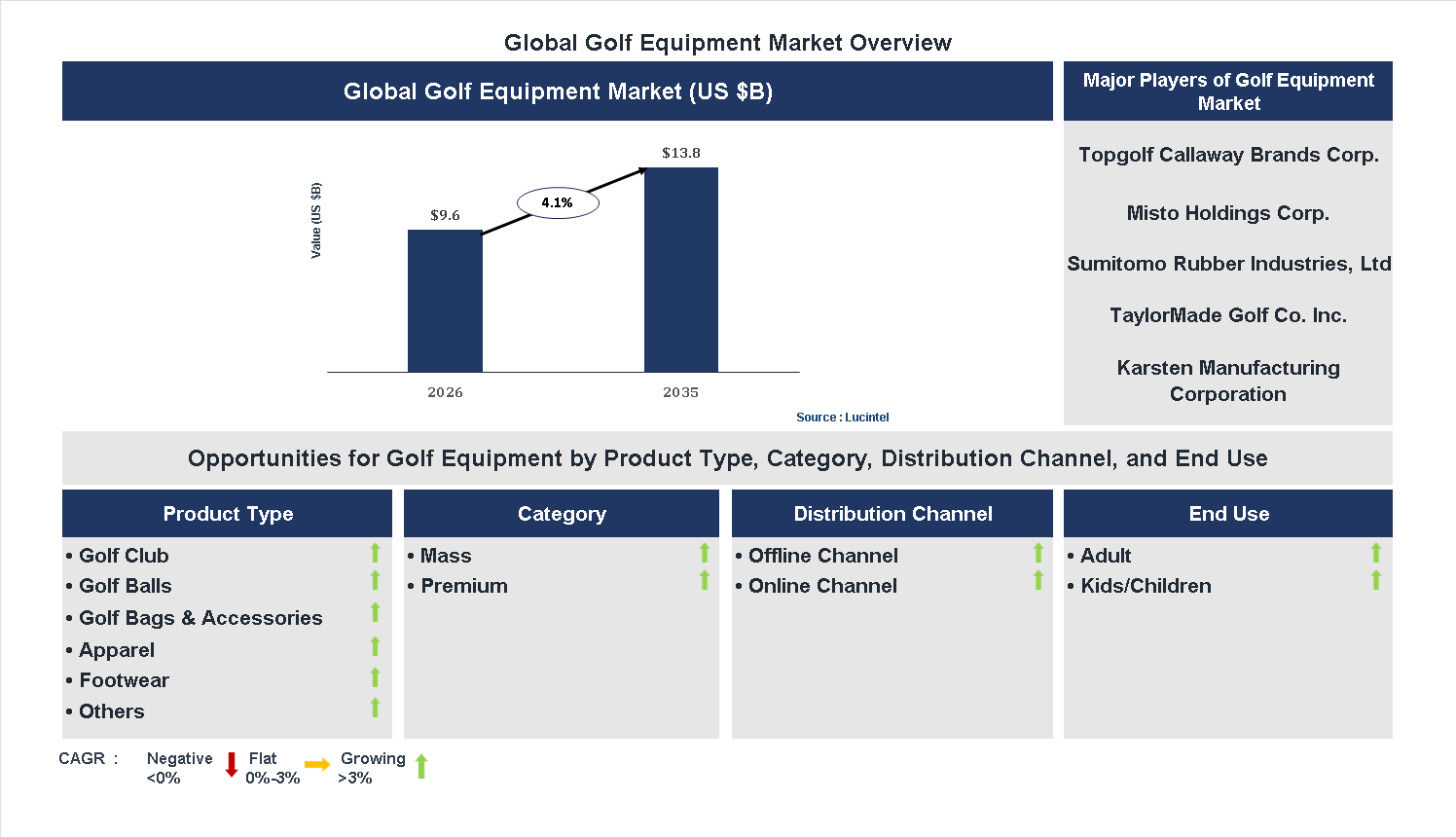
The future of the global golf equipment market looks promising with opportunities in the adult and kids/children markets. The global golf equipment market is expected to reach an estimated $13.8 billion by 2035 with a CAGR of 4.1% from 2026 to 2035. The major drivers for this market are the increasing popularity of golf among millennials, the rising demand for advanced golf technology, and the growing trend of golf fitness programs.• Lucintel forecasts that, within the product type category, golf club is expected to witness the highest growth over the forecast period.
• Within the end use category, adult is expected to witness higher growth.
• In terms of region, North America is expected to witness the highest growth over the forecast period. Gain valuable insights for your business decisions with our comprehensive 150+ page report. Sample figures with some insights are shown below.
Emerging Trends in the Golf Equipment Market
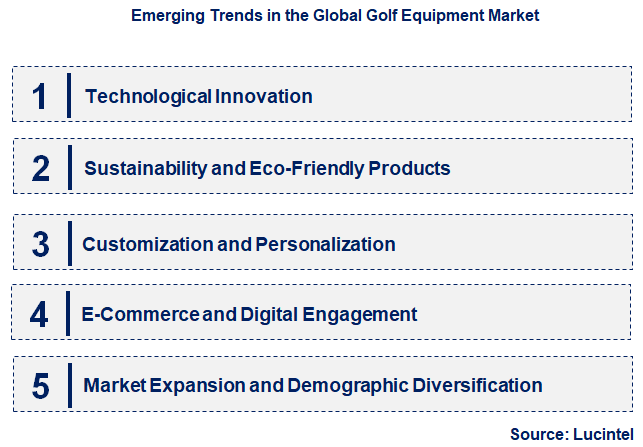
The golf equipment market is experiencing rapid transformation driven by technological advancements, changing consumer preferences, and sustainability concerns. As players seek innovative, eco-friendly, and personalized products, manufacturers are adapting to meet these evolving demands. The integration of digital technology, sustainability initiatives, and customization options is shaping the future landscape of golf equipment. These trends are not only enhancing player experience but also expanding market reach and competitiveness. Understanding these key developments is essential for stakeholders aiming to capitalize on emerging opportunities and stay ahead in this dynamic industry.• Technological Innovation: The integration of smart technology and advanced materials is revolutionizing golf equipment. Smart clubs with sensors provide real-time data on swing and shot accuracy, enhancing player performance. Advanced materials like carbon fiber reduce weight while increasing durability. These innovations improve user experience, attract tech-savvy consumers, and create new revenue streams for manufacturers. As technology becomes more affordable, adoption rates are expected to rise, making innovation a critical competitive factor in the market.
• Sustainability and Eco-Friendly Products: Growing environmental awareness is prompting brands to develop sustainable golf equipment. Use of recycled materials, biodegradable components, and eco-friendly manufacturing processes is gaining popularity. Consumers increasingly prefer brands committed to sustainability, influencing purchasing decisions. This trend encourages industry players to adopt greener practices, reduce carbon footprints, and promote eco-conscious branding. Sustainability not only aligns with consumer values but also helps companies meet regulatory standards and differentiate themselves in a competitive market.
• Customization and Personalization: Consumers are seeking tailored golf equipment to enhance their performance and express individual style. Manufacturers are offering customizable clubs, grips, and accessories through digital platforms. Personalization options include weight adjustments, grip sizes, and aesthetic designs. This trend improves customer satisfaction and loyalty, allowing brands to command premium pricing. As personalization becomes more accessible, it is expected to drive higher engagement and foster a more intimate connection between players and brands.
• E-Commerce and Digital Engagement: The rise of online retail channels and digital marketing is transforming how golf equipment is sold and marketed. E-commerce platforms provide wider reach, convenience, and access to a global customer base. Virtual fitting tools, augmented reality apps, and online tutorials enhance the shopping experience. Digital engagement fosters brand loyalty and provides valuable consumer insights. This shift enables brands to adapt quickly to market trends, reduce reliance on traditional retail outlets, and capitalize on the growing online shopping trend.
• Market Expansion and Demographic Diversification: The market is witnessing increased participation from younger consumers, women, and diverse demographic groups. Brands are developing products tailored to these segments, such as lightweight clubs for women and beginner-friendly equipment. This diversification broadens the customer base and stimulates market growth. Additionally, emerging markets in Asia and Africa present new expansion opportunities. As the sport becomes more inclusive and accessible, the market is poised for sustained growth driven by demographic shifts and global outreach efforts. In summary, technological innovation, sustainability, customization, digital engagement, and demographic diversification are reshaping the golf equipment market. These trends are fostering a more dynamic, inclusive, and environmentally conscious industry, creating new opportunities for growth and innovation. Stakeholders who adapt to these developments will be better positioned to thrive in this evolving landscape.
Recent Development in the Golf Equipment Market
The golf equipment market is experiencing rapid innovation driven by technological advancements, changing consumer preferences, and increased participation in golf worldwide. These developments are reshaping the industry landscape, creating new opportunities for manufacturers and retailers. As players adapt to evolving trends, understanding these key growth areas is essential for stakeholders aiming to capitalize on emerging prospects and stay competitive in a dynamic market environment.• Technological Innovations in Equipment: The integration of advanced materials and smart technology is revolutionizing golf clubs and accessories. Innovations such as lightweight composites, adjustable clubs, and sensors embedded in equipment enhance performance and user experience. These developments attract both amateur and professional players, expanding market reach. The adoption of technology-driven products is expected to boost sales, improve player engagement, and foster brand loyalty, ultimately driving market growth and competitiveness.
• Rise of Customization and Personalization: Consumers increasingly seek tailored golf equipment to match their playing style and preferences. Manufacturers are offering customizable options, including adjustable shafts, personalized grips, and bespoke club fittings. This trend enhances customer satisfaction and brand differentiation. The demand for personalized products is fueling growth in premium segments and encouraging innovation in manufacturing processes. As a result, the market is witnessing a shift toward more individualized offerings, an expanding consumer base, and revenue streams.
• Growing Golf Participation Globally: The sports popularity is surging in emerging markets and among younger demographics, driven by increased marketing and accessibility. This expansion boosts demand for golf equipment across all categories, from beginner sets to professional gear. The rise in participation also encourages golf tourism and club memberships, further stimulating sales. As global participation continues to grow, manufacturers are investing in affordable, entry-level products, broadening market reach, and fostering long-term industry growth.
• Sustainability and Eco-Friendly Products: Environmental concerns are prompting manufacturers to develop sustainable golf equipment using eco-friendly materials and manufacturing processes. Recyclable shafts, biodegradable tees, and sustainable packaging are gaining popularity among consumers. This shift aligns with broader environmental trends and enhances brand reputation. The focus on sustainability is opening new market segments and encouraging innovation, ultimately influencing purchasing decisions and fostering a more environmentally responsible industry.
• Digital and E-Commerce Expansion: The rise of online retail platforms and digital marketing is transforming how golf equipment is sold and marketed. E-commerce offers consumers convenience, wider product selection, and competitive pricing. Virtual fitting tools and augmented reality apps improve the shopping experience. This digital shift enables brands to reach global audiences more effectively, increase sales channels, and gather valuable consumer data. As online sales grow, the market is becoming more accessible, competitive, and responsive to consumer needs. These recent developments are significantly impacting the golf equipment market by fostering innovation, expanding consumer access, and emphasizing sustainability. Technological advancements, customization, global participation, eco-friendly products, and digital expansion are collectively driving growth, enhancing customer engagement, and creating new revenue streams. As these trends continue to evolve, they will shape the future landscape of the industry, making it more dynamic, competitive, and aligned with modern consumer values.
Strategic Growth Opportunities in the Golf Equipment Market
The golf equipment market is experiencing significant growth driven by increasing participation rates, technological advancements, and rising consumer interest in leisure sports. Innovations in product design, sustainability initiatives, and expanding global markets are creating new opportunities for manufacturers and retailers. As players seek improved performance and personalized experiences, companies are investing in R&D and strategic partnerships. This dynamic environment offers numerous avenues for growth, making it essential for industry stakeholders to identify and capitalize on emerging trends and consumer preferences.• Expanding Digital and E-Commerce Platforms: The rise of online retail channels and digital marketing offers golf equipment brands new avenues to reach consumers globally. E-commerce provides convenience, wider product selection, and personalized shopping experiences, boosting sales. Virtual fitting tools and augmented reality apps enhance customer engagement and confidence in purchasing. As consumers increasingly prefer online shopping, companies investing in digital infrastructure and omnichannel strategies can capture a larger market share and improve brand visibility.
• Innovation in High-Performance and Customizable Equipment: Advances in materials, design, and manufacturing techniques enable the development of high-performance golf clubs, balls, and accessories tailored to individual needs. Customization options, such as personalized grips and club fitting, enhance user experience and satisfaction. This trend attracts both amateur and professional players seeking competitive advantages. Companies focusing on R&D to deliver innovative, customizable products can differentiate themselves and command premium pricing, fueling market growth.
• Growing Focus on Sustainability and Eco-Friendly Products: Increasing environmental awareness among consumers is driving demand for sustainable golf equipment. Use of recycled materials, eco-friendly manufacturing processes, and biodegradable products appeals to environmentally conscious buyers. Brands adopting green initiatives can enhance their reputation and attract a broader customer base. Sustainability efforts also align with regulatory trends and corporate social responsibility goals, positioning companies as responsible industry leaders and opening new market segments.
• Rising Popularity of Golf in Emerging Markets: Emerging economies with growing middle classes and increasing disposable incomes present substantial growth opportunities. As golf gains popularity in regions like Asia, Latin America, and Africa, demand for equipment, apparel, and accessories rises. Localized marketing, affordable product lines, and strategic partnerships with regional distributors can facilitate market entry. Expanding into these markets allows companies to diversify revenue streams and capitalize on the global expansion of golf’s popularity.
• Integration of Smart Technology and Wearables: The incorporation of smart sensors, GPS, and wearable devices into golf equipment enhances player performance analysis and training. Data-driven insights help players improve techniques and track progress, increasing engagement and loyalty. Companies investing in connected technology can offer innovative products that appeal to tech-savvy consumers. This integration also opens opportunities for subscription services, app-based coaching, and data monetization, driving growth in the technologically advanced segment of the market. The overall market growth is poised to accelerate as these opportunities converge, fostering innovation, expanding consumer bases, and promoting sustainable practices. Stakeholders who strategically leverage these trends will be well-positioned to capture emerging demand and sustain competitive advantage in the evolving golf equipment landscape.
Golf Equipment Market Driver and Challenges
The golf equipment market is influenced by a variety of technological, economic, and regulatory factors that shape its growth and development. Advances in manufacturing technology have led to innovative products, while economic conditions affect consumer spending on leisure activities like golf. Regulatory policies regarding environmental sustainability and safety standards also impact product design and market entry. Additionally, demographic shifts and changing consumer preferences influence demand patterns. These drivers and challenges collectively determine the markets trajectory, requiring stakeholders to adapt strategies accordingly. Understanding these factors is essential for businesses aiming to capitalize on opportunities and mitigate risks within this dynamic industry. The factors responsible for driving the golf equipment market include:• Technological Innovation: The continuous development of advanced materials and manufacturing techniques has led to high-performance golf clubs, balls, and accessories. Innovations such as lightweight composites, aerodynamics, and personalized fitting options enhance player performance and experience. This technological progress attracts both amateur and professional golfers, expanding the market. Moreover, digital integration, like smart golf equipment with sensors and data analytics, offers a competitive edge, encouraging consumers to upgrade their gear. As technology evolves, the market benefits from increased product differentiation and consumer engagement, fueling overall growth.
• Rising Popularity of Golf as a Leisure Activity: Increasing global awareness of golf as a recreational sport has expanded its consumer base. Factors such as urbanization, rising disposable incomes, and the influence of media coverage have made golf more accessible and appealing. Golf tourism and corporate events further boost demand for equipment. The sports association with health and social networking also attracts younger demographics, broadening the market. As more people take up golf, the demand for equipment rises, driving sales across various segments, from beginner sets to professional gear.
• Growing Focus on Sustainability and Eco-Friendly Products: Environmental concerns are prompting manufacturers to develop sustainable golf equipment. Use of eco-friendly materials, such as recycled plastics and biodegradable components, appeals to environmentally conscious consumers. Regulatory pressures and corporate social responsibility initiatives encourage brands to adopt greener practices. This shift not only enhances brand reputation but also opens new market segments. Sustainable products often command premium pricing, contributing to higher profit margins. As sustainability becomes a key purchasing criterion, the market experiences a shift towards greener, innovative solutions that support long-term industry growth.
• Expansion of E-Commerce and Digital Marketing: The rise of online retail platforms has transformed how consumers access golf equipment. E-commerce offers convenience, wider product selection, and competitive pricing, attracting a broader customer base. Digital marketing strategies, including social media campaigns and influencer partnerships, increase brand visibility and engagement. Virtual try-ons and online customization tools enhance the shopping experience. This digital shift enables manufacturers to reach global markets efficiently, reduce distribution costs, and gather valuable consumer data. As e-commerce continues to grow, it significantly influences sales channels and market dynamics, fostering rapid industry expansion.
• Increasing Investment in Golf Infrastructure and Events: Investment in golf courses, tournaments, and training facilities boosts the sports popularity and accessibility. High-profile events like the Ryder Cup and PGA Championships attract global audiences, stimulating interest and equipment sales. Infrastructure development in emerging markets creates new opportunities for market players. Sponsorships and partnerships with sports organizations enhance brand recognition. These investments also encourage youth participation and amateur golf, expanding the customer base. As the sport gains prominence, the demand for high-quality, innovative equipment increases, supporting sustained market growth. The challenges facing the golf equipment market include:
• Economic Fluctuations and Disposable Income Variability: Economic downturns and financial uncertainties impact consumers discretionary spending on golf equipment. During recessions, consumers prioritize essential expenses, leading to reduced sales of premium and recreational gear. Fluctuations in currency exchange rates can also affect import costs and pricing strategies for international brands. Additionally, economic disparities across regions influence market expansion and product affordability. Manufacturers must adapt to these economic conditions by offering a range of products at different price points to maintain sales and market share during challenging times.
• Regulatory and Environmental Compliance: Increasing regulations related to environmental sustainability, safety standards, and product testing pose challenges for manufacturers. Compliance often requires significant investment in research, development, and certification processes, increasing costs. Non-compliance can lead to legal penalties and damage to brand reputation. Moreover, evolving regulations may restrict certain materials or manufacturing practices, necessitating redesigns and supply chain adjustments. Navigating complex regulatory landscapes across different regions demands strategic planning and resource allocation, potentially slowing product innovation and market entry.
• Intense Competition and Market Saturation: The Golf Equipment Market faces fierce competition from established brands and new entrants, leading to price wars and reduced profit margins. Market saturation in developed regions limits growth opportunities, forcing companies to seek emerging markets, which may involve additional risks and costs. Differentiating products becomes increasingly difficult as many offerings converge in features and pricing. Additionally, counterfeit products and grey markets undermine brand integrity and revenue. To sustain competitiveness, companies must invest in innovation, branding, and customer engagement, which can strain resources and impact profitability in a highly competitive environment. In summary, the golf equipment market is shaped by technological advancements, rising popularity, sustainability initiatives, digital transformation, and infrastructure investments, which collectively drive growth. However, economic volatility, regulatory hurdles, and intense competition pose significant challenges. These factors require industry players to innovate continuously, adapt to changing consumer preferences, and navigate complex regulatory landscapes. Overall, the markets future depends on balancing these drivers and challenges, leveraging opportunities for sustainable growth while mitigating risks associated with economic and regulatory uncertainties.
List of Golf Equipment Companies
Companies in the market compete on the basis of product quality offered. Major players in this market focus on expanding their manufacturing facilities, R&D investments, infrastructural development, and leverage integration opportunities across the value chain. With these strategies golf equipment companies cater increasing demand, ensure competitive effectiveness, develop innovative products & technologies, reduce production costs, and expand their customer base. Some of the golf equipment companies profiled in this report include-• Topgolf Callaway Brands Corp.
• Misto Holdings Corp.
• Sumitomo Rubber Industries, Ltd
• TaylorMade Golf Co. Inc.
• Karsten Manufacturing Corporation
• Mizuno Corporation
• Bridgestone Sports Co. Ltd.,
• PumaSE
• Adidas Group
• Nike, Inc.
Golf Equipment Market by Segment
The study includes a forecast for the global golf equipment market by product type, category, distribution channel, end use, and region.Golf Equipment Market by Product Type [Value from 2019 to 2035]:
• Golf Club
• Golf Balls
• Golf Bags & Accessories
• Apparel
• Footwear
• Others
Golf Equipment Market by Category [Value from 2019 to 2035]:
• Mass
• Premium
Golf Equipment Market by Distribution Channel [Value from 2019 to 2035]:
• Offline Channel
• Online Channel
Golf Equipment Market by End Use [Value from 2019 to 2035]:
• Adult
• Kids/Children
Golf Equipment Market by Region [Value from 2019 to 2035]:
• North America
• Europe
• Asia Pacific
• The Rest of the World
Country Wise Outlook for the Golf Equipment Market
The golf equipment market has experienced significant shifts driven by technological innovations, changing consumer preferences, and economic factors. As countries adapt to new trends and sustainability concerns, key players are investing in product development and digital integration. The United States, China, Germany, India, and Japan are notable markets with distinct developments shaping the future landscape of golf equipment. These countries advancements reflect broader industry trends, including eco-friendly products, smart technology integration, and expanding consumer bases. Understanding these regional dynamics offers insights into the evolving global market and potential opportunities for growth and innovation.• United States: The US market has seen a surge in demand for high-tech golf equipment, including smart clubs and wearable devices that enhance player performance. Major brands are investing in sustainable materials to appeal to environmentally conscious consumers. Additionally, digital platforms and online retail channels have expanded access to a broader customer base, boosting sales. The rise of golf tourism and increased participation among younger demographics are further driving market growth. Innovations in club design and customization options are also prominent, reflecting consumer preferences for personalized experiences.
• China: China’s golf equipment market is rapidly expanding, fueled by increasing disposable incomes and a growing middle class interested in leisure sports. Local manufacturers are improving product quality and competing with international brands through innovation and cost-effective solutions. The government’s efforts to promote golf tourism and infrastructure development are contributing to market growth. E-commerce platforms are playing a crucial role in reaching consumers, with online sales channels gaining popularity. There is also a rising trend in youth engagement and golf academies, which are fostering future demand for equipment.
• Germany: The German market emphasizes sustainability and eco-friendly products, aligning with the country’s environmental policies. Manufacturers are developing biodegradable and recycled material-based golf clubs and accessories. Technological integration, such as GPS-enabled rangefinders and swing analysis tools, is gaining traction among amateur and professional players. The market also benefits from a well-established golf tourism sector, with premium equipment catering to high-end consumers. Innovations in lightweight and ergonomic designs are enhancing user comfort and performance. Germany’s focus on quality and sustainability continues to shape its market developments.
• India: The Indian golf equipment market is experiencing rapid growth due to increasing urbanization and rising disposable incomes. Local brands are emerging, offering affordable yet quality products to a burgeoning middle class. The government’s initiatives to promote golf infrastructure and sports development are boosting demand. E-commerce and retail expansion are making golf equipment more accessible across urban centers. There is a growing interest among youth and corporate sectors, leading to increased sales of beginner and mid-range equipment. Innovations include lightweight clubs and beginner-friendly accessories tailored to the Indian market.
• Japan: Japan’s golf equipment market is characterized by technological innovation and a focus on precision. Leading brands are developing advanced clubs with enhanced aerodynamics and materials for better performance. The market also sees a strong demand for custom-fit equipment and high-end accessories. Sustainability efforts are evident through the use of eco-friendly materials and manufacturing processes. The aging population remains a key demographic, with products designed for comfort and ease of use. Digital integration, such as virtual fitting and swing analysis, is increasingly popular, reflecting Japan’s tech-savvy consumer base.

Features of the Global Golf Equipment Market
Market Size Estimates: Golf equipment market size estimation in terms of value ($B). Trend and Forecast Analysis: Market trends (2019 to 2025) and forecast (2026 to 2035) by various segments and regions. Segmentation Analysis: Golf equipment market size by various segments, such as by product type, category, distribution channel, end use, and region in terms of value ($B). Regional Analysis: Golf equipment market breakdown by North America, Europe, Asia Pacific, and Rest of the World. Growth Opportunities: Analysis of growth opportunities in different product types, categories, distribution channels, end uses, and regions for the golf equipment market. Strategic Analysis: This includes M&A, new product development, and competitive landscape of the golf equipment market. Analysis of competitive intensity of the industry based on Porter’s Five Forces model.
FAQ
Q1. What is the golf equipment market size? Answer: The global golf equipment market is expected to reach an estimated $13.8 billion by 2035. Q2. What is the growth forecast for golf equipment market? Answer: The global golf equipment market is expected to grow with a CAGR of 4.1% from 2026 to 2035. Q3. What are the major drivers influencing the growth of the golf equipment market? Answer: The major drivers for this market are the increasing popularity of golf among millennials, the rising demand for advanced golf technology, and the growing trend of golf fitness programs. Q4. What are the major segments for golf equipment market? Answer: The future of the golf equipment market looks promising with opportunities in the adult and kids/children markets. Q5. Who are the key golf equipment market companies? Answer: Some of the key golf equipment companies are as follows:• Topgolf Callaway Brands Corp.
• Misto Holdings Corp.
• Sumitomo Rubber Industries, Ltd
• TaylorMade Golf Co. Inc.
• Karsten Manufacturing Corporation
• Mizuno Corporation
• Bridgestone Sports Co. Ltd.,
• PumaSE
• Adidas Group
• Nike, Inc. Q6. Which golf equipment market segment will be the largest in future? Answer: Lucintel forecasts that, within the product type category, golf club is expected to witness the highest growth over the forecast period. Q7. In golf equipment market, which region is expected to be the largest in next 5 years? Answer: In terms of region, North America is expected to witness the highest growth over the forecast period. Q8. Do we receive customization in this report? Answer: Yes, Lucintel provides 10% customization without any additional cost.
Table of Contents
List of Figures
List of Tables
Methodology
- In-depth interviews of the major players in this market
- Detailed secondary research from competitors’ financial statements and published data
- Extensive searches of published works, market, and database information pertaining to industry news, company press releases, and customer intentions
- A compilation of the experiences, judgments, and insights of Lucintel’s professionals, who have analyzed and tracked this market over the years.


Buy Now
Choose a license that fits your team. Instant PDF delivery.
Prices exclude taxes. Instant delivery. Custom licensing available on request.
Key Questions
- • What are some of the most promising, high-growth opportunities for the golf equipment market by product type (golf club, golf balls, golf bags & accessories, apparel, footwear, and others), category (mass and premium), distribution channel (offline channel and online channel), end use (adult and kids/children), and region (North America, Europe, Asia Pacific, and the Rest of the World)?
- • Which segments will grow at a faster pace and why?
- • Which region will grow at a faster pace and why?
- • What are the key factors affecting market dynamics? What are the key challenges and business risks in this market?
- • What are the business risks and competitive threats in this market?
- • What are the emerging trends in this market and the reasons behind them?
- • What are some of the changing demands of customers in the market?
- • What are the new developments in the market? Which companies are leading these developments?
- • Who are the major players in this market? What strategic initiatives are key players pursuing for business growth?
- • What are some of the competing products in this market and how big of a threat do they pose for loss of market share by material or product substitution?
- • What M&A activity has occurred in the last 7 years and what has its impact been on the industry? For any questions related to Golf Equipment Market, Golf Equipment Market Size, Golf Equipment Market Growth, Golf Equipment Market Analysis, Golf Equipment Market Report, Golf Equipment Market Share, Golf Equipment Market Trends, Golf Equipment Market Forecast, Golf Equipment Companies, write Lucintel analyst at email: helpdesk@lucintel.com. We will be glad to get back to you soon.


