
Market Report · July 16, 2026

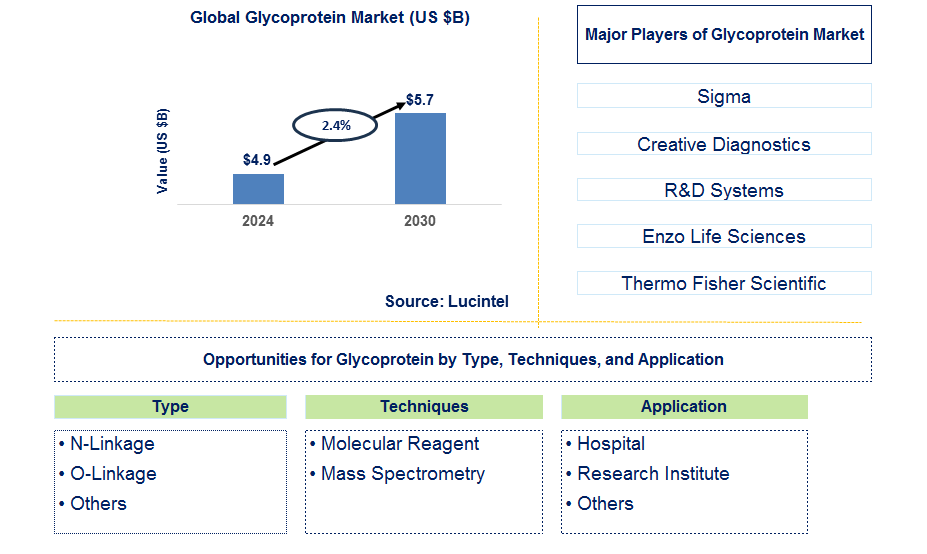
Key data points: The market size in 2030 = $5.7 billion, growth forecast = 2.4% annually for the next 6 years. Scroll below to get more insights. This market report covers trends, opportunities, and forecasts in the global glycoprotein market to 2030 by type (n-linkage, o-linkage, and others), techniques (molecular reagent and mass spectrometry), application (hospital, research institute, and others), and region (North America, Europe, Asia Pacific, and the Rest of the World)
We'll send your sample report shortly.
• United States: In the U.S., advancements in glycoprotein research focus on therapeutic applications, particularly in cancer treatment and vaccines. Notable progress includes the development of glycoprotein-based immunotherapies that enhance immune responses, demonstrating improved efficacy in clinical trials and expanding treatment options for various diseases.
• Chinese: China is rapidly advancing in glycoprotein production technologies, particularly for biopharmaceuticals. Recent investments in biotechnology firms are enhancing capabilities in glycosylation processes, which are crucial for the efficacy of therapeutic proteins, thus boosting the nation's competitive edge in global biopharma markets.
• Germany: Germany continues to lead in glycoprotein research, with a focus on applications in personalized medicine. Innovations in glycoprotein profiling and characterization techniques facilitate the development of targeted therapies, which are more effective and have fewer side effects compared to traditional treatments.
• Indian: India is emerging as a hub for glycoprotein research, driven by increasing investments in biotechnology. Recent collaborations between academic institutions and industry foster advancements in the production and application of glycoproteins in diagnostics and therapeutics, enhancing India's presence in the global market.
• Japan: Japan's glycoprotein market is characterized by technological advancements in glycoprotein synthesis and analysis. Recent developments include the use of artificial intelligence in glycoprotein research, improving the efficiency of drug discovery processes and enabling the development of novel therapeutics.
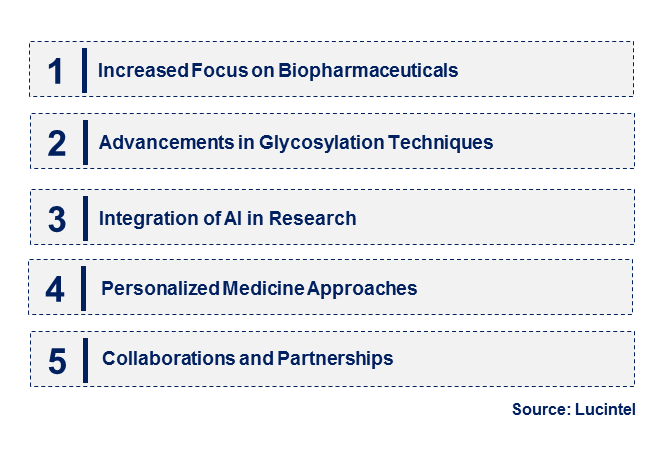
• Increased Focus on Biopharmaceuticals: There is a growing emphasis on developing glycoprotein-based biopharmaceuticals, known for their therapeutic efficacy. This trend is accelerating research and investment in glycoproteins, leading to the development of innovative treatments for various diseases.
• Advancements in Glycosylation Techniques: Innovations in glycosylation methods are improving the production of glycoproteins with specific structures and functions. Enhanced glycosylation techniques result in better drug efficacy and stability, making glycoproteins more appealing for therapeutic applications.
• Integration of AI in Research: The integration of artificial intelligence in glycoprotein research is streamlining drug discovery and development processes. AI technologies are facilitating the identification of potential glycoprotein candidates and predicting their efficacy, significantly reducing time and costs.
• Personalized Medicine Approaches: The shift toward personalized medicine is driving the demand for glycoproteins tailored to individual patient needs. This trend encourages research into glycoprotein-based therapies that can address specific genetic or phenotypic variations.
• Collaborations and Partnerships: Increasing collaborations between academic institutions, biotech firms, and pharmaceutical companies are fostering innovation in glycoprotein research. These partnerships facilitate resource sharing, knowledge exchange, and accelerated product development, enhancing overall market growth. These trends are transforming the glycoprotein market by fostering innovation, enhancing the development of novel therapeutics, and increasing the focus on personalized treatment solutions.
• Advancements in Glycoprotein Production Technologies: New production methods, such as improved fermentation and cell culture techniques, are enhancing the yield and purity of glycoproteins. These advancements are making production more efficient, ultimately lowering costs and increasing the availability of glycoprotein-based therapies.
• Innovative Glycoprotein Analysis Techniques: Developments in analytical technologies, such as mass spectrometry and chromatography, are improving the characterization of glycoproteins. Enhanced analysis capabilities enable better understanding of glycoprotein structures, which is crucial for drug development and quality control.
• Emergence of Glycoprotein-based Vaccines: The development of glycoprotein-based vaccines, particularly for infectious diseases, is gaining traction. These vaccines leverage the unique properties of glycoproteins to elicit stronger immune responses, leading to more effective vaccination strategies.
• Regulatory Advancements for Biologics: Regulatory bodies are updating guidelines to streamline the approval processes for glycoprotein-based therapies. These advancements are facilitating quicker market access for new treatments, encouraging investment and research in the field.
• Growth in Diagnostic Applications: Glycoproteins are increasingly utilized in diagnostic assays for disease detection and monitoring. Recent advancements in glycoprotein-based biomarkers are enhancing the sensitivity and specificity of diagnostic tests, leading to improved patient outcomes. These developments positively impact the glycoprotein market by improving production efficiency, expanding therapeutic applications, and enhancing the overall effectiveness of glycoprotein-based solutions.
• Therapeutic Applications in Oncology: The increasing incidence of cancer presents a significant opportunity for glycoprotein-based therapies. Developing glycoprotein-targeted treatments can enhance the efficacy of existing therapies and offer new options for cancer patients, driving market growth.
• Vaccines and Preventive Therapies: The rise in vaccine development, particularly in response to global health challenges, offers substantial growth potential. Glycoprotein-based vaccines can provide robust immune responses, making them an attractive option for public health initiatives.
• Diagnostic Innovations: The growing demand for accurate and rapid diagnostic tools provides opportunities for glycoprotein applications in diagnostics. Developing glycoprotein-based biomarkers for various diseases can lead to improved disease management and early detection.
• Personalized Medicine Solutions: The trend toward personalized medicine is creating opportunities for glycoprotein therapies tailored to individual patient profiles. Focusing on the development of customized glycoprotein treatments can enhance patient outcomes and drive market demand.
• Collaborative Research Initiatives: Engaging in partnerships with research institutions and biotech firms can accelerate innovation in glycoprotein research. These collaborations enhance resource sharing, technology transfer, and speed up product development cycles. These strategic growth opportunities are shaping the glycoprotein market by expanding application areas, enhancing product offerings, and driving innovation in therapeutic and diagnostic solutions.
• Growing Demand for Biologics: The increasing preference for biologic drugs, which often include glycoproteins, is driving market growth. Biologics are known for their targeted therapeutic effects, enhancing treatment efficacy and patient outcomes.
• Technological Advancements in Production: Innovations in glycoprotein production technologies are improving yields and reducing costs. Enhanced production methods make glycoproteins more accessible for therapeutic applications, fueling market expansion.
• Rising Investment in Biotechnology: Increased investments in biotechnology research and development are fostering innovation in glycoprotein applications. Funding supports the exploration of new therapeutic avenues and accelerates product development.
• Focus on Personalized Medicine: The shift toward personalized medicine is driving research into glycoprotein therapies tailored to individual needs. This trend creates demand for targeted treatments, enhancing the market's growth potential.
• Regulatory Support for Biologics: Favorable regulatory environments for biologics facilitate the approval and commercialization of glycoprotein-based therapies. Streamlined approval processes encourage investment and innovation in the sector. Challenges in the glycoprotein market are:
• High Development Costs: The costs associated with developing glycoprotein therapies can be substantial. High research and development expenses may deter smaller companies from entering the market, limiting competition.
• Complexity of Glycoprotein Structures: The intricate nature of glycoprotein structures presents challenges in production and characterization. Ensuring consistency and quality in glycoprotein products requires advanced technologies and expertise.
• Regulatory Hurdles: Navigating the regulatory landscape for glycoprotein therapies can be complex, with varying standards across regions. Compliance with stringent regulations may add time and costs to product development.
• Market Competition: The increasing number of players in the glycoprotein market creates competitive pressure. Companies must differentiate their products and demonstrate superior efficacy to maintain market share.
• Public Perception and Acceptance: Misunderstandings about biologics and glycoproteins can lead to public skepticism. Educating healthcare professionals and patients about the benefits and safety of glycoprotein therapies is crucial for market acceptance. In summary, the interplay of drivers and challenges shapes the glycoprotein market's trajectory. While opportunities for growth abound, companies must strategically navigate obstacles to capitalize on emerging trends and market demands.
• Sigma
• Creative Diagnostics
• R&D Systems
• Enzo Life Sciences
• Thermo Fisher Scientific
• Epitope Diagnostics
• Creative Biolab
• N-Linkage
• O-Linkage
• Others
• Molecular Reagent
• Mass Spectrometry
• Hospital
• Research Institute
• Others
• North America
• Europe
• Asia Pacific
• The Rest of the World
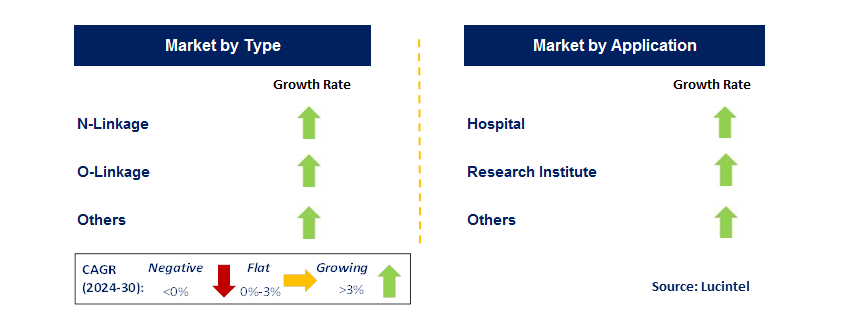
• Lucintel forecasts that, within the type category, n-linkage is expected to witness higher growth over the forecast period due to its crucial role in protein folding, stability, and function, making it highly relevant for therapeutic and diagnostic applications.
• Within the application category, hospitals are expected to witness higher growth due to widespread use in diagnostics and therapeutics.
• In terms of regions, North America will remain the largest region over the forecast period due to rising R&D expenditures and levels of healthcare spending.


• Sigma
• Creative Diagnostics
• R&D Systems
• Enzo Life Sciences
• Thermo Fisher Scientific
• Epitope Diagnostics
• Creative Biolab Q6. Which glycoprotein market segment will be the largest in future? Answer: Lucintel forecasts that n-linkage is expected to witness higher growth over the forecast period due to its crucial role in protein folding, stability, and function, making it highly relevant for therapeutic and diagnostic applications. Q7. In glycoprotein market, which region is expected to be the largest in next 5 years? Answer: North America will remain the largest region over the forecast period due to rising R&D expenditures and levels of healthcare spending. Q.8 Do we receive customization in this report? Answer: Yes, Lucintel provides 10% customization without any additional cost.


Choose a license that fits your team. Instant PDF delivery.
Prices exclude taxes. Instant delivery. Custom licensing available on request.
Market Report · July 16, 2026
Market Report · July 15, 2026
Market Report · July 15, 2026
Trusted partner for strategic intelligence and business growth


Receive a complimentary market analysis tailored to your industry. Our analysts will identify key growth opportunities and competitive dynamics specific to your business.

Market size, growth rate, and key trend analysis for your specific sector.

Top competitor positioning and market share analysis.

Strategic recommendations backed by data-driven insights.
Get curated market intelligence and competitive moves straight to your inbox.
By subscribing, you agree to receive our monthly insights. Unsubscribe anytime.
Receive a complimentary market analysis tailored to your industry. Our analysts will identify key growth opportunities and competitive dynamics specific to your business.
Market size, growth rate, and key trend analysis for your specific sector.
Top competitor positioning and market share analysis.
Strategic recommendations backed by data-driven insights.
Get curated market intelligence, emerging trends, and competitive moves straight to your inbox each month.
By subscribing, you agree to receive our monthly insights. Unsubscribe anytime.
We'll send your sample report shortly.