
Market Report · July 22, 2026

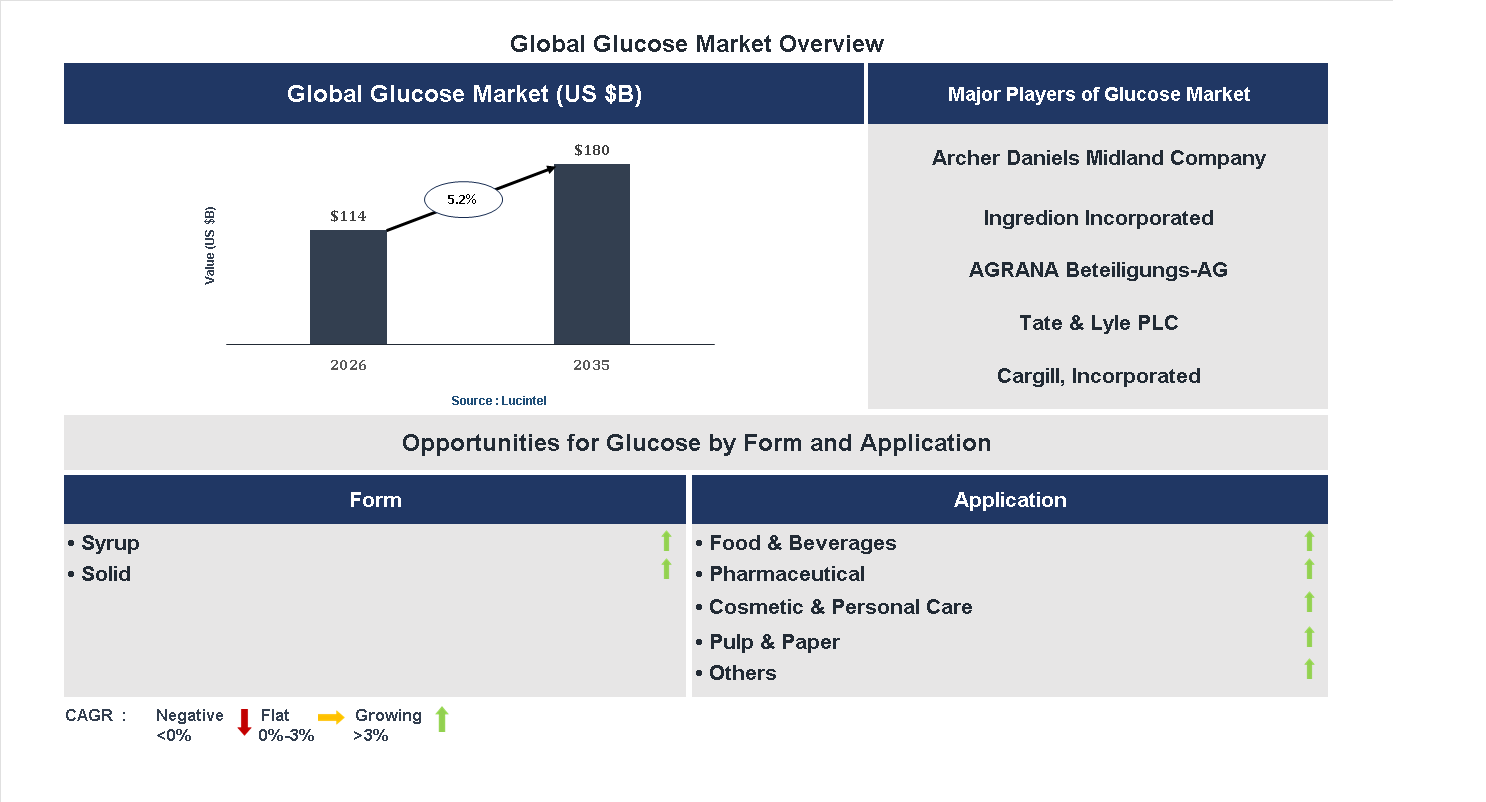
Key data points: The market size in 2035 = $180 billion, growth forecast = 5.2% annually for the next 8 years. Scroll below to get more insights. This market report covers trends, opportunities and forecasts in glucose market to 2035 by form (syrup and solid), application (food & beverages, pharmaceutical, cosmetic & personal care, pulp & paper, and others), and region (North America, Europe, Asia Pacific, and the Rest of the World)
We'll send your sample report shortly.
• Lucintel forecasts that, within the form category, syrup is expected to witness higher growth over the forecast period.
• Within the application category, food & beverage is expected to witness the highest growth.
• In terms of region, APAC is expected to witness the highest growth over the forecast period. Gain valuable insights for your business decisions with our comprehensive 150+ page report. Sample figures with some insights are shown below.
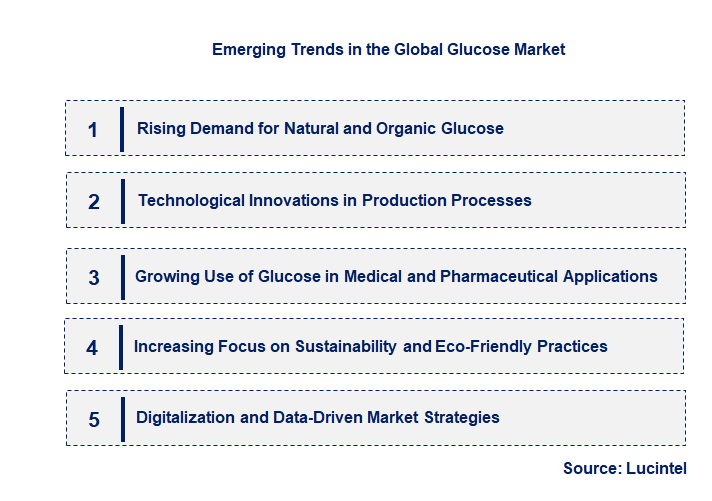
• Rising Demand for Natural and Organic Glucose: Increasing consumer preference for natural, organic, and clean-label products is significantly impacting the glucose market. Consumers are seeking healthier alternatives free from artificial additives and preservatives, prompting manufacturers to develop organic glucose derived from natural sources like corn and wheat. This trend enhances product appeal, especially among health-conscious demographics, and encourages innovation in sourcing and processing methods. As a result, companies investing in organic glucose production are gaining competitive advantages, and the market is witnessing a shift towards more sustainable and health-oriented products.
• Technological Innovations in Production Processes: Advances in biotechnology and enzymatic processing are transforming glucose manufacturing. These innovations improve yield, purity, and cost-efficiency, enabling producers to meet increasing demand while reducing environmental impact. Technologies such as fermentation optimization and membrane filtration are streamlining production, ensuring higher quality and consistency. This trend allows for the development of specialized glucose products tailored for specific applications like pharmaceuticals, food, and beverages. The adoption of cutting-edge technology is crucial for maintaining competitiveness and supporting the market's growth trajectory.
• Growing Use of Glucose in Medical and Pharmaceutical Applications: The expanding use of glucose in medical fields, particularly in intravenous therapies, diagnostics, and drug formulations, is a key trend. The rising prevalence of diabetes and other metabolic disorders fuels demand for medical-grade glucose. Innovations in formulation and delivery methods are enhancing treatment efficacy and patient outcomes. Additionally, glucose-based biosensors and diagnostic tools are becoming more sophisticated, further expanding applications. This trend underscores the importance of high-quality, pharmaceutical-grade glucose and is expected to drive sustained growth in the market.
• Increasing Focus on Sustainability and Eco-Friendly Practices: Sustainability initiatives are influencing the glucose industry, with companies adopting eco-friendly sourcing, production, and packaging practices. Using renewable energy, reducing waste, and implementing circular economy principles are becoming standard. These efforts appeal to environmentally conscious consumers and comply with stricter regulations. Sustainable practices not only improve brand reputation but also reduce costs and environmental impact. As sustainability becomes a core business strategy, the market is likely to see increased investment in green technologies and responsible sourcing, shaping a more sustainable future for the industry.
• Digitalization and Data-Driven Market Strategies: The integration of digital technologies, including data analytics, AI, and IoT, is transforming market strategies and operations. Companies are leveraging data to optimize supply chains, forecast demand, and personalize marketing efforts. Digital platforms facilitate better consumer engagement and transparency, enhancing brand loyalty. Additionally, digital tools support R&D activities, enabling faster development of new glucose formulations. This trend enhances operational efficiency, reduces costs, and provides valuable insights into consumer preferences, ultimately driving innovation and competitiveness in the glucose market. These emerging trends are collectively reshaping the glucose market by fostering innovation, sustainability, and consumer-centric approaches. They are enabling companies to meet evolving demands, improve product quality, and operate more sustainably, ensuring long-term growth and resilience in a competitive landscape.
• Growing Demand in Food and Beverage Industry: The increasing consumer preference for healthier, natural, and organic products is boosting glucose demand. Food manufacturers are incorporating glucose as a sweetener, preservative, and fermentation agent, which enhances product quality and shelf life. The rise in processed food consumption, coupled with the popularity of functional foods, is further propelling market growth. This trend is expected to continue, offering significant opportunities for suppliers to expand their product portfolios and market reach.
• Expansion of Pharmaceutical Applications: Glucose is vital in medical treatments, especially in intravenous therapy, diagnostics, and drug formulations. The rising prevalence of diabetes and other metabolic disorders increases demand for glucose-based products. Innovations in glucose monitoring devices and injectable solutions are enhancing treatment efficacy. The pharmaceutical sector's growth, driven by aging populations and chronic disease management, is expected to sustain high demand, encouraging manufacturers to invest in research and development for specialized glucose formulations.
• Technological Advancements in Production Processes: New manufacturing techniques, such as enzymatic conversion and bioengineering, are improving glucose yield and purity while reducing costs. These innovations enable large-scale, sustainable production, meeting increasing global demand. Enhanced process efficiency and environmental compliance are also key benefits, attracting investments. As technology advances, market players can offer higher-quality products at competitive prices, strengthening their market position and enabling expansion into emerging regions.
• Rising Focus on Sustainable and Natural Products: Consumers and regulators are emphasizing environmentally friendly and natural ingredients. This shift encourages companies to adopt sustainable sourcing and eco-friendly production methods for glucose. The development of bio-based and renewable glucose sources aligns with global sustainability goals. This focus not only enhances brand reputation but also opens new market segments. Sustainable practices are becoming a competitive differentiator, influencing purchasing decisions and fostering long-term industry growth.
• Increasing Regulatory Support and Market Penetration: Governments and industry bodies are implementing policies to promote the use of bio-based and health-oriented products. Regulatory approvals for new applications and standards for quality and safety are facilitating market entry and expansion. International trade agreements and subsidies are also encouraging cross-border growth. These regulatory frameworks create a conducive environment for innovation and investment, enabling companies to penetrate new markets and diversify their product offerings, ultimately driving overall market growth. The recent developments in the glucose market are significantly enhancing its growth trajectory by expanding applications, improving production efficiency, and emphasizing sustainability. These opportunities are attracting investments, fostering innovation, and enabling market players to meet evolving consumer and regulatory demands. As a result, the market is becoming more competitive, diversified, and poised for sustained expansion in the coming years.
• Expanding Use of Glucose in Functional Foods and Beverages: The rising consumer focus on health and wellness is boosting demand for functional foods and beverages containing glucose. Fortified products, energy drinks, and health supplements incorporate glucose for its quick energy release and health benefits. Manufacturers are innovating with natural and organic glucose sources to meet clean-label trends. This expansion offers significant growth potential, especially in emerging markets where health-conscious consumers seek nutritious options, driving increased production, marketing, and distribution channels.
• Growing Demand for Glucose in Pharmaceutical Applications: Glucose is vital in medical formulations, including intravenous (IV) solutions, oral rehydration salts, and nutritional supplements. The increasing prevalence of chronic diseases, malnutrition, and dehydration cases globally enhances the need for glucose-based medical products. Advances in pharmaceutical manufacturing and sterile processing techniques are improving product quality and safety. This opportunity encourages pharmaceutical companies to develop specialized glucose formulations, expand production capacities, and explore new therapeutic applications, thereby fueling market growth.
• Rising Adoption of Glucose in Industrial Fermentation Processes: Glucose serves as a primary substrate in industrial fermentation for producing bioethanol, organic acids, and enzymes. The shift towards renewable energy sources and sustainable manufacturing practices is boosting bioethanol production, which relies heavily on glucose. Additionally, the demand for biodegradable plastics and bio-based chemicals is expanding fermentation applications. This growth encourages investments in fermentation technology, feedstock sourcing, and process optimization, positioning glucose as a critical component in the bioeconomy.
• Increasing Focus on Sustainable and Organic Glucose Production: Consumers and regulators are emphasizing sustainability and organic certification, prompting manufacturers to adopt eco-friendly production methods. Organic glucose derived from non-GMO, sustainably farmed crops is gaining popularity in food, beverage, and pharmaceutical sectors. This trend offers opportunities for market differentiation and premium pricing. Companies investing in green extraction techniques, renewable energy use, and supply chain transparency can capitalize on the growing demand for sustainable glucose products, enhancing brand reputation and market share.
• Strategic Collaborations and Geographic Expansion Opportunities: Market players are forming alliances with local distributors, research institutions, and technology providers to expand their reach. Emerging markets in Asia-Pacific, Latin America, and Africa present untapped growth potential due to rising industrialization and consumer demand. Strategic acquisitions, joint ventures, and investments in regional manufacturing facilities enable companies to optimize supply chains, reduce costs, and adapt products to local preferences. These initiatives are crucial for capturing new customer bases and strengthening global market presence. The overall impact of these opportunities is set to significantly accelerate market growth, diversify application areas, and enhance competitive positioning. Stakeholders who effectively leverage these avenues will be better positioned to meet evolving consumer needs, comply with regulatory standards, and sustain long-term profitability in the dynamic glucose market.
• Increasing Demand for Processed Foods and Beverages: The rising consumer preference for convenience foods and beverages containing glucose boosts market growth. As urbanization accelerates and lifestyles become busier, the demand for ready-to-eat products, soft drinks, and confectionery items containing glucose increases. This trend is further supported by the expanding middle-class population in emerging economies, which seeks affordable and accessible nutritional options. Manufacturers are investing in product innovation to meet consumer preferences, thereby expanding the market. The growing awareness of glucose’s role in energy provision and its use as a sweetener in various applications sustains this demand, making it a key driver for market expansion.
• Technological Advancements in Production Processes: Innovations in enzymatic conversion, fermentation, and extraction techniques have significantly improved glucose production efficiency and purity. These technological advancements reduce manufacturing costs and enable the production of customized glucose formulations for specific applications such as pharmaceuticals, food, and beverages. Enhanced process control and automation also ensure consistent quality, which is critical for regulatory compliance and consumer trust. As research continues to optimize these processes, the market benefits from increased scalability and sustainability. These technological improvements facilitate the development of new product lines and expand the application scope, thereby fueling overall market growth.
• Growing Health Consciousness and Diabetes Prevalence: The increasing awareness of health issues related to sugar consumption, particularly diabetes and obesity, influences consumer behavior and product formulations. While glucose remains a vital ingredient in medical and nutritional products, there is a rising demand for healthier alternatives and functional foods containing controlled glucose levels. This health consciousness drives innovation in low-glycemic index products and natural sweeteners, impacting the traditional glucose market. Additionally, the expanding diabetic population necessitates specialized glucose-based medical products, creating new opportunities. These factors collectively shape market strategies focused on balancing health concerns with consumer preferences for sweet-tasting products.
• Expansion of Pharmaceutical and Medical Applications: Glucose plays a crucial role in medical diagnostics, intravenous therapy, and nutritional supplements. The increasing prevalence of chronic diseases and the growing geriatric population boost demand for glucose-based medical products. Innovations in glucose monitoring devices and formulations for parenteral nutrition further expand the application scope. The pharmaceutical industry's focus on developing advanced drug delivery systems and medical diagnostics enhances the market outlook. As healthcare infrastructure improves globally, especially in emerging economies, the demand for medical-grade glucose is expected to rise, supporting overall market growth.
• Rising Investment in R&D and Product Innovation: Continuous research and development efforts are leading to the creation of novel glucose derivatives and functional ingredients. Companies are investing in developing bio-based, sustainable, and cost-effective glucose sources to meet environmental and economic challenges. Product innovation also includes fortification with vitamins, minerals, and other nutrients to cater to health-conscious consumers. These R&D initiatives help companies differentiate their offerings and expand into new markets. The focus on sustainable production methods and innovative applications ensures the market remains dynamic and responsive to changing consumer and regulatory demands, fostering long-term growth. The challenges facing the glucose market include:
• Stringent Regulatory Frameworks and Food Safety Standards: The glucose market faces complex regulatory requirements across different regions, including safety assessments, labeling, and permissible usage levels. Compliance with these standards can be costly and time-consuming, especially for new entrants. Variations in regulations may restrict certain formulations or applications, limiting market flexibility. Additionally, increasing scrutiny over food additives and sweeteners demands rigorous testing and certification, which can delay product launches. Navigating these regulatory landscapes requires significant investment and expertise, posing a barrier to market entry and expansion for some companies.
• Fluctuating Raw Material Prices and Supply Chain Disruptions: The production of glucose relies heavily on raw materials such as corn, wheat, and other starch sources. Price volatility in agricultural commodities, driven by weather conditions, geopolitical tensions, and market dynamics, directly impacts production costs. Supply chain disruptions, including transportation delays and shortages, further challenge consistent supply. These factors can lead to increased prices and reduced profit margins, affecting competitiveness. Ensuring a stable supply chain and managing raw material costs are critical for maintaining market stability and meeting consumer demand.
• Competition from Alternative Sweeteners and Health Trends: The growing consumer preference for natural and low-calorie sweeteners, such as stevia and erythritol, presents significant competition to traditional glucose products. Health trends emphasizing reduced sugar intake and the development of functional foods with alternative ingredients challenge the market’s growth trajectory. Companies must innovate continuously to develop healthier, more sustainable, and cost-effective products to retain market share. Failure to adapt to these evolving consumer preferences and health concerns could result in declining demand for conventional glucose-based products, impacting overall market stability. The glucose market is shaped by technological innovations, increasing demand from processed foods, health consciousness, and expanding medical applications. However, regulatory complexities, raw material price fluctuations, and competition from alternative sweeteners pose notable challenges. These drivers and challenges collectively influence market dynamics, requiring stakeholders to adopt innovative, compliant, and sustainable strategies. The market’s future growth hinges on balancing technological advancements and consumer health trends while navigating regulatory and supply chain hurdles. Overall, the market remains promising but demands agility and strategic foresight to capitalize on emerging opportunities.
• Archer Daniels Midland Company
• Ingredion Incorporated
• AGRANA Beteiligungs-AG
• Tate & Lyle PLC
• Cargill, Incorporated
• Roquette Frères
• Grain Processing Corporation
• Tereos S.A.
• Fooding Group Limited
• Global Sweeteners Holdings Limited
• Syrup
• Solid
• Food & Beverages
• Pharmaceutical
• Cosmetic & Personal Care
• Pulp & Paper
• Others
• North America
• Europe
• Asia Pacific
• The Rest of the World
• United States: The U.S. glucose market has seen increased demand driven by the food and beverage industry, especially in organic and clean-label products. Innovations in production technology have improved purity levels, and there is a rising focus on sustainable sourcing. Regulatory agencies have tightened safety standards, prompting manufacturers to adopt stricter quality controls. The health sector's growth, particularly in sports nutrition and medical applications, has further expanded market opportunities. Additionally, partnerships between biotech firms and food companies are fostering the development of functional glucose products aimed at health-conscious consumers.
• China: China remains a major producer and consumer of glucose, with rapid industrial growth fueling market expansion. The country has invested heavily in modernizing production facilities to enhance efficiency and reduce environmental impact. There is a rising demand for glucose in the pharmaceutical and food sectors, especially in traditional Chinese medicine formulations. Government policies promoting sustainable agriculture and bio-based products are influencing market dynamics. Chinese companies are also exploring innovative applications such as biodegradable packaging and functional foods, aligning with global health trends. Export opportunities are expanding as quality standards improve.
• Germany: Germany's glucose market is characterized by high-quality standards and technological innovation. The country emphasizes sustainable production practices, including the use of renewable energy sources and eco-friendly raw materials. The food industry’s demand for natural and organic glucose products has increased, driven by consumer preferences for clean-label ingredients. Germany is also a leader in research and development, focusing on functional and specialty glucose derivatives for medical and nutritional applications. Regulatory compliance and safety are prioritized, with strict adherence to European Union standards. Collaborations between academia and industry are fostering new product development and process improvements.
• India: The Indian glucose market is experiencing rapid growth due to expanding food processing, pharmaceutical, and confectionery sectors. The country benefits from abundant raw materials and a large agricultural base, supporting local production. There is a rising trend toward organic and natural glucose products, driven by increasing health awareness. Government initiatives promoting sustainable agriculture and bio-based industries are influencing market trends. Investments in modern manufacturing facilities and technology upgrades are improving product quality and efficiency. Additionally, India is exploring export opportunities, especially in neighboring Asian markets, to meet rising global demand.
• Japan: Japan's glucose market is marked by a focus on innovation, quality, and health-oriented products. The country emphasizes functional foods and nutraceuticals, integrating glucose into products aimed at managing blood sugar levels and promoting wellness. Advanced manufacturing techniques ensure high purity and safety standards. The market is also driven by aging population needs, with glucose-based products used in medical and dietary supplements. Japan invests heavily in research to develop specialty glucose derivatives with enhanced health benefits. Sustainability practices, including eco-friendly sourcing and energy-efficient production, are increasingly prioritized to meet both domestic and international standards.


• Archer Daniels Midland Company
• Ingredion Incorporated
• AGRANA Beteiligungs-AG
• Tate & Lyle PLC
• Cargill, Incorporated
• Roquette Frères
• Grain Processing Corporation
• Tereos S.A.
• Fooding Group Limited
• Global Sweeteners Holdings Limited Q6. Which glucose market segment will be the largest in future? Answer: Lucintel forecasts that, within the form category, syrup is expected to witness higher growth over the forecast period. Q7. In glucose market, which region is expected to be the largest in next 5 years? Answer: In terms of region, APAC is expected to witness the highest growth over the forecast period. Q8. Do we receive customization in this report? Answer: Yes, Lucintel provides 10% customization without any additional cost.


Choose a license that fits your team. Instant PDF delivery.
Prices exclude taxes. Instant delivery. Custom licensing available on request.
Market Report · July 22, 2026
Market Report · July 22, 2026
Market Report · July 22, 2026
Trusted partner for strategic intelligence and business growth


Receive a complimentary market analysis tailored to your industry. Our analysts will identify key growth opportunities and competitive dynamics specific to your business.

Market size, growth rate, and key trend analysis for your specific sector.

Top competitor positioning and market share analysis.

Strategic recommendations backed by data-driven insights.
Get curated market intelligence and competitive moves straight to your inbox.
By subscribing, you agree to receive our monthly insights. Unsubscribe anytime.
Receive a complimentary market analysis tailored to your industry. Our analysts will identify key growth opportunities and competitive dynamics specific to your business.
Market size, growth rate, and key trend analysis for your specific sector.
Top competitor positioning and market share analysis.
Strategic recommendations backed by data-driven insights.
Get curated market intelligence, emerging trends, and competitive moves straight to your inbox each month.
By subscribing, you agree to receive our monthly insights. Unsubscribe anytime.
We'll send your sample report shortly.