
Market Report · July 22, 2026

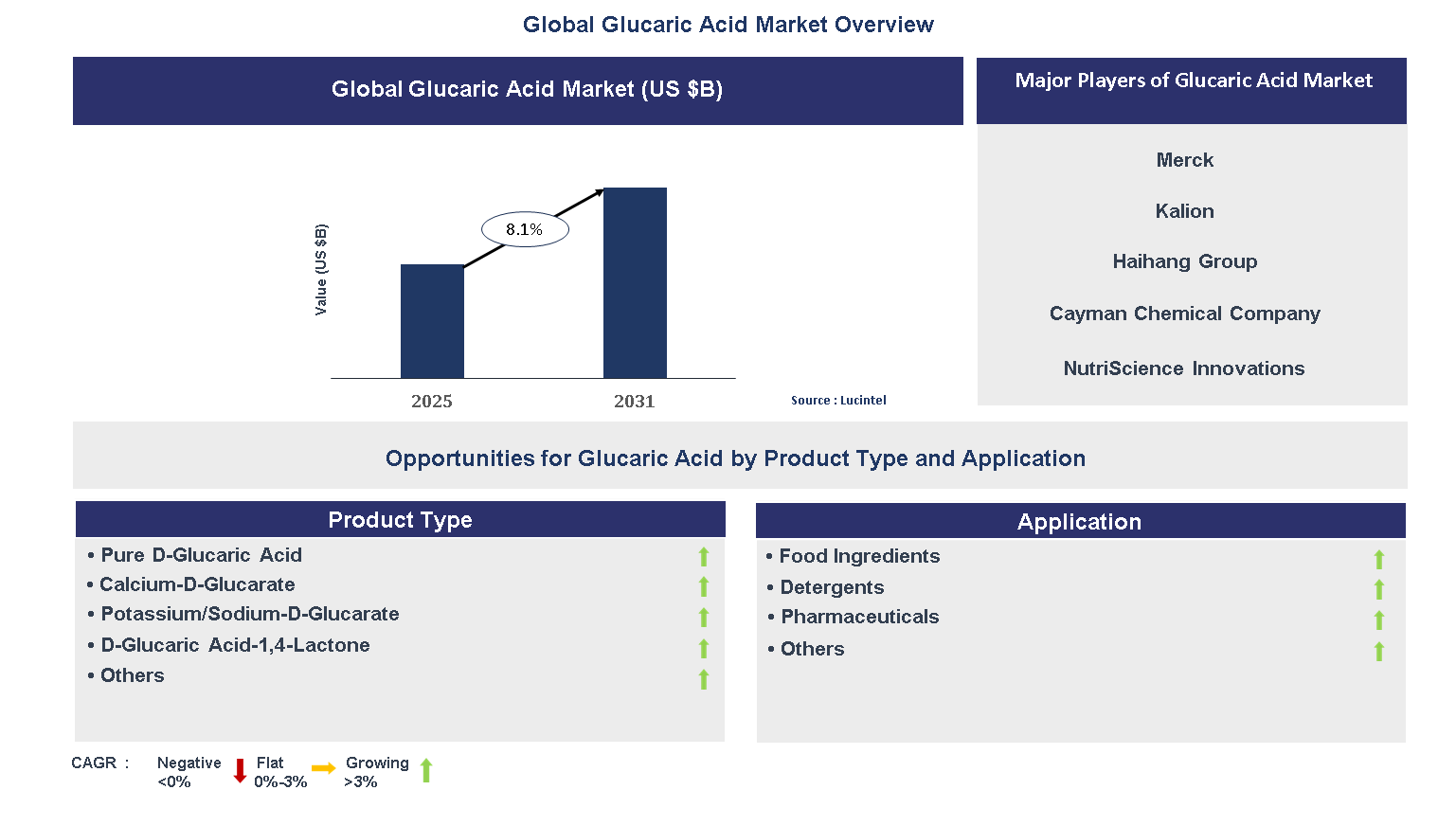
Key data points: The growth forecast = 8.1% annually for the next 7 years. Scroll below to get more insights. This market report covers trends, opportunities and forecasts in glucaric acid market to 2031 by product type (pure D-glucaric acid, calcium-D-glucarate, potassium/sodium-D-glucarate, D-glucaric acid-1,4-lactone, and others), application (food ingredients, detergents, pharmaceuticals, and others), and region (North America, Europe, Asia Pacific, and the Rest of the World)
We'll send your sample report shortly.
• Lucintel forecasts that, within the product type category, calcium-D-glucarate is expected to witness the highest growth over the forecast period.
• Within the application category, pharmaceutical is expected to witness the highest growth.
• In terms of region, APAC is expected to witness the highest growth over the forecast period. Gain valuable insights for your business decisions with our comprehensive 150+ page report. Sample figures with some insights are shown below.
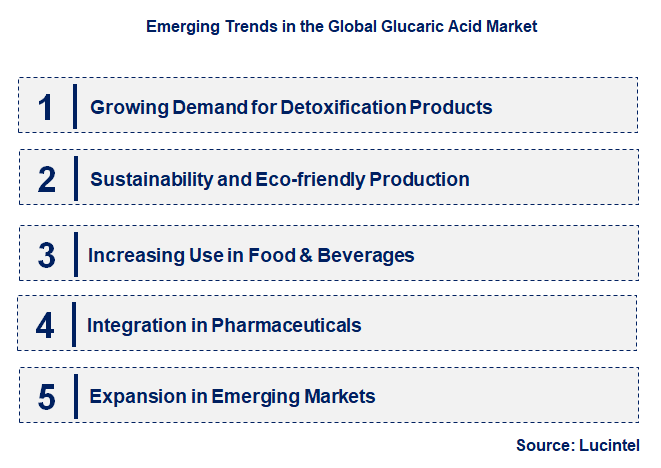
• Growing Demand for Detoxification Products: Consumers are becoming increasingly aware of the need for natural detoxification, boosting demand for glucaric acid in dietary supplements and functional foods. As more people seek products to cleanse the body from environmental toxins and pollutants, glucaric acid is emerging as a key ingredient in the detox market, contributing to its growth.
• Sustainability and Eco-friendly Production: The trend toward sustainability is gaining momentum in the glucaric acid market, with an increasing focus on bio-based and eco-friendly production methods. Manufacturers are prioritizing renewable raw materials and greener production techniques, aligning with consumer demand for natural, organic, and sustainably sourced products that minimize environmental impact.
• Increasing Use in Food & Beverages: Glucaric acid is finding new applications in the food and beverage sector, particularly as a natural preservative and antioxidant. This trend is driven by the growing consumer preference for clean-label products, with glucaric acid being used to enhance food safety and shelf-life without relying on artificial additives or preservatives.
• Integration in Pharmaceuticals: Glucaric acid is gaining popularity in the pharmaceutical industry, particularly in the formulation of drugs that aid in detoxification, liver function support, and cholesterol management. This trend is expected to accelerate as research continues to uncover new therapeutic applications for glucaric acid, particularly in the treatment of chronic diseases and metabolic disorders.
• Expansion in Emerging Markets: As health awareness rises in emerging markets, such as India and China, the demand for glucaric acid is expected to grow rapidly. These markets are increasingly adopting functional foods, dietary supplements, and pharmaceutical products, providing significant opportunities for glucaric acid manufacturers to expand their reach and cater to a larger consumer base. These emerging trends highlight the transformative shifts occurring in the glucaric acid market, driven by increasing consumer awareness, demand for natural products, and a focus on sustainability. As the market adapts to these evolving trends, companies that align their strategies with these changes will be better positioned to capture growth opportunities and meet consumer expectations.
• Innovations in Bio-based Production: A key development in the glucaric acid market is the shift toward bio-based production processes. Manufacturers are increasingly using plant-based raw materials to produce glucaric acid, aligning with the demand for sustainable and eco-friendly solutions. This innovation not only lowers production costs but also caters to the growing consumer demand for clean-label products.
• Increased Adoption in Pharmaceuticals: Glucaric acid is seeing increased adoption in the pharmaceutical industry due to its potential health benefits. Recent developments have focused on utilizing glucaric acid in the formulation of products aimed at liver detoxification, cholesterol management, and anti-inflammatory treatments. This growth is expected to continue as research uncovers more therapeutic applications.
• Regulatory Approvals in Key Markets: Several key markets have provided regulatory approvals for the inclusion of glucaric acid in various products, particularly in dietary supplements and food additives. These approvals have provided manufacturers with the confidence to expand production and marketing efforts, ensuring the safe use of glucaric acid in a wide range of consumer products.
• Partnerships for Product Innovation: Companies are forming strategic partnerships to innovate glucaric acid-based products, particularly in the dietary supplement and functional food sectors. These collaborations are driving the development of new formulations that address specific health concerns, such as detoxification, energy boosting, and weight management, further expanding glucaric acid’s application potential.
• Rising Demand in Emerging Markets: The glucaric acid market is seeing rapid growth in emerging markets, particularly in Asia-Pacific, as consumers in countries like India and China seek natural, health-promoting ingredients. The rising middle class and increasing health awareness in these regions are driving the demand for glucaric acid in dietary supplements, functional foods, and beverages. Recent developments in the glucaric acid market underscore the growing importance of sustainable production, regulatory support, and consumer demand for natural, health-enhancing ingredients. These developments are creating significant opportunities for companies to innovate and expand their product offerings, ensuring the market’s continued growth and diversification.
• Dietary Supplements Market: The dietary supplements sector presents a significant growth opportunity for glucaric acid, as consumers increasingly turn to natural products for detoxification, weight management, and overall wellness. Manufacturers can expand their offerings by creating new supplement formulations that incorporate glucaric acid for enhanced health benefits.
• Food & Beverages Industry: Glucaric acid is gaining popularity as a natural preservative and antioxidant in the food and beverage industry. This trend provides manufacturers with an opportunity to develop clean-label products that appeal to health-conscious consumers seeking natural, chemical-free alternatives for food safety and extended shelf life.
• Pharmaceuticals and Health Products: The pharmaceutical sector offers strong growth opportunities for glucaric acid, particularly in the development of detoxification, cholesterol-lowering, and anti-inflammatory drugs. Ongoing research into its therapeutic benefits is likely to expand its role in drug formulations, presenting manufacturers with opportunities to diversify their product offerings.
• Cosmetics and Personal Care: The use of glucaric acid in cosmetics is gaining traction due to its antioxidant properties, which can be leveraged in skin care products to promote detoxification and skin health. The rising demand for natural ingredients in personal care items presents a growing market for glucaric acid in the beauty and skincare industry.
• Emerging Markets Expansion: The rising health awareness in emerging markets such as India, China, and Latin America presents significant growth opportunities. As these regions adopt more health-conscious consumption habits, glucaric acid can be positioned as a key ingredient in functional foods, supplements, and personal care products, opening new avenues for market expansion. Strategic growth opportunities in the glucaric acid market are abundant, particularly in dietary supplements, food & beverages, pharmaceuticals, cosmetics, and emerging markets. Companies that adapt to these evolving trends will be well-positioned to capitalize on consumer demand for natural, health-promoting products, driving further market expansion.
• Merck
• Kalion
• Haihang Group
• Cayman Chemical Company
• NutriScience Innovations
• Rivertop Renewables
• Johnson Matthey
• Anmol Chemicals
• Alfa Chemistry
• AK Scientific
• Pure D-Glucaric Acid
• Calcium-D-Glucarate
• Potassium/Sodium-D-Glucarate
• D-Glucaric Acid-1,4-Lactone
• Others
• Food Ingredients
• Detergents
• Pharmaceuticals
• Others
• North America
• Europe
• Asia Pacific
• The Rest of the World
• United States: The United States has seen a surge in the use of glucaric acid, particularly in the dietary supplement and pharmaceutical sectors, as consumers increasingly seek natural detoxification products. Companies are focusing on refining production methods to enhance efficiency and lower costs, making glucaric acid more accessible to health-conscious consumers. The market is also benefiting from favorable regulations and growing awareness of its health benefits.
• China: In China, glucaric acid is gaining traction in both the pharmaceutical and food industries, driven by rising health concerns and a growing preference for natural ingredients. Chinese manufacturers are exploring cost-effective production methods to cater to the local market’s expanding demand for detoxifying agents and natural food additives. The government’s emphasis on environmental sustainability also encourages the use of plant-based glucaric acid.
• Germany: Germany’s glucaric acid market is driven by the country’s strong emphasis on health-conscious living and sustainability. Glucaric acid is increasingly used in the food and beverage industry, particularly as a natural preservative and detoxifying agent. German manufacturers are focusing on bio-based production methods, aligning with the growing consumer interest in organic and eco-friendly products.
• India: In India, the glucaric acid market is expanding rapidly, driven by the growing popularity of dietary supplements and health products. As the country becomes more health-conscious, there is increasing demand for detoxification and wellness-focused products. The use of glucaric acid in traditional Ayurvedic formulations is also gaining recognition, further fueling its market growth in the region.
• Japan: Japan has seen increased adoption of glucaric acid in both the pharmaceutical and food sectors, as consumers seek natural products that promote health and detoxification. Japanese manufacturers are focusing on research and development to create innovative glucaric acid-based products. Additionally, the market is supported by Japan’s commitment to health and wellness, and its focus on using natural ingredients in various consumer products.


• Merck
• Kalion
• Haihang Group
• Cayman Chemical Company
• NutriScience Innovations
• Rivertop Renewables
• Johnson Matthey
• Anmol Chemicals
• Alfa Chemistry
• AK Scientific Q5. Which glucaric acid market segment will be the largest in future? Answer: Lucintel forecasts that, within the product type category, calcium-D-glucarate is expected to witness the highest growth over the forecast period. Q6. In glucaric acid market, which region is expected to be the largest in next 5 years? Answer: In terms of region, APAC is expected to witness the highest growth over the forecast period. Q7. Do we receive customization in this report? Answer: Yes, Lucintel provides 10% customization without any additional cost.


Choose a license that fits your team. Instant PDF delivery.
Prices exclude taxes. Instant delivery. Custom licensing available on request.
Market Report · July 22, 2026
Market Report · July 22, 2026
Market Report · July 22, 2026
Trusted partner for strategic intelligence and business growth


Receive a complimentary market analysis tailored to your industry. Our analysts will identify key growth opportunities and competitive dynamics specific to your business.

Market size, growth rate, and key trend analysis for your specific sector.

Top competitor positioning and market share analysis.

Strategic recommendations backed by data-driven insights.
Get curated market intelligence and competitive moves straight to your inbox.
By subscribing, you agree to receive our monthly insights. Unsubscribe anytime.
Receive a complimentary market analysis tailored to your industry. Our analysts will identify key growth opportunities and competitive dynamics specific to your business.
Market size, growth rate, and key trend analysis for your specific sector.
Top competitor positioning and market share analysis.
Strategic recommendations backed by data-driven insights.
Get curated market intelligence, emerging trends, and competitive moves straight to your inbox each month.
By subscribing, you agree to receive our monthly insights. Unsubscribe anytime.
We'll send your sample report shortly.