
Report Feature
GCC Flavours and Fragrances Market Trends and Forecast
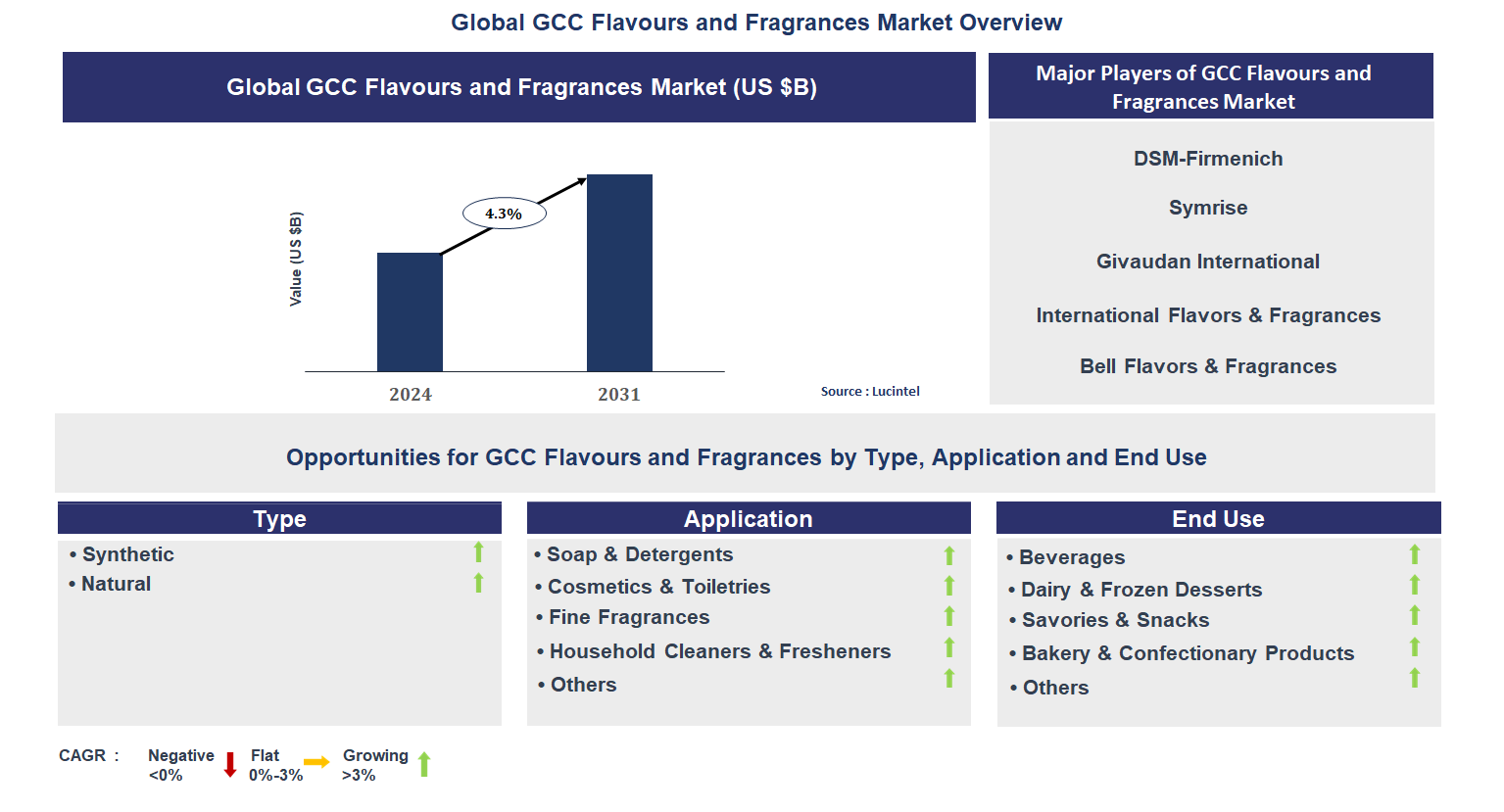
The future of the global GCC flavours and fragrances market looks promising with opportunities in the beverage, dairy & frozen dessert, savory & snack, and bakery & confectionary product markets. The global GCC flavours and fragrances market is expected to grow with a CAGR of 4.3% from 2025 to 2031. The major drivers for this market are the increasing demand for natural ingredients in fragrances, the rising consumer preference for premium scented products, and the growing use of flavors in food & beverages.• Lucintel forecasts that, within the type category, natural is expected to witness higher growth over the forecast period.
• Within the end use category, beverage is expected to witness the highest growth.
• In terms of region, APAC is expected to witness the highest growth over the forecast period. Gain valuable insights for your business decisions with our comprehensive 150+ page report. Sample figures with some insights are shown below.
Emerging Trends in the GCC Flavours and Fragrances Market
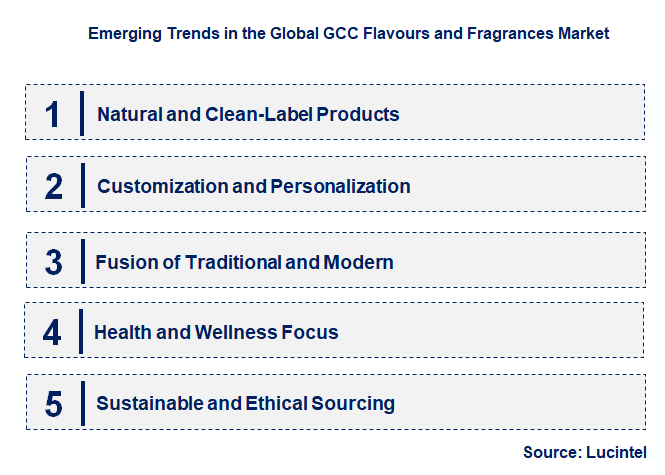
The GCC flavours and fragrances market is being transformed by a wave of emerging trends that are redefining consumer preferences and industry innovation. These trends are rooted in a desire for authenticity, health, and personalized experiences, pushing companies to adapt their product offerings and strategic approaches. The region's unique cultural landscape amplifies these trends, particularly in the fine fragrance sector, where traditional oud and oriental notes are being reinterpreted for a modern audience.• Natural and Clean-Label Products: Consumers are increasingly seeking products with natural, organic, and clean-label ingredients, driven by a rising focus on health and sustainability. This has led to a major shift in the industry, with companies investing in research and development to replace synthetic components with natural extracts, essential oils, and plant-based alternatives to meet this demand.
• Customization and Personalization: The market is seeing a significant trend toward personalized and bespoke products, allowing consumers to create unique scent and flavor profiles. This is particularly prevalent in the luxury fragrance segment, where consumers are willing to pay a premium for a product that reflects their individuality.
• Fusion of Traditional and Modern: There is a growing trend of blending traditional regional scents, such as oud, amber, and musk, with modern, Western-style notes. This fusion creates unique and culturally resonant products that appeal to a wide range of consumers, from those who appreciate classic scents to those seeking innovative, contemporary fragrances.
• Health and Wellness Focus: Flavors and fragrances are increasingly being developed with a focus on health and wellness. This includes functional flavors that offer added nutritional benefits and therapeutic fragrances used in aromatherapy to improve mood, reduce stress, and promote relaxation. This trend reflects a holistic approach to well-being.
• Sustainable and Ethical Sourcing: The industry is under pressure to adopt sustainable and ethical practices, from the sourcing of raw materials to eco-friendly packaging. Consumers are more aware of the environmental and social impact of their purchases, leading to a preference for brands that demonstrate a commitment to transparency and responsible production. The emerging trends in the GCC market are leading to a more sophisticated and discerning consumer base. The demand for natural, personalized, and sustainable products is pushing companies to innovate and differentiate themselves. This is reshaping the market landscape by promoting premiumization, encouraging the development of niche and artisanal brands, and driving a greater focus on ethical and environmentally friendly practices.
Recent Development in the GCC Flavours and Fragrances Market
The GCC flavours and fragrances market has seen several key developments, driven by shifting consumer dynamics and technological advancements. The region's high disposable incomes, cultural significance of scent, and a booming tourism sector have created a fertile ground for innovation and growth. These developments are not only transforming the product landscape but also the way companies engage with consumers.• Premiumization and Niche Fragrances: The market is witnessing a notable shift toward premium and niche fragrances, with consumers increasingly seeking unique and personalized scents. This has led to a boom in artisanal brands and a greater investment by major global players in developing exclusive, high-end collections that cater to this discerning consumer segment.
• Digital-First and Experiential Marketing: Brands are increasingly leveraging digital channels, social media influencers, and experiential marketing to connect with consumers. This includes virtual fragrance consultations, online scent quizzes, and pop-up stores that offer immersive sensory experiences, creating a deeper and more engaging brand relationship.
• Fusion of Flavors: The flavor segment is experiencing a fusion of traditional Middle Eastern spices and notes, such as cardamom, saffron, and rose, with global culinary trends. This innovation is evident in food and beverages, as well as in the growing demand for gourmet and high-quality ingredients for home cooking.
• Strategic Partnerships and Acquisitions: Companies are engaging in strategic partnerships and acquisitions to expand their market footprint and enhance their product portfolios. This includes collaborations between global flavor houses and local perfumers, as well as mergers that aim to consolidate expertise in areas like natural ingredient sourcing and research.
• Investment in Local Production: There is a growing trend of both local and international companies investing in production facilities within the GCC region. This aims to reduce reliance on imports, shorten supply chains, and better cater to regional tastes and preferences with culturally authentic and tailored products. These developments are collectively impacting the GCC market by driving a new era of innovation, elevating the consumer experience, and promoting a strong focus on premium, personalized, and culturally resonant products. The shift from mass-market offerings to a more segmented, quality-driven approach is reshaping the competitive landscape and solidifying the GCC's position as a global leader in the fragrance and flavor industry.
Strategic Growth Opportunities in the GCC Flavours and Fragrances Market
The GCC flavours and fragrances market presents numerous strategic growth opportunities across various applications, fueled by a young, affluent, and digitally-savvy population. The high consumer spending power and a deep cultural appreciation for scents create a unique environment for both established and new players to expand their presence and capitalize on emerging trends.• Food and Beverages: There's a significant opportunity in developing innovative flavors for the region’s expanding food and beverage sector, particularly for processed and ready-to-eat products. Companies can focus on creating new and exotic flavors that blend traditional Middle Eastern tastes with global culinary trends to meet the diverse palates of consumers.
• Fine Fragrances: The premium fine fragrances segment, especially niche and artisanal scents, offers a high-growth opportunity. The market is ripe for brands that can offer unique, high-quality, and personalized perfumes, with a strong emphasis on storytelling and ingredients that resonate with the local culture, such as oud and amber.
• Personal Care Products: The personal care sector, including deodorants, soaps, and lotions, provides a strong growth avenue. Companies can introduce products with high-quality, long-lasting, and culturally relevant fragrances. There is a specific opportunity in developing halal-certified and alcohol-free personal care products that align with consumer religious and ethical preferences.
• Home and Air Care: The home and air care market is growing, driven by a desire for products that enhance the home environment with sophisticated scents. Opportunities exist in premium scented candles, luxury air fresheners, and bakhoor (traditional incense) that feature unique and long-lasting fragrances. The market can also benefit from eco-friendly and natural home care products.
• Pharmaceutical and Nutraceutical: The pharmaceutical and nutraceutical sectors are emerging as a new growth frontier. Flavors are used to mask the unpleasant taste of medicines, while functional fragrances can be incorporated into products for their therapeutic benefits, such as stress relief and improved sleep. This segment is growing due to rising health consciousness in the region. These opportunities are significantly impacting the GCC flavours and fragrances market by encouraging diversification and innovation across multiple applications. The shift toward premium, customized, and culturally relevant products is driving increased investment and competition, ultimately leading to a more dynamic and consumer-centric market that is well-positioned for sustained growth.
GCC Flavours and Fragrances Market Driver and Challenges
The GCC flavours and fragrances market is shaped by a dynamic interplay of technological, economic, and regulatory factors. The key drivers, such as high disposable incomes and a strong cultural affinity for scents, are propelling market growth. However, this progress is tempered by significant challenges like fluctuating raw material costs and stringent regulations, which require strategic navigation. The factors responsible for driving the GCC flavours and fragrances market include: 1. Rising Disposable Incomes: High per capita income in the GCC fuels consumer spending on premium and luxury goods, including high-end fragrances and gourmet food items. This economic prosperity allows consumers to invest in sophisticated and unique products that offer a superior sensory experience, driving market value. 2. Cultural Significance of Fragrance: Scent holds a central role in GCC culture, deeply integrated into daily rituals, hospitality, and personal identity. This cultural significance ensures a consistently high demand for fragrances, from traditional bakhoor to modern perfumes, creating a strong and resilient market foundation. 3. Tourism and Retail Growth: The GCC's thriving tourism sector and extensive luxury retail infrastructure are major market drivers. Tourists, especially those on pilgrimage, contribute significantly to fragrance sales. The presence of world-class malls and specialty boutiques provides a vital platform for brand discovery and sales. 4. Increasing Urbanization: Rapid urbanization and a growing expatriate population are diversifying consumer tastes. This has created demand for a wider range of global flavors in the food industry and a variety of fragrances in personal and home care products, expanding market potential beyond traditional offerings. 5. Growth in F&B and Personal Care: The booming food and beverage, as well as the personal care sectors, are core drivers of flavor and fragrance demand. As these industries expand with new product innovations, such as ready-to-eat meals and specialized cosmetics, they create a continuous need for novel and appealing sensory ingredients. Challenges in the GCC flavours and fragrances market are: 1. Fluctuating Raw Material Costs: The market faces a significant challenge from the volatility of raw material prices, especially for natural ingredients like oud and rose. This unpredictability impacts production costs and profit margins, making it difficult for manufacturers to maintain stable pricing and a consistent supply. 2. Regulatory Hurdles: The industry is subject to evolving and often complex regulations regarding ingredient safety, labeling, and product formulation. Compliance with these stringent standards, particularly for imported products, can be costly and time-consuming, creating barriers to market entry for smaller players. 3. Counterfeiting and Competition: The high demand for luxury products has led to a rampant problem with counterfeiting. This not only erodes brand value and consumer trust but also creates intense price competition. The market is also highly fragmented, with numerous local and international players vying for market share. The combined effect of these drivers and challenges is a dynamic and competitive market. While strong economic foundations and cultural factors offer significant growth potential, the industry must navigate hurdles like cost volatility and regulatory complexities. Success depends on a company's ability to innovate, adapt to consumer preferences, and implement robust strategies to mitigate risks and protect brand integrity.List of GCC Flavours and Fragrances Companies
Companies in the market compete on the basis of product quality offered. Major players in this market focus on expanding their manufacturing facilities, R&D investments, infrastructural development, and leverage integration opportunities across the value chain. With these strategies GCC flavours and fragrances companies cater increasing demand, ensure competitive effectiveness, develop innovative products & technologies, reduce production costs, and expand their customer base. Some of the GCC flavours and fragrances companies profiled in this report include-• DSM-Firmenich
• Symrise
• Givaudan International
• International Flavors & Fragrances
• Bell Flavors & Fragrances
• RFF International
• Senovia
GCC Flavours and Fragrances Market by Segment
The study includes a forecast for the global GCC flavours and fragrances market by type, application, end use, and region.GCC Flavours and Fragrances Market by Type [Value from 2019 to 2031]:
• Synthetic
• Natural
GCC Flavours and Fragrances Market by Application [Value from 2019 to 2031]:
• Soap & Detergents
• Cosmetics & Toiletries
• Fine Fragrances
• Household Cleaners & Fresheners
• Others
GCC Flavours and Fragrances Market by End Use [Value from 2019 to 2031]:
• Beverages
• Dairy & Frozen Desserts
• Savories & Snacks
• Bakery & Confectionary Products
• Others
GCC Flavours and Fragrances Market by Region [Value from 2019 to 2031]:
• North America
• Europe
• Asia Pacific
• The Rest of the World
Country Wise Outlook for the GCC Flavours and Fragrances Market
The GCC flavours and fragrances market is experiencing significant growth, driven by a blend of deep-rooted cultural affinity for scents and modern consumer trends. This evolution is marked by a strong move toward premium and natural products, reflecting a shift in consumer preferences across key global markets. The region, with its high disposable incomes and a strong luxury retail ecosystem, serves as a hub for both traditional and innovative products.• United States: The US market is seeing a surge in demand for flavored desserts and ready-to-eat products. Consumers are increasingly health-conscious, driving a preference for natural, organic, and clean-label ingredients. This trend is pushing manufacturers to innovate with plant-based and exotic flavors, as well as functional fragrances that offer health and wellness benefits.
• China: China holds a dominant position in Asia Pacific, propelled by strong demand from its massive food, cosmetics, and pharmaceutical sectors. Rising disposable incomes and rapid urbanization are fueling a taste for both local and international flavors. The market is also seeing a rise in demand for premium, customized, and high-end fragrances in personal care.
• Germany: Germany's market is largely driven by its robust cosmetics and personal care industry. There's a strong demand for fine fragrances and a growing preference for natural and sustainable ingredients. The emphasis is on high-quality, locally produced products, and a commitment to eco-friendly and ethical practices.
• India: India's market is expanding rapidly due to rising disposable incomes and a growing preference for processed and packaged foods. There's a notable shift toward natural and organic ingredients, driven by increasing consumer health awareness. The market is also seeing a rise in demand for premium, functional fragrances and home care products with unique scents.
• Japan: Japan's market is characterized by a high demand for innovative and unique sensory experiences. The focus is on product differentiation and technological advancements. Consumers are drawn to high-quality, sophisticated, and often subtle flavours and fragrances, with an increasing interest in products that offer wellness and therapeutic benefits.

Features of the Global GCC Flavours and Fragrances Market
Market Size Estimates: Gcc flavours and fragrances market size estimation in terms of value ($B). Trend and Forecast Analysis: Market trends (2019 to 2024) and forecast (2025 to 2031) by various segments and regions. Segmentation Analysis: Gcc flavours and fragrances market size by type, application, end use, and region in terms of value ($B). Regional Analysis: Gcc flavours and fragrances market breakdown by North America, Europe, Asia Pacific, and Rest of the World. Growth Opportunities: Analysis of growth opportunities in different types, applications, end uses, and regions for the GCC flavours and fragrances market. Strategic Analysis: This includes M&A, new product development, and competitive landscape of the GCC flavours and fragrances market. Analysis of competitive intensity of the industry based on Porter’s Five Forces model.
FAQ
Q1. What is the growth forecast for GCC flavours and fragrances market? Answer: The global GCC flavours and fragrances market is expected to grow with a CAGR of 4.3% from 2025 to 2031. Q2. What are the major drivers influencing the growth of the GCC flavours and fragrances market? Answer: The major drivers for this market are the increasing demand for natural ingredients in fragrances, the rising consumer preference for premium scented products, and the growing use of flavors in food & beverages. Q3. What are the major segments for GCC flavours and fragrances market? Answer: The future of the GCC flavours and fragrances market looks promising with opportunities in the beverage, dairy & frozen dessert, savory & snack, and bakery & confectionary product markets. Q4. Who are the key GCC flavours and fragrances market companies? Answer: Some of the key GCC flavours and fragrances companies are as follows:• DSM-Firmenich
• Symrise
• Givaudan International
• International Flavors & Fragrances
• Bell Flavors & Fragrances
• RFF International
• Senovia Q5. Which GCC flavours and fragrances market segment will be the largest in future? Answer: Lucintel forecasts that, within the type category, natural is expected to witness higher growth over the forecast period. Q6. In GCC flavours and fragrances market, which region is expected to be the largest in next 5 years? Answer: In terms of region, APAC is expected to witness the highest growth over the forecast period. Q7. Do we receive customization in this report? Answer: Yes, Lucintel provides 10% customization without any additional cost.
Table of Contents
List of Figures
List of Tables
Methodology
- In-depth interviews of the major players in this market
- Detailed secondary research from competitors’ financial statements and published data
- Extensive searches of published works, market, and database information pertaining to industry news, company press releases, and customer intentions
- A compilation of the experiences, judgments, and insights of Lucintel’s professionals, who have analyzed and tracked this market over the years.


Buy Now
Choose a license that fits your team. Instant PDF delivery.
Prices exclude taxes. Instant delivery. Custom licensing available on request.
Key Questions
- • What are some of the most promising, high-growth opportunities for the GCC flavours and fragrances market by type (synthetic and natural), application (soap & detergents, cosmetics & toiletries, fine fragrances, household cleaners & fresheners, and others), end use (beverages, dairy & frozen desserts, savories & snacks, bakery & confectionary products, and others), and region (North America, Europe, Asia Pacific, and the Rest of the World)?
- • Which segments will grow at a faster pace and why?
- • Which region will grow at a faster pace and why?
- • What are the key factors affecting market dynamics? What are the key challenges and business risks in this market?
- • What are the business risks and competitive threats in this market?
- • What are the emerging trends in this market and the reasons behind them?
- • What are some of the changing demands of customers in the market?
- • What are the new developments in the market? Which companies are leading these developments?
- • Who are the major players in this market? What strategic initiatives are key players pursuing for business growth?
- • What are some of the competing products in this market and how big of a threat do they pose for loss of market share by material or product substitution?
- • What M&A activity has occurred in the last 5 years and what has its impact been on the industry? For any questions related to GCC Flavours and Fragrances Market, GCC Flavours and Fragrances Market Size, GCC Flavours and Fragrances Market Growth, GCC Flavours and Fragrances Market Analysis, GCC Flavours and Fragrances Market Report, GCC Flavours and Fragrances Market Share, GCC Flavours and Fragrances Market Trends, GCC Flavours and Fragrances Market Forecast, GCC Flavours and Fragrances Companies, write Lucintel analyst at email: helpdesk@lucintel.com. We will be glad to get back to you soon.


