
Market Report · July 29, 2026

Key data points: The growth forecast = 16.3% annually for the next 7 years. Scroll below to get more insights. This market report covers trends, opportunities and forecasts in GaN epitaxial market to 2031 by type (GaN-on-Sapphire, GaN-On-Si, GaN-On-SiC, GaN-on-GaN, and others), application (photoelectric, electronic power, and rf), and region (North America, Europe, Asia Pacific, and the Rest of the World)
We'll send your sample report shortly.
• Lucintel forecasts that, within the type category, GaN-on-Sapphire, GaN-On-Si, GaN-On-SiC, and GaN-on-GaN is expected to witness higher growth over the forecast period.
• Within the application category, RF is expected to witness the highest growth.
• In terms of region, APAC is expected to witness the highest growth over the forecast period. Gain valuable insights for your business decisions with our comprehensive 150+ page report. Sample figures with some insights are shown below.

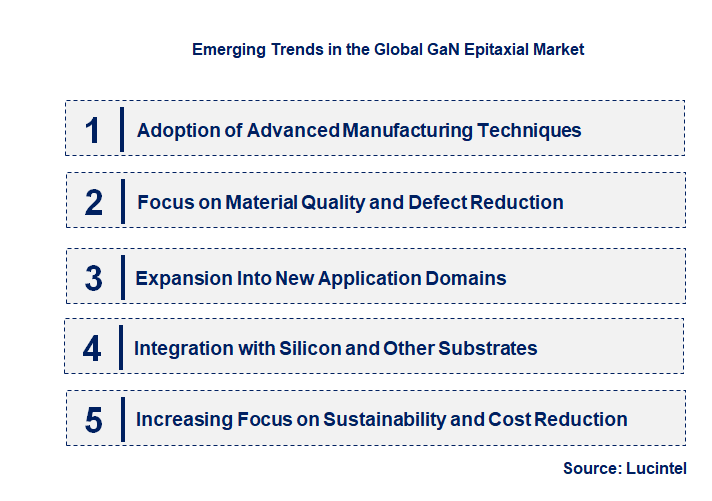
• Adoption of Advanced Manufacturing Techniques: This trend involves the integration of novel fabrication methods such as metal-organic chemical vapor deposition (MOCVD) improvements and atomic layer deposition (ALD). These techniques enable higher quality epitaxial layers with fewer defects, leading to better device performance and reliability. As manufacturing processes become more sophisticated, production costs decrease, making GaN devices more accessible for a broader range of applications. This evolution is crucial for scaling up production and meeting the increasing demand for high-performance GaN-based components.
• Focus on Material Quality and Defect Reduction: Improving the purity and crystalline quality of GaN epitaxial layers is a significant trend. Researchers are developing new substrate materials and refining growth conditions to minimize dislocations and impurities. Enhanced material quality directly impacts device efficiency, longevity, and thermal stability. This focus on defect reduction is vital for applications requiring high power and high frequency, such as 5G infrastructure and electric vehicles, where reliability is paramount. As a result, the market is witnessing a shift toward premium-quality GaN epitaxial layers.
• Expansion into New Application Domains: The market is witnessing diversification with GaN epitaxial layers being increasingly used in emerging sectors like electric vehicles, renewable energy, and 5G infrastructure. These applications demand high efficiency, compact size, and thermal stability, which GaN provides. The expansion into these domains is driven by technological advancements and the need for energy-efficient solutions. This trend broadens the market scope, creating new revenue streams and encouraging innovation in device design and integration.
• Integration with Silicon and Other Substrates: Hybrid approaches combining GaN with silicon and other substrates are gaining traction. This integration aims to leverage the cost-effectiveness and existing manufacturing infrastructure of silicon while benefiting from GaN’s superior electronic properties. Such hybrid solutions enable scalable production of high-performance devices at lower costs, accelerating market adoption. This trend is particularly impactful in power electronics and RF applications, where cost and performance are critical factors influencing market growth.
• Increasing Focus on Sustainability and Cost Reduction: As the market matures, there is a growing emphasis on sustainable manufacturing practices and reducing production costs. Innovations in epitaxial growth techniques aim to minimize waste and energy consumption. Additionally, efforts are underway to develop more affordable raw materials and scalable processes. These initiatives are essential for making GaN-based devices more economically viable and environmentally friendly, thereby expanding their adoption across various industries and supporting global sustainability goals. In summary, these emerging trends are collectively transforming the GaN epitaxial market by enhancing material quality, expanding application areas, reducing costs, and integrating new manufacturing techniques. These developments are driving innovation, improving device performance, and making GaN technology more accessible, ultimately reshaping the landscape of high-performance electronic and optoelectronic devices.
• Technological Innovations: Advancements in epitaxial growth techniques such as MOCVD and HVPE have improved GaN quality and reduced production costs, enabling wider adoption in high-performance applications. These innovations enhance device efficiency, reliability, and scalability, fostering new product development and expanding market reach.
• Expansion of Manufacturing Capacity: Major players are investing in new fabrication facilities and expanding existing ones to meet rising demand. Increased capacity ensures supply chain stability, reduces lead times, and supports large-scale deployment of GaN-based devices across industries.
• Strategic Collaborations and Partnerships: Companies are forming alliances with research institutions and industry leaders to accelerate R&D efforts. These collaborations facilitate technology transfer, standardization, and commercialization, boosting overall market growth and innovation.
• Growing Adoption in Power Electronics: The shift towards energy-efficient systems has driven increased use of GaN in power converters and inverters. This trend reduces energy consumption and enhances device performance, positioning GaN as a preferred material in sustainable energy solutions.
• Regulatory and Environmental Policies: Governments and industry bodies are implementing standards and incentives promoting the use of GaN technology due to its environmental benefits. These policies encourage market penetration and support sustainable development initiatives. In summary, these developments are collectively propelling the GaN epitaxial market forward by improving product quality, increasing production capacity, fostering innovation through collaborations, expanding application areas, and aligning with environmental policies. As a result, the market is experiencing accelerated growth, heightened competition, and broader adoption across multiple sectors, shaping a promising future for GaN technology.
• Advancements in Power Electronics: The increasing need for efficient power management solutions is driving the adoption of GaN epitaxial layers in power electronics. This growth enhances energy efficiency, reduces device size, and improves thermal management, making GaN a preferred material for high-power applications such as data centers, industrial machinery, and renewable energy systems. The impact is a broader market reach and increased adoption in high-performance power devices.
• Expansion in RF and Wireless Communications: The surge in 5G technology and wireless infrastructure development is fueling demand for GaN-based RF components. GaNs high electron mobility and power density enable better signal strength and coverage, essential for next-generation communication systems. This growth opportunity accelerates the deployment of advanced wireless networks and enhances device performance, positioning GaN as a critical material in telecommunications.
• Growth in LED Lighting: The shift towards energy-efficient lighting solutions is boosting the use of GaN in LED manufacturing. GaNs excellent optoelectronic properties improve LED brightness, efficiency, and lifespan. This trend supports the development of innovative lighting products for residential, commercial, and automotive applications, expanding market penetration and driving revenue growth in the lighting sector.
• Developments in Electric Vehicles (EVs): The rising adoption of EVs is creating demand for GaN-based power devices that offer higher efficiency and faster charging capabilities. GaNs ability to handle high voltages and reduce energy losses makes it ideal for EV power converters and charging stations. This opportunity accelerates EV adoption and supports the transition to sustainable transportation.
• Applications in Aerospace and Defense: The aerospace and defense sectors are increasingly utilizing GaN epitaxial layers for radar, satellite, and communication systems due to GaNs high power and frequency capabilities. These applications benefit from improved performance, miniaturization, and reliability, opening new avenues for market growth and technological innovation in these high-stakes industries. In summary, these strategic growth opportunities are significantly impacting the GaN epitaxial market by expanding its application scope, enhancing product performance, and driving technological innovation. As industries increasingly adopt GaN-based solutions, the market is poised for sustained growth, attracting investments and fostering competitive advancements.
• Technological Advancements: The continuous development of GaN epitaxial growth techniques, such as MOCVD and HVPE, has significantly improved material quality and device performance. These advancements enable the production of high-efficiency power electronics, RF devices, and optoelectronic components. As technology evolves, manufacturers can create more reliable, cost-effective, and scalable solutions, fueling market growth. The increasing integration of GaN in 5G infrastructure, electric vehicles, and satellite communications underscores the importance of ongoing innovation. This technological progress not only enhances product capabilities but also opens new application avenues, making GaN epitaxial materials indispensable in next-generation electronics.
• Rising Demand for Power Electronics: The global shift toward energy-efficient systems and renewable energy sources has heightened the need for advanced power electronic devices. GaN epitaxial layers offer superior switching speeds, lower losses, and higher voltage capabilities compared to traditional silicon-based components. This makes them ideal for applications such as electric vehicle chargers, data centers, and smart grid systems. The increasing adoption of GaN-based power transistors and diodes is driven by the demand for compact, lightweight, and energy-efficient solutions. As industries aim to reduce carbon footprints and improve energy management, the demand for GaN epitaxial materials is expected to surge, supporting market expansion.
• Growing Adoption in RF and 5G Technologies: The rollout of 5G networks and the proliferation of RF applications have significantly boosted demand for GaN-based RF devices. GaNs high electron mobility and power density enable high-frequency, high-power transmission, essential for 5G infrastructure, satellite communications, and radar systems. The ability to operate at higher frequencies with greater efficiency makes GaN epitaxial layers a preferred choice for telecom equipment manufacturers. As 5G deployment accelerates globally, the need for reliable, high-performance RF components will continue to grow, directly impacting the GaN epitaxial market positively.
• Increasing Investment in Semiconductor Manufacturing: Governments and private enterprises are investing heavily in semiconductor fabrication facilities to meet rising global demand. These investments include funding for research, development, and manufacturing of GaN epitaxial wafers. Such financial support facilitates technological innovation, reduces production costs, and enhances supply chain capabilities. The expansion of manufacturing capacity ensures a steady supply of high-quality GaN materials, attracting more end-users across various sectors. This investment trend is crucial for overcoming current production challenges and scaling up the market to meet future demands, thereby fostering sustained growth.
• Expansion in Consumer Electronics and Automotive Sectors: The integration of GaN epitaxial materials into consumer electronics, such as smartphones, laptops, and wearable devices, is increasing due to their compact size and energy efficiency. Similarly, the automotive industry is adopting GaN-based power devices for electric vehicles, including onboard chargers and inverter systems. These sectors demand high-performance, durable, and efficient components, which GaN epitaxial layers provide. The growing consumer preference for smarter, more efficient devices and the push toward electrification in vehicles are key drivers. This expansion into diverse end-use markets broadens the application scope and accelerates market growth. The challenges in the GaN epitaxial market are:
• High Manufacturing Costs: Producing high-quality GaN epitaxial layers involves complex, costly processes such as MOCVD, which require expensive equipment and strict process controls. The high capital expenditure and operational costs translate into expensive end products, limiting widespread adoption, especially in price-sensitive markets. Additionally, the need for specialized substrates and the difficulty in achieving uniform epitaxial layers further increase costs. These financial barriers can slow down market growth and restrict entry for smaller players, impacting overall industry expansion. Overcoming cost challenges is essential for making GaN-based solutions more accessible and competitive.
• Technical Complexities and Material Challenges: The growth of GaN epitaxial layers involves overcoming significant technical hurdles, including managing lattice mismatches and defect densities. These issues can impair device performance and reliability, posing challenges for mass production. Achieving consistent quality across large wafers remains difficult, affecting yield rates and increasing costs. Moreover, developing scalable, defect-free epitaxial processes requires extensive research and innovation. Addressing these technical complexities is critical for ensuring the commercial viability of GaN devices and maintaining industry standards, but it remains a significant obstacle for market players.
• Regulatory and Environmental Concerns: The manufacturing and disposal of GaN epitaxial materials involve environmental considerations, including the handling of hazardous chemicals used in epitaxial growth processes. Regulatory frameworks governing chemical use, waste management, and emissions can impose compliance costs and operational restrictions. Additionally, the lack of standardized regulations specific to GaN materials can create uncertainties for manufacturers and end-users. Navigating these regulatory landscapes requires significant effort and investment, potentially delaying product launches and market entry. Ensuring environmentally sustainable practices while complying with evolving regulations is a key challenge for industry stakeholders. In summary, the GaN epitaxial market is driven by technological innovations, increasing demand for efficient power and RF devices, substantial investments, and expanding applications across various sectors. However, high production costs, technical challenges, and regulatory hurdles pose significant obstacles. These factors collectively influence the markets growth trajectory, requiring strategic investments and technological advancements to overcome barriers. The overall impact suggests a promising future for GaN epitaxial materials, provided that industry players can address these challenges effectively, enabling broader adoption and sustained growth in the evolving electronics landscape.
• NTT AT
• Wolfspeed
• SCIOCS
• EpiGaN
• DOWA Electronics Materials
• IQE
• Enkris Semiconductor Inc
• CorEnergy
• GLC
• Genettice
• GaN-on-Sapphire
• GaN-On-Si
• GaN-On-SiC
• GaN-on-GaN
• Others
• Photoelectric
• Electronic Power
• RF
• North America
• Europe
• Asia Pacific
• The Rest of the World
• United States: The U.S. leads in GaN research and development, with major tech companies and startups investing heavily in advanced manufacturing processes. Government initiatives aim to promote domestic production and reduce reliance on imports, fostering innovation in high-power electronics and RF applications. The market is also driven by increased adoption in 5G infrastructure and electric vehicles, with several collaborations between industry and academia to develop next-generation GaN devices.
• China: China has rapidly expanded its GaN manufacturing capacity, supported by government policies favoring semiconductor self-sufficiency. The country focuses on integrating GaN technology into consumer electronics, telecommunications, and military applications. Domestic companies are investing in R&D to improve material quality and reduce costs, aiming to become a global leader in GaN epitaxial production. Strategic partnerships and acquisitions are also strengthening Chinas position in the global market.
• Germany: Germany emphasizes high-quality GaN epitaxial growth for industrial and automotive applications, leveraging its strong engineering and manufacturing expertise. The country is investing in research collaborations between universities and industry to develop efficient, reliable GaN devices. Focus areas include power electronics for renewable energy systems and electric vehicles, with a push toward sustainable and environmentally friendly manufacturing practices. India: India is gradually entering the GaN market, primarily through government initiatives aimed at boosting semiconductor manufacturing. The focus is on developing indigenous capabilities for GaN epitaxial growth to support the countrys growing electronics and telecom sectors. Several startups and research institutions are working on innovative applications, with government incentives encouraging local production and technology transfer to reduce dependency on imports.
• Japan: Japan continues to innovate in GaN epitaxial technology, emphasizing high-performance applications in aerospace, defense, and consumer electronics. The country invests in advanced research to improve material quality and device efficiency. Japanese companies are also exploring the integration of GaN with existing semiconductor technologies to develop hybrid solutions, maintaining their competitive edge in the global market. Sustainability and energy efficiency remain key priorities in Japans GaN development strategies.


• NTT AT
• Wolfspeed
• SCIOCS
• EpiGaN
• DOWA Electronics Materials
• IQE
• Enkris Semiconductor Inc
• CorEnergy
• GLC
• Genettice Q5. Which GaN epitaxial market segment will be the largest in future? Answer: Lucintel forecasts that, within the type category, GaN-on-Sapphire, GaN-On-Si, GaN-On-SiC, and GaN-on-GaN is expected to witness higher growth over the forecast period. Q6. In GaN epitaxial market, which region is expected to be the largest in next 5 years? Answer: In terms of region, APAC is expected to witness the highest growth over the forecast period. Q7. Do we receive customization in this report? Answer: Yes, Lucintel provides 10% customization without any additional cost.


Choose a license that fits your team. Instant PDF delivery.
Prices exclude taxes. Instant delivery. Custom licensing available on request.
Market Report · July 29, 2026
Market Report · July 20, 2026
Market Report · July 20, 2026
Trusted partner for strategic intelligence and business growth


Receive a complimentary market analysis tailored to your industry. Our analysts will identify key growth opportunities and competitive dynamics specific to your business.

Market size, growth rate, and key trend analysis for your specific sector.

Top competitor positioning and market share analysis.

Strategic recommendations backed by data-driven insights.
Get curated market intelligence and competitive moves straight to your inbox.
By subscribing, you agree to receive our monthly insights. Unsubscribe anytime.
Receive a complimentary market analysis tailored to your industry. Our analysts will identify key growth opportunities and competitive dynamics specific to your business.
Market size, growth rate, and key trend analysis for your specific sector.
Top competitor positioning and market share analysis.
Strategic recommendations backed by data-driven insights.
Get curated market intelligence, emerging trends, and competitive moves straight to your inbox each month.
By subscribing, you agree to receive our monthly insights. Unsubscribe anytime.
We'll send your sample report shortly.